Louisville Beauty Academy: A Net-Positive Economic Engine for the Commonwealth of Kentucky – RESEARCH & PODCAST 2026

A Comprehensive Institutional Research Study

Researched and Published by Di Tran University — The College of Humanization
In Partnership with Louisville Beauty Academy — The College of Human Service

Publication Date: February 27, 2026
Document Classification: Public Research Study — Policy, Workforce, and Economic Reference


This publication is an independently authored institutional research study conducted by Di Tran University — The College of Humanization. Louisville Beauty Academy’s role was limited to providing access to publicly available regulatory data and internal historical records for review. All modeling assumptions, fiscal interpretations, and policy conclusions reflect the academic analysis of Di Tran University and are presented for informational and educational purposes only. This document is not promotional material, does not guarantee outcomes, and is not intended to compare, evaluate, or diminish any other institution or regulatory body.


Acknowledgment

Louisville Beauty Academy extends its deepest gratitude to Di Tran University for conducting the independent research, data analysis, and economic modeling that underpin this study. Di Tran University’s commitment to institutional transparency, evidence-based education policy, and public-interest research has made it possible to document—with real numbers and verifiable methodology—the true fiscal and social contribution of Louisville Beauty Academy to the Commonwealth of Kentucky and the United States.

This study is published in the public interest and is intended for current students, prospective students, policymakers, regulators, community partners, and any citizen who cares about how education dollars flow through the economy. Every number presented below is grounded in Kentucky Board of Cosmetology reporting data, official state fee schedules (201 KAR 12:260), and conservative economic modeling.


I. Introduction & Purpose

In conversations about education, workforce development, and public spending, one question is rarely asked:

Does this school give more to the economy than it takes?

For the vast majority of adult education institutions in America—cosmetology schools, trade schools, community colleges, and vocational programs—the honest answer is complicated. Most rely on some combination of federal Pell Grants, federal student loans, state subsidies, nonprofit grants, and other public funding streams to operate. These public dollars are an investment, but they are also a cost on the public balance sheet. Every dollar of federal financial aid disbursed is a dollar that must be earned, taxed, borrowed, or printed by the government before it reaches the school.

Louisville Beauty Academy (LBA) operates differently. It takes zero dollars of federal or state education funding. It has never participated in Title IV federal student aid. It does not accept Pell Grants. It does not process federal student loans. It does not draw state workforce grants. It operates entirely on private cash payments and interest-free payment plans—even while offering 50–75% tuition discounts to its students.

And yet, over the past decade, LBA has generated an estimated $48.7 million in net-positive fiscal and tax contributions to the Commonwealth of Kentucky and the United States, while producing approximately 2,000 licensed beauty professionals and incubating approximately 30 independently owned salons and beauty businesses.

This study documents exactly how that works—line by line, dollar by dollar.


II. LBA’s Unique Fiscal Model: Starting at Zero

The Zero-Cost Baseline

Every school in America begins its fiscal relationship with government in one of two positions:

  1. Net consumer: The school receives public funds (federal aid, state grants, subsidies) to operate. Before a single student takes an exam or earns a license, public dollars have already been spent.
  2. Net neutral: The school receives nothing from the government. Its starting position on the public balance sheet is exactly $0.00.

Louisville Beauty Academy is in the second category. Its baseline cost to taxpayers is zero—not reduced, not subsidized, not offset. Zero.

How LBA Funds Its Operations

LBA operates on a transparent, cash-based tuition model:

ProgramFull TuitionWith Maximum Discounts
Cosmetology (1,500 hours)~$27,000 (industry norm)~$6,250
Nail Technology~$8,325 (industry norm)~$3,800
EstheticsComparable reductions50–75% below market

Students pay through:

  • Full payment at enrollment (largest discount)
  • Weekly/monthly payment plans (interest-free)
  • Effort-based incentives (attendance bonuses, exam score rewards, social media engagement credits)

No federal loans. No Pell Grants. No FAFSA processing. No debt.

Why This Matters for the Public Balance Sheet

The U.S. beauty education sector received over $1 billion in federal student loans and grants in the 2019–2020 academic year alone. Peer-reviewed research (Cellini & Goldin, American Economic Journal, 2014) found that Title IV cosmetology programs charge approximately 78% more in tuition than comparable non-Title IV programs—despite similar licensing exam pass rates. The tuition premium closely tracks the value of available federal aid, suggesting that aid itself inflates the cost of education.

At a national average Title IV cosmetology tuition of $15,000–$20,000, LBA’s price of $3,800–$6,250 is not just affordable—it is structurally different. It is built around licensure cost, not around aid-capture revenue.


III. The 10-Year Economic & Tax Impact: Real Numbers

The following model uses conservative, documented assumptions drawn from Kentucky Board of Cosmetology data, official state fee schedules (201 KAR 12:260), LBA institutional records, and industry-standard income ranges.

A. Direct Fee Revenue Paid to the State of Kentucky

Every LBA student who enrolls, takes an exam, earns a license, or opens a salon directly pays fees into the Kentucky Board of Cosmetology and the Commonwealth’s revenue system.

Revenue StreamCalculation10-Year Total
State Board Exam Fees~2,500 exam events × $85/exam$212,500
Initial License Fees2,000 graduates × $50/license$100,000
Annual License Renewals2,000 graduates × avg. 5 years × $50/year$500,000
Salon/Shop License Fees30 salons × $100 initial + 5 years renewals × $100$18,000
School License FeesLBA: $1,500 initial + 9 years × $250 renewal$3,750
Student Enrollment Permits~2,000 students × $25 estimated$50,000
TOTAL DIRECT FEE REVENUE$884,250

Note on exam volume: Kentucky Board of Cosmetology data for 2023–2025 alone documents over 600 exam events associated with LBA, including theory, practical, and retake attempts. LBA ranks #1 in the state for nail technology exam volume and #1 in the state for resilience-based retake participation—consistent with a school that encourages persistence until licensure is achieved.

B. Federal and State Aid Consumed

CategoryAmount
Federal Pell Grants consumed$0
Federal student loans processed$0
State education grants received$0
Nonprofit/foundation subsidies$0
TOTAL PUBLIC FUNDS CONSUMED$0

C. Workforce Economic Activity Generated

LBA’s 2,000 graduates and 30 alumni-owned salons generate continuous, measurable economic activity in Kentucky communities:

Economic ActivityCalculation10-Year Cumulative
Graduate service income2,000 graduates × $20,000 avg./year × 5 avg. years$200,000,000
Salon business gross revenue30 salons × $500,000 avg./year × 4 avg. years$60,000,000
Secondary employment income30 salons × 10 employees × $25,000/year × 4 years$30,000,000
TOTAL ECONOMIC ACTIVITY$290,000,000

Methodology note: The $20,000 average annual graduate income is intentionally ultra-conservative. LBA’s own workforce data cites a range of $10,000–$50,000 annually for individual graduates. The $500,000 average salon revenue is the bottom of the documented $500,000–$1,000,000 range. These figures deliberately err on the side of modesty.

D. Tax Revenue Generated

Every dollar of economic activity generates tax revenue for Kentucky and the United States:

Tax CategoryCalculation10-Year Total
Kentucky state income tax (4%) on graduate income$200M × 4%$8,000,000
Federal income tax (~10% effective) on graduate income$200M × 10%$20,000,000
Kentucky state tax on salon profits (~20% profit margin × 4%)$60M × 20% × 4%$480,000
Federal tax on salon profits (~20% margin × 10%)$60M × 20% × 10%$1,200,000
Payroll taxes (FICA) on all employment($200M + $30M) × 7.65%$17,595,000
Sales tax (6% on estimated 15% retail portion of salon revenue)$60M × 15% × 6%$540,000
TOTAL TAX REVENUE GENERATED$47,815,000

E. The Net-Positive Summary

CategoryAmount
Direct fee revenue paid to state$884,250
Tax revenue generated (state + federal)$47,815,000
Public funds consumed$0
TOTAL NET-POSITIVE CONTRIBUTION$48,699,250

Louisville Beauty Academy has generated approximately $48.7 million in net-positive fiscal contribution to the Commonwealth of Kentucky and the United States over 10 years—while consuming exactly zero dollars of public education funding.

F. What If LBA Were a Title IV School?

For context, if LBA had operated as a typical Title IV cosmetology school:

Hypothetical CostCalculationAmount
Pell Grants consumed2,000 students × $4,500 avg.$9,000,000
Federal student loans disbursed2,000 students × $8,000 avg.$16,000,000
TOTAL HYPOTHETICAL FEDERAL COST$25,000,000

The net fiscal difference between LBA’s actual model and a hypothetical Title IV model is approximately $73.7 million—the sum of the $48.7 million LBA generates plus the $25 million in federal costs it avoids.

This is the economic reality of what it means to operate as a debt-free, non-aid institution: every dollar that would have been a cost becomes, instead, a contribution.


IV. Policy and Regulatory Context

Situated Within the Kentucky Board of Cosmetology Ecosystem

Louisville Beauty Academy operates under the full authority and oversight of the Kentucky Board of Cosmetology (KBC). Its programs comply with all hour requirements established under Kentucky statute (KRS 317A) and administrative regulation (201 KAR 12):

  • Cosmetology: 1,500 hours
  • Nail Technology: 450 hours
  • Esthetics: 750 hours
  • Shampoo Styling: 300 hours

KBC’s public school reporting data for 2023–2025 confirms:

  • LBA operates at one of the highest exam participation volumes in the Commonwealth
  • LBA is the #1 school in the state for nail technology licensing volume
  • LBA facilitates more theory retake events than any other institution in Kentucky (218 retakes in the 2023–2025 window alone)

This retake volume is not a sign of weakness—it is a direct expression of LBA’s resilience-based model, fully aligned with the intent of Kentucky Senate Bill 22 (SB 22), which reformed licensing to make persistence and retaking accessible and encouraged.

The National Aid-Dependency Problem

Nationally, the cosmetology education sector is structured around federal financial aid:

  • The U.S. for-profit beauty school industry generates approximately $2.2 billion in annual revenue, heavily fueled by federal aid
  • Over $1 billion in federal student loans and grants flow through cosmetology programs each year
  • Peer-reviewed research documents that Title IV schools charge 78% more in tuition than comparable non-Title IV schools for the same licensure preparation
  • The federal Gainful Employment rule, upheld by courts in October 2025, now requires that Title IV programs demonstrate their graduates earn more than high school graduates—a standard many cosmetology programs struggle to meet

Within this national landscape, Louisville Beauty Academy stands as a documented alternative: a state-licensed, low-cost, non-aid institution that produces licensed professionals and economic activity at a fraction of the cost to students and at zero cost to taxpayers.


V. Educational Philosophy and Mindset: The Founding Principle

Louisville Beauty Academy was not built to be a business that captures federal aid. It was built on a founding principle articulated by Di Tran, its founder:

“Contribute to the United States—the number one country on earth—through work, education, and service.”

This is not a marketing slogan. It is an operating philosophy that shapes every aspect of the institution:

The “Yes I Can” Mentality

At LBA, students are taught that fear is not a reason to stop—it is a signal to begin.

  • We take the exam. Even when we feel unprepared.
  • We go at it. Even when the material feels overwhelming.
  • We go at it again. Even after a setback.
  • We face fear by doing. Not by waiting until fear disappears.
  • We try again and again and again until we can stand with confidence and say:

“I Have Done It.”™

This is not motivational rhetoric. It is a documented educational strategy. KBC data confirms that LBA students who persist through the retake process achieve licensure at rates approaching 100%. The school’s entire model is built around the idea that readiness is not a prerequisite for action—action is the prerequisite for readiness.

Resilience-Based Licensing Education

LBA’s curriculum is structured around Kentucky’s licensing requirements, with a pedagogy explicitly designed for resilience:

  • Theory-first instruction: Students master state board theory content through repetition, practice exams, and the CIMA exam scoring system before advancing to practical skills
  • Retake as progress: Exam retakes are treated not as failures but as steps in a structured learning process, consistent with SB 22’s intent
  • Multilingual support: LBA serves a predominantly multilingual, immigrant, and nontraditional student population, providing instruction and exam preparation in multiple languages

VI. Curriculum and Materials

Milady — The National Standard

LBA uses the Milady curriculum system, the #1 beauty education textbook platform in the United States, as its primary theory and practical foundation. This ensures that every LBA student is prepared against the same national standard used by schools across all 50 states.

Di Tran University Self-Published Supplements

What makes LBA unique in curriculum is what it adds beyond Milady. Di Tran University and Louisville Beauty Academy have self-published over 120 books and educational materials—available on Amazon and through institutional distribution—covering:

  • State board exam preparation (theory and practical, by discipline)
  • Sanitation, safety, and regulatory compliance (aligned to Kentucky law)
  • Business launching and salon management (practical entrepreneurship)
  • Financial literacy and wealth building (for first-generation professionals)
  • Mindset, resilience, and personal growth (the “Yes I Can”™ philosophy)

Featured titles include:

  • “YES I CAN” Mentality: Sharpening Your Mind for Success at Every Stage of Life
  • I HAVE DONE IT: Living a Legacy of Action and Value
  • The Complete Nail Licensing Master Book — Di Tran University 2025 Edition (50 chapters, the most comprehensive nail licensing textbook ever published)
  • Refugee Resilience: Elevating Lives, Communities, and America

These materials are not replacements for Milady. They are complements—designed to bridge the gap between theory knowledge and the mindset required to apply that knowledge under pressure, in a new language, in a new country, and in a regulated profession.

Louisville Beauty Academy is one of the only beauty schools in the United States—and among the rarest adult education institutions of any kind—to self-publish its own supplemental educational library. This reflects a commitment to continuous adaptation, daily improvement, and the belief that education must evolve as fast as the students it serves.

The Three Teaching Pillars

Everything taught at LBA rests on three pillars:

  1. Sanitation, Safety, and State Board Compliance — The law comes first. Students learn that protecting the public is the foundation of every license.
  2. Practical Skills for Licensure and Employment — Students are trained to pass the exam and enter the workforce ready to serve clients on day one.
  3. Mindset and Character — Students are developed as value-adding Americans, value-adding Kentuckians, and loving, caring individuals who serve their communities with dignity.

VII. Graduate Outcomes and Small-Business Creation

By the Numbers

Outcome MetricDocumented Value
Total licensed graduates (since founding)~2,000
Independently owned salons by LBA alumni~30
Additional professionals employed by alumni salons~10–20 per salon
Annual individual graduate income range$10,000–$50,000
Annual salon business revenue range$500,000–$1,000,000
Estimated annual statewide economic activity$20–50 million
Estimated 10-year cumulative economic activity$290 million (conservative)

Small Business as Workforce Multiplier

LBA does not simply produce employees. It produces entrepreneurs.

When an LBA graduate opens a salon, that single graduate becomes:

  • An employer (hiring 10–20+ additional licensed professionals)
  • A taxpayer (paying business taxes, payroll taxes, sales taxes)
  • A lease holder (contributing to commercial real estate)
  • A supply purchaser (supporting distributors, manufacturers, and logistics)
  • A community anchor (providing essential, in-person services that cannot be outsourced, automated, or relocated)

Each salon is a money printer for the local economy—generating $500,000 to $1,000,000 in annual gross revenue, paying salaries, generating tax revenue, and creating more licensed professionals who may themselves one day open businesses.

This is the exponential multiplier effect of LBA’s model: one graduate becomes one business, which creates ten jobs, which generates hundreds of thousands in revenue, which pays thousands in taxes—and the cycle repeats.


VIII. A Message to Current and Future Students

If you are reading this as a current student of Louisville Beauty Academy, or as someone considering enrollment, here is what this research means for you:

You Are Part of Something Rare

By choosing Louisville Beauty Academy, you have chosen an institution that:

  • Costs you less than almost any comparable school in America
  • Puts you in zero debt — no federal loans, no FAFSA burden, no repayment stress
  • Generates revenue for your state — every exam fee you pay, every license you earn, every salon you open strengthens Kentucky
  • Consumes zero public dollars — your education is funded by your own effort, not by taxpayers

You are not a cost to anyone. You are a contributor from day one.

You Are Trained as More Than a Technician

At LBA, you learn cosmetology, nail technology, esthetics, or instructor skills. But you also learn:

  • That you are a value-adding American — someone who contributes more than they consume
  • That you are a value-adding Kentuckian — someone who strengthens their community through work and service
  • That you are a loving and caring human being — someone who serves clients not just with skill, but with dignity, compassion, and professionalism

You Are Built to Persist

The founding principle of this school is simple:

We go at it.
We go at it even when we feel unready.
We go at it even when the exam feels impossible.
We face fear by doing—not by waiting.
We try again. And again. And again.

Until we can stand, with our license in hand, and say with full confidence:

“I Have Done It.”™

The data proves this works. Kentucky Board of Cosmetology reporting confirms that LBA students who stay engaged and persist through the exam process achieve licensure at rates approaching 100%. The majority of LBA graduates go on to become small-business owners—employing others, serving their communities, and building wealth for their families.

This is what it looks like when education works. Not education funded by debt. Not education subsidized by government. Education funded by belief, effort, and the courage to go at it.


IX. Positioning Statement

There are many good schools in Kentucky and across the United States. Many dedicated educators and institutions work hard to prepare students for licensed professions. This study does not diminish any of them.

But the data compels a clear and defensible conclusion:

Louisville Beauty Academy is a rare—if not singular—example of an adult education institution in the Commonwealth of Kentucky that:

✅ Takes zero federal education dollars
✅ Takes zero state education dollars
✅ Operates on purely private, cash-based, low-cost tuition
✅ Offers 50–75% discounts while maintaining financial sustainability
✅ Has produced approximately 2,000 licensed professionals in a decade
✅ Has incubated approximately 30 independently owned salons
✅ Generates an estimated $20–50 million in annual economic activity for Kentucky
✅ Has contributed an estimated $48.7 million in net-positive fiscal impact over 10 years
✅ Has consumed $0.00 in public education funding

In a sector where most schools begin their fiscal life as a cost to taxpayers, Louisville Beauty Academy begins at zero and only adds. It is, in the most literal and documented sense, a net-positive economic engine for the Commonwealth of Kentucky—a school that pays into the system instead of drawing from it.

This is not aspiration. This is arithmetic.

And behind the arithmetic is a founding principle that drives everything: contribute more than you consume, serve more than you take, and never stop going at it.


X. Methodology, Sources, and Disclaimers

Data Sources

  • Kentucky Board of Cosmetology (KBC): Official school exam performance reports (2023–2025), fee schedules (201 KAR 12:260), and licensing regulations (201 KAR 12:030)
  • Louisville Beauty Academy: Institutional enrollment records, graduate outcome tracking, workforce impact statements (2025–2026)
  • Di Tran University: Macroeconomic analysis of debt-free vocational pathways (2026), beauty education clarity report (2026), federal aid and licensure research (2025)
  • Peer-Reviewed Research: Cellini & Goldin (2014), American Economic Journal: Economic Policy — Title IV tuition premium analysis; Cellini & Onwukwe (2022/2024), Texas cosmetology school analysis
  • Federal Data: U.S. Department of Education financial aid disbursement data (2019–2020)
  • Kentucky Administrative Regulations: 201 KAR 12:260 (Fees), KRS 317A (Cosmetology statute)

Conservative Methodology

All economic impact figures in this study are intentionally conservative:

  • Graduate income is estimated at $20,000/year (bottom-half of the documented $10,000–$50,000 range)
  • Salon revenue is estimated at $500,000/year (bottom of the documented $500,000–$1,000,000 range)
  • Average working years per graduate are estimated at 5 years (many graduates have been licensed for 8–10 years)
  • Secondary employment is estimated at 10 employees per salon (documented range is 10–20+)

A more aggressive but still defensible calculation would place the 10-year economic impact well above $500 million and the net-positive fiscal contribution above $75 million.

Disclaimer

All figures and statements in this study are provided for educational and informational purposes only. Louisville Beauty Academy does not guarantee licensure, employment, income, business success, or specific economic outcomes for any individual. Actual outcomes vary based on individual effort, market conditions, regulatory requirements, and personal circumstances. Income and economic impact figures are estimates, not promises. Louisville Beauty Academy encourages all stakeholders to rely on independent judgment, official regulatory guidance, and verified financial advice when making decisions.


Researched by: Di Tran University — The College of Humanization
Published by: Louisville Beauty Academy — The College of Human Service
Date: February 27, 2026
Status: Public Research Document

Yes I Can.™ → I Have Done It.™

Louisville Beauty Academy — Where Education Generates, Not Consumes.


REFERENCES

Cellini, S. R., & Goldin, C. (2014). Does federal student aid raise tuition? New evidence on for-profit colleges. American Economic Journal: Economic Policy, 6(4), 174–206.

Di Tran University. (2025, December 21). Outcomes-based beauty education: A workforce and policy analysis of debt-free, completion-driven vocational models. New American Business Association. https://naba4u.org/2025/12/outcomes-based-beauty-education-a-workforce-and-policy-analysis-of-debt-free-completion-driven-vocational-training/

Di Tran University. (2025, December 8). DEC 7th, 2025 – A new FAFSA red-flag system raises national warning signals for beauty schools. New American Business Association. https://naba4u.org/2025/12/federal-warning-signals-students-away-from-many-beauty-schools-dec-7th-2025-a-new-fafsa-red-flag-system-raises-national/

Kentucky Board of Cosmetology. (2022). 201 KAR 12:260. Fees. https://kbc.ky.gov/Documents/201%20KAR%2012.260.pdf

Kentucky Board of Cosmetology. (2025, May 31). 201 KAR 12:030 – Licensing and examinations. Kentucky Administrative Regulations. https://regulations.justia.com/states/kentucky/title-201/chapter-12/030/

Kentucky Board of Cosmetology. (2025). Board of Cosmetology (Amendment) 201 KAR 12:260. Fees – Regulatory impact analysis and tiering statement. https://apps.legislature.ky.gov/services/karmaservice/documents/16149/ToPDF?markup=true

Louisville Beauty Academy. (2017). Kentucky State Board – Fees. https://louisvillebeautyacademy.net/kentucky-state-board-fees/

Louisville Beauty Academy. (2018, May 2). Economic impact [Tag archive]. https://louisvillebeautyacademy.net/tag/economic-impact/

Louisville Beauty Academy. (2018, May 2). Workforce inclusion Kentucky [Tag archive]. https://louisvillebeautyacademy.net/tag/workforce-inclusion-kentucky/

Louisville Beauty Academy. (2024, March 20). Empowering Kentucky’s economy: A modest calculation of Louisville Beauty Academy’s $20+ million economic impact in 7 years. https://louisvillebeautyacademy.net/empowering-kentuckys-economy-a-modest-calculation-of-louisville-beauty-academys-20-million-economic-impact-exposed/

Louisville Beauty Academy. (2024, August 12). Understanding finances and tuition costs at Louisville Beauty Academy: A path to debt-free success. https://louisvillebeautyacademy.net/understanding-finances-and-tuition-costs-at-louisville-beauty-academy-a-path-to-debt-free-success/

Louisville Beauty Academy. (2024, April 16). Who is Di Tran? Exploring the life and books of a prolific author, educator, and entrepreneur. https://louisvillebeautyacademy.net/explore-di-trans-inspirational-books-online/

Louisville Beauty Academy. (2025, January 3). Redefining the beauty industry as an Ivy League standard. New American Business Association. https://naba4u.org/2025/01/louisville-beauty-academy-redefining-the-beauty-industry-as-an-ivy-league-standard/

Louisville Beauty Academy. (2025, March 16). Affordable excellence: How Louisville Beauty Academy is transforming beauty education and impacting local economies. https://louisvillebeautyacademy.net/affordable-excellence-how-louisville-beauty-academy-is-transforming-beauty-education-and-impacting-local-economies/

Louisville Beauty Academy. (2025, August 7). Fast-track & debt-free: How Louisville Beauty Academy delivers the double scoop—save big and start earning sooner. https://louisvillebeautyacademy.net/fast-track-debt-free-how-louisville-beauty-academy-delivers-the-double-scoop-save-big-and-start-earning-sooner/

Louisville Beauty Academy. (2025, July 29). Financial aid options and payment model at Louisville Beauty Academy. https://louisvillebeautyacademy.net/financial-aid-options-and-payment-model-at-louisville-beauty-academy/

Louisville Beauty Academy. (2025, July 2). About us. https://louisvillebeautyacademy.net/about/

Louisville Beauty Academy. (2025, July 2). Big Beautiful Bill [Tag archive]. https://louisvillebeautyacademy.net/tag/big-beautiful-bill/

Louisville Beauty Academy. (2025, November 23). Louisville Beauty Academy: Self-published books for advanced mindset and licensing success. https://louisvillebeautyacademy.net/louisvillebeautyacademyselfpublishedbookcollection/

Louisville Beauty Academy. (2025, November 30). Louisville Beauty Academy proudly announces the release of the most comprehensive nail license master book 2025. https://louisvillebeautyacademy.net/louisville-beauty-academy-proudly-announces-the-release-of-the-most-comprehensive-nail-license-master-book-2025/

Louisville Beauty Academy. (2025, December 23). Louisville Beauty Academy: Workforce infrastructure impact statement 2025–2026. https://louisvillebeautyacademy.net/louisville-beauty-academy-workforce-infrastructure-impact-statement-2025-2026/

Louisville Beauty Academy. (2026, February 8). Re-engineering the vocational value chain: A strategic framework for humanized beauty education. https://louisvillebeautyacademy.net/re-engineering-the-vocational-value-chain-a-strategic-framework-for-humanized-beauty-education/

Louisville Beauty Academy. (2026, February 9). Debt-free beauty education blueprint: How Louisville Beauty Academy delivers real skills, real licenses, and real impact. https://louisvillebeautyacademy.net/debt-free-beauty-education-blueprint-how-louisville-beauty-academy-delivers-real-skills-real-licenses-and-real-impact/

Louisville Beauty Academy. (2026, February 12). Beauty education clarity report 2026: A student-protection analysis of program economics, labor outcomes, and federal-aid exposure. https://louisvillebeautyacademy.net/beauty-education-clarity-report-2026-a-student-protection-analysis-of-program-economics-labor-outcomes-and-federal-aid-exposure/

Louisville Beauty Academy. (2026, February 24). Kentucky’s leading resilience-based beauty school (KBC 2023–2025 data): A comprehensive analysis of exam volume, retakes, and licensing outcomes. https://louisvillebeautyacademy.net/kentuckys-leading-resilience-based-beauty-school-kbc-2023-2025-dataa-comprehensive-analysis/

Louisville Beauty Academy. (2026, February 25). Macroeconomic analysis of debt-free vocational pathways: A comparative study of the Louisville Beauty Academy model. https://louisvillebeautyacademy.net/macroeconomic-analysis-of-debt-free-vocational-pathways-a-comparative-study-of-the-louisville-beauty-academy-model/

Louisville Beauty Academy. (2026, February 26). The debt-free advantage: The macroeconomics of beauty education – Two students, two paths [Audio podcast episode]. In Louisville Beauty Academy Impact Series. YouTube. https://www.youtube.com/watch?v=pxkJztPLMIA

Louisville Beauty Academy. (n.d.). License requirements [Kentucky Board of Cosmetology schools list & requirements]. Kentucky Board of Cosmetology. https://kbc.ky.gov/Licensure/Pages/License-Requirements.aspx

Louisville Beauty Academy. (n.d.). Schools – Kentucky Board of Cosmetology [School listing]. Kentucky Board of Cosmetology. https://kbc.ky.gov/Schools/Pages/default.aspx

Louisville Beauty Academy. (n.d.). Student enrollment procedures. https://louisvillebeautyacademy.net/louisville-beauty-academy-student-enrollment-procedures/

Louisville Beauty Academy. (n.d.). Licensing examination outcome disclosure. https://louisvillebeautyacademy.net/licensing-examination-outcome-disclosure/

Louisville Beauty Academy. (n.d.). Kentucky State Board of Cosmetology – Tag archive. https://louisvillebeautyacademy.net/tag/kentucky-state-board-of-cosmetology/

Louisville Beauty Academy. (n.d.). Public record library: KBC Google review trends & official regulation update – 12-05. https://louisvillebeautyacademy.net/louisville-beauty-academy-public-record-library-public-case-study-kbc-google-review-trends-official-regulation-update/

Louisville Beauty Academy. (n.d.). Compliance reality & licensing education doctrine: A comprehensive institutional record for Louisville Beauty Academy. https://louisvillebeautyacademy.net/compliance-reality-licensing-education-doctrine-a-comprehensive-institutional-record-for-louisville-beauty-academy/

Louisville Beauty Academy. (n.d.). Louisville Beauty Academy Facebook page. Facebook. https://www.facebook.com/LouisvilleBeautyAcademy/

Louisville Beauty Academy. (n.d.). Louisville Beauty Academy: Impact (2025–2026) [Video]. YouTube. https://www.youtube.com/watch?v=kjIMhmtAGRA

Louisville Beauty Academy. (n.d.). Resilience in beauty: Kentucky SB 22, the theory bottleneck, and exam volume [Video]. YouTube. https://www.youtube.com/watch?v=YDSSwShQMwI

Louisville Beauty Academy. (2025, December 23). Louisville Beauty Academy workforce infrastructure impact statement 2025–2026 [LinkedIn post]. LinkedIn. https://www.linkedin.com/posts/louisville-beauty-academy_louisville-beauty-academy-is-proud-to-share-activity-740973127177553510/

New American Business Association. (2025, June 9). Louisville Beauty Academy’s model vs. typical U.S. beauty schools: A comprehensive comparison. https://naba4u.org/2025/06/louisville-beauty-academys-model-vs-typical-u-s-beauty-schools-a-comprehensive-comparison/

Be Confident in the Future of Beauty: Why Louisville Beauty Academy Prepares You for an AI-Proof, Human-Centered Career

Louisville’s economy is undergoing a historic transformation. On one side, large corporations and logistics firms are pursuing “lights-out” automation—deploying artificial intelligence (AI), autonomous systems, and algorithmic logistics to drive efficiency. This trend is reshaping many white-collar and routine jobs, making them increasingly automated and less dependent on human labor.

Yet alongside this technological shift, a powerful renaissance of human-centric labor is emerging—anchored in sectors that machines can’t replicate. Among these, the beauty, wellness, and personal care industries stand out as resilient, rewarding, and fundamentally human.

Why the Beauty Industry Is AI-Proof

Unlike data-driven tasks that can be executed by algorithms or automated machines, beauty services are rooted in human connection, empathy, and tactile skill:

  • Human Touch Is Irreplaceable: A haircut, facial, massage, or aesthetic service involves nuanced physical dexterity and a personal interaction that AI can’t authentically reproduce.
  • Psychology and Wellness: Beauty services release oxytocin—a hormone associated with trust and well-being—something no machine can deliver.
  • Community and Mental Health: Salons and spas are more than service centers—they are social hubs where clients find conversation, confidence, reassurance, and human care that counters stress and isolation.

This combination of physical skill, emotional intelligence, and social connection makes beauty professionals among the most robustly future-proof careers in the AI era.

Beauty as Preventive Health and Wellness

The beauty industry isn’t just about aesthetics. It plays a preventative role in health and wellness:

  • Well-being Through Care: Routine skin care, massage, and grooming contribute to mental and physical health by reducing stress, enhancing self-esteem, and promoting personal hygiene.
  • Human Interaction Matters: In an age of increasing loneliness and digital overload, beauty professionals provide meaningful human engagement that algorithms cannot replace.
  • Bridging Beauty and Health: With training in modalities such as esthetics and wellness treatments, beauty professionals operate at the intersection of beauty, mental well-being, and holistic care, making their roles not just desirable—but essential.

The “Human-as-Luxury” Trend

As automation expands across corporate and logistical sectors, people are rediscovering the value of high-touch human experiences. This phenomenon, described in economic research as the “Human-as-Luxury” trend, means consumers will pay a premium for authentic human care that technology can’t imitate.

Beauty services are inherently human—they require interpretation, adaptability, trust, and personal artistry. For clients, these services are not transactions; they are transformative experiences.

Your Future in Beauty Starts Here

At Louisville Beauty Academy, we prepare students for careers that are resilient, rewarding, and rooted in human connection.

  • AI-Proof Skills: Beauty professionals rely on empathy, creativity, and fine motor skills, all of which are extremely difficult for machines to replicate.
  • Wellness and Holistic Care: Training goes beyond technique—it includes understanding how beauty services contribute to mental wellness and preventive health.
  • Immediate Earning Potential: Unlike traditional four-year degrees, beauty training puts you into the workforce quickly with real earning power.
  • Community Impact: Graduates do more than build careers—they build confidence, wellbeing, and human connection in every client they serve.

Conclusion: Human Skills Won’t Go Out of Style

In a world increasingly dominated by automation, the value of human-centric labor rises. The beauty industry is a clear example of this shift—not just surviving the AI revolution but flourishing because it is fundamentally human.

People will always seek care, confidence, connection, and self-expression. At Louisville Beauty Academy, we celebrate this truth and prepare our students to thrive in a future where human skills are the most valuable currency of all.

Fast-Track & Debt-Free: How Louisville Beauty Academy Delivers the “Double Scoop” – Save Big and Start Earning Sooner – RESEARCH AUGUST 2025

Louisville Beauty Academy (LBA) is redefining beauty education with an unprecedented model that both slashes tuition costs and speeds up graduation. This means students save thousands upfront and start earning in the beauty industry much sooner than they would through traditional schools. With built-in tuition discounts of 50–75%, LBA offers a rare opportunity for students to graduate debt-free – something virtually unheard of in beauty schooling. At the same time, the academy’s fast-track programs enable motivated students to get licensed and join the workforce in a fraction of the usual time. The result is money in the student’s pocket now (through immediate savings) and later (through earlier career earnings) – a true double benefit for those serious about success.

Unprecedented Tuition Savings – 50–75% Off the Usual Cost 💰

Attending LBA is dramatically more affordable than a typical cosmetology school. Total tuition at LBA (including books and cosmetology kit) is under $7,000, which is about 50–75% lower than the tuition at comparable beauty programs. In fact, LBA’s pricing model saves students over $10,000 on average compared to other Kentucky cosmetology schools – a unique advantage that lets many LBA students pay as they go and avoid student loans entirely. Key highlights of this ultra-affordable model include:

  • Deep Tuition Discounts: Through internal scholarships and incentives, LBA tuition is slashed by half or more. For example, the 1,500-hour cosmetology program’s cost can drop from about $27,000 down to $6,250 for eligible students – roughly a 75% discount. Shorter programs see similar huge savings (e.g. Nail Technology is $3,800 with discounts, down from $8,325). Such low pricing is unmatched in the industry and has “never existed in the history of beauty school” in terms of built-in discounts.
  • Debt-Free Pathway: Because tuition is so low, students can make manageable out-of-pocket payments or use zero-interest payment plans – no need for federal loans at all. This means no crushing debt upon graduation. By comparison, cosmetology graduates nationally carry about $10,000 in student loan debt on average, and many spend years after school repaying loans with interest. LBA’s model spares students that burden completely.
  • All-Inclusive Pricing: LBA’s tuition includes all essential supplies – your textbooks, kit, and materials are covered in that $7K-or-less package. There are no surprise add-on costs. This all-inclusive approach makes budgeting straightforward and further reduces out-of-pocket expenses for students. In short, you get a quality beauty education at a fraction of the cost of other schools.

By keeping education affordable, LBA enables students to start their careers with financial freedom from day one. Graduates aren’t weighed down by loan payments, so they can focus on building their business or advancing their craft instead of worrying about debt. It’s a liberating feeling that lets new professionals seize opportunities – whether that’s pursuing advanced certifications or even opening their own salon – without the usual financial stress. In an industry where most students have had to borrow heavily just to get trained, Louisville Beauty Academy stands out as a beacon of debt-free education.

Fast-Track Graduation – Get Licensed and Earning Sooner 🏃‍♀️💨

LBA not only saves students money – it also saves them time. The academy is structured to get students licensed as efficiently as possible, so they can enter the workforce and start earning income quickly. How does LBA fast-track your education? It comes down to focused programs, flexible scheduling, and a priority on hard work and full-time attendance:

  • Targeted Programs, No Time Wasted: Louisville Beauty Academy offers each beauty licensure program as a standalone, focused track with exactly the state-required hours – nothing more, nothing less. Want to be just a nail technician? You can enroll in the 450-hour Nail Tech program and finish in a few months, instead of being forced into a 1,500-hour cosmetology course like many schools do. Similarly, future estheticians complete 750 hours for a skincare license, shampoo stylists 300 hours, etc., without having to spend time learning unrelated skills. This focused approach accelerates graduation by sparing students unnecessary coursework, yet still gets them fully qualified for licensing in their chosen specialty. It’s a modern answer to the outdated “one-size-fits-all” cosmetology program that can take 1–2 years to cover hair, skin, and nails in one huge curriculum. LBA’s philosophy: learn exactly what you need for the career you want, and get out into the real world faster.
  • Flexible Scheduling & Year-Round Enrollment: LBA operates on an open-enrollment, self-paced schedule that lets industrious students move at their own speed. There are no rigid semesters holding you back. If you commit to full-time hours, you can power through the program quickly. In fact, a motivated student can complete the full 1,500-hour cosmetology course in as little as ~9 to 10 months – which is about the fastest possible for that length of program. Many traditional beauty schools drag this out to 12–18 months, but LBA gives you the flexibility to finish as soon as you hit the required hours. The academy even has rolling graduations – students can and do finish weekly or even daily, whenever they achieve their hours and competencies. This means no waiting around; you receive your credential and can go straight to taking your state board exam and job hunting at the earliest opportunity.
  • Attendance Incentives – Work Hard, Save More: LBA actively encourages full-time attendance and consistent progress, not only because it helps you finish faster, but also because it maximizes your financial aid from the school. The generous tuition discounts and scholarships at LBA are often tied to meeting attendance and performance benchmarks (as detailed in the student contract). In other words, if you show up, work hard, and stay on track, you reap the full benefit of the 50–75% tuition reduction. This is a win-win setup: students who are serious and diligent get rewarded with lower costs and quicker graduation, while the academy produces successful graduates at a steady clip. LBA’s CEO, Di Tran, designed this model knowing that **“stay in school long” is usually a loss – in time and money – for goal-driven students. So why not remove the usual delays and push students to finish as soon as they’re able? The faster you graduate, the faster you can start making real money in the field.

By streamlining its programs for speed and flexibility, Louisville Beauty Academy empowers those “salon-owner material” students – the go-getters who mean business – to achieve their goals without unnecessary delay. There’s no sitting around waiting for a new semester or dragging out courses just to pad tuition. If you’re eager to launch your career, LBA is eager to get you there NOW.

Double Benefit: Save Thousands and Start Earning Sooner 💵⏱️

Perhaps the most exciting part of LBA’s model is how the financial benefits compound. Students not only save money upfront with discounted tuition, but also gain income by entering the job market earlier. It’s a one-two punch that puts substantial money in their pocket “here and now,” not years down the road. The math is straightforward for those who truly value their time and investment:

  • Savings in Education Costs: First, consider the direct savings. As noted, LBA students often pay $10,000+ less for their education than they would elsewhere. For example, a cosmetology student who might pay $17,000 (plus interest on loans) at another school can pay around $6,000 at LBA for the same license. That’s roughly $11,000 kept in the student’s pocket. And because LBA students typically don’t need loans, they also avoid accruing interest. (By contrast, a $9,600 loan could end up costing over $12,000 with interest in repayment – money that a debt-free LBA grad never has to spend.) In short, LBA graduates start their careers owing nothing, whereas a typical new cosmetologist might be $10–15K in the hole before their first day of work.
  • Earlier Entry = Earlier Earnings: Now factor in time. Thanks to the fast-track approach, LBA graduates enter the workforce months sooner than their peers at longer programs. Those extra months have real monetary value. Beauty professionals can earn solid wages – in Kentucky, for instance, cosmetologists earn about $48,700 annually on average (roughly $4,000 per month). If an LBA student graduates even 3 months earlier, that’s potentially on the order of $12,000 in additional earnings (3 × $4K) simply because they’re out working instead of still in class. Many LBA students may graduate 6+ months faster than they would in a drawn-out program, which doubles that advantage. Every week not spent in school is a week earning real income from clients. This is why “staying in school long” can truly mean losing money, and LBA works to prevent that loss.
  • The ~$20,000 Difference: Combine the tuition savings plus the early-career earnings, and you see why LBA often speaks of a nearly $20,000 swing in students’ favor. By committing to full-time attendance and finishing promptly, an LBA student might save around $10K in school costs and make an extra $8–$10K from getting into the job market faster – a combined financial impact that is life-changing. This isn’t fanciful theory; it’s a realistic scenario for many LBA graduates. The academy’s own students recognize that they are “saving nearly $20,000 simply by committing to full-time attendance and completing their program” on the accelerated timeline. It’s like getting a double scoop of success: you spend a lot less and you start earning much more, all thanks to finishing school quickly.

Crucially, these benefits aren’t just short-term. Graduating debt-free and earlier sets students up for long-term success. From day one, LBA grads have financial freedom – they can invest in better tools, further training, or even start their own business with the money others would be devoting to loan payments. Many LBA alumni are indeed entrepreneurial; with no debt weighing them down, they can take bold steps like launching a salon or studio early in their careers. This entrepreneurial jump-start is exactly what LBA’s founder envisioned: helping hard-working, ambitious students build wealth sooner rather than later. It’s great for the graduates and also great for the community – these newly licensed professionals are contributing to the local economy faster, filling in-demand jobs and even creating jobs for others. (The beauty industry is growing steadily – projected ~7% job growth nationally through 2033 – so getting skilled workers out there faster has real economic impact.)

A New Standard in Beauty Education 🎓✨

Louisville Beauty Academy’s model is truly revolutionary in the beauty education landscape. Few (if any) schools offer such steep tuition discounts upfront or actively push students to graduate faster for their own benefit. Traditionally, beauty schools have thrived on the opposite – high tuition, prolonged programs, and reliance on federal student aid. (The industry received over $1 billion in federal student aid in 2019–2020 alone, and many for-profit beauty colleges have been accused of being “loan mills” that keep students enrolled longer to maximize tuition.) LBA turns that model on its head. By keeping costs ultra-low, forgoing federal financial aid, and focusing on outcomes over profits, LBA has carved out a niche that did not exist before – an ethical, student-centered path where graduating fast and debt-free is the norm, not the exception.

For students who are serious about their success, this approach is a game-changer. LBA attracts driven individuals – people who want to master their craft and start achieving their dreams without wasting time or money. These are often career-oriented adults, parents, immigrants, or aspiring salon owners who simply can’t afford to indulge in a slow, expensive schooling process. Louisville Beauty Academy respects that drive. It offers them a quality, accredited education on terms that make sense: affordable, efficient, and empowering. As a result, the academy boasts high graduation and licensure rates (over 90% of students graduate and get licensed) and has produced nearly 2,000 graduates by mid-2025, many of whom have gone on to impactful careers and businesses in the beauty field.

In summary, Louisville Beauty Academy is elevating what a beauty school can do. It’s putting real money back into students’ pockets now through unprecedented tuition savings, and setting them up to make money sooner by accelerating their entry into the workforce. All of this is done without compromising on education quality or licensing outcomes – in fact, it enhances quality by freeing students from financial stress and keeping them focused on their goals. It’s a win-win model that benefits the students and the community. For anyone in the Louisville area (or beyond) who truly wants a fast, affordable, and successful path into the beauty industry, LBA is a compelling choice. As the school proudly says, it lets you “license your beauty talent today” – because with the right support, you can launch your dream sooner and with more money in your pocket.

Ready to turn your hard work into real success? Louisville Beauty Academy is making it happen every day. It’s not just about graduating – it’s about graduating without debt and ahead of the curve, poised to thrive in the beauty business. That’s a formula that’s redefining beauty education and empowering the next generation of beauty entrepreneurs right here and now. 🔑💇‍♂️🎉

The Double Scoop Benefit: How 1,000 LBA Graduates Gain $7.5–$10 Million in Real Value

Assumptions (for 1,000 graduates)

  • Mix: 80% Nail (800), 10% Cosmetology (100), 10% Esthetics (100)
  • Market vs. LBA prices (rounded, conservative):
    • Cosmetology: $19,000 market vs. $7,000 LBA$12,000 saved/student
    • Nail: $8,000 market vs. $4,000 LBA$4,000 saved/student
    • Esthetics: $12,000 market vs. $6,000 LBA$6,000 saved/student
  • Time gain from fast graduation: 25–50% faster (= 3–6 months earlier to work)
  • Conservative first-year earnings floor: $10,000/year$833/month

Scoop One — Tuition Savings (Money kept upfront)

1) Cosmetology (10% = 100 grads)

  • Savings per grad: $19,000 − $7,000 = $12,000
  • Total: 100 × $12,000 = $1,200,000

2) Nail (80% = 800 grads)

  • Savings per grad: $8,000 − $4,000 = $4,000
  • Total: 800 × $4,000 = $3,200,000

3) Esthetics (10% = 100 grads)

  • Savings per grad: $12,000 − $6,000 = $6,000
  • Total: 100 × $6,000 = $600,000

✅ Scoop One Total

$1,200,000 + $3,200,000 + $600,000 = $5,000,000


Scoop Two — Time Savings → Earlier Earnings (Money earned sooner)

We value only the time gained by graduating faster, at a conservative $833/month.

A) 25% faster (≈ 3 months earlier)

  • Earlier earnings per grad: $833 × 3 = $2,499
  • Total: 1,000 × $2,499 = $2,499,000

B) 50% faster (≈ 6 months earlier)

  • Earlier earnings per grad: $833 × 6 = $4,998
  • Total: 1,000 × $4,998 = $4,998,000

✅ Scoop Two Totals

  • Low (25% faster): $2,499,000
  • High (50% faster): $4,998,000

Double Scoop — Combined Impact (for 1,000 grads)

  • Low scenario (25% faster):
    $5,000,000 (tuition) + $2,499,000 (time) = $7,499,000
  • High scenario (50% faster):
    $5,000,000 (tuition) + $4,998,000 (time) = $9,998,000

Per-Graduate Averages

  • Tuition saved per grad (avg):$5,000,000 / 1,000 = $5,000
    • (Driven by mix: many nail grads at $4k saved; fewer cosmetology at $12k; esthetics at $6k.)
  • Earlier earnings per grad: $2,499 – $4,998
  • Total per grad (Double Scoop): $7,499 – $9,998

Why this is conservative (good for public use)

  • Uses lowest first-year earnings floor ($10k) just to value the months gained. Many grads will earn more.
  • Uses rounded, conservative market prices.
  • Counts no interest savings from avoiding loans (which would increase impact).
  • Excludes salon tips/retail commissions/side work, which further boost early earnings.

Summary (drop-in for the article)

Double Scoop Benefit for 1,000 LBA Graduates:

  • Scoop One (Tuition Saved): $5,000,000
  • Scoop Two (Earlier Earnings): $2,499,000 – $4,998,000
  • Total Economic Boost: $7,499,000 – $9,998,000

LBA keeps about $5M out of tuition bills and puts another $2.5–$5M into students’ hands by getting them working months sooner. That’s $7.5–$10M of real impact per every 1,000 graduates.

REFERENCES

Louisville Beauty Academy: Elevating the Beauty Industry in Kentucky Through Excellence in Education and Workforce Development

Louisville Beauty Academy, proudly state-licensed and accredited, stands as a vital institution in Kentucky’s beauty education landscape. Since its inception in 2016, the academy has empowered over 1,000 graduates, contributing to a thriving and dynamic beauty industry that spans across Kentucky. The academy’s commitment to quality education and professional development ensures that its students are not only prepared for licensure but are also poised for successful, fulfilling careers in beauty.

The Numbers Behind Kentucky’s Beauty Industry

As of August 2022, Kentucky’s beauty sector has grown to include approximately 23,210 licensed beauty professionals, 4,978 salons, and 49 beauty schools. Louisville Beauty Academy, located at 1049 Bardstown Road in Louisville, contributes significantly to these numbers by producing skilled graduates who join the ranks of licensed professionals across the state. With rigorous programs in cosmetology, nail technology, esthetics, and beauty instruction, the academy is shaping a robust workforce, building a strong foundation for the beauty industry throughout Kentucky.

Louisville Beauty Academy’s Comprehensive Beauty Programs

Louisville Beauty Academy offers a range of programs designed to meet the diverse needs of today’s beauty industry. Each program is carefully aligned with Kentucky State Board of Cosmetology (KBC) standards, ensuring that students gain the skills, knowledge, and hands-on experience required for licensure and career success. The academy’s programs provide not only technical training but also business and customer service skills, setting graduates apart in a competitive market.

Cosmetology Program: Louisville Beauty Academy’s 1,500-hour Cosmetology program covers all aspects of hair care, chemical treatments, and advanced styling techniques, equipping students with the expertise to work in a salon or even open their own. Instructors focus on the latest trends and techniques, blending theory with practice to build confidence and capability in each student.

Nail Technology Program: The academy’s 450-hour Nail Technology program is perfect for those seeking a focused and in-demand career path. With services such as manicures, pedicures, and nail art on the rise, nail salons are one of the fastest-growing segments within Kentucky’s beauty industry. Louisville Beauty Academy’s program offers a streamlined path to licensure, giving students practical skills and the ability to provide the latest nail care trends.

Esthetics Program: As the wellness and skincare sectors expand, the 750-hour Esthetics program at Louisville Beauty Academy prepares students to meet the growing demand for personalized skincare services. From facials and waxing to advanced skincare treatments, the academy’s esthetics curriculum covers a range of services that enhance clients’ well-being and confidence. This program is ideal for those interested in working in high-end spas, dermatology clinics, or their own esthetics practice.

Supporting the Industry: Louisville Beauty Academy’s Role in Workforce Development

Louisville Beauty Academy takes a comprehensive approach to supporting Kentucky’s beauty workforce and business community. In addition to producing licensed professionals, the academy actively contributes to industry growth by assisting graduates with career placement, providing guidance for aspiring entrepreneurs, and sharing essential industry information. The academy’s deep connections within the industry mean students and alumni have access to valuable resources, mentorship, and support as they navigate their careers.

A Resource for Aspiring Beauty Entrepreneurs

For those interested in opening their own beauty businesses, Louisville Beauty Academy is a trusted partner. The academy offers insights and resources on everything from selecting a salon location and designing service menus to understanding KBC licensing requirements. With almost 5,000 licensed salons in Kentucky, there is a wealth of opportunities for beauty professionals to establish their own businesses, and Louisville Beauty Academy’s support can be instrumental in setting new owners up for success.

Regional Market Insights

Kentucky’s beauty industry is dynamic, with different cities and regions offering unique opportunities. Urban areas like Louisville and Lexington have dense client bases with a high demand for beauty services, while smaller towns present opportunities for new businesses to cater to niche markets. Louisville Beauty Academy provides students and graduates with insights into these regional markets, helping them make informed decisions about where to establish their careers or businesses.

Community Engagement and Partnerships

Louisville Beauty Academy’s dedication to the industry goes beyond the classroom. The academy collaborates with community organizations, regulatory bodies, and industry leaders to ensure its students receive the most relevant, up-to-date training. Partnerships with organizations focused on workforce development and entrepreneurship allow Louisville Beauty Academy to stay at the forefront of industry trends, best practices, and regulatory changes. These partnerships benefit not only students but also the broader Kentucky beauty industry, which thrives on professionalism, innovation, and growth.

A Growing Need for Beauty Professionals

As Kentucky’s beauty industry continues to expand, Louisville Beauty Academy’s role in preparing future professionals becomes increasingly important. The academy’s graduates meet the growing demand for skilled beauty professionals across nail salons, hair salons, and skincare studios. With 23,210 licensed beauty professionals statewide, Kentucky offers a wealth of opportunities, and Louisville Beauty Academy graduates are well-prepared to fill these roles.

Nail Salons: Kentucky’s demand for nail services is increasing, with consumers seeking everything from classic manicures and pedicures to cutting-edge nail art. Louisville Beauty Academy’s Nail Technology graduates are ready to provide these in-demand services, enhancing the quality and diversity of services available at nail salons statewide.

Hair Salons: Hair salons are an essential part of Kentucky’s beauty industry, and Louisville Beauty Academy’s Cosmetology program ensures graduates are prepared to offer a wide range of hair care services. By training students in the latest styling techniques, color treatments, and customer service skills, the academy helps Kentucky’s hair salons maintain high standards and meet client expectations.

Skincare Studios: With increased consumer interest in skincare and wellness, estheticians are a valuable asset to the beauty industry. Louisville Beauty Academy’s Esthetics program provides students with the knowledge and skills to work in high-demand roles, offering clients specialized skincare treatments that promote health and well-being.

Louisville Beauty Academy’s Commitment to Excellence

Louisville Beauty Academy is more than just a beauty school—it is a cornerstone of Kentucky’s beauty industry. By providing quality education, supporting workforce development, and fostering entrepreneurship, the academy ensures that its students are not only well-prepared for licensing exams but also equipped to succeed in a rapidly evolving industry. Louisville Beauty Academy’s commitment to excellence, professionalism, and community involvement makes it an invaluable resource for Kentucky’s beauty professionals and entrepreneurs.

Disclaimer

All data provided in this article, including figures on licensed professionals, salons, and schools, is based on information available as of August 2022. Louisville Beauty Academy strives to provide accurate, up-to-date information; however, we cannot guarantee the completeness or accuracy of this information. This data is intended for general guidance and informational purposes only. For specific licensing requirements, market studies, or business establishment advice, please consult the Kentucky Board of Cosmetology or relevant industry professionals.

Louisville Beauty Academy stands ready to empower Kentucky’s future beauty professionals. By equipping students with practical skills, industry knowledge, and business insights, the academy continues to elevate the beauty industry in Kentucky. Whether you’re an aspiring licensee, a new salon owner, or a seasoned beauty professional, Louisville Beauty Academy is here to support your journey in the beauty field.

The Growing Trend of Estheticians in Dental Offices and Opportunities for Louisville Beauty Academy Graduates

The role of estheticians is expanding beyond traditional beauty and medical settings, entering the realm of dental care. Dental offices are increasingly incorporating esthetician services to provide comprehensive care that enhances both dental health and overall facial aesthetics. This trend presents new opportunities for graduates of Louisville Beauty Academy, a Kentucky State-Licensed Beauty College, to explore innovative career paths.

Why Estheticians Are Joining Dental Offices

Enhanced Patient Care: Dental offices are recognizing the value of offering a holistic approach to patient care. Estheticians can provide treatments that complement dental procedures, such as skincare for patients with braces or oral appliances that may affect the skin around the mouth.

Cosmetic Synergy: Many dental patients seek cosmetic enhancements, including teeth whitening and veneers. Estheticians can offer complementary services such as facials, microdermabrasion, and chemical peels to enhance the overall appearance, creating a more balanced and attractive smile.

Increased Patient Satisfaction: Combining dental and esthetic services in one location offers convenience and comprehensive care, leading to higher patient satisfaction. Patients appreciate the convenience of addressing both dental and skin care needs in one visit.

Training and Skills Required

Comprehensive Esthetics Program: Louisville Beauty Academy’s 750-hour program equips students with the foundational skills needed in skincare, facials, and other beauty treatments. This training provides a strong base for estheticians entering the dental field.

Specialized Training (Recommended): While Kentucky does not require additional certification for estheticians working in dental offices, specialized training in cosmetic dentistry and skincare for dental patients can enhance an esthetician’s skills and employability.

Interdisciplinary Knowledge: Understanding the relationship between dental health and skin health is crucial. Estheticians should be knowledgeable about common dental treatments and their potential impact on the skin to provide integrated care.

Services Estheticians Can Offer in Dental Offices

Pre- and Post-Procedure Care: Providing skincare treatments before and after dental procedures can help reduce inflammation and improve healing.

Facial Aesthetics: Treatments such as facials, microdermabrasion, and chemical peels can enhance the overall appearance, complementing dental cosmetic procedures like teeth whitening or veneers.

Oral Appliance Care: Educating patients on skincare routines to manage issues caused by braces, retainers, or other oral appliances.

Relaxation and Comfort: Offering relaxation treatments such as facial massages can help ease patient anxiety during dental visits, creating a more pleasant experience.

Steps for Louisville Beauty Academy Graduates to Enter Dental Esthetics

  1. Complete the 750-Hour Esthetics Program: Gain the essential skills in skincare and beauty treatments.
  2. Pass the State Licensing Exam: Obtain the necessary certification to practice as an esthetician in Kentucky.
  3. Seek Specialized Training: Consider additional courses in cosmetic dentistry and skincare for dental patients.
  4. Network with Dental Professionals: Connect with local dental offices to explore job opportunities and the potential for collaboration.
  5. Promote Integrated Services: Highlight the benefits of combined dental and esthetic services to potential employers and clients.

Conclusion

The integration of esthetician services in dental offices is a growing trend that offers unique career opportunities for graduates of Louisville Beauty Academy. By expanding their skills and understanding the synergy between dental and skincare, estheticians can enhance patient care and satisfaction. Enroll in our comprehensive esthetics program today to start your journey into this innovative and rewarding field. Text 502-625-5531 or email study@LouisvilleBeautyAcademy.net to learn more.

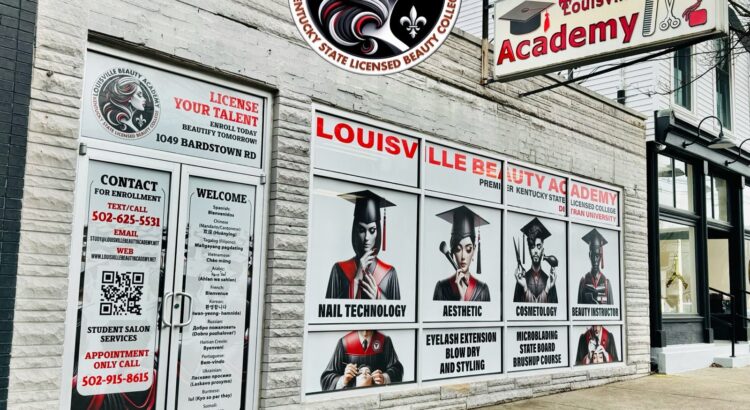
Louisville Beauty Academy - Front Store

Louisville Beauty Academy: A Path to Your Beauty Career

Louisville Beauty Academy, a Kentucky State-Licensed and State-Accredited beauty college, offers aspiring beauty professionals a comprehensive education in the heart of Kentucky. With two campuses aligned with Kentucky law, the academy provides a supportive and inclusive environment for students to pursue their passion for beauty.

Enrollment Requirements

To enroll at Louisville Beauty Academy, prospective students must submit the following required documents:

  • Driver’s License/State ID: Proof of identity and residency.
  • Social Security Card: For identification and employment purposes.
  • High School Diploma or Equivalent: A GED or official high school transcript is acceptable. For Jefferson County Public Schools (JCPS) graduates, transcripts can be requested online.
  • Passport-like Photo: A recent, clear photo against a plain white background, easily taken with a phone.

Documents can be sent via text to 502-625-5531 or emailed to Study@LouisvilleBeautyAcademy.net.

High School Transcripts and GED Information for JCPS Graduates

For those who graduated from JCPS, transcripts and student records can be requested online through a secure website. The process is designed to protect student privacy in accordance with the Family Educational Rights and Privacy Act (FERPA). There are no fees for certain categories, such as military personnel and JCPS employees. Requests are processed during normal business hours, and a $4.00 convenience fee applies to each order.

GED information is not maintained by JCPS. Individuals seeking GED records should visit the official GED website for Kentucky at www.request.ged.ky.gov.

Why Choose Louisville Beauty Academy?

Louisville Beauty Academy is dedicated to providing a high-quality education that prepares students for successful careers in the beauty industry. The academy’s state-accredited programs, experienced instructors, and modern facilities make it an ideal choice for those looking to turn their passion for beauty into a profession.

Contact Information

For more information about enrollment and programs at Louisville Beauty Academy, contact:

Start your journey to a rewarding career in beauty at Louisville Beauty Academy, where your passion meets professional training.