Question review: November 3, 2026
2 question entries revised in this pass. Corrected items retain their question identities and answer-key positions; historical results were not rewritten. Already-open sessions may show earlier wording. Finish or leave that attempt before opening a fresh practice set.
Repetition can support recall, but item count is not the number of distinct skills and a high score is not proof of exam readiness.
This editorial and source-check pass is not licensed-instructor sign-off, an official exam bank, or a guarantee that every remaining statement is error-free. Use current official rules, the exact product instructions, and supervised training. Report a disputed item by question number without sending client information.
FREE PUBLIC LEARNING · VERSION 3.0
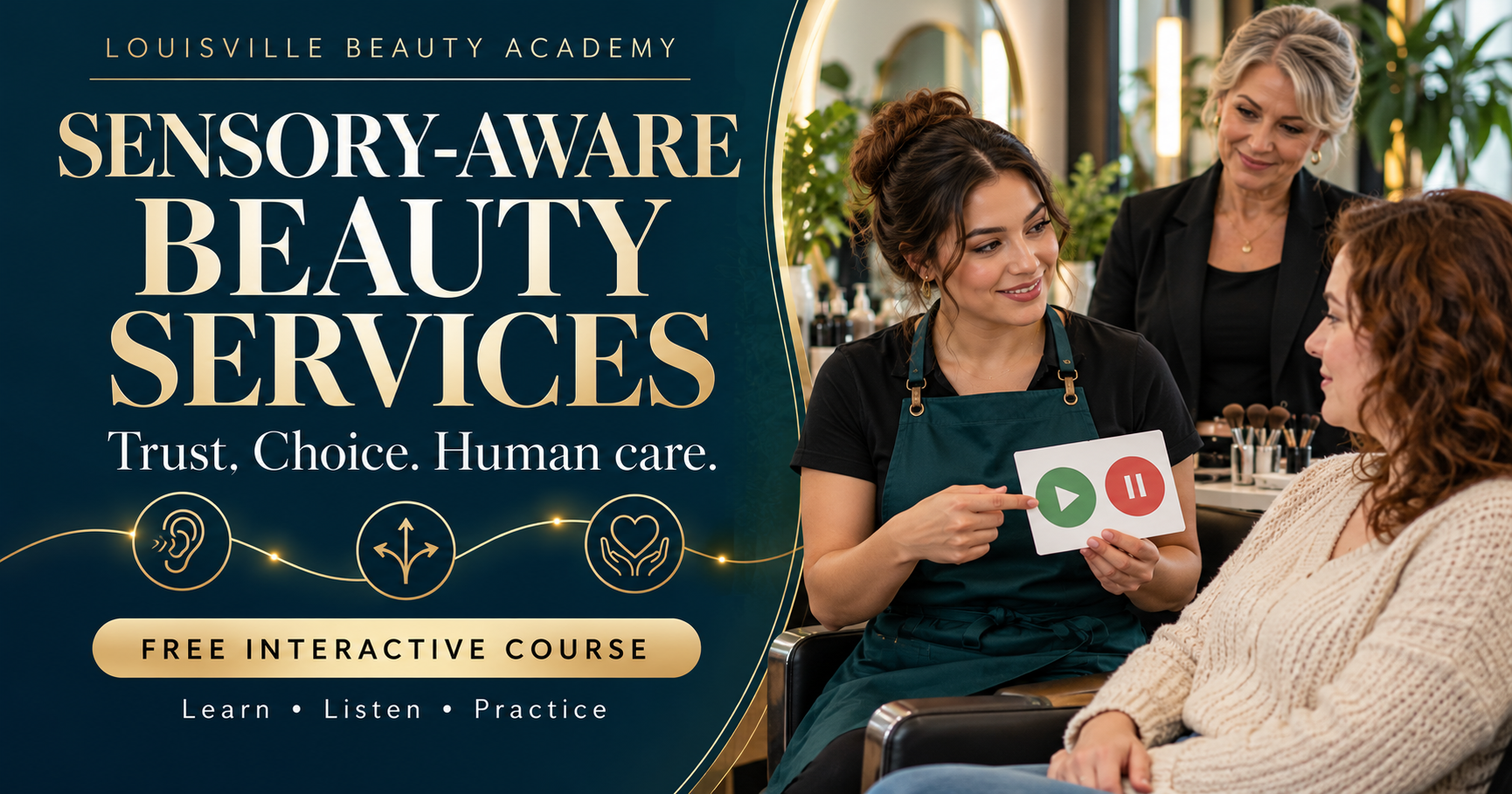
Sensory-aware beauty services
Learn the words. Practice the decisions.
Make human care part of every service.
For students, instructors, salon teams, and the people they serve. A guided learning studio with voice, practical Q&A, decision scenarios, and tools you can use.
No account required · Self-paced · Optional supplemental education
THE STANDARD IS HOW WE TREAT PEOPLE
Comfort begins with being heard.
Sound, scent, light, touch, movement, and uncertainty can affect a beauty-service experience. Start with the person’s preferences, preserve safety, and make the next step clear.
Your learning path
- Learn one lesson and rehearse its client-facing language.
- Check your understanding with 21 explained questions.
- Demonstrate skills in supervised role-play.
- Improve one real practice in your setting.
Suggested planning time: 90–150 minutes of self-study, plus a 30–45 minute facilitated lab. Take longer or return later as needed. These are estimates, not clock-hour or credit awards.
A resource with national usefulness
Developed in Louisville for public learning anywhere, this course supports LBA’s Beauty Education Center of Excellence initiative: make useful knowledge accessible, show the source, practice the skill, and improve service.
“Center of Excellence” describes LBA’s initiative. It is not an accreditation, government designation, clinical qualification, or outside endorsement. Each school or salon must apply its own jurisdiction’s rules.
See the school & salon implementation guide →What you will be able to do · 10 learning outcomes
- Identify sensory inputs without assigning a diagnosis.
- Ask a useful preference question and protect private information.
- Preview the service in a clear, predictable sequence.
- Offer effective choices while preserving safety and access.
- Check consent and honor a pause or stop signal.
- Use PAUSE and recognize when emergency action takes priority.
- Maintain infection control, scope, and required supervision.
- Build a communication plan with the client and clarify a supporter’s role.
- Adapt a service conversation without altering required protections or product directions.
- Document useful preferences, assess practical performance, and make one measurable improvement.
MAKE LEARNING FIT YOU
Read. Listen. Return.
Select Listen beside a lesson, question, or explanation. Audio never starts automatically.
Read-aloud uses your browser/device voice, not a live AI tutor. Voice availability and speech processing depend on your device. No microphone or recording is used. Text remains available if audio is unsupported.
Optional. This course feature stores no name or client information and does not submit your answers. Normal website services remain subject to the site’s privacy practices.
LESSON 01 / 10
Notice the Environment, Not a Diagnosis
Your outcome: Identify sensory inputs without assigning a diagnosis.
The CDC notes that unusual reactions to how things sound, smell, taste, look, or feel can occur among autistic people. That fact must never be turned into amateur diagnosis. Many people—autistic or not—may prefer lower sound, softer light, less fragrance, slower transitions, clearer instructions, reduced conversation, or advance notice before touch.
Common inputs in beauty services
- Sound: clippers, dryers, vacuums, music, conversations, foil, running water.
- Light and movement: bright task lights, mirrors, people moving nearby, flashing screens.
- Touch and pressure: capes, neck strips, combing, brushing, filing, massage, water spray.
- Scent and air: fragrances, disinfectants, acrylic or chemical odors, hair products.
- Temperature: water, dryers, wax, towels, room temperature.
- Time and unpredictability: waiting, unclear steps, sudden tool changes, unexpected delays.
- Communication load: rapid questions, figurative language, too many choices at once, pressure to make eye contact or converse.
Professional rule
Observe the service conditions and ask about preferences. Do not label behavior, demand a diagnosis, or require a client to “prove” discomfort before considering a practical change.
Instructor demonstration: Walk through one workstation and name each sensory input without calling any input universally good or bad.
Evidence note: CDC signs and symptoms guidance describes possible traits, not a diagnosis that a beauty professional should make.
Make it practical
Name three inputs at your station. Ask which, if any, the client wants adjusted.
LESSON 02 / 10
Ask Before You Assume
Your outcome: Ask a useful preference question and protect private information.
The most useful question is not “What condition do you have?” It is: “What would make this service more comfortable and predictable for you?”
The two-minute preference conversation
Ask only what helps deliver the service:
- “Would you like me to explain each step before I begin?”
- “Are there sounds, scents, lighting, touch, or tools you would like us to adjust when possible?”
- “Would you prefer more conversation, less conversation, or only service-related questions?”
- “Would you like a signal for pause or stop?”
- “Is there anything that has made a similar service difficult before?”
- “If a requested change is not safe or possible, may I explain why and offer alternatives?”
Data-minimization rule
Record only the service preference the client wants remembered—for example, “explain before water spray” or “offer quiet waiting area when available.” Do not record a diagnosis, trauma history, medication, or private family information unless a lawful and necessary process separately requires it.
For children and supported adults: Address the client directly in an age- and communication-appropriate way. A parent, caregiver, or support person may help, but the professional should preserve the client’s voice, assent, privacy, and dignity to the greatest extent possible.
Accessible communication is individualized
Speak to the client, allow time to respond, and ask which communication method works. Writing, pictures, a communication device, or qualified communication assistance may be needed. A simple note is not enough for every conversation. Do not require a client to bring their own interpreter or assume a family member can always interpret appropriately. Follow the DOJ effective communication guidance.
For minors, follow applicable guardian authorization requirements and school policy while seeking the child’s willing participation. Do not assume an adult lacks decision-making capacity because they communicate differently. Confirm the legal authority of any representative when relevant.
Make it practical
Practice asking a preference question, then write a note without a diagnosis.
LESSON 03 / 10
Make the Service Predictable
Your outcome: Preview the service in a clear, predictable sequence.
Predictability can reduce uncertainty. Before the service, give a short sequence using plain language.
Example: haircut preview
“First I will place the neck strip and cape. Then I will dampen and comb the hair. I will show you the clippers before turning them on. We can pause between sections. At the end, I will remove loose hair and show you the result.”
Useful tools
- a simple written or picture sequence;
- a timer or time estimate, clearly labeled as an estimate;
- showing a tool before activating it;
- demonstrating touch on the client’s hand or forearm only with permission;
- one instruction or choice at a time;
- a visible “first—then—finish” card;
- advance notice before changing position, temperature, sound, or pressure.
Do not promise an exact finish time when service, safety, chemical processing, or instructor review can change the timeline.
Instructor demonstration: Give one rushed, unpredictable service explanation, then repeat it using a three-step preview. Learners identify what changed.
Make it practical
Say a first–then–finish preview for the service you are learning.
LESSON 04 / 10
Offer Choices That Preserve Safety
Your outcome: Offer effective choices while preserving safety and access.
Choice supports dignity, but every choice must stay within professional scope and safety requirements.
Possible options when available
- quieter appointment time;
- reduced music or a seat farther from speakers;
- fewer observers around the station;
- dimmer ambient lighting while keeping required task lighting;
- fragrance-minimized products when compatible with the service;
- towel, cape, or neck-strip adjustment that remains sanitary and secure;
- client-owned hearing protection when it does not interfere with communication or safety;
- a hand-held item or sensory tool that remains clear of equipment and chemicals;
- shorter sections with planned pauses;
- standing, sitting, or repositioning when technically and physically safe;
- written, visual, or demonstration-based instructions;
- limiting conversation to service and safety questions.
Never trade away
- infection control and disinfection;
- required protective equipment;
- allergy, contraindication, and safety screening;
- manufacturer directions;
- professional licensure scope;
- chemical timing or emergency response;
- instructor supervision required in a school;
- the right to stop an unsafe service.
Use transparent language: “I cannot remove this safety step, but I can explain it, slow down, and offer these two alternatives.”
Access is a responsibility, not merely a courtesy
The ADA requires covered businesses to make reasonable modifications and communicate effectively with people with disabilities. A fundamental alteration is not required; the legal analysis is specific to the situation. Do not turn “when available” into a blanket refusal. Involve the responsible manager or instructor, consider effective alternatives, and use actual safety requirements rather than stereotypes. This course does not determine an individual’s legal rights or an organization’s compliance.
Preserve required ventilation and adequate task lighting. Do not turn off ventilation to reduce noise or substitute an incompatible product. Consult current rules, product directions, and the responsible supervisor before changing the service.
Make it practical
Offer two safe choices and explain one safety step that must remain.
LESSON 05 / 10
Consent Is Ongoing
Your outcome: Check consent and honor a pause or stop signal.
Consent is not a one-time yes at the front desk. Beauty services involve changing touch, position, tools, temperature, and intensity. Explain material changes and check in.
Before touch
- say what you are about to do;
- ask permission in plain language;
- wait for a clear response;
- do not treat silence, freezing, or a caregiver’s answer alone as automatic consent when the client can communicate a preference;
- respect a pause or stop signal.
Check-in language
- “Is this pressure comfortable?”
- “The dryer will start now. Would you like to hear it from farther away first?”
- “I am moving to the area near your ear. Ready?”
- “Would you like a pause, an adjustment, or to continue?”
Never shame, tease, restrain, surprise, or rush a client into tolerating a service. If a person cannot safely continue, stop and plan a different approach rather than forcing completion.
Stopping safely matters. If a chemical product or other active process is already in progress, do not simply abandon the client or leave the product on. Alert the instructor or responsible professional and follow the product directions and applicable safety or emergency procedure for ending the service safely.
Make it practical
Agree on a pause signal and demonstrate the response without persuasion.
LESSON 06 / 10
Pause, Reset, and Recover Respectfully
Your outcome: Use PAUSE and recognize when emergency action takes priority.
Possible signs of overload vary. They may include covering ears, pulling away, becoming still, repeating a phrase, crying, increased movement, loss of speech, rapid breathing, asking the same question, or trying to leave. These signs do not reveal a diagnosis or motive. They are signals to check in.
The PAUSE response
- P — Pause the tool or touch when it is safe to do so.
- A — Ask one simple question: “Pause, change, or stop?”
- U — Understand the answer or agreed signal without arguing.
- S — Simplify the environment and next step: reduce talking, distance the tool, lower optional sound, or offer space.
- E — Explain the safe choices: resume with an adjustment, reschedule, refer, or stop.
If there is an injury, allergic reaction, chemical exposure, breathing problem, loss of consciousness, or other emergency, follow the applicable emergency plan immediately. Sensory accommodation does not replace emergency action.
After a difficult service
Ask what helped and what should change next time. Record the minimum useful preference with permission. Do not publicly share the incident, image, diagnosis, or story without specific informed authorization.
Do not assume “sensory overload” explains a medical warning sign. Breathing difficulty, loss of consciousness, injury, or possible serious reaction requires immediate emergency action. Activate the emergency plan and call emergency services when indicated; do not wait to finish a preference conversation.
Make it practical
Rehearse PAUSE, then explain why a breathing emergency changes the response.
LESSON 07 / 10
Sanitation and Sensory Care Work Together
Your outcome: Maintain infection control, scope, and required supervision.
Kentucky sanitation requirements protect the public. Tools and surfaces must be cleaned, sanitized, or disinfected as the applicable rule requires. A dropped implement, contaminated item, blood exposure, or unsafe product cannot be handled differently merely because replacing it creates delay or distress.
Explain the safety boundary before it is needed
“If a tool falls or becomes contaminated, I must stop using it and follow the sanitation procedure. I will tell you what happened and what comes next.”
Sensory-aware infection control
- explain strong but necessary sounds or scents in advance;
- keep products properly labeled;
- never disguise or relabel a product inaccurately;
- provide distance from cleaning activity when feasible;
- allow a pause while a safe replacement is prepared;
- dispose of single-use items correctly;
- perform hand hygiene and required disinfection without omission;
- explain that the safety step protects every client.
Instructor demonstration: Drop a clean practice comb onto a designated training floor area. The learner must stop, identify it as contaminated, remove it from service, obtain a prepared replacement, complete the required infection-control response, explain the delay calmly, and continue only when safe.
Kentucky source: 201 KAR 12:100 — Infection control, health, and safety. Cleaning, disinfection, and disposal are different processes. Follow the rule for the specific item and the manufacturer’s directions. Outside Kentucky, verify your own regulator’s current requirements.
Make it practical
Demonstrate a contaminated-tool response while explaining the delay calmly.
LESSON 08 / 10
Communicate Accessibly. Keep the Client at the Center.
Your outcome: Build a communication plan with the client and clarify a supporter’s role.
Communication is part of the service
A booking confirmation is not the whole conversation. A person may need a different format for a complex consultation, a service change, or a safety explanation. Ask what works for this interaction and check that the exchange is effective. Do not infer understanding from a nod alone.
A practical conversation
- Address the client directly: “How would you like us to communicate today?”
- Offer time and appropriate formats. Keep a communication device within reach when safely possible.
- Explain the planned service, relevant limits, and how to pause.
- Invite questions or ask the client to describe the agreed plan in their own way. Treat this as a check of your explanation, not a test of intelligence.
- Revisit the plan if the person’s needs or the service change.
Support without taking over
Ask whether the client wants a companion involved. A companion does not automatically have legal authority to consent for an adult. For minors and authorized representatives, follow applicable requirements and school policy while continuing to address and listen to the client.
Prepare before the appointment
Give clients a way to request communication support when booking, but do not use advance notice as an automatic condition of access. Route requests to a responsible staff member. Where qualified assistance is needed, follow applicable access duties; do not simply require the client to supply a family interpreter.
Source: DOJ Effective Communication. The correct aid depends on the person and the conversation. This lesson does not make an individual legal determination.
Make it practical
In a fictional consultation, ask about communication, invite a supporter only as appropriate, and confirm a usable pause signal.
LESSON 09 / 10
Apply the Principles Across Beauty Services
Your outcome: Adapt a service conversation without altering required protections or product directions.
Use the same principles, then check the actual task
Ask, preview, agree, observe, and adapt. The option that works for a haircut may be unsuitable for a chemical, nail, skin, or lash service. Changes must stay within the practitioner’s authorized scope, current rules, product directions, and required supervision.
- Hair: preview tool sound and proximity, water temperature, and changes in position. Offer breaks when safe. A quiet tool is only an option if appropriate for the task.
- Nails: discuss sound, vibration, odor, and the time needed to remain still. Maintain ventilation and required product handling. “Unscented” is not a guarantee of no reaction or exposure.
- Skin: explain positioning, touch, temperature, and lighting before beginning. Maintain required visibility and eye protection.
- Lashes: discuss position, duration, required eye precautions, and how a client can signal while the service is underway. Do not proceed without a safe, effective communication plan.
Make limits clear before starting
Say: “I can adjust this part. This protection has to remain. Let’s ask the instructor about another safe option.” Never hide a product, skip an essential step, promise a risk-free service, or ask the client to waive a required safety measure.
Change the plan without blaming the person
If a requested adaptation cannot be provided safely, involve the responsible instructor or manager to assess effective alternatives and applicable access obligations. A different service, a different time, or safely stopping may be appropriate. An individualized safety assessment is different from excluding everyone with a particular diagnosis.
Apply Kentucky’s current infection-control, health, and safety rule when practicing in Kentucky. Other jurisdictions have their own requirements. These examples teach planning, not service technique.
Make it practical
Choose hair, nails, skin, or lashes. Name a possible sensory input, a preference question, a safe option, and the protection that remains.
LESSON 10 / 10
Turn Respectful Practice into a Reliable System
Your outcome: Document useful preferences, assess practical performance, and make one measurable improvement.
A good experience should not depend on guessing
Create a simple process: ask about preferences, confirm the service plan, identify the responsible supervisor, agree on a pause signal, and review what helped. Make the process easy for another team member to understand without collecting unnecessary personal details.
Write the useful fact
Prefer “requests a spoken explanation before water starts” to an unverified diagnosis or judgment. Record information only under the organization’s lawful privacy, access, retention, and security practices. Do not put real client records into this public course, a shared personal notebook, or an unapproved AI tool.
Keep three kinds of evidence separate
- Knowledge: a learner can explain a principle and choose an appropriate response.
- Observed performance: a qualified instructor or responsible supervisor sees the learner apply the skill safely.
- Client feedback: a person voluntarily describes their experience. Feedback can inform improvement, but does not replace a safety assessment or determine clinical effectiveness.
Improve one thing, then check it
For example: in the next five fictional role-plays, observe whether the learner explains the next step and confirms the pause signal. Record demonstrated, needs practice, or not observed. Rehearse any missing step. Do not claim that five observations prove a treatment outcome or guarantee future safety.
A portfolio should tell the truth
Describe this as optional self-study and supervised practice where applicable. Use images, work samples, and feedback only with appropriate permission. Do not label yourself certified by this course. Keep client dignity ahead of publicity.
Make it practical
Create a fictional service plan, rehearse it with an observer, and choose one improvement to review at your next practice session.
ASK A BETTER QUESTION. PRACTICE A BETTER RESPONSE.
50 questions. Useful answers.
Search a real concern, explore a lesson, or listen to an answer. Each teaching card includes a practical example. These are learning prompts, not individualized service instructions.
50 teaching cards available
Q01 · LESSON 1What does sensory-aware beauty care mean?Open answer +
It means noticing the service environment, asking what helps the individual, and adapting feasible parts of the experience while preserving required protections. It is a way to communicate and plan, not a diagnosis or therapy.
Put it into practice
Before starting, ask whether sound, light, scent, touch, or an unexpected step needs discussion.
Q02 · LESSON 1Can sensory preferences tell me someone’s diagnosis?Open answer +
No. A reaction to a sound or texture does not establish autism, anxiety, trauma, or another condition. Work with the preference the person shares; diagnosis belongs to appropriately qualified professionals.
Put it into practice
Replace “You must be autistic” with “Would a preview of this sound help?”
Q03 · LESSON 1Which inputs should I notice at a beauty station?Open answer +
Consider sound, scent, light, touch, temperature, movement, body position, visual activity, and uncertainty. What matters to one person may not matter to another, and preferences can change.
Put it into practice
Walk through a fictional appointment from the door to checkout and name three possible inputs.
Q04 · LESSON 1Should I remove every sound, scent, and light?Open answer +
No. An environment with no sensory input is neither a realistic promise nor always safe. Identify the person’s priority and offer appropriate adjustments while retaining ventilation, visibility, and other protections.
Put it into practice
Ask which part is difficult before deciding what to change.
Q05 · LESSON 1Is a calm-looking client necessarily comfortable?Open answer +
No. Appearance, stillness, silence, or smiling can be misleading. Offer a low-pressure check-in and enough time for a response rather than assuming the experience is comfortable.
Put it into practice
Try “Would you like to continue, pause, or change something?”
Q06 · LESSON 2What is a good first preference question?Open answer +
Use an open, practical question about the service rather than demanding a diagnosis. Explain that the client can share only what is useful and can change their preference later.
Put it into practice
“What would help this appointment feel more comfortable or predictable for you?”
Q07 · LESSON 2Must someone disclose a diagnosis to ask for quieter care?Open answer +
Do not make a diagnosis the routine price of a preference conversation. Ask what assistance is needed and involve the responsible staff member if a formal access request requires further review.
Put it into practice
Record “prefers a preview before the dryer starts,” not a guessed medical label.
Q08 · LESSON 2How do I ask without sounding patronizing?Open answer +
Speak directly to the person in ordinary respectful language. Offer choices without praise for tolerating discomfort, infantilizing words, or assumptions about competence.
Put it into practice
Use the same adult tone you would use with any adult client.
Q09 · LESSON 2What belongs in a preference note?Open answer +
A brief, useful, factual description of the agreed support, recorded with appropriate permission and under organizational policy. Avoid speculative diagnoses, private stories, and judgmental labels.
Put it into practice
“Explain before reclining the chair; client uses a raised hand to pause.”
Q10 · LESSON 2Can an online translation or AI answer replace a safety conversation?Open answer +
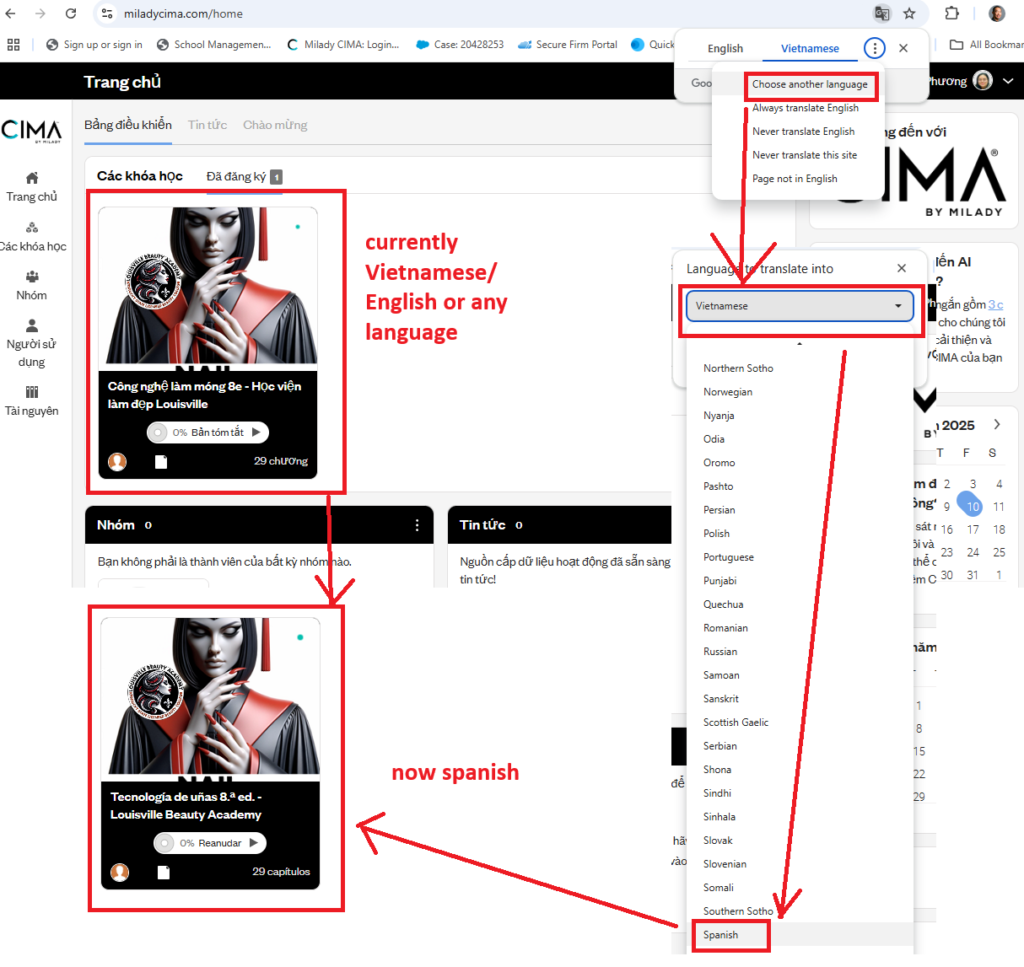
Do not rely on automated output when the meaning is uncertain or safety-critical. Confirm understanding through an effective communication method and a qualified person when needed.
Put it into practice
If the translated product warning is unclear, stop and obtain reliable clarification before proceeding.
Q11 · LESSON 3What is a first–then–finish preview?Open answer +
It is a brief sequence that tells the client what happens now, what follows, and how the service ends. Avoid guarantees about duration or sensation that you cannot reliably keep.
Put it into practice
“First we discuss the plan, then I explain each step before starting, and we finish by checking the result together.”
Q12 · LESSON 3How much detail should the preview include?Open answer +
Ask what level of detail helps. Some people want a short outline; others prefer step-by-step explanations. Include the information needed for informed decisions and safety even when conversation is kept brief.
Put it into practice
Offer “Would you like the whole outline first or one step at a time?”
Q13 · LESSON 3Should I demonstrate a tool before using it?Open answer +
Offer a preview when appropriate and safe. Explain the sound, location, or sensation without surprising the client. A demonstration is an option, not something to impose.
Put it into practice
Ask before turning on clippers near the person.
Q14 · LESSON 3What if the appointment runs longer than expected?Open answer +
Explain the change early, give a realistic update, and discuss safe choices. Do not rush essential steps or promise an exact finish that you cannot ensure.
Put it into practice
“This is taking longer than expected. Let’s review the remaining steps and your options.”
Q15 · LESSON 3Why explain before touching or moving a chair?Open answer +
A brief explanation reduces unexpected changes and gives the person a chance to respond. Prior agreement to a service does not remove the need for ongoing communication.
Put it into practice
“I’m ready to adjust the chair. Is this a good moment?”
Q16 · LESSON 4What makes a choice meaningful?Open answer +
It is feasible, clearly described, and free from pressure. Explain any limits honestly. A choice between enduring discomfort and being shamed is not respectful choice.
Put it into practice
Offer a safe pause, a different approach, or consultation with the instructor as appropriate.
Q17 · LESSON 4Can I switch off ventilation to make a room quieter?Open answer +
Do not disable required ventilation. Consider other effective options with the responsible instructor or manager while preserving product directions and safety rules.
Put it into practice
Discuss positioning or scheduling; do not improvise changes to ventilation equipment.
Q18 · LESSON 4Is every requested adjustment automatically safe?Open answer +
No. Evaluate the actual service and requirements with the responsible professional. Consider effective alternatives and applicable accessibility duties; do not use a blanket refusal based on a diagnosis.
Put it into practice
If a light cannot be dimmed safely, discuss positioning or another appropriate service.
Q19 · LESSON 4Can a client waive sanitation to make the service shorter?Open answer +
No. Client agreement does not authorize skipping mandatory infection-control procedures. Explain the reason and offer a safe alternative or pause.
Put it into practice
“This preparation step protects everyone. We can take a break while it is completed.”
Q20 · LESSON 4What should I say when I cannot provide the requested option?Open answer +
Describe the specific constraint without blaming the client, involve the responsible person, and explore effective alternatives. Avoid broad claims that an entire group cannot be served.
Put it into practice
“That change would remove a required protection. Let’s work with the instructor on another option.”
Q21 · LESSON 5Does signing at reception mean consent can never change?Open answer +
No. Continue checking agreement and respond to a request to pause or stop. Required forms and guardian authorization do not replace respectful ongoing communication.
Put it into practice
Confirm the plan again before a material change in service.
Q22 · LESSON 5How do we agree on a pause signal?Open answer +
Ask the person what signal they can comfortably use during the actual service. It might be words, a hand movement, or a communication aid. Confirm that the student and instructor can notice and respond to it.
Put it into practice
Rehearse the signal before beginning, without treating the rehearsal as a test.
Q23 · LESSON 5Is silence the same as agreement?Open answer +
No. Allow time and use an effective method to confirm understanding and agreement. Do not interpret non-speaking communication, delayed responses, or stillness as permission to continue.
Put it into practice
Pause the conversation and ask how the person would like to respond.
Q24 · LESSON 5What if a child signals stop but a parent says continue?Open answer +
Pause safely and involve the instructor. Follow applicable guardian requirements and school policy while respecting the child’s signals and willing participation. Do not force the service.
Put it into practice
Offer time to reset and discuss safe next steps without blaming the child.
Q25 · LESSON 5How do I stop an active chemical service safely?Open answer +
Alert the instructor or responsible professional and follow the product directions and applicable safety procedure. Do not abandon the client with product in place or improvise removal. Medical warning signs require emergency action.
Put it into practice
Before starting a service, know who is responsible and where the relevant instructions and emergency plan are located.
Q26 · LESSON 6What should I do when someone becomes distressed?Open answer +
Pause the service safely, reduce unnecessary demands, ask one clear question, and allow time. Offer feasible options and involve the instructor. Do not assume distress has a particular diagnosis or cause.
Put it into practice
Try “We can pause. Would you like quiet or a short explanation of the next step?”
Q27 · LESSON 6Should I touch someone to reassure them?Open answer +
Do not assume touch is comforting. Ask before nonessential touch and respect the response. Necessary emergency action follows the relevant emergency procedure.
Put it into practice
Offer a calm verbal check-in instead of automatically hugging or holding the client.
Q28 · LESSON 6Should everyone gather around to help?Open answer +
Extra voices and attention may add pressure. Keep communication clear, protect privacy, and involve only the people needed for safe support or emergency response.
Put it into practice
Identify one staff member to lead the non-emergency conversation.
Q29 · LESSON 6How do I distinguish discomfort from an emergency?Open answer +
Do not diagnose from this course. Breathing difficulty, loss of consciousness, injury, or a possible serious reaction calls for the emergency plan and emergency services when indicated. Do not delay action while trying sensory adjustments.
Put it into practice
In practice, locate the emergency plan and identify whom to alert immediately.
Q30 · LESSON 6What helps after an appointment is paused?Open answer +
Offer a respectful closeout and ask what would help next time if the person wants to discuss it. Avoid pressure to finish, explain a private history, or give positive feedback.
Put it into practice
“Thank you for telling us. Would you like us to note any preference for a future visit?”
Q31 · LESSON 7Are cleaning and disinfection the same?Open answer +
No. They are different processes. Apply the current rule for the item and follow manufacturer instructions; a quick wipe does not automatically make a contaminated reusable tool safe.
Put it into practice
Ask the instructor to demonstrate the approved process for one reusable item.
Q32 · LESSON 7What happens if a tool touches the floor?Open answer +
Remove it from service and apply the required contamination procedure. Use a properly prepared replacement when appropriate. Explain the delay calmly rather than concealing the incident.
Put it into practice
Rehearse “I’m replacing this tool so we can continue safely.”
Q33 · LESSON 7May a sensory preference change disinfectant contact time?Open answer +
No. Follow required label contact time and applicable rules. Comfort planning must work around required infection-control steps rather than shortening them.
Put it into practice
Prepare enough properly processed tools so a safe replacement is available.
Q34 · LESSON 7Who supervises a beauty-school student?Open answer +
Follow the school’s required licensed-instructor supervision and program rules. This public course does not authorize independent practice or replace the instructor’s responsibility to assess safety and technique.
Put it into practice
Identify the instructor and explain how the student will request help before the role-play starts.
Q35 · LESSON 7Does completing this course earn a license or certification?Open answer +
No. It is optional supplemental public learning. It awards no professional certification, CE, school clock hours, or licensing credit and does not establish legal compliance.
Put it into practice
Describe completion accurately as self-study, with supervised practice separately documented if performed.
Q36 · LESSON 8Is speaking louder always helpful?Open answer +
No. Ask how the person prefers to communicate. Volume alone does not address every hearing, speech, vision, language, or processing need and may create another difficulty.
Put it into practice
Offer an appropriate format and verify that it works for the actual conversation.
Q37 · LESSON 8Should I speak to a companion instead of the client?Open answer +
Address the client directly. Include a companion as appropriate and with the client’s wishes or relevant legal authority. A supporter’s presence does not erase the client’s voice.
Put it into practice
“Would you like your companion included in our discussion?”
Q38 · LESSON 8Can a family member always serve as interpreter?Open answer +
Do not assume so or routinely require it. Effective communication may need qualified assistance. Follow the DOJ guidance and applicable rules on relying on accompanying adults or children.
Put it into practice
Route the request to the staff member responsible for arranging communication support.
Q39 · LESSON 8How can I check understanding without embarrassing someone?Open answer +
Take responsibility for clarity. Invite the person to describe the plan in their preferred way, ask what was unclear, and explain again when needed.
Put it into practice
“I want to make sure I explained that clearly. What is our plan if you want to pause?”
Q40 · LESSON 8Can a communication device be part of the service plan?Open answer +
Yes. Discuss safe access to the person’s device or another effective method during the specific service. Do not remove it merely for convenience or assume someone else can speak for the client.
Put it into practice
Before starting, check how the person can signal if their hands or position will change.
Q41 · LESSON 9Does an unscented product guarantee a reaction-free service?Open answer +
No. Product labels and sensory experience do not guarantee absence of allergy, irritation, or other risk. Follow required screening, product directions, scope, and instructor guidance.
Put it into practice
Avoid promising “safe for everyone.” Discuss the actual product and appropriate alternatives.
Q42 · LESSON 9Can headphones be offered during a service?Open answer +
They may be an option if appropriate for the task and the person wants them. Preserve a reliable way to communicate and pause, required protections, and safe positioning.
Put it into practice
Agree on the signal before use and confirm that the instructor can reach the client effectively.
Q43 · LESSON 9How should light sensitivity be handled in skin or lash services?Open answer +
Discuss the concern before beginning and ask the responsible instructor about safe positioning or other effective options. Retain required visibility and eye protection.
Put it into practice
Explain which lighting can change and which protection must stay.
Q44 · LESSON 9What if the person needs to move during a precision task?Open answer +
Pause safely and consult the instructor about positioning, breaks, alternatives, or stopping. Do not restrain the person or continue a task that cannot be performed safely.
Put it into practice
Rehearse how to set tools aside safely and offer a break without criticism.
Q45 · LESSON 9Can the same plan be reused for every appointment?Open answer +
Use prior preferences as a starting point, then confirm them. The service, products, environment, and person’s preferences may have changed.
Put it into practice
“Last time you preferred a preview before the dryer. Would that help again today?”
Q46 · LESSON 10What evidence shows a learner can apply the course?Open answer +
Combine explained knowledge with observed practice under the required supervision. Record what was actually demonstrated and what needs more rehearsal. A quiz score alone does not establish practical competence.
Put it into practice
Use the observation rubric during a fictional scenario and reassess missed steps.
Q47 · LESSON 10Is a five-star review a substitute for an instructor’s assessment?Open answer +
No. Voluntary client feedback describes an experience. Instructor assessment addresses the required skills and safety. Both can be valuable, but they answer different questions.
Put it into practice
Keep feedback separate from official grades and never pressure someone for a positive review.
Q48 · LESSON 10May I put a client’s story into an AI tool for a portfolio?Open answer +
Do not enter identifiable or private client information into an unapproved tool. Follow organizational policy and applicable privacy requirements, use appropriate permissions, and prefer fictional examples for learning.
Put it into practice
Write a fictional reflection about a skill you practiced without names, images, or health details.
Q49 · LESSON 10How can a team measure improvement honestly?Open answer +
Choose a specific observable behavior, a defined practice period, and a simple observation method. Report what was measured and its limits. Do not turn a small practice exercise into a clinical effectiveness claim.
Put it into practice
Observe whether a pause signal was agreed in five role-plays, then rehearse the missing step.
Q50 · LESSON 10What should I do after finishing the course?Open answer +
Review any missed questions, demonstrate the skills, check local requirements with the responsible instructor, and choose one improvement to apply. Return to sources as rules and service practices change.
Put it into practice
Complete the fictional planning worksheet and ask an observer what to practice next.
UNDERSTAND THE WHY
21 questions. Practical decisions.
Choose one answer for each question, then check your understanding. Every answer includes an explanation and a route back to the lesson. This foundation check covers lessons 1–7; apply lessons 8–10 in the practice lab and planner.
Aim for 17 of 21 correct (about 80%), review all missed concepts, and demonstrate the skills. This self-study target is not a regulated grade or evidence that someone can safely perform a service independently.
FROM THE SCREEN TO THE STATION
Show the skill. Then improve it.
Use a peer role-play, not an unsuspecting client. Practice with the required qualified instructor or responsible supervisor. Do not reproduce a real person’s private medical history or story.
SCENARIO 01Clippers near the earOpen practice & debrief +
Choose the better first response
The client pulls away when the clippers start.
The client pulls away when the clippers start.
Demonstrate: Pause safely; check in; offer a preview at a comfortable distance and an agreed stop signal. Resume only with clear agreement and a safe plan.
Avoid: Continuing because the client agreed at reception, or asking someone to hold them still.
Teach back: What did you ask? What did you change? What safety step stayed in place? When would you stop or escalate?
SCENARIO 02Nail products and strong odorOpen practice & debrief +
Choose the better first response
The client says the scent is overwhelming.
The client says the scent is overwhelming.
Demonstrate: Pause safely and involve the instructor. Check ventilation, product directions, and feasible service alternatives. Explain limits honestly; stop or reschedule if a safe option cannot be found.
Avoid: Switching off required ventilation, disguising the product, or promising an odor-free chemical service.
Teach back: What did you ask? What did you change? What safety step stayed in place? When would you stop or escalate?
SCENARIO 03A child asks for quietOpen practice & debrief +
Choose the better first response
A parent answers every question while the child signals “quiet.”
A parent answers every question while the child signals “quiet.”
Demonstrate: Address the child directly with age-appropriate language. Confirm required guardian authorization and safety information, agree on necessary communication, and respect the child’s pause signal.
Avoid: Ignoring the child, forcing participation, or automatically excluding the parent.
Teach back: What did you ask? What did you change? What safety step stayed in place? When would you stop or escalate?
SCENARIO 04A tool falls to the floorOpen practice & debrief +
Choose the better first response
The client becomes upset about the delay.
The client becomes upset about the delay.
Demonstrate: Remove the tool from service. Explain the safety step, follow the required contamination procedure, and use a properly prepared replacement. Offer a pause.
Avoid: A quick wipe, hiding the incident, or asking the client to waive sanitation.
Teach back: What did you ask? What did you change? What safety step stayed in place? When would you stop or escalate?
SCENARIO 05Esthetics and bright lightOpen practice & debrief +
Choose the better first response
A client finds the facial task light uncomfortable.
A client finds the facial task light uncomfortable.
Demonstrate: Ask about positioning, explain required visibility and protection, and consider safe ambient-light or positioning changes with the instructor. Offer a different safe service if necessary.
Avoid: Reducing visibility below what is needed or removing required eye protection.
Teach back: What did you ask? What did you change? What safety step stayed in place? When would you stop or escalate?
SCENARIO 06A client uses a communication deviceOpen practice & debrief +
Choose the better first response
The client needs more time to answer before a lash or hair service.
The client needs more time to answer before a lash or hair service.
Demonstrate: Ask how the client prefers to communicate, allow response time, agree on a usable stop signal, and secure effective communication before beginning. Follow applicable access duties.
Avoid: Speaking only to a companion, taking the device away, or assuming silence is consent.
Teach back: What did you ask? What did you change? What safety step stayed in place? When would you stop or escalate?
SCENARIO 07An active service must stopOpen practice & debrief +
Choose the better first response
A client requests a stop while a chemical product is in use.
A client requests a stop while a chemical product is in use.
Demonstrate: Acknowledge the request, alert the instructor, and follow product directions and the applicable safety procedure to end the service safely. Escalate medical warning signs immediately.
Avoid: Leaving the product in place, rushing an unsafe removal, or insisting on finishing the planned result.
Teach back: What did you ask? What did you change? What safety step stayed in place? When would you stop or escalate?
Observe performance separately from the quiz
A correct written answer is not proof of practical competence. For each item below, record demonstrated, needs practice, or not observed. Rehearse and reassess anything missed. Any unsafe action requires an immediate stop and correction, regardless of the quiz score.
- Asks about preferences without demanding a diagnosis
- Uses an accessible, predictable explanation
- Obtains authorization and ongoing consent appropriately
- Honors the agreed pause or stop signal
- Offers feasible, safe options without blanket exclusion
- Recognizes emergency signs and escalates appropriately
- Maintains infection control, scope, and supervision
- Protects privacy and completes a respectful closeout
A REPEATABLE TEACHING SYSTEM
Bring the course to your school or salon.
This public resource is designed to support learning across the United States. It does not create a national license, uniform legal standard, or external certification. The adopting organization remains responsible for local compliance, accessibility, supervision, and service decisions.
Before you teach
- Identify the responsible qualified instructor or supervisor.
- Check your jurisdiction’s licensing, infection-control, school, minor-consent, and accessibility requirements.
- Review product instructions, emergency procedures, and available communication supports.
- Choose relevant scenarios and adapt their wording to your actual services.
- Offer accessible formats and invite feedback from the people who will use the training.
A suggested 45-minute practice lab
- 5 minutes: agree on respectful role-play and safety boundaries.
- 10 minutes: instructor models a preference conversation and predictable preview.
- 15 minutes: pairs rehearse two scenarios, then switch roles.
- 10 minutes: observe the rubric and repair missed skills.
- 5 minutes: each learner names one change they can safely apply.
This timing is a planning suggestion, not approved instructional credit.
Measure improvement honestly
Track aggregate knowledge-check results, skills needing another demonstration, and which service-process improvements were implemented. Invite optional feedback about clarity, choice, and comfort. Avoid public student rankings, diagnosis collection, or claims of proven clinical outcomes. Do not use satisfaction or a five-star review as a substitute for instructor safety assessment.
Review cycle: verify sources before each cohort or policy change, document local adaptations, and retain only records required by your lawful policy. Bring corrections or accessibility suggestions to LBA’s team.
PLAN IT. SAY IT. REHEARSE IT.
Build a fictional practice plan.
Prepare your next role-play with a clear preview, a pause signal, and a safety boundary.
Use a made-up scenario only. Do not enter real names, diagnoses, or private client information. This feature does not intentionally save or submit your entries; they are cleared when the page reloads. Normal website privacy practices still apply.
Your role-play plan
An organized copy of your entries—not an AI assessment or approval of the service.
USE IT IN THE REAL WORLD
Your service-ready toolkit.
Keep the checklist close. Use the blank practice planner for fictional role-play or your own learning; do not enter client names, diagnoses, or private stories into this page.
Sensory-aware service checklist
Before
- Ask about sensory and communication preferences.
- Agree on a pause/stop signal and a predictable sequence.
- Confirm required authorization, safety screening, and supervision.
- Prepare safe alternatives and an accessible communication plan.
During
- Explain before touch or a material change.
- Check comfort; allow time to answer.
- Honor the pause signal and preserve all safety steps.
- Keep task lighting, ventilation, labeling, and infection control intact.
When needs change
- Pause safely and ask one clear question.
- Offer feasible choices; involve the instructor or responsible professional.
- End active processes safely under applicable directions.
- Use the emergency plan immediately for medical warning signs.
After
- Ask what helped and what should change next time.
- Record only useful preferences with permission.
- Protect images, stories, and health information.
- Rehearse missed skills and update the local service plan.
LBA public learning · Version 3.0 · October 27, 2026 · Apply current local rules and product directions. No certification, CE, licensing credit, or compliance status.
The learning record is a personal study summary, not a certificate or an official LBA student record. The workbook includes the checklist, blank role-play planner, observation rubric, and local implementation prompts.
Connect service to an honest professional portfolio
Reflect on what you practiced and improved. Use only work samples and feedback you have permission to share. Clearly distinguish self-study, instructor assessment, and voluntary client feedback.
Continue with LBA’s Career Credit Score course →TRANSPARENCY IS PART OF EXCELLENCE
Know the source. Know the limits.
Version 3.0 · Updated October 27, 2026. Core source review: October 26, 2026. The guidance below supports specific concepts, not an endorsement of LBA or this course. Follow current official requirements if a linked source changes.
DOJ · Access duties
ADA Primer for Small Business ↗
Reasonable modifications and nondiscrimination responsibilities.
DOJ · Communication
Effective Communication ↗
Choosing aids and services appropriate to the person and conversation.
CDC · Individual differences
Signs and Symptoms of Autism ↗
Sensory reactions may occur; a trait does not establish a diagnosis.
SAMHSA · Respectful practice
Practical Guide to a Trauma-Informed Approach ↗
Background on safety, transparency, collaboration, voice, and choice. This course is not clinical training.
Kentucky · Current rule
201 KAR 12:100 ↗
Infection control, health, and safety. Use the current rule rather than an older archived sanitation PDF.
Local directory · Separate program
FEAT of Louisville ↗
LBA is listed in the Autism Friendly Business Initiative directory, checked October 26, 2026. This is not an endorsement of this course.
Scope, recognition, privacy & educational integrity
This is an original LBA public-education resource. It does not diagnose autism, sensory processing differences, anxiety, or trauma; provide treatment; replace an occupational therapist or other qualified professional; or establish ADA compliance. It is not medical or legal advice.
Self-study completion and a quiz score do not award a professional certification, regulated grade, continuing-education credit, school clock hours, or licensure. Practice in a school remains subject to required instructor supervision and program rules.
LBA’s listing in FEAT of Louisville’s Autism Friendly Business Initiative is separate from this course and from The Sensory Safe Solution’s independent certification pathway. This course does not reproduce that organization’s proprietary curriculum or claim equivalence to its assessment, badge, or credential. A learner must not describe themselves as “sensory-safe certified” based on this guide.
The browser score and progress features do not verify identity or practical competence. Optional device storage can be cleared, may be unavailable in private browsing, and does not synchronize across devices. Read-aloud is synthetic device/browser speech, not an instructor or a medical professional. Translations and automated speech can introduce errors; confirm safety-critical meaning with a qualified person and the official source.
The Center of Excellence description identifies LBA’s educational initiative. It is not a statement of external accreditation, government recognition of this course, or independently validated clinical effectiveness.
HUMAN-LED. DIGNITY-CENTERED. SAFETY-FIRST.
One respectful interaction
can change the experience.
Learn the principle. Rehearse the words. Protect the person.