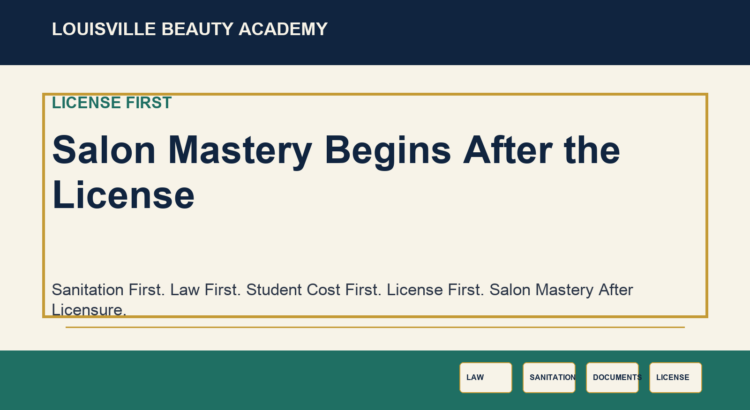
The school prepares students for lawful licensure. The salon develops speed, artistry, rhythm, specialization, and business maturity.
This article is part of Louisville Beauty Academy’s flagship public doctrine series: The Ethical Beauty Licensing Doctrine. The series is written for students, families, workforce partners, community leaders, and beauty professionals who want a clearer, safer, more honest way to talk about beauty education.
Two Stages, Two Purposes
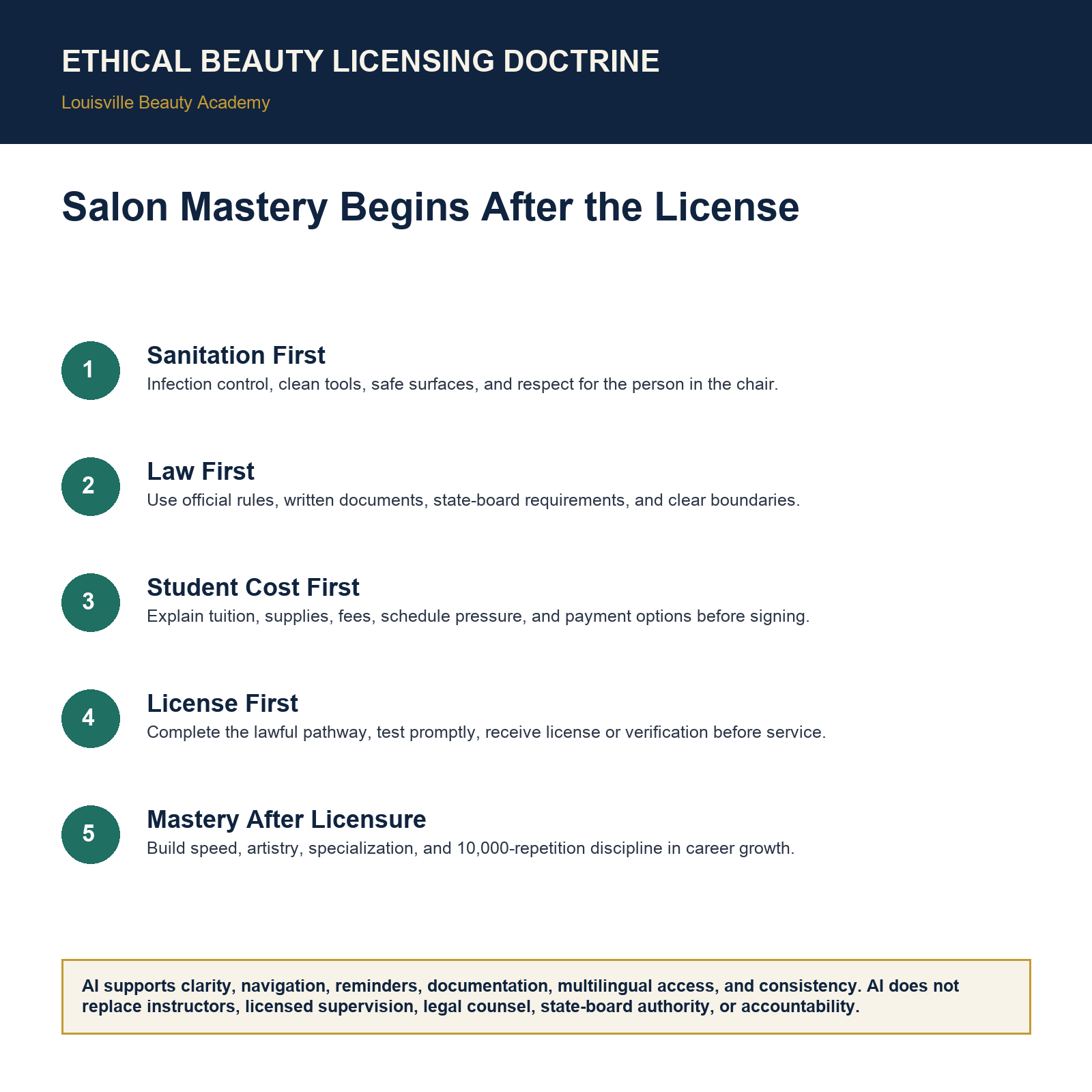
School and salon are connected, but they are not the same. The school stage is about completing the lawful education pathway with safety, sanitation, documentation, exam readiness, and professional foundation. The salon stage is where a licensed person builds client rhythm, advanced taste, speed, market understanding, and mature professional judgment.
The 10,000 Repetitions Metaphor
When Di Tran speaks about 10,000 repetitions, the phrase should be understood as a mastery metaphor after licensure. It is not a Kentucky licensing requirement, not a school-hour substitute, and not a promise that a certain number creates success. It simply honors the truth that career mastery requires time, practice, mentorship, and real experience.
A Better Promise To Students
The better promise is not easy money or instant fame. The better promise is truthful preparation: finish the required pathway, take the exam process seriously, receive the license before providing services, and keep learning in the workplace.
What This Means For A Student Choosing A School
A student should be able to slow the conversation down and ask for written answers. What license path am I entering? What hours are required? What is the total written cost? What documents control the relationship? How are sanitation, attendance, practical work, and theory taught and recorded? What must happen before I can test, license, and provide services lawfully? These questions are not disrespectful. They are the beginning of adult professional responsibility.
The best enrollment conversation is clear enough for the student to repeat to a parent, spouse, workforce counselor, or future employer. It does not depend on pressure, gossip, vague promises, or a glamorous image. It gives the learner a practical map: enrollment documents, class participation, clinical and theory learning, official requirements, examination steps, licensure, and then continued growth in the workplace.
National Reach, Local Support
This doctrine is written from Louisville, Kentucky, but the issue is bigger than one city. Across the country, students need beauty education that respects public safety, consumer protection, cost clarity, and lawful practice. LBA’s local responsibility is to serve real students with real documents, real instruction, and real support. Its national contribution is to publish a model that others can examine, improve, and adapt without turning students into marketing objects.
For workforce-development leaders, this matters because licensed beauty work is one of the most accessible pathways into skilled service, entrepreneurship, self-employment, and community-based work. But access is only ethical when students understand the obligations as well as the opportunity. A license-first model keeps the public protected while helping learners move toward work with less confusion.
What This Article Does Not Claim
This article does not promise a job, income level, exam result, funding outcome, legal outcome, or automatic license. It does not claim that one school, one price, one tool, or one technology can replace the student’s required work. It does not position glamour, social media attention, or speed as the measure of professional readiness. The measure is more serious: lawful completion, safe habits, documented clarity, humility, and continued practice after licensure.
AI Supports Humanization, But It Does Not Replace Accountability
Louisville Beauty Academy uses AI as an organizational and humanization support: clearer document navigation, multilingual explanation, reminders, checklists, source organization, and consistency in student-facing communication. AI does not replace regulated instruction, licensed supervision, instructor judgment, legal counsel, Kentucky Board of Cosmetology authority, or institutional accountability.
The LBA Career Credit Score Is A Trust Framework, Not A Financial Score
When LBA uses the phrase “Career Credit Score,” it means a non-financial career-trust framework. It is not a FICO score, credit report, employer guarantee, state-board metric, or promise of licensure. It simply names habits that build professional trust over time: attendance, sanitation, written documentation, communication, lawful practice, exam readiness, no-gossip conduct, and salon-readiness growth after licensure.
Continue Reading In The LBA Public Library
- From Your First License To Your Own Salon Lbas Step By Step Path With Apprenticeship And Ownership Opportunities
- Lba Nail Service Literacy Day 025 Salon Readiness
Official Sources And Student-Safe Limits
This article is public education, not legal advice and not a substitute for Kentucky Board of Cosmetology instructions, school enrollment documents, or professional counsel. Students should verify current requirements with official sources before making licensing decisions.
- Kentucky Board of Cosmetology license requirements
- 201 KAR 12:100, infection control, health, and safety
- 201 KAR 12:082, education requirements and school administration
The Student-Facing Bottom Line
The ethical goal is not to rush. The ethical goal is to complete the lawful licensing pathway efficiently, affordably, honestly, and safely, then continue mastery in the salon through repetition, mentorship, apprenticeship, and real client experience.
Louisville Beauty Academy’s doctrine is simple: Sanitation First. Law First. Student Cost First. License First. Salon Mastery After Licensure.