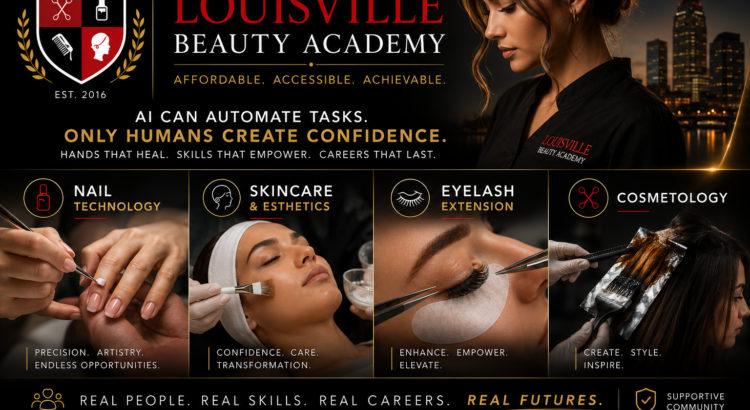
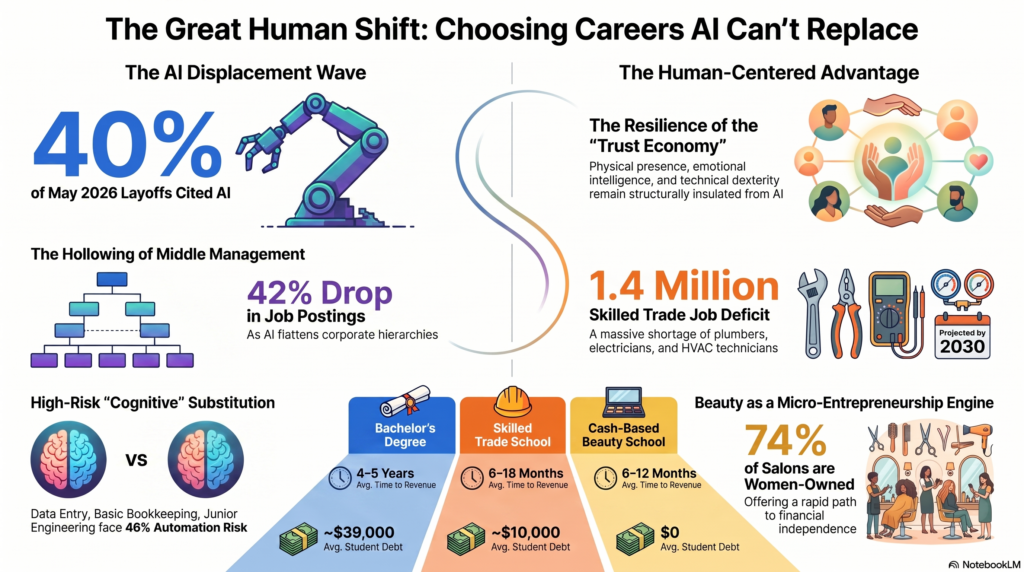
By Louisville Beauty Academy Educational Article | Workforce Awareness Series 2026
Editorial Attribution & Research Credit
This article is published by Louisville Beauty Academy with full gratitude and acknowledgment to the research, analysis, writing, and editorial work of the Di Tran University – College of Humanization Research Team. The underlying workforce research, economic analysis, policy review, and human-centered framework that informed this educational article originate from the independent research and public scholarship of Di Tran University’s College of Humanization. Louisville Beauty Academy shares this article to help educate students, families, career changers, educators, employers, and the public on emerging workforce trends and the future of human-centered professions.
Readers interested in the complete research are encouraged to read:
The Great Human Shift: AI, Corporate Layoffs & Why Human-Centered Careers May Be America’s Strongest Future — Research & Podcast Series 2026
Artificial intelligence is changing the way America works.
Across industries, businesses are adopting AI to automate routine tasks, improve productivity, and reshape how work gets done. Many office-based positions are evolving, some are being redefined, and others are being reduced as organizations rethink traditional corporate structures.
For many people, this creates uncertainty.
For others, it creates an opportunity to ask an important question:
What careers become more valuable when technology becomes more capable?
At Louisville Beauty Academy, we believe this question deserves careful research—not fear, not marketing, and not speculation.
That is why we encourage prospective students, families, educators, and career changers to learn about the broader workforce transformation occurring across the United States.
Human Skills Cannot Be Downloaded
Artificial intelligence can generate text.
It can analyze data.
It can organize schedules.
It can answer emails.
It can even help beauty professionals manage appointments, marketing, inventory, and business operations.
But AI cannot replace what happens when one human serves another with professionalism, trust, safety, compassion, and skilled hands.
A licensed nail technician doesn’t simply polish nails.
They help restore confidence.
An esthetician doesn’t simply perform a facial.
They help clients care for their skin, their well-being, and often their self-esteem.
A cosmetologist doesn’t simply cut hair.
They help people prepare for weddings, interviews, graduations, celebrations, and some of life’s most meaningful moments.
These are deeply human professions.
Technology may support them.
It does not replace them.
Licensed Beauty Professionals Build More Than Beauty
The beauty profession is often misunderstood.
Behind every state license is education in:
Infection control
Sanitation
Public safety
State law and regulations
Professional ethics
Technical skills
Client communication
Business fundamentals
These are licensed professions that protect the public while creating opportunities for meaningful careers and entrepreneurship.
Many professionals eventually become:
Salon owners
Independent suite renters
Educators
Product specialists
Brand ambassadors
Small business owners
Community leaders
A license is not simply permission to work.
For many, it becomes the foundation for building a business and serving a community.
Affordable Education Matters
Choosing a school is one of the most important financial decisions a student will make.
At Louisville Beauty Academy, we believe prospective students should compare:
Tuition
Program length
Written payment options
Licensing preparation
Student support
Schedule flexibility
Graduation requirements
Regulatory compliance
Overall value
We encourage every student to visit multiple schools, ask questions, request everything in writing, and make the decision that best fits their goals, finances, and circumstances.
An informed student is an empowered student.
AI Is a Tool—Not a Replacement for Humanity
Louisville Beauty Academy embraces technology where it improves education and student support.
AI-assisted translation.
Digital documentation.
Administrative efficiency.
Learning support.
Communication.
These tools help students learn more effectively and help educators spend more time teaching people—not paperwork.
Technology should strengthen human education, not replace it.
A Future Built on Service
Throughout history, technology has changed the tools we use.
It has never changed the importance of serving another human being well.
People will continue to seek professionals they trust.
People will continue to value kindness, craftsmanship, communication, and integrity.
People will continue to invest in confidence, wellness, and personal care.
Those are human needs.
And human needs create human careers.
Continue the Research
This article summarizes only part of a much larger workforce discussion.
For readers interested in labor market trends, AI, corporate restructuring, vocational education, entrepreneurship, and the future of human-centered careers, we invite you to read the independent research published by Di Tran University – The College of Humanization:
The Great Human Shift: AI, Corporate Layoffs & Why Human-Centered Careers May Be America’s Strongest Future – Research & Podcast Series 2026
The research examines publicly available information from government agencies, labor economists, academic institutions, and industry sources to explore how artificial intelligence is reshaping work—and why licensed, human-centered professions may become increasingly valuable in the decades ahead.
Our Commitment
At Louisville Beauty Academy, our mission has never been to tell students what career to choose.
Our mission is to provide affordable, accessible, ethical, state-approved education so students can make informed decisions, earn professional licensure, and build meaningful careers through service, skill, and lifelong learning.
Whether you choose Louisville Beauty Academy or another licensed institution, we encourage you to research carefully, compare thoughtfully, and invest in an education that aligns with your goals.
Because while technology will continue to evolve, one truth remains:
Human hands build trust. Human service builds communities. Human character builds careers.
Educational Disclaimer
This article is provided for educational and informational purposes only. It should not be interpreted as career, financial, legal, or employment advice. Labor market conditions change over time, and career outcomes vary by individual, region, experience, effort, and economic conditions. Louisville Beauty Academy encourages prospective students to conduct independent research, review official labor market information, compare educational institutions, and make informed decisions based on their own goals and circumstances. References to the independent research published by Di Tran University are provided to encourage continued learning and public discussion about workforce trends in the age of artificial intelligence.
Disclaimer: This research is authored exclusively by Di Tran University — The College of Humanization Research Team. Louisville Beauty Academy and affiliated organizations publish this material solely for educational and informational purposes and do not provide legal or regulatory interpretation. All licensing and compliance determinations are governed exclusively by the applicable state board. Information may change and should be independently verified.
The beauty and personal care industry represents a fundamental pillar of the United States economy, characterized by high rates of entrepreneurship, significant workforce diversity, and a complex regulatory landscape. This research paper provides an exhaustive analysis of the occupational licensing environments across all 50 states, the educational ecosystems that support them, and the resulting economic outcomes. By synthesizing data from the U.S. Census Bureau, the Bureau of Labor Statistics, and recent academic research, this analysis demonstrates how regulatory structures—ranging from training hour requirements to interstate reciprocity agreements—influence labor market dynamics and business formation. Central to this ecosystem is the beauty school, which serves as a workforce development engine. Using the Louisville Beauty Academy in Kentucky as a primary illustrative example, the report highlights the role of student-first, compliance-oriented institutions in fostering a professionalized workforce capable of navigating shifting state standards. Findings suggest that while the industry contributes over $308 billion to the national GDP, the efficiency of state boards and the rationality of licensing requirements vary significantly, impacting student debt, wage growth, and geographic mobility. The report concludes that supportive environments, characterized by transparent administrative processes and evidence-based training requirements, correlate with healthier small-business ecosystems and enhanced economic contributions.
Introduction and Research Questions
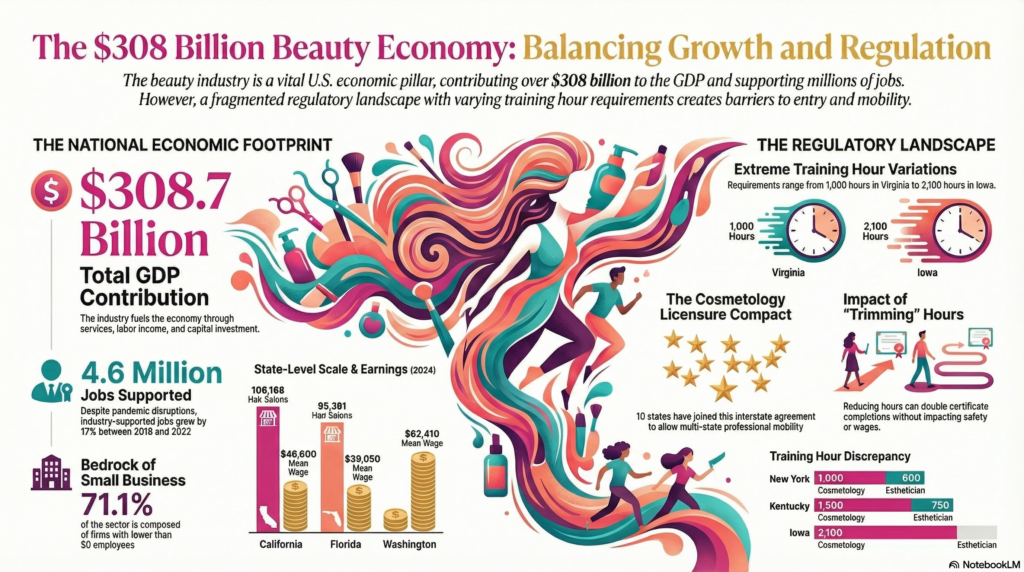
The professional beauty industry, encompassing hair, nail, skin care, and spa services, occupies a unique and often undervalued position within the American economic landscape. Far from being a mere luxury or discretionary sector, the personal care industry is an essential service provider that drives significant labor participation and capital investment. As of 2022, the industry was responsible for fueling the U.S. economy by directly and indirectly contributing $308.7 billion to the gross domestic product (GDP) and supporting 4.6 million jobs.1 Despite this massive scale, the sector remains deeply fragmented, composed primarily of small, independently owned businesses and a burgeoning class of “independent professionals” or “businesses of one”.2 This structural composition makes the industry highly sensitive to the regulatory environments established at the state level.
Occupational licensing serves as the primary gateway into this profession. In the United States, every state requires individuals to obtain a government-issued license to work as a cosmetologist, barber, esthetician, or nail technician.3 These requirements are designed to address potential market failures associated with asymmetric information—the idea that consumers cannot easily judge the health and safety competencies of a practitioner—and to mitigate negative externalities such as the spread of infections or chemical injuries.4 However, the specific standards for licensure—including training hours, examination protocols, and reciprocity rules—differ drastically across state lines. A student in New York may enter the cosmetology workforce after 1,000 hours of training, while their counterpart in Nebraska or Iowa may be required to complete 2,100 hours.3
This research paper investigates the ripple effects of these regulatory variations. Specifically, it seeks to answer: How do state-mandated training hours correlate with student debt and labor market entry? To what extent do state board administrative efficiencies—such as online application portals and transparent processing times—impact the density of beauty businesses? What is the role of beauty schools, particularly compliance-focused institutions like the Louisville Beauty Academy, in bridging the gap between state regulations and professional success? Finally, how does the emerging Cosmetology Licensure Compact represent a pivotal shift in professional mobility and state sovereignty? By addressing these questions, this report provides a fact-based framework for students, professionals, and policymakers to understand the interconnectedness of regulation, education, and economic prosperity in the beauty sector.
Background and Literature Review
The history of occupational licensing in the beauty industry is a reflection of broader labor market trends in the 20th and 21st centuries. In the early 1900s, the market for hair cutting was dominated by men, particularly in the barbering sector.6 As the economy shifted toward service-oriented sectors in the post-war era, the demographic makeup of the industry underwent a dramatic inversion. By 1980, women came to dominate the field, a transition facilitated by the rise of cosmetology as a distinct and broader profession than traditional barbering.6 Today, women hold nearly 80% of jobs in the sector and over half of all management positions, far exceeding national averages for workforce diversity.1
Academic literature on occupational licensing generally falls into two categories: the “public interest” perspective and the “economic theory of regulation” or “public choice” perspective. The public interest model posits that licensing is a necessary form of “human-capital quality control”.8 In a field where practitioners utilize sharp implements, high-heat tools, and complex chemical formulations, the state has a vested interest in ensuring a minimum skill level to prevent public harm.4 Proponents argue that without these standards, the market would suffer from a “race to the bottom” in quality, potentially leading to increased public health risks.
Conversely, the economic theory of regulation, often associated with Milton Friedman and George Stigler, argues that licensing acts as a barrier to entry that benefits incumbent workers at the expense of consumers and aspiring professionals.4 By restricting the supply of labor through long training hours and high fees, licensing can create “monopolistic rents,” driving up wages for those who are already licensed.4 Empirical studies have estimated that licensing can provide a wage premium of 11% to 18% for practitioners.8 However, recent research specific to cosmetology suggests that these premiums may be offset by the costs of entry.
A significant body of modern research highlights a disconnect between training hours and economic outcomes. Studies by the National Bureau of Economic Research (NBER) have found that higher licensing hour requirements are associated with higher levels of student debt but show no statistically significant correlation with higher post-graduation earnings.4 For instance, a cosmetologist in Iowa completes more training hours (2,100) than an Emergency Medical Technician (typically 132–150 hours), yet this additional training does not necessarily translate to a higher market value.4 This has led some researchers to characterize current licensing schemes as “irrational” and “disconnected from public health threats,” as seen in legal rulings regarding hair braiding in Utah.4
Furthermore, the literature identifies the “beauty school” as a critical institutional actor. Schools are not merely vendors of hours; they are workforce development centers that act as incubators for small business owners.1 The quality of these schools—measured by their focus on regulatory compliance, sanitation, and safety—is a primary determinant of a student’s ability to navigate the path to licensure and entrepreneurship.9 As the industry moves toward a “business of one” model, where professionals operate as independent contractors, the role of the school in providing business and regulatory literacy becomes increasingly vital.2
Methodology and Data Description
This research utilizes a secondary data analysis approach, synthesizing information from government agencies, industry associations, and academic repositories. The study is structured as a comparative analysis across all 50 U.S. states to map the regulatory and economic landscape of the beauty sector.
The regulatory data is drawn from state board of cosmetology and barbering statutes and administrative rules. This includes the documentation of training hour requirements for various license types (cosmetologist, barber, esthetician, nail technician, and instructor) as of 2024 and 2025.3 Administrative efficiency is gauged through observable “supportiveness” indicators, such as the presence of online application portals (e.g., California’s BreEZe or Georgia’s GOALS), the availability of comprehensive FAQs, and the transparency of license transfer protocols.12
The economic and demographic data is sourced from the following:
U.S. Census Bureau: Data from the Statistics of U.S. Businesses (SUSB) and Business Formation Statistics (BFS) provides the counts of firms and establishments at the 6-digit NAICS level.14 Key codes analyzed include 812112 (Beauty Salons), 812111 (Barber Shops), 812113 (Nail Salons), and 611511 (Cosmetology and Barber Schools).16
Bureau of Labor Statistics (BLS): The Occupational Employment and Wage Statistics (OEWS) provide state-level data on employment per thousand jobs, location quotients, and mean hourly/annual wages for practitioners.18
Industry Reports: Financial multipliers and nationwide economic impact figures are derived from the 2024 Economic & Social Contributions Report by the Personal Care Products Council (PCPC) and the 2024 Community Report by the Professional Beauty Association (PBA).1
Case Study Material: Publicly available information from the Louisville Beauty Academy (LBA) and the Kentucky Board of Cosmetology (KBC) provides an illustrative look at the practical application of these regulations in a specific regional ecosystem.19
The methodology also incorporates a conceptual framework that connects “licensing strictness” (measured by hours and fees) and “administrative supportiveness” (measured by process efficiency) to “economic outcomes” (measured by business density and labor income). This allows for a nuanced discussion of how policy choices facilitate or hinder the professional pipeline from student to salon owner.
Descriptive Overview of the 50-State Licensing Environment
The primary characteristic of the U.S. beauty licensing environment is its extreme heterogeneity. While all states mandate licensure, the path to obtaining that license is dictated by a complex set of variables that change frequently as legislatures respond to economic pressures.
Training Hour Variations for Cosmetology
The national average for cosmetology training is approximately 1,500 hours, which typically requires 9 to 18 months of full-time or part-time enrollment.3 However, the distribution around this mean is wide. On the lower end, states like California and Virginia have moved to a 1,000-hour requirement to lower the barriers to entry.22 On the higher end, states such as Idaho and Montana require 2,000 hours, while Iowa and Nebraska have historically set the bar at 2,100 hours.5
The following table provides a comprehensive overview of cosmetology school hours for selected states, highlighting the regional differences:
State
Cosmetology Training Hours
Esthetician Hours
Nail Technician Hours
Alabama
1,500
1,000
750
Alaska
1,650
350
120
California
1,000
600
400
Colorado
1,800
600
600
Florida
1,200
260
240
Georgia
1,500
1,000
525
Kentucky
1,500
750
450
New York
1,000
600
250
Texas
1,500
750
600
Virginia
1,000
600
150
Data compiled from.3
These hour requirements represent a significant investment of time and capital. In states with high hour mandates, students often accumulate more debt as they must pay for additional months of instruction before they can legally begin earning a wage.4 The “calendar days lost” metric developed by the Institute for Justice estimates that a student in Massachusetts may lose up to 963 days due to licensing requirements, whereas a student in New York might lose only 233 days.3 This discrepancy suggests that the regulatory environment significantly impacts the lifetime earning potential of a professional by delaying their entry into the workforce.
Board Administrative Efficiency and Support
Beyond the statutory hour requirements, the “supportiveness” of a licensing environment is often defined by the administrative ease of interacting with the state board. A supportive board is not necessarily one with the lowest requirements, but one that provides clear, stable, and predictable processes for its constituents.
Indicators of administrative support include:
Online Systems: Boards that utilize integrated portals for applications, renewals, and fee payments (e.g., California’s BreEZe or Kentucky’s Online Application Portal) reduce the administrative friction for practitioners.13
Processing Transparency: Some boards provide clear guidance on how long a license certification takes to process (e.g., California reports 2 weeks for processing and 4-6 weeks for total certification transfer).13
Accessibility: The availability of multiple communication channels (email, phone, and online chat) and detailed FAQs helps students and professionals avoid common mistakes, such as assuming reciprocity is automatic or prematurely enrolling in extra hours.12
The efficiency of these boards is a critical factor in business formation. In environments where the path from “passing exams” to “receiving a license” is delayed by bureaucratic backlog, the local economy suffers from a temporary shortage of labor and a delay in tax revenue generation.25
The Cosmetology Licensure Compact: A New Paradigm for Mobility
One of the most significant developments in the licensing environment is the creation of the Cosmetology Licensure Compact. Recognizing that the “patchwork” of state rules creates unnecessary barriers for mobile professionals—such as military spouses or individuals relocating for economic opportunities—the Council of State Governments developed an interstate agreement.26
The compact allows a cosmetologist who holds an active, unencumbered license in a member state to apply for a “multistate license.” This license functions similarly to a driver’s license, permitting the holder to practice in all other member states without the need for a separate license in each jurisdiction.27 As of mid-2025, ten states have enacted the compact: Alabama, Arizona, Colorado, Kansas, Kentucky, Maryland, Ohio, Tennessee, Virginia, and Washington.28 The compact reached its activation threshold of seven states in 2025 and is currently in the 18-24 month process of building the infrastructure necessary to issue licenses.27 This shift toward “multistate reciprocity” is expected to significantly reduce the administrative and financial burden on practitioners while preserving each state’s sovereignty to set its own initial licensing standards.27
Economic Footprint and Industry Density
The beauty industry is a primary driver of service-sector growth in the United States. Its economic footprint is defined not only by its total contribution to GDP but also by its role as a bedrock of small business stability and workforce inclusivity.
National Multipliers and Aggregate Contributions
In 2022, the personal care products industry accounted for $308.7 billion in total GDP contribution.1 This includes $203.3 billion in labor income, reflecting the industry’s role as a major employer of skilled professionals.1 The sector is highly resilient; despite the disruptions of the pandemic era, industry-supported jobs grew by 17% between 2018 and 2022.1
The industry is also a significant contributor to public coffers. Total tax payments at the federal, state, and local levels reached $82.3 billion in 2022.1 This tax revenue is generated through a combination of corporate taxes, payroll taxes, and the sales taxes collected on millions of personal care services and products. Furthermore, for every $1 million in revenue, personal care product manufacturers contribute approximately $1,500 to charitable causes, ranking third among all major industry sectors in charitable giving.7
State-Level Density and Business Formation
The density of beauty businesses is a key indicator of local economic health. California, Florida, and New York lead the nation in the absolute number of hair salons.29 As of 2024, California hosted over 106,000 hair salon businesses, followed by Florida with approximately 95,000 and New York with 95,000.29
However, the “density” of these services—measured by establishments per capita—varies. BLS data from 2023 shows that states like Pennsylvania have a high location quotient (1.66) for cosmetologists, meaning the occupation is significantly more concentrated there than in the nation as a whole.18 Other states with high employment of cosmetologists per thousand jobs include Massachusetts (2.71), Maine (1.76), and Colorado (2.32).18
The following table summarizes establishment and employment indicators for selected states:
State
Number of Hair Salons (2024)
Cosmetology Employment (BLS 2023)
Annual Mean Wage (Practitioner)
California
106,166
20,450
$46,600
Florida
95,381
21,820
$39,050
New York
95,333
21,000
$41,830
Texas
–
25,540
$38,050
Pennsylvania
–
19,120
$38,080
Washington
–
6,680
$62,410
Data from.18
The growth of the “medspa” and specialized esthetics sectors has outpaced traditional salons in recent years. The medical spa industry grew from 8,899 locations in 2022 to 10,488 in 2023, with an average annual revenue of nearly $1.4 million per location.30 This segment is particularly lucrative for practitioners and business owners, as it targets high-income consumers and benefits from a high rate of patient visits—averaging 245 visits per month per location.30
Small Business Formation Rates
The beauty industry is a leading sector for new business applications. Data from the Census Bureau’s Business Formation Statistics shows that during the post-pandemic recovery, states in the Sun Belt—such as New Mexico (+92.1%), South Carolina (+77.9%), Alabama (+72.2%), and Florida (+69.5%)—saw some of the highest increases in new business applications.31 In 2024, Florida alone saw over 56,000 new business formations in the month of June.32 Because the beauty industry is dominated by firms with fewer than 50 employees (71.1% of the sector), it serves as a critical engine for this entrepreneurial boom.1
Analytical Framework: Linking Regulation and Economic Outcomes
The central thesis of this report is that the regulatory environment is not a passive backdrop but an active participant in the economic health of the beauty sector. A supportive regulatory framework creates a “virtuous cycle” of professional development and economic growth.
The Professional Pipeline
The journey from a student to a successful salon owner can be conceptualized as a pipeline. In a supportive state:
Student Entry: Training requirements are evidence-based (e.g., 1,000–1,500 hours), making education affordable and reducing the reliance on high-interest student loans.10
Licensure: The state board provides a seamless transition from graduation to examination. Electronic authorizing systems allow students to schedule exams quickly (within 24–48 hours of authorization in some cases) and receive their licenses within days of passing.13
Employment and Mobility: Professionals can move between states with clarity, thanks to “substantial equivalence” rules or membership in the Cosmetology Licensure Compact.23
Entrepreneurship: Low administrative friction and clear salon-licensing rules encourage professionals to open their own establishments, becoming employers and tax-paying entities.11
The Impact of “Trimming” Hours
Academic evidence suggests that when states “trim” their hour requirements, the entire pipeline becomes more efficient. In the study “Cosmetology Gets a Trim,” researchers found that reducing hours led to a doubling of certificate completions without any detectable negative impact on wages or safety.10 By reducing the “barrier to entry,” the state allows more individuals to enter the formal, regulated market. This expands the tax base and reduces the prevalence of “under-the-table” services that bypass safety inspections and revenue reporting.
Administrative “Drag” vs. Support
Conversely, an unsupportive environment creates “administrative drag.” In states with high hour requirements, paper-only application processes, and ambiguous reciprocity rules, the pipeline is clogged with delays. Professionals may be forced to wait months for a license transfer, leading to lost income and a reduction in the state’s total labor contribution.3 This drag is particularly damaging for small businesses, which often operate on thin margins and cannot afford to have a chair sitting empty while a new hire waits for board approval.
A supportive environment, therefore, is defined by:
Rationality: Hours that match the actual health risks of the trade.
Predictability: Transparent timelines for all board actions.
Stability: Rules that do not change arbitrarily without industry input.
Reciprocity: Pathways that recognize the value of experience and out-of-state training.
Case Study: Louisville Beauty Academy and the Kentucky Ecosystem
The state of Kentucky, and specifically the Louisville Beauty Academy (LBA), provides a valuable illustrative case study of how a “center of excellence” can exist within a state that is actively modernizing its regulatory framework.
The Kentucky Regulatory Landscape
Kentucky currently requires 1,500 hours of training for a cosmetology license, with esthetics and nail technology recently reduced to 750 and 450 hours respectively.11 The Kentucky Board of Cosmetology (KBC) has moved toward modernization by implementing an online application portal and becoming an early adopter of the Cosmetology Licensure Compact.19
The state also employs a “2+ year experience rule,” which is a hallmark of a supportive reciprocity policy. Under this rule, out-of-state applicants who have been licensed and practicing for more than two years can have their hour deficiencies waived by the board.19 This recognizes that professional experience is an effective substitute for classroom hours, facilitating the entry of seasoned talent into the Kentucky market.
Louisville Beauty Academy as a “Center of Excellence”
In this ecosystem, Louisville Beauty Academy positions itself not through subjective rankings, but as a compliance-first institution that serves the interests of both students and the state. As an accredited school, LBA serves as a workforce engine by:
Educating on Compliance: LBA maintains a public library of research and guides that document state-by-state transfer rules. By explicitly stating that the board has final authority over licensing, the school ensures students have realistic expectations about the regulatory process.19
Prioritizing Safety: The school’s curriculum emphasizes sanitation and state-board preparation, ensuring that graduates meet the high safety standards required by the KBC.9
Fostering Entrepreneurship: LBA encourages students to see licensure as a “gateway to ownership.” By providing a foundation in the state’s salon-licensing laws, the school prepares graduates to open legitimate, tax-paying businesses in the region.11
LBA is an example of a school that does not merely teach technical skills but provides “regulatory literacy.” In an industry where a license is the most valuable asset a professional owns, this focus on compliance and professional mobility is essential for long-term career success.
Policy Implications and Recommendations
Based on the synthesis of 50-state data and economic impact studies, several policy recommendations emerge for state boards, legislatures, and industry stakeholders.
For State Legislatures: Evidence-Based Requirements
Legislatures should move toward a more uniform standard of 1,000 to 1,500 hours for cosmetology, as evidence shows that requirements exceeding 1,500 hours significantly increase student debt without a commensurate increase in public safety or wages.4 Furthermore, states should follow the lead of Virginia and Washington by joining the Cosmetology Licensure Compact.28 The compact is the most effective tool for promoting professional mobility while maintaining state control over health and safety standards.
For State Boards: Prioritize Digital Infrastructure
Boards should invest in integrated digital portals that offer real-time tracking of applications and certifications. Reducing the “administrative drag” of paper-based transfers is a low-cost, high-impact way to support small businesses. Boards should also adopt transparent “service level agreements,” such as guaranteeing a license verification within 10 business days, to provide predictability for the workforce.
For Schools and Industry Groups: Champion Professionalism
Beauty schools should emulate the “student-first” model by providing comprehensive information on interstate mobility and career pathways beyond just passing the state board exam. Industry groups like the PBA and PCPC should continue to advocate for the “Business of One” model, providing independent professionals with the tools they need for financial planning, insurance, and regulatory compliance.2
Limitations and Directions for Future Research
This report is based on a synthesis of publicly available data, which has inherent limitations. State board regulations change frequently, and there is often a lag between the passage of a law and the update of administrative manuals. Furthermore, while the NBER has provided excellent research on the impact of “trimming” hours, more longitudinal studies are needed to track the 10-year career trajectories of graduates from 1,000-hour programs versus 2,000-hour programs.
Future research should also investigate the specific impact of the “independent professional” trend on state tax revenues. As more practitioners move away from traditional employer-based salons toward booth rental and salon suites, states may need to adjust their licensing and tax collection mechanisms to ensure continued compliance and support for these micro-entrepreneurs.
Conclusion
The beauty and personal care industry is a dynamic, resilient, and essential component of the American economy. With an annual GDP contribution of over $308 billion and a workforce of 4.6 million people, the industry’s success is deeply intertwined with the regulatory choices made by the 50 states.1 This research has shown that a supportive licensing environment is characterized by evidence-based hour requirements, administrative transparency, and a commitment to professional mobility through initiatives like the Cosmetology Licensure Compact.
Schools like the Louisville Beauty Academy serve as the foundational infrastructure of this ecosystem, transforming students into compliant, safety-conscious professionals and entrepreneurs. When states reduce the unnecessary barriers to entry and provide efficient board operations, they do not merely help individual practitioners—they foster a thriving small-business landscape that creates jobs, builds local wealth, and contributes billions in tax revenue. As the industry continues to evolve toward more specialized services and independent business models, the need for a rational, transparent, and mobile regulatory framework has never been greater. By aligning policy with the empirical realities of the labor market, the United States can ensure that the beauty industry remains a premier pathway for economic opportunity and entrepreneurial success.
Barber, Cosmetology, Nail, Wax, Tattooing, Permanent Cosmetic Tattooing, and Master Permanent Cosmetic Tattooing Curriculum Requirements | Virginia Department of Professional and Occupational Regulation, accessed March 24, 2026, https://www.dpor.virginia.gov/CosmetologyCurriculum
In an era of rapid technological change, workforce shortages, and rising education costs, the beauty and trade school sector stands at a critical intersection. Louisville Beauty Academy (LBA), under the leadership of founder Di Tran, has become a model of how small vocational schools can innovate, serve communities, and influence policy — from city Hall in Louisville to the halls of Congress in Washington, D.C. LBA is not just training students; it’s building a foundation for future beauty professionals, advocating for regulatory reform, and embodying the spirit that small business is the backbone of the U.S. economy.
History of Louisville Beauty Academy & Di Tran
Founding and Local Impact Di Tran established Louisville Beauty Academy with a mission: provide high-quality, state-licensed beauty education, especially in cosmetology, esthetics, nail technology, and related fields. From the start, LBA focused on keeping tuition accessible, reducing student debt, and ensuring graduates are ready for licensure and employment. Over the past 5-6 years, the academy has grown in enrollment, added locations (if applicable: two or more campuses), and maintained nearly 100% job placement in certain certificate programs (notably nail technician, salon services, etc.).
Advocacy in Kentucky Early on, Di Tran and LBA worked with local and state agencies to highlight barriers: rigid accreditation requirements, lack of access to federal aid for short programs, costs of licensing exams, and regulatory overhead that often penalized small schools. LBA participated in state beauty board meetings, submitted testimony, worked with community leaders, and joined statewide coalitions for licensing reform (for example, pushing for reciprocity or more flexible licensing for beauty trade across state lines).
Elevation to National Level: NSBA & Beyond
Joining the National Stage As LBA’s local and state work matured, Di Tran expanded advocacy to the national level by partnering with organizations like the National Small Business Association (NSBA). This gave a platform to bring clarity around how beauty education is a vital trade sector, facing many of the same challenges as other small business owners: regulatory burden, financing/paying for training, licensure, workforce alignment, etc.
Recognition & Event Participation At events such as the NSBA Washington Presentation, Di Tran has spoken and been recognized among finalists for “Small Business Advocates of the Year” (or similar honors). This recognition is meaningful: among many applicants and nominations, only a few leaders are selected to present before Congress, the White House, and national small business stakeholders.
Criticality of this Moment
Industry Shifts The beauty / cosmetology industry is changing: automation, AI (e.g., scheduling, virtual try-on, education tools), robotics (in some cleaning/sterilization, equipment), and tech platforms are entering the space. Students entering beauty trades must now compete not just on hands-on skill, but digital literacy, customer service in online settings, licensing portability, and business acumen.
Higher Education Under Strain Traditional higher education faces critiques for cost, student debt, slow completion, and misalignment with job markets. Beauty and trade schools — when done well — can provide certificates/licenses, fast employment, lean operating models, and small debt or lower-debt paths.
Policy Momentum There is growing awareness in Washington, DC, and state capitals that short-term vocational/trade programs are essential for filling workforce gaps. There is pressure to reform federal aid policy so that short programs (those fewer than 600 hours, etc.) can access federal support, provided outcomes are verified.
NSBA: Background & Leadership (as of 2025)
History The NSBA (National Small Business Association) is a longstanding advocacy group representing small business owners across the U.S. It fights for fair taxes, less burdensome regulation, better access to capital, and supports policies that help small businesses compete. (Note: not to be confused with National School Boards Association.)
Leadership / Board of Directors (Based on public sources as of Sept 2025) NSBA’s Board includes a number of members who have led small business efforts. Some key leaders:
Devin Sheehan — President
President-Elect: Leonard Lockhart
Secretary-Treasurer: Becky Fles
Immediate Past President: Donald Hubler
Other Directors: Sami Al-Abdrabbuh; Flor Diaz Smith; Marvyn Jaramillo; Mildred Lefebvre; Marnie Maraldo; William Miller; Matthew Showalter; Eric Stroeder; Kathryn Whitaker Ballotpedia
🧑💼 NSBA Board of Trustees (Member Roles & Credentials)
These leaders bring small business backgrounds — ownership, management, entrepreneurship, non-profit or business leadership — and help guide NSBA’s advocacy agenda.
Successes & Economic Impact
Graduates & Small Businesses LBA has graduated nearly 2,000 students (approximate to fill in), many of whom immediately enter licensed workfields: nail technicians, cosmetologists, estheticians, salon services, etc. Several graduates have launched their own salons or service businesses in Louisville and elsewhere in Kentucky.
Economic Contribution The estimated economic impact of LBA’s alumni is between $20-50 million annually in wages and business activity feeding back into Kentucky’s economy (consumer spending, tax contributions, supply chain) — done with a lean, cash-based model that keeps barriers to education and operation low.
Operational Efficiency LBA runs with minimal overhead. It does not rely heavily on federal education funding (because many short certificate programs are excluded currently), which means it avoids heavy regulatory compliance costs, large accreditation costs, and large audit costs. School is state-licensed, student progress is tracked, licensure rates are strong, and employment outcomes are verified.
The White House Briefing & Legislative Engagement
During the NSBA Washington Presentation, a key highlight was the White House Briefing (speakers including senior officials from the U.S. Small Business Administration and the National Economic Council). LBA’s founder had opportunity to present ideas directly into the policymaking sphere regarding outcome-based federal student aid, removing unnecessary accreditation/audit requirements, and funding aligned with real results.
Legislators and small business advocates present included [list from your schedule/photos]: Sen. Rand Paul; Rep. Morgan McGarvey; along with other Senators / Representatives who focus on small business issues (access to capital, regulatory reform, innovation, trade, workforce, etc.).
Advocacy & Education Beyond Beauty
Workforce & Trades LBA is not just about beauty: it’s about trade skills, entrepreneurship, job creation. Graduates become licensed, employable, sometimes business owners. The model shows how trades education can reduce unemployment, build community wealth, especially for immigrant, low-income, or underrepresented groups.
Technology Integration Recognizing shifts, LBA is looking at integration of AI in learning (online modules, virtual simulations), automation (equipment, tools, business operations), robotics (in cleaning, streamline operations), and tech tools to support scheduling, client-management, hygiene, etc.
Why This Recognition Matters
Validation at National Scale Being recognized among National Small Business Advocate finalists (or similar) places LBA and Di Tran in a national spotlight. It underscores that beauty/trade education is not fringe, but central to workforce policy.
Policy Influence The moment creates leverage: legislators ask questions, staff follow up, bills can be drafted. The practical proposal from LBA — outcome-based aid, state licensing in lieu of redundant national accreditation, reimbursement after success — may gain traction.
Role Model for Others LBA provides a replicable model for other trade schools in beauty and beyond: lean operations, strong licensure/employment outcomes, advocacy, and boosting small business.
Challenges & Areas for Growth
Funding Gaps Many beauty / short trade programs remain excluded from federal aid unless accredited by certain national agencies. This limits student access and institutional growth.
Regulatory & Bureaucratic Overhead Accreditation, audits, high upfront costs, state licensing variance — all create patchwork barriers.
Student Support & Success Ensuring students not only graduate but are supported (mentoring, career services) to pass licensing exams, find employment.
Call to Action
For Policymakers Support legislation that enables outcome-based federal aid: reimburse students or sponsoring banks/families only after graduation/licensure/employment, not based on enrollment. Remove mandatory national accreditation for state-licensed trade schools when outcome metrics are met.
For Small Business & Beauty Industry Join the conversation, document your outcomes (licensure, employment), share your stories, push for policy changes in state and federal spheres.
For Community & Students Recognize trade/beauty education as valuable, legitimate, and essential. Demand clarity, accountability, and access.
Conclusion
Louisville Beauty Academy and Di Tran exemplify what it means to serve others, uplift communities, and champion small business at the heart of the American economy. From Louisville to Congress, the journey is one of perseverance, vision, and results. In advocating for beauty education, Di Tran is advancing more than a trade — he is strengthening the foundation upon which millions of small businesses, entrepreneurs, and future professionals depend.
At Louisville Beauty Academy, a Kentucky State-Licensed and state-licensed beauty college, we are committed to preparing our students for real-world success. Since our founding, we have proudly graduated nearly 2,000 licensed beauty professionals, whose work contributes an estimated $20 to $50 million annually to the economy of Kentucky and beyond.
Choosing your beauty career path is exciting — but it’s also a decision that benefits from careful research and a clear understanding of the industry. Whether your passion lies in Nail Technology, Esthetics, or Hair (Cosmetology), understanding the service frequency and career demand in each area can help you make the choice that best fits your goals, lifestyle, and earning potential.
Why Service Frequency Matters
In the beauty industry, how often a client returns directly impacts the predictability of your bookings and your revenue potential. These are basic human services — they will always be needed — but the frequency of that need varies from one specialty to another.
1. Nails — The Highest Repeat Rate
Average Frequency: Every 2 weeks or less for most regular clients (gel, dip, acrylics).
Why: Nail polish chips, gels and acrylics grow out, and many people maintain a standing schedule for well-groomed hands and feet.
Reality: Many nail clients pre-book their next visit before leaving the salon, creating a predictable, high-retention client base.
Impact: This repeat cycle offers stability and consistency, making nail technology one of the fastest ways to build a loyal clientele.
2. Esthetics — Moderate to High Frequency
Average Frequency: Typically monthly, but many services draw clients back every 2–4 weeks.
Examples:
Lash extensions → fills every 2–3 weeks
Brow shaping/waxing → every 3–4 weeks
Skincare programs → monthly facials or targeted treatments
Reality: Esthetic clients, especially those in ongoing programs, can match nail tech clients in repeat visits — offering both steady income and opportunities for upselling additional treatments.
3. Hair (Cosmetology) — Lower Frequency
Average Frequency: Every 6–8 weeks for most clients, sometimes longer.
Exceptions:
Short hair or precision cuts → every 4–6 weeks
Color touch-ups → every 4–8 weeks
Reality: Many hair clients extend visits to save money or because their style requires less frequent upkeep, which can make recurring revenue less predictable compared to nails or high-frequency esthetics.
Quick Comparison: Repeat Demand Potential
Service
Common Repeat Interval
Predictability of Bookings
Revenue Stability
Nails
2 weeks
Very High
Strong recurring revenue
Esthetics
2–4 weeks
High (varies by service type)
Solid, especially with memberships
Hair
4–8+ weeks
Moderate to Low
Less consistent unless short style or frequent color
Why This Matters for Your Career
Regardless of which path you choose, these fields are built on human connection and repeat service. The difference lies in how often clients come back — and that affects how quickly you can fill your schedule, grow your income, and plan your business.
At Louisville Beauty Academy, we guide students not only through technical training but also through career planning — helping them understand the realities of client demand, local market conditions, and business growth strategies.
About Louisville Beauty Academy
state-licensed beauty college
Nearly 2,000 graduates contributing $20–$50 million annually to the economy
Programs in Nail Technology, Esthetics, and Cosmetology
Commitment to affordable, flexible, and lower-debt education
Disclaimer: This article is for educational purposes only and reflects industry observations and publicly available data. Information may change over time. No guarantee of future income, employment, or career results is implied.
The beauty industry is more than just skin-deep; it is an essential, recession-resistant sector that offers a unique blend of creativity, practicality, and economic stability. With low capital investment, accessible college fees, and endless opportunities for personal and professional growth, the beauty field is a gateway to secure and thriving careers. Louisville Beauty Academy is leading the charge, offering one of the highly affordable and flexible beauty education experiences in Kentucky.
Beauty: A Basic Human Need and a Thriving Industry
From nail technicians and estheticians to cosmetologists and salon owners, the beauty industry touches lives in profound and personal ways. Beauty services are no longer limited to luxury—they are integrated into healthcare, wellness, and essential human services.
Nursing and Physician Assistants Exploring Beauty: Healthcare professionals are turning to beauty licensing as an additional skill set, recognizing its importance in patient care and overall wellness.
Nail Technicians Serving Specialized Needs: Nail care is being recommended for the elderly and disabled, emphasizing beauty’s role in health and self-care.
Esthetics in Medical Practices: Doctors’ offices increasingly incorporate estheticians, integrating beauty services into medical-grade skincare and health treatments.
Beauty Products as Health Products: As consumers shift away from chemical-laden products, beauty products are evolving into health products, further blurring the lines between beauty and wellness.
Louisville Beauty Academy: Affordable, Flexible, and Student-Centered
At Louisville Beauty Academy, we recognize that beauty licensing is challenging enough without unnecessary hurdles. That’s why we focus on providing a family-oriented, supportive environment where students can learn and grow at their own pace.
What Sets Louisville Beauty Academy Apart:
Affordability: As one of the most cost-effective beauty colleges in Kentucky, we believe that investing in yourself shouldn’t break the bank.
Flexibility: Whether you’re a full-time worker, a parent, or exploring a new career path, our accelerated programs adapt to your schedule. We pace with you; we don’t force you.
Licensing First: We don’t oversell dreams of immediate professional success. Instead, we focus on helping you achieve the critical first step—obtaining your beauty license.
Practical Training: While licensing is our primary focus, we offer ongoing opportunities for graduates to return, improve their skills, and receive hands-on guidance for launching their own salons or businesses.
Community Engagement: Graduates can become tutors, speakers, and mentors, fostering a culture of collaboration and lifelong learning.
Why Choose Beauty as Your Career?
Recession-Proof: The beauty industry thrives in any economy, providing steady income and job security.
Low Barrier to Entry: Unlike other professions requiring years of education and massive student loans, beauty licensing is affordable and achievable in a relatively short time.
Endless Opportunities: Whether you aspire to work in a salon, launch your own business, or integrate beauty with healthcare, the possibilities are limitless.
Personal Fulfillment: Beauty is about more than appearances—it’s about confidence, health, and self-care, making it a deeply rewarding career path.
Secure Your Future with Louisville Beauty Academy
Louisville Beauty Academy isn’t just a school; it’s a launchpad for success. We go beyond the basics to help you not only achieve licensing but also develop the skills and confidence to thrive in the real world. From licensing to salon management, we are here to guide you every step of the way.
Collaborate with Industry Experts: Learn directly from our founder and experienced instructors about launching and managing a successful beauty business.
Gain Hands-On Experience: Participate in real-world applications of beauty services and receive mentorship from our supportive community.
Shape the Future of Beauty: Join a booming industry where innovation and care intersect, paving the way for both personal growth and societal impact.
Take the First Step Today
The beauty industry is more than a career; it’s a calling. By investing in a beauty license through Louisville Beauty Academy, you are not only securing a future of stability and creativity but also joining a community dedicated to excellence and service.
Your journey starts here. Embrace the opportunity to transform lives—your own and others’—through the power of beauty. Louisville Beauty Academy: Affordable, Flexible, and Focused on You.
Enroll Now and Begin Your Journey to a Beautiful Future!
Take the first step toward a rewarding and recession-proof career in the booming beauty industry. Join Louisville Beauty Academy today, where affordability, flexibility, and a supportive environment are at the heart of your education.
📱 Text us at: 502-625-5531 📧 Email us at: study@LouisvilleBeautyAcademy.net Our Enrollment Department is ready to assist you in achieving your dreams!
Disclaimer
Louisville Beauty Academy focuses on preparing students to meet the licensing requirements outlined by the Kentucky State Board of Cosmetology. While we provide practical skills and training, individual career success depends on continued professional development, personal effort, and external market factors. Our programs are designed to support you at every stage of your beauty career journey.
In a world rapidly advancing towards automation and robotic services, there remains a profession deeply rooted in human connection, care, and physical touch: nail technology. This career is not just about aesthetics; it is a powerful blend of therapy, personal care, and social connection that addresses both the physical and emotional needs of clients. As we move further into an era dominated by technology, the significance of nail technicians will only grow, affirming their role as essential providers of human services.
The Therapeutic Power of Nail Services
Imagine walking into a nail salon after a stressful day. The environment is warm, the atmosphere inviting, and the technician greets you with a smile. As you settle into your seat, the conversation flows easily—sometimes light-hearted, sometimes profound. Your hands or feet are gently held, massaged, and cared for, and before long, you feel the stress melting away. This is the magic of nail technology, a profession that goes far beyond just applying polish.
In recent years, psychologists and psychiatrists have increasingly recognized the therapeutic value of services like manicures and pedicures. More than just an aesthetic treatment, these services provide a unique environment of care, where the human touch can alleviate loneliness, reduce anxiety, and foster a sense of well-being. As automation takes over more routine tasks, the demand for professions that offer this kind of human connection will only increase. Nail technicians are at the forefront of this movement, providing not just beauty but also a crucial mental health service.
The Heart of the Nail Industry: Immigrant Communities
The nail industry in the United States owes much of its success to immigrant communities, particularly the Vietnamese, who have made affordable, high-quality nail care a mainstream service. It all began in the 1970s when a group of Vietnamese refugees, mostly women, were introduced to the art of nail care by Hollywood actress Tippi Hedren. From these humble beginnings, the Vietnamese community has grown to dominate the industry, bringing affordable and accessible nail care to millions across the country.
Today, the industry continues to flourish, with many more immigrants, including Latinos, entering the field. These individuals share a deep love for the United States and an even deeper love for serving others. Their dedication to their craft and their clients is what makes the nail industry so extraordinary. They are not just providing a service; they are creating environments of care and connection, one client at a time.
Louisville Beauty Academy: A Beacon of Excellence
One of the shining examples of this industry’s impact is Louisville Beauty Academy, a Kentucky state-licensed college founded by Di Tran, a Vietnamese immigrant with over 20 years of experience in the nail industry. Starting in high school, Di Tran has seen firsthand how nail technology can change lives. He has dedicated himself to elevating the profession and training the next generation of nail technicians to not only excel in their craft but also to understand the profound impact they have on their clients’ lives.
Di Tran is also the founder of an AI company and an education college focused on IT, making him uniquely positioned to understand the balance between technology and human connection. He strongly believes that as the world becomes more automated, the nail industry will rise to new heights of importance, bridging the gap between healthcare and beauty. This profession treats not just the body but the mind and soul, making it a vital component of holistic health care.
The Future of Nail Technology: More Than Just Beauty
As we look to the future, the role of nail technicians will continue to expand. They are not just beauticians; they are caregivers, therapists, and community builders. In an increasingly disconnected world, they provide a vital human touch that no machine can replicate. The nail industry is not just surviving in the face of technological advancement—it is thriving, proving that the power of human connection is irreplaceable.
Louisville Beauty Academy and professionals like Di Tran are leading the charge, ensuring that this profession continues to grow and adapt to the changing needs of society. Nail technology is no longer just about making people look good; it is about making them feel good, too. And in a world where mental health is becoming an ever-more pressing concern, the role of the nail technician is more important than ever.
Call to Action
Ready to make a difference in people’s lives while building a rewarding career? Enroll today at Louisville Beauty Academy by texting our enrollment department at 502-615-5531 or emailing study@louisvilleBeautyAcademy.net. Our school is one of the most inclusive, caring, family-affordable, and flexible beauty colleges, where we teach the ‘YES I CAN’ mentality. Join us and become part of a profession that’s not just about beauty—it’s about connection, care, and making a real impact on the world.
In the heart of Kentucky, Louisville Beauty Academy stands as a beacon of opportunity, particularly for immigrants seeking to solidify their place in the American landscape. As a state-licensed and accredited institution, the academy offers extensive training in diverse areas of the beauty industry including nail care, hair styling, skincare, waxing, eyelash services, and microblading. More than just a career, obtaining a professional license in these trades marks a crucial step towards legitimacy in the U.S.
For many immigrants, establishing a licensed career is pivotal. It not only helps in assimilating into the community but also in gaining economic stability. Louisville Beauty Academy, founded by Di Tran—a zero-English speaker immigrant who has ascended to remarkable heights with multiple degrees, including a master’s in education and beauty, along with ownership of multiple businesses—epitomizes the spirit of determination and success.
Di Tran’s journey is inspirational. His deep understanding of the immigrant struggle ensures that the academy is designed to be the most flexible and affordable beauty training option in Kentucky. This commitment is critical because, regardless of one’s skill level or prior experience in their home country, practicing without a license in the beauty industry in Kentucky is illegal. This regulation, governed by strict sanitation and safety standards, ensures public welfare and professional credibility.
Louisville Beauty Academy does not just train beauty professionals; it molds entrepreneurs who are ready to make a significant impact in the beauty industry. The academy’s programs are tailored to meet the needs of a diverse student body, emphasizing practical experience and industry knowledge that students can immediately apply.
Enrollment is now open. Contact the enrollment department at 502-625-5531 or via email at study@louisvilleBeautyAcademy.net to begin your journey towards a licensed and prosperous career in the beauty industry. This is more than education; it’s a transformative experience that promises not just skill, but a licensed professional status that opens doors to numerous opportunities in the United States.
In Louisville, Kentucky, the nail industry is witnessing a remarkable transformation, propelled by the entrepreneurial spirit and visionary leadership of the Vietnamese community. Once a niche luxury, this sector has expanded into a thriving $20 billion industry, setting new benchmarks for accessibility and luxury from coast to coast.
Central to this transformation is the emphasis on safety, sanitation, and disinfection—principles that the Vietnamese pioneers have championed relentlessly. Their commitment to these standards has not only elevated the industry’s reputation but also ensured that luxury in nail care is synonymous with health and safety. This pioneering approach has made services more accessible, inviting a broader demographic to experience the luxury of well-cared-for hands and feet in settings that range from modest salons to multi-million dollar enterprises.
Leading the charge in education and professional training is Louisville Beauty Academy, a beacon of excellence in Kentucky. This state-licensed Beauty College excels in preparing the next generation of beauty professionals, with a curriculum that spans from 2-day certifications to extensive 10-month programs. The courses cover diverse beauty services, including the increasingly popular fields of skincare and esthetic treatments, where the standards set by the Vietnamese community for nail services are now being applied with equal rigor.
Louisville Beauty Academy proudly upholds the legacy of its Vietnamese-led teaching in nail technology, now extending these high standards into all realms of beauty training, including hair, skincare, and eyelash extensions. The academy’s dedication to comprehensive beauty education ensures each graduate not only masters their craft but also becomes a steward of client well-being and satisfaction.
As the industry continues to evolve, the influence of the Vietnamese community remains a cornerstone of the sector’s growth and reputation. Their unwavering commitment to excellence in sanitation and safety has inspired other communities, including Latino, other Asian groups, and Eastern European talents, to join this vibrant industry. Each brings unique skills, particularly in specialized manicure and pedicure techniques, further enriching the industry’s diversity and excellence.
The nail and esthetician industry, under the stewardship of Vietnamese leadership, promises a future where beauty services are not just aesthetically pleasing but are exemplars of safety and hygiene. Louisville Beauty Academy stands at the forefront of this ongoing revolution, equipping professionals who will continue to raise the bar for the entire beauty industry.
Louisville, KY – At the heart of Kentucky’s beauty education landscape stands the Louisville Beauty Academy, a state-licensed and accredited beauty college that is rapidly expanding its reach. With future second-location planning under development and a graduation rate of 95%, the academy has already graduated over 1,000 students, establishing itself as a beacon of excellence in the industry.
Founded by Di Tran, a visionary with a deep-seated belief in family-oriented values and community upliftment, Louisville Beauty Academy is more than just a school. It’s a sanctuary where underrepresented populations, particularly new immigrants with limited English skills, find a safe, supportive, and guided environment. The academy is dedicated to elevating individuals through beauty careers, ensuring that every graduate, regardless of their background, feels protected and valued.
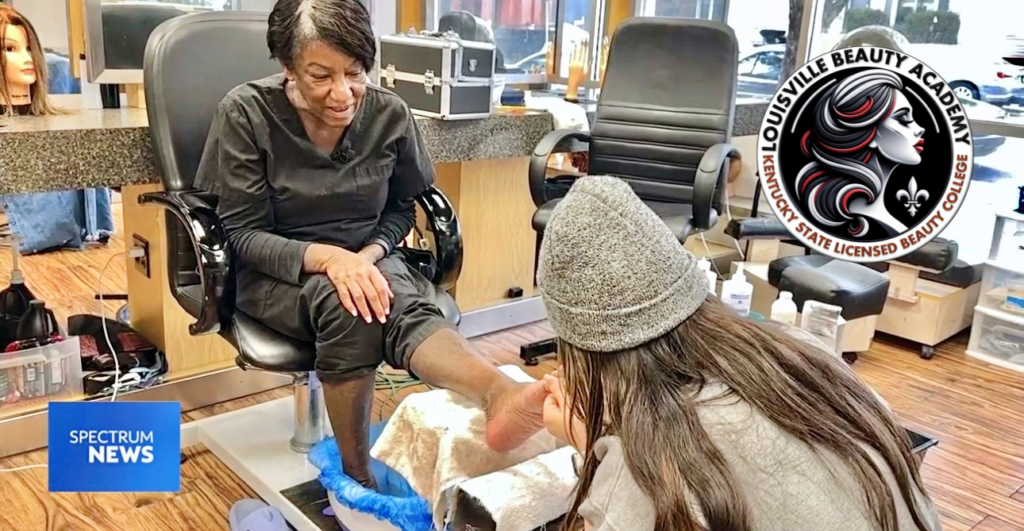
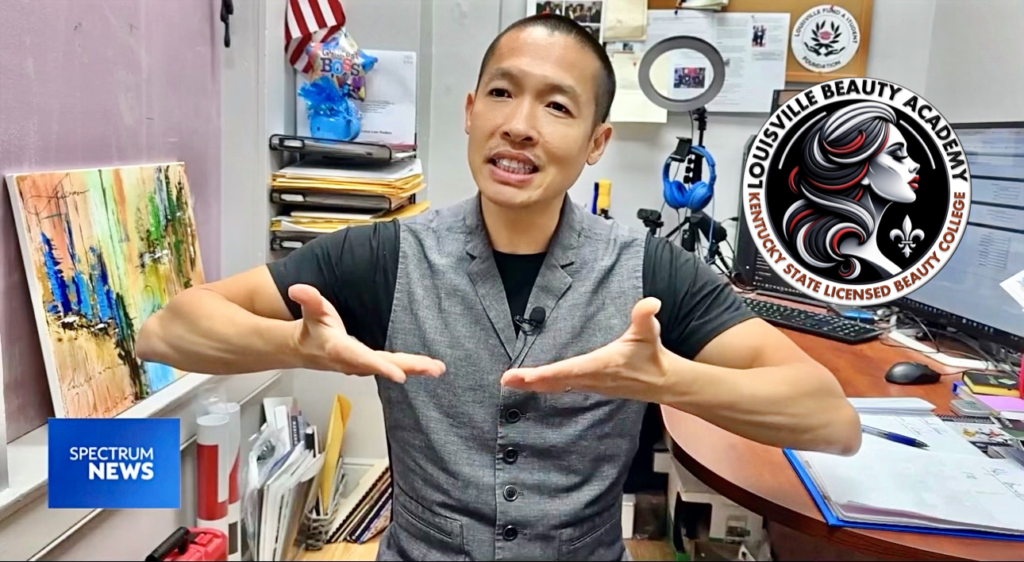
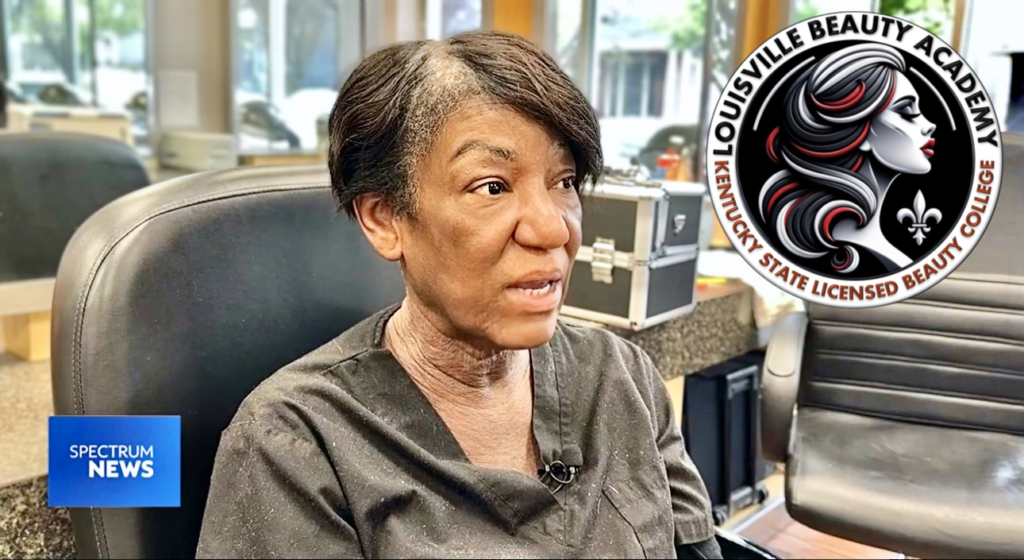
This week, Spectrum News of Louisville shone a spotlight on the diverse and inclusive nature of the academy, featuring its founder, instructors, and students. The coverage highlighted the school’s expertise in various beauty fields, including nail technology, skincare, cosmetology, and instructor training. Louisville Beauty Academy stands out as a testament to the power of diversity, with students and staff representing a wide range of races, languages, and expertise.
The recent passage of Senate Bill 14, which the academy has ardently supported, marks a significant milestone in the beauty industry’s history. Championed by minority party Democrat Senator Reggie Thomas, one of only three Black senators in the Kentucky State Senate, the bill was initially perceived as catering solely to the Asian community. However, it is a legislation for all, aiming to create a more inclusive and equitable beauty industry.
Louisville Beauty Academy is unique in its commitment to meeting community demands and needs. Unlike many schools that focus primarily on cosmetology due to federal financial aid availability, the academy offers a wide range of licensed fields, including nail technician, aesthetician, cosmetologist, instructor, shampoo and stylist, eyelash extension, and more. By offering short programs, the academy helps more individuals embark on successful beauty careers.
We extend our heartfelt gratitude to all who have supported and continue to support the beauty industry, Louisville Beauty Academy, and all beauty professionals. Together, we are shaping a brighter future for the beauty education landscape in Kentucky.
Kentucky’s Gold Standard of Lawful and Humanized Beauty Education
About the Program
Louisville Beauty Academy (LBA) is a Kentucky State-Licensed and state-licensed beauty college, nationally recognized for excellence in lawful, humanized beauty education.
Our Nail Technology 450 Clock Hours Curriculum is designed to train students in the science, art, and professionalism of nail care — aligned with the standards and expectations of the Kentucky Board of Cosmetology (KBC).
All instruction is built with awareness of the Kentucky statutes and administrative regulations governing nail technology, as published by the Kentucky Board of Cosmetology at: 👉 https://kbc.ky.gov
Milady as the Foundation of Theory Education
Louisville Beauty Academy’s Nail Technology curriculum is structured in alignment with the Milady Standard Nail Technology textbook and resources.
All theory instruction,
Chapter quizzes and tests, and
PSI exam preparation
follow the Milady framework, ensuring that each student receives education consistent with nationally recognized standards and the Kentucky Board of Cosmetology exam outline.
In addition, LBA enhances learning with:
Milady textbooks and online resources
PSI exam preparation materials
LBA’s own self-published books authored by Founder Di Tran
Multilingual and AI-assisted study support
This combination makes LBA a gold standard hub where national curriculum, state law, and humanized education meet.
Overview and awareness of KRS 317A and 201 KAR 12 as published by KBC
25 hrs
Clinic & Practice
Supervised services on mannequins and live models, sanitation, client care, application skills
275 hrs
Total Program
Comprehensive Instructional Program
450 Clock Hours Minimum
These hours reflect Louisville Beauty Academy’s internal educational structure and are based on the most recent publicly available information from the Kentucky Board of Cosmetology at the time of publication. For current official requirements, always refer directly to https://kbc.ky.gov.
Curriculum Overview
1. Foundational Knowledge
History and Opportunities in Nail Technology
Life Skills, Professional Ethics, and Personal Growth
Professional Image and Personal Presentation
Communication Skills and Client Relations
Building Confidence and “YES I CAN / I HAVE DONE IT” Mindset
2. General Sciences
Infection Control and Safety Practices
Anatomy and Physiology Related to Skin and Nails
Nail Structure, Growth, and Health
Nail Diseases and Disorders (recognition and referral)
Basics of Chemistry (products, ingredients, and interactions)
Nail Product Chemistry (monomer, polymer, gels, solvents)
Basics of Electricity (safe use of electrical equipment, e-files, lamps)
These science topics are taught using Milady Standard Nail Technology as the core textbook, supplemented by LBA’s additional materials and visual/AI tools to help students deeply understand the “why” behind every service.
3. Nail Care & Enhancement Techniques
Manicuring – Basic and advanced manicure procedures
Pedicuring – Foot care, safety, and professional pedicure services
Electric Filing (E-File) – Safe bit selection, speed control, and damage prevention
Nail Tips and Wraps – Application, blending, maintenance, and removal
Monomer Liquid & Polymer Powder Systems (Acrylic) – Full sets, fills, repairs
UV/LED Gel Systems – Structure gels, gel polish, and specialty gel services
Creative Nail Art & Design – Polish techniques, embellishments, hand-painted art
All skills are first demonstrated by instructors, then practiced on mannequins, then on live models in LBA’s supervised clinic.
4. Business and Professional Skills
Preparing for Licensure and Employment
Understanding the Nail Technician’s Role in a Salon or Spa
Salon Management and Entrepreneurship Basics
Customer Service, Client Retention, and Retail Skills
Professional Ethics, Boundaries, and Communication in Practice
Building a Portfolio and Social Media Presence Responsibly
These topics help students not only pass the exam, but also thrive in the workforce or as future salon owners.
Training and Lawful Practice
Students must complete a required number of theory hours and safety education before performing services on the public.
Early practice occurs only on mannequins and fellow students, under instructor supervision.
All clinic hours are recorded using biometric and digital tracking to preserve accurate attendance and service records.
Sanitation, disinfection, and safety practices are emphasized continuously in alignment with current standards published by the Kentucky Board of Cosmetology.
Instruction on Kentucky law is provided for educational awareness only. LBA directs all students, graduates, and licensees to always consult the Kentucky Board of Cosmetology at https://kbc.ky.gov for the latest, official, and legally binding rules and regulations.
Why Louisville Beauty Academy Is the Gold Standard
Louisville Beauty Academy serves as a Center of Excellence for Beauty Education and Compliance in Kentucky by:
Using Milady Standard Nail Technology as the national curriculum backbone
Aligning training with KBC expectations and PSI exam outlines
Supporting students with self-published LBA books, AI tools, and multilingual resources
Maintaining transparent, documented, and humanized processes for all students
LBA graduates are trained to be:
Technically skilled
Lawfully aware
Ethically grounded
Compassionate and community-focused professionals
“Our education begins with respect for the law and ends with service to others — because lawful practice is the highest form of professionalism.” — Di Tran, Founder & CEO, Louisville Beauty Academy
Legal and Educational Disclaimer
Louisville Beauty Academy’s curriculum materials, including this Nail Technology 450 Clock Hours Curriculum description, are provided solely for educational and sample purposes.
Any references to Kentucky statutes, administrative regulations, or board standards are general summaries and not official legal documents.
Louisville Beauty Academy assumes no liability for any errors, omissions, or changes in law or regulation after the time of publication.
The Kentucky Board of Cosmetology (KBC) is the only official source for current and legally binding requirements. For all official updates to KRS 317A and 201 KAR 12, please visit: 👉 https://kbc.ky.gov
Report a website barrier or request help accessing information. Email Study@LouisvilleBeautyAcademy.net or text 502-625-5531. Include the page and what you were trying to do. Please do not send medical records or sensitive identifiers.
Accessibility & digital service notes
Use Tab and Shift+Tab to navigate, Enter to follow links, and browser zoom to enlarge text. The language selector supports Enter, Space, Tab, and Escape. Motion is reduced when your device requests it. Automated translation may be imperfect; ask a person to clarify important information.
Updated October 16, 2026. Work on accessibility is ongoing. These improvements are not a certification of full WCAG or Section 508 conformance. Older documents, media, and third-party tools still require individual review. About WCAG accessibility standards.