From Licensure to Visibility: Why Louisville Beauty Academy Teaches Digital, Public Proof of Work — Not Just Hours
At Louisville Beauty Academy, We Educate for a New Era
In today’s rapidly changing beauty industry, success looks different than it did even a few years ago. Gone are the days when a clocked number of hours alone was enough to launch a career. Today’s professionals succeed by combining compliance, visible proof of skill, confidence, and a human-centered approach to learning.
At Louisville Beauty Academy, we are proud to embrace this evolution — preparing our students not just to graduate, but to thrive.
What the State Requires — and Why It Matters
Kentucky’s licensing process prioritizes:
Public safety
Sanitation and infection control
Professional responsibility
These requirements exist to protect clients and professionals alike — and we ensure every student meets and exceeds them with clarity, rigor, and understanding.
Beyond Hours: The Power of Proof
The beauty industry — like many skilled professions — is increasingly influenced by digital presence and demonstrated work. Employers, salons, and clients want to see proof of skill. They want to know that a professional not only learned but that they have done.
At LBA, we teach students how to show their work safely and ethically — with respect for privacy, compliance, and professionalism.
Our Mindset: YES I CAN → I HAVE DONE IT
Belief without action isn’t enough. Confidence without validation doesn’t travel far.
That’s why our classrooms and clinics are built around a simple, powerful philosophy:
➡️ YES I CAN — every student learns skills with intention.
➡️ I HAVE DONE IT — every student builds a body of work rooted in action and real experience.
This mindset prepares graduates to walk into licensure exams, job interviews, and client interactions with pride and professionalism.
Humanization First: A Better Way to Teach
We believe education should be:
Student-centered
Purpose-driven
Career-ready
Digitally fluent
Compliant and ethical
This human-centered approach helps students from all pathways — including adult learners, career changers, immigrants, and non-traditional students — find success in the beauty professions.
Research Backbone + Podcast Insights
We are excited to announce that the LBA education model is featured in a comprehensive research and podcast series published by Di Tran University – College of Humanization as part of the Research & Podcast Series 2026.
This research explores:
Regulatory compliance in vocational beauty education
Digital documentation of skill and experience
Ethical and legal use of portfolios and professional proof
Workforce mobility and human-centered pedagogy
The series includes real conversations that translate policy and research into practical insights for students, educators, and industry leaders.
🎧 Tune in to the podcast series and explore the full research report to go deeper.
We’re Ready to Help You Succeed
Whether you’re starting your beauty career, changing paths, or building professional confidence, Louisville Beauty Academy is here to guide you — with compliance, community, clarity, and proof of work at the center of everything we do.
Understanding 201 KAR 12:082 — The Framework that Governs Beauty School Education and Administration in Kentucky
🌟 Introduction
Louisville Beauty Academy (LBA) proudly serves as Kentucky’s Center of Excellence for Beauty Education, a state-licensed college committed to compliance, education integrity, and licensing excellence. Our mission extends beyond training — we actively promote awareness and understanding of the legal and administrative frameworks that govern Kentucky’s beauty industry.
One of the most important regulations every beauty school, instructor, and student should know is 201 KAR 12:082, an administrative law promulgated by the Kentucky Board of Cosmetology (KBC) under the authority of KRS Chapter 317A.
This article provides a simplified educational summary of the regulation to help learners and professionals understand its scope and importance. (⚠️ Please read the full disclaimer at the end — this article is not legal advice and may be out of date.)
⚖️ The Purpose of 201 KAR 12:082
The regulation titled “Education Requirements and School Administration” establishes the educational standards, instructional hours, and administrative expectations for all licensed schools of:
Cosmetology
Esthetics (Skin Care)
Nail Technology
Blow-Dry Services
Apprentice Instructor Training
It defines what schools must teach, how many hours each program must include, and how schools must report, document, and supervise student training.
🧠 Education and Curriculum Requirements
Each beauty discipline has a clearly defined set of subject areas and required instructional hours, combining theory and clinical practice:
Cosmetology
Total: 1,500 hours minimum
Lecture (theory): 375 hours
Clinic (practice): 1,085 hours
Law and Regulations: 40 hours
Students may not perform chemical services until completing 250 hours of training.
Nail Technology
Total: 450 hours
Lecture (theory): 150 hours
Clinic (practice): 275 hours
Law and Regulations: 25 hours
No public services until 60 hours are completed.
Esthetics
Total: 750 hours
Lecture (theory): 250 hours
Clinic (practice): 465 hours
Law and Regulations: 35 hours
No public services until 115 hours are completed.
Apprentice Instructor
Total: 750 hours
Direct Student Contact: 425 hours minimum
Theory (in-person or online): 325 hours covering teaching techniques, psychology, classroom management, and lesson planning.
Apprentice instructors must work under direct supervision of a licensed instructor at all times.
Blow-Dry Services License
Total: 300 hours
Lecture (theory): 100 hours
Clinic (practice): 175 hours
Law and Regulations: 25 hours
No public services until 60 hours are completed.
🏫 School Operations and Student Administration
201 KAR 12:082 also governs how schools must operate to ensure fair, transparent, and auditable administration:
Daily Attendance and Recordkeeping – Schools must maintain detailed, daily student records, attendance, and practical service logs for at least five years.
Monthly Reporting – Every month, schools must submit digital certifications of all student hours to the KBC.
Instructor Ratios – Schools must maintain at least 1 licensed instructor for every 20 students and 1 instructor for every 2 apprentice instructors.
No Compensation – Students cannot be paid or guaranteed employment while enrolled.
No Additional Fees – Schools cannot charge students beyond the contracted tuition amount.
Display Requirement – All schools must display a public notice: “Work Done by Students Only” – with letters at least one inch high.
Enrollment and Transfer Procedures – All enrollment data must be submitted digitally within 10 business days, matching official government-issued identification.
Leave, Withdrawal, and Credit for Hours – All must be reported to the Board within 10 business days. Hours older than five (5) years are not transferable.
🧾 Student Rights and School Responsibilities
201 KAR 12:082 ensures educational integrity by requiring that every student receives a copy of:
KRS Chapter 317A, and
201 KAR Chapter 12, upon enrollment.
It also affirms the right of any student to file a complaint with the Kentucky Board of Cosmetology under 201 KAR 12:190, ensuring accountability across all institutions.
💼 Business Skills and Professional Readiness
Every program must also include business education — covering topics such as career planning, professionalism, salon management, and licensure preparation — helping students transition confidently into licensed careers.
🌎 Louisville Beauty Academy’s Leadership Role
At Louisville Beauty Academy, these laws are not just compliance requirements — they are the foundation of excellence. LBA trains students to understand why these standards exist: to protect public health, ensure professional consistency, and elevate Kentucky’s beauty industry.
Our internal policies, training systems, and recordkeeping platforms are built to exceed these requirements, ensuring audit readiness, full transparency, and 100% licensing success.
🏆 Nationally Recognized Excellence
U.S. Chamber of Commerce Top 100 Small Businesses in America (2025)
National Small Business Association Advocate of the Year Finalist (2025)
These honors reflect Louisville Beauty Academy’s deep commitment to legal integrity, student success, and industry advancement.
⚖️ Legal Disclaimer (Read Carefully)
This article and any accompanying video are provided solely for educational and informational purposes by Louisville Beauty Academy. It does not constitute legal advice or an official interpretation of Kentucky law. Kentucky statutes and administrative regulations — including 201 KAR 12:082 and KRS Chapter 317A — are subject to frequent updates and revisions. Therefore, this information may be out of date as soon as it is posted.
For the most current and authoritative version of all Kentucky Board of Cosmetology laws and regulations, please refer directly to the official KBC website: 👉 https://kbc.ky.gov/Legal/Pages/default.aspx
🕊️ YES I CAN. I HAVE DONE IT.
Louisville Beauty Academy continues to stand as Kentucky’s model of compliance, education, and empowerment — shaping the next generation of licensed professionals with integrity, purpose, and pride.
Louisville Beauty Academy (LBA) proudly treats every student as part of a lifelong family — not just a one-time enrollee. Since its founding, LBA has built a supportive, humanized environment where current students and graduates continually uplift one another. In practice, this means that even after graduation, you are always welcome to return — to refresh your skills, observe classes, prepare for the state licensing exam, mentor others, or simply reconnect.
This open-door tradition has become a defining part of LBA’s culture. For nearly ten years and nearly 2,000 graduates, the Academy has remained committed to education through community, not isolation. Once you’ve joined the LBA family, our instructors and staff are glad to see you again — as a tutoring graduate, guest, or customer — whenever space and scheduling allow.
Dedicated Licensing Exam Preparation
LBA’s core mission is clear: to prepare students for the Kentucky State Board licensing exams, both theory and practical. Every lesson emphasizes safety, sanitation, and disinfection — the pillars of state-required cosmetology standards.
Our students practice every step required by the Board: disinfecting tools and workstations, proper handwashing, and sanitation procedures. These habits are drilled not as formality, but as lifelong professional ethics. Passing the state exam is not about artistry alone — it’s about demonstrating that you can protect clients’ health.
LBA ensures that all graduates understand the legal and safety standards demanded by Kentucky law. Once licensed, professionals expand beyond these basics into creativity, psychology, and advanced customer care — areas LBA continues to nurture through its ongoing community of mentorship.
Lifelong Learning and Career Growth
Graduation at LBA is not an ending — it’s a new stage in your professional journey. The beauty industry evolves rapidly, and continuing to learn keeps professionals strong, relevant, and successful. That’s why LBA invites all alumni to come back, free of charge, for optional tutoring, workshops, or guided practice, as staff and space permit.
These opportunities are offered as a community service — never as an obligation, contract, or guarantee. They exist to encourage growth, confidence, and connection. Many graduates find that returning for a few hours of guided practice or mentorship rekindles motivation and sharpens skills.
Humanized and Compassionate Teaching
Everything LBA does is grounded in its philosophy of Humanization — teaching individuals to love, accept, and care for themselves first, then to share that care through their service to others. Instructors focus on building confidence and compassion alongside technical mastery.
Students learn to see each client as a whole person, not just a customer. This approach builds empathy, professionalism, and lasting trust — the foundation of true beauty service. When graduates return to visit, they continue to grow this humanized mindset through collaboration, peer learning, and giving back.
Legal and Ethical Assurance
LBA’s continuing-support model is entirely voluntary and non-binding.
No additional contract or obligation exists after graduation.
No guarantee of licensure or employment is made or implied.
All support is offered at no cost as a community-service benefit, depending on staff and facility availability.
Graduates are free to pursue their careers independently, at any location or business of their choice.
Licensure is solely determined by the Kentucky State Board of Cosmetology and the graduate’s own compliance with state requirements. LBA’s ongoing access is a courtesy — a way to encourage lifelong learning, mentorship, and confidence — not a continuing enrollment or tuition program.
Disclaimer
Louisville Beauty Academy provides optional, no-cost post-graduation learning opportunities as a community service. Participation is voluntary, space-dependent, and not part of any contract or enrollment obligation. LBA does not guarantee licensure or employment outcomes. Licensure remains governed by the Kentucky State Board of Cosmetology and applicable state laws.
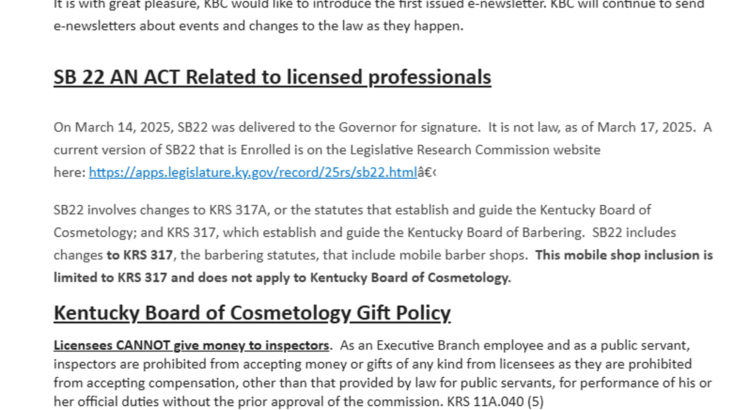
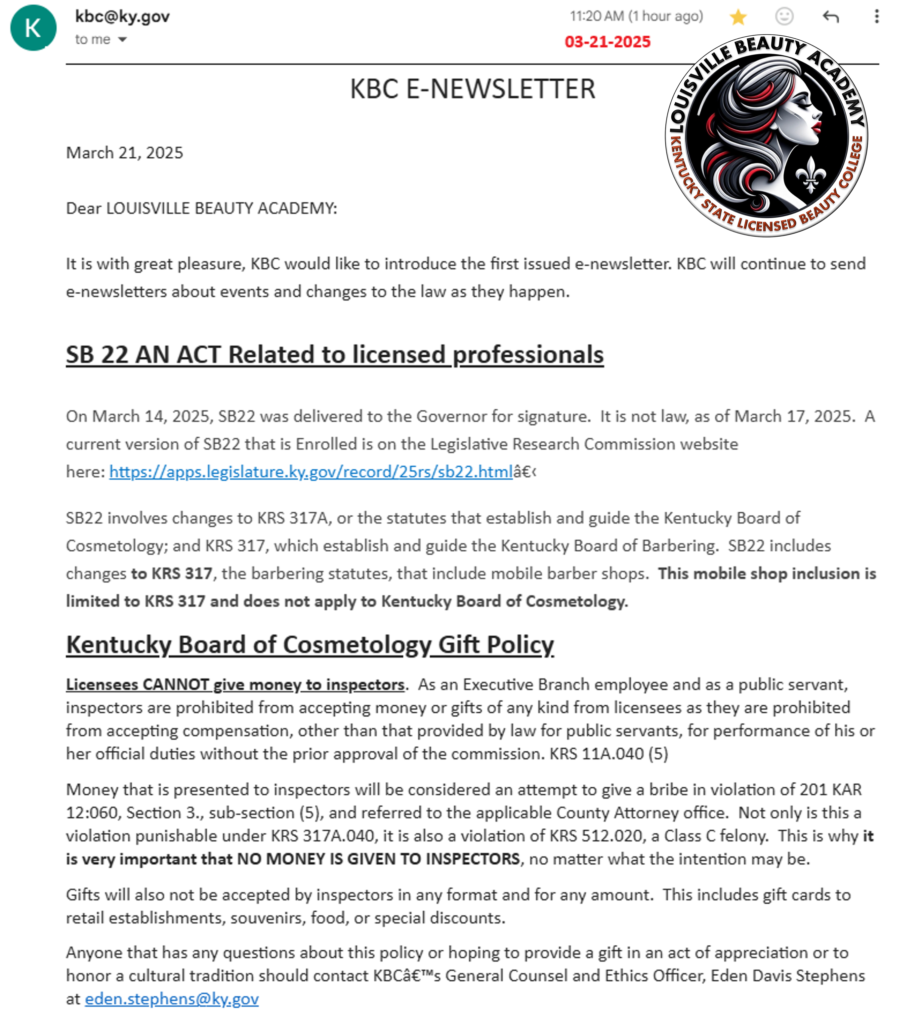
March 21, 2025, marks a historic moment for the Kentucky State Board of Cosmetology (KBC) as it releases its first-ever mass e-newsletter, signifying a new commitment to providing timely updates on industry regulations, legislative changes, and policies affecting licensed beauty professionals, students, and the public. Louisville Beauty Academy (LBA), a state-licensed beauty college in Kentucky, proudly recognizes and supports this advancement as part of its commitment to delivering regulatory knowledge to the beauty community.
Senate Bill 22 (SB22) – Updates on Licensed Professionals and Mobile Barber Shops
One of the primary highlights in the first KBC newsletter is Senate Bill 22 (SB22), which was delivered to the Governor for signature on March 14, 2025. While not yet enacted as of March 17, 2025, the bill’s current enrolled version can be reviewed on the Legislative Research Commission’s website: https://apps.legislature.ky.gov/record/25rs/sb22.html.
SB22 includes changes related to KRS 317A, which governs the Kentucky Board of Cosmetology, and KRS 317, which oversees the Kentucky Board of Barbering. Importantly, the bill includes updates specific to mobile barber shops under KRS 317. However, these mobile shop provisions do not apply to the Kentucky Board of Cosmetology or cosmetology establishments.
Kentucky Board of Cosmetology Gift Policy – Strict Prohibitions on Monetary Gifts to Inspectors
Another significant topic covered in the newsletter is a firm reminder regarding the Kentucky Board of Cosmetology’s policy prohibiting licensees from giving money or gifts to inspectors.
According to KBC, as Executive Branch employees and public servants, inspectors are strictly prohibited from accepting money or gifts of any kind from licensees. This regulation is in place to maintain integrity and uphold ethical standards within the industry. Inspectors can only accept compensation that is officially authorized for their role, per KRS 11A.040 (5).
Attempting to offer money or gifts to an inspector is considered an attempt to bribe a public official and is a violation of 201 KAR 12:060, Section 3, subsection (5).
Violating this policy can result in severe consequences, including referral to the County Attorney’s Office for further legal action.
Criminal penalties may apply, including violations under KRS 317A.040 and KRS 512.020, a Class C Felony.
No form of gift is acceptable—regardless of the intention or monetary value. This includes: ✔️ Gift cards to retail establishments ✔️ Souvenirs ✔️ Food or beverages ✔️ Special discounts or incentives
Licensees or individuals seeking clarification on this policy or those wishing to honor a cultural tradition related to gift-giving should contact KBC General Counsel and Ethics Officer Eden Davis Stephens at eden.stephens@ky.gov.
Louisville Beauty Academy’s Commitment to Spreading Regulatory Awareness
Louisville Beauty Academy (LBA), as a state-licensed beauty college in Kentucky, is dedicated to ensuring that all students, graduates, and beauty professionals remain informed of regulatory updates. By monitoring and promptly sharing changes from the Kentucky State Board of Cosmetology, LBA helps beauty professionals stay compliant, protect their licenses, and advance their careers with full awareness of industry laws.
Key initiatives at Louisville Beauty Academy include:
Curriculum Updates: Incorporating regulatory changes directly into coursework to prepare students for real-world compliance.
Workshops & Compliance Training: Providing ongoing education to students, alumni, and beauty professionals on industry standards and legal obligations.
Access to Information: LBA ensures that any updates, including state law changes, KBC regulations, and policy shifts, are disseminated to the beauty community in a timely manner.
Legal Considerations and Next Steps for Licensees and Beauty Professionals
In light of these recent updates, all licensed professionals should take the following proactive steps to ensure compliance with Kentucky cosmetology laws:
✔ Review Senate Bill 22 (SB22) and its impact on mobile barber shops. While it does not directly affect cosmetology, it is essential to understand the legislative environment.
✔ Adhere to the KBC Gift Policy and never offer gifts or monetary compensation to inspectors. Any violations can result in severe legal consequences.
✔ Stay updated with KBC’s newsletters and official announcements. These publications will now serve as a primary source of regulatory news for Kentucky’s beauty professionals.
✔ Attend Board meetings and actively engage with industry updates. KBC provides dates and schedules for upcoming meetings where stakeholders can stay informed and voice concerns.
✔ Ensure that your beauty school or employer follows all state regulations. Schools like Louisville Beauty Academy are instrumental in delivering up-to-date compliance education.
Disclaimer
Louisville Beauty Academy provides this information as a public service and educational resource. While we strive to ensure accuracy, individuals are advised to consult the Kentucky State Board of Cosmetology or legal professionals for the most current and personalized guidance regarding state laws and regulations.
A Historic Step Toward a More Informed Beauty Community
The Kentucky State Board of Cosmetology’s launch of its first-ever mass newsletter is a groundbreaking shift toward greater industry transparency and accessibility. Louisville Beauty Academy proudly supports and shares this initiative, ensuring that Kentucky’s beauty professionals—students, graduates, and salon owners—stay informed, protected, and empowered with knowledge.
With this new mode of communication, the beauty industry in Kentucky can expect greater clarity, proactive guidance, and enhanced regulatory awareness moving forward.
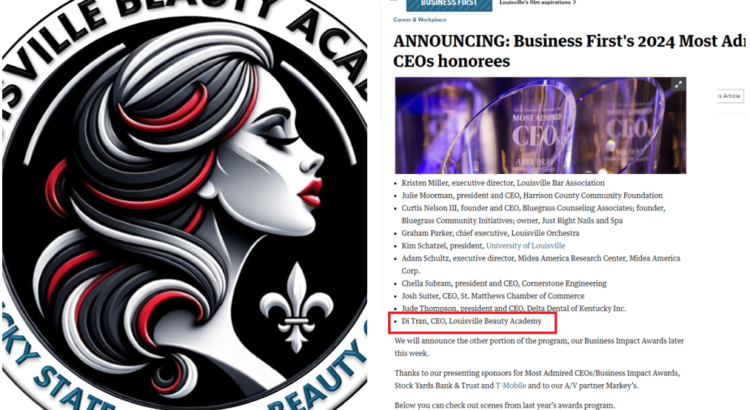
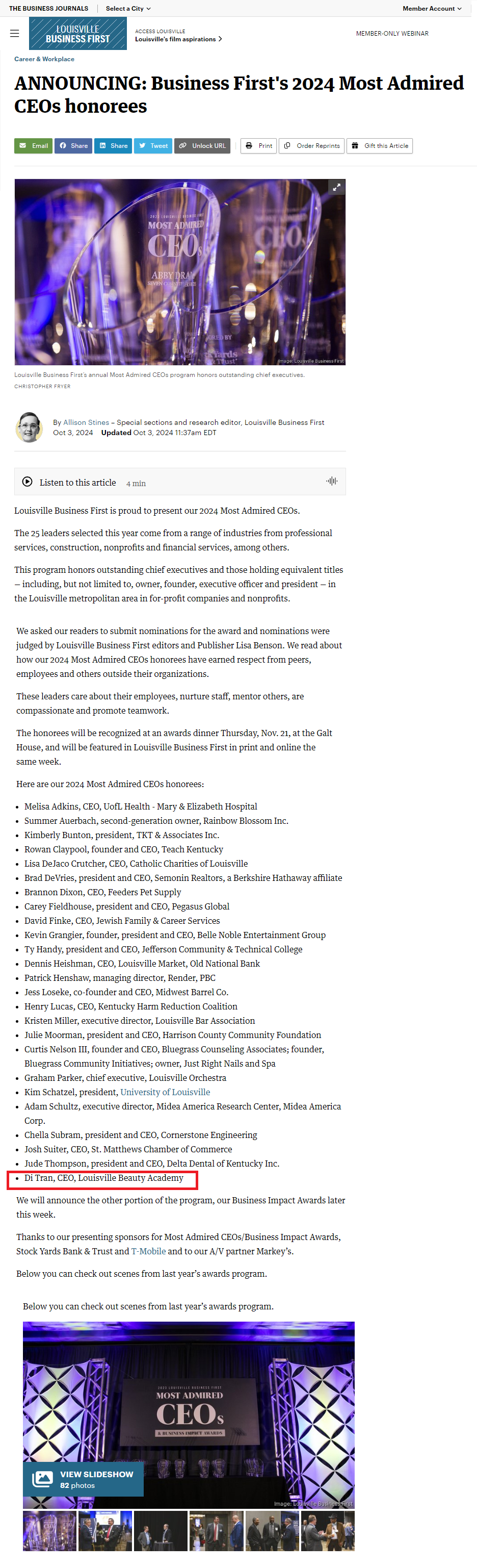
Di Tran’s recognition as one of Louisville’s most admired CEOs is a testament to his leadership, vision, and heart for service. His efforts go beyond running a beauty school. Di Tran is committed to empowering communities, supporting new immigrants, and fostering job growth. He is the epitome of a leader who works for the betterment of others, driven by the desire to “Create Smiles” in every life he touches.
As Louisville Beauty Academy continues to grow, with its second location poised to make an even greater impact, we are immensely proud of Di Tran and the entire team. This recognition only further solidifies our commitment to delivering excellence in beauty education and community service.
At Louisville Beauty Academy, we often hear the question: “Why should I go for beauty licensing and a career?” This question typically comes from those who are new to the beauty industry or considering it as a career path. For those who have always been passionate about beauty, the answer may already be clear—they know the industry is where their heart belongs. But for those still contemplating, let’s explore this question in depth, guided by the experience of Di Tran, our founder and CEO.
Understanding Beauty Licensing Requirements:
The Kentucky State Board of Cosmetology (KBC) mandates specific requirements for licensing in beauty fields, which vary slightly depending on your chosen career path—cosmetologist, nail technician, esthetician, or apprentice instructor. Here are the basic requirements:
Cosmetologist: 1500 hours, 12th-grade education or equivalent, and completion of a written and practical exam.
Nail Technician: 450 hours, 12th-grade education or equivalent, and completion of a written and practical exam.
Esthetician: 750 hours, 12th-grade education or equivalent, and completion of a written and practical exam.
Apprentice Instructor: 750 hours, 12th-grade education or equivalent, holding a license for at least one year in the respective beauty field, and completion of a written and practical exam.
Along with these requirements, specialized courses such as the newly added 300-hour Shampoo and Styling course, eyelash extension training, and other specialty permits are also available for those who want to expand their expertise.
Now, let’s delve into the reasons why pursuing a licensed beauty career could be one of the most rewarding decisions of your life.
1. Unlocking Creative Expression Through Licensing
A career in beauty is one of the rare paths where your creativity directly impacts your success. Licensing gives you the formal education and skills to not only express yourself but to offer professional, high-quality services that clients trust.
Di Tran, the founder of Louisville Beauty Academy, is a prime example of someone who has successfully blended his technical background as a computer engineer with his passion for beauty. After completing a Bachelor’s, Master’s, and PhD-level coursework in IT management, and holding one of the top three engineering titles out of 7,000+ engineers at a Fortune 50 company, Di Tran could have stayed in the tech world. But his love for the beauty industry drove him to become a licensed Nail Technician and to build a family business that now includes a series of nail salons, hair salons, and two beauty school locations.
For Di Tran, the transition into beauty wasn’t just about a career change—it was about finding a way to connect with people, create something beautiful, and make a tangible difference in the lives of others. Licensing opened that door.
2. Building Stability and Financial Independence
In today’s world, financial stability is a major concern for most people. The beauty industry offers not just creativity but also a stable and often lucrative career, particularly when you are licensed. With a license, you can work in established salons, spas, or even start your own business, giving you control over your financial future.
Licensing is your key to these opportunities. Without it, your career options in beauty are limited and less stable. With it, you can unlock a world of opportunity—whether that’s working as a freelance artist, opening your own salon, or becoming an educator.
Di Tran’s journey proves this. Despite his highly successful career in tech, he saw the immense potential in the beauty industry and decided to invest in licensing for himself and his family. Today, his beauty schools help hundreds of students become financially independent, teaching them the power of owning their skills and creating their opportunities.
3. Elevating Your Professional Credibility
A license is more than just a certificate—it’s a symbol of professionalism and trustworthiness. Clients are more likely to seek out and trust licensed beauty professionals because they know that these individuals are trained, skilled, and meet the highest industry standards. In a competitive market, your license sets you apart.
Imagine you’re a client looking for a service—whether it’s a manicure, a facial, or a haircut. Would you trust someone who is unlicensed and self-taught, or someone who has gone through the proper channels, trained under experts, and passed state-regulated exams? Licensing gives clients the peace of mind that they are receiving services from a true professional.
At Louisville Beauty Academy, we prioritize this professional growth. We guide our students through rigorous training, ensuring that when they graduate, they don’t just leave with a certificate—they leave with the confidence to make their mark on the industry.
4. Opportunities for Growth and Specialization
Once you are licensed, the opportunities for growth are endless. You can specialize in areas like eyelash extensions, advanced hairstyling, or medical esthetics, allowing you to continually expand your skillset. The Kentucky State Board of Cosmetology even offers pathways for you to acquire additional permits and specialize in specific services, making you even more marketable.
Di Tran is an advocate for lifelong learning and growth. Even after achieving incredible success in both the tech and beauty industries, he continues to push himself and his family to acquire new skills and certifications, ensuring they stay at the top of their game. This mindset of continuous improvement is something we instill in our students at Louisville Beauty Academy, empowering them to never stop learning and advancing.
5. Legal and Ethical Responsibility
The Kentucky State Board of Cosmetology has regulations in place to protect both beauty professionals and their clients. Licensing ensures that you understand the legal and ethical responsibilities of your profession, including proper sanitation, safety protocols, and business practices.
When you are licensed, you not only elevate your career but also commit to the well-being of your clients. This commitment is essential for building a lasting, successful career in beauty.
6. Flexibility and Control Over Your Career
One of the most appealing aspects of a licensed beauty career is the flexibility it offers. Whether you want to work part-time while raising a family, travel while freelancing, or open your own salon, beauty licensing gives you the control to shape your career the way you want.
Di Tran, despite his demanding schedule in other fields, has built a career in beauty that allows him to spend time with his family while simultaneously growing his businesses. Licensing gives you the freedom to do what you love while maintaining a work-life balance that suits your needs.
Conclusion: Take Action Now
At Louisville Beauty Academy, we believe that beauty is more than just a profession—it’s a calling that can provide you with freedom, creativity, and financial stability. We invite you to take the next step toward building a rewarding career by becoming part of our family. As one of the highly affordable, flexible, and caring beauty colleges in Kentucky, we’re here to support you every step of the way.
Don’t wait—enroll today! Text us at 502-625-5531 or email us at study@LouisvilleBeautyAcademy.net to start your journey with Louisville Beauty Academy, where we treat every student like family.
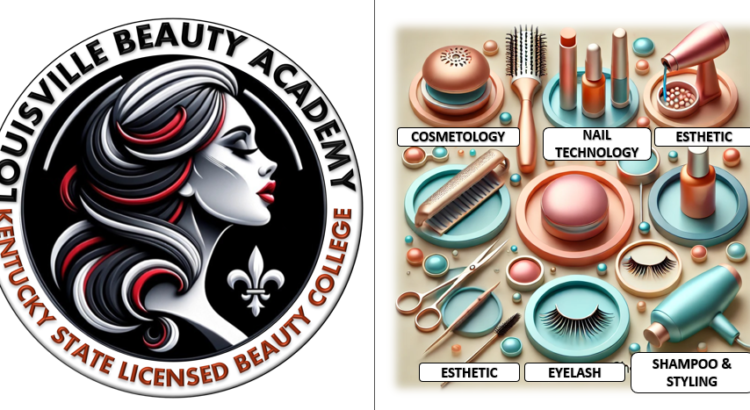
Clarifying the Confusion: Cosmetology vs. Specialized Programs (Nail Technology, Esthetics, Eyelash Extensions, Shampoo & Styling)
Many prospective beauty students find themselves confused between the broad Cosmetology program and more specialized licenses like Nail Technology, Esthetics, Eyelash Extensions, and Shampoo & Styling. This confusion often stems from the misconception that Cosmetology covers everything equally, but the focus is primarily on hair.
In Kentucky, each specialty has distinct licensing requirements:
Cosmetology: 1,500 hours
Nail Technology: 450 hours
Esthetics: 750 hours
Eyelash Extensions: 18 hours
Shampoo & Styling: 300 hours
At Louisville Beauty Academy, we offer all these Kentucky State Board-approved programs individually, allowing students to focus on the specific field they want to master. Many schools only offer Cosmetology and expect students to cover nails, lashes, or skincare within that program, which can be frustrating if you’re looking for dedicated training in a specific area.
For example, while Cosmetology covers nails and skincare, it does so briefly, and the main emphasis remains on hair. Specialized programs like Nail Technology and Esthetics allow students to dive deeply into those subjects, giving them the precise skills needed for a career in those areas without additional unrelated coursework.
Kentucky State Licensing Requirements:
Cosmetology: 1,500 hours
Nail Technology: 450 hours
Esthetics: 750 hours
Eyelash Extensions: 18 hours
Shampoo & Styling: 300 hours
At Louisville Beauty Academy, we are proud to offer all of these programs. As a Kentucky state-licensed beauty school, we help eliminate confusion and ensure you get the exact education you need for your chosen career.
Need Guidance?
If you’re feeling unsure about which license or program is best for you, we’re here to help. You can text or call us at 502-625-5531 or email study@louisvilleBeautyAcademy.net. We’re just a message away from clearing up any confusion and helping you take the next step in your beauty career!
At Louisville Beauty Academy, a Kentucky state-licensed beauty school, we are dedicated to not only teaching the skills necessary for success in the beauty industry but also emphasizing the importance of service and mental wellness. Our comprehensive licensing programs are designed to prepare students for a flourishing career in beauty by focusing on customer satisfaction and the substantial benefits of excellent service.
The Foundation of Service
The beauty industry is fundamentally a service industry, where success is directly correlated with the ability to meet and exceed client expectations. At Louisville Beauty Academy, we instill in our students the understanding that beauty services are not just about technical skills but also about creating a positive experience for each client. This approach is crucial because satisfied clients are more likely to return and recommend your services, which can significantly increase both regular income and tips.
Financial Rewards through Excellent Service
Our curriculum stresses the importance of exceptional service, highlighting how this can lead to additional financial rewards. Tips and extra cash are often a substantial part of a beauty professional’s income, and they typically reflect the client’s recognition of outstanding service. By fostering strong interpersonal skills and a client-focused approach, our students learn to enhance their earning potential in this competitive field.
Embracing Mental Wellness
One of the core teachings at Louisville Beauty Academy is the concept of mental wellness as a key to success. We encourage our students to “leave your baggage at the door” before entering the salon environment. This mindset helps in maintaining a professional and inviting atmosphere essential for both client satisfaction and personal well-being.
Our experienced instructors emphasize the importance of boosting one’s mental state through practices like mindfulness and positive thinking. An inviting smile and a genuine care for clients are not just recommended but considered essential traits for anyone aspiring to succeed in this industry.
Cultivating a Successful Mindset
We believe that the right attitude can make a significant difference in a beauty professional’s career. This includes being emotionally intelligent, handling workplace stress effectively, and consistently providing service with a smile. Our training programs focus on developing these aspects to ensure that every graduate is not only skilled in beauty techniques but also in managing the interpersonal dynamics of the salon environment.
Conclusion
Louisville Beauty Academy is committed to producing top-tier beauty professionals who excel in both skill and service. By prioritizing customer satisfaction and mental wellness, we equip our students with the tools they need for long-term success in the beauty industry. Join us to start your journey towards becoming a standout beauty professional who not only excels in technical skills but also in creating a memorable service experience for every client.
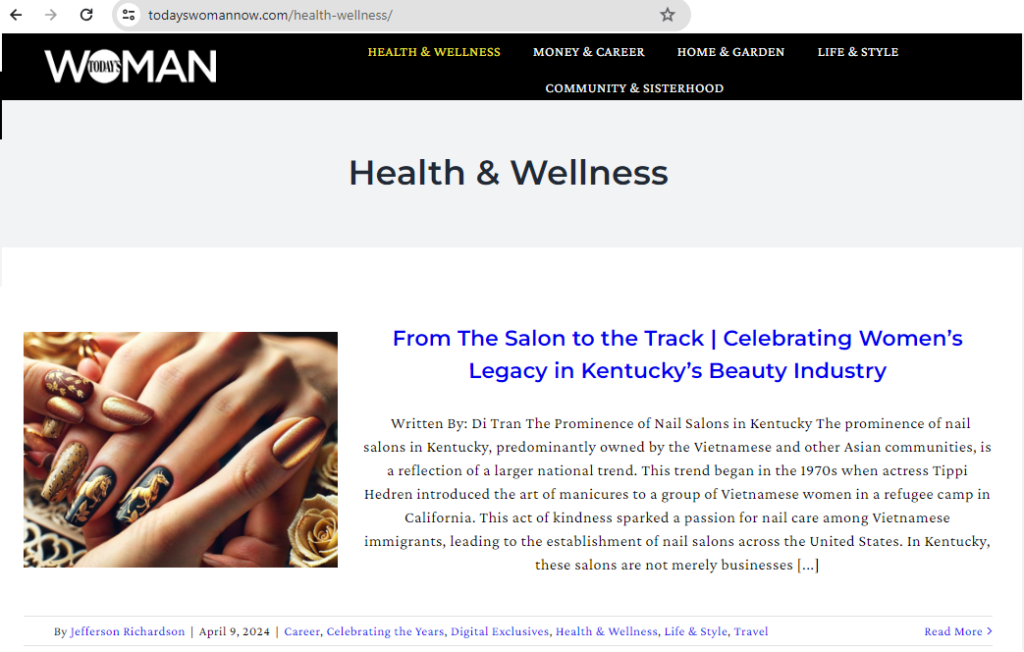
Kentucky’s Louisville Beauty Academy stands as a beacon of empowerment and cultural celebration, particularly during the festive times of the Kentucky Derby. The Academy, which has graduated over a thousand students—many of whom are now self-employed or own their salons—plays a pivotal role in shaping the local beauty industry. The connection between the nail services provided by these graduates and the Derby festivities highlights an important cultural narrative that deserves recognition.
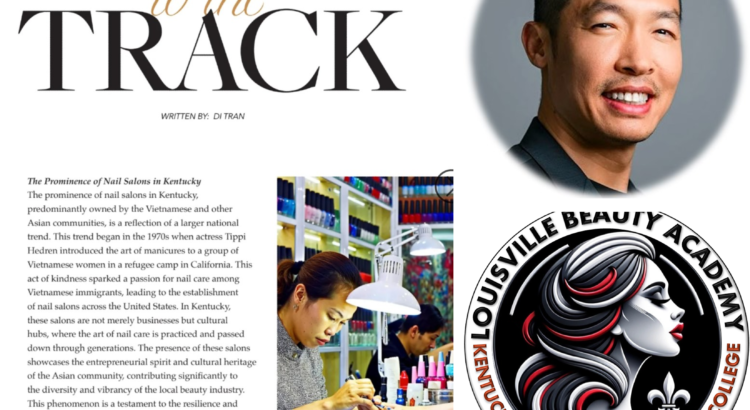
The Asian Influence in Kentucky’s Nail Salons
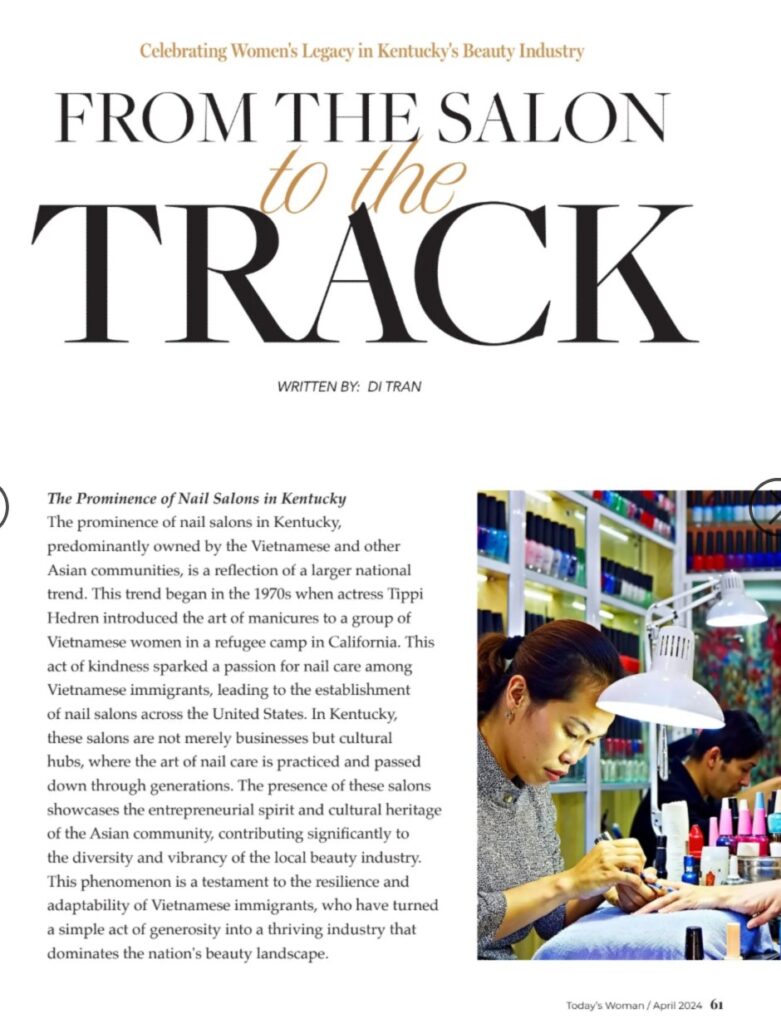
The predominance of nail salons owned by the Vietnamese and other Asian communities in Kentucky is not just a local phenomenon but a national trend that began in the 1970s. It was sparked by an act of kindness by actress Tippi Hedren, who taught Vietnamese women in a refugee camp in California the art of manicures. This gesture has since blossomed into a thriving industry dominated by Vietnamese Americans, shaping the beauty landscape of the nation, including Kentucky.
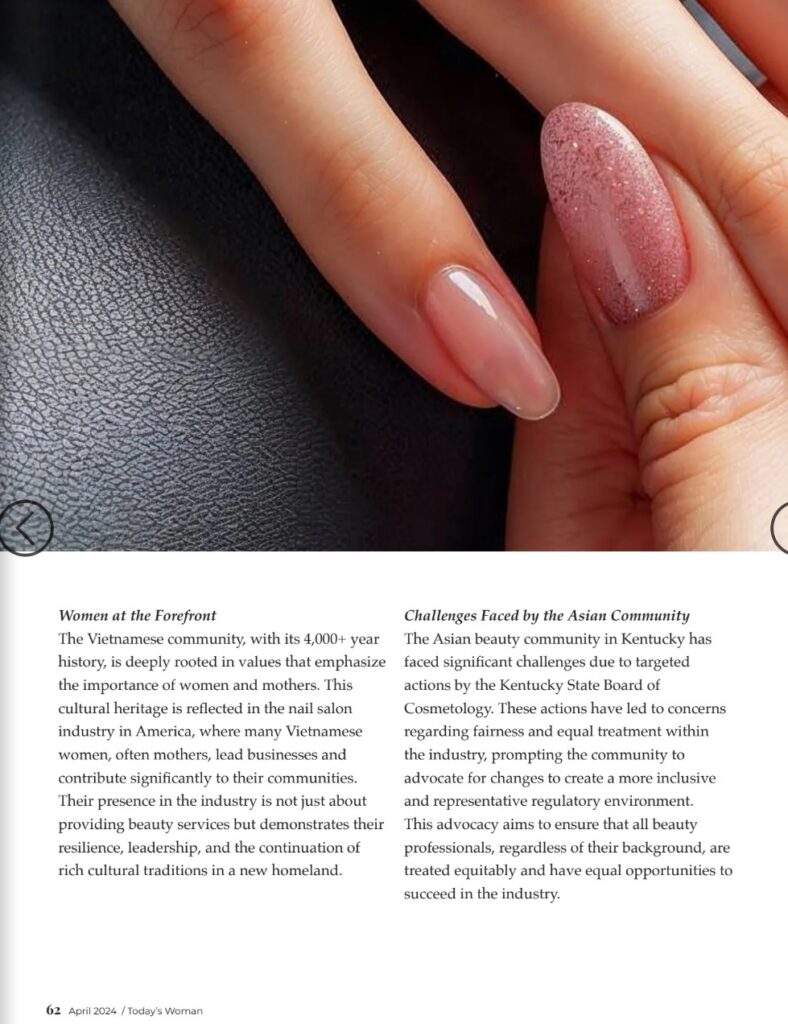
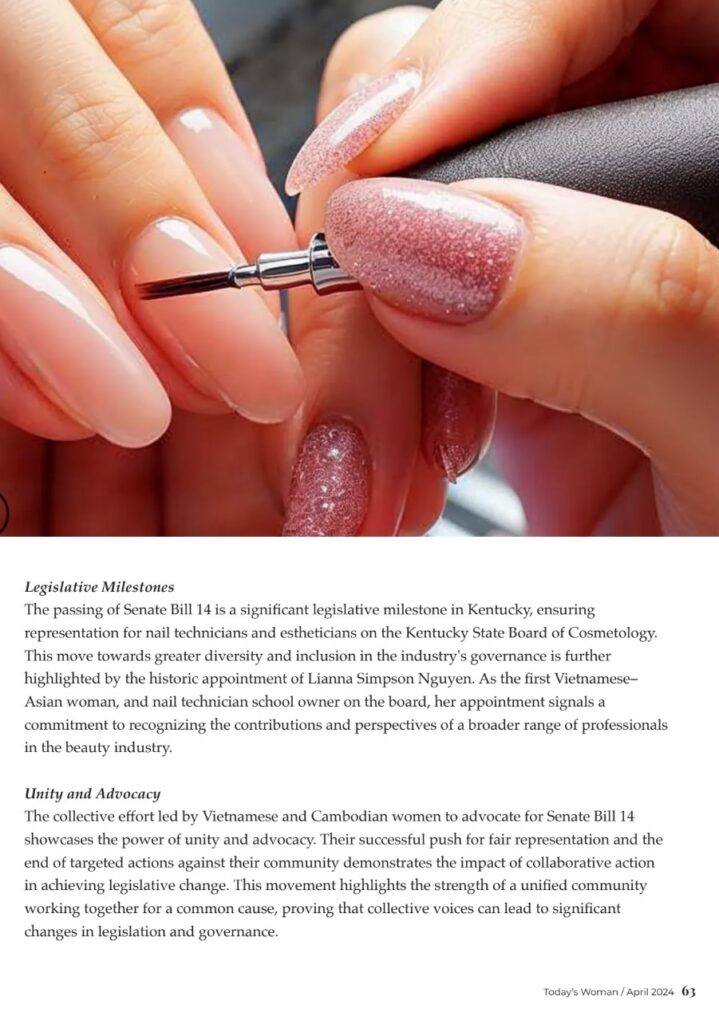
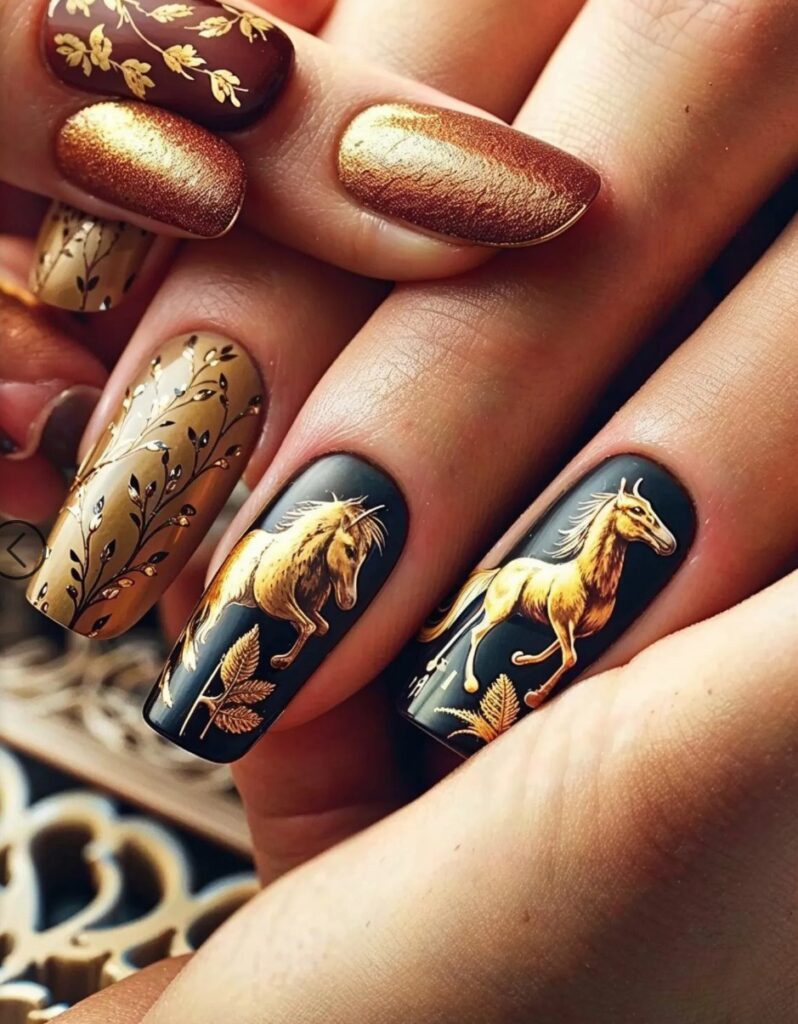
These salons are more than just places of business; they are community hubs where the rich cultural heritage and entrepreneurial spirit of the Asian community are on vibrant display. This is especially evident during the Derby, where nail services become a crucial part of the celebrations, akin to the event’s traditional hats and bourbon.
Women Leading the Way
The nail salon industry not only empowers women economically but also highlights the significant roles they play within their families and communities. Many salon owners are mothers who balance leadership in business with family responsibilities, showcasing the resilience and leadership of Vietnamese women and their substantial contributions to both their homeland and their new communities in the U.S.
Overcoming Challenges
Despite their success, the Asian beauty community in Kentucky has faced significant challenges, including targeted actions by regulatory bodies that have raised concerns about fairness and representation. This led to robust advocacy efforts, which were instrumental in the passing of Senate Bill 14, ensuring that nail technicians and aestheticians have representation on the Kentucky State Board of Cosmetology.
Legislative Milestones
The introduction of Senate Bill 14 was a landmark achievement for inclusivity within Kentucky’s beauty industry. The appointment of Lianna Simpson Nguyen as the first Vietnamese-American woman and nail technician school owner on the board marked a pivotal moment in recognizing the contributions of a broader demographic within the industry’s governance.
Unity and Advocacy
The collective advocacy by the Vietnamese and Cambodian communities is a prime example of how unity can lead to substantial legislative changes. Their efforts highlight the strength and impact of collaborative actions toward a common goal—fair representation and the cessation of targeted actions against their community.
Derby Celebrations
During the Kentucky Derby, Vietnamese salon owners and nail technicians not only work tirelessly to accommodate the increased demand but also take the time to celebrate this iconic event. They blend hard work with cultural festivities, including traditional Asian dishes and premium drinks, embodying the spirit of being American-made and foreign-born.
The Cultural Tapestry of the Derby’s Nail Industry
The Derby’s nail services illustrate the rich mosaic of cultures that shape this industry. Influenced by both Black and Vietnamese communities, the nail industry in Kentucky offers a range of styles that have become integral to the Derby experience, celebrating the diversity and creativity of the beauty industry.
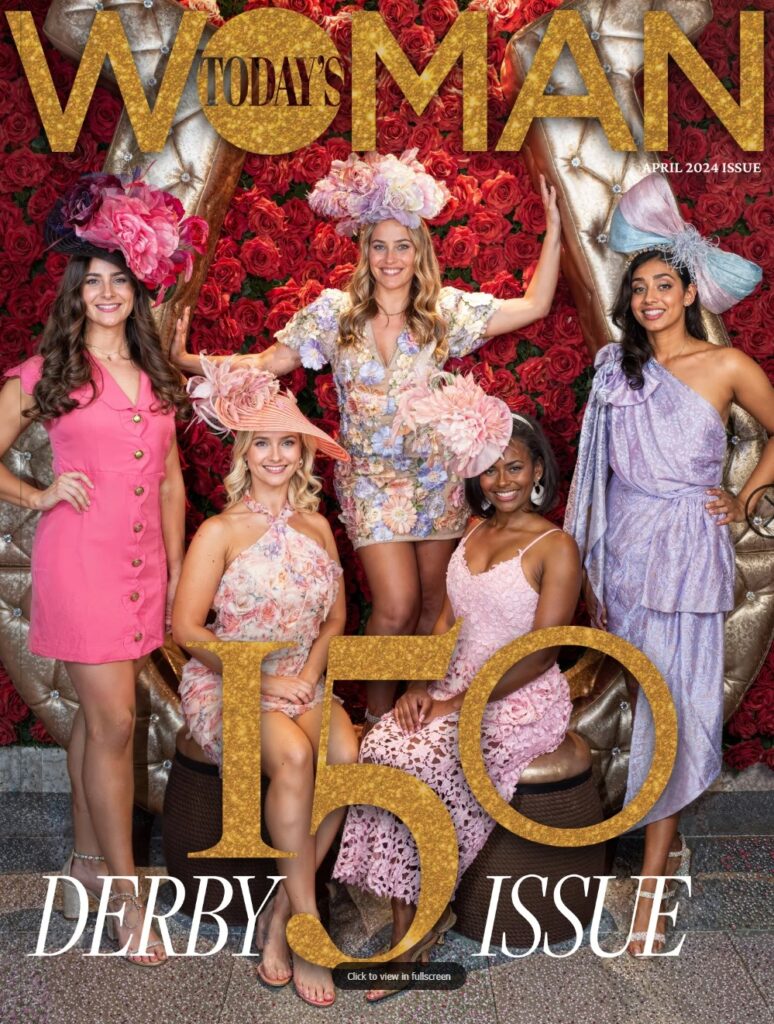
In conclusion, as we celebrate the 150th Kentucky Derby, it’s essential to recognize and elevate the contributions of the nail industry, particularly the role of women from the Asian community, who have been at the forefront of this beautiful, thriving sector. Louisville Beauty Academy remains committed to empowering future professionals, ensuring that the legacy of beauty, care, and cultural celebration continues to flourish in Kentucky.
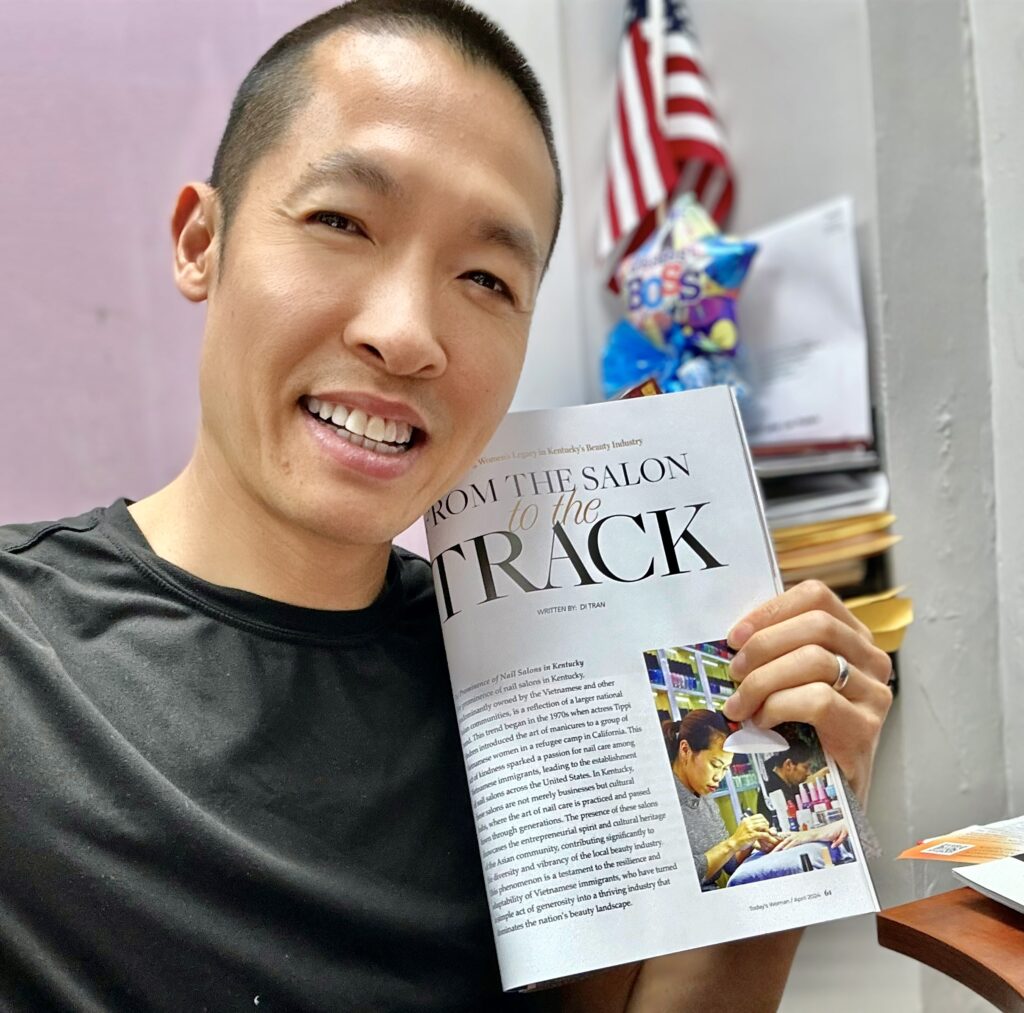
As the founder of Louisville Beauty Academy, I, Di Tran, would like to extend my deepest gratitude to the incredible team at Today’s Woman Magazine. Your unwavering support has been a crucial catalyst in empowering women and uplifting small business owners throughout Kentucky. Thank you for your dedication to making a meaningful impact in our community.
Louisville, KY – At the heart of Kentucky’s beauty education landscape stands the Louisville Beauty Academy, a state-licensed and accredited beauty college that is rapidly expanding its reach. With future second-location planning under development and a graduation rate of 95%, the academy has already graduated over 1,000 students, establishing itself as a beacon of excellence in the industry.
Founded by Di Tran, a visionary with a deep-seated belief in family-oriented values and community upliftment, Louisville Beauty Academy is more than just a school. It’s a sanctuary where underrepresented populations, particularly new immigrants with limited English skills, find a safe, supportive, and guided environment. The academy is dedicated to elevating individuals through beauty careers, ensuring that every graduate, regardless of their background, feels protected and valued.
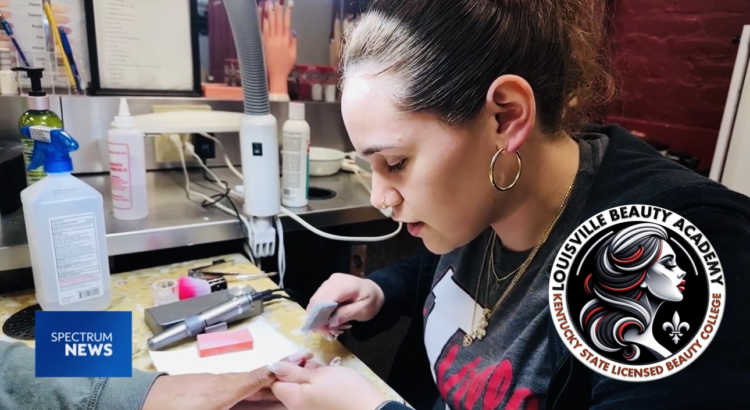
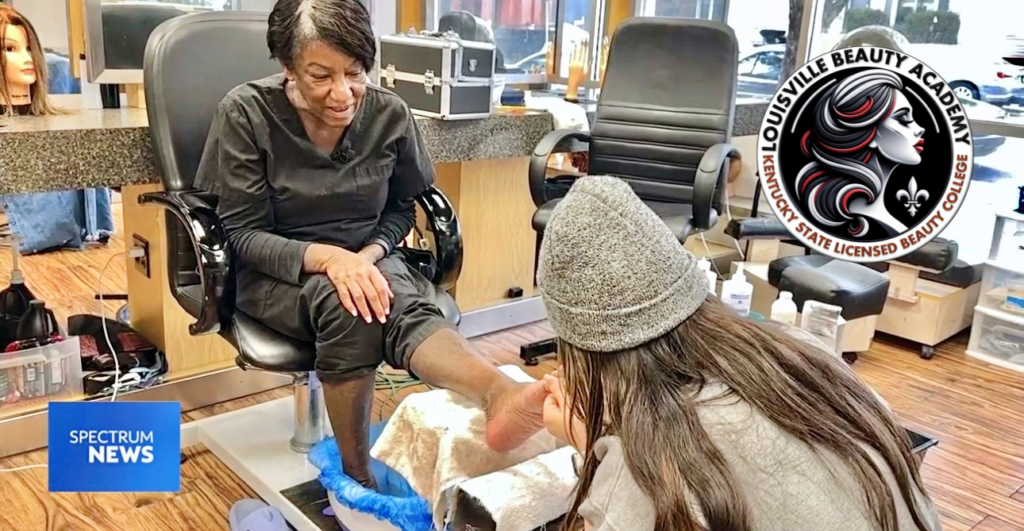
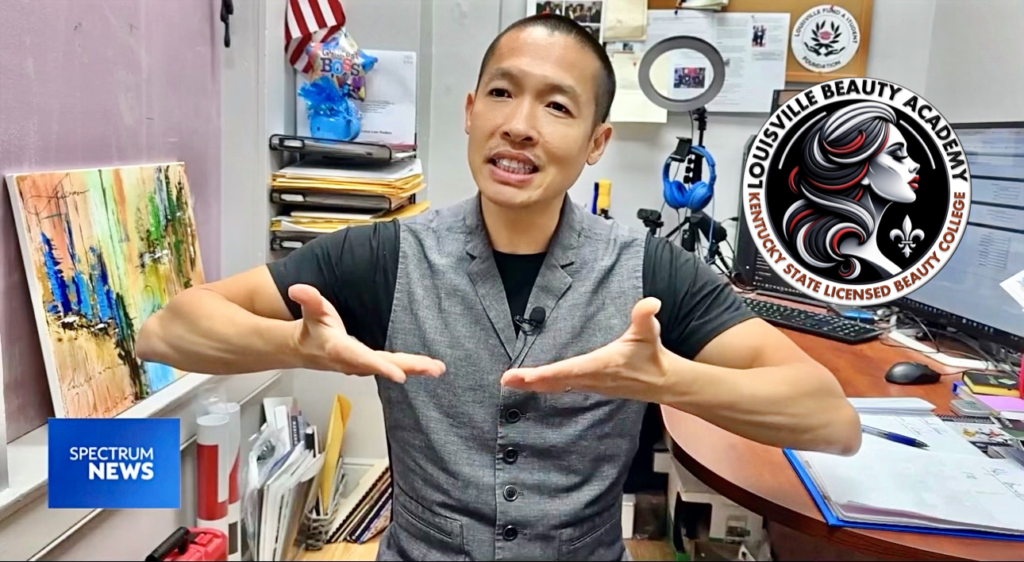
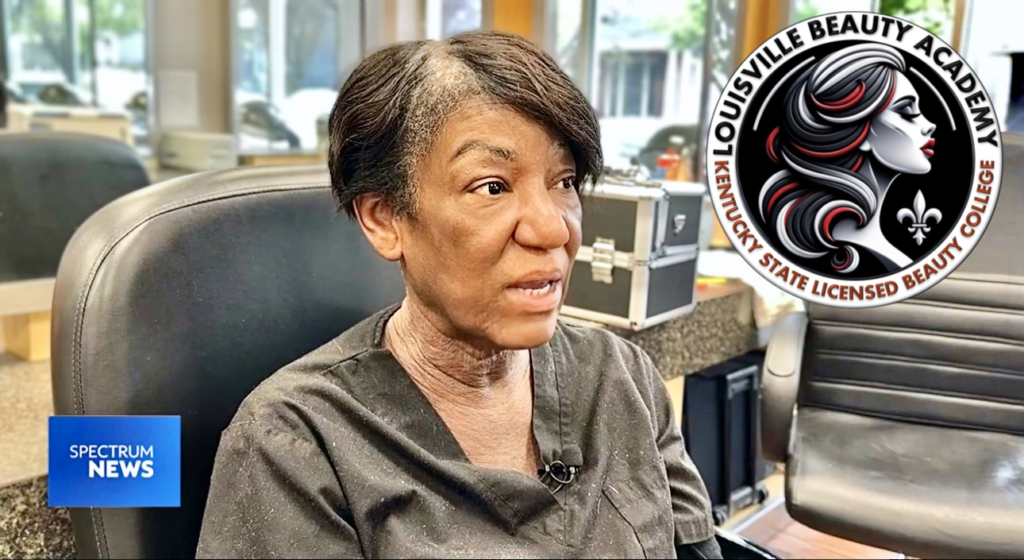
This week, Spectrum News of Louisville shone a spotlight on the diverse and inclusive nature of the academy, featuring its founder, instructors, and students. The coverage highlighted the school’s expertise in various beauty fields, including nail technology, skincare, cosmetology, and instructor training. Louisville Beauty Academy stands out as a testament to the power of diversity, with students and staff representing a wide range of races, languages, and expertise.
The recent passage of Senate Bill 14, which the academy has ardently supported, marks a significant milestone in the beauty industry’s history. Championed by minority party Democrat Senator Reggie Thomas, one of only three Black senators in the Kentucky State Senate, the bill was initially perceived as catering solely to the Asian community. However, it is a legislation for all, aiming to create a more inclusive and equitable beauty industry.
Louisville Beauty Academy is unique in its commitment to meeting community demands and needs. Unlike many schools that focus primarily on cosmetology due to federal financial aid availability, the academy offers a wide range of licensed fields, including nail technician, aesthetician, cosmetologist, instructor, shampoo and stylist, eyelash extension, and more. By offering short programs, the academy helps more individuals embark on successful beauty careers.
We extend our heartfelt gratitude to all who have supported and continue to support the beauty industry, Louisville Beauty Academy, and all beauty professionals. Together, we are shaping a brighter future for the beauty education landscape in Kentucky.




 Wed, Apr 10, 2:53 PM (7 days ago)