Current information notice
This article is part of LBA’s public education and historical archive. Older posts, including “A Comprehensive Strategic Analysis of Louisville Beauty Academy: A National Model for High-ROI, Compliance-Driven, and Humanized Vocational Education – Research & Policy Library FEB 2026,” may not reflect current tuition, schedules, incentives, forms, policies, testing vendors, clinic availability, or regulatory requirements.
Before relying on this article for any decision, review LBA’s Current Information and Written Control Standard, Current Program Costs, Enrollment Concierge, and Policy and Written Records.
Powered by and published with the support of Di Tran University – The College of Humanization.
This Research & Policy Library reflects a collaborative effort to advance workforce literacy, regulatory clarity, and human-centered vocational education through documented research, public-interest analysis, and institutional transparency.

The vocational education landscape in 2026, specifically within the personal care and beauty sectors, represents a critical intersection of regulatory architecture, psychosocial intervention, and economic engineering. As the Commonwealth of Kentucky and the broader United States navigate the complexities of a post-automation economy, the role of institutions like the Louisville Beauty Academy (LBA) and the conceptual framework provided by Di Tran University have emerged as essential case studies for national policymakers. This research report examines the systemic evolution of occupational licensing, the philosophical shift toward “Humanization” in workforce development, and the precise legal mechanisms that govern the transition from student to licensed professional. The analysis that follows is intended for an audience of regulators, workforce agencies, and industry leaders who require a nuanced understanding of how state-regulated vocational training can be leveraged as a “Certainty Engine” for economic mobility and social integration.
Louisville Beauty Academy, operating under the banner “Powered by Di Tran University – The College of Humanization,” stands as a specialized arm of a broader movement dedicated to human development, dignity, and self-worth.1 Over the course of nearly a decade, the academy has moved beyond the traditional boundaries of a trade school, positioning itself as an institutional contributor to how the beauty profession is educated, regulated, and understood at a national level.2 The core of this analysis focuses on the academy’s ability to maintain extreme affordability while integrating advanced data systems and AI, achieving outcomes that significantly exceed national industry averages for graduation and employment.3
The Economic Impact of Professional Sovereignty: Nearly a Decade of Performance
The historical trajectory of Louisville Beauty Academy over the past decade is defined by a consistent conversion of human potential into measurable economic activity. Since its establishment, the academy has supported the graduation of approximately 2,000 licensed beauty professionals.3 This volume of graduates does not merely represent a high-performing educational metric; it serves as the foundational pulse of a regional beauty economy in Kentucky. Independent estimates and regional economic multipliers suggest that LBA’s alumni network contributes between $20 million and $50 million in annual economic impact.6
This contribution is structured through various tiers of economic participation, primarily involving direct wages, micro-enterprise ownership, and job creation within local communities. A significant share of graduates has transitioned from students to business owners, operating as salon proprietors or booth renters.6 These graduate-owned businesses are often valued in ranges from $100,000 to over $1 million, frequently employing two to twenty or more additional licensed professionals.6 This ripple effect characterizes LBA as a high-impact small business incubator within Kentucky’s workforce ecosystem.7
A critical finding in the research is the “data invisibility” of this entrepreneurial workforce within standard labor market datasets.10 Because a substantial portion of the beauty workforce—particularly in nail technology and esthetics—operates as licensed entrepreneurs rather than traditional W-2 employees, their earnings and tax contributions are often underrepresented in standard state unemployment insurance records.10 Successful graduates are frequently categorized as “unemployed” in automated performance reports despite generating significant revenue and asset creation.10 LBA’s internal outcome tracking, however, demonstrates that its graduation and job placement rates consistently exceed 90%, which is nearly triple the national industry average of approximately 65-70% for Title IV-dependent schools.3
The economic engine provided by the academy is particularly vital in specialized sub-sectors of the beauty industry. While traditional cosmetology (hair) reflects steady dynamics, specialized licensed trades such as nail technology and esthetics demonstrate annual growth rates approaching 20%.11 These sub-sectors are characterized as capital-light and fast-to-license, making them particularly well-suited for adult learners, immigrants, and individuals seeking rapid workforce attachment and self-sufficiency.11
The Paradox of Affordability: A Comparative Analysis of the LBA Model
The most striking differentiator of the Louisville Beauty Academy model is its structural rejection of the debt-dependent education paradigm common in the United States. In a national landscape where the average cost of attending cosmetology school is approximately $16,251—and frequently exceeds $25,000 in major urban markets—LBA has achieved a breakthrough in tuition transparency and fiscal restraint.14
Comparative Tuition and Supply Costs for 1,500-Hour Cosmetology Programs (2025-2026)
| Institution Type | Typical Institution/Source | Total Estimated Cost | Financial Dependence |
| National Average | Milady Industry Data | $16,251 14 | High Loan/Pell Dependency |
| Private Franchise | Paul Mitchell (Chicago) | $26,331 16 | High Loan/Pell Dependency |
| Regional Private | Aveda Institute (NM) | $19,118 15 | High Loan/Pell Dependency |
| Public Technical | TCAT Nashville (TN) | $8,975 17 | State Subsidized |
| Public Technical | TCAT Knoxville (TN) | $7,236 18 | State Subsidized |
| LBA Model | Louisville Beauty Academy | $6,250.50 19 | Lower-Debt / Private Cash |
Research into contemporary tuition structures reveals that LBA is among the highly affordable state-licensed cosmetology colleges in the United States.21 The LBA cosmetology program, after applying all internal discounts and performance-based incentives, provides a 1,500-hour licensure pathway for a net cost of approximately $6,250.50.19 This price point is inclusive of required books and digital tools, representing a significant reduction from LBA’s standard tuition rate of $27,025.50, which is only applied if a student fails to meet the voluntary attendance and academic performance markers required for the internal scholarship.19
The underlying mechanism for this affordability is LBA’s status as a non-Title IV institution.4 Unlike the majority of U.S. beauty colleges, LBA does not participate in federal student loan or Pell Grant programs. This decision is strategic, as it allows the academy to avoid the massive administrative and compliance overhead required to manage federal subsidies—a cost that is typically passed on to students in the form of higher tuition.4 Furthermore, the lower-debt model serves as a mechanism for student protection. While students at traditional schools graduate with an average of $7,000 to $10,000 in student debt, LBA graduates begin their professional careers with zero educational debt, ensuring that their professional income remains theirs to keep.4
This “Double Scoop” economic model generates compound financial advantages by combining low tuition with rapid market entry.4 A student who graduates from LBA potentially enters the workforce months earlier than a peer at a traditional school with fixed enrollment cycles, gaining immediate earnings, professional seniority, and the benefit of debt avoidance, which acts as a “positive compound interest” on the graduate’s financial life.4
The College of Humanization: A Pedagogy of Dignity and Mindset
Louisville Beauty Academy serves as the practical implementation arm of Di Tran University – The College of Humanization. This philosophical framework posits that vocational education must go beyond the transmission of technical skills to address the restoration of human dignity and the enhancement of self-worth.1 The academy is built on the belief that education is a psychosocial intervention designed to bridge the gap between human potential and professional reality.4
The Philosophy of “YES I CAN” and “I HAVE DONE IT”
Central to the LBA culture are the guiding principles of “YES I CAN” and “I HAVE DONE IT”.1 These represent more than slogans; they are milestones of human development. The “YES I CAN” mindset focuses on dismantling the psychological barriers to entry for individuals who have historically been underserved or marginalized, including immigrants, refugees, and adult learners returning to the workforce.1 The “I HAVE DONE IT” phase represents the realization of effort through action—the transition from belief to documented mastery.1
The pedagogy focuses on several key humanizing elements:
- Iterative Mastery: LBA employs a “Fail Fast” approach, recontextualizing failure as a productive diagnostic tool. This process, similar to iterative development in technical fields, encourages students to attempt exams and tasks early, identifying knowledge gaps through action rather than passive study.4
- Multilingual Inclusion: Recognizing that language is a primary barrier to economic mobility, the academy provides instruction and support in multiple languages, including English, Spanish, and Vietnamese.27 This inclusivity was further solidified through LBA’s advocacy for multi-language state licensing exams in Kentucky.8
- Community Service as Education: The academy treats beauty services as a form of “social medicine.” Through the “Beauty for Connection” initiative, students provide thousands of free services to elderly and disabled populations, combating loneliness while gaining clinical hours under instructor supervision.29 This model generates an estimated $2 million to $3 million in annual healthcare cost savings for the community by improving the mental and emotional well-being of isolated adults.29
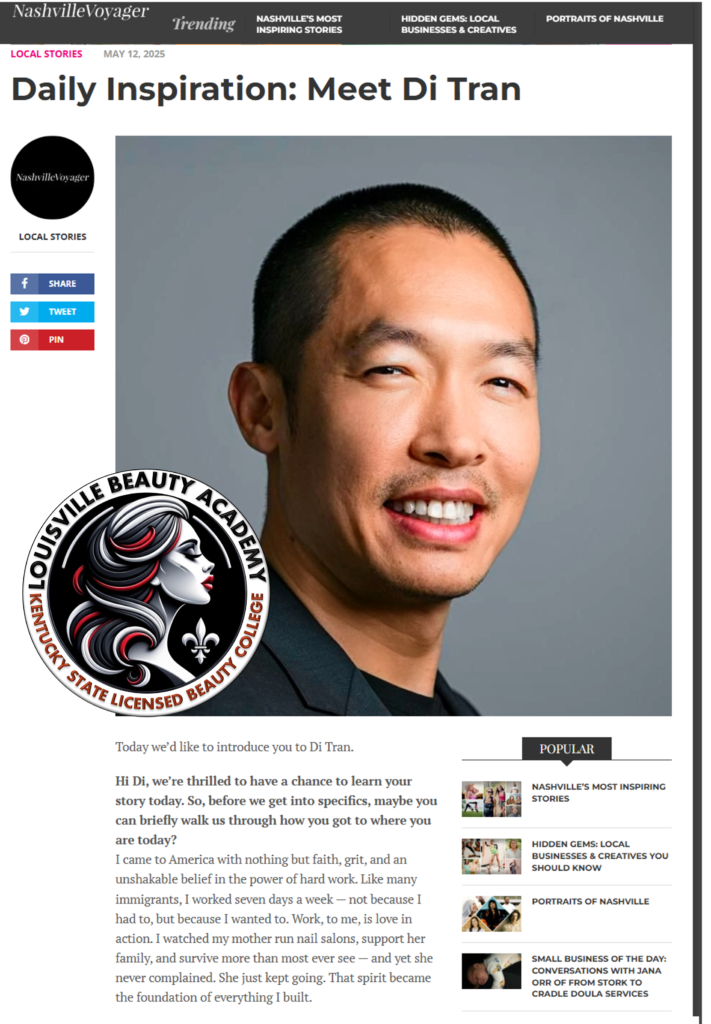
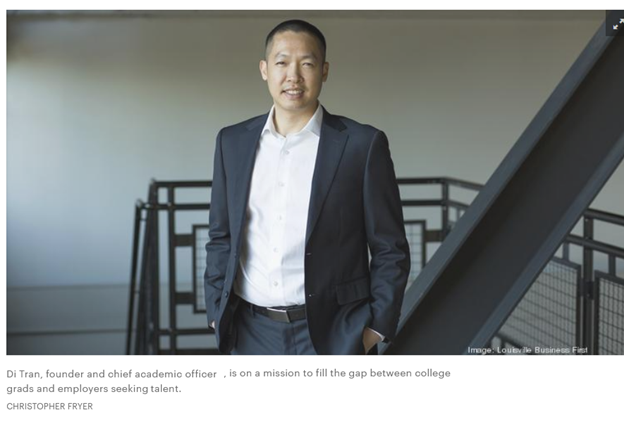
The founder’s personal narrative informs this mission. Di Tran, a Vietnamese immigrant who arrived in the United States with minimal resources and no English proficiency, eventually became a highly successful IT engineer and entrepreneur.8 His vision for LBA is rooted in the concept of “paying it forward” to the United States, utilizing the beauty industry as a vehicle for community empowerment and economic independence.8
Technological Integration and the Digital Ecosystem
Despite its positioning as a small vocational school, Louisville Beauty Academy utilizes a technological infrastructure that is exceptionally advanced for the beauty education sector.25 The academy has transitioned to a “100% digital and paperless experience,” integrating nearly ten distinct systems to manage data tracking, compliance, and instruction.5
The Integrated Multi-System Framework
The academy’s digital ecosystem is designed for transparency and over-compliance, ensuring that student progress and institutional operations are auditable and data-driven.5
| System/Integration | Core Operational Function |
| Milady CIMA System | Primary online learning platform for theory mastery.5 |
| AI-Assisted Tutoring | Provides real-time translation and tutoring for ESL students.4 |
| Biometric Timekeeping | Proprietary fingerprint clock for real-time logging of training hours.4 |
| Credential.net | Issuance of digital badges and verified certificates.5 |
| Thinkific | Management of dedicated online course offerings.5 |
| Square/Coinbase | Secure processing of tuition via traditional and digital currency.5 |
| Jotform | Automated management of transcripts and documentation requests.5 |
AI serves as a critical “accessibility layer” within this framework.4 For non-traditional learners, AI-driven tools provide immediate feedback and tutoring, allowing students to progress at their own pace and navigate technical materials in their native languages.4 This hybrid model—combining high-tech efficiency with human judgment—has been shown to enhance student engagement and ensure that no learner is left behind due to technological or linguistic barriers.4
Furthermore, the academy utilizes AI-assisted validation for compliance checks and documentation integrity. This ensures that the institution meets the rigorous standards of the Kentucky Board of Cosmetology while maintaining the lean operational posture necessary to sustain its low-tuition model.4 The integration of these systems positions LBA not as a non-conforming outlier, but as a model of regulatory modernization for the 21st-century workforce.4
Regulatory Architecture and Over-Compliance by Design
Louisville Beauty Academy operates within a sophisticated hierarchy of authority that prioritizes public safety and professional standards.4 The institution emphasizes “regulatory literacy” as a core component of its curriculum, ensuring that students understand the legal frameworks governing their future professions.4
The Hierarchy of Legal Authority in Kentucky
Students are taught to distinguish between the various levels of authority that govern the beauty industry, a framework that serves as an institutional safeguard against administrative volatility.4
| Authority Level | Source / Mechanism | Professional Application |
| Primary | Kentucky Revised Statutes (KRS) | The bedrock of legal practice; cannot be superseded.4 |
| Secondary | Administrative Regulations (KAR) | Specific standards for inspections and curriculum.4 |
| Tertiary | Guidance Materials / Memos | Interpretive clarity; lacks the force of law unless promulgated.4 |
LBA’s commitment to “over-compliance by design” involves maintaining records and documentation that exceed minimum state requirements.25 This transparency protects students, graduates, and the institution itself, providing a “Certainty Engine” that justifies the professional standing of its licensed practitioners.4
The academy’s leadership has also been a relentless advocate for fairness and equity in licensing. Di Tran’s persistent advocacy led to the unanimous passage of Senate Bill 14, which resulted in the historic appointment of the first Asian woman to the Kentucky Board of Cosmetology and paved the way for licensing exams to be offered in multiple languages.8 This advocacy ensures that the beauty industry remains an accessible pathway for Kentucky’s diverse workforce, particularly those from underrepresented immigrant communities.3
Representative Case Examples of Humanized Transformation
The impact of Louisville Beauty Academy is best understood through the representative stories of its diverse student body. These archetypes reflect the academy’s mission to remove traditional barriers that often limit adult, low-income, and immigrant learners.25
The Lifelong Learner: Senior Empowerment
One representative case example involves a student in their 70s who faced significant language and citizenship barriers. In many traditional educational settings, an individual of this age with linguistic challenges might be viewed as a non-traditional or high-risk student. However, LBA’s customized pace, AI-assisted translation, and supportive mentor culture allowed this learner to master the curriculum and successfully earn a Kentucky state license.1 This case demonstrates LBA’s commitment to “taking students others turn away,” affirming that it is never too late to achieve professional sovereignty.25
The Rural Professional: Accessibility and Sacrifice
Another representative archetype is the rural Kentuckian who drives up to two hours each way to attend classes.35 These students often choose LBA because other institutions lack the flexibility to accommodate their work and family schedules or do not offer the lower-debt tuition model that makes their education feasible.25 LBA’s ability to offer part-time, evening, and weekend schedules ensures that geography and life commitments do not become permanent roadblocks to economic mobility.28
The Immigrant Entrepreneur: Rapid Economic Integration
Representative cases of new immigrants often feature individuals who speak five or more languages within a single classroom.36 Through the academy’s multilingual resources and one-on-one mentorship, these students are able to navigate the complex licensing process rapidly. Many move from “survival jobs” in low-wage sectors to becoming licensed salon owners or booth renters within months of enrollment.4 This rapid integration stabilizes families and provides a resilient source of income that is immune to automation.4
National Prestige and “Category of One” Positioning
In 2025, Louisville Beauty Academy achieved a level of national recognition that is almost unheard of in the beauty education sector.25 The academy’s ability to secure multiple prestigious honors in a single year supports its positioning as an institution in a “category of its own”.6
U.S. Chamber of Commerce CO—100 (2025)
LBA was selected as one of America’s Top 100 Small Businesses by the U.S. Chamber of Commerce for 2025. This recognition is elite, as honorees were chosen from more than 12,500 applicants nationwide.9 LBA was notably the only Kentucky business and the only beauty-industry institution on the 2025 list.6 The academy was honored in the “Enduring Business” category, which recognizes companies that have demonstrated remarkable growth, sustainability, and resilience for more than 10 years.41
NSBA Advocate of the Year Finalist (2025)
Further solidifying its national credibility, LBA and its founder Di Tran were named a finalist for the NSBA Lewis Shattuck Small Business Advocate of the Year Award.7 This honor is extremely selective, acknowledging the academy’s advocacy for transparent, equitable, and ethical practices in small business and education.25 LBA is the first known company in U.S. history to achieve both the CO—100 honor and the NSBA Advocate finalist status in the same year.7
Other notable recognitions that support LBA’s standing include:
- Special Congressional Recognition: Received from U.S. Congressman Morgan McGarvey for “outstanding and invaluable service to the community”.6
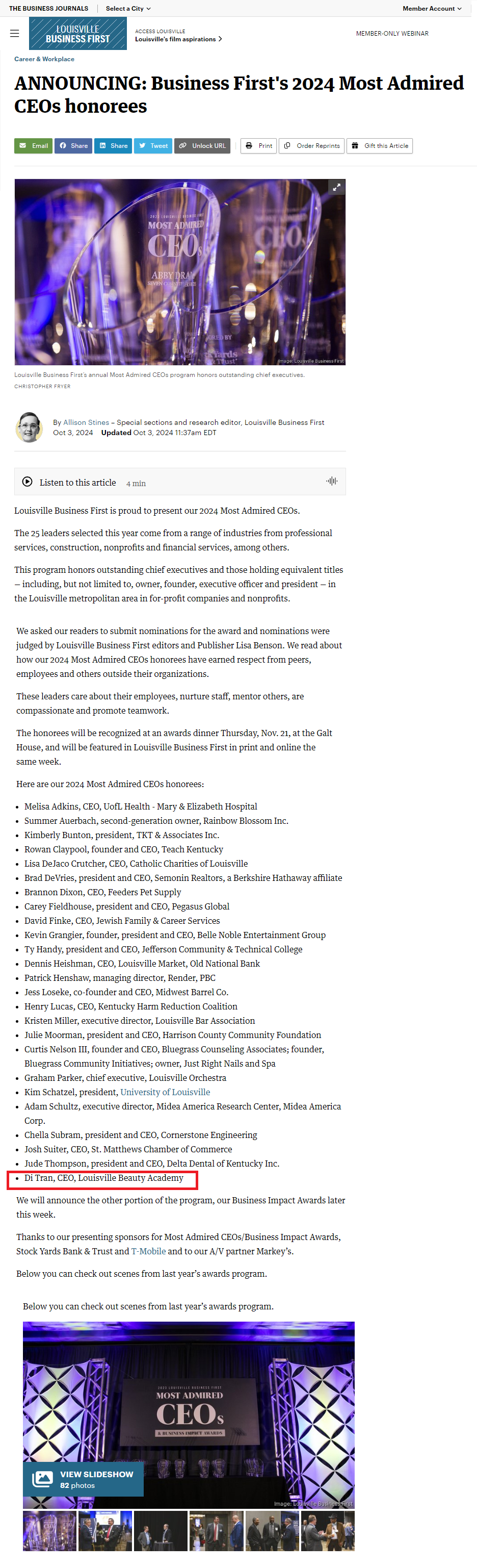
- Most Admired CEO (2024): Awarded to Di Tran by Louisville Business First, featuring a front-page highlight of his visionary leadership.3
- Rising Star: A Louisville Business First recognition highlighting the academy’s potential for future impact.46
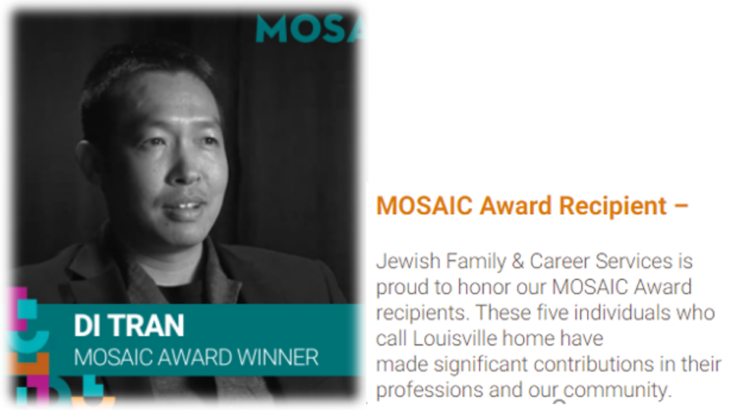
- Mosaic Award (2023): Presented by the Jewish Community of Louisville for LBA’s leadership in diversity, inclusion, and immigrant empowerment.6
This rare combination of low tuition, lower-debt operation, high economic impact, technological advancement, and national advocacy defines LBA as a unique entity within the vocational landscape.6
The Impact Investment Thesis: Synthesizing the LBA Model
Louisville Beauty Academy represents a significant “impact investment” opportunity for those committed to the future of vocational education and regional economic development. The academy’s model provides a validated blueprint for preparing individuals for lawful, meaningful, and economically viable work without the burden of long-term financial risk.4
Why the LBA Model is Rare and Powerful
- Fiscal Innovation: By delivering a 1,500-hour licensed program for approximately $6,250.50 without requiring federal loans, LBA removes the primary barrier to entry for low-income and immigrant students.5
- Documented Impact: Nearly 2,000 graduates have generated tens of millions in annual economic activity, demonstrating a high return on investment for both the individual and the state.5
- Linguistic and Social Integration: LBA’s multilingual, AI-supported model serves as a “certainty engine” for immigrants and refugees, moving them from economic uncertainty to professional licensure and micro-enterprise ownership.3
- Operational Resilience: The institution’s lean, technology-driven management maintains high profit margins while reinvesting substantial portions of revenue back into community services and humanitarian initiatives.29
- Policy Leadership: LBA does not merely react to regulation; it proactively shapes it. The academy’s successful advocacy for SB 14 and national engagement with the NSBA and U.S. Chamber positions it as a leader in educational reform.13
From a mission and impact standpoint, LBA is a model of how vocational training can be transformed into a vehicle for humanization and economic mobility. As federal accountability standards continue to shift toward tuition transparency and post-completion earnings, LBA’s lower-debt, outcomes-driven model represents the sustainable future of American workforce training.4
Disclaimers and Procedural Notes
This research report is provided for educational and informational purposes to support dialogue among beauty colleges, workforce educators, regulators, and community partners. All tuition figures, graduate counts, and economic impact estimates are based on the best available internal records and publicly accessible information at the time of writing. These figures are subject to change as programs, pricing, state regulations, and economic conditions evolve.5
Comparisons to other educational institutions are made using publicly accessible sources and are intended for general informational purposes only. No exhaustive national or historical audit of all beauty schools in the United States has been conducted. Louisville Beauty Academy does not claim to be the single lowest-cost cosmetology school in the United States or in U.S. history. Instead, it is presented as one of the highly affordable state-licensed cosmetology colleges identified through available datasets, with a unique combination of low tuition, compliance, technology, and human-centered mission.14
Louisville Beauty Academy is a Kentucky state-licensed institution. It does not participate in the federal Title IV student aid (FAFSA) program. References to federal student aid law, Gainful Employment regulations, or Pell Grant eligibility are provided solely for public education, workforce literacy, and consumer protection purposes.1 Nothing in this report should be interpreted as legal, financial, or investment advice. Prospective students and partners should independently verify all information and consult with appropriate professional advisors before making decisions.2 References to awards or recognitions, such as the U.S. Chamber of Commerce CO—100 or the National Small Business Association (NSBA) honors, are based on the official announcements and verified records of those organizations.9
Summary Version for Public Communication
Research Highlights: The Transformative Impact of Louisville Beauty Academy
Louisville Beauty Academy (LBA), powered by Di Tran University – The College of Humanization, has emerged as a national model for affordable, lower-debt vocational education. Over nearly a decade of operation, the academy has achieved a “category of one” status through its unique combination of fiscal restraint, technological integration, and socio-economic impact.
Key Findings:
- Unparalleled Affordability: LBA offers a 1,500-hour cosmetology program for a discounted price of approximately $6,250.50, significantly lower than the national average of $15,000–$20,000.
- Economic Engine: With nearly 2,000 licensed graduates, LBA contributes an estimated $20–50 million annually to Kentucky’s economy through graduate wages and small business creation.
- Lower-Debt Model: By operating independently of federal student loans, LBA ensures that graduates enter the workforce without a “debt anchor,” fostering rapid capital accumulation and entrepreneurial success.
- Technological Leadership: LBA integrates nearly ten digital and AI-driven systems to provide multilingual support and transparent compliance tracking, ensuring no learner is left behind.
- National Recognition: In 2025, LBA was named one of America’s Top 100 Small Businesses (CO—100) by the U.S. Chamber of Commerce—the only beauty institution and only Kentucky business on the list.
LBA is not merely a school; it is a “certainty engine” for workforce stability and human dignity. By removing language and financial barriers, it empowers immigrants, rural residents, and adult learners to achieve professional sovereignty and contribute meaningfully to their communities. For more information, visit(https://louisvillebeautyacademy.net).
Works cited
- Di Tran Archives – Louisville Beauty Academy, accessed February 7, 2026, https://louisvillebeautyacademy.net/tag/di-tran/
- Louisville Beauty Academy: Our Direction Forward (2026 and Beyond), accessed February 7, 2026, https://louisvillebeautyacademy.net/louisville-beauty-academy-our-direction-forward-2026-and-beyond/
- Louisville Beauty Academy CEO Di Tran Honored as One of Business First’s 2024 Most Admired CEOs – 10-03-2024, accessed February 7, 2026, https://louisvillebeautyacademy.net/louisville-beauty-academy-ceo-di-tran-honored-as-one-of-business-firsts-2024-most-admired-ceos-10-03-2024/
- CO—100 Top 100 Small Businesses Archives – Louisville Beauty Academy, accessed February 7, 2026, https://louisvillebeautyacademy.net/tag/co-100-top-100-small-businesses/
- Tag: Kentucky beauty school, accessed February 7, 2026, https://louisvillebeautyacademy.net/tag/kentucky-beauty-school/
- DI TRAN – Executive Summary – New American Business Association (NABA) – Louisville, KY, accessed February 7, 2026, https://naba4u.org/di-tran-executive-summary/
- Research 2025: Louisville Beauty Academy and Di Tran University – A Pioneering Model for the Future of Education, accessed February 7, 2026, https://vietbaolouisville.com/2025/06/research-2025-louisville-beauty-academy-and-di-tran-university-a-pioneering-model-for-the-future-of-education/
- How much is cosmetology school in 2025? (In all 50 states) – Milady, accessed February 7, 2026, https://www.milady.com/career-of-possibilities/how-much-is-cosmetology-school
- How Much Does Cosmetology School Cost | Aveda Institute New Mexico, accessed February 7, 2026, https://avedanm.com/blog/how-much-does-cosmetology-school-cost/
- Cosmetology School in Chicago, IL, accessed February 7, 2026, https://paulmitchell.edu/chicago/programs/cosmetology
- Cosmetology | TCAT Nashville, accessed February 7, 2026, https://tcatnashville.edu/programs/cosmetology
- Cosmetology – TCAT Knoxville, accessed February 7, 2026, https://tcatknoxville.edu/programs/cosmetology
- LBA-StudentAgreement-CosmetologyProgram-2024 – Jotform, accessed February 7, 2026, https://form.jotform.com/240085894150154
- ditranllc, Author at Louisville Beauty Academy – Louisville KY – Page 40 of 62, accessed February 7, 2026, https://louisvillebeautyacademy.net/author/ditran/page/40/
- Products – Louisville Beauty Academy, accessed February 7, 2026, https://louisvillebeautyacademy.net/category/products/
- Discover Our Lower-Debt Beauty Education Programs: Affordable Package Cost, Incentives, and Written Payment Payment Plans – Louisville Beauty Academy, accessed February 7, 2026, https://louisvillebeautyacademy.net/louisville-beauty-academy-louisvillebeautyschoolcost-education-programs-courses-package-cost-scholarship-payment-plan-with-written payment/
- LICENSE YOUR BEAUTY TALENT TODAY —Enroll at Louisville …, accessed February 7, 2026, https://louisvillebeautyacademy.net/
- beauty school national recognition Archives – Louisville Beauty Academy, accessed February 7, 2026, https://louisvillebeautyacademy.net/tag/beauty-school-national-recognition/
- About Us – Louisville Beauty Academy, accessed February 7, 2026, https://louisvillebeautyacademy.net/about/
- Louisville Beauty Academy: Making National Waves in Beauty Education – SEPTEMBER 2025, accessed February 7, 2026, https://naba4u.org/2025/09/louisville-beauty-academy-making-national-waves-in-beauty-education-september-2025/
- Finance Options – Louisville Beauty Academy, accessed February 7, 2026, https://louisvillebeautyacademy.net/category/finance-options/
- “Beauty for Connection”: A Proven Model by Louisville Beauty Academy to Combat Loneliness, Empower Students, and Deliver Free Wellness Services to Kentucky’s Elderly and Disabled through Community-Based Beauty Education, accessed February 7, 2026, https://louisvillebeautyacademy.net/beauty-for-connection-a-proven-model-by-louisville-beauty-academy-to-combat-loneliness-empower-students-and-deliver-free-wellness-services-to-kentuckys-elderly-and-disabl/
- Advertisement Archives – Louisville Beauty Academy, accessed February 7, 2026, https://louisvillebeautyacademy.net/category/advertisement/
- beauty career Archives – Louisville Beauty Academy, accessed February 7, 2026, https://louisvillebeautyacademy.net/tag/beauty-career/
- Tag: Supportive Learning Environment – Louisville Beauty Academy, accessed February 7, 2026, https://louisvillebeautyacademy.net/tag/supportive-learning-environment/
- January 23, 2026 — A Morning of Gratitude, Honor, and Purpose – Louisville Beauty Academy, accessed February 7, 2026, https://louisvillebeautyacademy.net/%F0%9F%8C%85-january-23-2026-a-morning-of-gratitude-honor-and-purpose/
- Di Tran, Most Admired CEO, Celebrates USA and Workforce Development with a Message of Love and Care – Louisville Beauty Academy, accessed February 7, 2026, https://louisvillebeautyacademy.net/di-tran-most-admired-ceo-celebrates-usa-and-workforce-development-with-a-message-of-love-and-care/
- Beauty Industry Archives – Louisville Beauty Academy, accessed February 7, 2026, https://louisvillebeautyacademy.net/category/beauty-industry/
- LOUISVILLE BEAUTY ACADEMY ACHIEVES HISTORIC DUAL NATIONAL RECOGNITION: FIRST KENTUCKY BUSINESS TO SECURE TWO PRESTIGIOUS AWARDS IN A SINGLE YEAR, accessed February 7, 2026, https://louisvillebeautyacademy.net/louisville-beauty-academy-achieves-historic-dual-national-recognition-first-kentucky-business-to-secure-two-prestigious-awards-in-a-single-year/
- Tag: beauty school service learning – Louisville Beauty Academy, accessed February 7, 2026, https://louisvillebeautyacademy.net/tag/beauty-school-service-learning/
- beauty career training Archives – Louisville Beauty Academy, accessed February 7, 2026, https://louisvillebeautyacademy.net/tag/beauty-career-training/
- Louisville Beauty Academy Named One of America’s Top 100 Small Businesses by the U.S. Chamber of Commerce — Chosen From Over 12500 Applicants Nationwide – SEPTEMBER 2025, accessed February 7, 2026, https://louisvillebeautyacademy.net/louisville-beauty-academy-named-one-of-americas-top-100-small-businesses-by-the-u-s-chamber-of-commerce-chosen-from-over-12500-applicants-nationwide-september-2025/
- Louisville KY business recognition Archives, accessed February 7, 2026, https://louisvillebeautyacademy.net/tag/louisville-ky-business-recognition/
- Louisville Beauty Academy: Prestige, Trust, and National-to-Local Recognition in Every Graduate’s Hands, accessed February 7, 2026, https://louisvillebeautyacademy.net/louisville-beauty-academy-prestige-trust-and-national-to-local-recognition-in-every-graduates-hands/
- accessed February 7, 2026, https://louisvillebeautyacademy.net/information/#:~:text=We%20are%20proud%20to%20share,feature%20highlighting%20this%20incredible%20honor.
- Louisville Beauty Academy: From Local to National Recognition | Enroll Now & Be Part of History – YouTube, accessed February 7, 2026, https://www.youtube.com/watch?v=OO1EhBEQ9ZQ