Louisville Beauty Academy Featured Nationally by NSBA on 12-03-2025

A Moment of Pride, A Celebration of Collaboration, and a Testament to Humanization in Action

On December 3, 2025, the National Small Business Association (NSBA) — America’s longest-serving small-business advocacy organization — officially featured Di Tran, founder of Louisville Beauty Academy (LBA), in its national “My Business, My Cause” spotlight and across its NSBAAdvocate.org platform and national social channels. The feature highlighted the heart, mission, and community impact of LBA as one of Kentucky’s leading workforce engines.

This national recognition is not only a proud moment for Di Tran personally — it is a proud moment for the entire Louisville Beauty Academy family, for the City of Louisville, for the Commonwealth of Kentucky, and for the United States.


A School Built on Humanization — Before Skill, Before Business

Louisville Beauty Academy was founded on the principle that humanization comes first.

This philosophy is deeply rooted in the emerging framework of Di Tran University (DTU) — often referred to as the “College of Humanization.” The foundation of this philosophy is simple but profound:

Human First → Value-Add → Skill → Business → Economy

Before we teach beauty techniques, before we talk about licensing, before we mention entrepreneurship, we focus on the person — their dignity, their confidence, their story, their hopes.

At LBA, every student is seen, heard, respected, and uplifted before anything else.
This is why our classrooms feel like families.
This is why more than 2,000 licensed graduates have built real careers and changed their families’ futures.
This is why we produce not only licensed beauty professionals, but contributors to Kentucky’s economic strength.


Business Is Human. Business Is Collaboration. Business Is Shared Elevation.

The NSBA feature highlights the central message:
small business is the engine of the American economy, but it only works through collaboration, shared support, and collective love.

The NSBA’s 2025 National Impact Report shows the scale of this collaboration:

  • 14 million jobs saved through initiatives NSBA shaped
  • 20% Qualified Business Income deduction permanently enacted for small-business owners
  • 535 congressional districts represented through NSBA leadership
  • Multiple congressional testimonies, letters, and federal regulatory actions shaping policy nationally
    (See NSBA PDF, pages 1–4 for full details.) NSBA-LBA-Website-12-03-2025 _ W…

Louisville Beauty Academy stands proudly inside this national ecosystem — an ecosystem where small schools, small employers, and small families collectively build huge economic outcomes.


Why This NSBA Feature Matters to Louisville Beauty Academy

This national spotlight is more than an honor — it reinforces three core truths about LBA:

1. LBA Is a Human-First Academy

We exist to lift people up first, before teaching skills.
This is the DTU philosophy in action.

2. LBA Is a Workforce Engine for Kentucky

Nearly 2,000 licensed graduates, contributing $20–50 million annual economic impact to the Commonwealth.

3. LBA Is Part of a National Ecosystem

We are not alone.
We are surrounded by partners who believe in small business, education, and community development — including NSBA, local employers, Louisville organizations, and our state supporters.


A Message of Gratitude — From LBA to the World

On this special occasion, Louisville Beauty Academy expresses:

Thanks to God

For life, for purpose, for each breath that allows us to serve.

Thanks to Louisville

The city of love, diversity, and resilience — the city that embraced LBA and every immigrant and first-generation student who walks through our doors.

Thanks to Kentucky

The state of opportunity — where hard work and family values still matter, and where education transforms lives daily.

Thanks to the United States

The #1 country on Earth, where a small immigrant-founded school can rise, serve, and be recognized nationally.

Thanks to NSBA

For giving voice to small businesses, for elevating stories like ours, and for being a national advocate protecting the backbone of America’s economy.


“Value-Add” — The Daily Principle of Louisville Beauty Academy

At LBA, our founder Di Tran teaches one simple rule:

Value-add every single day — to yourself, your family, your community, and your state.

This principle guides:

  • our instructors
  • our students
  • our graduates
  • our outreach
  • our contribution to Kentucky’s workforce and economy

This NSBA feature is simply the outward reflection of what LBA practices daily — the quiet, humble work of serving people, one license at a time.


Proud, Grateful, Motivated — and Ready for More

Louisville Beauty Academy celebrates this moment not as a finish line, but as encouragement to keep serving with greater love, greater humanization, and greater commitment to Kentucky families.

**We rise by lifting others.

We grow by serving others.
We succeed by adding value to others.**

From our family at LBA to yours —
Thank you for believing in us.
Thank you for walking with us.
Thank you for letting us serve.

Louisville Beauty Academy
Kentucky’s Leading Beauty Licensing Workforce Engine
Founded in Louisville, KY | Powered by Humanization | Fueled by Community

Walk In, Learn, Succeed: Louisville Beauty Academy Sets the Gold Standard for Accessible, Compliant, and Digitally-Verified Beauty Licensing Education

Louisville Beauty Academy (LBA) continues to lead Kentucky as the #1 Beauty Licensing Workforce Engine, producing nearly 2,000 licensed graduates and generating an estimated $20–50 million annual economic impact for the Commonwealth.
Rooted in compassion, discipline, and full Kentucky State Board compliance, LBA offers an educational experience built around accessibility, transparency, and the highest digital accountability in the state.

Today, we highlight the core features that set LBA apart from every other beauty college in Kentucky.


1. Walk-In Enrollment — Start Immediately, No Delay, No Barriers

LBA empowers students to take control of their future today, not months from now.
If a student is ready, they may walk in and begin the same day.

Simple steps to start immediately:

  • Review the Enrollment Procedure
  • Bring required documents (ID, SS card or ITIN, education verification)
  • Complete the digital student contract
  • Read and acknowledge the Student Handbook
  • Make the required initial payment
  • Begin training right away

This model reflects LBA’s mission: no waiting lists, no wasted time, no unnecessary hurdles.
Students enroll weekly. Students graduate weekly. The learning community grows continuously.


2. Walk-In Tours — No Appointment Needed, Ever

LBA believes in radical transparency.
We welcome the public to walk in anytime between 9 AM – 4 PM, Monday–Friday, for a full tour.

During these hours:

  • Classrooms are active
  • Instructors are available
  • Students are practicing
  • Prospective students can observe real training sessions
  • All questions are answered with full regulatory accuracy

No scheduling.
No sales process.
No barriers.

Just real education on display.


3. Kentucky’s Leading Digital Compliance System — 100% Tracking, Zero Guesswork

Louisville Beauty Academy is recognized statewide for its advanced compliance infrastructure, designed to protect every student, graduate, and staff member with uncompromising accuracy.

LBA’s Digital Compliance & Tracking System Includes:

  • SMART biometric timekeeping for exact State Board attendance records
  • Digital student contracts via JotForm (fully archived and timestamped)
  • Quality assurance dashboards ensuring every hour, service, and requirement is properly counted
  • AI-assisted compliance oversight for self-correction and rapid adaptation when laws change
  • Full communication logs for transparency, staff accuracy, and student protection

Our Why

Kentucky State Board regulations evolve.
Our systems evolve faster.

LBA’s compliance department uses digital tools to:

  • Track all communication
  • Audit every student milestone
  • Verify staff responses
  • Prevent misinformation
  • Maintain 100% verifiable, defensible documentation
  • Protect every student through their entire licensing journey

This is why LBA is trusted as one of the most digitally mature and compliance-secure beauty colleges in Kentucky.


4. Preferred Communication: Text or Email for Accuracy and Documentation

For the benefit and protection of all students, graduates, and staff, LBA strongly prefers:

📱 Text Messaging
📧 Email

These channels allow the compliance department to:

  • Provide accurate, updated answers as regulations change
  • Keep clear records for student protection
  • Maintain internal accountability
  • Self-correct and adapt instantly if any policy or rule changes
  • Store all communication in the school’s digital archive for long-term security

This ensures zero confusion, zero miscommunication, and 100% transparency.


5. A Culture of Safety, Family, and Weekly Success

Every week at LBA:

  • New students walk in and begin their journey
  • Graduates walk out fully licensed
  • Students support one another like a family
  • Instructors guide students at a self-paced, flexible schedule

The school prides itself on being:

  • Family-oriented
  • Safe and welcoming
  • Fully state-compliant
  • Student-protective
  • Community-focused
  • Future-workforce driven

LBA’s mission is simple:
Help every student become the best licensed professional they can be, at their own pace, with full protection and full transparency.


Visit Anytime — Your Future Is One Walk-In Away

📍 Louisville Beauty Academy – State Licensed Beauty College
🕘 Walk-In Public Hours: 9 AM – 4 PM (Mon–Fri)
📱 Text or Call: 502-625-5531
📧 study@LouisvilleBeautyAcademy.net
🌐 LouisvilleBeautyAcademy.net

No appointments. No waiting lists. No barriers.
Walk in today — start your new career today.


Compliance & Legal Disclaimer

This information is for general educational purposes only. All policies, procedures, and requirements are governed by the Kentucky State Board of Cosmetology under KRS 317A and 201 KAR 12. Regulations may change without notice. LBA assumes no liability for interpretation or external use. Students are responsible for reviewing all contracts, handbooks, and regulatory materials before enrollment.

Louisville Beauty Academy: Prestige, Trust, and National-to-Local Recognition in Every Graduate’s Hands

At Louisville Beauty Academy (LBA), graduation means more than earning a license. Every student walks proudly with their Certificate of Completion — a credential that carries prestige, trust, and community recognition far beyond the classroom. This certificate is more than paper; it is a badge of honor, a lifelong reminder of the “YES I CAN → I HAVE DONE IT” mindset that defines both our academy and our graduates.


A Legacy of Recognition: From Local to National

The academy’s impact, fueled by hardworking staff, dedicated instructors, and resilient students, has been validated through some of the most prestigious awards in the nation, the state, and the city of Louisville:

  • U.S. Chamber of Commerce CO—100 (2025) – Louisville Beauty Academy was the only Kentucky business named among America’s Top 100 Small Businesses, selected from over 12,500 applicants nationwide.
  • National Small Business Association (NSBA) – Small Business Advocate of the Year Finalist (2025) – Founder Di Tran was honored in Washington, D.C. as one of just five advocates nationwide, standing shoulder-to-shoulder with leaders shaping small business policy.
  • Louisville Business First – Most Admired CEO (2024) – Front-page recognition of Di Tran as a visionary leader in Kentucky’s business community.
  • Louisville Business First Rising Star – Highlighting Di Tran as one of Louisville’s most promising young leaders.
  • Jewish Community of Louisville Mosaic Award (2023) – Celebrating LBA for advancing diversity, inclusion, and empowerment across immigrant and minority communities.

These honors do not belong to one person alone. They reflect the collective effort of nearly 2,000 graduates, dedicated faculty, and the broader Louisville community that trusts in LBA’s mission.


Why the Certificate of Completion Matters

Graduates often ask: “Which certificate is most important when I graduate?”
While the state license is essential to practice, the LBA Certificate of Completion carries something deeper:

  • Prestige – It symbolizes the most awarded and nationally recognized beauty college in Kentucky.
  • Community Trust – It represents the support of local, state, and national organizations who have celebrated LBA’s success.
  • Family & Belonging – LBA is more than a school; it is a lifelong family. Students are never left behind—unless they choose to leave themselves.

To hold an LBA Certificate is to hold proof of not just a completed program, but of resilience, empowerment, and recognition at every level.


A Movement of Empowerment

Through Louisville Beauty Academy and Di Tran University, the motto “YES I CAN → I HAVE DONE IT” has become a movement of human development. Nearly 2,000 graduates have gone on to open salons, launch careers, and collectively contribute an estimated $20–50 million annually to Kentucky’s economy.

Every award, every certificate, and every graduate’s success proves that beauty education is more than skills. It is about entrepreneurship, empowerment, and economic impact.


The LBA Promise

Louisville Beauty Academy remains:

  • The most affordable beauty school in Kentucky.
  • The most flexible, meeting students where they are.
  • The most supportive, creating a lifelong network of care.
  • The most loving, because every student matters.

Our Certificate of Completion is not just paper. It is prestige, trust, and belonging — a testament to both personal achievement and the collective spirit of Louisville and Kentucky.

When our graduates hold that certificate in their hands, they hold more than their future. They hold local, state, and national recognition for who they are and what they will become.

Because here at Louisville Beauty Academy: YES I CAN. YES WE DID. YES YOU WILL.

References

Louisville Beauty Academy. (2024, October 3). Louisville Beauty Academy CEO Di Tran honored as one of Louisville Business First’s 2024 Most Admired CEOs. Louisville Beauty Academy. https://louisvillebeautyacademy.net/louisville-beauty-academy-ceo-di-tran-honored-as-one-of-business-firsts-2024-most-admired-ceos-10-03-2024 Louisville Beauty Academy

Jewish Family & Career Services. (2022). Meet Our 2022 MOSAIC Award Honorees. Jewish Family & Career Services. https://jfcslouisville.org/meet-our-2022-mosaic-award-honorees/ Jewish Family & Career Services

Louisville Beauty Academy. (2024, November 22). Di Tran, Most Admired CEO, celebrates USA and workforce development with a message of love and care. Louisville Beauty Academy. https://louisvillebeautyacademy.net/di-tran-most-admired-ceo-celebrates-usa-and-workforce-development-with-a-message-of-love-and-care/ Louisville Beauty Academy

Louis Business First. (2024, October 3). Announcing: Here are LBF’s Most Admired CEOs honorees. Louisville Business First. https://www.bizjournals.com/louisville/news/2024/10/03/announcing-here-are-lbfs-most-admired-ceos-honoree.html media.zenobuilder.com

National Small Business Association. (2025, September 4). Press | NSBA Announces Finalists for 2025 Advocate of the Year Award. NSBA. https://www.nsbaadvocate.org/post/press-nsba-announces-finalists-for-2025-advocate-of-the-year-award NSBA | Since 1937

U.S. Chamber of Commerce. (2025). Louisville Beauty Academy | CO— by U.S. Chamber of Commerce. U.S. Chamber. https://www.uschamber.com/co/profiles/louisville-beauty-academy uschamber.com

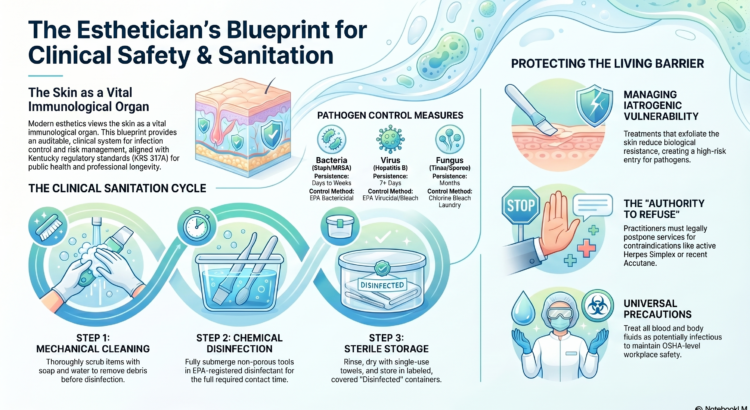
Comprehensive Guide to the Kentucky PSI Esthetics Licensing Exam: Top 600+ Questions and Answers

🔹 Section 1: Safety & Infection Control (90 Qs)

1. What is the highest level of decontamination?
👉 Sterilization.

2. What is the lowest level of decontamination?
👉 Sanitation (cleaning).

3. Which disinfectant is required by EPA for salon use?
👉 EPA-registered hospital-grade disinfectant.

4. How long should you wash your hands before and after each client?
👉 At least 20 seconds.

5. What is the first step if a client starts bleeding during a service?
👉 Stop the service, put on gloves.

6. Multi-use tools must be disinfected when?
👉 After each client.

7. What must be worn when cleaning up blood spills?
👉 Disposable gloves.

8. What should be done with single-use items after service?
👉 Discard in a covered trash container.

9. Tools contaminated with blood must be cleaned with what first?
👉 Soap and warm water.

10. After cleaning, tools should be immersed in what?
👉 EPA-registered disinfectant.

11. How often should disinfectant solution be changed?
👉 Daily or when visibly contaminated.

12. What is the OSHA Bloodborne Pathogen Standard for?
👉 Protecting workers from exposure to infectious materials.

13. A biohazard bag is used for what?
👉 Disposal of contaminated items.

14. What level of decontamination kills most microorganisms but not spores?
👉 Disinfection.

15. What is the correct contact time for most disinfectants?
👉 10 minutes (or manufacturer’s instructions).

16. What should be used to disinfect electrical tools?
👉 EPA-approved disinfectant wipes or sprays.

17. How should sharp implements be stored?
👉 In a closed, labeled container.

18. What is the purpose of Material Safety Data Sheets (MSDS/SDS)?
👉 To provide information on safe use, storage, and disposal of chemicals.

19. What is the main method of transmission of hepatitis B?
👉 Blood and bodily fluids.

20. HIV is spread through what?
👉 Blood, semen, vaginal fluids, breast milk.

21. Which disease is caused by a fungus?
👉 Ringworm (tinea).

22. Which disease is caused by a parasite?
👉 Scabies or lice.

23. Which disease is caused by a virus?
👉 Herpes simplex.

24. Which disinfectant is not safe for salon use?
👉 Formalin (formaldehyde).

25. What is the most common way infections spread in salons?
👉 Contaminated hands.

26. What is the safest way to remove contaminated gloves?
👉 Peel them off inside out without touching skin.

27. What is the term for a disease spread from one person to another?
👉 Communicable disease.

28. The technical term for head lice is?
👉 Pediculosis capitis.

29. What should you do with porous items contaminated with blood?
👉 Double-bag and dispose.

30. What is the first step before disinfecting a tool?
👉 Clean with soap and water.

31. How long must tools be immersed in disinfectant?
👉 As recommended by manufacturer.

32. Which bacteria form spores?
👉 Bacilli.

33. What is the shape of cocci bacteria?
👉 Round.

34. What bacteria cause pus-forming infections?
👉 Staphylococci.

35. Which bacteria cause strep throat?
👉 Streptococci.

36. Which bacteria cause Lyme disease?
👉 Spirilla.

37. What is the body’s first line of defense against infection?
👉 Intact skin.

38. What is the natural nail plate made of?
👉 Keratin.

39. What kind of container should disinfectants be kept in?
👉 Covered, labeled containers.

40. Which agency regulates disinfectant use in salons?
👉 EPA (Environmental Protection Agency).

41. Which agency enforces workplace safety standards?
👉 OSHA.

42. What is the most important infection control practice in the salon?
👉 Hand washing.

43. What is a universal precaution?
👉 Treating all blood and bodily fluids as if infected.

44. What is an antiseptic used for?
👉 Reducing microbes on the skin.

45. What is sterilization?
👉 The destruction of all microbial life, including spores.

46. Which tools must be sterilized?
👉 Tools that pierce skin or contact blood.

47. What type of gloves is best for estheticians?
👉 Nitrile gloves.

48. Why are vinyl gloves not recommended?
👉 They can tear easily.

49. What should be done after every facial bed use?
👉 Sanitize with disinfectant spray.

50. Which bacteria cause MRSA?
👉 Staphylococcus aureus (resistant strain).

51. What is the purpose of universal precautions?
👉 To assume all human blood and fluids are infectious.

52. What should be done immediately after removing gloves?
👉 Wash hands with soap and water.

53. What are examples of single-use items?
👉 Cotton pads, gauze, wooden sticks, sponges.

54. What should be done before disinfecting implements?
👉 Remove visible debris.

55. Where should clean towels be stored?
👉 In a closed, covered cabinet.

56. Where should soiled linens be placed?
👉 In a closed, labeled hamper.

57. What should you do if disinfectant touches your skin?
👉 Rinse immediately with water.

58. What is a local infection?
👉 Confined to one area, such as a boil or pimple.

59. What is a systemic infection?
👉 Spread throughout the body via blood or lymph.

60. Which body fluid is NOT considered infectious by OSHA?
👉 Sweat.

61. What is the most common way HIV is spread?
👉 Through unprotected sexual contact and blood exposure.

62. What does “nonporous” mean?
👉 A surface that cannot absorb liquids.

63. What is the main benefit of using nitrile gloves?
👉 They resist punctures and chemicals.

64. What should be used to clean facial brushes?
👉 Soap and water, then disinfectant.

65. How should electrical cords be maintained?
👉 Free of frays, cracks, or exposed wires.

66. What are parasites?
👉 Organisms that live on or in another organism.

67. Which parasite burrows under the skin?
👉 Scabies.

68. Which parasite attaches to hair shafts?
👉 Head lice.

69. What is the best way to prevent cross-contamination?
👉 Wash hands and change gloves between clients.

70. What is the first step in the event of an accidental blood exposure?
👉 Stop the service immediately.

71. What must disinfectants be effective against to be used in a salon?
👉 Bacteria, fungi, and viruses.

72. What type of disinfectant is quats?
👉 Quaternary ammonium compounds.

73. What is the minimum contact time for quats?
👉 10 minutes, unless otherwise directed.

74. What is the purpose of chelating soaps?
👉 To break down residue, scrubs, and salts.

75. What is the purpose of cross-contamination prevention?
👉 To stop pathogens from spreading between clients.

76. What is the correct way to disinfect tweezers?
👉 Clean, immerse fully in disinfectant, then store properly.

77. Where should disinfectants never be stored?
👉 In unmarked or unlabeled containers.

78. What is the technical term for plant parasites such as molds?
👉 Fungi.

79. What is tinea pedis?
👉 Athlete’s foot.

80. What is tinea corporis?
👉 Ringworm of the body.

81. What is conjunctivitis?
👉 Pink eye (an eye infection).

82. What is herpes simplex virus type 1?
👉 Causes cold sores around the mouth.

83. What is herpes simplex virus type 2?
👉 Causes genital herpes.

84. What is hepatitis?
👉 A disease that causes inflammation of the liver.

85. Which type of hepatitis is most difficult to kill on surfaces?
👉 Hepatitis B.

86. Which government agency regulates bloodborne pathogens?
👉 OSHA.

87. Which government agency regulates disinfectants?
👉 EPA.

88. What type of sanitizer is alcohol?
👉 An antiseptic, not a disinfectant.

89. What should be worn during chemical mixing?
👉 Safety glasses and gloves.

90. How should sharp objects be disposed of?
👉 In a puncture-proof sharps container.

🔹 Section 2: Anatomy & Physiology (Q91–150)

91. What is the largest organ of the body?
👉 The skin.

92. What are the two main layers of the skin?
👉 Epidermis and dermis.

93. What lies beneath the dermis?
👉 Subcutaneous tissue (hypodermis).

94. Which layer of skin contains no blood vessels?
👉 Epidermis.

95. Which layer of the epidermis produces new skin cells?
👉 Stratum basale (germinativum).

96. Which epidermal layer contains melanocytes?
👉 Stratum basale.

97. Which layer of the epidermis contains keratinocytes linked by desmosomes?
👉 Stratum spinosum.

98. Which layer of the epidermis is only present on palms and soles?
👉 Stratum lucidum.

99. Which layer of the epidermis contains keratohyalin granules?
👉 Stratum granulosum.

100. Which layer of the epidermis is made of dead cells that shed?
👉 Stratum corneum.

101. What protein makes skin strong and waterproof?
👉 Keratin.

102. What fibers provide skin with strength and elasticity?
👉 Collagen and elastin.

103. Which layer of the dermis contains capillaries and nerve endings?
👉 Papillary dermis.

104. Which layer of the dermis contains sweat and oil glands?
👉 Reticular dermis.

105. Which glands produce sebum?
👉 Sebaceous glands.

106. What is the function of sebum?
👉 Lubricates and protects skin and hair.

107. Which glands regulate body temperature through sweat?
👉 Eccrine glands.

108. Which glands are associated with body odor?
👉 Apocrine glands.

109. What are sensory nerves in the skin responsible for?
👉 Touch, pain, pressure, and temperature.

110. What is the function of motor nerves in the skin?
👉 Control movement of arrector pili muscles.

111. What pigment protects skin from UV radiation?
👉 Melanin.

112. What are the two types of melanin?
👉 Eumelanin (brown/black) and pheomelanin (red/yellow).

113. What causes goosebumps?
👉 Arrector pili muscle contraction.

114. What is the main function of the lymphatic system in the skin?
👉 Removes waste and protects against infection.

115. What vitamin does the skin synthesize with UV exposure?
👉 Vitamin D.

116. What is the primary function of the integumentary system?
👉 Protection.

117. What is the pH of healthy skin?
👉 4.5 to 5.5.

118. What layer of skin contains hair follicles?
👉 Dermis.

119. What is the function of adipose tissue?
👉 Provides insulation and energy storage.

120. What does the circulatory system provide to the skin?
👉 Oxygen and nutrients.

121. What system controls oil and sweat gland activity?
👉 Nervous system.

122. What system controls hormone production affecting the skin?
👉 Endocrine system.

123. Which system is responsible for transporting oxygen to skin cells?
👉 Circulatory system.

124. What is the function of fibroblasts?
👉 Produce collagen and elastin.

125. What is the function of mast cells in the skin?
👉 Release histamine during allergic reactions.

126. Which nerve controls facial expressions?
👉 Seventh cranial nerve (facial nerve).

127. Which cranial nerve controls sensation of the face?
👉 Fifth cranial nerve (trigeminal nerve).

128. Which cranial nerve controls eyelid and eye movement?
👉 Third, fourth, and sixth cranial nerves.

129. What is the function of lymph nodes near the face?
👉 Filter waste and defend against pathogens.

130. Which layer of skin is primarily responsible for wrinkle formation?
👉 Dermis (collagen loss).

131. What causes couperose skin (redness)?
👉 Weakening of capillary walls.

132. What happens to elastin fibers with sun damage?
👉 They weaken and break down, causing sagging.

133. What is the technical name for sweat glands?
👉 Sudoriferous glands.

134. What is miliaria rubra?
👉 Prickly heat rash caused by blocked sweat glands.

135. What is the medical term for a boil?
👉 Furuncle.

136. What is the medical term for a group of boils?
👉 Carbuncle.

137. What is hyperpigmentation?
👉 Darkening of the skin due to excess melanin.

138. What is hypopigmentation?
👉 Light patches due to lack of melanin.

139. What is albinism?
👉 Absence of melanin.

140. What is vitiligo?
👉 Irregular white patches from loss of pigment.

141. What is melasma?
👉 Brown patches often caused by hormones or sun.

142. What are keloids?
👉 Thick, raised scars.

143. What are striae?
👉 Stretch marks.

144. What type of tissue is the skin mostly made of?
👉 Epithelial tissue.

145. What type of muscle is attached to hair follicles?
👉 Arrector pili muscle.

146. Which body system is the skin part of?
👉 Integumentary system.

147. What is the skin condition rosacea?
👉 Chronic redness and visible capillaries on cheeks/nose.

148. What is psoriasis?
👉 Chronic skin disorder with red, scaly patches.

149. What is eczema?
👉 Inflammatory skin condition causing itching and rash.

150. What is dermatitis?
👉 General term for inflammation of the skin.

🔹 Section 3: Chemistry, Electricity & Product Knowledge (Q151–200)

151. What is the smallest particle of an element?
👉 An atom.

152. What is the smallest unit of a compound?
👉 A molecule.

153. What is a substance that cannot be reduced to a simpler form?
👉 An element.

154. What is the pH of pure water?
👉 7 (neutral).

155. What does pH stand for?
👉 Potential hydrogen.

156. What is the pH range of the skin’s acid mantle?
👉 4.5 to 5.5.

157. Substances with a pH below 7 are called what?
👉 Acids.

158. Substances with a pH above 7 are called what?
👉 Alkaline (bases).

159. What does an alkaline solution do to skin and hair?
👉 Swells and softens.

160. What does an acidic solution do to skin and hair?
👉 Contracts and hardens.

161. What is an emulsion?
👉 A mixture of two immiscible substances held together by an emulsifier.

162. What is an example of an oil-in-water emulsion?
👉 Moisturizing cream.

163. What is an example of water-in-oil emulsion?
👉 Cold cream.

164. What are surfactants?
👉 Surface active agents that allow oil and water to mix.

165. What is the main ingredient in most skin care products?
👉 Water.

166. What is a humectant?
👉 An ingredient that attracts water to the skin.

167. What is an example of a humectant?
👉 Glycerin or hyaluronic acid.

168. What are lipids used for in skin care?
👉 To improve hydration and barrier function.

169. What is an antioxidant?
👉 A substance that neutralizes free radicals.

170. What vitamin is a strong antioxidant often used in skin care?
👉 Vitamin C (ascorbic acid).

171. What vitamin is known as retinol?
👉 Vitamin A.

172. What is exfoliation?
👉 The removal of dead skin cells from the stratum corneum.

173. What is the difference between physical and chemical exfoliation?
👉 Physical uses scrubs; chemical uses acids or enzymes.

174. What are AHAs used for?
👉 Chemical exfoliation (glycolic, lactic acid).

175. What are BHAs used for?
👉 Oil-soluble exfoliation for acne-prone skin (salicylic acid).

176. What is microdermabrasion?
👉 A mechanical exfoliation using crystals or diamond tip.

177. What is the purpose of a clay mask?
👉 Absorbs oil and detoxifies skin.

178. What is the purpose of a cream mask?
👉 Hydrates and nourishes.

179. What is the purpose of a paraffin mask?
👉 Traps heat, increases penetration of products.

180. What is the purpose of a gel mask?
👉 Hydrates, soothes, and calms.

181. What is electricity?
👉 The movement of electrons.

182. What is an insulator?
👉 A substance that does not conduct electricity (rubber, plastic, wood).

183. What is a conductor?
👉 A substance that allows electricity to flow (metal, water).

184. What unit measures electrical pressure?
👉 Volt.

185. What unit measures the flow of electric current?
👉 Ampere (amp).

186. What unit measures resistance?
👉 Ohm.

187. What unit measures the amount of electricity used?
👉 Watt.

188. What device shuts off an electric circuit when overloaded?
👉 Circuit breaker.

189. What is galvanic current?
👉 A constant, direct current used in esthetics for iontophoresis and desincrustation.

190. What is iontophoresis?
👉 Using galvanic current to infuse water-soluble products into the skin.

191. What is desincrustation?
👉 Using galvanic current with alkaline solution to soften sebum and unclog pores.

192. What is high-frequency current also called?
👉 Tesla current.

193. What gas inside high-frequency electrodes produces a violet light?
👉 Argon gas.

194. What gas inside high-frequency electrodes produces an orange light?
👉 Neon gas.

195. What is microcurrent therapy used for?
👉 Toning facial muscles and improving circulation.

196. What type of light is used in Wood’s lamp?
👉 Ultraviolet (UV).

197. What type of light is used in LED for acne treatment?
👉 Blue light.

198. What type of light is used in LED for anti-aging?
👉 Red light.

199. What type of light causes tanning and premature aging?
👉 UVA rays.

200. What type of light causes sunburn?
👉 UVB rays.

🔹 Section 4: Facials, Massage & Skin Care (Q201–250)

201. What is the first step in performing a facial?
👉 Client consultation and skin analysis.

202. What is the final step in a facial?
👉 Application of moisturizer and sunscreen.

203. What is the main purpose of a client consultation form?
👉 To identify contraindications and client concerns.

204. What should be done before performing extractions?
👉 Steam or warm compress to soften the skin.

205. What is the main purpose of a toner?
👉 To rebalance the skin’s pH.

206. What is the purpose of an exfoliant?
👉 To remove dead skin cells from the stratum corneum.

207. What is the benefit of using an enzyme exfoliant?
👉 Gentle removal of dead skin without abrasion.

208. What is the purpose of facial massage?
👉 To increase circulation, relax muscles, and improve skin condition.

209. What type of skin benefits most from clay masks?
👉 Oily and acne-prone skin.

210. What type of skin benefits most from cream masks?
👉 Dry and aging skin.

211. What type of skin benefits most from gel masks?
👉 Sensitive or dehydrated skin.

212. What type of skin benefits most from paraffin masks?
👉 Dry, mature, or dull skin.

213. How long should steam be applied during a facial?
👉 5–10 minutes.

214. When should steaming be avoided?
👉 On sensitive, couperose, or rosacea skin.

215. What type of skin should exfoliation be avoided on?
👉 Inflamed, sunburned, or broken skin.

216. What type of massage movement is light stroking?
👉 Effleurage.

217. What type of massage movement is kneading?
👉 Petrissage.

218. What type of massage movement is tapping or percussion?
👉 Tapotement.

219. What type of massage movement is deep rubbing or friction?
👉 Friction.

220. What type of massage movement is shaking or vibration?
👉 Vibration.

221. What direction should massage movements follow?
👉 Always from insertion to origin of the muscle.

222. Why should massage be avoided on clients with high blood pressure?
👉 It may overstimulate circulation.

223. Why should massage be avoided on inflamed acne skin?
👉 It may spread infection.

224. What is the purpose of effleurage in massage?
👉 Relaxation and soothing.

225. What is the purpose of petrissage in massage?
👉 Stimulating circulation and improving muscle tone.

226. What is the purpose of tapotement in massage?
👉 Stimulates nerves and circulation.

227. What is the purpose of vibration in massage?
👉 To stimulate and relax at the same time.

228. What is the purpose of friction in massage?
👉 To warm tissue and increase circulation.

229. What is the average recommended facial time?
👉 60 minutes.

230. How should massage movements be performed?
👉 Rhythmic, consistent, and even pressure.

231. What should be applied to the skin before massage?
👉 Massage cream or oil.

232. What should be done if a client falls asleep during massage?
👉 Continue service quietly and gently.

233. What is the purpose of galvanic desincrustation during a facial?
👉 To soften sebum and unclog pores.

234. What is the purpose of galvanic iontophoresis during a facial?
👉 To infuse water-soluble products into the skin.

235. What is the benefit of using high-frequency after extractions?
👉 Kills bacteria and calms the skin.

236. What is the purpose of using a rotary brush machine?
👉 To gently exfoliate and cleanse the skin.

237. What is the purpose of vacuum suction in facials?
👉 To stimulate circulation and remove impurities.

238. What is the purpose of Lucas sprayer (Lucas atomizer)?
👉 To apply fine mist of solution to the skin.

239. What is the purpose of exfoliation before a mask?
👉 To allow better penetration of products.

240. Why is sunscreen important after a facial?
👉 Because exfoliation increases sun sensitivity.

241. What is the function of moisturizers?
👉 To protect the barrier and prevent water loss.

242. What type of moisturizer is best for oily skin?
👉 Oil-free or water-based moisturizer.

243. What type of moisturizer is best for dry skin?
👉 Rich, emollient cream.

244. What type of moisturizer is best for acne-prone skin?
👉 Non-comedogenic lotion.

245. What should always be documented after a service?
👉 Treatment notes and client reaction.

246. What should be done if a client has open sores?
👉 Refer them to a physician, do not perform service.

247. What should be done if a client has sunburn?
👉 Postpone treatment until skin heals.

248. What should be done before applying a chemical exfoliant?
👉 Perform a patch test.

249. What is the main goal of a facial treatment?
👉 To improve and maintain the health and appearance of the skin.

250. What is the esthetician’s role in treating medical skin conditions?
👉 To recognize them and refer to a physician.

🔹 Section 5: Hair Removal (Q251–275)

251. What is the natural growth phase of hair called?
👉 Anagen phase.

252. Which hair growth phase is the transitional stage?
👉 Catagen phase.

253. Which hair growth phase is the resting stage?
👉 Telogen phase.

254. Which phase is best for permanent hair removal?
👉 Anagen phase.

255. What is the technical term for excessive hair growth in women in areas where men usually grow hair?
👉 Hirsutism.

256. What is the technical term for excessive hair growth of thick, dark hair in areas of the body not normally covered with hair?
👉 Hypertrichosis.

257. What is the most common method of temporary hair removal?
👉 Shaving.

258. What is depilation?
👉 Removing hair at the skin’s surface (shaving, depilatory creams).

259. What is epilation?
👉 Removing hair from the follicle (waxing, tweezing, electrolysis).

260. What method uses a chemical cream to dissolve hair?
👉 Depilatory.

261. What is the main ingredient in depilatory creams?
👉 Calcium thioglycolate.

262. What is the most common method of epilation?
👉 Waxing.

263. How long should hair be for effective waxing?
👉 At least 1/4 inch (0.6 cm).

264. What is the main contraindication for waxing?
👉 Use of Accutane, blood thinners, or skin irritation.

265. How should wax be tested for temperature?
👉 On the inside of the wrist.

266. How should skin be prepared before waxing?
👉 Cleansed and lightly powdered.

267. How should the wax strip be removed?
👉 Quickly, in the opposite direction of hair growth.

268. What should be applied after waxing?
👉 Soothing product such as aloe vera or antiseptic lotion.

269. What type of wax is best for sensitive skin or small areas?
👉 Hard wax.

270. What type of wax is best for large areas such as legs?
👉 Soft wax with strips.

271. What is sugaring?
👉 A method of hair removal using a paste of sugar, water, and lemon juice.

272. What is threading?
👉 A hair removal method using a twisted cotton thread.

273. What is electrolysis?
👉 Permanent hair removal using an electric current.

274. What are the three methods of electrolysis?
👉 Galvanic, thermolysis, and blend.

275. What is the only FDA-approved method of permanent hair removal?
👉 Electrolysis.

🔹 Section 6: Makeup & Color Theory (Q276–290)

276. What is the first step in a makeup service?
👉 Client consultation.

277. What is the most important factor when choosing foundation?
👉 Skin undertone and skin type.

278. Which type of foundation is best for oily skin?
👉 Oil-free, water-based, or powder foundation.

279. Which type of foundation is best for dry or mature skin?
👉 Cream or liquid foundation with moisturizing ingredients.

280. What is the purpose of color correcting concealer?
👉 To neutralize discolorations on the skin.

281. What color neutralizes redness?
👉 Green.

282. What color neutralizes blue/purple under-eye circles?
👉 Yellow or peach.

283. What color neutralizes sallowness (yellow tones)?
👉 Lavender or violet.

284. What color neutralizes dark spots or hyperpigmentation on dark skin?
👉 Orange or red.

285. Where is blush typically applied?
👉 On the apples of the cheeks.

286. What is the purpose of highlighting in makeup?
👉 To bring features forward.

287. What is the purpose of contouring in makeup?
👉 To create shadow and minimize features.

288. Which eye shadow colors make blue eyes stand out?
👉 Warm tones such as copper, peach, or brown.

289. Which eye shadow colors enhance green eyes?
👉 Red-based colors like plum or burgundy.

290. Which eye shadow colors enhance brown eyes?
👉 Almost any color, especially purples, blues, and greens.


🔹 Section 7: Professional Practices & Ethics (Q291–300)

291. What is the purpose of maintaining treatment records?
👉 To track client history, treatments, and progress.

292. What should always be included on a client consultation form?
👉 Health history, allergies, medications, and treatment goals.

293. What should be done if a client reveals a contagious condition?
👉 Do not perform the service; refer to a physician.

294. What is professionalism in esthetics?
👉 Conduct, behavior, and appearance that earn client trust.

295. What is confidentiality in esthetics practice?
👉 Protecting client information and privacy.

296. What is the importance of continuing education for estheticians?
👉 To stay current with new products, techniques, and laws.

297. Why should estheticians avoid diagnosing medical conditions?
👉 Only physicians are licensed to diagnose.

298. Why is punctuality important in esthetics practice?
👉 It shows professionalism and respect for clients’ time.

299. What is the purpose of professional liability insurance?
👉 To protect against claims of negligence or accidents.

300. What is the main goal of the esthetician?
👉 To improve and maintain the health and appearance of the skin.

📘 PSI Esthetics Practice Exam SAMPLE — 300+ Questions


🔹 Safety & Infection Control

1. What is the highest level of decontamination?
A. Cleaning
B. Disinfection
C. Sterilization ✅
D. Sanitation

2. Which agency regulates disinfectants used in spas/salons?
A. FDA
B. EPA ✅
C. OSHA
D. State Board

3. Which agency enforces workplace safety standards?
A. FDA
B. OSHA ✅
C. EPA
D. CDC

4. How long should you wash your hands before/after each client?
A. 5 seconds
B. 10 seconds
C. 20 seconds ✅
D. 1 minute

5. What is the first step if a client starts bleeding during service?
A. Continue service carefully
B. Stop the service and put on gloves ✅
C. Apply foundation to cover it
D. Ignore it

6. What is the proper disposal of contaminated sharps?
A. Regular trash
B. Laundry bin
C. Biohazard bag
D. Sharps container ✅

7. What is the main way infection spreads in salons?
A. Towels
B. Hands ✅
C. Floors
D. Makeup brushes

8. What does “nonporous” mean?
A. Absorbs liquids
B. Cannot absorb liquids ✅
C. Has holes
D. Is natural

9. What is the first step before disinfecting a tool?
A. Immerse in alcohol
B. Clean with soap and water ✅
C. Spray with antiseptic
D. Place in autoclave

10. What type of disinfectant is Quats?
A. Alcohol
B. Phenol
C. Quaternary ammonium compound ✅
D. Bleach


🔹 Anatomy & Physiology

11. What is the largest organ of the body?
A. Liver
B. Heart
C. Skin ✅
D. Lungs

12. What are the two main layers of the skin?
A. Dermis and subcutaneous
B. Epidermis and dermis ✅
C. Epidermis and adipose
D. Papillary and reticular

13. Which layer of the epidermis produces new cells?
A. Stratum corneum
B. Stratum basale ✅
C. Stratum lucidum
D. Stratum granulosum

14. Which layer of skin contains melanocytes?
A. Stratum corneum
B. Stratum basale ✅
C. Stratum spinosum
D. Dermis

15. What is the resting stage of hair growth?
A. Anagen
B. Catagen
C. Telogen ✅
D. Growth

16. Which protein provides strength to skin, hair, and nails?
A. Collagen
B. Elastin
C. Keratin ✅
D. Melanin

17. What is the purpose of sebaceous glands?
A. Produce sweat
B. Produce oil (sebum) ✅
C. Produce pigment
D. Produce hormones

18. Which glands regulate body temperature?
A. Sebaceous
B. Eccrine ✅
C. Apocrine
D. Pituitary

19. What is the skin pigment that protects against UV?
A. Hemoglobin
B. Carotene
C. Melanin ✅
D. Keratin

20. Which muscle causes “goosebumps”?
A. Arrector pili ✅
B. Masseter
C. Trapezius
D. Sternocleidomastoid


🔹 Chemistry & Electricity

21. What is the pH of healthy skin?
A. 3.0–3.5
B. 4.5–5.5 ✅
C. 6.5–7.0
D. 8.0–9.0

22. A substance with a pH above 7 is:
A. Neutral
B. Acid
C. Alkaline ✅
D. Balanced

23. Adding white to a color creates a:
A. Shade
B. Tint ✅
C. Tone
D. Hue

24. What unit measures electrical pressure?
A. Watt
B. Ohm
C. Volt ✅
D. Amp

25. What unit measures the flow of electric current?
A. Watt
B. Ohm
C. Volt
D. Amp ✅

26. Which type of current is used in iontophoresis?
A. Alternating
B. Direct (Galvanic) ✅
C. Tesla
D. Microcurrent

27. What is iontophoresis?
A. Infusing water-soluble products into skin ✅
B. Removing hair
C. Producing UV light
D. Exfoliating skin

28. What is desincrustation?
A. Infusing vitamins
B. Softening sebum and debris ✅
C. Toning muscles
D. Applying clay mask

29. Which LED light treats acne?
A. Red
B. Blue ✅
C. Green
D. Yellow

30. Which LED light stimulates collagen?
A. Red ✅
B. Blue
C. Green
D. Purple


🔹 Facials, Massage & Skin Care

31. What is the first step in a facial?
A. Massage
B. Client consultation ✅
C. Mask
D. Exfoliation

32. What is the last step in a facial?
A. Cleanser
B. Massage
C. Sunscreen ✅
D. Toner

33. What is the main purpose of exfoliation?
A. Hydrate skin
B. Remove dead skin ✅
C. Kill bacteria
D. Produce pigment

34. Which exfoliant uses fruit enzymes?
A. Physical scrub
B. Enzyme peel ✅
C. Microdermabrasion
D. Retinoid

35. Which mask is best for oily skin?
A. Gel mask
B. Clay mask ✅
C. Cream mask
D. Paraffin mask

36. Which mask is best for dry skin?
A. Gel
B. Clay
C. Cream ✅
D. Peel-off

37. Which massage movement is stroking?
A. Petrissage
B. Tapotement
C. Effleurage ✅
D. Friction

38. Which massage movement is kneading?
A. Petrissage ✅
B. Tapotement
C. Effleurage
D. Vibration

39. Which massage movement is tapping?
A. Effleurage
B. Tapotement ✅
C. Petrissage
D. Vibration

40. Which massage movement is deep rubbing?
A. Effleurage
B. Tapotement
C. Friction ✅
D. Vibration


🔹 Hair Removal

41. What is the growing stage of hair?
A. Anagen ✅
B. Catagen
C. Telogen
D. Rest

42. Which method removes hair from the surface only?
A. Waxing
B. Tweezing
C. Depilatory ✅
D. Electrolysis

43. Which method removes hair from the follicle?
A. Depilatory
B. Waxing ✅
C. Shaving
D. Bleaching

44. Which type of wax is best for sensitive skin?
A. Hard wax ✅
B. Soft wax
C. Sugaring
D. Shaving cream

45. What is the only FDA-approved permanent hair removal method?
A. Laser
B. Electrolysis ✅
C. Waxing
D. Tweezing


🔹 Makeup & Color Theory

46. What color concealer corrects redness?
A. Green ✅
B. Yellow
C. Purple
D. Pink

47. What color concealer corrects dark circles (blue)?
A. Purple
B. Yellow ✅
C. Green
D. Red

48. What color concealer corrects sallowness (yellow)?
A. Purple ✅
B. Green
C. Orange
D. Blue

49. Where is blush applied?
A. Forehead
B. Apples of the cheeks ✅
C. Nose
D. Chin

50. What is the purpose of contouring?
A. Highlight features
B. Create shadows ✅
C. Add shine
D. Smooth skin


🔹 Professional Practices & Ethics

51. Why should estheticians not diagnose skin diseases?
A. It is unprofessional
B. Only physicians can legally diagnose ✅
C. Clients don’t want to know
D. It’s unnecessary

52. Why is confidentiality important?
A. To protect client privacy ✅
B. To advertise treatments
C. To market products
D. To avoid extra work

53. Why is punctuality important?
A. Shows professionalism ✅
B. Gets more tips
C. Reduces costs
D. Fills time

54. Why is professional liability insurance important?
A. To cover salon rent
B. To protect against lawsuits ✅
C. To buy supplies
D. To advertise services

55. What is the main goal of an esthetician?
A. To treat disease
B. To improve skin health ✅
C. To prescribe medication
D. To sell products

56. Which of the following is an example of a single-use item?
A. Tweezers
B. Comedone extractor
C. Cotton pad ✅
D. Shears

57. Which bacteria cause pus-forming infections like boils?
A. Spirilla
B. Bacilli
C. Staphylococci ✅
D. Streptococci

58. Which bacteria cause strep throat?
A. Spirilla
B. Staphylococci
C. Streptococci ✅
D. Bacilli

59. What is MRSA caused by?
A. Streptococcus
B. Virus
C. Resistant Staphylococcus aureus ✅
D. Fungus

60. What is tinea pedis?
A. Ringworm of the scalp
B. Athlete’s foot ✅
C. Cold sores
D. Head lice

61. What is conjunctivitis commonly known as?
A. Cold sore
B. Pink eye ✅
C. Ringworm
D. Psoriasis

62. What type of gloves are recommended for salon services?
A. Cotton
B. Latex
C. Nitrile ✅
D. Vinyl

63. Where should clean towels be stored?
A. Open shelf
B. Covered container ✅
C. On the floor
D. In client chairs

64. Where should soiled linens be placed?
A. On the counter
B. In open basket
C. In closed, labeled hamper ✅
D. In the sink

65. What is the safest way to prevent the spread of infection?
A. Wearing makeup
B. Handwashing ✅
C. Wearing perfume
D. Using paper towels


🔹 Anatomy & Physiology

66. Which layer of the dermis contains blood vessels and nerves?
A. Reticular
B. Papillary ✅
C. Subcutaneous
D. Basal

67. Which layer of the dermis contains sweat and oil glands?
A. Basal
B. Reticular ✅
C. Papillary
D. Corneum

68. What are fibroblasts responsible for?
A. Producing sebum
B. Producing collagen and elastin ✅
C. Producing melanin
D. Producing sweat

69. Which cells produce pigment?
A. Keratinocytes
B. Melanocytes ✅
C. Fibroblasts
D. Mast cells

70. What pigment is red-yellow in color?
A. Eumelanin
B. Pheomelanin ✅
C. Carotene
D. Hemoglobin

71. What pigment is brown-black in color?
A. Pheomelanin
B. Eumelanin ✅
C. Hemoglobin
D. Collagen

72. What vitamin does the skin synthesize with sun exposure?
A. Vitamin A
B. Vitamin C
C. Vitamin D ✅
D. Vitamin K

73. What condition causes white patches of skin from loss of pigment?
A. Melasma
B. Vitiligo ✅
C. Psoriasis
D. Rosacea

74. What condition causes brown patches often from hormones or sun?
A. Vitiligo
B. Melasma ✅
C. Eczema
D. Albinism

75. What is another name for stretch marks?
A. Striae ✅
B. Keloids
C. Nodules
D. Carbuncles


🔹 Chemistry & Electricity

76. What is an example of a humectant?
A. Talc
B. Glycerin ✅
C. Clay
D. Wax

77. What is an example of an emollient?
A. Mineral oil ✅
B. Water
C. Alcohol
D. Salt

78. What is the main ingredient in most cosmetics?
A. Alcohol
B. Water ✅
C. Oils
D. Wax

79. What is the function of antioxidants in skin care?
A. Produce pigment
B. Neutralize free radicals ✅
C. Hydrate skin
D. Create exfoliation

80. What vitamin is known as retinol?
A. Vitamin A ✅
B. Vitamin B
C. Vitamin C
D. Vitamin D

81. Which current is used to tone facial muscles?
A. Galvanic
B. Tesla
C. Microcurrent ✅
D. Alternating

82. Which current is used to kill bacteria after extractions?
A. Galvanic
B. High frequency ✅
C. Microcurrent
D. UV light

83. Which light causes tanning and premature aging?
A. UVA ✅
B. UVB
C. LED red
D. Blue LED

84. Which light causes sunburn?
A. UVA
B. UVB ✅
C. UVC
D. LED

85. Which LED light helps reduce hyperpigmentation?
A. Blue
B. Red
C. Green ✅
D. Yellow


🔹 Facials, Massage & Skin Care

86. What should be done before applying a mask?
A. Extractions
B. Exfoliation ✅
C. Massage
D. Sunscreen

87. What skin type should not be steamed?
A. Oily
B. Sensitive ✅
C. Combination
D. Normal

88. How long should steam be applied in a facial?
A. 2 minutes
B. 5–10 minutes ✅
C. 15–20 minutes
D. 30 minutes

89. What machine uses crystals or a diamond tip for exfoliation?
A. Galvanic
B. Microdermabrasion ✅
C. Lucas sprayer
D. Vacuum

90. What machine sprays a fine mist of solution?
A. Vacuum
B. Lucas sprayer ✅
C. Galvanic
D. Rotary brush

91. Which massage movement improves circulation most deeply?
A. Effleurage
B. Petrissage ✅
C. Tapotement
D. Vibration

92. Which massage movement is most soothing?
A. Effleurage ✅
B. Petrissage
C. Tapotement
D. Friction

93. Which massage movement is most stimulating?
A. Effleurage
B. Tapotement ✅
C. Petrissage
D. Friction

94. What is the average time for a full facial?
A. 30 minutes
B. 60 minutes ✅
C. 90 minutes
D. 120 minutes

95. What should always be applied at the end of a facial?
A. Serum
B. Sunscreen ✅
C. Toner
D. Clay mask


🔹 Hair Removal

96. How long should hair be for waxing?
A. 1/8 inch
B. 1/4 inch ✅
C. 1/2 inch
D. 1 inch

97. Which direction is wax applied?
A. Against hair growth
B. With hair growth ✅
C. Sideways
D. In circles

98. Which direction is wax removed?
A. With hair growth
B. Against hair growth ✅
C. Sideways
D. Downward

99. What should be applied to skin before waxing?
A. Alcohol
B. Powder ✅
C. Cream
D. Oil

100. What should be applied after waxing?
A. Powder
B. Soothing lotion ✅
C. Scrub
D. Steam


🔹 Makeup & Color Theory

101. Which foundation is best for oily skin?
A. Oil-based cream
B. Water-based ✅
C. Stick
D. Paraffin

102. Which foundation is best for dry skin?
A. Powder
B. Cream ✅
C. Matte
D. Gel

103. What is the purpose of highlighting?
A. To minimize features
B. To bring features forward ✅
C. To hide imperfections
D. To add color

104. Which eye shadow colors enhance green eyes?
A. Blue and silver
B. Plum and burgundy ✅
C. Green and yellow
D. Black and gray

105. Which eye shadow colors enhance brown eyes?
A. Any color, especially purples and blues ✅
B. Only brown tones
C. Only neutral tones
D. Only greens


🔹 Professional Practices & Ethics

106. What is the purpose of treatment notes?
A. Advertising
B. Tracking client progress ✅
C. Selling products
D. Filing taxes

107. What should be done if a client has open sores?
A. Cover with makeup
B. Refer to physician ✅
C. Perform facial
D. Steam longer

108. What is the purpose of client consultation?
A. To sell products
B. To identify contraindications ✅
C. To clean skin
D. To practice massage

109. Why is continuing education important?
A. To keep license current ✅
B. To advertise
C. To avoid working
D. To make exams easier

110. What is the esthetician’s main responsibility?
A. Treating diseases
B. Improving and maintaining skin health ✅
C. Prescribing medication
D. Performing surgery

PSI STYLE QUESTIONS/ANSWER WITH EXPLANTION – 200+ Q/A

Let’s go.

  1. Which agency issues safety rules for handling blood and bodily fluids in the salon?
    A. FDA
    B. OSHA ✅
    C. CDC
    D. FTC
    Explanation: OSHA (Occupational Safety and Health Administration) creates and enforces workplace safety standards, including the Bloodborne Pathogens Standard for handling blood exposure in salons.
  2. What is the FIRST step after an accidental blood exposure in a service?
    A. Finish the service, then clean later
    B. Stop the service and put on gloves ✅
    C. Spray alcohol directly on the wound
    D. Call 911 immediately
    Explanation: You must stop, put on gloves, and control the situation safely before doing anything else. Continuing service is not allowed.
  3. What should be used to clean a tool before immersing it in disinfectant?
    A. Lotion
    B. Soap and warm water ✅
    C. Pure alcohol
    D. Baby wipes
    Explanation: All visible debris and residue must be removed with soap and water before disinfection; disinfectant cannot work correctly on dirty tools.
  4. What does “EPA-registered hospital-grade disinfectant” mean?
    A. It smells good
    B. It is safe to drink
    C. It kills pathogens like bacteria, fungi, and viruses ✅
    D. It only works on countertops
    Explanation: Hospital-grade disinfectants approved by the EPA are proven effective against the broad range of pathogens commonly found in professional service environments.
  5. What is sanitation?
    A. Destroying all microorganisms including spores
    B. Reducing the number of pathogens on a surface ✅
    C. Performing extractions
    D. Treating sunburn
    Explanation: Sanitation (or cleaning) lowers the number of germs using soap/detergent. It is the lowest level of decontamination.
  6. What is disinfection?
    A. Washing hands only
    B. Killing MOST microorganisms on nonporous surfaces ✅
    C. Killing all bacterial spores
    D. Boiling towels
    Explanation: Disinfection destroys most microorganisms (not all spores) on tools and implements that are nonporous.
  7. What is sterilization?
    A. Wiping with alcohol
    B. Using UV light
    C. Complete destruction of ALL microbial life, including spores ✅
    D. Rinsing in hot tap water
    Explanation: Sterilization is the highest level of decontamination. Estheticians usually do not sterilize unless piercing the skin.
  8. Which of the following MUST go into a sharps container?
    A. Cotton pads
    B. Orangewood sticks
    C. Used razors or lancets ✅
    D. Sponges
    Explanation: Sharps containers are puncture-proof containers meant for items that can cut or puncture and that may have blood on them.
  9. Which of the following is considered a single-use (disposable) item?
    A. Metal extractor
    B. Tweezers
    C. Nippers
    D. Cotton round ✅
    Explanation: Cotton, gauze, sponges, wooden sticks are all single-use. Once used, they are thrown away.
  10. Clean towels should be stored:
    A. On top of the wax pot
    B. In an open rolling cart
    C. In a closed, covered cabinet ✅
    D. On the massage bed
    Explanation: State board sanitation standards require clean linens to be protected from contamination before client use.
  11. Soiled towels and linens should be:
    A. Put back if they “look clean”
    B. Placed in an uncovered basket
    C. Set on the workstation until later
    D. Placed in a closed, labeled hamper ✅
    Explanation: Soiled items must be separated from clean items and stored in closed containers to prevent cross-contamination.
  12. What does “universal precautions” mean?
    A. Treat only visibly sick clients as infectious
    B. Treat all bodily fluids as potentially infectious ✅
    C. Never touch clients
    D. Refuse all acne clients
    Explanation: Universal precautions assume every client can carry pathogens, so you protect yourself the same way every time.
  13. What is MRSA?
    A. A harmless skin yeast
    B. Drug-resistant Staphylococcus infection ✅
    C. A type of ringworm
    D. A seasonal allergy
    Explanation: MRSA is Methicillin-Resistant Staphylococcus aureus, a staph infection that resists common antibiotics and can spread through skin contact.
  14. “Staphylococci” bacteria are known for:
    A. Causing strep throat
    B. Spiral shape and Lyme disease
    C. Causing pus-forming infections like boils ✅
    D. Causing dandruff
    Explanation: Staphylococci are round, cluster-forming bacteria responsible for abscesses, boils, pimples.
  15. “Streptococci” bacteria are:
    A. Round bacteria in chains that can cause strep throat ✅
    B. Spiral bacteria found in ponds
    C. Harmless normal skin flora
    D. Virus particles
    Explanation: Streptococci arrange in chains and commonly cause strep throat and blood poisoning.
  16. Which of the following is a fungal infection?
    A. Scabies
    B. Impetigo
    C. Herpes simplex
    D. Tinea pedis ✅
    Explanation: Tinea pedis (athlete’s foot) is a contagious fungal infection.
  17. Which of the following is a parasitic infestation?
    A. Pediculosis capitis ✅
    B. Psoriasis
    C. Rosacea
    D. Melasma
    Explanation: Pediculosis capitis = head lice. Lice are parasites.
  18. Conjunctivitis is commonly known as:
    A. Ringworm
    B. Cold sore
    C. Pink eye ✅
    D. Ingrown lash
    Explanation: Conjunctivitis is an easily spread eye infection with redness and discharge. It is contagious; service should not continue.
  19. Herpes simplex type 1 is most often seen as:
    A. Nail lifting
    B. Cold sores around the mouth ✅
    C. Athlete’s foot
    D. Staph boil
    Explanation: HSV-1 typically presents as fever blisters around the lips. Do not work directly over active lesions.
  20. What is the body’s first line of defense against infection?
    A. Saliva
    B. Intact skin ✅
    C. Fingernails
    D. Hair
    Explanation: Unbroken skin is a physical barrier that blocks many pathogens.
  21. Which layer of the skin has NO blood vessels?
    A. Dermis
    B. Hypodermis
    C. Epidermis ✅
    D. Subcutaneous fat
    Explanation: The epidermis is avascular (no direct blood supply). It receives nutrients from diffusion below.
  22. The epidermis is primarily made of:
    A. Adipose cells
    B. Keratinocytes ✅
    C. Muscle fibers
    D. Collagen bundles
    Explanation: Keratinocytes produce keratin, which strengthens and waterproofs the outer skin.
  23. What is the function of melanocytes?
    A. Produce sweat
    B. Produce oil
    C. Produce pigment ✅
    D. Produce collagen
    Explanation: Melanocytes in the stratum basale create melanin, which helps protect against UV radiation.
  24. Which layer of the epidermis continuously divides to form new cells?
    A. Stratum corneum
    B. Stratum basale (germinativum) ✅
    C. Stratum lucidum
    D. Stratum granulosum
    Explanation: The stratum basale is the “germinating” layer responsible for mitosis of new keratinocytes.
  25. Which epidermal layer is present only on thick skin like palms and soles?
    A. Stratum corneum
    B. Stratum spinosum
    C. Stratum lucidum ✅
    D. Stratum basale
    Explanation: Stratum lucidum is a clear, thin layer found only in areas of heavy friction.
  26. The dermis is mostly made of:
    A. Dead keratin
    B. Dense connective tissue with collagen and elastin ✅
    C. Bone
    D. Adipose only
    Explanation: Dermis = “true skin,” supports strength (collagen) and flexibility (elastin).
  27. The papillary layer of the dermis primarily contains:
    A. Hair bulbs only
    B. Deep fat cells
    C. Capillaries and nerve endings near the surface ✅
    D. Muscle fibers
    Explanation: The papillary dermis is the upper dermis; it supplies nutrients to the epidermis and contains touch receptors.
  28. The reticular layer of the dermis:
    A. Has sweat and oil glands ✅
    B. Has only dead cells
    C. Has the stratum corneum
    D. Has only pigment cells
    Explanation: The deeper reticular dermis contains appendages (sweat glands, sebaceous glands, hair follicles) and provides structure.
  29. What is sebum?
    A. Sweat
    B. Lymph
    C. Skin oil from sebaceous glands ✅
    D. Broken-down collagen
    Explanation: Sebum lubricates the skin and hair, helping maintain barrier and softness.
  30. Which glands regulate body temperature by producing sweat?
    A. Sebaceous glands
    B. Eccrine sweat glands ✅
    C. Apocrine glands
    D. Pineal glands
    Explanation: Eccrine glands are found all over the body and primarily handle thermoregulation via perspiration.
  31. Apocrine glands are mainly associated with:
    A. Temperature control
    B. Body odor in areas like underarms ✅
    C. Tear production
    D. Scalp oil
    Explanation: Apocrine glands (axilla, groin) become active at puberty; bacteria break down their secretions and cause odor.
  32. Adipose (fat) tissue is primarily located in which layer?
    A. Stratum corneum
    B. Dermis
    C. Subcutaneous layer (hypodermis) ✅
    D. Papillary layer
    Explanation: The hypodermis cushions, insulates, and stores energy.
  33. What is collagen’s main job?
    A. UV protection
    B. Pigment production
    C. Structural support and firmness ✅
    D. Sweat production
    Explanation: Collagen is a fibrous protein that gives the skin its strength and prevents sagging.
  34. What is elastin’s main job?
    A. Oil production
    B. Immune defense
    C. Stretch and recoil of skin ✅
    D. Sweat gland activation
    Explanation: Elastin fibers allow skin to snap back. Sun damage can break them down.
  35. What is melasma?
    A. Pus-filled lesions
    B. Brown facial patches often triggered by hormones or sun ✅
    C. Lack of pigment in patches
    D. Peeling from sunburn
    Explanation: Melasma is common on cheeks/forehead, especially with hormone changes or UV exposure.
  36. What is vitiligo?
    A. Red, itchy eczema patches
    B. White, depigmented patches due to loss of melanocytes ✅
    C. Stretch marks
    D. Thick raised scars
    Explanation: Vitiligo is an autoimmune pigment-loss condition. Estheticians may camouflage but cannot “treat/cure.”
  37. What are striae?
    A. Stretch marks ✅
    B. Milia
    C. Keloids
    D. Comedones
    Explanation: Striae are linear tears in dermal collagen from rapid stretching (pregnancy, growth spurts).
  38. What are keloids?
    A. Flat birthmarks
    B. Sunburn blisters
    C. Thick raised overgrowths of scar tissue ✅
    D. Ingrown hairs
    Explanation: Keloids are excessive collagen buildup beyond the original wound boundary.
  39. What is rosacea?
    A. Highly contagious infection
    B. Chronic redness with visible capillaries, often on cheeks and nose ✅
    C. Fungal ring
    D. Autoimmune pigment loss
    Explanation: Rosacea presents with persistent redness, sometimes bumps. You avoid aggressive heat, scrubs, or strong stimulation.
  40. What is eczema?
    A. A viral blister
    B. A chronic inflammatory skin condition with itching and dryness ✅
    C. A hair infection
    D. A muscle disease
    Explanation: Eczema (atopic dermatitis) is irritated, itchy, often flaky or weepy skin. Estheticians must not aggravate it.
  41. What is psoriasis?
    A. Head lice
    B. Chronic autoimmune disorder with red plaques and silvery scales ✅
    C. A basic sunburn
    D. Ringworm of the scalp
    Explanation: Psoriasis is not contagious. Do not pick or exfoliate aggressively; refer to medical care if unsure.
  42. Healthy skin’s pH is typically:
    A. 2.0
    B. 4.5–5.5 ✅
    C. 7.5–8.0
    D. 10.0
    Explanation: The acid mantle protects against bacteria and moisture loss. Normal skin is slightly acidic, not neutral.
  43. The pH scale measures:
    A. Oil level
    B. Heat level
    C. Potential hydrogen / acidity or alkalinity ✅
    D. UV strength
    Explanation: pH tells you how acidic or basic a solution is. 7 is neutral.
  44. A product with pH 3 is:
    A. Neutral
    B. Slightly alkaline
    C. Strongly alkaline
    D. Acidic ✅
    Explanation: Anything below 7 is acidic. Lower number = stronger acid.
  45. A product with pH 10 is:
    A. Acidic
    B. Neutral
    C. Alkaline ✅
    D. Oil-based
    Explanation: Values above 7 are alkaline (basic). High alkalinity can swell and open the skin/hair cuticle.
  46. Humectants do what?
    A. Block UV
    B. Add fragrance
    C. Attract water to the skin ✅
    D. Break down pigment
    Explanation: Humectants (like glycerin, hyaluronic acid) draw moisture into the stratum corneum.
  47. Emollients do what?
    A. Dissolve makeup
    B. Sit on top of the skin to soften and smooth ✅
    C. Exfoliate dead cells
    D. Sterilize pores
    Explanation: Emollients create an occlusive or softening layer to reduce water loss.
  48. Antioxidants in skincare help:
    A. Bleach the hair
    B. Neutralize free radicals ✅
    C. Increase oil instantly
    D. Cause sunburn
    Explanation: Free radicals damage collagen and speed aging. Ingredients like vitamin C fight that damage.
  49. What is retinol?
    A. Vitamin A ✅
    B. Vitamin B
    C. Vitamin C
    D. Vitamin D
    Explanation: Vitamin A derivatives (retinoids) help with cell turnover and fine lines. Use with caution and SPF.
  50. AHAs (alpha hydroxy acids) are:
    A. Oil-soluble exfoliants best for acne
    B. Water-soluble exfoliants that work on the surface ✅
    C. Hair removal creams
    D. Neutralizers for alkaline burns
    Explanation: AHAs (like glycolic, lactic) loosen bonds between dead cells to smooth texture and brighten.
  51. BHAs (beta hydroxy acids) are:
    A. Only for dry skin
    B. Only for rosacea
    C. Oil-soluble exfoliants that penetrate pores ✅
    D. Sunblock agents
    Explanation: Salicylic acid (a BHA) can dissolve oil and is great for congested/oily/acne-prone skin.
  52. Microdermabrasion is best described as:
    A. High-frequency germ killer
    B. Mechanical exfoliation using crystals or diamond tip ✅
    C. UV sterilization
    D. Medical laser treatment
    Explanation: Microdermabrasion physically abrades the stratum corneum to smooth texture and increase product penetration.
  53. Iontophoresis is:
    A. Using direct current to push water-soluble ingredients into the skin ✅
    B. Using tapotement on the neck
    C. Using UV to tan
    D. Using steam to melt oil
    Explanation: Galvanic current helps deliver beneficial serums deeper.
  54. Desincrustation is:
    A. Applying ice globes
    B. Using galvanic current with an alkaline solution to soften sebum ✅
    C. Coloring brows
    D. Removing vellus hair with tweezers
    Explanation: This helps prep congested skin for extractions.
  55. High-frequency (Tesla) current is often used:
    A. To flavor products
    B. After extractions to kill bacteria and calm the skin ✅
    C. To remove tattoos
    D. To bleach hair
    Explanation: High-frequency can create a germicidal effect and reduce redness after extractions.
  56. Blue LED light is typically used to:
    A. Stimulate collagen
    B. Reduce acne-causing bacteria ✅
    C. Lift dark spots
    D. Treat spider veins
    Explanation: Blue light targets acne bacteria on the skin’s surface.
  57. Red LED light is typically used to:
    A. Sterilize tweezers
    B. Deep tan the skin
    C. Stimulate collagen and reduce fine lines ✅
    D. Remove hair permanently
    Explanation: Red/near-infrared supports circulation and repair, often marketed for anti-aging.
  58. Green LED light is often used for:
    A. Pigment balancing / reducing hyperpigmentation ✅
    B. Muscle toning
    C. Hair regrowth
    D. Callus removal
    Explanation: Green light is used in some protocols to help calm redness and target appearance of uneven pigment.
  59. Before performing extractions, the skin should be:
    A. Frozen
    B. Steamed or softened with warm compress ✅
    C. Scratched dry
    D. Rubbed with alcohol only
    Explanation: Softening the sebum reduces trauma and helps prevent scarring.
  60. Steaming should be avoided on:
    A. Normal skin
    B. Mildly oily skin
    C. Rosacea / couperose / highly sensitive skin ✅
    D. Thick, nonreactive skin
    Explanation: Heat and dilation of capillaries can worsen redness and sensitivity.
  61. What is effleurage?
    A. Deep kneading
    B. Light, gliding strokes ✅
    C. Fast tapping
    D. Strong friction
    Explanation: Effleurage is soothing and used to begin and end facial massage movements.
  62. What is petrissage?
    A. Pinching, lifting, and kneading ✅
    B. Feather-light stroking
    C. Rapid tapping
    D. Vibrating/shaking
    Explanation: Petrissage improves circulation and helps with muscle tone.
  63. What is tapotement?
    A. Slow kneading
    B. Deep friction
    C. Rhythmic tapping or percussive movements ✅
    D. Static pressure
    Explanation: Tapotement is stimulating. It should be used carefully and avoided on certain sensitive or inflamed areas.
  64. Which movement is best for calming and soothing at the end of massage?
    A. Tapotement
    B. Effleurage ✅
    C. Friction
    D. Vibration
    Explanation: Effleurage relaxes the client and helps “close” the massage.
  65. Why do we apply toner after cleansing?
    A. To strip moisture
    B. To bleach skin
    C. To rebalance pH and remove residue ✅
    D. To clog pores
    Explanation: Toner helps restore the acid mantle and prepares skin for serum/moisturizer.
  66. Why must SPF be applied at the end of most facial services?
    A. It smells good
    B. Exfoliation can increase sun sensitivity ✅
    C. It tightens pores permanently
    D. It prevents sweating
    Explanation: After exfoliation, the skin is more vulnerable to UV damage, so protection is required for client safety.
  67. Non-comedogenic products are:
    A. Guaranteed to cure acne
    B. Fragrance-free
    C. Designed to not block pores ✅
    D. Only for dry skin
    Explanation: “Non-comedogenic” means less likely to create comedones (clogged pores).
  68. Which skin type benefits most from clay masks?
    A. Oily/congested ✅
    B. Very dry/mature
    C. Extremely sensitive
    D. Wounded
    Explanation: Clay absorbs oil and impurities.
  69. Which skin type benefits most from cream masks?
    A. Oily teenage acne
    B. Very dry, mature, or dehydrated ✅
    C. Super oily scalp
    D. Sunburn blisters
    Explanation: Cream masks nourish and add emollients.
  70. Which mask type is great for soothing, cooling, and calming redness?
    A. Gel mask ✅
    B. Clay mask
    C. Charcoal peel
    D. Paraffin
    Explanation: Gel masks often hydrate and calm reactive skin.
  71. What is paraffin wax mask used for?
    A. Cooling the skin
    B. Dehydrating the skin
    C. Trapping heat to drive product in deeper ✅
    D. Bleaching facial hair
    Explanation: Paraffin is occlusive and increases circulation and product absorption; good for very dry skin.
  72. Why should aggressive massage be avoided on inflamed acne skin?
    A. It is boring
    B. It increases sebum instantly
    C. It may spread bacteria and worsen inflammation ✅
    D. It cures acne scars
    Explanation: Over-stimulation can rupture pustules and spread infection.
  73. A client is using Accutane (isotretinoin). Which service is generally CONTRAINDICATED?
    A. Light lotion application
    B. Gentle conversation
    C. Waxing ✅
    D. SPF application
    Explanation: Accutane thins the skin and increases risk of lifting, tearing, scarring. Waxing is not allowed.
  74. How long should hair generally be for waxing?
    A. 1/16 inch
    B. 1/4 inch ✅
    C. 1 inch
    D. 2 inches
    Explanation: At about 1/4 inch, wax can grip the hair well enough to remove it from the follicle.
  75. Wax should be applied:
    A. Against the direction of hair growth
    B. With the direction of hair growth ✅
    C. Straight up and down only
    D. In circles
    Explanation: Proper application direction reduces breakage and improves removal.
  76. Wax should be removed:
    A. Slowly upward
    B. With the direction of hair growth
    C. In the opposite direction of hair growth, quickly and close to the skin ✅
    D. Straight out at 90 degrees
    Explanation: Quick, low, back-against-growth removal removes hair efficiently and minimizes pain.
  77. Before waxing, the skin should be:
    A. Covered in heavy oil
    B. Lightly cleansed and powdered ✅
    C. Scratched with a file
    D. Rubbed with alcohol until red
    Explanation: Cleansing removes oils; a small amount of powder protects the skin and improves wax adherence to hair.
  78. After waxing, it is best to:
    A. Apply abrasive scrub
    B. Apply soothing/antiseptic product like aloe ✅
    C. Apply hot towel
    D. Re-wax to be sure
    Explanation: The skin is irritated and follicles are open. Soothing products calm, reduce bacteria, and reduce redness.
  79. Which method removes hair at the surface only?
    A. Sugaring
    B. Waxing
    C. Tweezing
    D. Shaving ✅
    Explanation: Shaving cuts hair at skin level. Regrowth is fast because the follicle is untouched.
  80. Which method removes hair from the follicle?
    A. Depilatory cream
    B. Waxing ✅
    C. Shaving
    D. Bleaching
    Explanation: Waxing = epilation. The hair bulb is pulled out.
  81. Which of the following is the ONLY FDA-recognized permanent hair removal method?
    A. Laser
    B. Intense Pulsed Light (IPL)
    C. Electrolysis ✅
    D. Sugaring
    Explanation: Electrolysis destroys the growth cells of each hair follicle with electrical current and is considered permanent.
  82. Hirsutism is:
    A. Mild teen acne
    B. Abnormal hair growth in women in areas normally seen in men ✅
    C. Toenail fungus
    D. Broken capillaries
    Explanation: Often caused by hormonal imbalance; common areas include chin, chest.
  83. Hypertrichosis is:
    A. Complete baldness
    B. Excessive hair growth in areas not normally hairy for ANY sex ✅
    C. Follicle infection
    D. Only underarm odor
    Explanation: Hypertrichosis can appear anywhere and is not strictly male-pattern; sometimes called “werewolf syndrome.”
  84. Threading is:
    A. A laser method
    B. A chemical depilatory
    C. Hair removal using twisted cotton thread ✅
    D. A type of peel
    Explanation: Threading is often used for brows and facial hair with high precision.
  85. Color theory: What color concealer helps neutralize redness (like broken capillaries)?
    A. Green ✅
    B. Purple
    C. Blue
    D. Yellow
    Explanation: Green cancels red because they are complementary on the color wheel.
  86. Which concealer tone helps cancel blue/purple undereye circles on light/medium skin?
    A. Green
    B. Lavender
    C. Peach/Yellow ✅
    D. Teal
    Explanation: Peach/yellow correctors brighten shadowy blue/purple tones.
  87. Which concealer tone helps cancel hyperpigmentation/dark spots on deeper skin tones?
    A. Light green
    B. Cool lavender
    C. Bright white
    D. Orange/Red corrector ✅
    Explanation: Orange/red corrects deep brown/gray hyperpigmentation before foundation on rich skin tones.
  88. Highlighting is used to:
    A. Push areas back
    B. Bring areas forward ✅
    C. Hide all texture
    D. Shrink the whole face
    Explanation: Light colors attract attention and make features (like cheekbones, bridge of nose) appear more lifted.
  89. Contouring is used to:
    A. Add shine
    B. Bring areas forward
    C. Create shadow and minimize features ✅
    D. Hydrate skin
    Explanation: Deeper, matte shades recede areas (sides of nose, jawline, hollows of cheek).
  90. The most important factor when matching foundation for a client is:
    A. The bottle design
    B. The brand name
    C. Their favorite celebrity
    D. Undertone and skin type ✅
    Explanation: Undertone (warm, cool, neutral) must match to avoid ashiness/orange, and formula must suit oily, dry, mature, etc.
  1. The first step in any facial procedure is:
    A. Cleansing
    B. Consultation ✅
    C. Mask
    D. Massage
    Explanation: Consultation ensures you identify client needs, allergies, and contraindications before touching the skin.
  2. The final step of a facial should always be:
    A. Toner
    B. Sunscreen ✅
    C. Mask
    D. Steam
    Explanation: Protection with SPF is required after exfoliation or treatment to prevent UV sensitivity.
  3. The Lucas sprayer (atomizer) is used for:
    A. Disinfecting tools
    B. Applying a fine mist of lotion or toner ✅
    C. Heating wax
    D. Drying nail polish
    Explanation: The Lucas sprayer distributes water-based products as a soothing mist over the face.
  4. The vacuum machine function in facials is:
    A. Exfoliation
    B. Removing impurities and stimulating circulation ✅
    C. Heating skin
    D. Delivering serum
    Explanation: It helps deep-clean pores and improve microcirculation.
  5. Which machine uses positive and negative poles to drive ingredients in or soften sebum?
    A. High frequency
    B. Galvanic ✅
    C. Rotary brush
    D. LED
    Explanation: Galvanic current performs iontophoresis (+) and desincrustation (–).
  6. Steaming should last no longer than:
    A. 3 minutes
    B. 5–10 minutes ✅
    C. 20 minutes
    D. Until redness appears
    Explanation: Too much steam causes capillary dilation and dehydration.
  7. Clay masks are best suited for:
    A. Dry skin
    B. Oily or congested skin ✅
    C. Sensitive skin
    D. Mature skin
    Explanation: They draw out impurities and absorb sebum.
  8. Cream masks are ideal for:
    A. Acneic skin
    B. Dry or mature skin ✅
    C. Oily T-zone
    D. Combination only
    Explanation: Cream masks add moisture and nourishment.
  9. The primary purpose of exfoliation is to:
    A. Hydrate the skin
    B. Remove dead cells from the stratum corneum ✅
    C. Kill bacteria
    D. Stimulate glands
    Explanation: Exfoliation smooths texture and allows better product penetration.
  10. The enzyme peel is classified as what type of exfoliation?
    A. Physical
    B. Chemical ✅
    C. Mechanical
    D. Thermal
    Explanation: Enzymes digest dead skin cells without friction — a chemical process.
  11. During massage, movements should follow:
    A. From origin to insertion
    B. From insertion to origin ✅
    C. Circular only
    D. Random
    Explanation: Always move toward the heart to aid circulation and avoid pulling tissue.
  12. Tapotement movements should be avoided on:
    A. Oily skin
    B. Sensitive or couperose skin ✅
    C. Normal skin
    D. Chest area
    Explanation: Tapping is stimulating and can aggravate redness or broken capillaries.
  13. Effleurage is primarily used for:
    A. Relaxation and soothing ✅
    B. Deep muscle kneading
    C. Stimulating lymph
    D. Scraping comedones
    Explanation: It provides comfort and prepares tissue for deeper work.
  14. Petrissage is defined as:
    A. Deep kneading movement ✅
    B. Tapping
    C. Stroking
    D. Rolling only
    Explanation: It lifts, squeezes, and kneads to increase circulation.
  15. The Lucas atomizer sprays a solution that is:
    A. Hot and thick
    B. Cool, light, and fine ✅
    C. Alkaline
    D. Oily
    Explanation: It hydrates without disturbing sensitive skin.
  16. Facial massage movements should be:
    A. Fast and irregular
    B. Rhythmic and consistent ✅
    C. Random
    D. Rough
    Explanation: Smooth rhythm relaxes muscles and promotes results.
  17. The average facial time is:
    A. 20 min
    B. 45–60 min ✅
    C. 90 min
    D. 10 min
    Explanation: Most state board standards test on the 60-minute standard facial protocol.
  18. Facial massage should avoid direct pressure on:
    A. Cheeks
    B. Eyes and thyroid area ✅
    C. Jawline
    D. Forehead
    Explanation: The eyes and throat are delicate; use light touch only.
  19. Skin analysis is best performed under:
    A. UV sterilizer
    B. Magnifying lamp ✅
    C. Fan brush
    D. Steam wand
    Explanation: A magnifying lamp reveals skin type, texture, and conditions.
  20. A client’s contraindication means:
    A. Recommended treatment
    B. Product preference
    C. Reason a service should not be performed ✅
    D. Marketing idea
    Explanation: Contraindications include conditions or medications that make a treatment unsafe.

🔹 Hair Removal (continued)

  1. The Anagen phase is when hair:
    A. Rests
    B. Transitions
    C. Actively grows ✅
    D. Sheds
    Explanation: Only the growing stage allows destruction of the root in permanent removal.
  2. The Catagen phase is:
    A. Growing
    B. Transition between growth and rest ✅
    C. Resting
    D. Shedding
    Explanation: Catagen is brief, when hair detaches from the papilla.
  3. The Telogen phase is:
    A. Active growth
    B. Transitional
    C. Resting ✅
    D. Dying follicle
    Explanation: In telogen, hair is fully separated and ready to fall out.
  4. Depilation removes hair:
    A. Below the skin
    B. At skin level ✅
    C. Permanently
    D. Using current
    Explanation: Shaving and depilatory creams are depilation methods.
  5. Epilation removes hair:
    A. At the surface
    B. From the follicle ✅
    C. Chemically
    D. Temporarily bleached
    Explanation: Waxing, tweezing, and electrolysis pull hair out from the root.
  6. Before waxing, always:
    A. Apply oil
    B. Cleanse and dry the skin ✅
    C. Apply mask
    D. Rub alcohol after
    Explanation: Clean skin prevents infection and helps wax adhere properly.
  7. After waxing, apply:
    A. Alcohol toner
    B. Cooling or antiseptic lotion ✅
    C. Clay mask
    D. Warm compress
    Explanation: To calm skin and close follicles, use soothing products.
  8. Soft wax requires:
    A. No strips
    B. Removal strips ✅
    C. Cold water
    D. Electric tweezers
    Explanation: Soft wax adheres to strips for quick removal.
  9. Hard wax is preferred for:
    A. Large areas
    B. Sensitive skin/small areas ✅
    C. Legs only
    D. Only men
    Explanation: Hard wax encapsulates hair without sticking to skin, minimizing irritation.
  10. To test wax temperature:
    A. On client’s arm
    B. On inside of your wrist ✅
    C. On cotton pad
    D. On towel
    Explanation: This ensures the wax isn’t too hot for client comfort.
  11. Hair should be at least:
    A. ⅛ inch
    B. ¼ inch ✅
    C. ½ inch
    D. 1 inch
    Explanation: ¼ inch allows wax to grip effectively.
  12. Clients using Retin-A or Accutane should:
    A. Avoid waxing ✅
    B. Wax weekly
    C. Use double wax
    D. Apply retinoid before
    Explanation: These products thin skin and increase risk of tearing.
  13. Threading removes hair by:
    A. Chemical reaction
    B. Twisted cotton thread pulling from follicle ✅
    C. Electric current
    D. Sugary paste
    Explanation: A manual method with great precision for facial hair.
  14. Sugaring paste consists of:
    A. Sugar, lemon, and water ✅
    B. Wax and oil
    C. Alcohol and powder
    D. Bleach
    Explanation: Natural paste removes hair similar to waxing, gentle on skin.
  15. The blend method of electrolysis combines:
    A. Heat and chemical destruction ✅
    B. Laser and LED
    C. Wax and threading
    D. Tweezer and light
    Explanation: Blend uses galvanic + thermolysis for efficient follicle destruction.
  16. Laser hair removal targets:
    A. Sebum
    B. Melanin in the hair follicle ✅
    C. Collagen
    D. Oil glands
    Explanation: Laser energy is absorbed by pigment to disable growth.

🔹 Makeup & Color Theory (continued)

  1. Complementary colors are:
    A. Colors next to each other
    B. Colors opposite on the color wheel ✅
    C. Shades of gray
    D. All warm tones
    Explanation: Opposite colors neutralize each other (e.g., red–green).
  2. A warm undertone skin usually shows:
    A. Blue or pink tones
    B. Yellow, peach, or golden tones ✅
    C. Cool veins
    D. Violet reflection
    Explanation: Warm skin reflects golden hues; foundation should match that base.
  3. A cool undertone usually appears:
    A. Olive or golden
    B. Pink, red, or bluish ✅
    C. Yellow-green
    D. Tan
    Explanation: Cool complexions need foundations with pink/neutral tones.
  4. To make eyes appear larger, use:
    A. Dark liner all around
    B. Light shadow on lid and inner corner ✅
    C. Heavy contour
    D. Thick lower liner
    Explanation: Light shades open and brighten the eye area.
  5. To make eyes appear closer together, apply darker shadow:
    A. Toward inner corners ✅
    B. Toward outer corners
    C. On brow bone only
    D. None
    Explanation: Darkness draws attention inward.
  6. To make eyes appear farther apart, place darker shadow:
    A. On outer corners ✅
    B. On inner corners
    C. On lower lid only
    D. Near nose bridge
    Explanation: Emphasis outward visually separates the eyes.
  7. Foundation should be tested on:
    A. Back of hand
    B. Jawline ✅
    C. Forehead
    D. Neck
    Explanation: The jawline best matches face to neck color.
  8. Powder is used to:
    A. Add shine
    B. Set foundation and reduce oil ✅
    C. Increase moisture
    D. Bleach hair
    Explanation: Powder mattifies and sets makeup for longer wear.
  9. Highlighting products should be:
    A. Dark and matte
    B. Light and luminous ✅
    C. Green toned
    D. Neutral only
    Explanation: Light shades bring areas forward.
  10. Contouring should use:
    A. Lighter than skin tone
    B. Same as foundation
    C. Deeper matte shade ✅
    D. Shimmer finish
    Explanation: Shadows sculpt and add definition when matte.
  11. Lip liner is used to:
    A. Color cheeks
    B. Define and prevent lipstick bleeding ✅
    C. Highlight brow
    D. Fill entire face
    Explanation: It outlines and shapes lips cleanly.
  12. For mature skin, foundation should be:
    A. Heavy matte
    B. Thick cream
    C. Lightweight, hydrating ✅
    D. Powder-only
    Explanation: Avoid heavy texture; use moisture-rich formulas.
  13. When applying false lashes, instruct client to:
    A. Keep eyes wide open
    B. Look down ✅
    C. Close both eyes tightly
    D. Look upward
    Explanation: Looking down keeps the lid flat for safe placement.
  14. After makeup application, always:
    A. Apply mask
    B. Sanitize tools ✅
    C. Store brushes dirty
    D. Use same brush for everyone
    Explanation: Cleaning brushes prevents cross-contamination.

🔹 Professional Practices & Ethics (continued)

  1. Confidentiality means:
    A. Sharing client stories
    B. Protecting private information ✅
    C. Posting before/after without consent
    D. Discussing conditions publicly
    Explanation: Client records and conversations must remain private.
  2. Professionalism includes:
    A. Punctuality, cleanliness, and courtesy ✅
    B. Gossip and lateness
    C. Ignoring dress code
    D. Arguing with clients
    Explanation: Behavior and image affect trust and reputation.
  3. Continuing education helps estheticians:
    A. Relax at home
    B. Stay current with products, laws, and techniques ✅
    C. Increase gossip
    D. Avoid renewal
    Explanation: Ongoing learning ensures legal compliance and skill advancement.
  4. Liability insurance protects against:
    A. Product theft
    B. Claims of negligence or injury ✅
    C. Tax audits
    D. Equipment loss
    Explanation: It covers accidental damages from professional services.
  5. Record keeping is essential for:
    A. Social media
    B. Tracking services, allergies, and progress ✅
    C. Marketing only
    D. Client gossip
    Explanation: Documentation supports safety, repeat results, and legal protection.
  6. Ethics in esthetics refers to:
    A. Legal advertising
    B. Moral principles and professional conduct ✅
    C. Following trends only
    D. Personal beliefs only
    Explanation: Ethical behavior builds trust and integrity.
  7. When a client has a contagious disease, you should:
    A. Cover it with makeup
    B. Perform service carefully
    C. Refuse service and refer to a physician ✅
    D. Ignore it
    Explanation: Safety and infection control require stopping service.
  8. A client record card should include:
    A. Favorite music
    B. Health history, allergies, treatments ✅
    C. Family income
    D. Credit score
    Explanation: Medical info prevents contraindicated procedures.
  9. If unsure about a client’s medical condition, you should:
    A. Guess
    B. Proceed anyway
    C. Require written physician approval ✅
    D. Cancel license
    Explanation: Always get clearance for client safety and liability.
  10. A state board inspector enters the salon—your first action should be:
    A. Hide products
    B. Panic
    C. Welcome and provide records ✅
    D. Leave the room
    Explanation: Cooperation shows professionalism and compliance.
  11. All salon licenses must be:
    A. Hidden for privacy
    B. Displayed in public view ✅
    C. Kept at home
    D. Laminated in drawer
    Explanation: State law requires licenses to be visible to clients and inspectors.
  12. Estheticians must renew their license:
    A. Every 10 years
    B. As required by the state board (usually annually or biennially) ✅
    C. Never
    D. Only after suspension
    Explanation: Renewal periods vary; staying current keeps practice legal.
  13. Sanitizers labeled “for hands” are:
    A. Disinfectants
    B. Antiseptics ✅
    C. Sterilizers
    D. None
    Explanation: Antiseptics reduce microbes on living tissue like hands.
  14. The main reason to maintain a clean uniform and workspace is:
    A. Fashion
    B. Client confidence and infection control ✅
    C. Trend following
    D. Color matching
    Explanation: Hygiene communicates safety and care.
  15. A biohazard bag is used for:
    A. Normal trash
    B. Contaminated items with blood or body fluids ✅
    C. Food waste
    D. Towels only
    Explanation: Such items must be segregated and disposed per OSHA.
  16. The Material Safety Data Sheet (SDS) provides:
    A. Chemical safety information ✅
    B. Salon policies
    C. Payment info
    D. Expiration dates
    Explanation: SDS sheets detail handling, storage, and emergency measures for chemicals.
  17. Cross-contamination happens when:
    A. Tools touch multiple clients without disinfection ✅
    B. Towels are new
    C. Gloves are changed
    D. Products are sealed
    Explanation: Always disinfect between each use to prevent spreading microbes.
  18. Universal Precautions are enforced by:
    A. EPA
    B. OSHA ✅
    C. FDA
    D. State board only
    Explanation: OSHA sets and enforces the Bloodborne Pathogen Standard.
  19. EPA registration number on disinfectant ensures:
    A. Packaging looks nice
    B. Product meets effectiveness and safety standards ✅
    C. It is fragrance free
    D. It smells strong
    Explanation: Only EPA-registered products are approved for salon disinfection.
  20. Double-bagging is required when:
    A. Items are porous and contaminated with blood ✅
    B. Towels are clean
    C. Brushes are new
    D. Tools are metal
    Explanation: To safely dispose of infectious waste and prevent leaks.
  21. Nonporous items are:
    A. Absorbent
    B. Cannot absorb liquids ✅
    C. Cloth
    D. Porous only
    Explanation: Nonporous = metal, glass, plastic — disinfectable surfaces.
  22. Porous items like cotton and wood:
    A. Can be disinfected
    B. Must be thrown away after use ✅
    C. Can be boiled clean
    D. Never used
    Explanation: Once contaminated, porous materials can’t be disinfected effectively.
  23. Chelating soaps are used for:
    A. Exfoliation
    B. Removing product residue and mineral buildup ✅
    C. Coloring
    D. Masking scent
    Explanation: They bind metals and product residue on tools.
  24. Hospital-grade disinfectant means it:
    A. Is gentle for home use
    B. Kills tuberculosis bacteria ✅
    C. Is food safe
    D. Works on hair
    Explanation: Hospital-grade meets the highest pathogen-kill standard for salon tools.
  25. Expiration dates on disinfectants matter because:
    A. Old product looks dirty
    B. Efficacy declines over time ✅
    C. Smell fades
    D. Law requires labeling
    Explanation: Expired disinfectant may no longer destroy pathogens reliably.

  1. Client consent forms protect the esthetician by:
    A. Advertising services
    B. Documenting that the client understands the treatment and risks ✅
    C. Setting prices
    D. Replacing medical approval
    Explanation: A signed consent shows the client agreed to receive the service and was informed of possible outcomes and limitations.
  2. A treatment is considered outside the esthetician’s scope when it:
    A. Reduces oil
    B. Uses moisturizer
    C. Breaks the skin or treats medical disease ✅
    D. Applies toner
    Explanation: Estheticians cannot diagnose, prescribe, or perform medical procedures such as deep extractions that break the skin.
  3. You notice a suspicious dark mole on a client’s cheek. You should:
    A. Try to lighten it with acid
    B. Tell them it’s skin cancer
    C. Avoid the area and suggest they see a physician ✅
    D. Remove it with tweezers
    Explanation: You cannot diagnose. You can recommend that they seek medical evaluation.
  4. “Scope of practice” refers to:
    A. How much you charge
    B. The treatments you personally like
    C. What the state legally allows you to do under your license ✅
    D. What clients ask for
    Explanation: State law defines tasks you are licensed to perform and what you cannot do.
  5. A professional boundary means:
    A. Becoming best friends with every client
    B. Asking personal medical questions for gossip
    C. Maintaining respectful distance and appropriate behavior ✅
    D. Texting clients at midnight
    Explanation: Boundaries protect both client and practitioner from ethical conflicts.
  6. Punctuality shows:
    A. You’re busy and important
    B. Respect for your client’s time ✅
    C. You want to rush them
    D. You’re new
    Explanation: Being on time builds trust and professionalism.
  7. If a client is late and you are fully booked, the best professional action is:
    A. Refuse service rudely
    B. Do the full service and make the next client wait
    C. Calmly offer a shortened version or reschedule ✅
    D. Charge double without notice
    Explanation: You manage time fairly while staying respectful to everyone’s appointment.
  8. A difficult client becomes verbally aggressive. You should:
    A. Argue back
    B. Raise your voice
    C. End the service professionally and document what happened ✅
    D. Post about them online
    Explanation: Safety and record-keeping matter. Never escalate.
  9. If a client asks you to do something illegal (like prescribe medication), you should:
    A. Try it once
    B. Do it for a tip
    C. Refuse and explain it’s outside your license ✅
    D. Tell them you’ll “pretend”
    Explanation: You must follow state law and protect your license.
  10. A client complains about redness after a peel you performed yesterday. You should FIRST:
    A. Ignore messages
    B. Tell them it’s their fault
    C. Ask for details and photos, document it ✅
    D. Block them
    Explanation: You need to assess, document, and determine if medical referral is needed.
  11. When in doubt about a post-service reaction, you should:
    A. Give prescription advice
    B. Diagnose it as an allergy
    C. Refer the client to a licensed medical professional ✅
    D. Tell them to wait a week, no matter what
    Explanation: You cannot diagnose or prescribe; you can recommend medical evaluation.
  12. “Good faith effort” in documentation means:
    A. Guessing
    B. Erasing mistakes
    C. Honest, timely, accurate recordkeeping ✅
    D. Writing only positives
    Explanation: You must record true events, services, and client reports accurately.
  13. Why should corrections in a treatment record never be blacked out or destroyed?
    A. Because it looks unprofessional
    B. Because clients like neatness
    C. Because altering records can create legal liability ✅
    D. Because state board hates ink
    Explanation: You must not falsify records. You strike through with a single line and initial.
  14. Professional appearance includes:
    A. Clean uniform and personal hygiene ✅
    B. Heavy perfume clouds
    C. Long acrylics caked with product
    D. Visible dirty tools
    Explanation: Cleanliness supports infection control and public confidence.
  15. The most important reason to maintain a clean workstation is:
    A. Reviews online
    B. It looks fancy
    C. Infection control and client safety ✅
    D. Saving money
    Explanation: Sanitation is a legal requirement for health protection.
  16. If your hands have cuts or open wounds, you should:
    A. Work without telling anyone
    B. Work bare-handed
    C. Wear gloves and cover the wound ✅
    D. Cancel license
    Explanation: Gloves protect both you and the client from bloodborne exposure.
  17. What is the safest way to remove contaminated gloves?
    A. Snap them off into the air
    B. Peel them inside-out, touching only the glove surface ✅
    C. Shake them over the trash
    D. Reuse them
    Explanation: You avoid contact with possible contaminants by turning gloves inside-out as you remove them.
  18. After removing gloves, you must:
    A. Apply lotion
    B. Put on new gloves immediately
    C. Wash your hands with soap and water ✅
    D. Spray perfume
    Explanation: Handwashing is always required after glove removal.
  19. “Contact time” on a disinfectant label means:
    A. How fast it dries on the shelf
    B. How long it can sit unopened
    C. How long the surface must stay visibly wet to be effective ✅
    D. How old it is
    Explanation: If you remove the product too soon, it may not kill pathogens.
  20. Disinfectant should be changed:
    A. Once a month
    B. Whenever cloudy/contaminated or as directed on label ✅
    C. Only if client complains
    D. Never
    Explanation: Dirty or expired solution cannot disinfect properly.
  21. Implements must be fully immersed in disinfectant so that:
    A. Tips are exposed to air
    B. Just the handle is covered
    C. The entire tool is covered ✅
    D. The label is visible
    Explanation: If part of the tool is not submerged, that area is not disinfected.
  22. What should you do with a cracked electrical cord?
    A. Tape it with scotch tape
    B. Use it only on friends
    C. Stop using it and replace immediately ✅
    D. Hide it
    Explanation: Damaged cords are shock/fire hazards and are not allowed in professional practice.
  23. Which items can be disinfected and reused?
    A. Metal tweezers ✅
    B. Cotton pads
    C. Gauze
    D. Wooden sticks
    Explanation: Nonporous metal implements can be disinfected. Porous items are single-use.
  24. Which of the following CANNOT be disinfected and reused?
    A. Stainless steel comedone extractor
    B. Metal shears
    C. Cotton sponge ✅
    D. Metal tweezers
    Explanation: Cotton is porous and must be discarded after use.
  25. “Non-comedogenic” means:
    A. Fragrance-free
    B. Will not clog pores ✅
    C. Waterproof
    D. Hypoallergenic
    Explanation: Non-comedogenic products are formulated to reduce buildup in follicles.
  26. The main goal of an esthetician is to:
    A. Treat disease
    B. Perform surgery
    C. Improve and maintain the health and appearance of the skin ✅
    D. Prescribe drugs
    Explanation: Skin improvement and education, within legal limits, is the esthetic scope.
  27. SPF stands for:
    A. Skin Protection Finish
    B. Sun Protection Factor ✅
    C. Surface Peel Formula
    D. Serum Penetration Force
    Explanation: SPF measures protection against UVB radiation (burning rays).
  28. UVA rays are primarily responsible for:
    A. Surface burns only
    B. Tanning and premature aging ✅
    C. Killing acne bacteria
    D. Producing collagen
    Explanation: UVA penetrates deeper, breaks down collagen and elastin, and speeds photoaging.
  29. UVB rays are primarily responsible for:
    A. Tanning only
    B. Wrinkles
    C. Sunburn ✅
    D. Hair loss
    Explanation: UVB is the “burning” ray and is linked to direct DNA damage.
  30. “Broad spectrum” SPF means:
    A. Only UVA protection
    B. Only UVB protection
    C. UVA and UVB protection ✅
    D. Infrared protection only
    Explanation: Broad spectrum covers both burning (UVB) and aging (UVA) rays.
  31. When recommending SPF to a client after exfoliation, stress:
    A. “Use only at night”
    B. “Use on lips only”
    C. Daily use on exposed skin, even if cloudy ✅
    D. “Only if it’s hot outside”
    Explanation: UV exposure happens daily, even through clouds and windows.
  32. Hyperpigmentation is best described as:
    A. Lack of pigment
    B. Overproduction of melanin leading to dark spots ✅
    C. Blood vessel breakage
    D. Bacterial infection
    Explanation: Melanin clumps can create age spots, melasma, post-inflammatory marks.
  33. Hypopigmentation is:
    A. Extra melanin
    B. Redness
    C. White/light patches from lack of melanin ✅
    D. Bruising
    Explanation: Areas have reduced pigment, like vitiligo or post-injury pigment loss.
  34. Post-inflammatory hyperpigmentation (PIH) often appears after:
    A. Extractions, acne, or injury ✅
    B. Drinking water
    C. Moisturizing
    D. Brushing teeth
    Explanation: Trauma to skin can trigger melanin overproduction, especially in deeper skin tones.
  35. Milia are:
    A. Active pimples
    B. Buried, hardened sebum/keratin cysts ✅
    C. Broken capillaries
    D. Fungal infections
    Explanation: Milia look like tiny white pearls under the skin. They’re not pus-filled pimples.
  36. Comedones are:
    A. Spider veins
    B. Clogged pores (open = blackhead, closed = whitehead) ✅
    C. Acne scars only
    D. Fungal patches
    Explanation: A comedo is an impaction of sebum and dead cells inside a follicle.
  37. A papule is:
    A. Raised lesion without visible pus ✅
    B. Fluid-filled blister
    C. Flaky patch
    D. Bruise
    Explanation: A papule is inflamed and raised but does not yet have a white/yellow head of pus.
  38. A pustule is:
    A. Flat discoloration
    B. Deep cyst
    C. Lesion with visible white or yellow center of pus ✅
    D. Stretch mark
    Explanation: Pustules are infected pimples with purulent fluid.
  39. Cystic acne lesions are:
    A. Shallow and dry
    B. Deep, painful, often nodular ✅
    C. Only sunburn
    D. Just blackheads
    Explanation: Deep cysts can scar. Estheticians must not break the skin; refer to dermatology when severe.
  40. Rosacea clients should AVOID:
    A. Gentle cool compress
    B. Harsh scrubs and high heat ✅
    C. Calm hydrators
    D. SPF
    Explanation: Heat, friction, and stimulation can worsen redness and flare-ups.
  41. Sensitive/reactive skin typically:
    A. Loves aggressive peels
    B. Always tolerates fragrance
    C. Flushes easily and becomes red with stimulation ✅
    D. Never needs calming products
    Explanation: Sensitive skin requires soothing, non-irritating formulas.
  42. Dehydrated skin is lacking:
    A. Oil
    B. Water ✅
    C. Collagen
    D. Melanin
    Explanation: Any skin type (even oily) can become dehydrated and feel tight due to low water content.
  43. Oily skin is characterized by:
    A. Invisible pores
    B. Flaky patches only
    C. Excess sebum, enlarged pores, shine ✅
    D. No breakouts ever
    Explanation: Overactive sebaceous glands lead to congestion and sheen.
  44. Dry skin typically needs:
    A. Strong alcohol toners
    B. More stripping cleansers
    C. Occlusive and emollient moisturizers ✅
    D. More clay masks
    Explanation: Dry skin lacks oil and needs lipid support to protect the barrier.
  45. Combination skin usually shows:
    A. Dry cheeks and oily T-zone ✅
    B. All areas oily
    C. All areas dry
    D. Constant peeling
    Explanation: It’s the most common skin type and requires zone-specific product choices.
  46. Mature/aging skin often needs:
    A. Strong surfactants
    B. Hydration, barrier support, and collagen-supporting ingredients ✅
    C. Nothing but clay masks
    D. No SPF
    Explanation: Aging skin needs moisture, gentle exfoliation, antioxidants, and sun protection.
  47. What is the Fitzpatrick Scale used for?
    A. Wrinkle depth
    B. Acne type
    C. Tanning/burning response and pigment level ✅
    D. Elasticity level
    Explanation: Fitzpatrick I–VI helps predict risk of UV damage, hyperpigmentation, and how skin reacts to procedures.
  48. Fitzpatrick I skin type:
    A. Always tans, never burns
    B. Rarely burns
    C. Burns easily, hardly tans ✅
    D. Deep brown/black
    Explanation: Type I is very fair, extremely sun-sensitive.
  49. Fitzpatrick VI skin type:
    A. Pale with freckles
    B. Medium olive
    C. Deeply pigmented, rarely burns ✅
    D. Always peels
    Explanation: Darker skin tones have more natural melanin protection but higher PIH risk after trauma.
  50. Darker Fitzpatrick types (IV–VI) are at higher risk for:
    A. Hypothermia
    B. Instant blistering
    C. Post-inflammatory hyperpigmentation after aggressive treatments ✅
    D. Zero scarring
    Explanation: Any trauma (picking, harsh peels) can cause lingering dark spots.
  51. Lighter Fitzpatrick types (I–II) are at highest risk for:
    A. No UV damage
    B. Melanoma and sunburn ✅
    C. PIH only
    D. No wrinkles
    Explanation: Less melanin = less natural UV protection, more burn and skin cancer risk.
  52. When removing product from a jar, you should use:
    A. Your finger
    B. A clean spatula ✅
    C. Client’s cotton
    D. Anything nearby
    Explanation: Double-dipping is not allowed. Spatulas prevent contamination.
  53. Multi-use implements must be stored after disinfection in:
    A. An open apron pocket
    B. A sealed, clean, labeled container ✅
    C. On a used towel
    D. A client’s purse
    Explanation: Clean tools must stay sanitary until the next service.
  54. “Closed, labeled container” for implements means:
    A. Open basket on station
    B. Drawer full of hair
    C. Covered and clearly marked as ‘clean’ ✅
    D. Trash can
    Explanation: Proper storage prevents mix-ups between clean and dirty tools.
  55. A client has severe sunburn on the face. You should:
    A. Perform a peel
    B. Microdermabrasion anyway
    C. Refuse facial service until healed ✅
    D. Wax the cheeks
    Explanation: Burned skin is injured skin. Performing services could worsen damage and liability.
  56. If a client falls asleep during a facial massage:
    A. Wake them up to keep talking
    B. Stop service
    C. Continue gently and quietly ✅
    D. Leave the room for 20 minutes
    Explanation: Quiet, controlled continuity is professional and comforting.
  57. “Desincrustation” is most helpful for which skin type?
    A. Extremely dry only
    B. Oily, congested, comedonal ✅
    C. Severely sunburned
    D. Sensitive rosacea
    Explanation: The alkaline softening action targets hardened sebum in clogged follicles.
  58. After extractions, high-frequency can be used to:
    A. Force oil into pores
    B. Spread bacteria
    C. Kill bacteria and calm the skin ✅
    D. Break capillaries
    Explanation: High-frequency has a germicidal effect and can reduce post-extraction redness.
  59. After using high-frequency, you should avoid:
    A. Applying soothing serum
    B. Applying SPF
    C. Using flammable products like high-alcohol aerosols immediately ✅
    D. Moisturizer
    Explanation: High-frequency can create tiny sparks. Avoid ignition risk.
  60. Iontophoresis using the positive pole (anode) does what?
    A. Softens and emulsifies sebum
    B. Causes vasodilation
    C. Calms and soothes, tightens skin ✅
    D. Exfoliates the stratum corneum aggressively
    Explanation: The positive pole is generally calming and can aid product penetration of acidic solutions.
  61. Iontophoresis using the negative pole (cathode) does what?
    A. Tightens pores
    B. Soothes redness
    C. Softens sebum and prepares skin for extractions ✅
    D. Causes pigment to darken
    Explanation: The negative pole drives alkaline solutions in, which helps dissolve oil and debris.
  62. Microcurrent is primarily used to:
    A. Sterilize implements
    B. Firm facial muscles and improve tone ✅
    C. Bleach hair
    D. Create sunburn
    Explanation: Microcurrent is sometimes called “non-surgical face lifting” because of its toning effect.
  63. If a client has a pacemaker, which treatment is generally CONTRAINDICATED?
    A. Manual massage
    B. Clay mask
    C. Galvanic or microcurrent ✅
    D. Cleanser
    Explanation: Electrical modalities are not safe for clients with implanted electrical medical devices.
  64. Before any electrical modality service, you should always:
    A. Skip consultation
    B. Assume it’s fine
    C. Ask about medical devices and health history ✅
    D. Turn machine to max
    Explanation: Contraindications like pregnancy, epilepsy, heart devices, etc., must be screened.
  65. Why are nitrile gloves preferred over latex in many esthetics services?
    A. They dissolve in water
    B. They tear easily
    C. They are more resistant to chemicals and reduce allergy risk ✅
    D. They are edible
    Explanation: Nitrile is stronger, more chemical-resistant, and less allergenic than latex.
  66. Vinyl gloves are generally considered:
    A. Strongest chemical barrier
    B. Ideal for long, high-risk procedures
    C. More likely to tear and offer less protection ✅
    D. Illegal
    Explanation: Vinyl can be acceptable for low-risk tasks but is weaker and more prone to microtears.
  67. The SDS (Safety Data Sheet) will tell you:
    A. The company’s sales goals
    B. The product’s celebrity sponsor
    C. First-aid steps if the chemical gets in eyes or on skin ✅
    D. Your state exam date
    Explanation: SDS includes hazards, emergency actions, storage, and disposal for chemicals.
  68. “Single-use” means:
    A. Use it once per day
    B. Use it for one client, then disinfect
    C. Use it for unlimited clients
    D. Use it for one client and then discard ✅
    Explanation: Single-use items cannot legally be reused or disinfected on another client.
  69. Which item below is ALWAYS single-use?
    A. Metal tweezers
    B. Stainless steel shears
    C. Wooden waxing stick ✅
    D. Glass bowl
    Explanation: Wood is porous and must be discarded after one dip/contact.
  70. “Double-dipping” in a wax pot means:
    A. Using two sticks at once
    B. Re-dipping the same stick after touching a client’s skin ✅
    C. Putting wax in two warmers
    D. Melting wax twice
    Explanation: Double-dipping contaminates the entire wax pot and is a sanitation violation.
  71. A tingle or slight pinkness after exfoliation is usually:
    A. Always an emergency
    B. A normal mild response ✅
    C. A sign of infection
    D. Internal bleeding
    Explanation: Mild stimulation is expected, but burning, swelling, or welts are not.
  72. A true allergic reaction often shows as:
    A. Instant muscle fatigue
    B. Redness, swelling, itching, hives ✅
    C. Freckles
    D. Blackheads
    Explanation: Histamine response can include hives and swelling; stop service and document.
  73. “Patch testing” is done to:
    A. Speed up service
    B. Lighten pigment
    C. Check for sensitivity or allergic reaction before full application ✅
    D. Cure acne instantly
    Explanation: Especially important with tints, peels, and waxes.
  74. If a client reports they are allergic to aspirin (salicylates), use caution with:
    A. Hyaluronic acid
    B. Shea butter
    C. Salicylic acid products ✅
    D. Aloe vera
    Explanation: Salicylic acid is related to salicylates; sensitivity may cross over.
  75. A client with diabetes may have:
    A. Slower healing and reduced sensation ✅
    B. Super-fast healing
    C. No contraindications
    D. Guaranteed perfect circulation
    Explanation: You must be gentle — avoid aggressive exfoliation, cuts, burns, or excessive pressure.
  76. A pregnant client should generally avoid:
    A. Any product with water
    B. Basic cleansing
    C. Harsh electrical modalities or certain chemicals without medical clearance ✅
    D. Gentle SPF
    Explanation: Always screen pregnancy before using intense current, heat, or strong actives.
  77. Why is documenting medications important?
    A. For marketing emails
    B. For gossip
    C. To detect contraindications like blood thinners or retinoids ✅
    D. To set prices
    Explanation: Medications can affect waxing safety, bruising risk, photosensitivity, etc.
  78. Blood thinners increase risk of:
    A. Tanning
    B. Bruising and bleeding ✅
    C. Stretch marks
    D. Hair regrowth
    Explanation: You must use less-aggressive techniques when clotting is reduced.
  79. Retinoids (like Retin-A) increase risk of:
    A. Thick callus
    B. Sun insensitivity
    C. Skin lifting or tearing during waxing/peeling ✅
    D. Stronger collagen overnight guaranteed
    Explanation: Retinoids speed cell turnover, making skin more fragile.
  80. If a product accidentally gets in a client’s eye, first action is:
    A. Rub the eye
    B. Apply serum
    C. Rinse the eye with clean, lukewarm water or eyewash immediately ✅
    D. Ignore
    Explanation: Immediate flushing reduces irritation or chemical burn. Document the incident.
  81. After any incident (burn, cut, reaction), you should:
    A. Hide it from the client
    B. Keep no notes
    C. Document what happened, what you observed, and what you advised ✅
    D. Post on social media
    Explanation: Accurate documentation protects both client safety and your license.
  82. “Informed consent” means the client:
    A. Knows what service they are getting, possible risks, and alternatives ✅
    B. Agreed to pay cash
    C. Signed a birthday card
    D. Chose the playlist
    Explanation: You must clearly communicate what you’re doing and why, in plain language.
  83. You should refuse service if the client:
    A. Forgot to tip last time
    B. Has a contagious condition that could spread or be worsened by service ✅
    C. Has freckles
    D. Has curly hair
    Explanation: Safety overrides revenue. You cannot knowingly provide unsafe services.
  84. The BEST way to build long-term clientele is:
    A. Gossip about other clients
    B. Overpromise results
    C. Consistent results, honesty, sanitation, and respectful care ✅
    D. Free random peels
    Explanation: Trust and professionalism are what keep clients returning and referring others.
  85. The overall purpose of esthetics in Kentucky licensing is:
    A. To create instant perfection
    B. To act as a medical doctor
    C. To safely provide skin and beauty services within state law, protecting the public ✅
    D. To ignore regulation
    Explanation: State licensure exists to protect public health, safety, and sanitation while allowing you to practice professionally.

📑 Disclaimer

The following practice exam questions and answers have been prepared by Louisville Beauty Academy (LBA) solely for educational and study purposes.

  • These materials are not official PSI exam questions, nor are they endorsed or approved by PSI, the Kentucky Board of Cosmetology, or any other state licensing authority.
  • The questions provided are designed to help students review key concepts commonly tested in esthetics theory exams, based on standard textbooks, state board guidelines, and industry knowledge.
  • Because PSI regularly updates and varies its exams, no guarantee is made that the exact questions, wording, or answers will appear on any licensing test.
  • Students should use this guide as a supplemental study aid only and are encouraged to review official PSI Candidate Information Bulletins, state board laws, and required textbooks for complete preparation.
  • Louisville Beauty Academy, its staff, and affiliates are not liable for exam results, licensing outcomes, or reliance on this material.

By using this study guide, you acknowledge that it is for practice only and does not replace official licensing resources.

Elevate Your Future with Louisville Beauty Academy: A Lifeline Career in the AI Era

The AI Tsunami and Job Uncertainty

Advances in artificial intelligence are reshaping the job market at breakneck speed. Many workers feel like they’re caught in an “AI tsunami” – waves of automation and layoffs that threaten to overturn traditional careers. In fact, some estimates suggest 40–50% of all jobs could be replaced in the next 20 years. From finance to customer service, AI tools are automating tasks once done by humans, leaving many to wonder if their livelihoods are secure. This technological upheaval has created an urgent question: how can you future-proof your career? For those watching roles vanish almost overnight, it’s like drowning in uncertainty – but there is a lifeline. Not all work can be handed off to robots, and that’s where human service professions stand out. Before despair sets in, it’s critical to recognize one reassuring fact: jobs that rely on human touch, creativity, and personal care are far harder to automate. In the midst of an AI-driven storm, these people-centered careers can be a safe harbor for your professional future.

Human Service: An Irreplaceable Touch

https://commons.wikimedia.org/wiki/File:Hairdresser_at_work.jpg Personal care professions like hairstyling offer a human connection and skilled touch that technology cannot replicate. Careers focused on serving people’s personal needs – such as cosmetologists, hairstylists, estheticians, and nail technicians – provide something no algorithm can replace: the human touch. Consider the simple act of getting a haircut or a facial. It’s not just a mechanical service; it’s a personal experience built on trust, creativity, and care. Hairdressers and cosmetologists have an extremely low risk of automation (roughly a 30% chance of being automated), which is considered “Low Risk” compared to many other jobs. Why? Because these roles demand uniquely human qualities: dexterity, creativity, and social perception. A robot might theoretically wash hair or mix hair color, but it cannot replace the empathetic listening, the friendly conversation, or the nuanced artistry a trained beauty professional provides.

This human-centric aspect is not just a feel-good bonus – it’s increasingly essential. As modern life grows more digital, many people are experiencing greater stress and even loneliness. Ironically, the more tech surrounds us, the more we crave genuine human interaction. A beauty salon or barbershop often serves as a social hub that eases isolation, where clients not only get a makeover but also share stories and form bonds. Studies have noted that salons can play a role in reducing social isolation and fostering community connection. Think of how often a hairstylist or barber becomes a confidant – providing a friendly ear and personal advice while helping you look your best. In a time when mental health and human connection are paramount, beauty professionals offer a form of personal care that goes well beyond surface appearance. They deliver moments of trust, confidence, and comfort that no AI can replicate or replace.

Importantly, the demand for these services remains strong. No matter what new app or gadget comes along, people will continue to need haircuts, skincare, nail care, and the simple relief of personal pampering. In fact, far from shrinking, the need for well-trained beauty professionals is expected to grow. The U.S. Bureau of Labor Statistics projects that job openings for “Hairdressers, Hairstylists, and Cosmetologists” will rise by about 7% by 2033 – steady growth that outpaces many other occupations. The reasoning is clear: while automation might streamline some aspects of the beauty industry (like online scheduling or AI-powered product recommendations), the core services require a human provider and always will. In sum, pursuing a career in the beauty field means entering an industry that is future-proofed against automation and rooted in human connection. It’s work that feeds a genuine human need – for connection, confidence, and care – making it as resilient as it is rewarding.

Stability and Opportunity in the Beauty Industry

Choosing a career in beauty isn’t just about surviving the AI disruption; it’s about thriving in a stable, flexible, and opportunity-rich field. Unlike many professions where AI might cause uncertainty, licensed beauty professionals enjoy a level of job security and adaptability that’s increasingly rare. One key reason is the speed and certainty with which you can start working and earning in this field. With the proper training and a state cosmetology or esthetics license, you can be job-ready in under a year and immediately begin earning income – often even before many college students would finish their freshman courses. In contrast to a four-year (or longer) college path, beauty training is a fast track to the workforce. For example, a focused program in nail technology can be as short as 6 months, and a full cosmetology program is typically around 9–12 months, not 4+ years. This means you can start bringing in paychecks years earlier than someone taking the traditional degree route. Those extra years of earnings can be life-changing for you and your family.

Equally important, beauty careers offer immediate and practical financial benefits. As soon as you pass your state board exams and obtain your license, you hold a credential that salons, spas, and barber shops are actively seeking. There’s a well-documented shortage of licensed beauty professionals in many areas, so placement rates for graduates of good beauty schools are impressively high. For instance, Louisville Beauty Academy (a standout example we’ll discuss in depth shortly) reports nearly a 90% job placement rate for its graduates entering the beauty job market. In real terms, that means almost all students who put in the effort to get licensed are able to find work – and not just any work, but work they enjoy in the beauty field. Clients are out there waiting; from day one with a license, you can often start taking clients or filling open chairs at salons. Many new graduates even choose to start earning money on the side while finishing their training, by offering limited services (within what’s legally allowed) or working as an assistant in a salon, so they can “pick up cash work instantly” as the user phrased, gaining experience and income even before fully graduating.

Another major draw of the beauty industry is entrepreneurial opportunity. This is not a field where you’re locked into climbing a rigid corporate ladder. On the contrary, it’s one of the best fields to launch your own business when you’re ready. Once you have your license, you can work as a freelance makeup artist, rent a chair as an independent stylist, or even open your own salon. The barrier to starting a small business in beauty is relatively low – often requiring just some basic equipment, a rented space or mobile setup, and your skills. Plenty of cosmetologists become their own bosses within a few years of gaining experience. This means a beauty career can scale with your ambitions: it’s perfectly fine to work for an established salon, but if you have the drive, you can grow into an owner or entrepreneur. In Kentucky, for example, many former students of Louisville Beauty Academy have gone on to become successful salon owners and small-business entrepreneurs, using their training as the foundation for business ownership. Some now own thriving salons valued at over half a million dollars, contributing significantly to their communities and personal wealth. The beauty industry’s blend of low startup costs and high demand makes it fertile ground for those with an entrepreneurial spirit.

Finally, consider the personal and social rewards that come with this career. Working in beauty, you directly impact people’s lives in a positive way every day. You help someone feel confident before a job interview, provide a relaxing service to a stressed client, or simply lend a sympathetic ear. There’s a deep fulfillment in using your hands and creativity to make others happy – something that many desk jobs can’t offer. In a world where degrees sometimes lead graduates to underemployment or impersonal cubicle work, a beauty professional gets to see the smile on a client’s face every day as a direct result of their skill. This immediate sense of making a difference, combined with flexible career paths and steady demand, makes the beauty field exceptionally rewarding. It’s a career where you can earn a good living, support your family, and even build a business – all while doing work that genuinely matters to people. That combination of stability, financial opportunity, and personal fulfillment is precisely what so many are seeking as other industries become more uncertain.

License vs. Degree: The Power of a State-Approved Career

Choosing a state-licensed career in beauty over a traditional academic degree can be a smart, pragmatic decision in today’s economy. Let’s break down why a state-issued license often delivers more tangible value than a generalized college diploma, especially when jobs are in flux. First and foremost, a cosmetology or esthetics license is a legal requirement to work in this field – it’s a credential backed by the state government, verifying that you have the specific skills and hours of training needed to safely serve clients. In other words, a license is directly tied to a job: once you have it, you are authorized to perform services and earn money in a salon or your own business. A college degree, by contrast, does not guarantee a job. Many graduates discover that their degree, while valuable in knowledge, doesn’t translate into immediate employment or may be in a field with shrinking demand. This is especially worrying in the age of AI, where certain degree-heavy fields (like some areas of finance, journalism, or even tech) are seeing roles eliminated or transformed beyond recognition. A degree’s value can diminish if the field it’s in becomes obsolete. A state license in a human service trade, however, maintains its value because the service remains in demand and often is legally protected (for example, only licensed professionals can perform certain beauty services).

Another advantage of the licensure path is time and cost efficiency. Traditional college is a 4-year commitment at minimum, and in reality many students take 5–6 years to graduate, often incurring tens of thousands in student loans along the way. The average new college graduate in America now carries about $29,000 in student loan debt from a bachelor’s degree. That debt can be a heavy burden, following people for decades and limiting their financial freedom. And after all that time and money, about 40% of students never even complete their degree within six years – meaning many are left with debt but no diploma. In contrast, beauty school is relatively short and affordable. For example, at Louisville Beauty Academy a full cosmetology program (1500 hours) can be completed in 9–10 months, and a shorter specialty like nail tech (450 hours) in just a few months. Tuition is often a fraction of what a university charges; at LBA, a nail program might cost around $3,800 after scholarships, and a full cosmetology program around $6,000–7,000, whereas even public universities can cost $40,000 or more over four years. Significantly, schools like LBA take pride in a “no student debt” policy – offering zero-interest payment plans and in-house scholarships so that most graduates finish owing $0 in school debt. The outcome is a new professional entering the workforce in under a year, debt-free, as opposed to a college grad who might spend half a decade in school and come out owing money without a guaranteed job.

The results speak for themselves. A vocational education focused on licensing tends to have higher completion rates and job placement than the college route. Louisville Beauty Academy, for instance, boasts a completion/graduation rate over 95% (virtually all who start the program finish and go on to take their licensing exam). That’s dramatically higher than the ~60% six-year completion rate of four-year colleges. And those who finish at LBA do so with a professional license and often a job offer waiting. The academy’s graduates achieve a 90%+ licensure pass rate and job placement around 90% into salons and spas. Many even quickly progress to opening their own businesses, as noted earlier. Compare that to the story for many college grads: about 53% of bachelor’s degree holders take on loans, and upon graduating, a significant number find themselves underemployed or struggling to find a role that actually requires their degree. Employers frequently note that new college graduates lack practical skills and need additional training. In contrast, a beauty school graduate’s skills are hands-on and directly aligned with a job; they’ve literally been practicing on real clients during training, so they’re ready to work immediately.

Beyond the statistics, there’s a shift happening in how society views education. The old stigma that “vocational schools are second tier” is fading in the face of economic reality. People are recognizing that practical, skills-based education can offer equal or greater stability than a generalized degree. A state license is portable (often transferable or recognized across states with minimal extra requirements) and it never loses its relevance – as long as people need haircuts, skincare, and wellness, your license is your ticket to employment. Degrees will always have their place, but in an era when even white-collar jobs are at risk from AI, having a certified trade is like an insurance policy for your livelihood. You hold proof of ability to do work that people unequivocally need and will pay for. In short, license equals livelihood. It’s a foundation you can build on for life, whether you practice your craft, manage others, or start your own venture. And with ongoing education (like learning new beauty techniques or trends), your skills only increase in value over time.

Louisville Beauty Academy – Leading the Way in a Changing World

https://louisvillebeautyacademy.net/louisville-beauty-academy-ceo-di-tran-honored-as-one-of-business-firsts-2024-most-admired-ceos-10-03-2024/ Louisville Business First honored Louisville Beauty Academy CEO Di Tran (top left) as a 2024 “Most Admired CEO,” recognizing his visionary approach to education and workforce development. When it comes to choosing a beauty school and launching your new career, Louisville Beauty Academy (LBA) stands out as a model of excellence, innovation, and heart. This Kentucky-state licensed and accredited beauty college has earned a reputation not only for producing highly skilled professionals, but also for its mission-driven commitment to students’ success. LBA is helmed by CEO Di Tran, an immigrant entrepreneur and thought leader who has been widely recognized for his work in education and workforce development. In 2024, Di Tran was honored as one of Louisville’s “Most Admired CEOs” by Business First, a testament to his visionary leadership and unwavering dedication to uplifting the community through education, workforce development, and entrepreneurship. Under his guidance, Louisville Beauty Academy has transformed the lives of hundreds of individuals and is actively setting new standards in the beauty education field.

One of LBA’s core beliefs is that education should be accessible, flexible, and practical. This is evident from the moment you inquire about enrolling. The academy understands that many of its students are adults who might be juggling jobs, family, or other responsibilities (after all, not everyone can drop everything for school). That’s why LBA offers open enrollment (you can start at multiple points in the year) and even self-paced scheduling options. Students can attend full-time or part-time, including evening and weekend hours, making it possible to fit education into a busy life. This flexibility means even if you’re a single parent or working a day job, there’s a path for you to get your license. The results are astounding: thanks to this supportive approach, LBA achieves an extremely high completion rate of over 95% – almost everyone who starts is able to finish, because the school works with students to overcome obstacles. It’s common at LBA to see a mother of two, a recent high school grad, and a retiree all in the same class, each accommodated and empowered to succeed in their own way. The academy’s message is “once you’re part of the family, we will do everything to see you succeed.” This family atmosphere isn’t just talk – it’s backed by policies like allowing students to pause and resume studies as needed, providing extra tutoring, and offering personal mentorship when life challenges arise.

Another hallmark of Louisville Beauty Academy is its commitment to inclusivity and community service. LBA proudly welcomes students of all backgrounds: from local Louisville natives to new immigrants and refugees who speak little English. In fact, the majority of LBA’s 1,000+ graduates have been new Americans – people from diverse countries who found a welcoming home at LBA while pursuing their dreams. Walking into the school, you might hear five or six languages being spoken among students. Rather than seeing this as a barrier, LBA has turned it into a strength. Di Tran and his team leverage technology (and a lot of human kindness) to break down language barriers. Generative AI tools and AI-driven translation are integrated into daily learning – an area where LBA is truly ahead of the curve. For example, students have access to a custom ChatGPT-based assistant and AI video avatars that can tutor or answer questions in 100+ languages, providing on-demand translation and explanations. A prospective student can even go to LBA’s website and interact with an AI video guide in Spanish or Vietnamese to learn about the enrollment steps. In the classroom, if a student struggles with English, they can use a tablet to instantly translate a lesson or ask the AI for clarification, 24/7. This kind of AI-supported, multilingual learning environment ensures no one is left behind due to language or learning style. It’s a human-centered approach enhanced by technology – blending in-person mentorship with AI assistance to create a truly inclusive classroom. While most traditional colleges are still debating how to handle AI (only about 10% have any formal policy on tools like ChatGPT as of 2024), LBA has embraced these innovations to better serve students. As a result, LBA’s students get “everything they need to succeed from day one to licensure” with personalized support that big institutions simply don’t offer. This forward-thinking use of AI in education has put LBA at the forefront of vocational training innovation, effectively making Di Tran a pioneer in combining AI with workforce development in a practical, no-nonsense way.

Beyond technology, LBA distinguishes itself through affordability and financial support that remove barriers for those seeking a new career. Tuition at LBA is deliberately kept low – well below national and state averages – because Di Tran’s philosophy is that no willing student should be turned away for lack of funds. The academy offers hefty scholarships, typically 50% to 75% off tuition, for students who need it, especially immigrants, single parents, and those from underserved communities. Many students attend at half price or even less, and LBA provides zero-interest payment plans to spread out any remaining cost. This means you can enroll with little upfront cost and without resorting to loans. As LBA often says, “legitimate beauty careers” should be within reach for everyone. The impact of this policy is evident in the diverse makeup of the student body – people who might not afford other schools are thriving at LBA, and subsequently uplifting their own economic situations. By boosting the local pool of licensed talent in the beauty industry through these efforts, LBA isn’t just helping individual students; it’s also strengthening the community’s workforce and small business sector. (Notably, LBA was recognized as one of the most impactful businesses in Louisville for these contributions.)

Crucially, LBA’s focus is not merely on getting students licensed, but truly on elevating lives. Under Di Tran’s leadership, the academy instills a mindset of confidence and continual growth in its students. The school’s mantra “YES, I CAN” is more than a slogan – it’s a culture. Students of all ages (teenagers to seniors) learn that it’s never too late to start a new chapter. As Di Tran proudly notes, LBA has had graduates in their 60s and 70s earn their Kentucky beauty license, including a 70-year-old recent graduate who’s living proof that new careers aren’t just for the young. This supportive, empowering environment builds graduates who not only have skills, but also the confidence to pursue their goals boldly. Many alumni carry that forward – they open businesses, mentor others, and continue to learn new techniques. It’s no surprise that Di Tran’s leadership and LBA’s model have drawn national attention. Education experts have pointed out that integrating adaptive learning technology and hands-on training (as LBA does) is “revolutionizing skill development”, and LBA is at the forefront of this revolution. In recognition of his visionary approach, Di Tran’s story – from humble immigrant beginnings to successful founder of LBA and author of over 130 self-published books – has been widely celebrated as an embodiment of the American Dream. He and the Louisville Beauty Academy team demonstrate how practical workforce development can change lives and communities for the better, one student at a time.

When you choose Louisville Beauty Academy, you’re not just signing up for a course – you’re joining a family and a movement. You’ll train with instructors who care about your success, in an environment equipped with both traditional and cutting-edge learning tools. You’ll be taught to master the technical skills of beauty and the soft skills of customer service, business basics, and community engagement. You’ll learn in a place where “love and care come first,” as LBA likes to say, reflecting the supportive culture that has enabled over 1,000 students (many from underrepresented backgrounds) to become successful professionals. And as a graduate, you’ll carry a state license that can immediately translate into employment or entrepreneurship. LBA’s nearly 90% job placement rate means the odds are in your favor from the start. The academy’s partnerships – such as a new second LBA location within Louisville’s Harbor House intergenerational life center – even create additional opportunities for students to practice and give back (for example, providing free beauty services to seniors and people with disabilities as part of training). This reflects a learning philosophy that’s not just about technical skills, but about building compassionate, community-minded professionals. In every sense, LBA is designed to elevate you – financially, professionally, and personally. It’s exactly the kind of institution that proves how a licensed trade education can outshine the traditional paths by being more inclusive, innovative, and results-oriented.

Conclusion: Take Charge of Your Future

We live in an era of rapid change, where it’s easy to feel overwhelmed by forces like AI that seem beyond our control. But your career choice is very much in your control. You don’t have to be swept away by the uncertainty. You can grab hold of a lifeline – a solid career that AI can’t steal, in an industry that’s all about human connection and creativity. For countless individuals, that lifeline has been a career in the beauty field, and the starting point was Louisville Beauty Academy. With a state-recognized license in your hand, you gain a secure footing in the job market: a skillset that is in demand everywhere, a chance to earn income almost immediately, and the flexibility to shape your own career path. You’ll also be joining a profession that makes a positive difference in people’s lives every single day.

If you’ve been searching for a practical and inspiring way to “AI-proof” your livelihood and provide for your family, this is your moment. The beauty industry is calling for more trained professionals, and it offers not just a job, but a gateway to independence and entrepreneurship. Louisville Beauty Academy, with its proven track record and compassionate support, stands ready to guide you every step of the way – from your first day in class to the day you earn your license, and beyond. As we’ve seen, LBA’s graduates are thriving: nearly all finish their program, most pass their licensing exams on the first try, and an overwhelming majority secure jobs or start businesses quickly thereafter. These aren’t just statistics; they represent real people who have transformed their lives through determination and the right training.

You could be one of them. Whether you’re 18 or 68, whether you’re switching careers due to an AI shake-up or finally pursuing a long-held passion, it’s never too late to invest in yourself and your future. Enroll now and take that first step toward a stable and fulfilling career. In as little as a year, you could be a licensed professional, earning income, building clientele, and perhaps even laying the groundwork for your own business. Instead of fearing the changes that technology brings, you’ll be in a career that embraces technology as a tool but relies on you as the indispensable heart of the service. In the face of the AI tsunami, you won’t be drowning – you’ll be confidently riding the wave, supported by your skills, your license, and a community that believes in you. It’s often said that fortune favors the bold. By choosing a beauty career with the help of Louisville Beauty Academy, you’re making a bold, smart move to secure your life, support your family, and thrive in the new economy. Your future is in your hands – grab it with both, and let LBA help lift you to success.

Key Takeaways and Benefits of a Beauty Career:

  • Automation-Proof & In Demand: Personal care services like hair, nails, and skincare are low-risk for automation, ensuring long-term job security in an AI era. People will always seek human touch and artistry for their beauty needs, keeping demand strong.
  • Quick Path to Employment: Beauty training programs can be completed in under a year, allowing you to start earning years sooner than a four-year college track. Licensing leads directly to jobs – e.g., LBA graduates enjoy ~90% job placement, often right after passing their boards.
  • Affordable Education (Little to No Debt): Tuition at schools like LBA is a fraction of university costs, and generous scholarships (50–75% off) are available. With payment plans and a focus on graduating debt-free, most beauty students finish with zero student loans.
  • Entrepreneurial Opportunities: A beauty license opens the door to start your own business or freelance. Many licensed cosmetologists become salon owners or independent stylists, enjoying the freedom to set their hours and grow their income. Your earning potential grows with experience and reputation, not just with a corporate pay scale.
  • Personal Fulfillment & Impact: In this career you make people feel confident and cared for every day. The salon can be a place of community and emotional support, giving you a sense of purpose. Plus, you join a close-knit professional community and “family” like LBA, gaining mentors and friends along the way.

In summary, a licensed beauty career offers a practical escape from the uncertainty of today’s job market. It’s a path built on human strengths – creativity, compassion, skill – and one where you control how far you go. Louisville Beauty Academy stands ready to elevate you on that path, combining an old-fashioned caring approach with cutting-edge learning tools. The decision is yours to make, and the opportunity is clear. Embrace this lifeline, invest in yourself, and step confidently into a future where you and your family can not only survive, but truly thrive. Your career, your license, your future – it all starts now. Enroll with confidence, and let’s create success together.

Sources:

  1. Donlon, C. (2025). Why Our Hairstylists Help Us Feel Less Lonely. [Allure Magazine] – Discusses the salon as a social hub and the supportive role of stylists pmc.ncbi.nlm.nih.gov.
  2. Will Robots Take My Job (2023). Hairdressers, Hairstylists, and Cosmetologists – Automation Risk. – Reports a low 30% automation risk for cosmetology jobs and highlights the human skills that protect these roles willrobotstakemyjob.com.
  3. Britt Seva (2023). What Will AI’s Impact on the Beauty Industry Be? [ThrivingStylist.com] – Notes concerns that up to 50% of jobs could be replaced by AI in coming decades, underscoring the importance of human-centric careers thrivingstylist.com.
  4. Louisville Beauty Academy (2024). Elevating Lives and Creating Opportunities – Blog post noting LBA’s 90% job placement rate and many graduates becoming small-business owners louisvillebeautyacademy.net.
  5. Louisville Beauty Academy (2024). Affordable, Flexible, and Inclusive Education – Describes LBA’s 50–75% tuition scholarships and mission to expand the licensed beauty workforce louisvillebeautyacademy.net.
  6. Di Tran (2025). Research 2025: LBA & Di Tran University – Future of Education [Viet Bao Louisville] – Highlights LBA’s fast-track programs (9-month cosmetology), no-debt policy, and ~95% graduation rate vs. traditional college outcomes vietbaolouisville.com.
  7. Di Tran (2025). Research 2025: LBA & Di Tran University – Details LBA’s integration of AI (ChatGPT, multilingual avatars) to support students, contrasting with slow adoption in traditional schools vietbaolouisville.com.
  8. Louisville Beauty Academy (2024). Di Tran: A Mission-Driven Leader – Announces Di Tran’s recognition as a “Most Admired CEO 2024” for his visionary leadership in education and workforce development louisvillebeautyacademy.net.
  9. Louisville Beauty Academy (2024). A Legacy of Loving and Caring – Describes LBA’s family-like environment, noting 1,000+ graduates (including immigrants) and some owning salons worth $500k+, creating $20–50M in community impact louisvillebeautyacademy.net.
  10. Louisville Beauty Academy (2025). Inclusive, Multigenerational Community – Explains how LBA serves students ages 16 to 70+, supports different cultures and life situations, and maintains a >95% completion rate through flexible, supportive policies vietbaolouisville.com.

Beauty Career Demand: Nails vs. Esthetics vs. Hair — What You Need to Know – RESEARCH AUGUST 2025

At Louisville Beauty Academy, a Kentucky State-Licensed and State-Accredited beauty college, we are committed to preparing our students for real-world success. Since our founding, we have proudly graduated nearly 2,000 licensed beauty professionals, whose work contributes an estimated $20 to $50 million annually to the economy of Kentucky and beyond.

Choosing your beauty career path is exciting — but it’s also a decision that benefits from careful research and a clear understanding of the industry. Whether your passion lies in Nail Technology, Esthetics, or Hair (Cosmetology), understanding the service frequency and career demand in each area can help you make the choice that best fits your goals, lifestyle, and earning potential.


Why Service Frequency Matters

In the beauty industry, how often a client returns directly impacts the predictability of your bookings and your revenue potential. These are basic human services — they will always be needed — but the frequency of that need varies from one specialty to another.


1. Nails — The Highest Repeat Rate

  • Average Frequency: Every 2 weeks or less for most regular clients (gel, dip, acrylics).
  • Why: Nail polish chips, gels and acrylics grow out, and many people maintain a standing schedule for well-groomed hands and feet.
  • Reality: Many nail clients pre-book their next visit before leaving the salon, creating a predictable, high-retention client base.
  • Impact: This repeat cycle offers stability and consistency, making nail technology one of the fastest ways to build a loyal clientele.

2. Esthetics — Moderate to High Frequency

  • Average Frequency: Typically monthly, but many services draw clients back every 2–4 weeks.
  • Examples:
    • Lash extensions → fills every 2–3 weeks
    • Brow shaping/waxing → every 3–4 weeks
    • Skincare programs → monthly facials or targeted treatments
  • Reality: Esthetic clients, especially those in ongoing programs, can match nail tech clients in repeat visits — offering both steady income and opportunities for upselling additional treatments.

3. Hair (Cosmetology) — Lower Frequency

  • Average Frequency: Every 6–8 weeks for most clients, sometimes longer.
  • Exceptions:
    • Short hair or precision cuts → every 4–6 weeks
    • Color touch-ups → every 4–8 weeks
  • Reality: Many hair clients extend visits to save money or because their style requires less frequent upkeep, which can make recurring revenue less predictable compared to nails or high-frequency esthetics.

Quick Comparison: Repeat Demand Potential

ServiceCommon Repeat IntervalPredictability of BookingsRevenue Stability
Nails2 weeksVery HighStrong recurring revenue
Esthetics2–4 weeksHigh (varies by service type)Solid, especially with memberships
Hair4–8+ weeksModerate to LowLess consistent unless short style or frequent color

Why This Matters for Your Career

Regardless of which path you choose, these fields are built on human connection and repeat service. The difference lies in how often clients come back — and that affects how quickly you can fill your schedule, grow your income, and plan your business.

At Louisville Beauty Academy, we guide students not only through technical training but also through career planning — helping them understand the realities of client demand, local market conditions, and business growth strategies.


About Louisville Beauty Academy

  • State-Licensed and State-Accredited beauty college
  • Nearly 2,000 graduates contributing $20–$50 million annually to the economy
  • Programs in Nail Technology, Esthetics, and Cosmetology
  • Commitment to affordable, flexible, and debt-free education
  • Focus on career success and real-world readiness

📧 Email: study@LouisvilleBeautyAcademy.net
📱 Text: 502-625-5531
🌐 Visit Us: LouisvilleBeautyAcademy.net


Disclaimer: This article is for educational purposes only and reflects industry observations and publicly available data. Information may change over time. No guarantee of future income, employment, or career results is implied.

Louisville Beauty Academy: Your “YES I CAN” Journey Starts Here

Welcome to Louisville Beauty Academy, Kentucky’s most affordable, most flexible, and most supportive beauty college.
We are KY State‑Licensed and State‑Accredited, helping aspiring beauty professionals from all walks of life turn their passion into a licensed, thriving career.

Whether your dream is to excel in a top-tier salon, start your own beauty business, or master a specialized skill, we’re here to guide you every step of the way.


Why Louisville Beauty Academy Stands Out

We are proud to be more than a school — we are a community of mentorship, opportunity, and lifelong learning.
Here’s why students choose LBA:

  • Separate, Specialized Programs – You are never forced into a broad cosmetology track. Choose exactly what fits your goals:
    • Nail Technology
    • Aesthetic Skincare
    • Cosmetology
    • Shampoo Styling
    • Short courses like 2‑day Eyelash Extensions
  • Debt-Free Education – Our tuition is the most affordable in Kentucky, with flexible payment plans and no required loans.
  • Unlimited Graduate Access – Even after you graduate, you’re welcome back for mentorship, tutoring (as available), and to inspire current students by sharing your success story.
  • Flexible Scheduling – Perfect for working adults, parents, and anyone balancing life’s commitments.
  • Diversity and Inclusivity – We proudly serve immigrants, non‑native English speakers, and students from all backgrounds.

Breaking Barriers with Multilingual Licensing Exams

We celebrate our first graduate to pass the Kentucky State Licensing Exam in Spanish — and this is just the beginning!
The Kentucky Nail Licensing Exam is now available in:

  • English
  • Simplified Chinese (简体中文)
  • Spanish (Español)
  • Vietnamese (Tiếng Việt)
  • Korean (한국어)

This means more students can achieve their professional goals without language being a barrier.


Hands-On Training with Modern Technology

Our training is state‑board aligned and supported by the Cengage CIMA Digital Learning Solution, giving you the best of both worlds:

  • Practical, in-person skill development.
  • Accessible online resources you can use anytime, anywhere.

Proven Success: Over 1,000 Graduates

With more than 1,000 licensed graduates, our impact speaks for itself. Many of our students overcome financial hardship, language barriers, or busy family schedules — and still succeed.

Your journey is unique, but success is possible with belief, consistency, and the YES I CAN mentality we live and breathe every day.


From the Desk of Our Founder: Di Tran

Our founder, Di Tran, has written over 40 books on beauty, business, and personal growth — including Why Licensing a Beauty Career is the Way for Me?
In this inspiring guide, Di explains how licensing boosts credibility, opens career opportunities, and ensures long-term stability in the beauty industry.


Begin Your Journey Today

At Louisville Beauty Academy, we don’t just teach beauty techniques — we prepare you for a licensed, empowered, and debt-free future.
We are proudly KY State‑Licensed and State‑Accredited, meeting the highest educational and regulatory standards in the state.

📞 Call or Text: 502‑625‑5531
📧 Email: Study@LouisvilleBeautyAcademy.net
🌐 Explore Programs & Enroll

Your future in beauty starts with one step.
Say YES I CAN today — and soon, you’ll be proudly saying I HAVE DONE IT.

🎓 WELCOME TO LOUISVILLE BEAUTY ACADEMY

You are now officially part of a Kentucky State-Licensed and State-Accredited Beauty College, committed fully to your success — no matter your background, language, or past experience.

Whether you’re beginning your journey in:

  • Cosmetology (1500 hours)
  • Nail Technology (450 hours)
  • Esthetic Skincare (750 hours)
  • Shampoo & Styling (300 hours)
  • Eyelash Extension (16 hours)
  • Instructor Licensing (750 hours)
  • Refresher Courses (for licensed or previously trained students)
  • Or even returning as a graduate seeking free tutoring and support

✨ You are family now — and your success is our mission.


🥇 YOUR #1 GOAL: GET LICENSED — LEGALLY AND PROFESSIONALLY

No matter which program you’re in, your first and most urgent focus is to meet all Kentucky State Board of Cosmetology requirements and pass your licensing exams.
This is not just a school rule — it’s a legal requirement that makes you a legitimate, licensed professional.

Without a license:

  • You cannot legally work in your field.
  • You are not protected under KY law.
  • You are at risk of being exploited or disqualified from jobs.

We take this seriously because we want you to succeed.


💡 HOW TO START: One Small Step at a Time

At Louisville Beauty Academy, we believe in bite-sized, focused progress. Here’s the proven order of success:


✅ STEP 1: MASTER THEORY (Required for Licensing)

Before touching any tools, products, or clients — you must build your legal and safety foundation.

🎯 Start with CIMA, your included online study system
💻 www.MiladyCIMA.com
(Value: $500 — provided FREE with tuition)

📚 Focus first on:

  • Sanitation & Infection Control
  • KY State Laws & Professional Conduct
  • Safety & First Aid
  • Anatomy Basics
  • Chemistry & Product Knowledge
  • Skin & Nail Structure

📝 Jump straight to chapter quizzes — guess if needed. Then:

  • Study the correct answers
  • Repeat each quiz until you score 90% or more at least 5 times
  • This is your real exam prep — theory exam is where 75% of students nationwide fail.
    You will not be one of them.

✅ STEP 2: PRACTICAL EXAM PREPARATION

Once you pass your theory, we guide you step-by-step through the practical licensing exam.
This means:

  • Kit prep
  • Manikin practice
  • Timed procedures
    All done exactly as required by the State Board.

✅ STEP 3: PROFESSIONAL DEVELOPMENT (After Licensing)

Now that you’re licensed, we continue the journey with you:

  • Advanced beauty skills
  • Client communication
  • Business setup & marketing
  • Continuing education
  • Even new licenses and specialties

You can come back anytime for tutoring — FREE.
It’s our way of saying: we don’t give up on our students. Ever.


🧠 YOUR MINDSET = “YES I CAN”

This school runs on belief.
Every student here — from first-timers to returning professionals — is encouraged to say daily:

“YES, I CAN.”
“YES, I WILL.”
“YES, I HAVE DONE IT.”

You may be learning in a second language.
You may be a busy parent.
You may have failed before.

But you are not alone anymore.
With focus, small steps, and a community around you — you will succeed.


📲 Questions or Need Help?

We are here for you, every step of the way:
Text: (502) 625-5531
Email: study@LouisvilleBeautyAcademy.net


Welcome again. Let’s get licensed. Let’s legitimize your career. And let’s build your future — one focused step at a time.
You are ready.
YES YOU CAN.

💅 Introduction: Beauty is Evolving Toward Hands, Feet, and Skin

The future of the beauty industry is shifting. As artificial intelligence and robotics transform knowledge work and repetitive labor, one essential, human-first field is rising fast: nail technology and esthetic skincare services. These are no longer just cosmetic luxuries—they are essential wellness treatments, from reflexology to detoxification, from CBD-infused therapies to anti-aging facials.

Louisville Beauty Academy (LBA) stands at the forefront of this transformation as Kentucky’s most affordable, most flexible, and fastest state-licensed and state-accredited beauty school—offering Cosmetology, Nail Technology, Esthetics, Instructor Training, and Eyelash Extension licensing programs that reflect the future of health-aligned beauty services.


📊 Market Trends: Nails & Skin are Taking Over

1. Health & Wellness Integration

  • Modern pedicures are no longer just cosmetic. They are now wellness treatments addressing circulation, inflammation, and nervous system balance.
  • Foot Reflexology (Eastern-rooted) is rising fast as a service to activate pressure points, reduce stress, and promote full-body healing.
  • CBD-infused manicures and pedicures are trending for pain relief and anti-inflammation.
  • Dry pedicures are gaining traction in luxury and medical-grade nail services.
  • Clients now request anti-aging hand facials, LED therapy for nails, and more.

2. Skin Services Are a Daily Need

  • Facials are part of everyday wellness, not a luxury. Services like:
    • Lymphatic drainage facials
    • Dermaplaning and Gua Sha
    • LED light therapy facials
    • Microcurrent and oxygen facials
    • Cryotherapy and enzyme peels
  • These attract long-term clients and repeat income.

💼 Job Market: Exploding Demand in Post-AI Labor Shift

Occupation2023 U.S. JobsProjected Growth (2033)Median Pay
Nail Technicians212,700+12% (much faster than avg)$34,660/year
Estheticians81,800+10%$41,560/year

Source: U.S. Bureau of Labor Statistics

  • In Kentucky and nationally, salons are urgently hiring.
  • Post-COVID, salons are booming again, but short on licensed techs.
  • Employers report hundreds of unfilled positions for nail techs and estheticians.
  • Cosmetologists are often unemployed because they are too general. The real jobs are in specialty licenses like Nails and Esthetics.

📅 Licensing in Kentucky: Clear, Fast, and Strategic

  • Nail Technology License: 450 hours
  • Esthetics License: 750 hours
  • Cosmetology License: 1500 hours
  • Eyelash Extension: 16 hours
  • Instructor License: 750 hours

Kentucky laws now support faster entry and more flexibility, especially after House Bill 260 lowered required hours (e.g., nails from 600 to 450, esthetics from 1000 to 750).

Louisville Beauty Academy offers:

  • Multiple language support (English, Spanish, Vietnamese, and more)
  • Weekend/evening schedules
  • Full-payment, attendance-based, and performance-based discounts
  • Debt-free, cash-based education that is licensed, job-aligned, and compliant

🚀 Product & Treatment Trends: Where Beauty Meets Health

  • CBD Pedicure & Manicure: Pain relief, inflammation reduction
  • LED Nail & Facial Therapy: Stimulates collagen, clears acne, boosts circulation
  • Foot Reflexology & Dry Pedicures: Wellness-aligned, hygienic, modern
  • Anti-aging hand/foot masks: Collagen, hyaluronic acid, and sugar scrubs
  • Advanced facial services:
    • Oxygen facials
    • Cryo facials
    • Enzyme peels
    • Microcurrent toning
    • Gua Sha energy therapy

🌟 Louisville Beauty Academy: The Future Starts Here

LBA is not just a school. It’s a Freedom Factory—a place where:

  • You learn fast
  • You pay low or zero debt
  • You become licensed in a real field
  • You join almost 2,000 graduates with nearly 100% job placement

LBA Offers:

  • Cosmetology (1500 hrs): For those committed to full-spectrum beauty (hair, skin, nails).
  • Nail Technology (450 hrs): Specialize in fast-track, high-income nail work.
  • Esthetics (750 hrs): Focused skin care with health alignment.
  • Instructor Training (750 hrs): Become a licensed teacher.
  • Eyelash Extension (16 hrs): Fastest-growing mini license in the U.S.

Our founder, Di Tran, is a 20+ year nail technician known for his 10-minute full-set acrylic — nearly unmatched in the industry. He built LBA to give people real opportunity, with no fluff, no debt, and no barriers.


✨ Why LBA Wins

  • Most Affordable: Discounts bring nail tuition from $8,380 to ~$3,800; esthetics from $14,174 to ~$6,100.
  • Most Flexible: Study full-time, part-time, nights, weekends.
  • Most Inclusive: Multi-language, multi-culture, no discrimination.
  • Most Results-Oriented: Near-100% job placement, fast exam pass rate.

“You can’t fail here unless you choose not to try.” — Di Tran, Founder

Join the next generation of beauty professionals.

Text/Call: (502) 625-5531
Email: study@LouisvilleBeautyAcademy.net
Website: www.LouisvilleBeautyAcademy.net


📄 References (APA Format)

Research Report: Louisville Beauty Academy as a Proven Model for Loan Reform and Workforce Development – 2025

Key Points

  • Research suggests the proposed policy to allow federal loans for state-licensed beauty programs aligns with the Trump administration’s focus on reducing federal control and empowering states.
  • Removing hour-based barriers and accreditor mandates will support workforce development in the beauty industry, a vital economic sector.
  • The policy benefits the Department of Education (DOE) by streamlining aid distribution and boosting local economies.
  • Kentucky, through institutions like Louisville Beauty Academy (LBA) and efforts by NABA, is leading in cost-effective, skill-focused education.

Why This Matters

The beauty industry is a cornerstone of the U.S. economy, contributing $308.7 billion to GDP in 2022 and supporting 4.6 million jobs (Personal Care Products Council). In Kentucky, over 2,120 cosmetologists, 160 manicurists, and 570 skincare specialists fuel local economies (Bureau of Labor Statistics). However, federal rules limit access to aid for many state-licensed programs, delaying workforce entry and increasing costs.

Proposed Solution

Allow federal loans for any state-licensed program, regardless of hours or accreditation. This empowers students and states, reduces bureaucracy, and aligns with DOE’s mission for efficient education. Kentucky’s LBA is a successful example, offering affordable, fast-track programs that lead to immediate employment.

Benefits for All

This policy reduces federal oversight, trusts state licensing, and meets workforce demands, especially in high-growth fields like skincare. It is a low-risk, high-reward model that ensures quality through state regulation.

Detailed Policy Analysis and Alignment

Overview

This analysis evaluates a policy to allow federal student loans for all state-licensed beauty programs, removing hour-based barriers and accreditor mandates. The proposal, championed by the New American Business Association Inc. (NABA), aligns with the Trump administration’s education and workforce priorities and positions DOE as a reform leader. Kentucky, via LBA and NABA, is a national model in delivering efficient, workforce-ready education.

The Beauty Industry’s Economic and Social Significance

The U.S. beauty industry contributes $308.7 billion to GDP (2022) and supports 4.6 million jobs. Global retail sales hit $446 billion in 2023, expected to reach $580 billion by 2027 (McKinsey). In Kentucky, the sector employs:

  • 2,120 cosmetologists and hairdressers
  • 160 manicurists
  • 570 estheticians

Median wages range from $14.63 to $21.72/hour (Bureau of Labor Statistics). The industry is highly resilient, inclusive (79.3% women, 33% people of color), and poised for continued growth.

Barriers in Federal Financial Aid

Federal aid restrictions create the following problems:

  • Hour-Based Rules: Programs under 600 hours (like Kentucky’s 450-hour Nail Technology) are excluded.
  • Accreditor Mandates: Even state-regulated programs are disqualified if not federally accredited, despite rigorous oversight.

These restrictions:

  • Delay student graduation
  • Force unnecessary cost inflation
  • Prevent students from entering the workforce quickly

Proposed Policy

NABA proposes allowing federal loans for any state-licensed program, regardless of hour count or accreditor status. The core principles include:

  • State Licensing as the Benchmark
  • Empowered Student Choice
  • Workforce-Driven Access

Alignment with Trump Administration Priorities

The administration has taken several actions that support this policy:

  • DOE Dismantling: Executive order (March 20, 2025) prioritizes state-led education.
  • Accreditor Reform: April 2025 order criticizes accreditors as barriers.
  • Workforce Emphasis: Republican plans support vocational training, including Pell Grants for short programs.

This policy advances all three goals.

Kentucky’s Leadership: LBA and NABA

Louisville Beauty Academy (LBA) is:

  • Kentucky State-Licensed and State-Accredited
  • Tuition 50–75% lower than federally funded schools
  • Debt-free with weekly or daily graduations
  • Transparent, flexible, and student-driven

LBA offers Nail Tech (450 hrs), Esthetics (750 hrs), Shampoo Styling (300 hrs), and Cosmetology (1,500 hrs) — all aimed at licensing, not just certificates. With support from employers, families, and internal scholarships, LBA delivers guaranteed results through a multi-stakeholder model.

Benefits for the DOE

  • Streamlined Administration
  • Lower Cost with Higher Outcome
  • Support for Industry-Aligned Training

The policy aligns education funding with workforce results — a major win for efficiency and public trust.

Employment and Economic Impact (KY, 2023)

OccupationEmploymentMedian WageAnnual Mean Wage
Hairdressers/Cosmetologists2,120$14.63$48,700
Manicurists/Pedicurists160$17.01$42,330
Skincare Specialists570$21.72$55,060

Source: Bureau of Labor Statistics

The BLS projects a 7% growth in cosmetology nationwide through 2033 with 89,100 job openings annually.

Implementation Considerations

  • Loan Oversight: The Small Business Administration may assume loan administration post-DOE.
  • Aid Limits: Republican proposals may cap borrowing but support short-term vocational training.

Despite these uncertainties, the policy’s outcomes-focused design ensures resilience.

Conclusion

This proposal supports economic recovery, job creation, and student empowerment by removing unjust barriers to aid. Louisville Beauty Academy is a working proof of success, demonstrating how licensing-focused, state-approved education can deliver better outcomes faster and cheaper than traditional pathways. Let’s put trust — and funding — in the hands of the people who bear the cost: students and families.


📎 Research Sources

