The Federal Transparency Era in Cosmetology Education – Accreditation Terminology Reform, Financial Value Accountability, and the Primacy of State Licensure – RESEARCH & PODCAST SERIES 2026


This publication is provided for educational and informational purposes only. It reflects regulatory analysis based on publicly available federal and Kentucky law as of February 2026. It does not constitute legal advice and does not endorse or criticize any specific institution. Readers are encouraged to consult official sources.


The landscape of American vocational education is currently undergoing a profound structural realignment, driven by significant shifts in federal oversight and a growing emphasis on measurable student outcomes over historical prestige. For decades, the term “accreditation” has functioned as a primary marker of institutional legitimacy, yet its role has frequently been misunderstood by the public and, in some instances, leveraged as a marketing tool to imply a hierarchy of quality that does not exist under federal law.1 As the U.S. Department of Education (DOE) moves toward a more transparent, data-driven accountability framework, the distinction between institutional accreditation and state-mandated professional licensure has become the most critical factor for prospective beauty professionals to understand.3

Historical Context: The Construction of the Accreditation Hierarchy

To understand the current regulatory environment, one must first examine how “regional accreditation” evolved from a geographic descriptor into a prestige-laden marketing buzzword. Historically, the United States higher education system operated through a bifurcated accreditation model. Regional accrediting agencies, established over a century ago as voluntary membership associations, oversaw traditional, non-profit, liberal arts-based colleges and universities within specific geographic jurisdictions.5 Concurrently, national accrediting agencies were developed to evaluate specialized vocational, technical, and career-oriented institutions that often operated across state lines.2

The Prestige Marketing Narrative and the G.I. Bill Legacy

The perceived superiority of regional accreditation was not a product of federal statute, but rather an organic development rooted in the transfer-of-credit policies of traditional universities. Because regionally accredited institutions primarily focused on academic degrees, they often refused to accept credits from “nationally accredited” vocational schools, regardless of the quality of instruction.1 This created a cultural hierarchy where regional accreditation was marketed as the “gold standard,” while national accreditation was framed as a secondary tier reserved for trade schools.2

The conflation of accreditation with quality intensified following the Servicemen’s Readjustment Act of 1944 (the G.I. Bill) and the subsequent Higher Education Act of 1965.8 These laws transformed the federal government into the primary financier of postsecondary education. To manage the distribution of taxpayer funds, the government utilized accrediting agencies as “gatekeepers” for Title IV federal aid.10 Consequently, an institution’s ability to offer federal student loans became a proxy for “educational quality” in the eyes of consumers, even though the primary function of the accreditor was to verify the school’s fiscal and administrative capacity to handle federal funds.3

Masking Program Costs through Federal Aid

The availability of Title IV federal aid often masked the true cost of vocational programs. Institutions that gained access to federal loans could increase tuition rates because the immediate financial burden on the student was deferred.13 Historical data indicates that the “portable-subsidy” model of student aid allowed some proprietary schools to enrich themselves while providing education that did not always lead to sustainable earnings.8 By marketing “accreditation” as a signifier of elite status, institutions could justify high tuition costs that were often disconnected from the local economic reality of the beauty industry.14

Historical EraPrimary Role of AccreditationMarketing Impact
Pre-1944Voluntary peer review of academic standardsLimited public awareness
1944–1965Gatekeeper for veteran and federal fundingEmergence of “quality” proxy
1990s–2010sMarketing tool for “Regional” prestigeHigh tuition/debt inflation
2019–PresentOutcomes-based regulatory oversightShift toward transparency

Federal Regulatory Reshaping: The 2026 Interpretive Rule

In a landmark move to protect consumers and eliminate anti-competitive barriers, the U.S. Department of Education has formally moved to eliminate the “regional” vs. “national” distinction. Although the Department technically removed the concept of regional accreditors from its regulations in 2019, many institutions and state boards continued to use the terminology to maintain an artificial hierarchy.1

The Elimination of “Regional” Terminology

On February 13, 2026, the DOE issued a proposed interpretive rule clarifying that the “regional” label creates inappropriate barriers and misleads the public.1 The Department explicitly stated that it does not recognize a hierarchical difference between recognized accreditors. Under Secretary of Education Nicholas Kent emphasized that “Accreditors, institutions of higher education, states, and professional licensure boards continue to cling to outdated terminology that prioritizes artificially inflated prestige over real student outcomes”.1

Under current federal guidance, all recognized institutional accreditors are held to the same standards under 34 CFR Part 602.1 The continued use of the phrase “regionally accredited” in marketing materials may now be considered a “substantial misrepresentation” under federal law (34 CFR 668.71), as it implies a level of superiority that is not supported by regulatory fact.1 The Department now requires that accrediting agencies be described simply as “nationally recognized institutional accreditors”.5

Shift Toward Earnings Accountability and STATS

The federal government’s focus has shifted from terminology to “return on investment” for the student. The introduction of the Student Tuition and Transparency System (STATS) and the Earnings Accountability framework (formerly Gainful Employment) reflects a new era of data-driven oversight.19 These regulations aim to ensure that students do not leave a program financially worse off than when they entered.19

A primary metric in this new framework is the Earnings Premium (EP). This metric measures whether a program’s graduates earn more than a typical high school graduate in their state.19 For undergraduate programs, the threshold is the median earnings of a working high school graduate (aged 25-34) in the same state.19 If a program fails to meet this threshold in two out of three consecutive years, it risks losing eligibility for federal student loans.19

Federal Accountability MetricRegulation CitationPurpose
Earnings Premium (EP)34 CFR § 668 Subpart QMeasure financial value of degree/cert
Earnings Accountability34 CFR § 668 Subpart SDetermine Title IV eligibility
Administrative Capability34 CFR § 668.16Ensure school can manage federal aid
Misrepresentation34 CFR § 668.71Prevent deceptive marketing claims

Accreditation vs. Licensure: The Critical Distinction

A foundational misunderstanding in beauty education is the belief that accreditation grants a graduate the right to practice. In the regulatory framework of the United States, Accreditation and Licensure serve two entirely different purposes.

Defining the Boundaries

Institutional Accreditation is a federal-level recognition that allows a school to participate in the Title IV federal aid system.7 It signifies that the school meets certain administrative and fiscal standards. However, accreditation does not confer professional competency or legal authority to work in a specific state.3

State Licensure is the legal authority granted by a state government—such as the Commonwealth of Kentucky—to practice a regulated profession.2 In Kentucky, this authority is vested in the Kentucky Board of Cosmetology (KBC) under KRS Chapter 317A and 201 KAR Chapter 12.22 A student who graduates from an “accredited” school is still legally prohibited from working until they meet the specific requirements of the state board, including passing state examinations.3

Kentucky Licensure Requirements

To become a licensed professional in Kentucky, a student must complete a specific number of clock hours and pass standardized examinations. These requirements are independent of the school’s federal aid participation or accreditation status.

Program TypeKentucky Required HoursClinical Threshold (Must complete before public service)
Cosmetology1,500 Hours250 Hours 25
Esthetician750 Hours115 Hours 26
Nail Technician450 Hours60 Hours 23
Shampoo Styling300 Hours60 Hours 27
Instructor750 Hours425 Hours direct contact 22

The Reality of Licensing Examinations

Kentucky licensing exams are standardized and administered by a third-party vendor, PSI.28 The process consists of a theory exam and a practical exam.

  • Theory Exam: A computer-based assessment focusing heavily on sciences (anatomy, physiology, chemistry), infection control, and Kentucky laws.29
  • Practical Exam: A hands-on assessment where skills are performed exclusively on mannequins.24 No live models are used for the practical examination to ensure a standardized, objective evaluation of safety and technique.24

This “mannequin-first” examination model reinforces that the state board prioritizes public safety and regulatory compliance over “salon artistry.” Consequently, a school’s primary responsibility is to prepare students for these specific standardized hurdles, a function often referred to as “licensing education”.3

Labor Standards and the Educational Clinic Model

As the vocational education sector faces increased scrutiny regarding student labor, it is essential to clarify the legal and educational boundaries of the “clinical classroom.” Historically, critics have argued that some beauty schools function more as salons than as schools, using student labor to generate revenue.14

The Primary Beneficiary Test

Under the Fair Labor Standards Act (FLSA), the U.S. Department of Labor and federal courts use the “Primary Beneficiary Test” to determine if a student is an employee entitled to wages.32 In landmark cases such as Walling v. Portland Terminal Co. and Benjamin v. B&H Education, Inc., the courts have consistently ruled that cosmetology students are not employees because they are the primary beneficiaries of the educational program.33

The factors of the test include:

  1. Understandings regarding compensation: Students understand they will not be paid for their training hours.32
  2. Educational setting: The training is similar to that provided in an educational environment.32
  3. Academic credit: The work is tied to the student’s formal education and results in credit (clock hours) toward a degree or license.33
  4. No displacement of employees: Students do not replace regular salon employees; rather, they work under close supervision.34

LBA’s Student Work Policy

Louisville Beauty Academy (LBA) strictly adheres to these legal standards to prevent the exploitation of student labor.

  • Voluntary Public Service: While Kentucky law allows students to perform services on the public after reaching the required thresholds (e.g., 250 hours for cosmetology), LBA does not force students to work on customers.37
  • Educational Priority: Training emphasizes skill mastery on mannequins first. Clinical practice on the public is framed as an educational opportunity for those who wish to practice their communication and professional skills in a supervised environment.37
  • Sanitation and Maintenance: While students are taught to clean and sanitize their stations—as these are tasks required for licensure and salon safety—these activities are part of the curriculum, not institutional janitorial labor.35

Transparency and Biometric Accountability

In an era where “accreditation” is being demystified, institutional transparency has become the new benchmark for quality. Louisville Beauty Academy has adopted a radical transparency model that prioritizes data integrity and regulatory over-compliance.

Biometric Verification of Hours

A major challenge in beauty education is the accurate tracking of instructional hours. Per 201 KAR 12:082, schools must maintain accurate daily attendance records and report them to the board monthly.3 LBA institutionalizes biometric attendance tracking (fingerprint clock-in) as a non-negotiable compliance pillar.3 This technology ensures that every hour certified to the State Board is auditable and verifiable, protecting the student’s eligibility for licensure and ensuring that no “phantom hours” are recorded.3

Law-Centered Curriculum

Kentucky law requires that at least one hour per week be devoted to the teaching of Kentucky statutes and regulations.22 LBA views this not as a minimum requirement, but as a foundational necessity.

  • Law Library Access: LBA provides students with full access to a public law library containing KRS 317A and 201 KAR Chapter 12.3
  • Explicit Law Study: The curriculum includes 40 dedicated hours (for cosmetology) of law and regulation study to ensure graduates understand their scope of practice and legal responsibilities.3
  • Over-Compliance: By focusing on the law, the institution empowers students to become self-regulating professionals who understand the difference between aesthetic trends and legal mandates.3

LBA’s Structural Alignment: The Non-Title IV Position

A central component of Louisville Beauty Academy’s transparency strategy is its decision to operate outside of the federal Title IV student loan system. This position is a deliberate choice of “structural alignment” designed to protect students and the institution from the systemic risks associated with federal aid cycles.3

Protection from Tuition Inflation

Historically, the availability of federal student loans has been linked to tuition inflation in the proprietary sector.13 When schools rely on federal aid, tuition is often set at the maximum amount the government is willing to lend, rather than the actual cost of instruction.8 By not participating in Title IV, LBA keeps its tuition aligned with the real costs of clock-hour licensure requirements, focusing on “accessibility through affordability”.3

Immunity to Gainful Employment Volatility

As previously noted, the federal government’s new STATS/Subpart S regulations (Earnings Accountability) create significant volatility for schools that rely on Title IV.19 Many cosmetology programs nationwide are at risk of losing federal aid eligibility because their graduates’ reported earnings fall below the state’s high school graduate threshold.15

  • Underreported Income: Because many beauty professionals are self-employed or receive tips, their reported taxable income may not reflect their true earnings.15
  • Institutional Risk: A school that loses Title IV eligibility often closes abruptly, leaving students with debt and no path to completion (e.g., Regency Beauty Institute, Marinello Schools of Beauty).43
  • LBA Stability: By not participating in these aid programs, LBA is immune to this specific regulatory volatility, ensuring that its doors remain open regardless of shifts in federal earnings metrics.3
School ModelFunding SourceRegulatory Risk ProfileCost Alignment
Title IV DependentFederal Student Loans/PellHigh (GE/STATS failure risk)Inflated to loan limits
LBA Model (Non-Title IV)Direct Tuition/ScholarshipsLow (Independent of federal EP metrics)Aligned to instructional cost

The Future Direction of Beauty Education

The U.S. Department of Education’s 2026 direction is clear: the era of relying on prestige labels like “regional accreditation” is ending. The future of beauty education will be defined by measured outcomes, workforce integration, and transparency.10

Outcomes-Based Education

The Department’s intent with the Accreditation, Innovation, and Modernization (AIM) committee is to refocus quality assurance on data-driven student success.10 This includes a shift toward apprenticeships and shorter, more intensive training models that align with the actual needs of the workforce.10 Licensing-centered schools that prioritize exam readiness and law compliance are naturally positioned to thrive in this new environment, as they provide a clear, low-debt path to professional entry.3

Reduced Reliance on Terminology

As state licensing boards and professional organizations are “strongly discouraged” from using the regional label, the focus will return to the State Board License as the only credential that matters for the right to practice.1 For students, this means the choice of school should be based on cost-to-license ratio, biometric hour integrity, and exam pass rates, rather than the misleading marketing buzzwords of the past.3

Concluding Framing: A New Standard for Accountability

In conclusion, the historical construct of “regional accreditation” has served more as a marketing vehicle than a genuine indicator of a beauty professional’s right to work. The federal government’s 2026 interpretive rule has finally clarified that all recognized accreditors are equal and that the use of misleading terminology constitutes a barrier to student success.1

For prospective students and the public, the following principles should guide the evaluation of beauty education:

  1. Licensure is Paramount: Federal accreditation allows for aid participation; only state licensure grants the right to practice.3
  2. Terminology is Not Quality: The “regional” label is an obsolete marketing term that the DOE now views as misrepresentation.1
  3. Transparency Matters: Biometric tracking of hours and a law-centered curriculum are the true marks of institutional integrity.3
  4. Evaluate the Debt Load: High tuition masked by federal loans often leads to “low-earning outcomes” and institutional instability.15

Louisville Beauty Academy positions itself as a licensing-first, law-centered institution. By prioritizing radical transparency through biometric accountability and structural alignment outside the federal debt system, LBA offers a stable, affordable, and compliant path for the next generation of Kentucky beauty professionals.

Licensure first. Law first. Transparency always.

Works cited

  1. U.S. Department of Education Issues Proposed Interpretive Rule to …, accessed February 28, 2026, https://www.ed.gov/about/news/press-release/us-department-of-education-issues-proposed-interpretive-rule-eliminate-use-of-regional-accrediting-agencies
  2. Regional Accreditation vs National: Understanding Key Differences and Benefits, accessed February 28, 2026, https://thescholarshipsystem.com/blog-for-students-families/regional-accreditation-vs-national-understanding-key-differences-and-benefits/
  3. Compliance Reality & Licensing Education Doctrine: A …, accessed February 28, 2026, https://louisvillebeautyacademy.net/compliance-reality-licensing-education-doctrine-a-comprehensive-institutional-record-for-louisville-beauty-academy-public-transparency-publication-compliance-student-education/
  4. Navigating the Landscape of Accreditation: Regional vs. National – Oreate AI Blog, accessed February 28, 2026, http://oreateai.com/blog/navigating-the-landscape-of-accreditation-regional-vs-national/5ca863ea09264210268ff1cf3bab4e36
  5. Education Department Moves to Eliminate “Regional Accreditor …, accessed February 28, 2026, https://www.universityherald.com/articles/80152/20260216/education-department-moves-eliminate-regional-accreditor-label-major-higher-ed-shake.htm
  6. Understanding the Difference Between Regional and National Accreditation – QAHE, accessed February 28, 2026, https://www.qahe.org/article/understanding-the-difference-between-regional-and-national-accreditation/
  7. Regional Accreditation vs. National Accreditation – Watermark Insights, accessed February 28, 2026, https://www.watermarkinsights.com/resources/blog/an-overview-of-regional-vs-national-accreditation/
  8. Subprime Education: For-Profit Colleges and the Problem with Title IV Federal Student Aid – Duke Law Scholarship Repository, accessed February 28, 2026, https://scholarship.law.duke.edu/cgi/viewcontent.cgi?article=3355&context=dlj
  9. Institutional Eligibility and the Higher Education Act: Legislative History of the 90/10 Rule and Its Current Status – EveryCRSReport.com, accessed February 28, 2026, https://www.everycrsreport.com/reports/RL32182.html
  10. US Department of Education issues new rule to ease entry of accrediting agencies: Two-year activity requirement clarified, accessed February 28, 2026, https://timesofindia.indiatimes.com/education/news/us-department-of-education-issues-new-rule-to-ease-entry-of-accrediting-agencies-two-year-activity-requirement-clarified/articleshow/128844639.cms
  11. Higher Education: Ensuring Quality Education From Proprietary Institutions – GovInfo, accessed February 28, 2026, https://www.govinfo.gov/content/pkg/GAOREPORTS-T-HEHS-96-158/html/GAOREPORTS-T-HEHS-96-158.htm
  12. 34 CFR § 602.16 – Accreditation and preaccreditation standards. – Cornell Law School, accessed February 28, 2026, https://www.law.cornell.edu/cfr/text/34/602.16
  13. Effect of Changes to Title IV of the Higher Education Act in the One Big Beautiful Bill, accessed February 28, 2026, https://www.jdsupra.com/legalnews/effect-of-changes-to-title-iv-of-the-4210468/
  14. How Cosmetology Education Cuts Students’ Dreams Short – Republic Report, accessed February 28, 2026, https://www.republicreport.org/2025/how-cosmetology-education-cuts-students-dreams-short/
  15. Why so many cosmetology schools in Minnesota are considered ‘low earnings’, accessed February 28, 2026, https://www.americanexperiment.org/why-so-many-cosmetology-schools-in-minnesota-are-considered-low-earnings/
  16. ED Issues New Proposed Interpretive Rule Warning Against Use of ‘Regional Accreditation’ Terminology – nasfaa, accessed February 28, 2026, https://www.nasfaa.org/news-item/38231/ED_Issues_New_Proposed_Interpretive_Rule_Warning_Against_Use_of_Regional_Accreditation_Terminology
  17. Regulatory Guidance Relating to the Criteria and Process for Initial Recognition of an Accrediting Agency – Federal Register, accessed February 28, 2026, https://www.federalregister.gov/documents/2026/02/27/2026-03953/regulatory-guidance-relating-to-the-criteria-and-process-for-initial-recognition-of-an-accrediting
  18. 34 CFR Part 668 Subpart F — Misrepresentation – eCFR, accessed February 28, 2026, https://www.ecfr.gov/current/title-34/subtitle-B/chapter-VI/part-668/subpart-F
  19. 2026 Gainful Employment – nasfaa, accessed February 28, 2026, https://www.nasfaa.org/ge_2026
  20. Public Opinion Backs Retaining Gainful Employment Alongside New Earnings Standards, accessed February 28, 2026, https://www.thirdway.org/blog/public-opinion-backs-retaining-gainful-employment-alongside-new-earnings-standards
  21. Department of Education Publishes Earnings Threshold Rates for Financial Value Transparency and Gainful Employment Final Rules – Duane Morris, accessed February 28, 2026, https://www.duanemorris.com/alerts/department_education_publishes_earnings_threshold_rates_financial_value_transparency_0125.html
  22. Title 201 Chapter 12 Regulation 082 • Kentucky Administrative Regulations, accessed February 28, 2026, https://apps.legislature.ky.gov/law/kar/titles/201/012/082/16143/
  23. Title 201 Chapter 12 Regulation 082 • Kentucky Administrative …, accessed February 28, 2026, https://apps.legislature.ky.gov/law/kar/titles/201/012/082/
  24. Exams – Kentucky Board of Cosmetology, accessed February 28, 2026, https://kbc.ky.gov/exams/Pages/default.aspx
  25. Title 201 Chapter 12 Regulation 082 • Kentucky Administrative Regulations – Legislative Research Commission, accessed February 28, 2026, https://apps.legislature.ky.gov/law/kar/titles/201/012/082/10638/
  26. Title 201 Chapter 12 Regulation 082 • Kentucky Administrative Regulations – Legislative Research Commission, accessed February 28, 2026, https://apps.legislature.ky.gov/law/kar/titles/201/012/082/10893/
  27. Tag: shampoo styling curriculum – Louisville Beauty Academy, accessed February 28, 2026, https://louisvillebeautyacademy.net/tag/shampoo-styling-curriculum/
  28. test taker guide – Kentucky Board of Cosmetology, accessed February 28, 2026, https://kbc.ky.gov/exams/Exam%20Instructions/KY%20CIB%20COS.pdf
  29. KY State Board of Cosmetology Exam: A Comprehensive Guide, accessed February 28, 2026, https://cosmetologyguru.com/blog/kentucky-state-cosmetology-board-exam-2025-and-everything-you-need-to-know/
  30. Cosmetology State Board Exam: How to Prepare – Milady, accessed February 28, 2026, https://www.milady.com/career-of-possibilities/cosmetology-state-board-exam
  31. Employment Status of Cosmetology Students is not so cut and Dry, accessed February 28, 2026, https://www.hinshawlaw.com/en/insights/blogs/employment-law-observer/employment-status-of-cosmetology-students-is-not-so-cut-and-dry
  32. Fact Sheet #71: Internship Programs Under The Fair Labor Standards Act – DOL.gov, accessed February 28, 2026, https://www.dol.gov/agencies/whd/fact-sheets/71-flsa-internships
  33. Ninth Circuit Concludes Cosmetology Students Are Not Employees of School, accessed February 28, 2026, https://www.duanemorris.com/alerts/ninth_circuit_concludes_cosmetology_students_not_employees_school_0118.html
  34. Definition of ‘Employee’ Under the Fair Labor Standards Act: Insights from WALLING v. PORTLAND TERMINAL CO. – CaseMine, accessed February 28, 2026, https://www.casemine.com/commentary/us/definition-of-’employee’-under-the-fair-labor-standards-act:-insights-from-walling-v.-portland-terminal-co./view
  35. Second Circuit Court of Appeals Holds That Cosmetology Students at a For-Profit Cosmetology Training School Were Not Employees Under the Fair Labor Standards Act or New York Labor Law, accessed February 28, 2026, https://www.bsk.com/news-events-videos/second-circuit-court-of-appeals-holds-that-cosmetology-students-at-a-for-profit-cosmetology-training-school-were-not-employees-under-the-fair-labor-standards-act-or-new-york-labor-law
  36. Walling v. Portland Terminal Co. | 330 U.S. 148 (1947) | Justia U.S. Supreme Court Center, accessed February 28, 2026, https://supreme.justia.com/cases/federal/us/330/148/
  37. Tag: shampoo and styling license Kentucky – Louisville Beauty Academy, accessed February 28, 2026, https://louisvillebeautyacademy.net/tag/shampoo-and-styling-license-kentucky/
  38. Louisville Beauty Academy — Aesthetic/Esthetic 750 Clock Hours Curriculum, accessed February 28, 2026, https://louisvillebeautyacademy.net/louisville-beauty-academy-mastering-aesthetics-with-a-comprehensive-curriculum/
  39. Seventh Circuit Rules Cosmetology Students Are Not Employees – Duane Morris, accessed February 28, 2026, https://www.duanemorris.com/alerts/seventh_circuit_rules_cosmetology_students_not_employees_0817.html
  40. Louisville Beauty Academy – Student Enrollment Procedures, accessed February 28, 2026, https://louisvillebeautyacademy.net/louisville-beauty-academy-student-enrollment-procedures/
  41. LBA-StudentAgreement-NailTechnologyProgram-2024 – Jotform, accessed February 28, 2026, https://form.jotform.com/240076361544150
  42. What the One Big Beautiful Bill Means for Cosmetology Students, accessed February 28, 2026, https://www.newamerica.org/education-policy/edcentral/what-the-one-big-beautiful-bill-means-for-cosmetology-students/
  43. Gainful Employment Rules and School Closures (2014–Present …, accessed February 28, 2026, https://naba4u.org/2025/05/gainful-employment-rules-and-school-closures-2014-present-may-2025-study/
  44. Updates on Federal Actions Impacting NJ Institutions of Higher Education, accessed February 28, 2026, https://www.nj.gov/highereducation/broadcasts/2026/02182026.shtml
  45. U.S. Department of Education Issues Interpretive Rule to Reduce Barriers for New and Emerging Accrediting Agencies – ED.gov, accessed February 28, 2026, https://www.ed.gov/about/news/press-release/us-department-of-education-issues-interpretive-rule-reduce-barriers-new-and-emerging-accrediting-agencies

Compliance Reality & Licensing Education Doctrine: A Comprehensive Institutional Record for Louisville Beauty Academy – Public Transparency Publication — Compliance & Student Education Resource – RESEARCH & PODCAST SERIES 2026


Federal Reference Clarification: Louisville Beauty Academy does not participate in Title IV federal financial aid programs. References to federal regulations within this document are included solely as nationally recognized consumer-protection and educational best-practice frameworks and do not imply federal regulatory jurisdiction over institutional operations unless otherwise required by law.


The regulatory landscape of vocational beauty education is currently undergoing a transformative shift, driven by a convergence of state-level administrative tightening and federal-level consumer protection oversight. For an institution like Louisville Beauty Academy (LBA) in Kentucky, maintaining a position of leadership requires more than mere operational compliance; it necessitates the establishment of a formal “Compliance Reality and Licensing Education Doctrine.” This document serves as a permanent, citation-anchored record intended to define the institutional boundaries, legal responsibilities, and educational philosophies of LBA in strict accordance with the Kentucky Revised Statutes (KRS), Kentucky Administrative Regulations (KAR), and the mandates of the United States Department of Education (ED) and the Federal Trade Commission (FTC). This doctrine is crafted to protect the institution from legal misunderstandings, to provide students with a transparent framework of expectations, and to align the school’s mission with the broader public-interest goals of workforce development and safety-focused occupational licensing.


Executive Legal Summary

The operation of a licensed school of cosmetology, esthetic practices, or nail technology in the Commonwealth of Kentucky is a privilege granted under the authority of the Kentucky Board of Cosmetology (KBC), as established by KRS Chapter 317A.1 This statutory framework is designed to ensure that the practice of beauty services—which involves the application of chemical substances, the use of sharp implements, and the maintenance of rigorous sanitation protocols—is conducted by individuals who have demonstrated a baseline of “minimal competence” to protect the health and safety of the general public.2 Louisville Beauty Academy operates within this framework by prioritizing a “compliance-first” educational model. This model recognizes that the primary legal function of a vocational beauty school is not the provision of celebrity-level artistry, but rather the rigorous verification of instructional hours and the preparation of students for state-mandated licensure examinations.4

At the heart of LBA’s legal protection strategy is the explicit separation of “licensing education” from “professional mastery.” While many institutions in the sector may utilize marketing language that promises high-level career outcomes or specific skill-based mastery, LBA’s doctrine is anchored in the legal reality that professional mastery is a post-graduate objective achieved through years of industry experience, whereas school-based education is a regulatory requirement designed to meet state standards.5 By formalizing this distinction, LBA mitigates the risk of “substantial misrepresentation” under federal law (34 CFR 668.71), which prohibits misleading statements regarding the nature of an educational program or the employability of its graduates.7

Furthermore, LBA institutionalizes the use of biometric attendance tracking as a non-negotiable compliance pillar. Under 201 KAR 12:082, schools are required to maintain “accurate daily attendance records”.8 In an era of increased federal scrutiny regarding the disbursement of Title IV funds, the integrity of the “clock hour” is paramount. LBA’s reliance on biometric verification ensures that every hour certified to the State Board is auditable and verifiable, protecting both the student’s eligibility for licensure and the institution’s standing with federal regulators.10 This doctrine also addresses the limits of institutional authority, particularly regarding the transfer of hours. Under Kentucky law, the power to certify and exchange licensing records rests solely with the KBC; LBA serves as a conduit for the education but does not possess the statutory authority to “grant” hours earned at other institutions without board verification.12

Louisville Beauty Academy acknowledges that official interpretation and enforcement authority regarding cosmetology education and licensing requirements rests exclusively with the Kentucky Board of Cosmetology and applicable governmental agencies. This document describes institutional compliance practices and does not constitute regulatory interpretation.

Regulatory Foundations: The Intersection of Kentucky and Federal Law

The legal foundation for Louisville Beauty Academy is constructed from a hierarchical structure of state statutes, administrative regulations, and federal consumer protection mandates. Understanding the interplay between these levels of government is essential for maintaining long-term institutional stability.

The Statutory Framework: KRS Chapter 317A

KRS Chapter 317A serves as the primary governing statute for all beauty-related occupations in Kentucky. It establishes the Kentucky Board of Cosmetology and defines its powers to regulate the industry.13 Specifically, KRS 317A.020 prohibits any person from practicing or teaching cosmetology, esthetic practices, or nail technology for consideration without a license, emphasizing that the primary purpose of this regulation is not the “treatment of physical or mental ailments” but the safe provision of cosmetic services.1 The statute grants the Board the authority to bring actions in its own name to enjoin violations and to take emergency actions to stop immediate dangers to public safety.14

For an educational institution, the most critical sections are KRS 317A.060, which mandates the Board to promulgate regulations governing the hours and courses of instruction, and KRS 317A.090, which sets the requirements for the operation of beauty schools.13 These statutes establish that the curriculum must be focused on the “basics” of the science and the “clinic and practice” hours required for a student to eventually serve the public.16 The law also explicitly prohibits licensed instructors or schools from holding “clinics for teaching or demonstrating for personal profit” if those clinics are not sponsored by recognized professional associations, further reinforcing the distinction between regulated education and private commercial demonstration.1

Administrative Specificity: 201 KAR 12:082

While the KRS provides the “what” of the law, the Kentucky Administrative Regulations (KAR) provide the “how.” Specifically, 201 KAR 12:082 establishes the detailed requirements for school administration, curriculum subject areas, and instructional hour reporting.9 This regulation is the primary tool used by state auditors to evaluate school performance and compliance.

Instructional RequirementRegulation SectionLegal Mandate Summary
Attendance RecordsSection 18Schools must maintain daily attendance and practical work records for five years.9
Monthly ReportingSection 19Total student hours must be submitted electronically to the KBC by the 10th of each month.9
Faculty RatiosSection 21Schools must maintain a ratio of 1 instructor for every 20 students.9
Instructional LimitsSection 4Students may train no more than 10 hours per day or 40 hours per week.9
Break RequirementsSection 4A 30-minute break is mandatory for an 8-hour day but does not count toward hours.17

The regulation also defines the specific subject areas that must be covered for each license type. For cosmetology, this includes a mandatory 40 hours dedicated solely to the study of Kentucky statutes and administrative regulations.16 This requirement underscores the state’s expectation that graduates are not just practitioners of hair and nail care, but are informed “regulatory citizens” who understand the legal boundaries of their profession.4

Federal Oversight: The Role of the US DOE and FTC

At the federal level, LBA aligns its institutional practices with nationally recognized consumer-protection principles reflected in the Higher Education Act and Federal Trade Commission guidance, while remaining outside Title IV federal financial aid participation. The primary risk at this level is “substantial misrepresentation” under 34 CFR 668 Subpart F.7 Federal regulators are increasingly concerned with institutions that use “deceptive advertisements” to attract students, particularly regarding the nature of the training and the expected financial outcomes.18

Under 34 CFR 668.72, an institution is prohibited from misrepresenting the “nature of its educational program.” This includes any false or misleading statements regarding the “availability of training devices or equipment” or the “qualifications” of the faculty.7 Additionally, 34 CFR 668.74 focuses on the “employability of graduates,” prohibiting any claims that imply a job is “guaranteed” or that the institution has “exclusive” relationships with employers that lead directly to placement.7 The FTC supplements these rules with its “Truth in Advertising” standards, which require that all claims in advertisements be “truthful, not misleading, and, when appropriate, backed by scientific evidence”.19 These federal layers create a “compliance ceiling” that LBA must respect to maintain its eligibility for federal financial aid and to avoid the “steep fines” associated with consumer protection violations.18

Licensing Education Reality Explained

The core of LBA’s Institutional Doctrine is the clarification of the “Licensing Education” model. In many vocational fields, there is a tension between the expectations of the student (who seeks “mastery”) and the requirements of the state (which seeks “safety”).20 LBA addresses this tension by aligning its curriculum with the “Public Interest” theory of occupational licensing.

The Theory of Minimal Competence vs. Professional Mastery

Occupational licensing exists primarily to solve “information gaps” regarding a practitioner’s competence.21 Because consumers cannot easily judge the safety of a chemical hair treatment or the sterility of a nail implement, the state imposes a “minimum quality standard”.21 This is known as the “minimal competence” standard. Licensing examinations, such as those administered by PSI for the Kentucky Board, are specifically designed to identify if a candidate possesses the “minimum knowledge and experience” to perform tasks on the job safely.3

Professional mastery, by contrast, is a continuous variable. It involves the planning, organization, and high-level execution of complex artistry that distinguishes an experienced professional from an entry-level practitioner.22 Mastery is often signaled by “certifications” issued by non-governmental bodies, which are voluntary and denote advanced skill.5 Licensing education is the “hurdle to enter” the profession, while mastery is the result of the career that follows that entry.23

The Role of the Licensing Examination (PSI/NIC)

The Kentucky state board exam follows the standards of the National Interstate Council of State Boards of Cosmetology (NIC) and is administered by proctoring vendors like PSI.2 These exams prioritize “essential safety concerns” such as proper tool usage, disinfection, and hygiene.2 In fact, PSI’s exam development process explicitly removes content “unrelated to health and safety” to ensure the test is directly relevant to the protection of public wellbeing.2

Exam ComponentFocus AreaEducational Goal
Written (Theory)Scientific principles, laws, chemistryDemonstrating theoretical understanding of safety.4
Practical (Skills)Hands-on application on mannequinsDemonstrating technical competency under safety protocols.4
Sanitation CheckInfection control, tool disinfectionProving mastery of public health protection.24

By educating students according to this safety-first model, LBA ensures that graduates are prepared for the “high-stakes” environment of the licensing test room. The institution rejects the “shoddy programs” that focus on aesthetic trends at the expense of the dry, technical, but essential science of bacteriology and chemical composition.25

Compliance Doctrine: The 10 Principles of Institutional Integrity

To codify its commitment to legal and educational excellence, Louisville Beauty Academy adheres to the following ten principles. These principles serve as the operational “manual” for the institution and its stakeholders.

1 — Onsite Licensing Education Requirement

The legal definition of a “clock hour” in Kentucky requires a student to be physically present in a licensed facility under the immediate supervision of a licensed instructor.15 This onsite requirement is not an institutional preference but a statutory mandate.

  • Legal Rationale: The “Public Safety Licensing Model” assumes that the risks associated with the beauty profession (e.g., chemical burns, infections) can only be mitigated through hands-on, supervised training.20
  • Prohibition of Remote Learning: Kentucky law does not currently recognize “remote” or “distance” learning for credit toward basic licensing hours.10 Any “independent learning” conducted by the student outside the facility may contribute to their personal growth but cannot, by law, be recorded as a “clock hour” for licensing purposes.10
  • Institutional Practice: LBA maintains that all 1,500/750/450 hours must be earned through physical attendance. This protects the integrity of the hours submitted to the KBC and prevents the “hour inflation” that often triggers regulatory audits.11

2 — Biometric Attendance Requirement

To comply with the mandate for “accurate daily attendance records” under 201 KAR 12:082, LBA utilizes biometric timekeeping.8 This technology ensures that the person earning the hours is the person who is physically present.

  • Auditable Integrity: Biometric data creates a “non-repudiable” record of attendance. In the event of a state audit or a federal review of financial aid records, LBA can provide indisputable proof of student presence.9
  • Mitigation of Compliance Risk: Schools that rely on manual sign-in sheets or honor-based systems face significant risk of “ghost hours.” Federal regulators (US DOE) have targeted schools for “delayed aid” and “financial instability” often linked to inaccurate record-keeping.11 LBA’s biometric requirement is a proactive defense against such allegations.

3 — Licensing Education ≠ Professional Mastery

LBA maintains a transparent boundary between the “minimum competence” required for a state license and the “professional mastery” required for career success.

  • Managed Expectations: Students are informed from enrollment that the academy’s mission is to provide the “regulatory gateway” to the profession.23
  • Theoretical Grounding: This distinction is supported by the “Cadillac Effect” theory, which argues that excessive educational requirements (forcing every student to become a “master” before being licensed) can actually harm the public by reducing the supply of practitioners and driving consumers to unregulated “underground” services.21
  • Educational Priority: LBA focuses its limited instructional time on the “high-risk” areas of the state exam—sanitation and safety—while leaving advanced aesthetic specialization to the post-graduate professional environment.25

4 — No Unrealistic Skill or Celebrity Promises

In accordance with 34 CFR 668.72, LBA does not make deceptive claims regarding the level of mastery or the “celebrity” status a student will achieve.7

  • Deceptive Marketing Risk: Promising “high-level professional mastery” creates a significant liability for “unrealistic expectation” and “misrepresentation”.18
  • Institutional Honesty as Strength: LBA frames its honesty as a compliance strength. By promising only what the state board requires and the institution can deliver, LBA protects itself from the lawsuits and “reputational damage” that have plagued larger, brand-heavy chains.18

5 — No Job Guarantee Policy

Federal law prohibits schools from guaranteeing employment to potential students.7 LBA’s policy is one of connection, not guarantee.

  • Employer Connection Guidance: LBA provides a platform for employers to meet students and for students to learn about career pathways.29 However, the academy explicitly states that “employment depends on employer decisions” and the candidate’s professional performance.29
  • Compliance with GE Regulations: This policy ensures LBA is not penalized under the “Gainful Employment” rule, which evaluates if programs lead to “livable wages” relative to debt, rather than relying on potentially inflated job placement stats.30

6 — Licensing-Focused Tool and Kit Philosophy

Consumer protection agencies have raised concerns about schools that force students to buy “pricey branded products” that add unnecessary expense to an already costly program.32

  • Financial Harm Risk: Excessive kit sales can lead to “unmanageable debt” for graduates who typically enter a low-wage entry-level field.30
  • Practical Exam Focus: LBA’s kits are designed around the specific requirements of the PSI/NIC practical exam.33 By focusing on “utility” over “prestige,” LBA reduces the financial burden on the student and aligns with federal expectations for “value-added” education.32

7 — Brand Neutrality

Louisville Beauty Academy maintains a policy of brand neutrality to avoid the risks associated with vendor influence.

  • Vendor Influence Risk: When an institution aligns too closely with a single brand, it risks “vendor fraud” and “decentralized management” errors.28 It also subjects students to “financial pressure” to use expensive products they may not be able to afford once they leave the school environment.32
  • Regulatory Benefit: Brand neutrality ensures that the education remains focused on the “general sciences” of cosmetology (anatomy, chemistry, electricity) rather than the marketing of specific product lines.9 This protects the academy from “trademark infringement” issues and “misleading endorsements”.35

8 — Accessibility Through Affordability

LBA views affordability as a core component of its compliance with Kentucky’s workforce development goals.

  • Workforce Alignment: The Kentucky Workforce Innovation Board (KWIB) emphasizes “increasing workforce participation” and “removing employment barriers”.37 High tuition is a primary barrier for the “young people” and “low-income families” that the state seeks to support.38
  • Public-Interest Education: By maintaining lower tuition, LBA ensures that its graduates are not “trapped in debt with little hope of long-term economic security”.30 This affordability aligns the academy with the “AHEAD” framework, which seeks to ensure students are not “financially worse off” after attending a program.34

9 — State Board Authority Over Transfers

A significant point of legal protection for LBA is the clarification that schools cannot transfer hours; only state boards possess this power.

  • The Procedure of Certification: When a student transfers from another Kentucky school or an out-of-state program, LBA requires the “Program Hour Transfer Request” form.10 However, LBA explicitly informs the student that the “State Board is in charge” and that hours are only “credited” after board verification.12
  • Integrity of Records: This prevents the institution from being liable for “miscalculating” hours or accepting fraudulent records from previous institutions. LBA relies on the “KBC School Portal” for all hour corrections and transfers, ensuring a direct digital link to the official state record.10

10 — Protected Learning Environment (ADA Compliance)

Louisville Beauty Academy is committed to providing an inclusive environment for students with disabilities in accordance with Title III of the Americans with Disabilities Act (ADA).

  • Legal Obligations: As a place of “public accommodation,” LBA is required to provide “auxiliary aids and services” to ensure effective communication and access.41
  • Structured Support: LBA’s policy includes a formal process for “Requesting Accommodations” and requires “medical documentation” to ensure that the support provided is both appropriate and reasonable.42 This structured approach protects the rights of “diverse learners” while maintaining the “essential requirements” of the licensing curriculum.43

Consumer Protection Alignment: Mitigating Institutional Risk

The “Compliance Reality” model is specifically designed to navigate the increasingly hostile regulatory environment facing for-profit vocational schools. By adopting a “defensive disclosure” strategy, LBA aligns itself with the “consumer protection basics” promoted by the FTC and the DOE.19

Gainful Employment and Financial Value Transparency

Federal “Gainful Employment” (GE) and “Financial Value Transparency” (FVT) regulations are the primary mechanisms used to evaluate the worth of career-driven programs.31 These rules require schools to demonstrate that their graduates can afford to repay their student loans.31

MetricPassing StandardLBA Compliance Strategy
Annual Earnings Rate (AER) of annual earnings.45Maintain tuition affordability to keep loan payments low relative to median earnings.45
Discretionary Income Rate of discretionary income.45Focus kit and supply costs on “necessity” rather than “prestige” to lower total cost of attendance.32
Earnings Premium (EP)Earnings High School Grad in state.34Align curriculum with “high-demand” technical skills to improve initial earning potential.46

By proactively disclosing these metrics and aligning institutional costs with realistic earnings, LBA avoids the “re-evaluation” or “probation” periods that accreditors like NACCAS impose on schools with poor outcomes.47

Preventing “Substantial Misrepresentation” in Recruiting

The US Department of Education warns that misrepresentation can occur not just through “acts” but also through “omissions”.49 For example, failing to mention that a criminal record might prevent licensure is a form of misrepresentation.7

LBA’s doctrine prevents these omissions by:

  1. Explicit Law Study: Dedicating 40 hours to KRS/KAR ensuring students understand licensure barriers.16
  2. Truthful Faculty Disclosures: Providing accurate information regarding the “number, availability, and specific qualifications” of instructors as required by 34 CFR 668.72(h).7
  3. No “Help Wanted” Language: Avoiding phrases like “Men/women wanted to train for…” which imply a job opening rather than educational recruitment.7

Risk Reduction Analysis: Honesty as a Legal Shield

In the current legal climate, the “biggest scams in higher education” are often those that rely on “shady practices” like “delayed aid” or “forcing students to recruit customers”.11 Louisville Beauty Academy’s Compliance Doctrine functions as a “passive legal protection document” by removing these triggers for litigation and investigation.

Protecting the Institution from Student Grievances

Most lawsuits in this sector arise from a disconnect between “marketing promises” and “educational reality.” By formalizing that “mastery” is the student’s responsibility post-graduation and that the academy’s role is “licensing eligibility,” LBA sets a contractual and ethical baseline that is difficult to challenge in court.18

Protecting the Institution from Regulatory Audits

The Kentucky Board of Cosmetology has the authority to issue “emergency orders” and “warning notices” for documented violations.14 LBA’s biometric system and adherence to the “KBC Portal Workflow” for extracurricular and transfer hours ensure that the school’s records are always “audit-ready”.10 Furthermore, by following the “Gold-Standard Over-Compliance” approach, LBA ensures that even when procedures are clarified through “agency email” rather than printed regulation, the institution is already ahead of the curve.10

Protecting the Institution from Vendor and Brand Liability

By refusing to become a “brand-aligned” school, LBA avoids the “hidden risks of culture and process failures” associated with external vendor influence.28 This neutrality protects the school’s “brand identity” from being negatively impacted by a vendor’s “cybersecurity breaches,” “fraudulent payment requests,” or “trademark disputes”.28

Why LBA Represents a Future Compliance Model

The future of vocational education is defined by “demand-driven workforce” needs and “AHEAD” (Accountability in Higher Education and Access through Demand-driven Workforce Pell) metrics.34 The traditional beauty school model—defined by high tuition, long hours, and “broken promises”—is no longer sustainable.30

Louisville Beauty Academy represents a new model for the industry:

  • Data-Driven Accountability: Using biometrics and electronic reporting to ensure transparency.8
  • Public Safety Focus: Recognizing that the license is a “safety credential,” not an aesthetic award.2
  • Workforce Integration: Aligning with state “Strategic Pillars” of education attainment and workforce participation.37
  • Social Responsibility: Providing “affordable, attainable” education that serves as a “first dollar” bridge for working-class Kentuckians.38

By establishing this Doctrine, LBA signals to regulators, students, and employers that it is a “national model of compliance-first vocational education.”


Non-Supersession Notice: Nothing in this document is intended to replace, override, or supersede official statutes, administrative regulations, or agency determinations. In any instance of conflict, governing law and agency guidance control.


Institutional Declaration Statement

Louisville Beauty Academy (LBA) hereby formally adopts this Compliance Reality & Licensing Education Doctrine as its official record of institutional intent and operational standard. LBA declares that its primary mission is the provision of “licensing education” focused on the sanitation, safety, and regulatory knowledge required by the Commonwealth of Kentucky. The institution acknowledges that its authority is derived from and limited by the Kentucky Board of Cosmetology and federal consumer protection laws. LBA commits to the absolute integrity of student clock hours through biometric tracking and to the ethical representation of career outcomes through the avoidance of job guarantees and unrealistic skill promises. This doctrine stands as a permanent clarification of LBA’s commitment to its students, the law, and the public welfare of Kentucky.

Legal Disclaimer

The information provided in this Compliance Reality & Licensing Education Doctrine is for institutional compliance clarification and informational purposes only and does not constitute legal advice. While this document is based on research into Kentucky Revised Statutes (KRS Chapter 317A), Kentucky Administrative Regulations (201 KAR Chapter 12), and federal guidance (34 CFR 668), it should not be used as a substitute for professional legal counsel. Regulations are subject to change, and the interpretation of these laws by the Kentucky Board of Cosmetology or federal agencies may evolve. Louisville Beauty Academy does not replace or supersede the authority of state or federal regulators. All stakeholders should consult official government resources and professional legal advisors for specific legal or regulatory inquiries.

This document reflects institutional understanding as of the publication date and may be updated periodically as regulatory guidance or laws evolve.

This publication is intended as an educational transparency resource and institutional clarification document and should be read in conjunction with official statutes, regulations, and agency guidance.

Works cited

  1. Kentucky Revised Statutes Title XXVI. Occupations and Professions § 317A.020 | FindLaw, accessed February 16, 2026, https://codes.findlaw.com/ky/title-xxvi-occupations-and-professions/ky-rev-st-sect-317a-020/
  2. Quality barbering & cosmetology state board exams | PSI, accessed February 16, 2026, https://www.psiexams.com/knowledge-hub/barbering-cosmetology-state-board-exams-set-the-standard/
  3. Licensure Examinations, accessed February 16, 2026, https://www.clearhq.org/licensure-examinations
  4. Your Complete Guide to Passing the Cosmetology State Board Exam: Tips, Preparation, and What to Expect, accessed February 16, 2026, https://www.gotopjs.com/blog/your-complete-guide-to-passing-the-cosmetology-state-board-exam-tips-preparation-and-what-to-expect/
  5. Professional certifications and occupational licenses: evidence from the Current Population Survey – BLS.gov, accessed February 16, 2026, https://www.bls.gov/opub/mlr/2019/article/professional-certifications-and-occupational-licenses.htm
  6. International Handbook of Research in Professional and Practice-based Learning, accessed February 16, 2026, https://www.ndl.ethernet.edu.et/bitstream/123456789/40830/1/547.Stephen%20Billett.pdf
  7. 34 CFR Part 668 Subpart F — Misrepresentation – eCFR, accessed February 16, 2026, https://www.ecfr.gov/current/title-34/subtitle-B/chapter-VI/part-668/subpart-F
  8. Title 201 Chapter 12 Regulation 082 • Kentucky Administrative …, accessed February 16, 2026, https://apps.legislature.ky.gov/law/kar/titles/201/012/082/
  9. 201 KAR 12:082. Education requirements and school administration., accessed February 16, 2026, https://kbc.ky.gov/Documents/201%20KAR%2012.082.pdf
  10. cosmetology student transfer hours Archives – Louisville Beauty …, accessed February 16, 2026, https://louisvillebeautyacademy.net/tag/cosmetology-student-transfer-hours/
  11. Federal investigations into beauty schools exploiting federal financial aid and the role of NACCAS and other accreditors (through 2025), accessed February 16, 2026, https://naba4u.org/2025/09/federal-investigations-into-beauty-schools-exploiting-federal-financial-aid-and-the-role-of-naccas-and-other-accreditors-through-2025/
  12. YouTube, accessed February 16, 2026, https://www.youtube.com/watch?v=CmrMPOs_9_U
  13. Kentucky Revised Statutes – Chapter 317A – Legislative Research Commission, accessed February 16, 2026, https://apps.legislature.ky.gov/law/statutes/chapter.aspx?id=38831
  14. 317A.020 Scope of chapter — Licensure requirements — Emergency orders — Warning notice — Legal actions brought by the, accessed February 16, 2026, https://apps.legislature.ky.gov/law/statutes/statute.aspx?id=56210
  15. Download Word (.docx), accessed February 16, 2026, https://apps.legislature.ky.gov/services/karmaservice/documents/16398/ToWord?markup=false&style=web
  16. Board of Cosmetology (Amendment) 201 KAR, accessed February 16, 2026, https://apps.legislature.ky.gov/services/karmaservice/documents/16143/ToPDF?markup=true
  17. Title 201 Chapter 12 Regulation 082 • Kentucky Administrative Regulations, accessed February 16, 2026, https://apps.legislature.ky.gov/law/kar/titles/201/012/082/10348/
  18. Advertising regulations in higher education you need to know | MPP – Media Place Partners, accessed February 16, 2026, https://www.mediaplacepartners.com/advertising-regulations-in-higher-education-you-need-to-know/
  19. Truth In Advertising | Federal Trade Commission, accessed February 16, 2026, https://www.ftc.gov/news-events/topics/truth-advertising
  20. What explains occupational licensing? – Brookings Institution, accessed February 16, 2026, https://www.brookings.edu/articles/what-explains-occupational-licensing/
  21. Occupational Licensing – Econlib, accessed February 16, 2026, https://www.econlib.org/library/enc/occupationallicensing.html
  22. Latvian Self-Assessment Report 2nd version, accessed February 16, 2026, https://www.nok.si/sites/www.nok.si/files/dokumenti/95-file-path.pdf
  23. Educational Measurement – NCME, accessed February 16, 2026, https://ncme.org/wp-content/uploads/2026/01/Educational-Measurement-Fifth-Edition-Chapter-18.pdf
  24. The Ultimate Guide to Passing Your Cosmetology State Board Exam, accessed February 16, 2026, https://hybridcosmetologyschool.com/cosmetology-state-board-exam/
  25. Navigating Cosmetology State Boards and Mastering Chemical Safety, accessed February 16, 2026, https://heyloopy.com/learning/guides/navigating-cosmetology-state-boards-and-mastering-chemical-safety/
  26. Congress’s College Accountability Statute Has Cracks. The 2023 Gainful Employment Rule Fills Them. – The Century Foundation, accessed February 16, 2026, https://tcf.org/content/commentary/congresss-college-accountability-statute-has-cracks-the-2023-gainful-employment-rule-fills-them/
  27. Title 201 Chapter 12 Regulation 082 • Kentucky Administrative Regulations – Legislative Research Commission, accessed February 16, 2026, https://apps.legislature.ky.gov/law/kar/titles/201/012/082/10893/
  28. 5 Higher Education Vendor Compliance Risks to Address in 2025 – PaymentWorks, accessed February 16, 2026, https://www.paymentworks.com/2025/03/21/5-higher-education-vendor-compliance-risks/
  29. How to Transfer Your Cosmetology, Nail, Esthetic, or Instructor License to Kentucky | Pass PSI Exam – YouTube, accessed February 16, 2026, https://www.youtube.com/watch?v=SPIp4xiafBw
  30. How Cosmetology Education Cuts Students’ Dreams Short – Republic Report, accessed February 16, 2026, https://www.republicreport.org/2025/how-cosmetology-education-cuts-students-dreams-short/
  31. FVT/GE Glossary – Compliance Central – Help, accessed February 16, 2026, https://help.studentclearinghouse.org/compliancecentral/knowledge-base/fvt-ge-glossary/
  32. Cut Short: The Broken Promises of Cosmetology Education: Introduction – New America, accessed February 16, 2026, https://www.newamerica.org/education-policy/reports/cut-short-the-broken-promises-of-cosmetology-education/introduction/
  33. How to Prepare for State Licensing Exams in the Beauty Industry, accessed February 16, 2026, https://thestudioacademyofbeauty.com/blog/how-to-prepare-for-state-licensing-exams-in-the-beauty-industry/
  34. 2026 Gainful Employment – nasfaa, accessed February 16, 2026, https://www.nasfaa.org/ge_2026
  35. Pennsylvania Jury Sacks Unauthorized Sportswear Vendor Seeking to Score on Penn State Popularity – The Federalist Society, accessed February 16, 2026, https://fedsoc.org/commentary/fedsoc-blog/pennsylvania-jury-sacks-unauthorized-sportswear-vendor-seeking-to-score-on-penn-state-popularity
  36. FTC’s Endorsement Guides: What People Are Asking | Federal Trade Commission, accessed February 16, 2026, https://www.ftc.gov/business-guidance/resources/ftcs-endorsement-guides-what-people-are-asking
  37. Program Year 2022 – WIOA Statewide Annual Narrative, accessed February 16, 2026, https://www.dol.gov/sites/dolgov/files/ETA/Performance/pdfs/PY2022/KY_PY22%20WIOA%20Statewide%20Annual%20Performance%20Report%20Narrative.pdf
  38. Building a Kentucky Workers Can Afford, accessed February 16, 2026, https://kypolicy.org/kentucky-worker-affordability/
  39. GROWING WORK-READY KENTUCKIANS – Northern Kentucky Chamber of Commerce, accessed February 16, 2026, https://www.nkychamber.com/assets/pdf/2025+Growing+Work-Ready+Kentuckians+Policy
  40. Tag: program transfer hours – Louisville Beauty Academy, accessed February 16, 2026, https://louisvillebeautyacademy.net/tag/program-transfer-hours/
  41. ADA Obligations of Private Schools, Classes, or Programs – National Association of the Deaf, accessed February 16, 2026, https://www.nad.org/resources/education/other-educational-opportunities/ada-obligations-of-private-schools-classes-or-programs/
  42. Disability Accommodation & Grievance Policy – Kenneth Shuler School of Cosmetology, accessed February 16, 2026, https://kennethshuler.com/wp-content/uploads/2021/09/Disability-Accommodation-and-Grievance-Policy.pdf
  43. Guide to Reasonable Accommodations in Postsecondary Education | Disability Rights Ohio, accessed February 16, 2026, https://www.disabilityrightsohio.org/assets/documents/a-student-with-disability-guide-to-reasonable-accommodations-in-postsecondary-education.pdf
  44. ADA Compliance in Schools & Education – BraunAbility, accessed February 16, 2026, https://www.braunability.com/us/en/blog/disability-rights/ada-compliance-schools-education.html
  45. Gainful Employment – Federal Student Aid, accessed February 16, 2026, https://studentaid.gov/data-center/school/ge
  46. WoRKFORCE INNOVATION AND OPPORTUNITY ACT (WIOA) Kentucky Central Region REGIONAL PLAN py25/FY26 – NKADD, accessed February 16, 2026, https://www.nkadd.org/wp-content/uploads/2025/03/Regional-Plan_3.20.25-public-comment.pdf
  47. How NACCAS Helps Pave the Best Path for Beauty School Hopefuls, accessed February 16, 2026, https://www.ebc.edu/blog/what-it-means-attending-a-naccas-accredited-beauty-school/
  48. NACCAS Sample Forms and Guidelines, accessed February 16, 2026, http://elibrary.naccas.org/InfoRouter/docs/Public/Website%20Menus/Applications%20and%20Forms/Other%20Key%20Documents/Sample%20Forms%20and%20Guidelines.pdf
  49. (GEN-25-01) Notice of interpretation regarding misrepresentations by third-party service providers engaged by an institution of higher education, accessed February 16, 2026, https://fsapartners.ed.gov/knowledge-center/library/dear-colleague-letters/2025-01-16/notice-interpretation-regarding-misrepresentations-third-party-service-providers-engaged-institution-higher-education
  50. Beauty Schools Use Ugly Practices to Boost Profits – The Institute for Justice, accessed February 16, 2026, https://ij.org/report/beauty-school-debt-and-drop-outs/beauty-schools-use-ugly-practices-to-boost-profits/
  51. The Top 10 Legal Risks Impacting the Value of a Retail Brand – Troutman Pepper Locke, accessed February 16, 2026, https://www.troutman.com/insights/the-top-10-legal-risks-impacting-the-value-of-a-retail-brand/

Louisville Beauty Academy: Building a Legacy of Love, Service, and Expansion

At Louisville Beauty Academy (LBA), we don’t just teach beauty—we live it. In a world filled with noise and rush, we slow down to serve, to connect, and to give. And through that giving, we grow—not just as professionals, but as human beings.

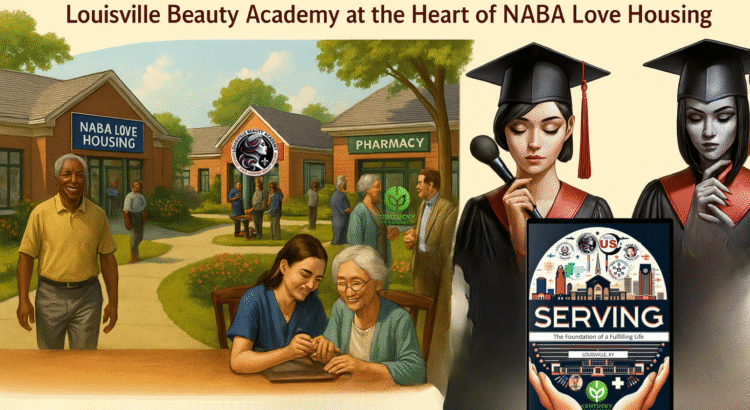
LBA is now honored to serve as a pillar in the groundbreaking NABA Love Housing ecosystem, a visionary model that unites affordable housing, healthcare, food access, and dignity-filled beauty services for the elderly, disabled, and underserved. Within this powerful system, Louisville Beauty Academy plays a central role by offering 100% free beauty services—manicures, pedicures, hairstyling, facials—delivered with compassion and skill by our students.

But what makes this even more special is how our students serve.

They don’t just log clock hours for state board licensing requirements.
They earn volunteer hours—real acts of love that count toward their growth and contribution to society.
They don’t just observe service.
They do it with us—guided side-by-side by instructors who lead with heart, not just curriculum.

And as an institution, LBA donates up to 30% of its income directly to support this ecosystem. Why? Because we believe in a future where beauty education isn’t just profitable—it’s purpose-driven, sustainable, and rooted in humanity.

This is an invitation to those who feel called to build something lasting:

  • To own and operate your own school, as part of this growing movement
  • To join a community that’s about more than skill—it’s about service
  • To be part of a system that prioritizes love, care, and expansion through impact

We don’t grow by chasing money. We grow by creating value through service. That’s the Louisville Beauty Academy way.

Whether you’re a student, a dreamer, or a future school owner—we welcome you.
Not just to learn, but to lead through love.

📩 For ownership, partnership, or program inquiries:
study@louisvillebeautyacademy.net
📞 Text or Call: 502-625-5531

🌐 www.LouisvilleBeautyAcademy.net

A Badge of Purpose and Vision

This photo captures a meaningful moment for Di Tran, founder and CEO of both the New American Business Association Inc. (NABA) and Louisville Beauty Academy (LBA), and the visionary behind Di Tran University and Di Tran Enterprise.

As a presenter at the 2025 Optimal Aging Conference, hosted by the UofL Trager Institute and Republic Bank Foundation Optimal Aging Clinic, Di Tran shared the NABA Love Housing model—a fully integrated and replicable community care system designed to serve both low-income and self-funded seniors through:

🏡 NABA – lean-built, HUD-funded, and Section 8-supported affordable housing
💅 Louisville Beauty Academy – free daily beauty and wellness services by students earning both licensing and volunteer hours
💊 Kentucky Pharmacy – on-site Medicare/Medicaid-backed healthcare with AI-powered safety monitoring

The research powering this visionary approach originates from Di Tran University, where current and future studies focus on optimizing the intersection of housing, health, wellness, and human connection. It’s the think tank behind the movement—turning love and service into data-driven, sustainable models.

From a mud hut in Vietnam to the stage at the University of Louisville, Di Tran now builds systems to uplift others—combining purpose, efficiency, and deep care for the human spirit.