Introduction
Beauty school graduates and transfer students across the United States often face a perplexing reality after completing their required training hours: they feel stranded and unsupported. In states like Kentucky and beyond, frequent changes in cosmetology board regulations can upend graduates’ plans, leaving them unsure how to proceed toward licensure. Many newly minted graduates, especially those who fail their licensing exams or relocate from other states, find that their schools provide little if any guidance once formal training ends. This article explores why these graduates feel abandoned, how regulatory shifts contribute to the problem, and how one institution – Louisville Beauty Academy in Kentucky – has emerged over the past decade as a reliable lifeline for those struggling to navigate licensing hurdles.
Regulatory Changes Leaving Graduates in Limbo
State cosmetology boards frequently update rules and requirements, and these changes can inadvertently strand students and professionals. Mergers of regulatory boards, alterations in exam content, and shifts in required training hours are not uncommon. For example, in Mississippi a 2024 merger of the barbering and cosmetology boards led to an incomplete transition, creating confusion for schools and students. With no fully seated board to provide updated guidance, educators were left without clear rules to teach and students had to take exams based on outdated laws. One Mississippi school owner even chose to close her academy because “inconsistent communication and testing requirements” meant she could no longer give students accurate information for licensing. As she put it, she couldn’t sleep at night taking students’ money without knowing if her guidance would help them obtain a license under the unpredictable board conditions. In short, ongoing regulatory upheaval left both educators and graduates in a “tough position”, unsure how to proceed.
A lapse in leadership on state boards can exacerbate these issues. When Mississippi’s cosmetology board lost its quorum in 2025, it operated under temporary rules that were set to expire without permanent replacements. With no board members to decide on new rules or hear appeals, over 50,000 beauty professionals were effectively in regulatory limbo. Licensees reported feeling they had to “figure out what to do on their own” in the absence of guidance from the board. Changes like these create confusion not just in Mississippi. Across states, even less drastic regulatory tweaks – such as adjusting required training hours or introducing new exam procedures – can leave recent graduates uncertain about compliance. As one report described, “ongoing changes to state licensing rules have left many students and professionals seeking clearer guidance”. Crucially, official communication often lags; graduates might hear about new requirements through word-of-mouth or social media rather than direct board notice. This information void can spread misinformation and anxiety, making graduates feel even more unsupported by the system.
Frequent regulatory changes also vary widely by state, complicating matters for those who move. In recent years, some states have lowered required training hours or eliminated certain exams, while others maintain higher standards. For instance, California’s 2022 reform cut cosmetology training from 1,600 hours to 1,000 and removed the practical exam requirement. Meanwhile, states like New York and Kentucky still require 1,000–1,500 hours or more. Such disparities mean transfer students may find that the education they completed in one state doesn’t neatly fulfill another state’s licensure criteria. Overall, cosmetology education in the U.S. has been described as an industry in “dire need of reform” that “fails to meet student expectations”, often leaving graduates with burdensome debt and little clarity on career pathways. While that critique applies broadly to employment and earnings outcomes, it also reflects the lack of systemic support for graduates transitioning to licensed professionals. In fact, a legislative oversight in Kentucky revealed that the Board of Cosmetology was the single biggest source of professional complaints in the state, with 72 complaints logged between 2008 and 2024 – many concerning delays in receiving licenses. These delays and procedural snags highlight how regulatory bodies, through slow processes or shifting rules, can inadvertently strand graduates at the crucial moment when they are trying to launch their careers.
Lack of Post-Graduation Support from Beauty Schools
Compounding the regulatory complexities is the reality that many beauty schools offer minimal assistance once students graduate. The focus of most cosmetology programs is on helping students accumulate the required hours and technical skills to graduate; after that point, students are expected to pass state board exams and attain licenses largely on their own. If a graduate struggles with the licensing exam or encounters new requirements, their alma mater may not be equipped – or obligated – to help. In practice, this leaves many recent graduates feeling abandoned just when the stakes are highest.
One critical hurdle is the licensing examination itself. Cosmetology and related fields require passing both a theory (written) exam and a practical (hands-on) exam in most states. Yet schools often “teach to the test” in a general sense during the program and may not provide dedicated exam prep or remediation after graduation. If a student fails the state board exam, few schools have formal programs to continue coaching them. The burden (and cost) of retesting usually falls entirely on the individual. In Kentucky, this challenge has been recognized at the policy level. Until recently, Kentucky’s regulations mandated that any applicant who fails the exam three times must wait at least six months and then complete an 80-hour board-approved “brush-up” course before attempting the test again. If the person failed two more times after that, they could even be barred from retaking the exam for three years. Such rules aim to ensure competency, but they also place a heavy burden on the graduate: someone who struggled on the exam must find and pay for additional schooling, and endure a lengthy waiting period, all without guaranteed support from their original school. As one nail industry representative noted in testimony, these requirements can impose a “great financial burden” on otherwise skilled professionals – especially those for whom English is a second language – and ultimately keep would-be cosmetologists out of work.
Language barriers illustrate how schools may fail to fully support certain student populations. Many beauty programs enroll immigrants and non-native English speakers, particularly in fields like nail technology where a large portion of workers in the U.S. are from Asian American and Pacific Islander communities. If instruction and exam preparation are delivered only in English, graduates who are talented practitioners but not fluent in English can be at a severe disadvantage on written licensing tests. Molida Soth, a Kentucky nail technician, highlighted in 2023 that the state’s nail exam was offered only in English, a factor that “disfavors those who do not speak English as their first language” and not due to lack of technical skill. Failing the exam under these circumstances triggers the onerous retake requirements described above. While the root cause is a regulatory issue (lack of translated exams), it underscores a gap in school support as well – many schools do not provide multilingual training materials or exam prep, leaving these graduates to fend for themselves. (Notably, Kentucky responded by expanding its exam language options by late 2024, offering the nail licensing test in Vietnamese, Spanish, Chinese, and Korean in addition to English. This change came only after sustained industry advocacy and underscores how slowly institutions adapt to student needs.)
Transfer students are another group that often feels unsupported. When a student who trained in one state moves to another – or even just transfers schools mid-education – they can encounter significant obstacles. Every state has its own licensing requirements in terms of hours, curriculum content, and exams. Most state boards offer some form of reciprocity or endorsement, but typically the onus is on the individual to prove their credentials and meet any gaps. For example, a cosmetologist moving to Kentucky from a state that required only 1,000 hours of training will find that Kentucky expects 1,500 hours. In many cases, states with higher hour requirements will accept a combination of the applicant’s prior training and work experience to cover the deficit. If not, the transfer student may be told to obtain additional hours of education before they can be licensed in the new state. This scenario can be frustrating: a person who has already graduated beauty school and perhaps been working in the field suddenly must re-enroll in a school for extra hours (sometimes hundreds of hours) just to qualify for an exam in the new state. Unfortunately, beauty schools do not always make this process easy. Some schools are reluctant to enroll students for partial programs or “credit transfers” because it may be administratively complicated or less profitable than full-program students. Others simply may not advertise or invest in transfer support services. As Louisville Beauty Academy notes in a guide for transferring hours, the process “can be time-consuming” and varies by state, requiring careful adherence to board guidelines. Students often have to coordinate the transfer of transcripts and certification of hours themselves by contacting state boards directly. If a state board informs a transfer applicant that additional hours are needed, it is then on the student to find a school willing to provide those hours – a task that can be daunting if their original school is out of state or no longer accessible. In short, while the regulatory framework technically allows for license transfers, in practice many students feel they are left to navigate the bureaucracy alone. Without a school’s active guidance, it’s easy to feel stranded between states.
Even within the same state, graduates who have completed their hours but did so outside a traditional sequence (for instance, those who had to pause their education due to personal reasons, or who finished school but waited long to take the exam) may find themselves without support. Beauty schools typically consider their job done at graduation: their funding (especially if federal aid is involved) often depends on students finishing, not on students becoming licensed. This misalignment of incentives contributes to the “broken promises” of cosmetology education – schools are not held accountable for whether graduates actually attain licensure or employment. A 2022 study found that cosmetology graduates often end up earning very low wages, in part because many do not make a successful transition to licensed work. The analysis concluded that students are left with debt and credentials that don’t pay off, highlighting an industry-wide failure to support student success post-graduation. While that study focused on economic outcomes, the underlying issue is closely tied to lack of post-grad guidance: a graduate who never gets licensed, or who struggles for years to do so, will understandably have poor earnings. Thus, the cycle continues – graduates feel let down by schools and regulators at the very moment they need the most help launching their careers.
The Louisville Beauty Academy Difference
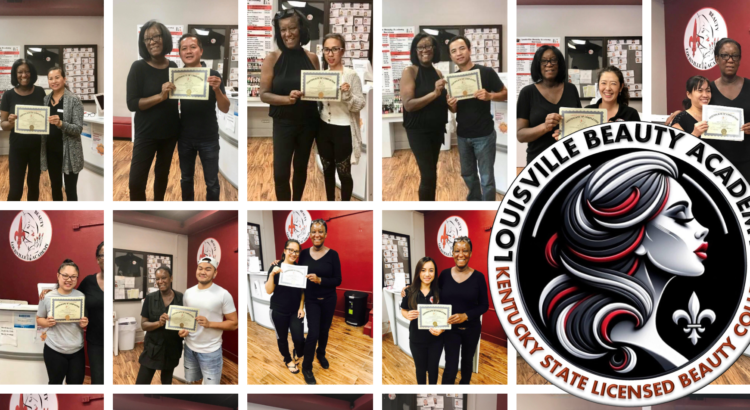
Amid these widespread challenges, Louisville Beauty Academy (LBA) has distinguished itself in Kentucky as a school that actively supports graduates and transfer students after they’ve completed their hours. Over the past 10 years, LBA’s approach has been to treat students and alumni like “family,” providing guidance well beyond the classroom. Founded in late 2015 with a vision of making beauty education affordable and outcomes-driven, LBA quickly became known for helping non-traditional students succeed in the licensed workforce. It is no coincidence that LBA is led by immigrant entrepreneurs who understood the hurdles faced by newcomers and working adults in the beauty industry. From its inception, the academy focused on flexibility, community support, and a laser focus on licensure as the end goal. The results speak volumes: by mid-2023, LBA had already empowered “over a thousand graduates” to complete their programs and many to become licensed professionals, a majority of whom came from immigrant and minority communities. For a school built from a focused main campus and now preparing future second-location planning to produce that many graduates in under a decade is a testament to its supportive model.
One of Louisville Beauty Academy’s hallmark offerings – and a service rarely found elsewhere in Kentucky – is its 80-hour State Board-approved brush-up course for graduates and transfer students. This course directly addresses the scenarios discussed earlier: it is designed for individuals who have already completed their required hours (often at another school or in another state, or who finished a Kentucky program in the past) but cannot move forward for some reason. LBA developed the 80-hour brush-up course to meet the Kentucky State Board of Cosmetology’s specific requirement that such students refresh their training. In fact, Kentucky’s board explicitly requires an 80-hour theory refresher for candidates who either transfer into Kentucky or who fail the licensing exam three times, before they are allowed to retest. Louisville Beauty Academy recognized that no student in that position should be left without help. Thus, they began offering the brush-up program as a formal enrollment option – meaning the student becomes an LBA student for the duration of the refresher. Crucially, this enrollment allows LBA to provide personalized guidance and advocacy on the student’s behalf, picking up where their original school left off. As the academy explains, it’s challenging to advise individuals who are not enrolled students, because the school may lack access to their prior training records or know their exact needs. By having students join the “academy family” through the brush-up course, LBA can legitimately mentor them with full knowledge of their background. This approach has provided a legal and structured pathway for stranded graduates to complete any missing requirements and regain confidence before attempting the board exams.
The impact of the 80-hour brush-up course has been significant. In Kentucky, Louisville Beauty Academy often ends up as the sole institution actively advertising and providing this type of post-graduate support course. It is not uncommon for graduates from other Kentucky schools – or those who moved to Kentucky after partial training elsewhere – to find that LBA is essentially the only school willing to take them in for the final push. The course itself covers both theory and practical skills tailored to the individual’s program (cosmetology, esthetics, nails, etc.), serving as a comprehensive review and skills refresher. Students who enroll in the brush-up program get access to LBA’s instructors, equipment, and even online study platforms to help reinforce learning. Just as importantly, they gain a partner in navigating the state board process. LBA assists these students in ensuring their paperwork is in order – for example, helping confirm that the Kentucky board has accepted their transferred hours before the student even begins the course. The academy’s staff are familiar with the state’s procedures and can advise on scheduling exams or obtaining the necessary authorizations from the board, tasks that would bewilder someone doing it alone. This level of support dramatically improves graduates’ chances of successfully obtaining a license after a setback. It essentially fills the void left by their original schools. Indeed, LBA markets the brush-up course as “your route to success” for re-entering the licensing track, emphasizing that with the right guidance, students can “move forward with confidence toward licensure”.
Another key area where Louisville Beauty Academy has led is in exam preparation and accommodations. Recognizing the diversity of its student body, LBA was at the forefront of pushing for and utilizing translated exams. The academy celebrated in October 2024 when one of its graduates became the first in Kentucky to pass the state licensing exam in Spanish – just weeks after the state introduced multi-language exams for nail technicians. Likewise, LBA had Vietnamese graduates passing soon after. This success is partly due to LBA’s commitment to language inclusion. The school routinely provides bilingual support, knowing that many of its students are more comfortable in languages other than English. By advocating for state exam translations and preparing students to use them, LBA directly addressed a gap that had long caused exam failures. In the words of one Kentucky legislator, the state previously had “overregulated” the exam process in a way that got “in the way of people working”, and reforms were needed to remove “red tape”. LBA’s efforts aligned with these reforms, effectively giving students the tools to overcome regulatory obstacles like language and excessive wait times.
Furthermore, LBA keeps its community well-informed about any regulatory changes – a critical service in an environment where rules can change year to year. The academy regularly publishes updates on new laws, board appointments, and licensing procedures on its website and social media. “Whether it’s news about licensing, educational opportunities, or regulatory changes, we are committed to providing timely and accurate information,” LBA states in one update. This proactive communication ensures that graduates and even current students are not blindsided by shifts such as a new piece of legislation or a change in board leadership. For instance, when Kentucky passed Senate Bill 14 in 2024 to restructure its cosmetology board and add seats for nail techs and estheticians, LBA not only reported on it but also explained its significance to the beauty community. When further legislative efforts in 2025 (like SB 22) aimed to allow unlimited exam retakes after a one-month wait and create license pathways for out-of-state practitioners, LBA kept students apprised of these proposed changes. By acting as an information hub, Louisville Beauty Academy has, in effect, become a translator of regulatory jargon and an advocate for compliance – roles that most schools do not play. Students who engage with LBA’s content are empowered to adjust quickly to new requirements instead of feeling lost or misled by rumors.
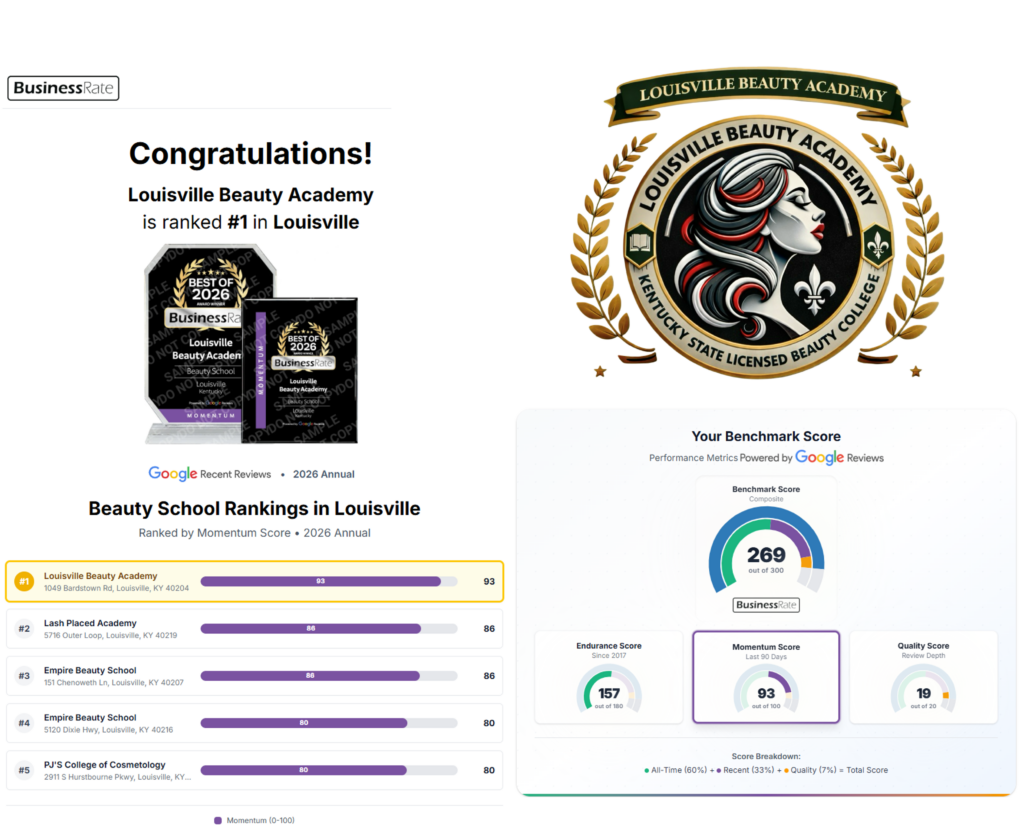
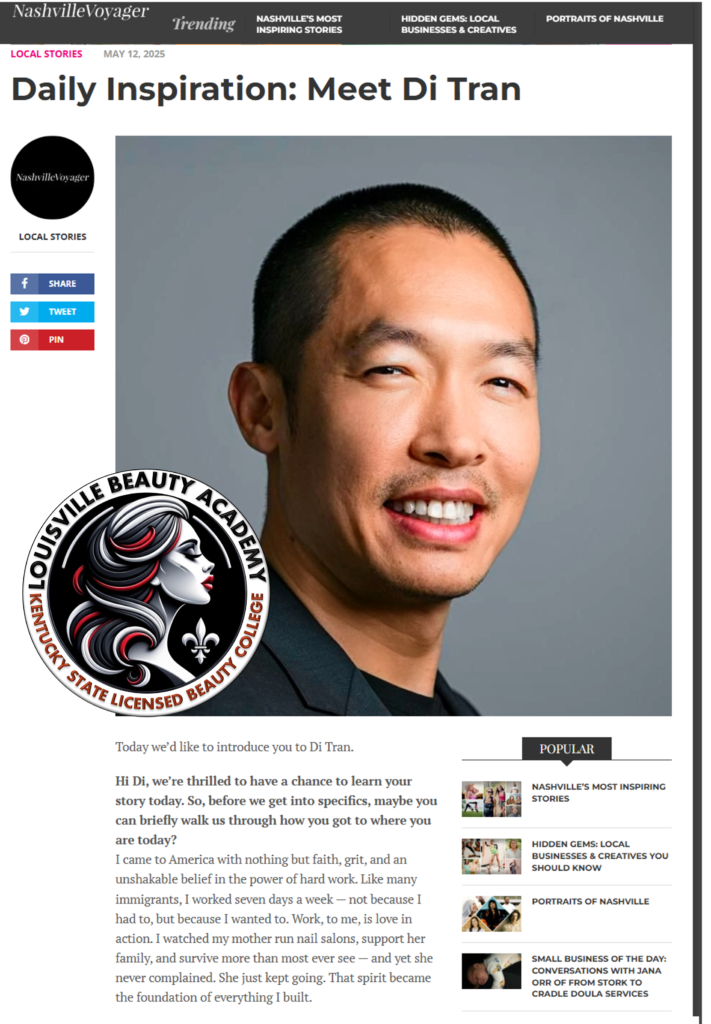
Over the last decade, LBA’s supportive approach has yielded measurable successes. The academy boasts high licensure exam pass rates, which it attributes to its rigorous training and exam prep focus (including the use of modern tools like a digital theory & exam simulation platform). The school’s founder, Di Tran, was recognized as the 2024 “Most Admired CEO” by a local business journal in part for this student-centric mission. LBA has also been honored for its community impact and innovative model, being the only Kentucky business named to the U.S. Chamber of Commerce’s CO— “100 Small Businesses of the Year” awards in 2025. These accolades underscore that LBA’s role extends beyond just one-off help – it has been shaping the conversation on how beauty education can better serve graduates. Through partnerships and even published guides, LBA has tried to streamline the process of hour transfers between states, giving clear step-by-step advice on how to transfer licenses or training credits into Kentucky. The guide emphasizes compliance with board procedures, but also reassures students that yes, transferring is possible and that LBA “can offer guidance and advice” within the board’s framework. By demystifying these processes, Louisville Beauty Academy stands out as an institution that doesn’t abandon students at graduation but instead offers a bridge to that next milestone of licensure.
Conclusion
Frequent regulatory changes and inconsistencies among state cosmetology boards have undeniably left many beauty school graduates feeling stranded after completing their hours. Whether it’s a newly graduated cosmetologist in Kentucky facing a long wait and extra course after failing her exam, or a licensed esthetician from out-of-state struggling to meet a new state’s criteria, the path from school to professional license can be fraught with uncertainty. In too many cases, beauty schools have not provided the aftercare that students need – there is no “safety net” if you stumble on the last step. The onus falls on graduates to decipher evolving rules, often with significant financial and emotional burdens if they get it wrong.
Yet, the past ten years have also shown that this narrative can be changed. Louisville Beauty Academy’s model in Kentucky demonstrates that a school can remain a steadfast partner to its students even after graduation. By tailoring programs like the 80-hour brush-up course to plug into state requirements, offering transfer-hour solutions, and actively guiding students through licensing obstacles, LBA has filled a critical void in support. Graduates who might otherwise have given up on their dreams are instead passing their exams and starting careers – sometimes in new languages, sometimes after years of detour – because someone took the time to show them the way forward. LBA’s success highlights the importance of adaptability and advocacy in beauty education. It serves as a call to action for other cosmetology schools and state boards: when schools proactively help students navigate the licensing maze, and when regulators prioritize clarity and access, the whole industry benefits. Students invest their passion and time into beauty education with the hope of a better future; it is incumbent upon both educators and regulators to ensure they don’t feel abandoned at the finish line. As Louisville Beauty Academy’s decade of experience shows, with the right support, no beauty graduate needs to remain stranded – they can instead become a licensed professional, ready to thrive in the career they worked so hard to prepare for.
References (APA)
Bauer-Wolf, J. (2024). Cut Short: The Broken Promises of Cosmetology Education (Introduction). New America. Retrieved from https://www.newamerica.org/education-policy/reports/cut-short-the-broken-promises-of-cosmetology-education/introduction/
Brink, M. (2022, July 14). Study: Cosmetology Schools Yield Poor Student Outcomes. Inside Higher Ed. Retrieved from https://www.insidehighered.com/quicktakes/2022/07/15/study-cosmetology-schools-yield-poor-student-outcomes
Glowacki, J., & Sharma, N. (2025, July 21). Leadership lapse stalls Mississippi’s beauty board. RHCJC News. Retrieved from https://rhcjcnews.com/4936/news/leadership-lapse-stalls-mississippis-beauty-board/
Hensley, J. (2023, August 22). Nail tech industry asks legislative committee to update testing, regulations. The Lexington Times. Retrieved from https://lexingtonky.news/2023/08/22/nail-tech-industry-asks-legislative-committee-to-update-testing-regulations/
Louisville Beauty Academy. (2020, August 11; updated 2025, March 24). Louisville Beauty Academy – Students and Graduates Transfers of Hours Between States (Guidance). LouisvilleBeautyAcademy.net. Retrieved from https://louisvillebeautyacademy.net/louisville-beauty-academy-students-and-graduates-transfers-of-hours-between-states-regulated-by-kentucky-state-board-of-cosmetology-and-hairdressers/
Louisville Beauty Academy. (2023, July 17). Louisville Beauty Academy: A Gateway to Beauty Careers for the Latino Community in Kentucky. LouisvilleBeautyAcademy.net. Retrieved from https://louisvillebeautyacademy.net/louisville-beauty-academy-a-gateway-to-beauty-careers-for-the-latino-community-in-kentucky/
Louisville Beauty Academy. (2024, July 24). 80-Hour Brush-Up Course: Essential Support for Transfer Students and Exam Preparation at Louisville Beauty Academy. LouisvilleBeautyAcademy.net. Retrieved from https://louisvillebeautyacademy.net/80-hour-brush-up-course-essential-support-for-transfer-students-and-exam-preparation-at-louisville-beauty-academy/
Louisville Beauty Academy. (2024, August 22). Board of Cosmetology Under Scrutiny: Legislative Oversight Reveals Ongoing Issues and Complaints. LouisvilleBeautyAcademy.net. Retrieved from https://louisvillebeautyacademy.net/board-of-cosmetology-under-scrutiny-legislative-oversight-reveals-ongoing-issues-and-complaints-august-15-2024/
Disclaimer: The information provided in this article is for general educational and informational purposes only. While every effort has been made to ensure accuracy, state regulations, licensing requirements, and board procedures are subject to change at any time. Louisville Beauty Academy does not guarantee licensure, exam passage, or acceptance of transfer hours, as these decisions are made solely by the Kentucky State Board of Cosmetology and other state regulatory bodies. Students and graduates are encouraged to consult directly with the appropriate state board for the most current policies and requirements.