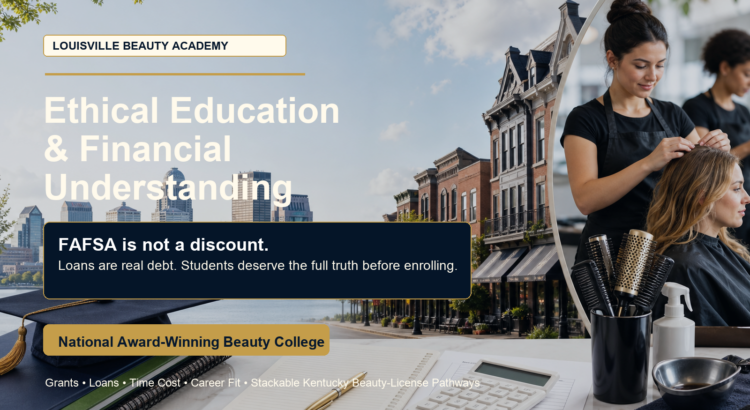
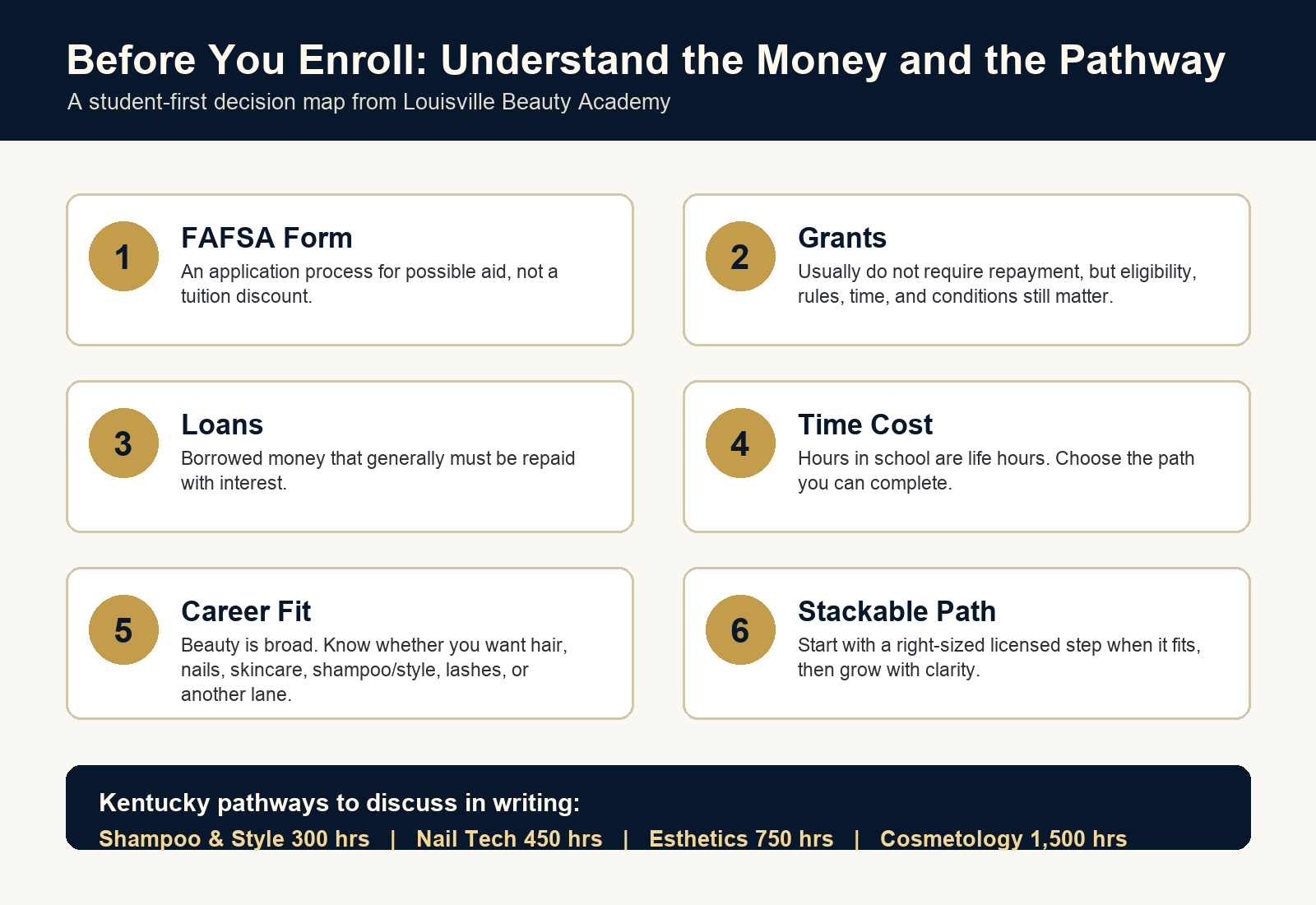
Federal Student Aid posted 2027-28 FAFSA preview materials on September 3, 2026. Here is the plain-English lesson for beauty school families: FAFSA is a government student-aid form. It is not a school price. It is not a discount. It is not a scholarship promise. It is not a payment plan. It is not a promise that school will be free.
This Center of Excellence update is written for normal people: students, parents, spouses, mentors, workforce counselors, and school teams. The goal is to help families slow down and understand funding words before anyone signs school paperwork. This is public education only. It is not legal advice, financial-aid advice, or a claim that LBA processes federal student aid.
Return to the LBA Beauty Education Center of Excellence hub.

Simple Answer First
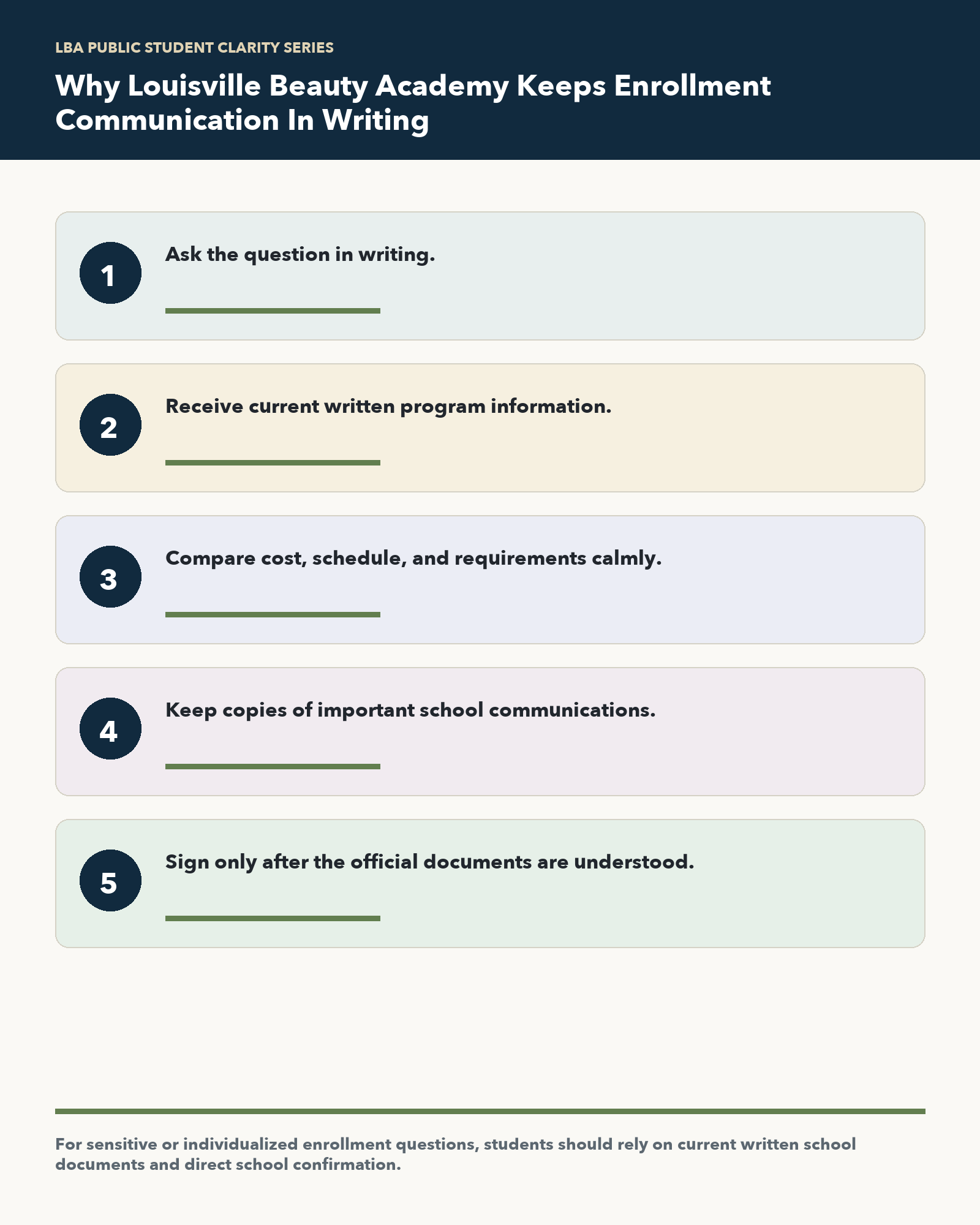
The FAFSA preview is useful because it helps families practice. But practice is not the final application. A student still needs to use the official FAFSA.gov process when the real FAFSA is available. A student also still needs the school’s written price and written payment rules.
If a family remembers only one thing, remember this: FAFSA can be part of a funding conversation, but the school’s written cost documents tell you what the school charges.
What Federal Student Aid Posted
Federal Student Aid posted two related resources for the 2027-28 FAFSA cycle: a preview presentation and an interactive prototype. A prototype is a practice version. FSA says users can click through most pages of the online 2027-28 FAFSA form, but it is not the final FAFSA form and may differ from what is later available on FAFSA.gov.
That difference matters. A preview can help a family learn the steps before the real process opens. It does not replace the real FAFSA.
Why Beauty School Families Should Care
Beauty education is a licensed career path. Students are not just buying classes or a school image. They are choosing a schedule, a price, a contract, training hours, safety rules, and a path toward a state license. Any funding conversation should make those pieces clearer, not more confusing.
The FAFSA preview helps families see the kinds of steps that may involve the student, a parent, or a spouse. But even when a student is exploring aid, the family still needs school-specific facts in writing: total tuition, fees, kit or supply costs, refund rules, payment obligations, program hours, attendance rules, and whether the school actually processes federal student aid.
What The Hard Words Mean
- FAFSA means Free Application for Federal Student Aid. It is the government form many students use to apply for federal student aid.
- Contributor means a person, such as a parent or spouse, who may need to provide information or a signature on the FAFSA.
- Title IV means the federal student-aid system that can include Pell Grants, federal student loans, and other aid programs at participating schools.
- Participating school means a school that is approved to process those federal aid programs. A family should never assume this. Ask and get the answer in writing.
Four Plain-English Rules
- FAFSA is not a price sheet. A school’s written cost documents still tell you the price.
- A preview is not the final form. Use the preview to learn. Use FAFSA.gov for the real process when it opens.
- Signatures matter. If a student, parent, or spouse must sign or add information, missing that step can delay the form.
- School aid status must be verified. Never assume a school processes federal student aid because it is a school. Ask the school directly and read the answer in writing.
The LBA Clarity Standard
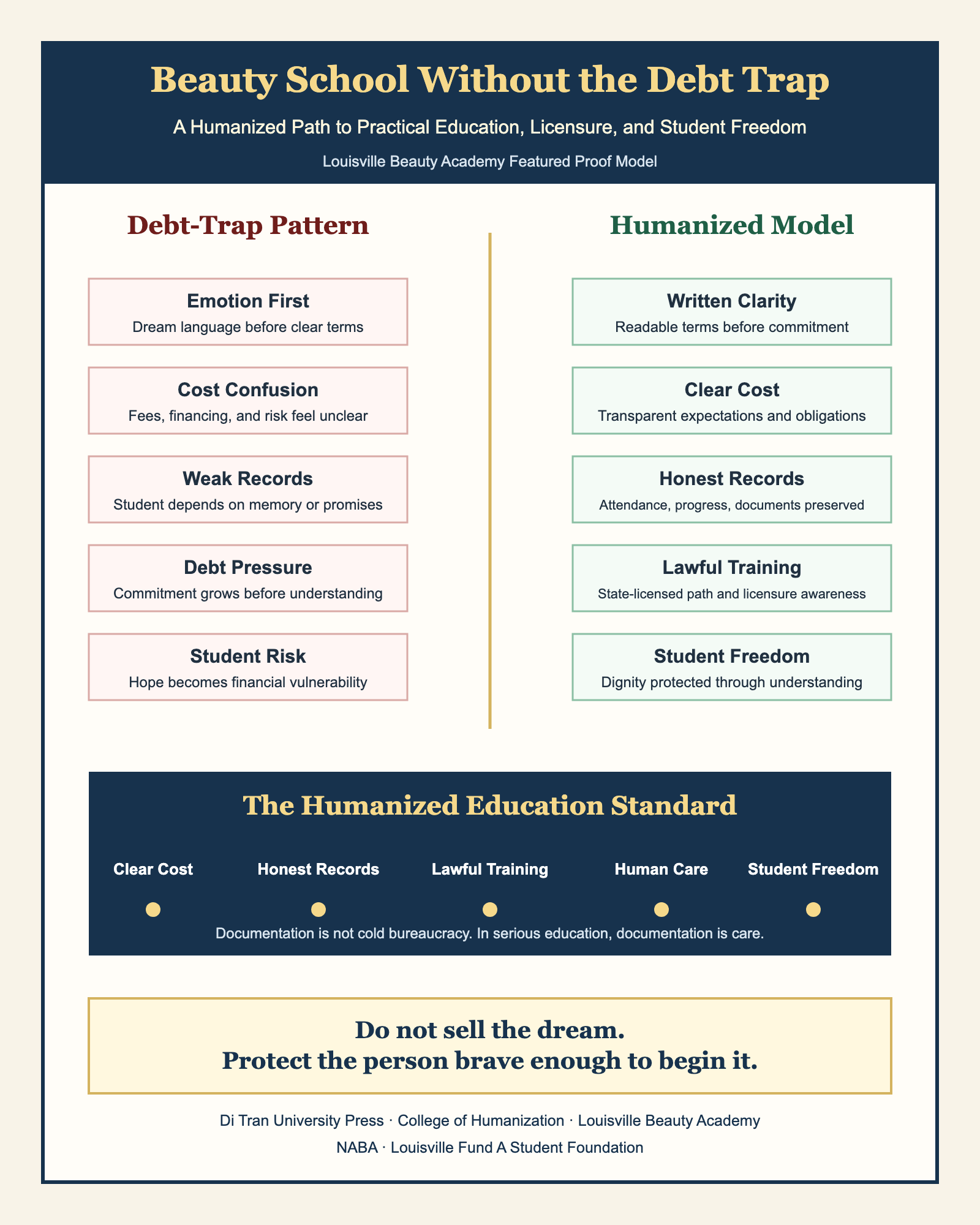
Louisville Beauty Academy is a Kentucky state-licensed beauty school. LBA is not institutionally accredited by a federally recognized accrediting agency and does not process FAFSA or Title IV federal student aid. In plain language: students do not use FAFSA through LBA. LBA publishes that clearly because families deserve to know the funding structure before they compare schools.
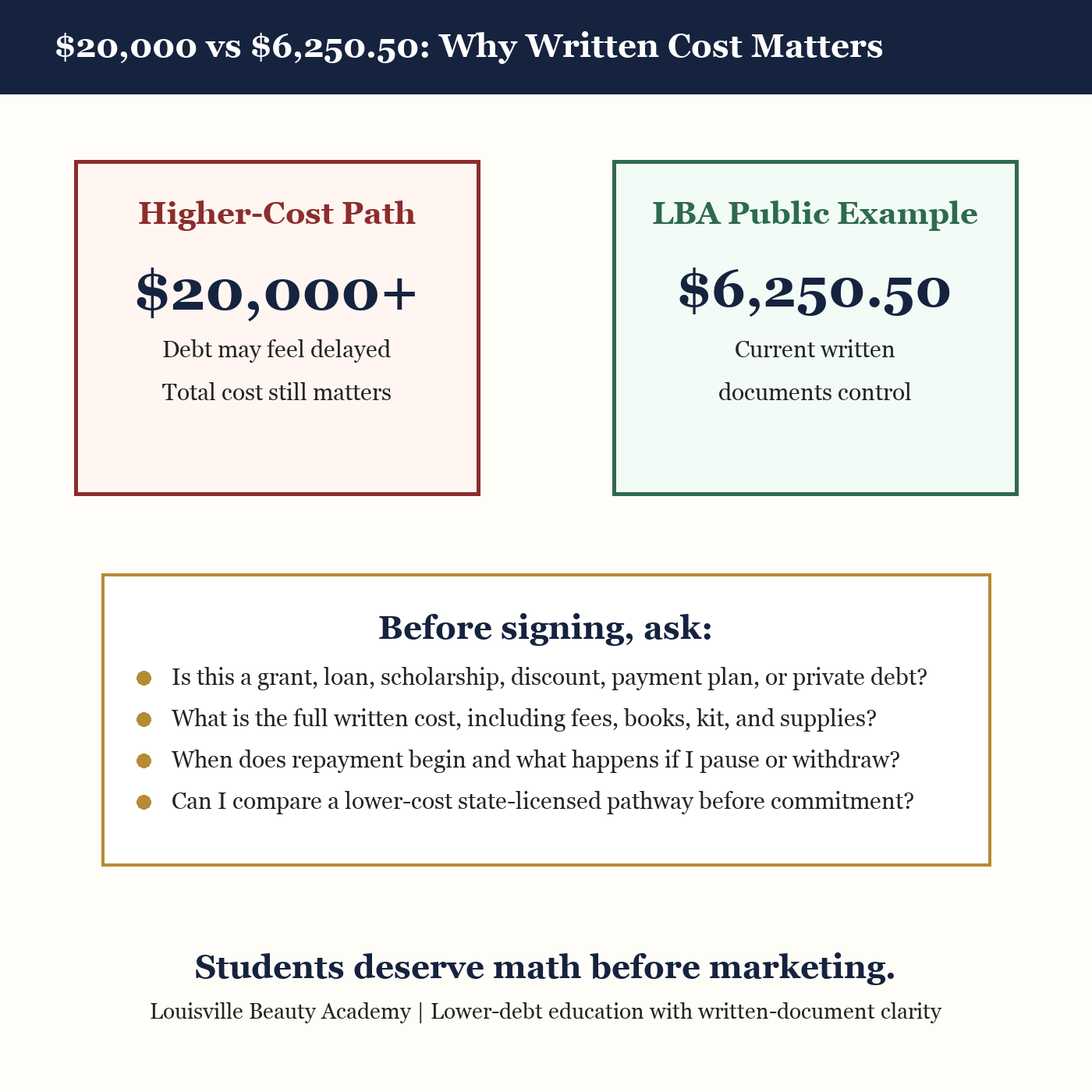
This is not a criticism of federal-aid schools. It is a student-protection standard. At any school, a family should know the same basic facts: Does this school process federal aid? What is the full written cost? What will I owe? What happens if I withdraw? Which document controls if there is a disagreement?
The Deeper Lesson, In Plain English
Financial-aid literacy is not only about filling out a form. It is about protection. A student who understands the difference between an application, an estimate, a school bill, a grant, a loan, a refund rule, and a signed contract is harder to confuse and easier to protect.
That is why FAFSA literacy belongs inside serious beauty education. Starting school is not the whole goal. The real goal is to choose clearly, understand the cost, complete the required training, prepare for licensure, avoid unnecessary debt, and enter the workforce with dignity.
Official Sources
- Federal Student Aid: 2027-28 FAFSA Prototype Now Available, posted September 3, 2026
- Federal Student Aid: 2027-28 FAFSA Preview Presentation, posted September 3, 2026
- FSA Partner Connect: What’s New
- Federal Student Aid: official student-facing site
- Louisville Beauty Academy: Financial Support and Tuition Payment Options
Public-Safe Limit
This article is public education. It does not promise aid eligibility, loan approval, grant approval, school admission, licensure, employment, income, or any particular outcome. Federal Student Aid, the official FAFSA process, current school documents, Kentucky Board of Cosmetology requirements, and applicable law control.