Louisville Beauty Academy as a Center of Excellence for Beauty Education Information
Louisville Beauty Academy believes education begins before enrollment.
Our purpose is not only to teach beauty skills, but also to help students, families, educators, employers, and the public understand the rules, costs, licensing pathways, responsibilities, and financial choices connected to beauty education.
For that reason, LBA is committed to serving as a local Center of Excellence for Beauty Education Information — a place where students can learn clearly, ask questions, compare options, and make informed decisions before choosing any school.
Louisville Beauty Academy does NOT process Title IV federal student aid, including federal student loans or Pell Grants. Because we do not operate as a federal-aid-dependent model, our goal is to keep tuition lower, reduce unnecessary administrative cost, and pass as much educational value as possible directly to students through affordability, transparency, and practical training.
This guide is part of that purpose.
By organizing federal policy, student questions, licensing concepts, affordability concerns, federal-aid terminology, and plain-English explanations in one place, Louisville Beauty Academy seeks to support transparency across the beauty education field.
Our mission is education first: clear information, honest guidance, practical training, responsible cost, and accessible pathways toward state licensure.
A Plain-English Guide for Students, Parents, Educators, and the Beauty Industry
About This Guide
This guide is designed to help students, parents, educators, employers, policymakers, and the public understand the portions of the U.S. Department of Education’s June 29, 2026 Earnings & Accountability Final Rule that are most relevant to beauty education.
Unlike a news article, this page serves as a long-term educational resource. It combines official federal information with Louisville Beauty Academy’s educational commentary to help readers better understand the policy landscape.
Important Disclaimer
This guide is an independent educational resource prepared by Louisville Beauty Academy. The U.S. Department of Education does not endorse, accredit, evaluate, approve, or otherwise recognize Louisville Beauty Academy through this rule. References to federal materials are provided for educational purposes. Readers are encouraged to review the official Department of Education publications directly.
Why This Guide Exists
Federal education regulations can be difficult to read, often spanning hundreds of pages filled with legal terminology and technical language.
Students deserve a clear explanation of:
- What changed.
- Why it changed.
- What it means for beauty education.
- What it means for future students.
- What it does not mean.
Our goal is education—not persuasion.
Quick Summary
The Department’s Goals
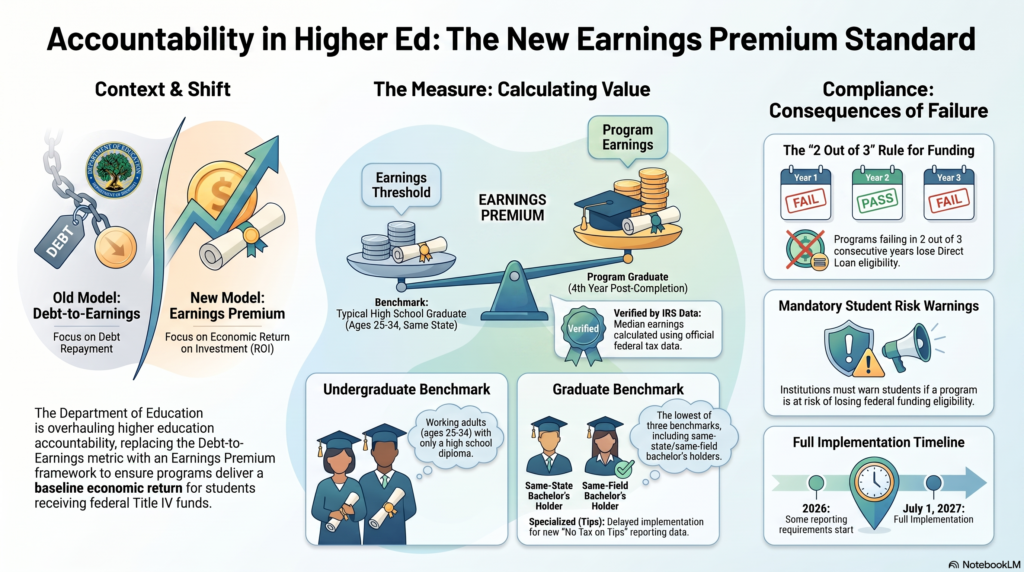
The Department’s final rule focuses on several major themes, including:
- Protecting students from low-earning programs.
- Improving educational accountability.
- Increasing transparency.
- Reducing unnecessary student debt.
- Supporting workforce needs.
- Improving information available to students.
These themes are part of a broader national conversation about educational value.
Why Beauty Education Is Specifically Discussed
The final rule includes discussion regarding cosmetology education and recognizes that many cosmetology programs operate differently from many traditional colleges.
The rule discusses comments noting that:
- many cosmetology programs do not participate in the Federal student loan program;
- some non-federally funded cosmetology programs may have lower tuition prices;
- similar educational outcomes may exist in certain circumstances; and
- these programs help supply the cosmetology workforce.
These discussions recognize that beauty education has characteristics that differ from many other forms of higher education.
What “Delayed Implementation” Means
One of the most significant aspects of the final rule for beauty education is delayed implementation for certain occupations, including cosmetology, barbering, esthetics, and massage therapy.
This means certain program eligibility consequences will begin later than originally proposed.
It does not mean:
- beauty schools are exempt;
- accountability has been eliminated;
- regulations no longer apply.
Instead, the Department determined that implementation should be delayed for these occupations while using earnings data that better reflects the implementation of federal tax policy affecting tipped workers.
Questions Every Student Should Ask Before Choosing Any Beauty School
Regardless of which school you attend, ask:
Tuition
- What is the total tuition?
- Are there additional fees?
- Are books included?
- Is the student kit included?
Licensing
- Does this program prepare me for state licensure?
- What are my state licensing requirements?
- What examinations are required?
Financial Commitment
- Will I borrow money?
- How much debt could I graduate with?
- What are my repayment responsibilities?
Educational Experience
- What is the attendance policy?
- What is the refund policy?
- How much hands-on training will I receive?
- How are practical skills taught?
Students who ask informed questions make better educational decisions.
Understanding Key Terms
State Licensure
A state-issued professional license allowing an individual to practice after meeting legal requirements.
Accreditation
A separate institutional quality assurance process that may be required for participation in certain federal student aid programs.
Federal Student Aid
Federal financial assistance programs authorized under federal law for eligible students attending eligible institutions.
Workforce Education
Career-focused education designed to prepare students for employment in licensed or skilled professions.
What This Rule Does NOT Say
The Department of Education does not state that:
- Louisville Beauty Academy is endorsed.
- Louisville Beauty Academy is approved by the federal government.
- Accreditation is unnecessary.
- Lower tuition automatically means higher quality.
- Every beauty school is the same.
Readers should be careful not to draw conclusions beyond what the Department actually published.
Louisville Beauty Academy’s Perspective
Since opening in 2016, Louisville Beauty Academy has believed that career education should be:
- Affordable.
- Transparent.
- Practical.
- State-licensed.
- Workforce-focused.
- Student-centered.
- Ethically operated.
We have also believed that students deserve clear information before enrolling, including tuition, licensing requirements, expected commitments, and educational expectations.
Today, after helping nearly 2,000 graduates pursue state licensure and careers, we continue to believe that informed students make better educational decisions.
While the Department of Education does not discuss Louisville Beauty Academy specifically, we believe the broader national conversation surrounding affordability, transparency, workforce preparation, and responsible educational value reflects principles that have guided our educational philosophy since our founding.
Read the Official Sources
We encourage every reader to review the original materials.