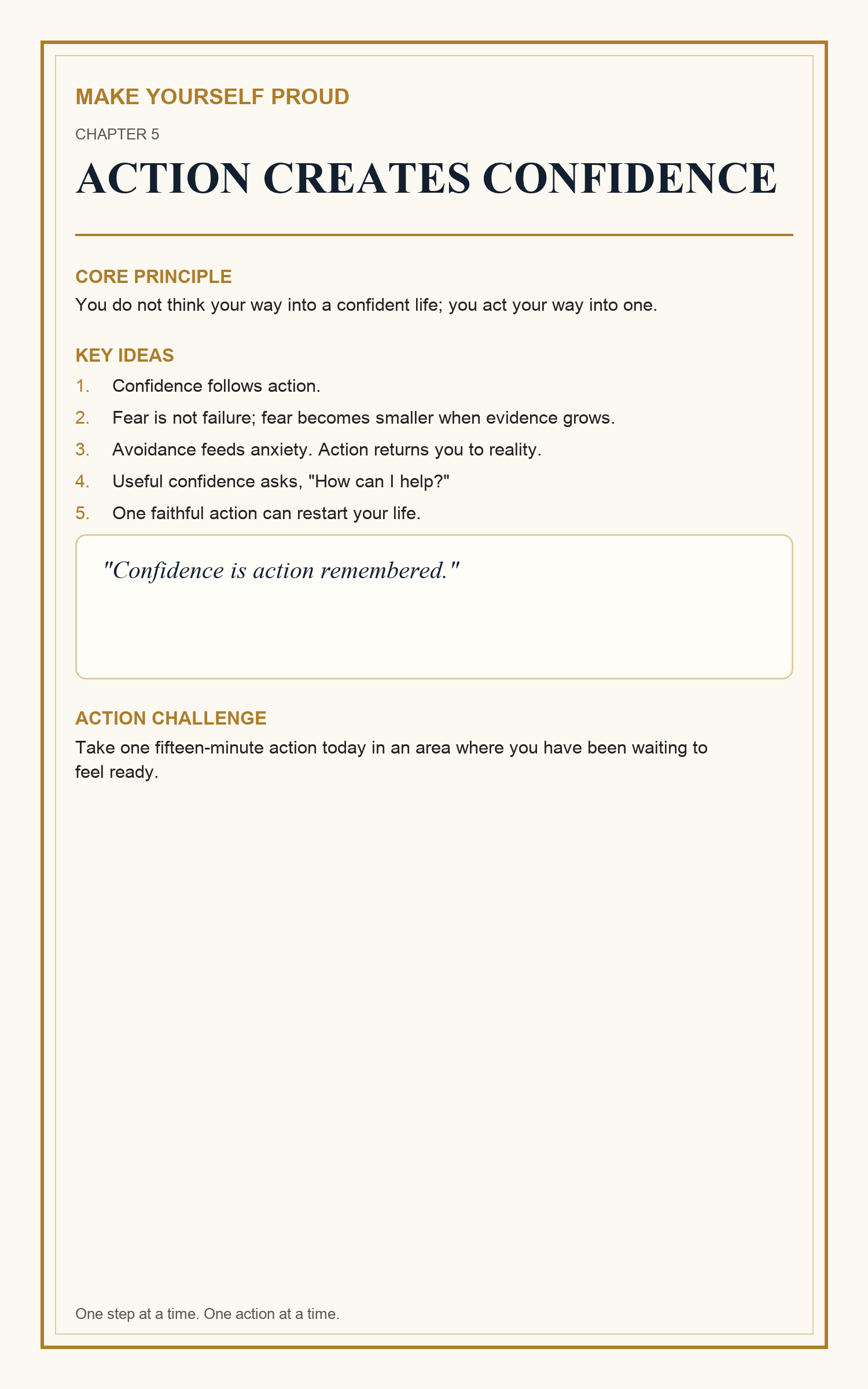
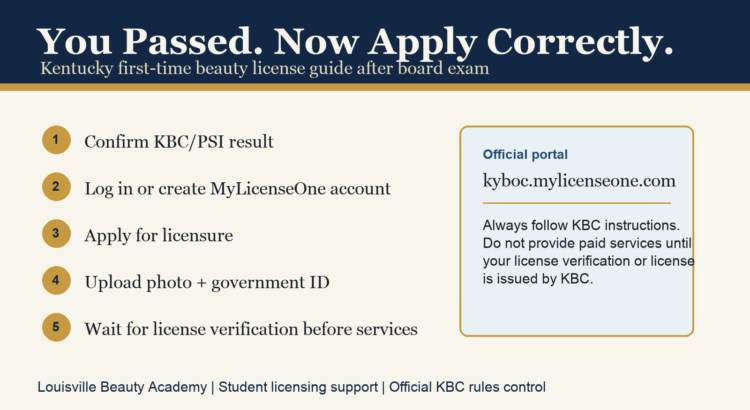
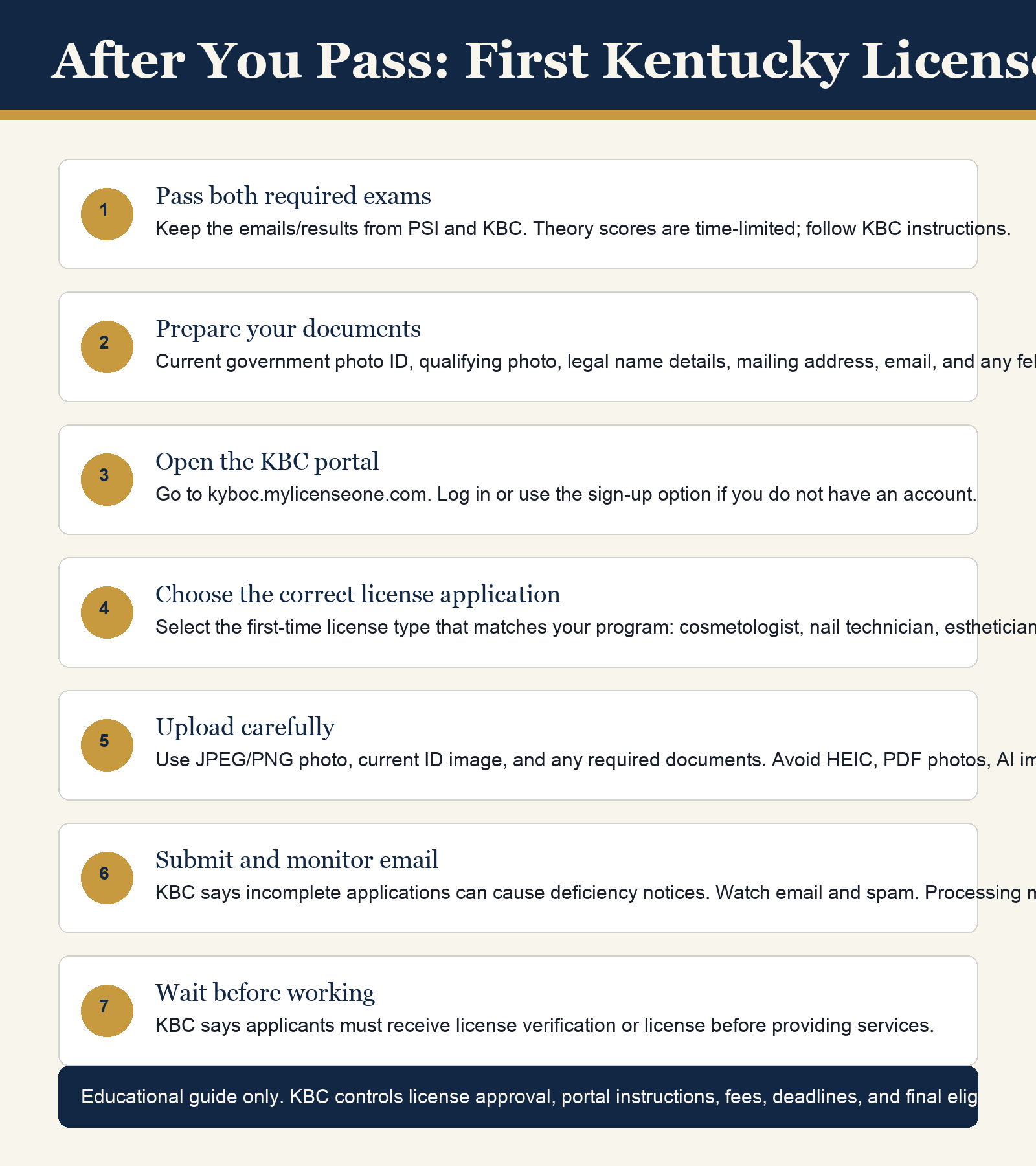
Louisville Beauty Academy is honored to share the release of Di Tran’s new book, Make Yourself Proud: Keep Promises to Yourself and Become Evidence.
For students, this message matters deeply. Many people wait to feel confident before they begin. But in real life, confidence often grows after action. A student becomes stronger by showing up, practicing, correcting, learning, serving, and keeping small promises long enough for evidence to appear.
Make Yourself Proud is not about ego. It is about responsibility, dignity, and self-trust. It teaches that a person can become proud in the clean sense: by doing what is right, by not quitting on their own growth, and by becoming someone their own conscience can trust.
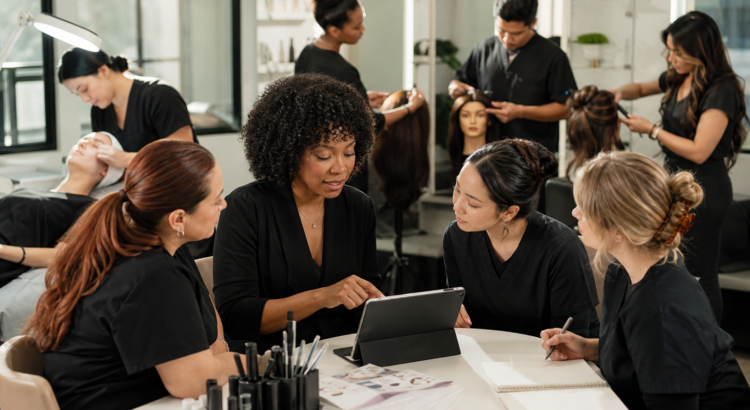
That message aligns with Louisville Beauty Academy’s student culture. We believe students deserve encouragement, clear expectations, practical support, and a learning environment where progress is built through action.
For students, confidence often grows after action. Evidence is built one kept promise at a time.
Companion Video And Audio
Di Tran also released companion media for readers and listeners who want the message in more than one format.
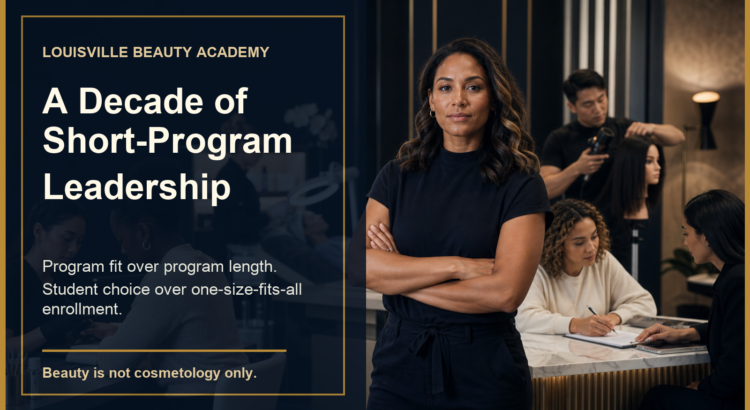
For nearly a decade, Louisville Beauty Academy has helped students enter the beauty workforce through shorter, specialized, lawful programs that match real student goals.
That experience matters because beauty education has too often been publicly reduced to one word: cosmetology. Cosmetology is valuable. It is a serious broad license for the students whose goals require broad preparation. But beauty is not cosmetology only, and cosmetology should not be treated as the default answer for every student who walks through the door.
Our own enrollment reality confirms the shift
LBA’s lived enrollment reality has consistently shown that many students are not primarily looking for the longest generalist route. They are looking for the path that fits their life, their budget, their service goal, and the law.
Many students want a focused pathway: nail technology, esthetics and skincare, eyelash services, shampoo and styling, instructor development, or another specific beauty workforce route. For those students, the ethical question is not how much time a school can keep them enrolled. The ethical question is what pathway they actually need.
The real gate is often knowledge
Beauty education is not just hands. It is lawful judgment. It is theory, safety, sanitation, infection control, public protection, documentation, exam readiness, and professional responsibility.
When students struggle, the barrier is often not that they cannot care, serve, practice, or work. The barrier is often the knowledge system around licensure. That is why LBA and Di Tran University treat theory support, multilingual explanation, AI-assisted learning, and compliance clarity as workforce infrastructure.
A different answer to federal scrutiny
The federal conversation around career programs, debt, earnings, and gainful employment has created stigma around parts of beauty education. LBA’s answer is not to defend every old model. Our answer is better: right-size the pathway, reduce unnecessary burden, make program choice transparent, and help students enter the workforce through the route that fits.
The future of beauty education should not be one long default lane. It should be an honest map.
Not every student needs the same road. Every student deserves the path that fits.
Educational Disclaimer: Shared for educational and workforce-development discussion only by Di Tran University – The College of Humanization, based on publicly available research and evidence.
Direct Answers
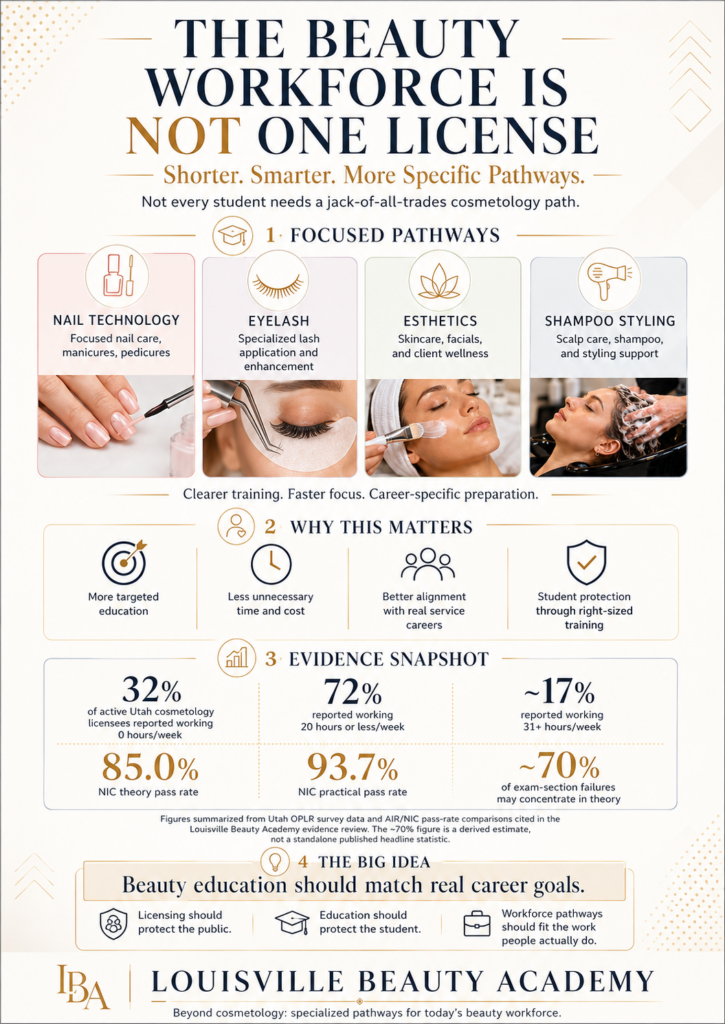
1. Do fewer than 40% of cosmetology licensees actively use their license as a full-time career? Yes. Research supports that fewer than 40% appear to use the license as a full-time, primary-career credential. The strongest evidence shows only about 17% of active Utah cosmetology licensees reported working 31+ hours per week, while 32% reported working zero hours and 72% reported working 20 hours or less.
2. Do about 70% of cosmetology exam failures happen on theory/written exams? Yes. Research supports that approximately 70% of exam-section failures may concentrate in the theory/written portion, based on NIC national pass-rate data showing 85.0% theory pass rate versus 93.7% practical pass rate.
Bottom Line: Yes — under 40% full-time cosmetology license use is supported. Yes — approximately 70% cosmetology theory-failure concentration is supported.
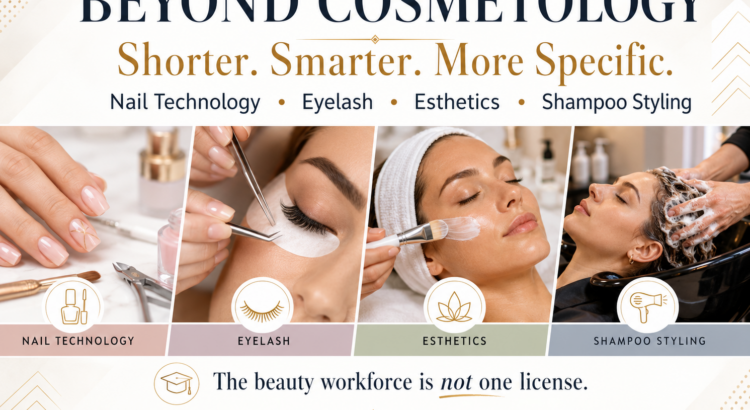
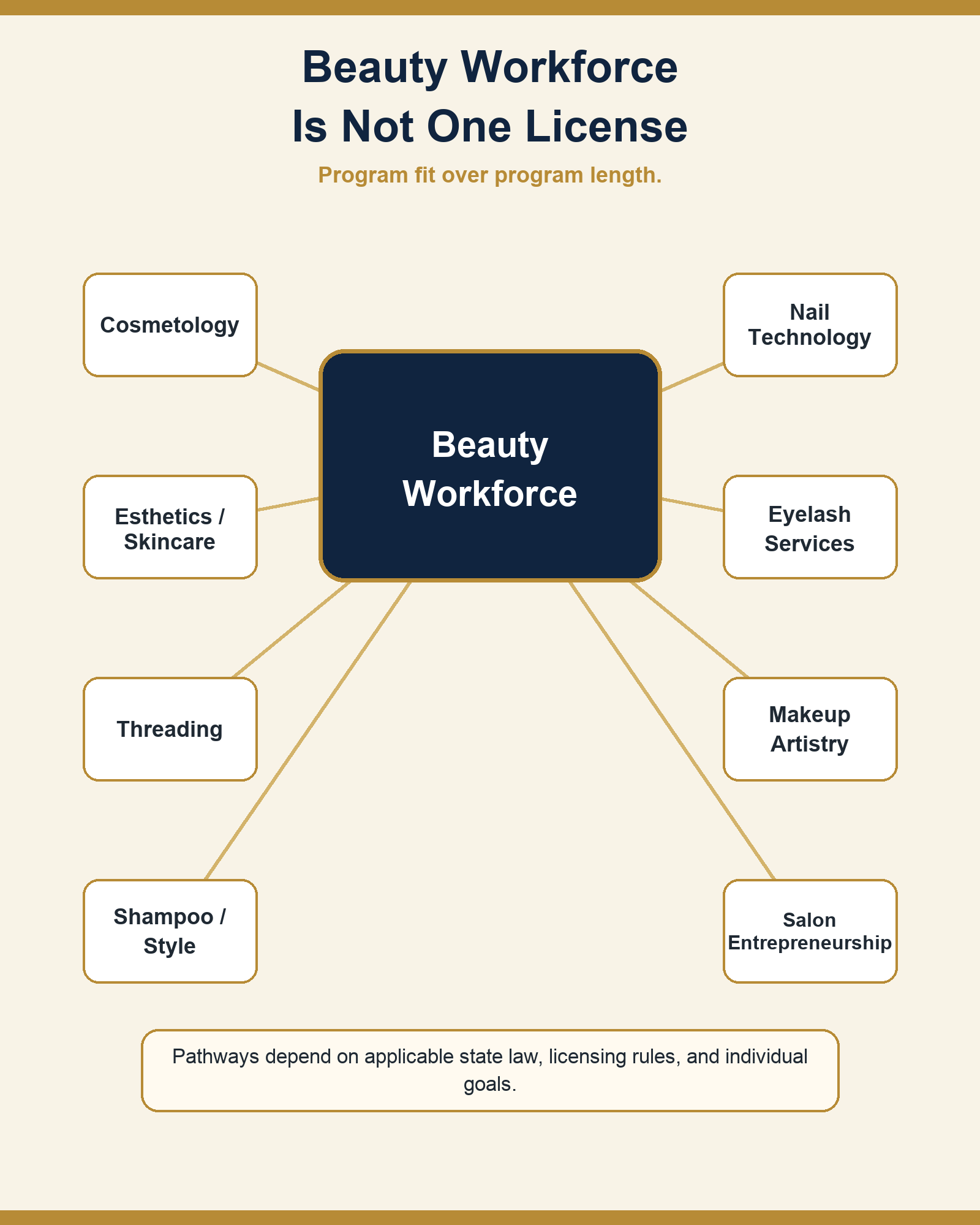
The beauty workforce is not one license. Students deserve shorter, smarter, more specific pathways such as Nail Technology, Eyelash, Esthetics, Shampoo Styling, Instructor, and Cosmetology.
This report investigates two widely cited claims in cosmetology policy advocacy:
Claim A: Fewer than 40% of licensed cosmetologists are actively using their license in the workforce.
Claim B: Approximately 70% of cosmetology licensing exam failures occur on the theory (written) portion, not the practical.
After reviewing federal labor data, state licensing board reports, independent academic studies, and national exam statistics, the findings are as follows:
Claim A is partially to strongly supported. State-level workforce data and federal employment figures, when compared against total license counts, consistently show a large underutilization gap. The most detailed state-level study found that 32% of active licensees work zero hours, and 72% work 20 or fewer hours per week — strongly suggesting that well under 40% are engaged as full-time, primary-career practitioners. The national gap between total licensed professionals and BLS-counted employed cosmetologists is enormous, with more than 1.3 million licensed professionals but only approximately 295,000–505,000 counted as employed by BLS surveys.
Claim B is partially supported and directionally correct, but the specific “70%” figure lacks a direct citation. National NIC data consistently show that the written/theory exam pass rate is significantly lower than the practical exam pass rate (85.0% vs. 93.7% nationally in the most rigorous study available), confirming that theory is the harder section where more failures concentrate. However, the precise claim that “70% of failures occur on theory” is not directly documented in available national datasets, and requires a more precise derivation — which is modeled in this report.
The Professional Beauty Association (PBA) and U.S. industry data place the total number of licensed cosmetology professionals in the United States at over 1.3 million. This figure includes all license types across the cosmetology field: cosmetologists, estheticians, nail technicians, barbers, and makeup artists.[1][2][^3]
By contrast, the Bureau of Labor Statistics (BLS) OEWS program counts only those actively employed in the field:
Hairdressers, Hairstylists, and Cosmetologists (SOC 39-5012): approximately 294,840 employed as of May 2023[^4]
When estheticians, manicurists/pedicurists, and makeup artists are added, the combined actively employed licensed workforce reaches approximately 900,000+ workers[^5]
DataUSA estimates the workforce of hairdressers, hairstylists, and cosmetologists at 505,296 people in 2024[^6]
Even using the most generous estimate (~900,000 actively employed), and comparing it to the 1.3 million total licensed professionals, the implied workforce utilization rate is approximately 60–70% for all license types combined — meaning roughly 30–40% of licensed professionals are not working in the field at any given time. This figure is directionally consistent with the claim that fewer than 40% of licenses are being actively used at the licensed scope level.
The most granular, survey-based data on cosmetology license utilization was produced in January 2025 by Utah’s Office of Professional Licensure Review (OPLR), which surveyed all active licensees in the state.[^7]
Key findings from the OPLR Survey of Utah Cosmetology Licensees (May 2024):
Work Status
Percentage of Active Licensees
Working 0 hours per week
32%
Working 1–20 hours per week
~40%
Working 21–30 hours per week
~10%
Working 31+ hours per week (combined)
~17%
Total working more than 30 hours per week
17%
Source: OPLR Survey of Utah Cosmetology Licensees, May 2024[^7]
The report explicitly states: “72% of licensees currently work 20 hours or less a week, with 32% not working any hours.” Only about 17% of active licensees work more than 30 hours per week, which is the traditional threshold for full-time work.[^7]
Utah has the largest licensed workforce of any profession in the state — 56,766 active cosmetology licensees — more than nursing. Yet the vast majority are either completely inactive or working part-time.[^7]
Several evidence-based factors explain why so many licensees do not use their credentials:
Low earnings: The median annual wage for cosmetologists was approximately $33,400–$35,420 in 2023–2024, making full-time practice financially challenging.[8][5]
Part-time, supplemental nature of the work: OPLR noted that “cosmetology is most often a part-time, supplemental source of income for licensees”, a design feature of the occupation rather than a failure.[^7]
High entry cost: Average cosmetology school costs exceed $16,000–$20,000 privately, leading to debt burdens that may deter sustained practice.[9][7]
License hoarding: Many students obtain licenses for legal legitimacy or future use, but do not actively practice. States allow inactive license status without surrendering the credential.[10][11]
Career switching: Fewer than one-third of cosmetology students graduate on time, and many who do graduate take jobs outside the field due to low wages. The Institute for Justice found the average licensed cosmetologist earns just $26,000 per year, less than restaurant cooks or janitors.[^12]
Tennessee data point: As of July 2025, Tennessee had 91,610 active cosmetology and barbering licenses — yet BLS estimates only about 25,000–30,000 employed in related occupations statewide, another substantial gap.[^13]
Verdict: The claim that fewer than 40% of cosmetology licensees are actively using their license in a full-time, career-level capacity is supported by available data. Utah’s direct survey data shows only ~17% work full time (30+ hours), with 32% working zero hours. The national licensed-vs.-employed gap is consistent with this finding. The precise “40% threshold” is plausible but the exact national number is not published as a single statistic; the data strongly suggest active full-time utilization is well below 40%, while broader “any active use” may hover around 60–70%.
The most authoritative published comparative data on cosmetology exam pass rates by section comes from a 2016 American Institutes for Research (AIR) study commissioned for the cosmetology licensing industry, using NIC examination data across 28–29 states for written exams and 21 states for practical exams:[^14]
Exam Section
Mean Pass Rate (NIC National)
SD
Written/Theory
85.0%
7.7%
Practical
93.7%
5.2%
The difference was statistically significant (paired t-test, p = 0.003), confirming theory is harder and generates more failures. In states where both exams were compared side by side, the gap was 90.1% (theory) vs. 95.2% (practical).[^14]
This means: for every 100 candidates taking the NIC exam —
Using the national NIC averages as a baseline model:
Assume a cohort of 100 candidates takes both exams:
Theory failures: 15.0 out of 100
Practical failures: 6.3 out of 100
Total failures (any section): ~21.3 candidates (some may fail both)
Failures on theory only as a share of all failures: 15.0 / (15.0 + 6.3) = ~70.4%
This derivation mathematically produces the ~70% figure claimed. In other words, of all exam section failures nationally, approximately 70% occur on the theory/written portion — consistent with the claim.[^14]
Important caveat: This is a derived estimate using 2015 NIC data. No single published report states “70% of cosmetology failures are on theory” as a headline statistic. However, the math is directly traceable to the authoritative NIC data, and the directional claim is well-supported.
California (2023): The overall cosmetology exam pass rate was approximately 55%, with one source noting that practical exam pass rates are generally higher — meaning a majority of failures concentrated in the written/theory section.[^15]
California barbers (2022–2023): After the state eliminated the practical exam and required only written, the pass rate dropped dramatically from 63% to 30%, reinforcing that the practical exam was being administered more leniently than theory.[^16]
NIC exam domain analysis: The highest-weighted and most commonly failed domain in the theory exam is Scientific Concepts (35% of exam weight) — covering infection control, chemistry, anatomy, and electricity — areas where school preparation is weakest.[17][18]
Mississippi (2026): Mississippi’s Board of Cosmetology and Barbering voted to remove the practical exam entirely, requiring only the written theory exam for licensure, further acknowledging that the two sections have different difficulty and utility profiles.[^19]
The AIR/PBA research identified a structural reason for the practical exam’s higher pass rate: rater leniency. Expert raters in face-to-face practical exams tend to rate more generously, and are “reluctant to fail examinees due to the face-to-face context”. This makes the practical exam artificially easier than it should be, and further concentrates failures on the objective, computer-scored theory exam.[^14]
Industry sources and exam prep providers confirm: “Scientific Concepts is the number one reason people fail” the NIC cosmetology exam, and students who “walk in cold after finishing school are the ones who fail” the written portion.[^18]
Verdict: The claim that approximately 70% of cosmetology exam failures occur on the theory/written portion is directionally well-supported and mathematically derivable from NIC national data. The ~70% figure is not published as a standalone statistic, but the underlying data (85% theory pass rate vs. 93.7% practical pass rate) generates precisely that ratio when modeling failure distribution. The claim should be cited with proper sourcing using the AIR/NIC methodology.
No centralized national dataset tracks total licenses issued vs. actively practicing professionals across all 50 states. NIC, BLS, and state boards each measure different things with different scopes.
Theory vs. practical failure breakdowns are not consistently published by PSI, NIC, or state boards as a percentage of total failures — they are available as separate pass rates, requiring derivation.
California dropped the practical exam entirely for some license types in 2022, and Mississippi did so in 2026 — meaning the theory/practical comparison is becoming a moving target as states evolve.[19][16]
The Utah OPLR data is the most rigorous single-state survey on license utilization available, but Utah is not necessarily representative of all states nationally.
Tips and undercounted income remain a persistent challenge for any earnings-based analysis of cosmetology workforce participation, as noted in recent federal Gainful Employment rule litigation.[^21]
To formally validate both claims for regulatory or legislative use:
File public records/FOIA requests with NIC (nictesting.org) for annual theory vs. practical pass/fail counts, broken down by state and exam cycle.
Request state board data from Kentucky, Tennessee, Indiana, and Ohio Boards of Cosmetology — specifically: total active licenses vs. renewal addresses linked to active salon employment.
Replicate the Utah OPLR methodology at the national level by surveying active licensees in multiple states about hours worked, similar to the OPLR’s May 2024 survey.
Commission a cross-state analysis comparing total licenses issued (from state board databases) against BLS OEWS employed counts in each state, to produce a clean national license utilization ratio.
Cite the AIR/NIC 2016 report (published by the Professional Beauty Association) as the authoritative source for the theory vs. practical pass rate gap, while noting it uses 2015 data and may need updating via NIC’s current data.
Both claims are directionally supported by available evidence, with the following nuances:
Claim A (Less than 40% actively using their license): The most direct evidence comes from Utah’s OPLR survey, which found only 17% of active licensees work full-time (30+ hours), with 32% working zero hours. National comparisons of total licensed professionals (~1.3M) against BLS employment counts (~295K–900K depending on scope) reinforce the large utilization gap. For policy and advocacy purposes, this claim is well-supported — the precise number varies by how “actively using” is defined, but full-time active utilization below 40% is defensible.
Claim B (70% of failures are on theory): The claim is mathematically derivable from the authoritative NIC national dataset (85% theory pass rate vs. 93.7% practical pass rate) and confirmed by state-level data patterns. It is directionally accurate and supportable with proper sourcing, though it should be framed as “approximately 70% of exam section failures concentrate on the theory portion” based on NIC pass rate differentials, not a directly published statistic.
Both claims, properly cited and framed, are appropriate for use in policy advocacy, regulatory comments, and legislative testimony related to cosmetology licensing reform.
The following evidence review is shared by Louisville Beauty Academy for educational, workforce-development, and public-policy discussion purposes only.
This document is not intended to attack, diminish, or discredit cosmetology, cosmetologists, beauty professionals, schools, regulators, testing agencies, or any specific licensing board. Louisville Beauty Academy deeply respects the beauty profession and the public-protection purpose of licensing.
The purpose of this review is to ask a constructive workforce question:
Is the modern beauty workforce still being treated as one single license pathway, when today’s industry includes many distinct career pathways — cosmetology, nail technology, esthetics, shampoo styling, eyelash services, instructor training, and more?
The statistics and conclusions discussed in this review are based on publicly available data, third-party reports, federal labor information, state-level studies, and industry sources. Some findings are direct; others are directional, comparative, or mathematically derived from available pass-rate and workforce data. Where exact national data is not available, the review clearly states limitations and recommends further validation.
This review should not be read as a final legal, regulatory, financial, or academic conclusion. It is a good-faith policy and workforce analysis intended to support better discussion around:
Student protection Affordable education Right-sized licensing Workforce alignment Exam readiness Debt reduction Public safety Career-specific training pathways
Louisville Beauty Academy’s position is simple:
Licensing should protect the public. Education should protect the student. Workforce pathways should match real career use.
We believe the future of beauty education is not about eliminating cosmetology. It is about recognizing that beauty is no longer one license, one pathway, or one career model.
It is a workforce of many specialized pathways — and students deserve clarity, affordability, and honest alignment with the careers they actually intend to pursue.
Beauty education should never be treated as one single pathway for every student.
This article is not a criticism of any school, any program, or the cosmetology profession. Cosmetology is a respected and valuable license. It remains an important pathway for students who want broad training, long-term professional flexibility, and preparation across multiple areas of beauty service.
However, cosmetology should not automatically be treated as the default answer for every person who wants to enter the beauty workforce.
Kentucky recognizes multiple lawful beauty career pathways for a reason.
Some students are called to full cosmetology. Some students are called to nails. Some students are called to esthetics. Some students are called to shampoo and styling. Some students may later grow into instructor roles, salon ownership, specialty services, or expanded professional leadership.
The question should not be:
How do we push every student into the longest program?
The better question is:
What lawful license pathway fits this student’s real career goal, financial situation, time availability, family responsibility, language needs, and professional future?
At Louisville Beauty Academy, our belief is simple:
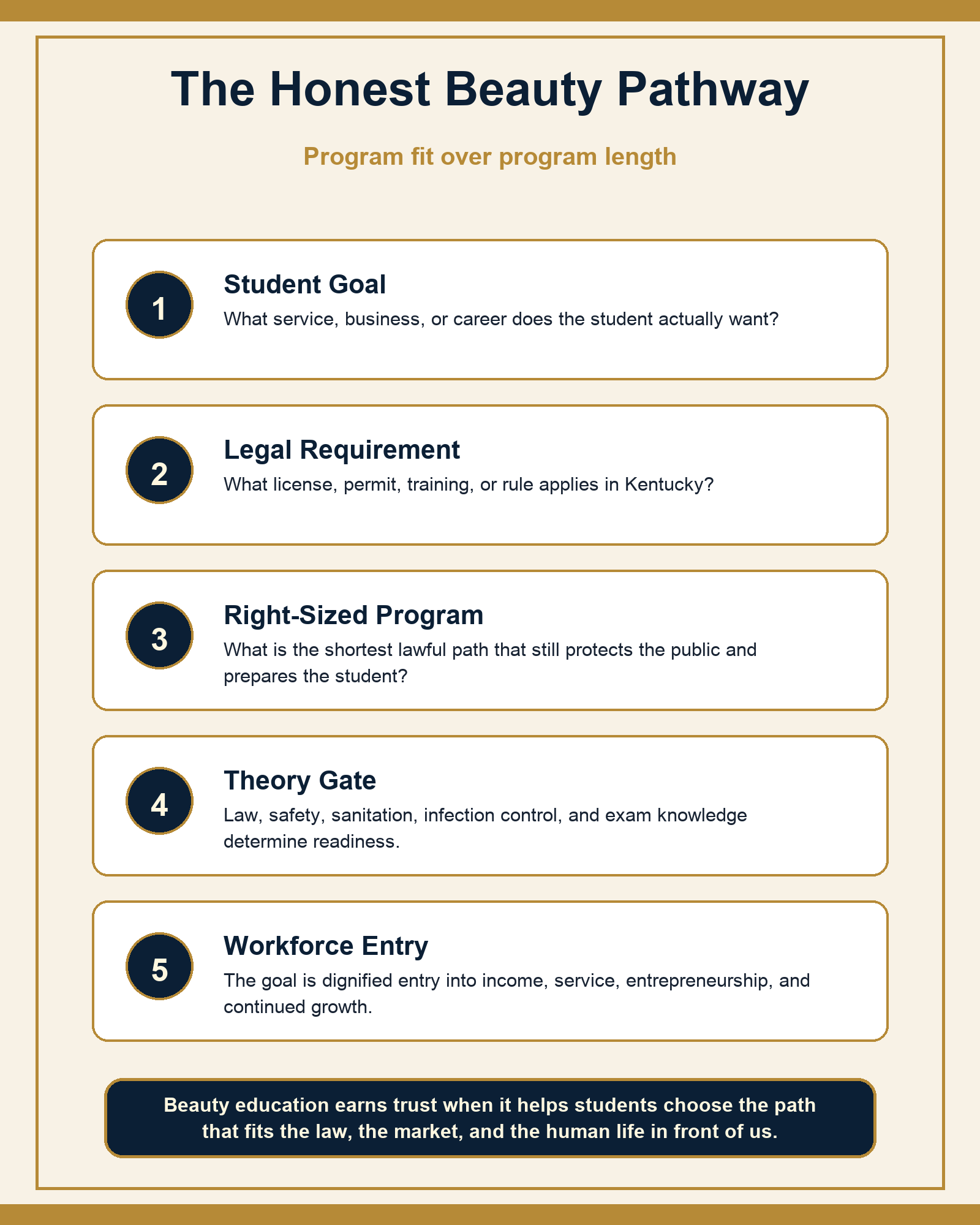
Program Fit Over Program Length
A longer program is not automatically better for every person.
A shorter program is not automatically less valuable.
The right program is the one that lawfully prepares the student for the work they actually plan to do.
This is a student-first, compliance-first, workforce-first approach.
The future of beauty education is not fewer standards. It is clearer pathways, stronger compliance, better documentation, ethical enrollment, multilingual access, technology-supported learning, and career guidance designed around the student’s real goal.
Beauty education should protect students, protect the public, and protect the profession.
That means schools must be honest about the difference between each license type, each scope of practice, each required hour level, each career outcome, and each student responsibility.
A student who wants to become a nail technician should clearly understand the nail technology pathway.
A student who wants skincare should clearly understand the esthetics pathway.
A student who wants full hair, skin, and nail services should clearly understand the cosmetology pathway.
A student who wants shampooing and styling services should clearly understand that lawful pathway as well.
This is not anti-cosmetology.
This is pro-student. This is pro-compliance. This is pro-workforce. This is pro-public protection. This is pro-beauty industry.
The Beauty Industry Is Larger Than One Path
The beauty industry is larger than one license, one program, or one career path.
Some students want to work in nails. Some are drawn to skincare. Some want to focus on hair. Some want to shampoo and style. Some want to build toward salon ownership. Some want to begin with one lawful pathway, work, earn, grow, and later return for additional training.
Real students have real lives.
Many are working adults. Many are parents. Many are immigrants. Many are multilingual learners. Many are changing careers. Many are trying to enter the workforce responsibly without unnecessary debt or wasted time.
A strong school should not treat those differences as problems.
A strong school should help students understand their options clearly.
The goal is not to make every student choose the same road.
The goal is to help every student choose the lawful road that fits their actual destination.
Ethical Enrollment Means Honest Career Matching
Ethical enrollment is not just helping a student sign up.
Ethical enrollment means helping a student understand what they are signing up for.
Before a student chooses a program, a school should help them consider:
What service do they want to perform?
What license, permit, or training does the law require?
What is the student’s available time?
What is the student’s budget?
What language or learning support does the student need?
What family or work responsibility must the student balance?
What career outcome is the student actually seeking?
What is the shortest lawful path that still protects the public and prepares the student responsibly?
This is career matching.
Career matching does not lower standards. It strengthens standards because the student understands the purpose of the program before entering it.
When students understand the pathway, they make better decisions.
When students make better decisions, they are more likely to continue.
When they continue, they are more likely to complete.
When they complete, they are more likely to become licensed.
When they become licensed, they can work, serve, earn, and grow.
That is the purpose of beauty education.
Compliance Is Student Protection
Compliance should not be viewed only as paperwork.
The beauty industry serves the public. That means training must be honest, organized, documented, and aligned with the law.
A school should not simply ask, “Can this student enroll?”
A school should also ask:
Does this student understand the pathway?
Does this student understand the requirement?
Does this student understand the career outcome?
Does this student understand the responsibility?
That is how education becomes protection.
Responsible AI Can Support Clarity, But Humans Remain Central
Technology and artificial intelligence can support beauty education when used responsibly.
AI can help organize information.
AI can help explain pathways more clearly.
AI can support multilingual access.
AI can help reduce paperwork burden.
AI can help students compare options.
AI can help schools document processes more consistently.
But AI does not replace teachers.
AI does not replace licensed professionals.
AI does not replace hands-on training.
AI does not replace human judgment.
AI does not replace official law, board rules, signed school documents, or regulatory review.
At Louisville Beauty Academy, technology is used as support — not as a substitute for lawful training, professional instruction, student responsibility, or public protection.
The goal is not to make education less human.
The goal is to make education clearer, more organized, more accessible, and more accountable for real human beings.
The Future of Beauty Education
The future of beauty education is not one license for everyone.
The future is lawful pathway clarity.
The future is ethical enrollment.
The future is documentation by design.
The future is compliance by design.
The future is multilingual access.
The future is student-centered career matching.
The future is affordability with responsibility.
The future is technology supporting human service.
The future is schools helping students choose the right path, not simply the longest path.
Cosmetology remains valuable.
Nail technology remains valuable.
Esthetics remains valuable.
Shampoo and styling remains valuable.
Instructor training remains valuable.
Specialty and continued education remain valuable when aligned with law, safety, and professional purpose.
The beauty workforce needs many roles because the public needs many services and students have many different goals.
A responsible school does not reduce the profession to one option.
A responsible school helps students understand the full map.
Louisville Beauty Academy’s Position
Louisville Beauty Academy believes beauty education should be honest, lawful, affordable, documented, and aligned with the student’s actual career goal.
We believe students deserve clear information before enrollment.
We believe students deserve to understand the difference between programs.
We believe students deserve to know what each license allows and does not allow.
We believe students deserve guidance that respects their time, money, family, language, work, and future.
We believe public protection and student opportunity can work together.
We believe compliance and compassion belong together.
We believe education should help students move from uncertainty to clarity, from training to licensing, and from licensing to work, service, and growth.
Not every student needs the same road.
Every student deserves an honest map.
Final Thought
Beauty workforce education should not begin with the assumption that one license fits everyone.
It should begin with a better question:
What is the right lawful pathway for this student’s real life and real career goal?
That is program fit over program length.
That is ethical beauty education.
That is workforce education with responsibility.
That is how students are protected.
That is how the public is protected.
That is how the profession is strengthened.
Not one license for everyone.
The right license, for the right student, at the right time, for the right career goal.
Beauty workforce education should begin with pathway clarity: program fit over program length, within applicable law and licensing rules.
At Louisville Beauty Academy, a school name is not only a name. It is a responsibility.
Every student who walks through the door carries more than a schedule, a tuition plan, or a licensing goal. They carry family pressure, work pressure, language difference, financial reality, hope, fear, discipline, and the quiet question that lives inside almost every serious beginning:
Can I really do this?
Louisville Beauty Academy answers through culture, not noise:
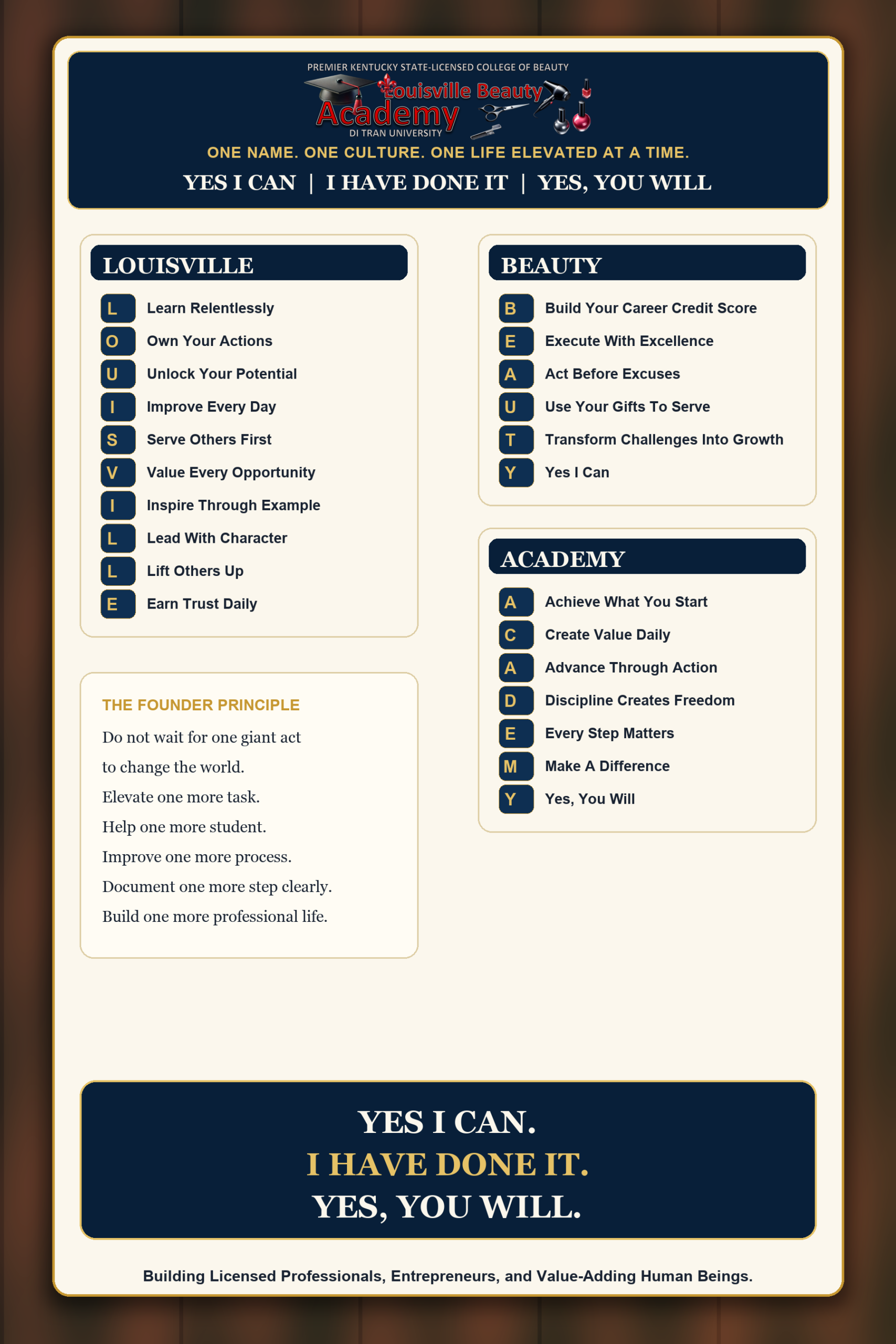
YES I CAN. I HAVE DONE IT. YES, YOU WILL.
Those words are not decoration. They are a sequence of growth. YES I CAN is the courage to begin. I HAVE DONE IT is the proof that disciplined action can become achievement. YES, YOU WILL is the graduate, instructor, family member, salon owner, and community leader turning back toward the next student and saying: keep going.
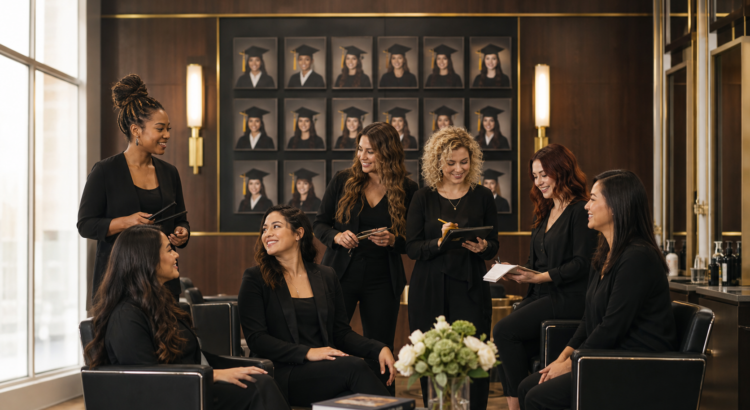
Louisville Beauty Academy culture wall: one name, one culture, one life elevated at a time.
The Meaning Inside The Name
LOUISVILLE begins with the professional foundation: learning, ownership, service, character, and trust.
L — Learn Relentlessly
O — Own Your Actions
U — Unlock Your Potential
I — Improve Every Day
S — Serve Others First
V — Value Every Opportunity
I — Inspire Through Example
L — Lead With Character
L — Lift Others Up
E — Earn Trust Daily
A beauty professional must learn technique, sanitation, client care, timing, communication, discipline, documentation, and business judgment. Talent matters, but talent without trust does not build a career. Skill matters, but skill without character does not build a profession.
BEAUTY becomes more than appearance. It becomes service, professionalism, dignity, and value creation.
B — Build Your Career Credit Score
E — Execute With Excellence
A — Act Before Excuses
U — Use Your Gifts To Serve
T — Transform Challenges Into Growth
Y — Yes I Can
Beauty work is human work. A student learns to serve another person with care, prepare a clean and safe service environment, listen carefully, practice repeatedly, accept correction, and build public trust one client at a time.
ACADEMY becomes the discipline of completion.
A — Achieve What You Start
C — Create Value Daily
A — Advance Through Action
D — Discipline Creates Freedom
E — Every Step Matters
M — Make A Difference
Y — Yes, You Will
The academy exists because people need more than encouragement. They need structure. They need repetition. They need written clarity. They need instructors who care enough to correct them and a culture strong enough to bring them back to action after difficulty.
One More Action At A Time
The founder principle behind this culture is simple: do not wait for one giant act to change the world. Elevate one more task. Help one more student. Improve one more process. Finish one more requirement. Speak one more sentence of encouragement. Document one more step clearly. Build one more professional life.
Small actions compound.
One checklist becomes readiness.
One correction becomes skill.
One returned student becomes completion.
One written record prevents confusion.
One license pathway becomes economic movement.
One graduate becomes a model for the next person.
This is how a school becomes more than a school. It becomes a place where people practice becoming trustworthy, useful, skilled, licensed, and ready to serve.
Why This Is Also Civic Work
Beauty education is often misunderstood as small. It is not small. It is workforce development. It is small-business formation. It is immigrant and working-family mobility. It is sanitation and public trust. It is language access. It is the discipline of taking a real person from uncertainty toward a documented professional pathway.
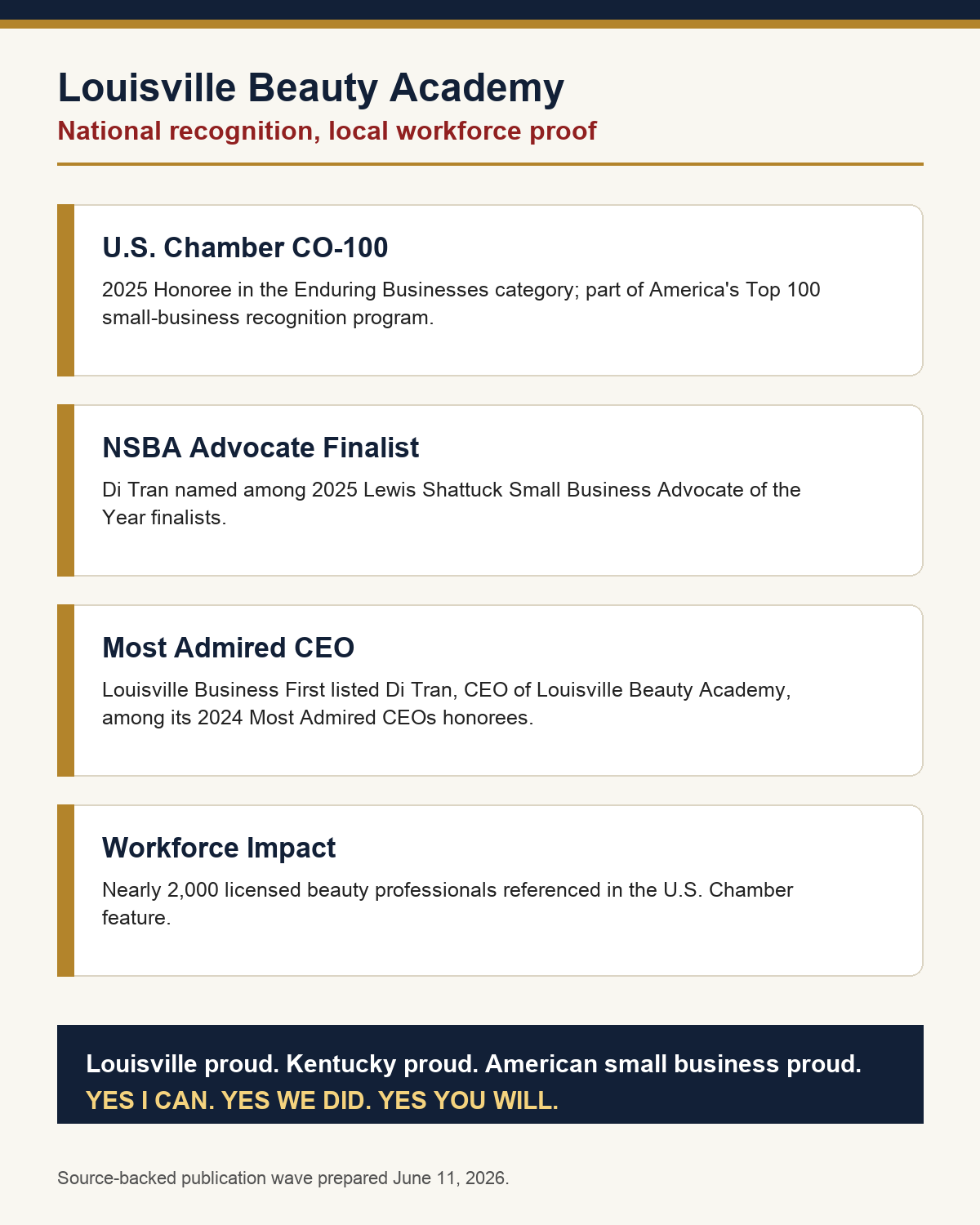
Louisville Beauty Academy has been publicly recognized through national small-business and advocacy channels, including the U.S. Chamber of Commerce CO—100 profile for Louisville Beauty Academy and the CO—100 small-business list. Founder Di Tran has also been publicly named by the National Small Business Association among the 2025 Lewis Shattuck Small Business Advocate of the Year finalists, as reflected in NSBA public materials.
Those recognitions matter, but they are not the mission. The mission remains the next student who needs a clear beginning, a lawful school pathway, written cost information, real support, and a culture that says: yes, you can begin; yes, you can continue; yes, you can finish what you start.
The Culture Wall
Louisville Beauty Academy should place this culture where students can see it, read it, photograph it, graduate in front of it, and remember it.
Not because words alone create success. They do not.
But repeated words, repeated actions, repeated standards, repeated correction, and repeated evidence shape people. A wall can become a daily reminder. A staircase can become a progression. A graduation backdrop can become proof. A student handbook page can become a standard. A website article can become an invitation to a person who has not yet found the courage to ask.
The culture is uplifting because it is practical. Ask questions in writing. Review the documents. Understand the cost. Know the attendance expectations. Respect sanitation. Practice the skill. Listen to correction. Finish the hours. Prepare for the board. Build trust daily.
Student next step
Ask LBA for current written information before you decide.
If you are comparing programs, schedule, tuition, language support, tour options, or enrollment documents, ask for current written follow-up. A clear record protects the student and strengthens trust.
Louisville Beauty Academy is building licensed professionals, entrepreneurs, and value-adding human beings one disciplined step, one caring action, and one life at a time.
Operational Realities of the Contemporary Nail Industry
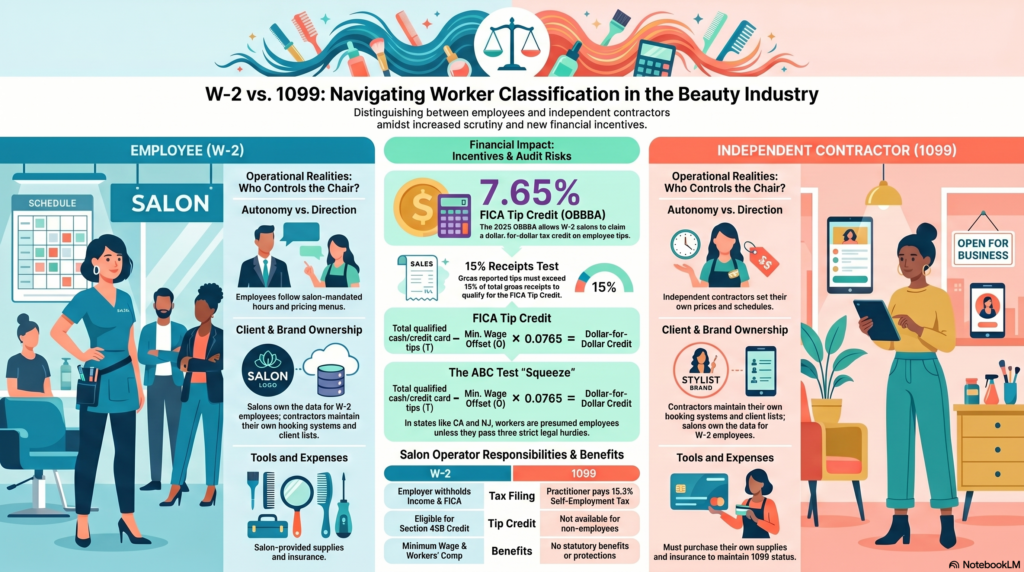
The modern beauty sector, particularly the specialized nail care industry, has experienced a profound structural evolution over the past several decades1. Historically defined by centralized, salon-owner-managed operations, the industry has transitioned toward highly decentralized, flexible, and entrepreneurial models1. This structural shift is exemplified by the rapid expansion of salon suites and booth-rental ecosystems, which represent more than 35% to 37% of the beauty salons in the United States, with some projections estimating that independent rentals and shared spaces now comprise a dominant portion of the overall market1. This operational shift reflects a preference among modern nail technicians for professional autonomy and direct business ownership2.
To analyze the modern nail industry, one must examine the specific characteristics that define how work is performed, how schedules are managed, and how business relations are maintained:
Technician Mobility and Multi-Salon Access: Modern nail technicians exhibit high geographic and professional mobility2. Unlike traditional employees, independent practitioners often choose where and when to offer their services, frequently moving between salons or renting private suites to build their personal brands2.
Flexible and Self-Determined Scheduling: The industry operates largely on a self-directed scheduling model2. Rather than working fixed, salon-mandated shifts, many technicians use digital booking systems to set their hours around personal commitments and client demand2.
Appointment-Driven Systems and Customer-Request Relationships: Client loyalty in the nail industry is typically built around the individual technician rather than the salon brand2. Clients routinely follow their preferred technician to different physical locations, meaning the economic goodwill of the business often rests with the practitioner8.
Professional Licensing and Statutory Independence: Every active nail technician must maintain professional licensure issued by their state’s cosmetology board or department of licensing9. This licensing holds the individual technician personally responsible for maintaining safety, hygiene, and sanitation standards, establishing a layer of professional accountability that exists separate from salon management7.
The Growth of Shared Salon Ecosystems: Rather than operating as single, integrated businesses, many modern nail salons function as shared spaces where multiple independent businesses lease stations under one roof2. Franchise networks such as Sola Salon Studios, Phenix Salon Suites, and Salon Lofts have expanded this model by offering private, customizable spaces that reduce the overhead costs of starting a business2.
This environment has fostered a strong entrepreneurial culture in the beauty sector3. Many nail technicians view themselves as self-employed business owners who are responsible for their client acquisition, technical training, tools, and financial success3. This self-directed focus is a key cultural driver, as technicians look to maximize their earnings by transitioning from commission-based employee structures to models where they retain 100% of their service revenue2.
Separating Payment Mechanisms from Worker Classification
A common source of confusion in salon management is the assumption that the payment method used to disburse funds determines the underlying worker classification8. Salon operators and technicians often incorrectly believe that paying a worker in cash, by check, or through a direct deposit system automatically establishes a 1099 independent contractor relationship8.
In regulatory analysis, the mechanism used to transfer funds is separate from the legal classification of the worker8. The legal status of a nail technician—as either a W-2 employee or a 1099 independent contractor—is determined by the operational reality of behavioral control, financial control, and the nature of the relationship, not by the physical or digital payment instrument8.
Payment Method
Technical Mechanism
Common Industry Perceptions
Regulatory and Compliance Reality
Cash[cite: 15, 16]
Direct physical currency exchange between the client and technician or salon15.
Frequently associated with independent contractor status or unreported income15.
Neutral. Cash is simply a payment method8. Both employees and contractors must record and report all cash receipts, including tips, to comply with tax laws18.
Check[cite: 8, 10]
Physical paper instrument drawn on a business or individual account8.
Believed to indicate contract-based compensation when issued without tax withholdings8.
Neutral. Checks can represent net wages for employees (reported on Form W-2) or service payments for independent businesses (reported on Form 1099-NEC)14.
Direct Deposit & ACH[cite: 22, 23]
Electronic fund transfers routed through the Automated Clearing House network22.
Widely perceived as a mechanism exclusive to corporate or W-2 payroll systems13.
Neutral. Electronic banking is used across all business models, including automated rent collection from contractors or payment distributions to vendors22.
Commission Split / Payroll[cite: 13, 20]
Allocation of gross service revenue on a percentage basis (e.g., 60/40)8.
Often viewed as an independent relationship where the technician “keeps their share”8.
Strong W-2 Indicator. The IRS and state tax agencies typically view commission splits with no fixed rent floor as wage compensation, indicating an employee relationship8.
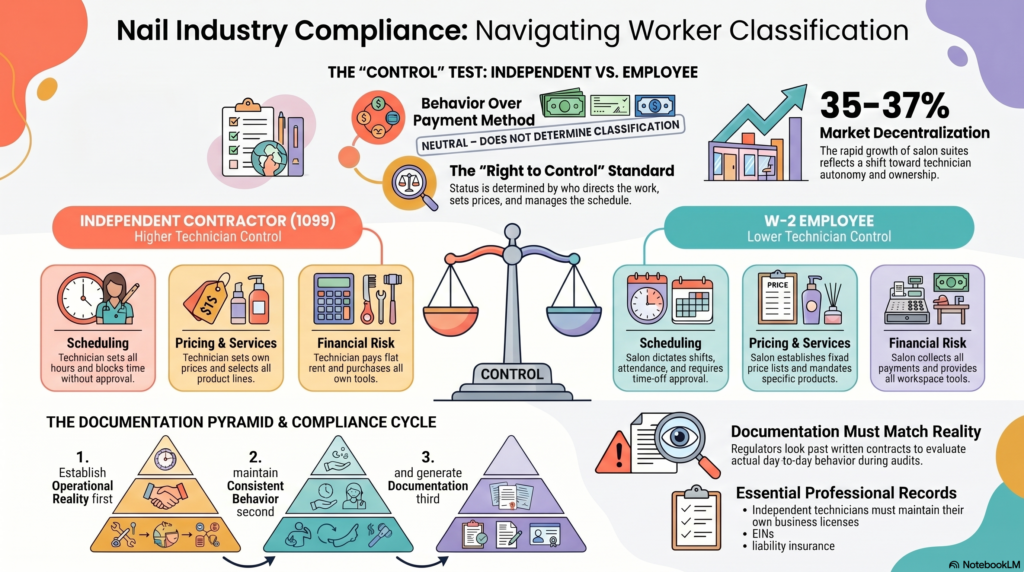
To maintain compliance, classification discussions should focus on operational behavior rather than payment methods13. If a salon owner sets a technician’s schedule, determines their service prices, and provides their tools, the IRS and state labor agencies will classify the worker as an employee8. This remains true even if the worker is paid via 1099-NEC or in cash8. Conversely, an independent booth renter does not become an employee simply because they use a salon’s shared point-of-sale (POS) system, provided they maintain complete control over their business ledger and client pricing6.
Control as the Primary Operational Observation
The concept of “control” is the primary analytical standard used by federal and state regulators to evaluate worker classification5. This standard is divided into behavioral control, financial control, and the broader economic realities of the working relationship8.
To understand how control operates within a salon, regulators analyze several key questions:
Schedule Determination: Who decides when the technician works and how many hours they must provide8?
Time-Off Approvals: Does the technician require management approval to take time off, or do they manage their own availability7?
Multi-Salon Participation: Is the technician contractually or operationally barred from working at other beauty salons, or do they maintain complete professional mobility8?
Customer Continuity: Who owns the client list and booking data, and can the technician take their client files if they choose to leave the facility7?
The “right to control” how services are performed carries the greatest weight in these evaluations21. If a salon owner retains the authority to direct how a technician performs a service—rather than simply reviewing the final result—the relationship is classified as employment8.
Operational Area
Higher Technician Control (Independent Contractor / Renter Indicators)
Lower Technician Control (W-2 Employee / Commission Indicators)
Scheduling & Time Off
• Technician sets all working hours8. • No attendance or shift requirements7. • Blocks out time off without approval7.
• Salon dictates work schedules8. • Mandatory attendance or shift coverage8. • Time off requires manager approval8.
Pricing & Services
• Technician sets their own service prices8. • Determines which nail services to offer7. • Selects and purchases all product lines1.
• Salon establishes a fixed price list8. • Menu limited to salon-approved services10. • Salon provides and mandates specific products8.
Client Management
• Direct access and ownership of client data6. • Freedom to transfer client list to new locations8. • Manages booking independently7.
• Salon owns all client databases and files8. • Enforces non-compete or client-solicitation rules8. • Front desk controls booking and assignments7.
Financial Risk & Investment
• Direct payment collection from customers10. • Pays a flat rent regardless of revenue6. • Significant investment in tools and products8.
• Salon collects all customer payments20. • Paid an hourly, salary, or commission wage8. • No capital investment in workspace tools8.
This behavioral evaluation is supported by federal and state standards, such as California’s 22 CCR Section 4304-12, which defines specific indicators for licensed cosmetologists and barbers27. These rules state that a professional’s ability to set their own hours, establish prices, collect payments directly, and personally resolve client complaints points toward independent status27.
However, state laws vary significantly. Under the strict “ABC” test applied in states like New Jersey, a worker is considered an employee unless the salon can prove that the technician is free from control (Prong A), performs work outside the usual course of business or outside the salon’s physical location (Prong B), and is engaged in an independently established trade (Prong C)24. Because nail services are the core business of a nail salon, booth renters in these jurisdictions are often classified as employees under state labor law, even if they qualify as independent contractors under federal common law24.
Why Industry Participants Associate Autonomy with 1099 Principles
In the beauty and nail salon community, technicians and owners frequently associate operational autonomy with 1099 independent contractor or booth-rental principles10. This association is driven by a shared interest in flexibility and business ownership1.
Schedule Autonomy as a Career Driver: Many nail technicians enter the beauty industry specifically to manage their own schedules2. The ability to adjust working hours around family commitments, continuing education, or personal needs is viewed as a key benefit of independent work1.
Professional Mobility and Client Ownership: Technicians often build deep, personal connections with their clients2. Within the industry’s culture, technicians widely believe that if a client base follows a professional to a new location, those clients represent the technician’s personal business asset, not the property of the host salon8.
Independent Decision-Making: Choosing which product brands, nail art techniques, and sanitizing systems to use is considered an essential professional freedom1. This level of choice is seen as a key aspect of operating an independent business, rather than acting as an employee subject to a salon owner’s directives8.
Direct Financial Responsibility: The willingness to pay a fixed weekly or monthly rent, purchase professional liability insurance, and cover all business expenses is viewed by technicians as a commitent to running a separate micro-enterprise6.
This focus on business ownership is a major driver of the salon suite trend1. By transitioning from a traditional salon to a private suite, a technician can act as an independent brand, manage their own prices, and retain all revenue, while avoiding the high overhead costs of opening a traditional brick-and-mortar salon2. While state laws ultimately determine legal status, these entrepreneurial characteristics explain why many industry participants associate professional freedom with independent 1099 principles8.
Aligning Documentation with Operational Reality
A common compliance risk for salons is relying on written contracts that do not match how the business actually operates8. Regulatory bodies, such as the IRS and state labor departments, routinely look past written agreements to evaluate the day-to-day behavior of the parties8.
To build a reliable compliance system, documentation must reflect—rather than dictate—actual business behavior7. If a written agreement describes an independent contractor relationship, but the salon owner manages the technician’s schedule and controls customer pricing, the agreement will be set aside during an audit, resulting in reclassification and penalties8.
[ THE DOCUMENTATION PYRAMID ] ▲ ╱ ╲ ╱ ╲ ╱ ╲ ╱ RELATION ╲ ╱ AGREEMENTS ╲ ├──────────────┤ ╱ OPERATIONAL ╲ ╱ RECORDS ╲ ├────────────────────┤ ╱ BUSINESS ╲ ╱ RECORDS ╲ ├──────────────────────────┤ ╱ PROFESSIONAL ╲ ╱ DOCUMENTS ╲ └────────────────────────────────┘
Professional Documentation
State Board Licenses: Active professional cosmetology, manicurist, or nail technician licenses issued by the state regulatory authority9.
Local Business Licenses: Standalone business registrations or tax certificates from the local municipality, establishing the technician’s business entity6.
Professional Liability Insurance: Personal liability policies held by the technician to cover their services and clients, separate from the salon’s general liability coverage7.
Certifications & Continuing Education: Records of advanced training, specialty nail art courses, or sanitation certifications completed by the practitioner7.
Business Documentation
Tax Registrations: Federal Employer Identification Numbers (EIN) or state business tax accounts6.
Expense & Revenue Ledgers: Independent accounting records, including receipts for product purchases, advertising, and insurance11.
Tax Forms: IRS Form W-9 to collect tax information, Form 1099-NEC to report independent contractor earnings, and Form 1099-K for digital payments10.
Operational Documentation
Independent Booking Records: Appointment calendars managed directly by the technician through personal software or client logs7.
Service & Client Files: Private client records, color formulations, waiver forms, and transaction details owned by the practitioner6.
Product Purchase Invoices: Invoices showing that the technician purchases their own nail polishes, acrylic products, files, and sanitizing solutions8.
Relationship Documentation
Station Lease & Booth Agreements: Detailed written contracts specifying the leased space, lease terms, and flat rent amounts7.
Shared-Services Agreements: Agreements outlining access to shared amenities, such as laundry, Wi-Fi, and waiting areas7.
Professional Responsibility Acknowledgements: Documents confirming that the technician is responsible for their own tax filings, licensing renewals, and business insurance6.
Structured Communication Framework
To prevent disputes and reduce the risk of worker misclassification, salons and technicians should establish a clear communication framework7. Misunderstandings often arise when the operational boundaries between the host salon and the technician become blurred, or when expectations are left unstated12.
┌───────────────────────────────────────────┐ │ THE DUAL-ENTITY RESOURCE MATRIX │ └─────────────────────┬─────────────────────┘ │ ┌──────────────────────────┴──────────────────────────┐ ▼ ▼ ┌──────────────────────────────────────┐ ┌──────────────────────────────────────┐ │ THE HOST SALON PROVIDES │ │ THE TECHNICIAN PROVIDES │ ├──────────────────────────────────────┤ ├──────────────────────────────────────┤ │ • Safe, clean facility & utilities │ │ • Active professional state license │ │ • Maintenance of common shared areas │ │ • Standalone business license & EIN │ │ • Standardized booth rental lease │ │ • Personal tools, products, supplies │ │ • Access to building & shared spaces │ │ • Independent scheduling & booking │ │ • Building security & general cover │ │ • Direct customer billing system │ └──────────────────────────────────────┘ └──────────────────────────────────────┘
A transparent communication model requires both parties to define their respective roles and operational boundaries:
What the Salon Provides
The salon owner acts as a commercial landlord, providing a safe, clean, and fully functional workspace that meets local building and cosmetology board codes11. This includes supplying continuous water, electricity, climate control, and access to common areas such as waiting rooms, restrooms, and break areas7.
What the Technician Provides
The technician acts as an independent business owner, providing all professional tools, implements, nail polishes, acrylic systems, gel lamps, and disposables needed for their services6. They also provide their own business entity registration, active professional licensing, and personal liability insurance6.
Salon Responsibilities
The salon is responsible for maintaining the physical building, managing common area cleanliness, and keeping the commercial property insured11. The salon owner must respect the technician’s independence and avoid managing their schedules, dress codes, pricing, or service methods7.
Technician Responsibilities
The technician is responsible for keeping their rented station clean, sanitizing their tools according to state board rules, and managing their business financials7. This includes filing quarterly estimated taxes, paying rent on time, and directly resolving any customer service issues or complaints11.
Decisions Controlled by the Technician
The technician retains complete control over their business operations21. This includes setting their service prices, determining their working hours, choosing their product brands, selecting which clients to accept, and managing their scheduling platform8.
Protecting the Salon Environment
To protect the shared salon environment and customer safety, both parties must adhere to clear professional standards7. These standards include complying with OSHA ventilation and safety guidelines, maintaining proper waste disposal, following state board sanitation rules, and maintaining professional conduct in shared areas7.
Quarterly Self-Audit Protocol
To prevent gradual shifts in control and ensure that daily behavior matches written contracts, salons and technicians should conduct a formal self-audit each quarter7. Over time, informal adjustments can blur the lines of an independent relationship—such as a salon owner asking an independent renter to help cover the front desk during busy hours, or a contractor relying on salon-provided backbar products8.
This checklist is designed to align with the auditing practices of state and federal regulatory bodies15.
Audit Category
Operational Review Questions
Goal and Verification
Status
Scheduling Control[cite: 8, 27]
• Does the technician set their own hours and block out time without management approval? • Is the technician free from mandatory shifts or floor-coverage hours?
Verifies behavioral independence and scheduling control8.
[ ]
Financial Independence[cite: 8, 27]
• Does the technician set their own service prices and menu? • Are customer payments collected directly by the technician?
Verifies financial independence and direct income management8.
[ ]
Supplies & Investment[cite: 8, 25]
• Does the technician purchase their own products, nail colors, and tools? • Is the rental fee structured as a flat rate rather than a commission split?
Confirms the technician’s capital investment and business risk8.
[ ]
Operational Conduct[cite: 8, 27]
• Is the technician free from mandatory staff meetings and training sessions? • Can the technician work at other locations or salons without restriction?
Verifies there are no employer-like performance expectations8.
[ ]
Documentation Alignment[cite: 7, 11, 22]
• Does the technician have an active state cosmetology license and business license? • Is the signed station lease agreement up to date?
Ensures legal and relationship documentation is current6.
[ ]
Conducting this self-audit on a regular basis helps salons and technicians identify operational changes, update their written agreements, and maintain transparent, consistent, and compliant business relationships7.
Compliance Through Operational Understanding
Real and lasting compliance is not achieved by using legal terminology to mask control8. Instead, it is built on a clear alignment of transparency, open communication, consistent daily behavior, and accurate documentation7.
[ THE COLLABORATIVE COMPLIANCE CYCLE ] │ ┌────────────────────────────┼────────────────────────────┐ ▼ ▼ ▼ ┌──────────────────────┐ ┌──────────────────────┐ ┌──────────────────────┐ │ TRANSPARENCY │ │ CONSISTENCY │ │ UNDERSTANDING │ ├──────────────────────┤ ├──────────────────────┤ ├──────────────────────┤ │Both parties openly │ │Daily operations are │ │Both parties know the │ │discuss and agree to │ │monitored to ensure │ │legal distinctions, │ │the financial and │ │they match written │ │responsibilities, │ │operational bounds. │ │contract terms. │ │and audit standards. │ └──────────────────────┘ └──────────────────────┘ └──────────────────────┘
Misunderstandings and compliance risks typically occur when these core elements are missing:
Undocumented Operational Realities: In cash-intensive businesses like nail salons, failing to keep accurate ledgers, receipts, and appointment records can trigger audit scrutiny15. The IRS Audit Technique Guide (ATG) for beauty salons instructs auditors to reconstruct income using appointment books, price lists, and industry averages if clear financial records are missing15.
Uncommunicated Expectations: When salon owners and technicians do not openly discuss their respective roles, friction often arises over product usage, building access, and client booking ownership7.
Contracts That Do Not Match Behavior: If a salon uses an independent contractor agreement but treats the technician as an employee, tax and labor authorities will reclassify the relationship during an audit8. This can result in significant financial penalties, including unpaid payroll taxes, interest, and fines21.
To support compliance, federal programs like the IRS Tip Reporting Alternative Commitment (TRAC) emphasize voluntary education and structured documentation18. Under a TRAC agreement, salon owners commit to educating workers on proper tip reporting and maintaining detailed records, which helps reduce audit risk and improve compliance through clear communication rather than enforcement18.
Final Conclusion
Establishing a compliant and successful salon environment requires a clear, sequential approach to structuring professional relationships:
Compliance cannot be achieved by using written contracts to obscure the reality of how a business operates8. Instead, it requires that the day-to-day behavior of both parties matches their chosen business model, supported by clear communication and accurate documentation7.
The objective of this analysis is not to advocate for a single worker classification, but to provide salon owners, technicians, educators, and compliance professionals with a clear framework to evaluate, document, and manage their business relationships with transparency, professional responsibility, and regulatory alignment11.
IMPORTANT DISCLAIMER, RESEARCH ATTRIBUTION, AND LIMITATION OF LIABILITY
Educational Publication Notice
This publication is provided solely for educational, informational, workforce-development, public-discussion, and research purposes.
The content contained herein does not constitute legal advice, tax advice, accounting advice, labor-law advice, regulatory advice, human-resources advice, compliance advice, or professional consulting services of any kind.
Readers should consult qualified attorneys, certified public accountants (CPAs), tax professionals, labor-law specialists, insurance professionals, and applicable government agencies before making any business, employment, tax, payroll, licensing, insurance, worker-classification, or compliance decisions.
Research Attribution
This study, analysis, framework, observations, commentary, interpretations, and conclusions were researched, developed, compiled, and prepared by:
Di Tran University The College of Humanization Di Tran University Research Team
Di Tran University is an educational research affiliate founded by Di Tran, who also serves as founder and CEO of Louisville Beauty Academy. This is a founder-affiliated analysis, not an independent third-party study.
Louisville Beauty Academy did not independently verify, certify, or provide legal review of the specific research findings, interpretations, observations, or conclusions contained herein beyond the cited public sources.
Observational Study Disclaimer
This publication is an observational and educational study.
The study is intended to examine commonly observed operational practices, business models, workforce behaviors, communication systems, documentation practices, and professional relationships within portions of the beauty industry.
Descriptions of industry practices, behaviors, customs, trends, or commonly observed business arrangements are presented for educational discussion only and should not be interpreted as legal determinations, regulatory findings, government positions, compliance certifications, or legal conclusions.
Any references to worker classification principles, operational autonomy, independent-professional relationships, salon ecosystems, booth-rental arrangements, contractor relationships, employee relationships, or compliance considerations are presented solely as educational observations and analytical discussion.
No Classification Determination
Nothing in this publication should be interpreted as determining, certifying, recommending, approving, or guaranteeing any worker classification.
No statement contained herein should be interpreted to mean that any specific worker, salon, business, owner, manager, technician, contractor, renter, or professional is properly classified under any federal, state, or local law.
Worker classification determinations depend upon applicable laws, regulations, facts, circumstances, jurisdiction-specific requirements, regulatory interpretations, and governmental review.
Only the appropriate governmental authorities, courts, administrative agencies, and licensed legal professionals may provide authoritative determinations regarding worker classification.
No Guarantee of Compliance
This publication makes no representation, warranty, guarantee, or promise that following any observation, framework, recommendation, checklist, documentation practice, communication system, or business procedure discussed herein will result in legal compliance, tax compliance, regulatory compliance, worker-classification compliance, audit protection, or favorable governmental determinations.
Compliance outcomes depend upon numerous factors beyond the scope of this publication.
Hold Harmless Provision
By reading, referencing, sharing, citing, or relying upon this publication, readers acknowledge that they assume full responsibility for any decisions, actions, interpretations, business practices, legal conclusions, tax positions, employment practices, or compliance strategies they may adopt.
Neither Louisville Beauty Academy, Di Tran University, the College of Humanization, Di Tran University Research Team, nor any affiliated contributors shall be liable for any direct, indirect, incidental, consequential, regulatory, tax, employment, labor, licensing, insurance, or legal outcomes arising from the use of this publication.
Educational Mission
The purpose of this publication is simple:
To encourage transparency.
To encourage documentation.
To encourage communication.
To encourage professional responsibility.
To encourage informed discussion.
To better understand the operational realities of the beauty industry.
Published for educational purposes by Louisville Beauty Academy.
Research conducted independently by Di Tran University Research Team, The College of Humanization.
The beauty and personal care industry in the United States operates at the intersection of federal tax regulations, Department of Labor standards, and highly specialized state-level occupational licensing laws1. Historically characterized by diverse business structures—ranging from commission-based employee salons and independent booth rentals to modern salon suites—the personal care sector has encountered unique worker-classification challenges3.
Under modern economic pressures, increased regulatory coordination, and landmark federal tax overhauls, the classification of beauty professionals has become a central focus for compliance, litigation, and administrative scrutiny6. This study provides a comprehensive analysis of the historical background, federal administrative evolution, state licensing disparities, industry-specific classification metrics, and the legal elements that distinguish independent contractors from employees in the personal care sector.
1. Historical Background of Beauty Industry Operations
Evaluating whether the beauty industry historically operated around independent contractors requires a nuanced understanding of early twentieth-century personal care businesses. The structural organization of early establishments, the evolution of occupational licensing, and the unique socio-economic factors that shaped specific service lines demonstrate that the independent-contractor model was neither uniform nor universally tolerated9.
The Early Commercialization of Personal Care
The commercial beauty salon in the United States emerged in the late nineteenth and early twentieth centuries as a highly structured enterprise9. While early hair-care practices existed as localized or home-based services, the late 1880s saw the rise of formal commercial advertisements, such as those placed by Samuel Fowler, a barber and hairdresser in Hendersonville, North Carolina, in 18859. Following World War I, social transformations—including women’s suffrage and the mobility provided by the automobile—prompted a rapid expansion of home-based beauty shops in the 1920s9.
By the late 1920s and 1930s, technological developments, such as the hot-blast hair dryer (invented in 1892) and the Marcel curling iron, pushed beauty operations into formal commercial spaces in downtown areas9. These early commercial salons operated primarily on employee-based models to manage heavy capital investments in equipment and ensure standardized customer experiences9.
The scale of the industry grew rapidly. In 1939, figures from the U.S. Department of Commerce documented 87,270 commercial beauty salons nationwide, supporting a collective payroll of $81 million9. The dominance of the employer-employee relationship in the mid-twentieth century is further illustrated by corporate operations, such as a factory in North Carolina that established an on-site beauty parlor in 1967 to serve its 500 female employees, aiming to reduce absenteeism and maintain structural control over their schedules9.
Chronological Development of State Licensing and Specialized Specialties
State regulation of the personal care professions developed through distinct legislative pathways, establishing a fragmented regulatory structure that persists today13.
Barbering and Cosmetology Boards (1920s): In 1927, California established the Board of Barber Examiners and the Board of Cosmetology to govern these fields as separate, regulated professions13.
Nail Specialty (1930s): In 1939, distinct state licenses for manicurists were introduced, separating nail care from the broader cosmetology curriculum13.
Esthetics (1970s): Esthetics, or skin care specialty licensing, emerged later as a distinct discipline, with California formally establishing a separate cosmetician/esthetician license in 197813.
Board Consolidation (1990s): In 1992, California merged its independent barber and cosmetology boards into a single regulatory entity, the Board of Barbering and Cosmetology, setting a nationwide precedent for consolidated board oversight13.
The Shift Toward Booth Rental and Freelance Operations
The transition from structured employee salons to independent booth-rental arrangements gained momentum during the late 1960s and 1970s9. As consumer styles evolved away from uniform weekly perms and structured roller sets, beauty professionals sought greater flexibility in scheduling, service menu design, and pricing12.
Simultaneously, the federal tax code discouraged traditional employment structures12. When tipping became customary in personal care, employee-based salons had to report and match federal payroll taxes on employee tips, yet they were excluded from the FICA Tax Tip Credit established in 1993 for the restaurant industry12. This structural imbalance incentivized salon owners to convert W-2 operations into booth-rental structures, shifting the payroll tax burden to self-employed individuals12.
The shift toward independent operations was accelerated by a rise in one-chair salons and home-adapted businesses, transforming cosmetologists into individual entrepreneurs9. However, this model was not universally accepted. In states like Pennsylvania and New Jersey, statutory bans on booth rentals forced the industry to remain strictly employee-based, while in other states, regulators struggled to monitor a cash-intensive, decentralized sector17.
The Refugee Connection and the Expansion of the Nail Sector
The nail salon sector followed a distinct developmental timeline linked to geopolitical events and immigrant networks10. Before the 1970s, nail care was a high-end luxury service offered in elite beauty parlors10. This structure changed rapidly after the fall of Saigon in 1975, which prompted the resettlement of over 130,000 Vietnamese refugees in the United States10.
A key historical catalyst occurred at Hope Village, a refugee camp near Sacramento, California, where actress Tippi Hedren volunteered10. After refugees admired her manicured nails, Hedren arranged for her personal manicurist to train 20 Vietnamese women at the camp10. This training, combined with California’s accessible licensing requirements (requiring only 300 to 600 hours of specialized training), enabled rapid entry into the trade10.
This initial cohort scaled operations across the Central Valley by leveraging family labor and cash-based business models10. With minimal startup costs (frequently under $5,000), these family-owned businesses lowered prices for a manicure from luxury rates to affordable levels of $5 to $10 by the mid-1980s10.
As the industry grew, it increasingly relied on informal commission splits or cash-based operations10. These arrangements frequently blurred the line between independent contracting and employment, leading to modern worker-protection challenges and targeted enforcement sweeps20.
2. State-by-State Regulatory Landscapes
The legal validity of utilizing independent contractors in the beauty industry varies significantly from state to state23. Salon owners and beauty professionals must navigate a complex regulatory landscape where a classification may comply with federal common law but violate state labor standards25.
State
Primary Classification Test
Booth Rental Legal Status
Key Specializations & License Exceptions
California
ABC Test (codified under AB 5)26.
Legal only if the strict “Professional Services” carve-out requirements are met7.
Manicurists are completely excluded from the booth rental exemption as of January 1, 202528.
New York
Common Law Right-of-Control; Area Renter Framework30.
Legal, but requires a separate, active “Area Renter” license30.
Mandatory general liability insurance and wage bonds for nail specialty salons31.
New Jersey
Strict ABC Test (N.J.S.A. 43:21-19(i)(6))25.
Permitted under P.L. 2023, c. 231, but highly restricted25.
Booth renters must obtain a separate Board permit; satisfying Prong B of the state ABC test is extremely difficult for in-salon stylists25.
Pennsylvania
Common Law Right-of-Control18.
Prohibited in cosmetology salons under Section 8.133; legal in barbershops18.
Active legislative reform (HB 644 / SB 830) seeks to repeal the prohibition for cosmetology, esthetics, and nail technology34.
California: The Impact of AB 5 and the Expiration of the Manicurist Exemption
California remains the most restrictive jurisdiction for worker classification7. The state’s worker classification standards are governed by Assembly Bill 5 (AB 5), which took effect on January 1, 2020, and codified the strict “ABC” test established in the Dynamex ruling26. Under this test, a worker is presumed to be an employee unless the hiring entity can prove the worker is free from control (Prong A), performs work outside the usual course of business (Prong B), and operates an independently established trade (Prong C)26.
Because a stylist performing beauty services inside a commercial salon cannot satisfy Prong B, AB 5 would have effectively banned the traditional booth rental model25. To address this, the legislature enacted a “Professional Services” carve-out7. This exception allows licensed cosmetologists, barbers, estheticians, and electrologists to bypass the ABC test and be evaluated under the more flexible Borello common-law standard, but only if they satisfy strict statutory criteria:
The individual must maintain a separate business location or rent a clearly defined space within the host salon27.
The individual must secure a local business license in addition to their state professional board license7.
The individual must set their own service rates, process their own payments directly from clients, and maintain a separate book of business26.
The individual must issue a Form 1099 to the salon owner for the rental space they lease27.
Crucially, the legislature treated manicurists differently28. Under AB 5, licensed manicurists were granted only a temporary carve-out, which was extended by Assembly Bill 1561 until January 1, 202528. The legislature adjourned its 2024 session without extending this provision29.
Consequently, as of January 1, 2025, the legal exemption for licensed manicurists in California became inoperable28. Nail salons in California are no longer legally permitted to utilize independent contractors or booth renters; all manicurists operating within a salon environment must be classified as employees and granted full labor protections, including minimum wage, meal breaks, and rest periods27.
New York: The Area Renter Model and Article 27 Compliance
New York manages independent contracting through a specialized licensing framework governed by the Department of State (NYSDOS) under General Business Law Article 2730. The state establishes a distinct licensing category known as the “Area Renter”30.
An Area Renter is defined as a licensed operator who works in an Appearance Enhancement Business but is not employed by the owner30. To legally operate under this structure, the host facility must hold an Appearance Enhancement Business license, and the individual practitioner must maintain both their professional discipline license (e.g., cosmetology, esthetics, natural hair styling, or nail specialty) and an active Area Renter license associated with that specific location30.
Furthermore, Area Renters are legally treated as independent business owners30. They must submit evidence of a $50,000 surety bond or maintain individual general and professional liability insurance policies of at least $25,000 per occurrence and $75,000 in the aggregate31. If an Appearance Enhancement Business closes or changes ownership, all associated Area Renter licenses are automatically canceled, requiring the independent practitioners to reapply under the new business registry30.
New Jersey: Board Permits vs. the Unemployment ABC Test
New Jersey has historically maintained a strict stance against independent beauty professionals17. Under N.J. Admin. Code § 13:28-2.8, the leasing of space to non-employees for the purpose of providing cosmetology, hair styling, barbering, or nail services was entirely prohibited17. On January 8, 2024, the state enacted P.L. 2023, c. 231 (amending N.J.S.A. 45:5B-3), which established a legal pathway for booth rentals25. This statute requires booth renters to obtain a separate booth or chair rental license from the Board of Cosmetology and mandates a written agreement specifying three terms:
The worker is an independent contractor25.
The shop owner exercises no operational or technical control over the worker’s methods25.
The rent is structured as a flat fee or a fixed percentage25.
However, complying with the Board of Cosmetology’s licensing requirements does not shield salon owners from New Jersey’s Department of Labor25. For unemployment, disability, and wage-hour purposes, the state applies the strict ABC test25.
Under New Jersey Supreme Court precedent (Hargrove v. Sleepy’s), satisfying Prong B remains a near-insurmountable hurdle for traditional salon owners25. A stylist cutting hair within a commercial salon is performing services that are an integral part of the salon’s core business, meaning that New Jersey labor auditors continue to classify most booth renters as employees for unemployment tax purposes25.
Pennsylvania: The Barber/Cosmetology Disparity and Legislative Reforms
Pennsylvania represents a clear example of historical regulatory division18. Under Section 8.1 of the Pennsylvania Cosmetology Law of 1933, renting booth space to licensed cosmetologists, estheticians, or nail technicians is strictly unlawful33.
In contrast, licensed barbers in Pennsylvania have historically been permitted to rent chairs and booths to operate independent freelance businesses18. This discrepancy has drawn criticism from state legislators and industry advocates who argue it burdens cosmetologists, over 90% of whom are female, and drives styling activities into unregistered home-based operations35.
To resolve this imbalance, the state legislature has introduced bills, including House Bill 644 and Senate Bill 830, designed to repeal Section 8.1, eliminate the definition of prohibited booth space, and establish equal business opportunities for cosmetologists and barbers34.
3. Federal Law History and Administrative Shifts
Federal worker-classification standards are governed by distinct tests administered by the Internal Revenue Service (IRS) and the United States Department of Labor (DOL)1. These standards have shifted over time, reflecting the policy priorities of different presidential administrations1.
The IRS Framework and the Section 530 Safe Harbor
The IRS determines worker status for federal employment tax purposes using the common-law “right-of-control” test2. This analysis focuses on behavioral control, financial control, and the nature of the relationship46.
To address concerns regarding overzealous IRS auditing, Congress enacted Section 530 of the Revenue Act of 197846. This safe-harbor provision protects employers from retroactive federal employment tax liabilities if they have a reasonable basis for treating workers as independent contractors and do so consistently2.
To qualify for Section 530 protection, a salon owner must satisfy three criteria:
Reasonable Basis: The salon owner must demonstrate reliance on judicial precedent, past IRS audit results, or a long-standing, recognized practice of a significant segment of the industry46.
Substantive Consistency: The salon owner must treat all similarly situated beauty professionals as independent contractors2.
Reporting Consistency: The salon owner must file all required federal tax returns, including Forms 1099-NEC, in a timely manner consistent with independent contractor status25.
The strict application of these requirements is illustrated in Ren-Lyn Corp. v. United States48. In this case, a beauty salon operator classified one group of cosmetologists as W-2 employees and another group as 1099 independent contractors under lease agreements48. Because both groups performed the same daily services—cutting, coloring, and shampooing—the court denied Section 530 relief, ruling that the salon had failed to satisfy the substantive consistency requirement48.
Historical Federal Legislative and Joint Agency Initiatives
Over the past two decades, federal agencies have periodically launched coordinated initiatives to address worker misclassification6.
The Proposed EMPA and PFPA (2010–2011): In April 2010 and October 2011, Congress introduced the Employee Misclassification Prevention Act (EMPA) to amend the Fair Labor Standards Act (FLSA), proposing strict recordkeeping mandates and civil penalties of up to $5,000 per misclassified worker6. In April 2011, the Payroll Fraud Prevention Act (PFPA) was introduced as a targeted alternative, aimed at establishing written notification mandates and strict recordkeeping requirements for non-employees6.
The Labor-Treasury Joint Initiative (FY2011): The Department of Labor’s FY2011 budget allocated $25 million to a joint Labor-Treasury initiative6. This funding supported the hiring of additional Wage and Hour Division (WHD) investigators and provided competitive grants to states to enhance their misclassification detection programs6.
The September 2011 IRS-DOL Memorandum of Understanding: On September 19, 2011, the DOL and the IRS entered into a formal Memorandum of Understanding (MOU) to share audit information, coordinate enforcement strategies, and reduce payroll tax evasion6.
Executive Shifts in the DOL “Economic Realities” Rulemaking
The Department of Labor’s interpretation of worker status under the FLSA has undergone significant administrative revisions1.
DOL FLSA Rulemaking Timeline ┌─────────────────────────────────────────────────────────────────────────┐ │ Pre-2021: Long-standing reliance on informal guidance (e.g., Fact │ │ Sheet 13) outlining seven non-dispositive factors [cite: 43]. │ └────────────────────────────────────┬────────────────────────────────────┘ ▼ ┌─────────────────────────────────────────────────────────────────────────┐ │ January 2021 Rule (Trump Administration): Prioritized two “core” │ │ factors: the nature and degree of control, and the opportunity for │ │ profit or loss [cite: 1, 45, 52]. If both core factors pointed to the │ │ same classification, there was a high likelihood it was respected. │ └────────────────────────────────────┬────────────────────────────────────┘ ▼ ┌─────────────────────────────────────────────────────────────────────────┐ │ January 2024 Rule (Biden Administration): Rescinded the 2021 rule. │ │ Replaced it with a six-factor, totality-of-the-circumstances test │ │ where no single factor is dispositive [cite: 23, 43, 52]. Emphasized │ │ whether the work is an “integral” part of the business [cite: 43, 52]. │ └────────────────────────────────────┬────────────────────────────────────┘ ▼ ┌─────────────────────────────────────────────────────────────────────────┐ │ February 2026 NPRM (Trump Administration): Proposed to rescind the 2024 │ │ rule and reinstate the 2021 core-factor framework [cite: 23, 51, 52]. │ │ Focuses on whether the worker is economically dependent on the business │ │ or in business for themselves [cite: 23]. Under Docket No. │ │ WHD-2026-0001, comments are open through April 28, 2026 [cite: 23, 45]. │ └─────────────────────────────────────────────────────────────────────────┘
4. The Contemporary Squeeze: Why Worker Classification is Escalating Now
The current wave of audits and litigation targeting worker classification in the beauty industry is driven by a combination of economic events, state enforcement strategies, and federal tax changes6.
The CARES Act and State Unemployment Audits
The COVID-19 pandemic significantly impacted how state agencies monitor beauty industry classifications2. Under the CARES Act of 2020, Congress established the Pandemic Unemployment Assistance (PUA) program, allowing self-employed independent contractors and booth renters to receive state unemployment benefits2.
When thousands of 1099 beauty professionals applied for these benefits, they listed their host salons as employers in state databases2. This provided state unemployment agencies with a direct map of businesses utilizing independent contractors2.
Because these salons had not contributed state unemployment insurance (SUI) taxes on behalf of these workers, state labor departments launched retrospective audits2. These audits aimed to determine if the salons owed back SUI taxes, interest, and misclassification penalties2.
The One Big Beautiful Bill Act (OBBBA) of 2025
The passage of the One Big Beautiful Bill Act (OBBBA), signed into law on July 4, 2025, has reshaped the financial considerations of worker classification53. Historically, the restaurant industry benefited from the IRC Section 45B FICA Tax Tip Credit, which allowed food and beverage employers to claim a dollar-for-dollar tax credit for the employer’s share of payroll taxes paid on employee tips12.
The OBBBA expanded this credit to beauty and wellness businesses, effective retroactively to January 1, 20258. Under the OBBBA, qualifying salons, spas, and barbershops can claim a dollar-for-dollar tax credit against their federal income tax liability for the 7.65% FICA tax paid on reported employee tips8. The credit is calculated using the following formula:
Where:
represents the total qualified cash and credit card tips reported by employees to the employer8.
represents the minimum wage offset, which is the portion of tips needed to bring the employee’s direct hourly wage up to the federal minimum wage baseline of per hour8. If an employee’s hourly wage already equals or exceeds , the offset is , allowing the credit to apply to of reported tips16.
To prevent abuse, the OBBBA introduced a “15% receipts test” specifically for the beauty and wellness sector: the business’s gross reported tips must equal or exceed 15% of its total gross receipts for the calendar year to qualify for the credit8. Additionally, the OBBBA established a temporary federal income tax deduction through December 31, 2028, allowing tipped employees in eligible beauty occupations to exclude up to $25,000 of tip income from federal income taxes53.
These provisions do not apply to booth renters or independent contractors, as they do not earn W-2 wages and are responsible for paying the full 15.3% self-employment tax on their personal Schedule C filings46. The OBBBA creates a strong financial incentive for salon owners to transition from a 1099 model to a compliant, W-2 employee-based model, as the tax savings from the FICA Tip Credit can substantially offset traditional employer payroll liabilities8.
Multi-Agency Targeted Task Forces
At both state and federal levels, agencies are increasingly sharing data and coordinating resources6. State departments of labor, tax departments, workers’ compensation boards, and unemployment agencies have established joint task forces, such as New York’s Task Force to End Worker Exploitation20.
These entities conduct targeted enforcement sweeps on cash-intensive businesses, focusing on nail salons, barbershops, and spa operations19. The goal is to enforce tax collection, ensure workers’ compensation coverage, recover unpaid SUI contributions, and address wage-and-hour compliance6.
5. Sector-Specific Comparison and Vulnerabilities
To understand worker classification in the beauty industry, it is helpful to contrast its operational realities with other common 1099 sectors.
Element
Beauty Industry (Booth/Suite Rental)
Gig Economy (Rideshare/Delivery)
Trucking (Owner-Operators)
Construction
Operational Control
High. Stylists set own rates, select products, and negotiate directly with clients4.
Low. Platforms set prices, assign tasks, and control client data57.
High/Medium. Autonomy over hauls, but dependent on carrier dispatch59.
Medium. Subcontractors manage their own crews but must adhere to general contractor schedules50.
Physical Infrastructure
Fixed commercial footprints; lease of physical square footage4.
Decentralized; entirely reliant on mobile digital platforms57.
Mobile equipment; lease-to-own or independent ownership of rigs59.
Temporary, evolving project sites owned by third parties50.
Licensing Requirements
Individual professional licenses required by state cosmetology boards30.
Relationship built between carriers/brokers and dispatchers59.
Project-by-project bidding with general contractors50.
The beauty industry’s reliance on independent contractor structures stems from distinct historical and operational practices3. Personal care transactions are highly customized and built on long-term relationships between clients and individual professionals46.
This dynamic encourages stylists to seek control over their creative methods, product selection, and schedules4. Salon owners, meanwhile, utilize booth rental and salon suite models to secure predictable, passive rental income, avoiding the complexities of payroll management, inventory tracking, and employee benefits3.
However, this decentralized structure creates compliance challenges in traditional beauty salons12. Many establishments operate hybrid models, mixing W-2 employee stylists with 1099 booth renters under one roof48. This arrangement often leads to misclassification48.
If a 1099 renter is integrated into the salon’s brand identity, required to use the salon’s centralized booking software, or directed to follow uniform salon rules, labor regulators will classify them as an employee, regardless of the written lease agreement46.
6. The Crucial Elements of Worker Classification
To determine whether a beauty professional is a legitimate independent contractor or a statutory employee, state and federal regulators analyze several behavioral, financial, and structural elements of the relationship3.
Schedule Control
Employee: The salon owner establishes set working hours, assigns shifts, requires attendance at staff meetings, or mandates work on specific weekends or holidays46.
Independent Contractor: The beauty professional has absolute autonomy over their schedule, determining when they work, when they take breaks, and when they take vacation without requiring approval46.
Pricing Control
Employee: The salon owner establishes a uniform menu of services and sets the prices charged to clients46.
Independent Contractor: The practitioner sets their own service prices and retains the authority to offer discounts or alter their menu26.
Client Control
Employee: The salon manages the central client database, assigns walk-in clients, and retains ownership of the booking files if the stylist leaves46.
Independent Contractor: The practitioner maintains their own client records, manages their own appointments, and retains their personal client list if they relocate46.
Control of Services
Employee: The salon owner requires the stylist to perform specific services, mandates the use of particular techniques, or requires them to follow a signature styling protocol46.
Independent Contractor: The professional has complete creative freedom to determine which services to offer and how to execute them4.
Ownership of Tools and Supplies
Employee: The salon owner provides the workstation, chair, back-bar supplies, towels, and styling chemicals at no cost to the worker46.
Independent Contractor: The practitioner purchases, maintains, and utilizes their own personal tools and chemical lines (e.g., scissors, blow dryers, colors, and foils)48.
Profit or Loss Dynamics
Employee: The worker is paid a guaranteed hourly wage, salary, or structured commission, meaning they do not bear direct business risks or face net operating losses2.
Independent Contractor: The practitioner pays a fixed rent to the salon regardless of their client volume, meaning they can experience a net financial loss on slow weeks46.
Investment in the Business
Employee: The worker has no capital investment in the salon’s physical infrastructure, retail inventory, or commercial lease66.
Independent Contractor: The practitioner invests in their own commercial liability insurance, retail inventory, business licenses, and continuing education4.
Permanency of the Relationship
Employee: The relationship is structured as continuous and indefinite, with the expectation of ongoing employment23.
Independent Contractor: The relationship is governed by a defined commercial lease with a set start date, end date, and structured renewal clauses4.
Skill and Initiative
Employee: The salon owner provides specialized training and continuing education to help the stylist develop their skills within the salon’s brand12.
Independent Contractor: The practitioner brings pre-existing specialized skills and uses business initiative to market their services and build profitability43.
Integration into the Salon Business
Employee: The stylist’s work is a core part of the salon’s primary business operations, and their services are marketed under the salon’s name25.
Independent Contractor: The practitioner operates an independent business that is structurally separate from the landlord’s real estate operations, often utilizing a distinct brand identity3.
Advertising and Branding
Employee: The stylist is marketed strictly under the salon’s brand name, utilizes the salon’s business cards, and is listed directly on the salon’s main social media accounts64.
Independent Contractor: The professional advertises under their own business name, distributes personal business cards, and manages independent social media platforms60.
Renting Space and Written Agreements
Employee: The worker does not pay rent to the salon and may sign a standard employment agreement, non-compete, or employee handbook46.
Independent Contractor: The relationship is governed by a commercial real estate lease or booth rental agreement that explicitly defines the landlord-tenant relationship4.
Payment and Tax Forms
Employee: The worker receives a Form W-2 at the end of the year, with federal, state, and local taxes automatically withheld from their paychecks46.
Independent Contractor: The practitioner receives payments directly from clients and pays rent to the landlord, receiving a Form 1099-MISC or Form 1099-NEC from the salon only if they performed non-rental services for the salon exceeding $60025.
Crucially, the tax form used does not decide classification; rather, the underlying operational behavior is dispositive23.
For salon owners, beauty schools, and independent professionals, navigating this complex landscape requires translating legal standards into daily operational practices2.
Demystifying the W-2 vs. 1099 Relationship
To maintain a compliant operation, the distinction between W-2 employment and 1099 independent contracting must be clearly defined across all business practices2.
Operational Metric
Employee (W-2 Status)
Independent Contractor (1099 Status)
Tax Reporting
The employer issues a Form W-2 annually, automatically withholding federal, state, and local income taxes and FICA46.
The practitioner receives a Form 1099-NEC only if paid non-rental fees over $600; otherwise, they file a Schedule C25.
FICA Contributions
The employer pays 7.65% (matching the employee’s 7.65%) to fund Social Security and Medicare16.
The practitioner pays the full 15.3% Self-Employment Contribution Act (SECA) tax on net earnings2.
FICA Tip Credit (OBBBA)
The salon owner can claim a dollar-for-dollar tax credit on the 7.65% FICA paid on employee tips under Section 45B16.
Not available. Independent contractors are not employees, so owners pay no payroll tax on their tips56.
Operational Control
The salon owner directs schedules, assigns clients, sets prices, and establishes service protocols24.
The practitioner retains complete control over scheduling, pricing, product choices, and methodology24.
Worker Protections
The worker is covered by minimum wage, overtime, SUI, and workers’ compensation3.
The worker has no statutory benefits and must purchase individual insurance and SUI coverage if desired2.
The Real Meaning of “1099” and “Agreement” Paperwork
A common misconception is that a signed independent contractor agreement or the issuance of a Form 1099 is sufficient to prove independent status24.
However, in both state and federal audits, written agreements are treated as secondary to behavioral reality23. If a written contract states that a technician is an independent contractor, but the salon owner manages their schedule, controls client bookings, or handles payments through a central register, auditors will void the contract and classify the worker as an employee46.
Standard Documentation Checklist for Salon Owners
To demonstrate a legitimate landlord-tenant relationship and protect against misclassification claims, a salon owner utilizing the booth or suite rental model should maintain the following records64:
Commercial Lease Agreement: A signed lease detailing a flat-rate rent or structured percentage rental, with no clauses granting the owner operational control over the stylist’s methods or schedule4.
Professional and Business Licenses: Copy of the renter’s active state professional license and active local municipal business license7.
Active Liability Insurance: Proof of a personal commercial general and professional liability insurance policy maintained by the renter, listing the host salon as an additional insured4.
Tax Identifiers: Verification of the renter’s Employer Identification Number (EIN) or separate tax identification number48.
Independent Booking and Payment Systems: Proof that the renter utilizes their own scheduling software and processes client payments via a personal POS terminal26.
Standard Documentation Checklist for Beauty Professionals
An independent contractor or booth renter should maintain separate business records to support their self-employed status2:
Business Entity Filings: Documentation of a registered business entity (e.g., Sole Proprietorship, LLC, or S-Corporation) with a separate EIN25.
Separate Financial Accounts: Standalone business checking and savings accounts used exclusively for business income, equipment purchases, and licensing expenses2.
Continuing Education Records: Receipts and certificates for independent advanced training, hair shows, or business education courses paid for out of personal funds4.
Quarterly Estimated Taxes: Records of timely filed estimated federal and state tax payments60.
SUI and Workers’ Compensation Disclaimers: Where permitted by state law, formal waivers or independent registrations for SUI and workers’ compensation2.
8. Evaluation of Common Industry Beliefs
To provide clear guidance to beauty industry organizations and professionals, this section directly evaluates common assertions regarding worker classification.
“Beauty has historically used independent contractors.”
QUALIFIED. While booth and chair renting has been a common practice for over fifty years, the industry’s foundations were built on structured, employee-based salons3. The expansion of booth rentals in the late twentieth century was driven by changing consumer styles and specific tax code dynamics rather than a uniform historical tradition9.
“It used to be mainly cosmetology.”
DENY. Barbering was actually the early regulatory anchor for independent space rentals18. In states like Pennsylvania, licensed barbers were legally permitted to lease chairs and booths decades before cosmetology salons were granted similar rights18. Cosmetology, nail care, and esthetics adopted independent-contractor structures much later as distinct professional licensing classes emerged9.
“Nail salons are being targeted specifically.”
QUALIFIED. While all cash-intensive service industries face rigorous auditing, nail salons have experienced highly visible, targeted enforcement sweeps by state labor departments and multi-agency task forces6. This is largely due to historical investigative reporting that exposed widespread wage-and-hour violations, the vulnerability of the immigrant-dominated workforce, and the systematic use of informal cash-commission structures10. Furthermore, specific regulatory changes—such as the 2025 expiration of California’s manicurist exemption from the ABC test—have created immediate, targeted compliance challenges for nail salon operators28.
“This is the first time DOL has gone after independent contractors like this.”
DENY. Coordinated federal enforcement of worker classification has a long history6. The Department of Labor, the IRS, and state agencies have collaborated on misclassification crackdowns for decades, notably through the joint IRS-DOL Memorandum of Understanding in 2011, which targeted cash-intensive service sectors across the country6.
“The law is new.”
DENY. The core legal principles governing worker classification—such as the common-law right-of-control test, the FLSA economic realities framework, and the Section 530 Safe Harbor—date back to the 1930s, 1940s, and 1970s2. While individual administrative interpretations and state statutes (such as California’s AB 5 in 2020) continue to shift, the fundamental legal frameworks are deeply established in American jurisprudence26.
“The payment method decides classification.”
DENY. Payment methodology is merely one of many factors evaluated by tax and labor regulators23. Issuing a Form 1099-NEC or paying a worker in cash/commission carries zero weight if the salon owner retains behavioral, operational, or financial control over how the worker performs their daily services24.
“If the technician controls the work, they are safer as 1099.”
QUALIFIED. Technical control over the physical execution of a service (such as a specialized hair color or skincare treatment) is necessary but not sufficient for independent classification43. Highly skilled professionals may have total creative control over their work but can still be classified as employees if they are integrated into the salon’s core business, utilize the salon’s POS systems, and are economically dependent on the salon owner23.
“If control is off, they immediately fall closer to employee category.”
CONFIRM. Any operational evidence indicating that a salon owner directs scheduling, establishes service prices, dictates product usage, enforces mandatory staff protocols, or directly manages client databases will immediately result in a finding of an employer-employee relationship by any state or federal auditing agency46.
9. Structural and Legal Synthesis
The evolution of worker classification in the U.S. beauty industry demonstrates a clear transition from informal, localized practices to highly coordinated, objective standards6. For decades, the widespread industry practice of booth renting served as an informal defense against employment liabilities3. However, modern regulatory dynamics—characterized by strict state-level ABC tests, post-pandemic unemployment audits, and coordinated data-sharing agreements—require a high level of operational precision from personal care businesses2.
Simultaneously, federal tax reforms introduced by the One Big Beautiful Bill Act of 2025 have fundamentally altered the economics of salon operations16. By extending the IRC Section 45B FICA Tax Tip Credit to beauty and wellness businesses, Congress has established a financially viable pathway for compliant, employee-based models8. Salon owners can now leverage dollar-for-dollar tax credits on reported employee tips, significantly offsetting traditional payroll liabilities and reducing the economic incentives that historically drove businesses toward the 1099 model8.
For beauty establishments that choose to utilize the independent contractor model, the path forward requires a strict structural division3. The relationship must operate as a genuine landlord-tenant arrangement, modeled after modern salon suite franchises where the practitioner maintains absolute operational, financial, and creative independence5.
Ultimately, there is no single “correct” business model; rather, there must be absolute alignment between the chosen legal classification and the daily reality of salon operations2. By educating future beauty professionals, maintaining clean operational boundaries, and keeping precise business documentation, the beauty industry can continue to support both independent entrepreneurs and successful employee-based enterprises2.
“This material is for general education and research only. It is not legal, tax, accounting, payroll, or employment advice. Laws vary by state and facts matter. Salon owners and beauty professionals should consult qualified legal, tax, payroll, insurance, and workers’ compensation professionals before making classification decisions.”
Louisville Beauty Academy is a Kentucky state-licensed beauty school. Student clinic services are supervised educational practice opportunities, not guaranteed commercial-salon appointments. Public patrons are appreciated as volunteer live models who help students learn under instructor supervision.
Student-clinic availability depends on student willingness, student readiness, licensed-instructor supervision, sanitation, safety, service complexity, product availability, time boundaries, current school policy, and applicable law. A requested appointment, call, voicemail, text, website visit, or prior visit does not guarantee service, timing, provider, product, correction, refund, or cosmetic result.
For student-clinic scheduling, call 502-915-8615 during the clinic scheduling window of 9:00 AM to 4:00 PM, Monday through Friday, when available. Outside that window, students and instructors may be in learning, theory, sanitation, classroom, or supervised practice time. LBA may request written confirmation when a request affects service scope, safety, consent, scheduling, payment, policy, or records.
When a patron needs guaranteed availability, speed, a polished commercial result, or a professional-service expectation, LBA recommends choosing a licensed salon. Read LBA’s student-first clinic model.
Student clinic / appointment scheduling
Student clinic uses a separate scheduling phone path.
For student-clinic appointment scheduling, call 502-915-8615 during the clinic scheduling window of 9:00 AM to 4:00 PM, Monday through Friday, when available. LBA may still ask for written confirmation when a request affects scheduling, service scope, safety, consent, student learning records, payment, policy, or official school records.
Important: Louisville Beauty Academy is a Kentucky state-licensed beauty school, not a commercial salon. Student-clinic services are availability-based and depend on student willingness, student readiness, instructor supervision, sanitation, safety, scheduling, current school policy, and applicable law.
Student-first clinic education
A Beauty School Is Not A Salon
Louisville Beauty Academy exists to teach safety, sanitation, theory, professional discipline, and licensed beauty practice. Student clinic services are educational practice opportunities, made possible when students choose live practice and when public patrons enter the learning environment with care, patience, and realistic expectations.
The public may see a low-cost service. The school must see education first.
Beauty schools can be misunderstood by the public. Some patrons look at student clinic pricing and assume the school is operating like a low-cost salon. That is not the right lens.
LBA’s public position is simple: a state-licensed beauty school should not treat students as unpaid labor for customer demand. Students are learners. Their first obligation is to learn safely, practice correctly, understand sanitation, build skill, and prepare for licensure and professional life.
LBA’s student-first commitments
student clinic work is education-first;
live patron services depend on student readiness and choice;
mannequin practice and peer practice remain valid learning methods;
availability may change based on class, schedule, policy, and compliance needs;
customer charges are educational clinic charges, not commercial salon pricing.
Why student choice matters
No forced patron labor posture
LBA should not pressure students to perform live patron services merely because a customer wants a low-cost appointment. Student participation must fit education, readiness, schedule, and supervision.
Safety before speed
Sanitation, infection-control habits, consultation discipline, and instructor guidance matter more than rushing a service to satisfy a public appointment expectation.
School boundaries
LBA can set morning, afternoon, theory, clinic, sanitation, and practical-work boundaries so students are not reduced to service volume.
Public patron care and availability notice
LBA deeply thanks public patrons who volunteer their time, patience, and trust to support student learning. A public patron is not merely buying a cheap service; the patron is entering a supervised educational setting where a student is practicing, learning, building confidence, and being guided by licensed instructors.
Because this is a school, service expectations must be different from a salon. Students are learning. They may work slowly. They may need correction. A service may not be perfect. A requested service may be unavailable. Student clinic appointments may be limited, changed, declined, rescheduled, or redirected based on student choice, student readiness, instructor supervision, sanitation, service complexity, time boundaries, school policy, and applicable law.
When a patron needs speed, guaranteed availability, a highly polished commercial result, or a professional-service expectation, LBA strongly recommends choosing a licensed salon. The student clinic exists for education first.
Federal and Kentucky source frame
The U.S. Department of Labor’s public guidance on interns and students under the Fair Labor Standards Act explains that courts consider who is the primary beneficiary of a student/work relationship and whether the work resembles educational training, is tied to formal education, accommodates education, and complements rather than displaces paid work.
Kentucky’s school regulation requires schools to keep records of student practical work and clinic-patron work, and requires licensed instructor or apprentice-instructor supervision during class or practical student work. That is the school lens: records, supervision, education, and safety.
What patrons should understand before requesting service
Students are learners
They are not salon employees and they are not unpaid labor for public demand. The purpose is education, practice, correction, confidence, sanitation discipline, and licensure preparation.
Low cost requires care
Student clinic pricing reflects the educational clinic environment. It does not create a right to demand speed, perfection, immediate availability, or a particular student’s labor.
Community love protects learning
Patrons support education when they bring patience, kindness, schedule flexibility, respect for instructor decisions, and care for the dignity of students who are still learning.
LBA’s ethical beauty-school position
Louisville Beauty Academy’s model is to make the school more ethical, not more exploitative: teach first, document clearly, supervise responsibly, protect student dignity, thank the community, and allow live patron practice only when it fits the student’s education, voluntary choice, readiness, schedule, and the school’s safety standards.
This is the gold-standard ethical posture LBA wants to normalize: public patrons are welcomed and appreciated, but students remain students first. Enrollment uses the written school path. Student clinic/live practice uses the clinic/customer-service path. Community access is valuable; student dignity and education come first.
A beauty school should make students work-ready. It should not use students as workers. Practice belongs to education. Production belongs to licensed professional employment.
Professional communication
When students choose to invite, text, call, or coordinate with a patron or model, that communication is taught as professional formation: consultation, scheduling awareness, responsibility, courtesy, preparation, and documentation. LBA does not treat students as a scheduled salon labor force.
Voluntary on both sides
Student clinic participation depends on school policy, student readiness, instructor supervision, sanitation, schedule, and voluntary public participation. Patrons are appreciated as learning partners; students remain learners first.
Public legal history as education, not accusation
LBA studies public legal cases and labor guidance as compliance education. The purpose is not to attack other schools, encourage conflict, or provide legal advice. The purpose is to teach the practical boundary: who controls the work, who benefits from the work, whether the task is educational, whether paid staff are displaced, and whether the student is being formed as a future licensed professional.
Across federal guidance and public cases, the recurring question is not a label. It is the economic and educational reality. LBA’s answer is to keep the clinic tied to curriculum, supervision, sanitation, documentation, student choice, and licensure readiness.
Institutional doctrine
Louisville Beauty Academy does not operate its clinic as a traditional salon. It operates the clinic as a classroom with real-world practice. Public affordability is a community benefit, but the controlling mission is education, safety, sanitation, correction, documentation, and student advancement.
This is the future-facing institutional standard: computers and AI may support documentation, translation, scheduling support, research, draft preparation, and validation; humans remain responsible for care, coaching, judgment, sanitation, relationship, and the dignity of hands-on service.
Case-study map for compliance learning
Training can be education
Walling v. Portland Terminal remains a foundational trainee case. Solis v. Laurelbrook, important in the Sixth Circuit, also teaches that student work must be evaluated through educational benefit and surrounding reality.
Beauty-school clinic work must stay educational
Hollins v. Regency, Benjamin v. B&H Education, and Velarde v. GW GJ show why courts examine the total educational structure of vocational and beauty-school practical work rather than relying on labels alone.
Non-educational tasks increase risk
Eberline v. Douglas J. Holdings, a Sixth Circuit beauty-school case, is a cautionary teaching example: cleaning, laundry, restocking, retail, and business-operation tasks require careful curriculum, supervision, and educational-purpose boundaries.
These cases are used here as public legal education. They do not determine any individual student’s rights, any school’s liability, or any current regulatory matter. Facts, contracts, records, law, and counsel review control.
This article is public education and institutional policy explanation. It is not legal advice and does not promise any individual service, licensure, employment, income, board outcome, or regulatory result.
Student guide from Louisville Beauty Academy. Passing your Kentucky board exams is a serious milestone. But passing the exam is not the same thing as already being licensed. In Kentucky, the next step is to apply for your first license through the Kentucky Board of Cosmetology’s online system and wait until the Board issues license verification or the license before providing services.
This guide is written for a first-time Kentucky beauty graduate who has completed school, passed the required board examinations, and is ready to apply for the first professional license through the Kentucky Board of Cosmetology online portal.
Start With The Official Portal
The Kentucky Board of Cosmetology’s online application portal is:
If you already have an account, log in. If you do not have an account, use the portal’s sign-up or account-creation option and follow the prompts. Use your real legal information. Keep your email address accessible because the Board may send confirmation messages, deficiency notices, or status communications by email.
Before You Apply: Make Sure You Are Actually Ready
According to the Kentucky Board of Cosmetology’s published license requirements, first-time applicants in the major student license categories must meet the required training hours, provide grade-12 or equivalency education proof, be at least 18 years old, successfully complete the written and practical examinations, apply for licensure, and receive license verification or the license before providing services.
Cosmetologist: 1,500 hours.
Nail Technician: 450 hours.
Esthetician: 750 hours.
Shampoo and Style Services: 300 hours.
If you have not passed both required examinations, or if your school record is not complete, do not guess. Confirm your status first. If you studied at Louisville Beauty Academy, contact the school office for school-record support. If the question is about state licensing, portal instructions, eligibility, fees, or Board status, follow the Kentucky Board of Cosmetology’s official instructions.
What To Prepare Before Opening The Application
Before you begin the online application, prepare clean digital copies and accurate information. The Board’s licensure page states that applications missing required items are considered incomplete, and processing may take up to 10 days after submission.
Your legal name, date of birth, mailing address, phone number, and active email address.
Your current government photo ID. KBC states that a current driver’s license, state ID, passport ID, or military ID may be used; expired IDs are not accepted.
A clear digital image of the government-issued ID. KBC states photocopies will not be accepted.
A qualifying personal photo taken within the last six months.
Your school completion and examination information, as requested by the portal.
Any felony support documents if applicable, including the documents identified by KBC.
A payment method for required online fees, if the portal requires payment at submission.
Photo Rules Matter
KBC gives detailed photo instructions. Do not treat the photo as a casual selfie. Use a photo taken within the last six months, facing forward, shoulders up, with a solid white or light-blue background. The photo should be clear, not too dark, not too bright, not blurry, and should not include other people, pets, car selfies, filters, or AI-generated images. KBC also states that photos must be JPEG or PNG format and that HEIC/live photos and PDFs may not reach the Board properly.
Step-By-Step: Applying Through MyLicenseOne
The exact portal screens may change, so follow the portal prompts carefully. The safe general sequence is:
Log in or create a new account if you do not already have one.
Choose the Kentucky Board of Cosmetology service or application area.
Select the correct first-time license application for your license type.
Enter your legal information exactly and consistently.
Upload your current government photo ID and qualifying personal photo.
Answer all required questions honestly, including any required disclosure questions.
Review every page before submission.
Submit the application and pay any required fee through the online system.
Save or screenshot your confirmation for your personal records.
After You Submit
After submission, monitor your email carefully. KBC states that deficiency notices may be sent by email, and applicants may have a limited time to correct problems before an application is closed. Check your inbox and spam folder. Keep your confirmation information. If you do not receive confirmation of licensure or examination after 30 days of submission, KBC says to contact kbc@ky.gov and inquire on your status.
Do Not Start Working Too Early
This is one of the most important parts. The Kentucky Board of Cosmetology’s license requirements state that applicants must receive license verification or the license before providing services. Passing the exam is a milestone. Submitting the application is a step. The license or license verification is the authority to begin providing licensed services.
Common Mistakes That Delay Students
Using an old or expired ID.
Uploading a blurry, dark, cropped, filtered, HEIC, PDF, or AI-generated photo.
Using a nickname instead of the legal name.
Not checking email after submission.
Assuming passing the exam means the license is already active.
Ignoring a deficiency notice from KBC.
Trying to provide services before license verification or the license is issued.
Louisville Beauty Academy’s Student Guidance
Louisville Beauty Academy wants every graduate to move from school completion to examination, licensure, and professional work with calm, written clarity. Keep records. Read official instructions. Use your legal name. Use a proper photo. Watch your email. Ask before guessing. And remember: the Kentucky Board of Cosmetology controls the license decision, portal rules, fee requirements, deficiency process, and final approval.
Students who need school-record assistance may contact Louisville Beauty Academy through the school’s normal written communication channels. For state portal, licensing, or application-status questions, use the official KBC portal and KBC contact information.
This article is general student guidance from Louisville Beauty Academy. It is not legal advice and does not replace the Kentucky Board of Cosmetology’s official instructions. KBC rules, portal instructions, fees, deadlines, and application requirements control. Students should verify all requirements directly with KBC at the time of application.
A practical checklist for graduates moving from passing the board exam to applying for first-time Kentucky licensure.
Louisville proud. Kentucky proud. American small business proud.
Louisville, Kentucky should be proud.
Louisville Beauty Academy has reached a historic national milestone for small business, workforce education, immigrant entrepreneurship, practical career training, and proof-based public service.
Louisville Beauty Academy framing: This is the flagship school proof article.
In 2025, Louisville Beauty Academy was named a U.S. Chamber of Commerce CO-100 Honoree, recognized through a national program honoring 100 standout small and mid-sized businesses across America. The U.S. Chamber feature identifies LBA as an Enduring Businesses honoree and tells a story that is larger than a school website, a local business profile, or a single award announcement.
It is a Louisville story. It is a Kentucky story. It is an American small-business story. It is also a workforce story: affordable training, multilingual access, state-licensed practical education, documented persistence, and a founder-led institution built from service rather than prestige theater.
U.S. Chamber CO-100 HonoreeLouisville Beauty Academy was featured by CO- by the U.S. Chamber of Commerce as a 2025 CO-100 Honoree.
Enduring Businesses CategoryThe U.S. Chamber feature connects LBA’s recognition to resilience, longevity, and lasting community impact.
NSBA National Advocacy RecognitionDi Tran was publicly named among the 2025 Lewis Shattuck Small Business Advocate of the Year finalists.
Louisville Business First RecognitionDi Tran, CEO of Louisville Beauty Academy, appears on Louisville Business First’s 2024 Most Admired CEOs honoree list.
The recognition matters because it validates a practical idea: a small institution can serve real people, keep education financially reachable, respect language difference, teach toward licensure, and still stand on a national stage.
Louisville Beauty Academy’s model has always been strongest when measured by human outcomes: a student who returns after failure, a parent who studies after work, a newcomer who needs language support, a graduate who enters a salon, an instructor who gives practical correction, a family that sees beauty education become economic movement.
Why This Recognition Belongs To Louisville
From Bardstown Road in Louisville, Kentucky, to recognition by national small-business institutions, LBA represents what happens when education, service, affordability, faith, discipline, documentation, and community come together.
This is not merely an award story. It is evidence that practical education matters. Affordable training matters. Immigrant-founded businesses can build real workforce impact. Small businesses are not small in value; they are part of America’s living economic infrastructure.
YES I CAN. YES WE DID. YES YOU WILL.
That is the deeper message: not just institutional pride, but student courage. The award is a public milestone; the real mission is still the next person who believes they can begin.
A Rare Intersection Of Proof
U.S. Chamber of Commerce CO-100 Honoree.
Recognized within America’s Top 100 small-business program.
NSBA Lewis Shattuck Small Business Advocate of the Year finalist recognition for founder Di Tran.
Nearly 2,000 beauty professionals impacted, as described in the U.S. Chamber feature.
Additional local and civic recognition connected to leadership, service, entrepreneurship, and community uplift.
Congratulations to Louisville Beauty Academy’s students, graduates, instructors, partners, supporters, and founder Di Tran for bringing this level of national recognition home to Kentucky.
This article uses public source attribution for the strongest claims. The U.S. Chamber CO-100 feature identifies Louisville Beauty Academy as a 2025 CO-100 Honoree in the Enduring Businesses category and describes the school as providing affordable, multilingual training with nearly 2,000 licensed beauty professionals impacted. The U.S. Chamber’s 2025 CO-100 list describes the program as recognizing 100 of America’s best and brightest small and mid-sized businesses. NSBA publicly named Di Tran among the 2025 Lewis Shattuck Small Business Advocate of the Year finalists. Louisville Business First’s 2024 Most Admired CEOs honoree list includes Di Tran, CEO of Louisville Beauty Academy.
Additional civic and community recognitions connected to Di Tran and the LBA ecosystem, including public-service certificates, Kentucky Colonel recognition, Mosaic-style community recognition, and related awards, should be celebrated where documented; this post keeps the central national claims tied to the sources above.
Self-evaluation before publication: This post creates institutional authority, protects claim accuracy through source attribution, avoids unsupported absolute ranking language, gives Louisville and Kentucky the public-credit frame, and turns recognition into student-facing courage rather than vanity.
Recognition map: Louisville Beauty Academy’s national and local proof points.