
Students and families do not always need someone to tell them which school is right. Often, what they need most is a better set of questions.
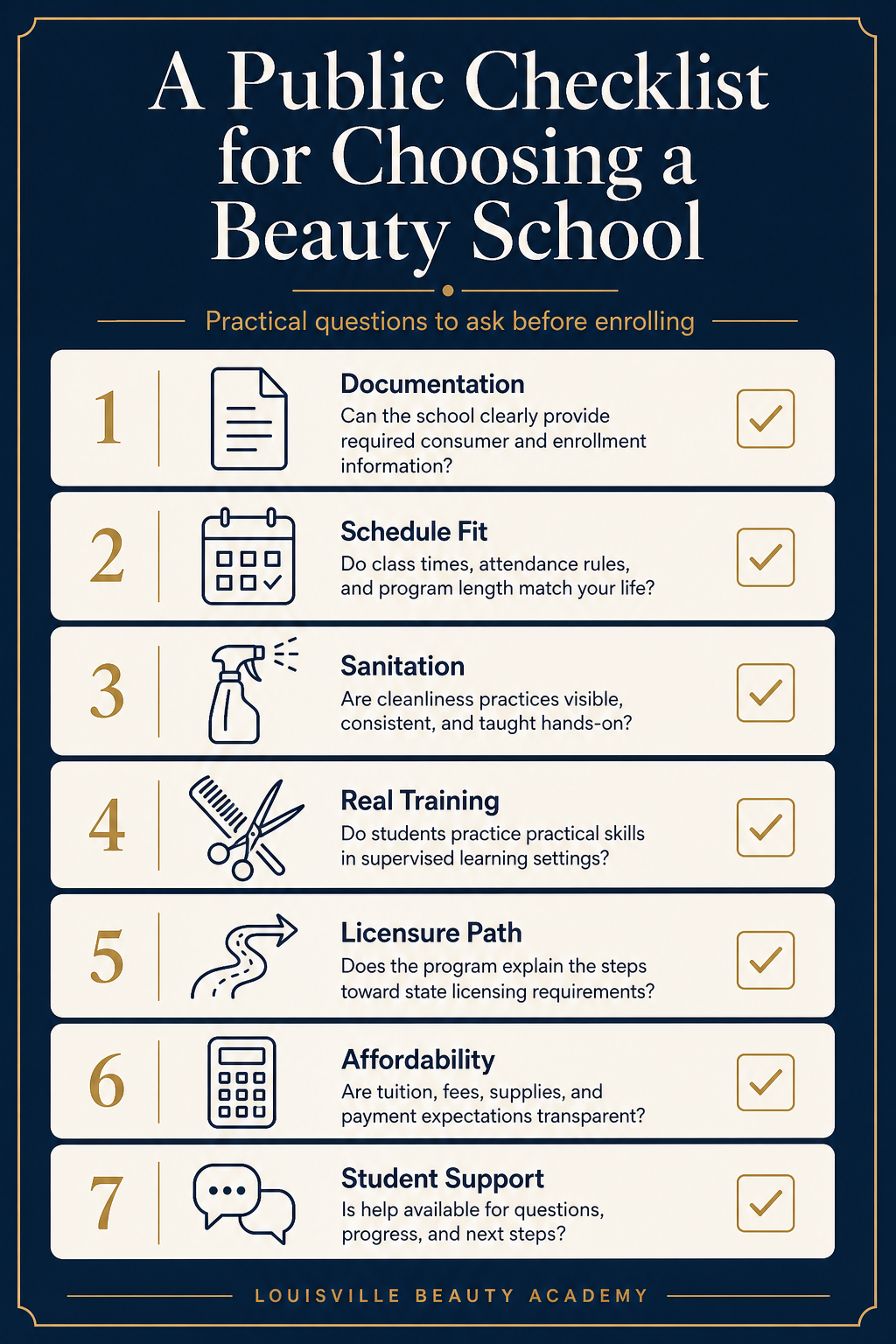
- Do the instructors and staff communicate in a way that feels respectful, clear, and genuinely helpful?
- Does the environment feel clean, sanitary, safe, and serious?
- Does the culture seem focused on building students up, or does it feel driven by gossip, confusion, or pressure?
- If a document affects the student, is it available in writing and reasonably reviewable before commitment?
- Is the student contract accessible enough to inspect before making a major decision?
- Are important costs, rules, and expectations clearly documented?
- Does the school explain progress standards, attendance expectations, and readiness honestly?
- Does the institution seem truly affordable in the student’s real life?
- Is communication available in ways the student or family can understand, including multiple languages where possible?
- Do the leaders and instructors show proof of work, service, awards, recognition, or real-life example beyond sales language?
- Does the school appear focused on helping the student become ready for real work, not just on protecting its own image?
- Do I feel that this environment fits me?
There is not always one universally right answer. Sometimes the honest question is simply whether a school is fit or unfit for a particular student’s needs, goals, finances, language reality, schedule, and comfort level.
That is what advocacy should protect: the student’s right to ask, compare, review, and choose with dignity. The goal is not control for its own sake. The goal is informed choice.
This material is provided for public-information and educational purposes only. It reflects general institutional, compliance, and educational discussion informed by applicable federal and state frameworks. It is not individualized legal, financial, or regulatory advice. Students and families should review official program documents, funding terms, school policies, student contracts, and applicable legal requirements before making decisions.