A day of listening, gratitude, and renewed responsibility to serve.
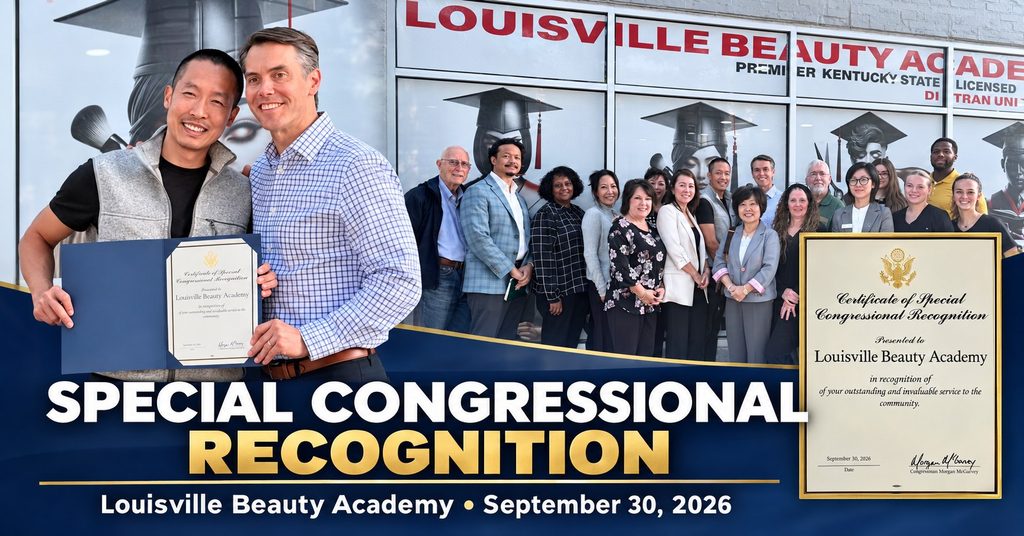
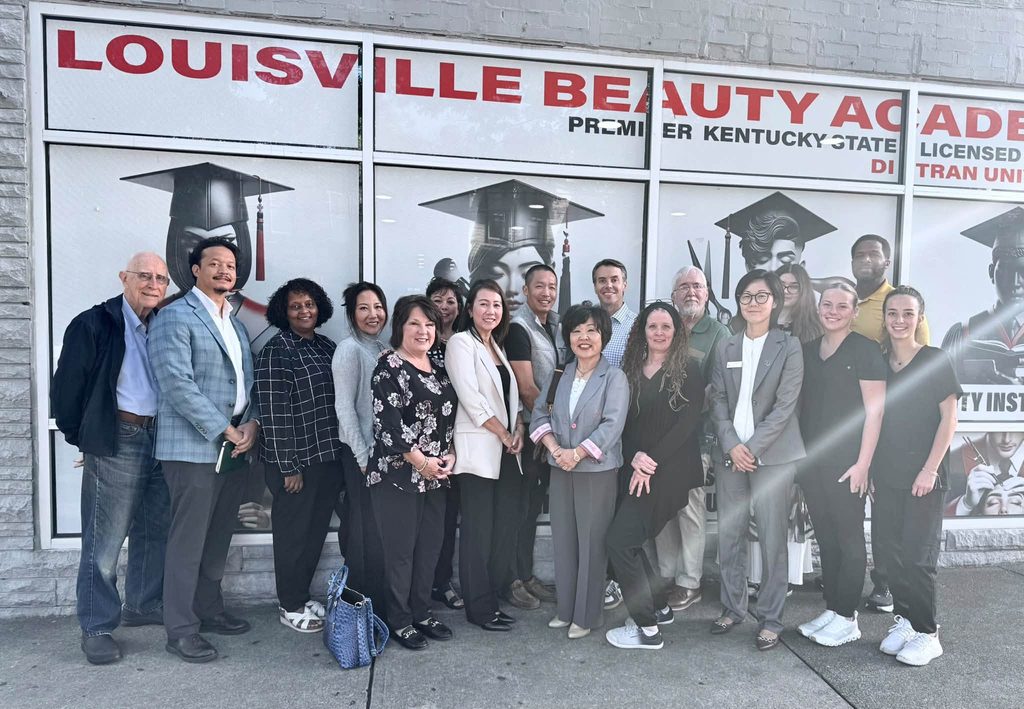
Louisville Beauty Academy welcomed Congressman Morgan McGarvey, who represents Kentucky’s Third Congressional District, and members of his team for a nonpartisan workforce-education listening visit on September 30, 2026.
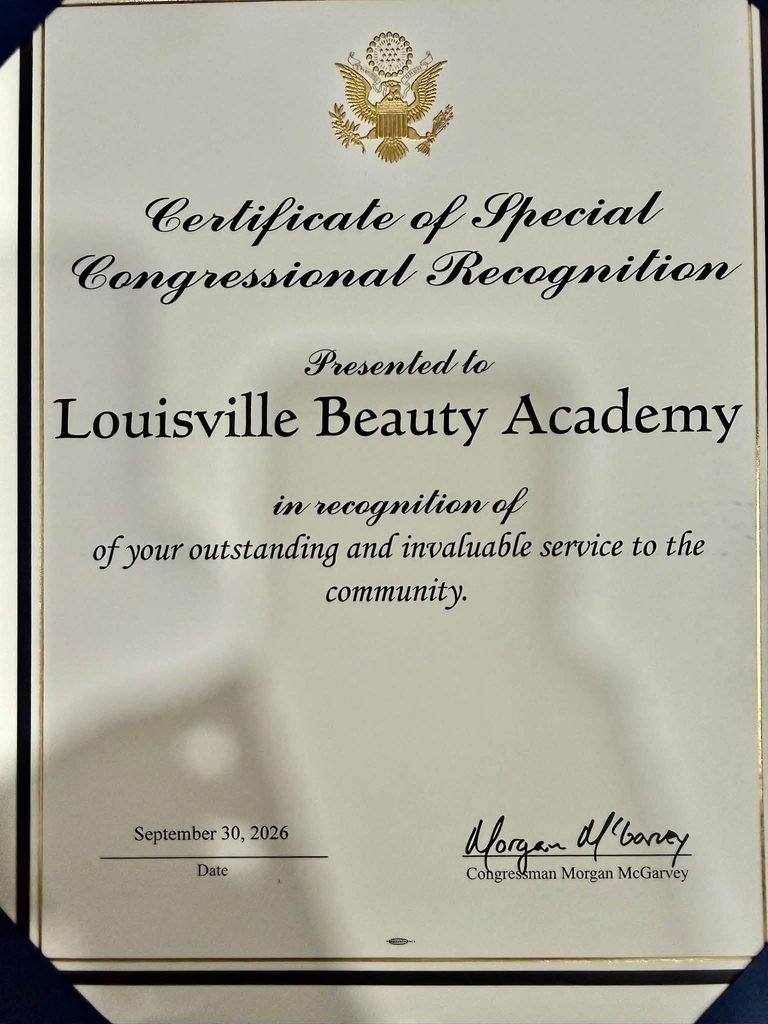
During the visit, Congressman McGarvey presented Louisville Beauty Academy with a Certificate of Special Congressional Recognition stating that it was given:
“in recognition of your outstanding and invaluable service to the community.”
The certificate is dated September 30, 2026, and signed by Congressman Morgan McGarvey. LBA receives it with humility—not as a finish line, but as a responsibility to keep serving students, families, licensed professionals, small businesses, and the Louisville community.
A listening visit centered on people and practical opportunity
The conversation brought together LBA team members and community participants to discuss practical Beauty Education and workforce access. Topics included affordability, state licensure, safety and sanitation, multilingual and working-adult access, small-business and entrepreneurship pathways, and the responsible use of human-supervised technology in regulated education.
LBA’s purpose was simple: offer a real Louisville example, listen carefully, and help public leaders understand both the opportunity and the complexity of short-term, state-licensed career education. No policy agreement, grant decision, regulatory outcome, or other commitment is claimed in this article.
Service before recognition
Recognition matters because it reflects the daily work of people: students who continue through fear and difficulty; educators who teach safety, sanitation, skill, and professional responsibility; families who support a learner’s next step; graduates who enter licensed work; and community members who believe practical education can open doors.
Louisville Beauty Academy is grateful to Congressman McGarvey and his team for visiting, listening, and recognizing service to the community. We are equally grateful to every person who joined the conversation and every learner, graduate, educator, client, and partner whose work gives that service meaning.
A clear factual record
The September 30, 2026 certificate is a dated Certificate of Special Congressional Recognition presented to Louisville Beauty Academy.
It follows a separate certificate dated October 29, 2025. LBA records these as two distinct, dated recognitions.
The September 30 event was a nonpartisan listening visit—not a campaign event or fundraiser.
The visit and certificate do not imply endorsement of LBA, agreement with every statement made, partnership, funding, regulatory approval, or support for a particular policy proposal.
No private student records or individual educational outcomes are disclosed in this article.
Our commitment continues
LBA will continue working to make state-licensed Beauty Education practical, transparent, human-centered, and connected to real work. The standard remains the same: evidence before claims, people before systems, and service before recognition.
Public-information and compliance note: Louisville Beauty Academy is a Kentucky state-licensed Beauty Education institution. This article is an institutional news record, not legal advice, a campaign communication, an endorsement, an enrollment guarantee, a funding announcement, or a representation of any government office’s policy position. Current law, official licensing requirements, LBA’s current written policies, and each student’s signed enrollment documents control over general website content.
A Multidisciplinary Research Report by Di Tran University – The College of Humanization
Louisville Beauty Academy is honored to share this Di Tran University research publication, where LBA is presented as an observable case study and pilot environment for Compliance-by-Design education and Regulatory Immersion Learning. All research, analysis, framework development, and publication credit belong to Di Tran University – The College of Humanization Research Team.
The Psychobiological Architecture of Authority, Stress, and Compliance
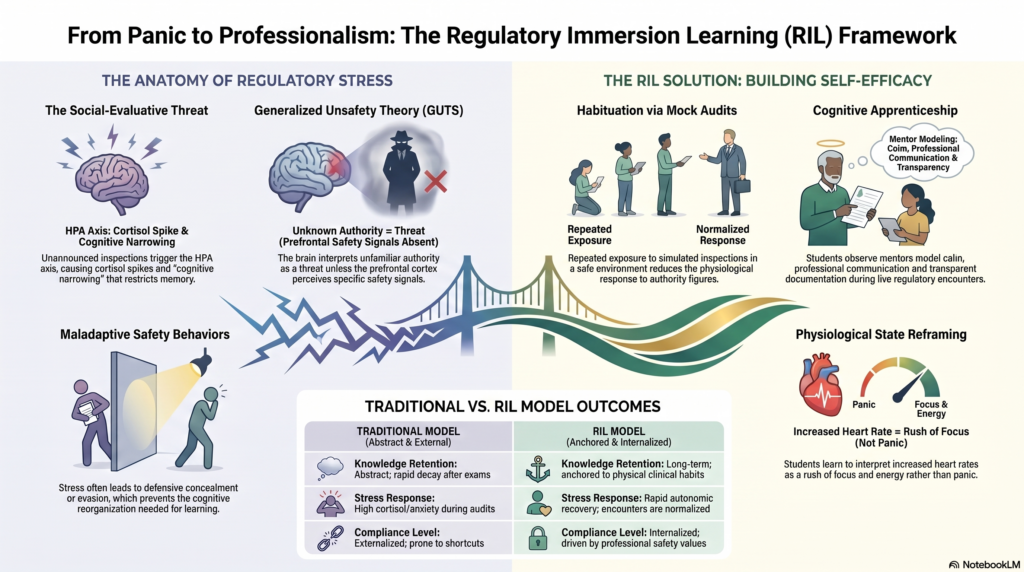
Neuroendocrine Cascade of the Social-Evaluative Threat
The unannounced arrival of a regulatory enforcement officer within a licensed professional training environment triggers a highly predictable, phylogenetically ancient psychobiological stress response1. In human psychology, the perception of an authority figure armed with the power to penalize, fine, or shut down operations is categorized as a high-stakes social-evaluative threat1. The primary biological mechanism driving this reaction is the rapid activation of the hypothalamic-pituitary-adrenal (HPA) axis and the sympathetic-adrenal-medullary (SAM) system4.
Clinical evaluations using the Trier Social Stress Test (TSST) demonstrate that situations combining social-evaluative threat, uncontrollability, and anticipation consistently produce massive physiological spikes in salivary and blood serum cortisol, alongside rapid elevations in heart rate, blood pressure, and salivary alpha-amylase (sAA)1. This autonomic arousal is accompanied by acute state anxiety, which can be measured clinically via the Generalized Anxiety Disorder 7-item (GAD-7) scale, showing transitions from minimal baseline scores to severe anxiety ranges during active enforcement encounters6.
This systemic response is further illuminated by the Generalized Unsafety Theory of Stress (GUTS), which posits that the physiological stress response is a default state that remains active unless the prefrontal cortex actively perceives specific, reliable signals of safety8. Under the GUTS model, the human brain default-interprets an unfamiliar authority encounter as unsafe8. When an inspector arrives, the absence of an immediate safety context prevents prefrontal-subcortical inhibition, leaving the fight-or-flight default response fully disinhibited8.
This state of generalized unsafety induces cognitive narrowing, wherein the individual’s working memory capacity is severely restricted, limiting their ability to recall complex administrative regulations, access documentation, or communicate professionally8.
Compliance Psychology and Safety Behaviors
To manage this acute discomfort, individuals frequently adopt “safety behaviors”—defined in behavioral psychology as unnecessary, dysfunctional actions taken to prevent, escape from, or reduce the immediate severity of a perceived threat10. In a regulatory enforcement context, safety behaviors manifest as defensive concealment, paper-shuffling, evasion of verbal interaction, or performative compliance designed solely to expedite the inspector’s departure9.
While these behaviors may temporarily alleviate immediate anxiety, they prevent the cognitive reorganization and emotional regulation required for authentic learning10. Instrumental deterrence models of regulation, which rely heavily on punitive sanctions and monitoring, inadvertently reinforce these fear-driven dynamics11. This erodes the regulatee’s intrinsic commitment to professional standards and replaces genuine self-regulation with defensive, risk-avoiding maneuvers11.
Sociocultural and Geographic Dimensions of Government Trust
The baseline psychobiological reaction to regulatory authority is heavily moderated by the cultural, historical, and geographic backgrounds of the individuals undergoing the encounter14. For educational institutions serving diverse student bodies, understanding these nuances is critical to transforming fear into professional agency16.
Comparative Immigrant Perceptions of State Authority
First-generation immigrants often view and experience regulatory bodies through a “dual frame of reference,” evaluating the administrative host environment against the historical performance and corruption levels of their countries of origin17.
The table below provides an analytical comparison of immigrant perceptions of government authority across diverse geopolitical regions of origin:
Region of Origin
Historical / Administrative Context
First-Generation Behavioral Bias
Second-Generation Trust Divergence
United States(Native-Born)
Deep historical values of constitutional due process; moderate institutional trust17.
Relies on procedural safeguards; comfortable requesting legal representation22.
Serves as the baseline standard; highly sensitive to systemic enforcement biases18.
Vietnam
Post-war bureaucratic models; history of centralized control and administrative opacity3.
High outward compliance driven by caution; internal avoidance of state agents3.
Rapid assimilation to US standards; lower tolerance for arbitrary state actions17.
China
Authoritarian administrative state; legacy of pervasive civil and commercial surveillance17.
Severe risk aversion; immediate compliance with state demands to avoid scrutiny17.
Internalizes host-country legal standards; increasingly willing to challenge rules18.
India
Heavily bureaucratic administrative structures; legacy of colonial civil service hierarchies14.
High reliance on credentials and written stamps; comfortable with slow processes14.
Expects rapid, digitized public services; dismissive of archaic paper procedures18.
Africa
Post-colonial instability; history of militarized enforcement in specific regions14.
Acute fear of uniforms and unexpected visits; trauma reactions to unannounced audits16.
Reappraises regulatory bodies through localized socioeconomic and racial lenses18.
Latin America
History of structural corruption, arbitrary enforcement, and police-ICE data integration24.
Pervasive fear that sharing professional data will lead to deportation or profiling24.
Demands structural reform; highly active in labor and civic organizing25.
Eastern Europe
Post-Soviet transitional states; legacy of state-directed commercial and political surveillance17.
Systemic cynicism toward inspectors; expectation that audits require informal resolution17.
Expects absolute institutional transparency and digital accountability18.
High anxiety during unannounced audits; fear of administrative profiling18.
Active pushback against structural bias; values-driven engagement with laws18.
This cross-regional analysis demonstrates that immigrant students do not represent a homogenous group25. First-generation immigrants often exhibit “over-confidence” in host institutions early in their residency because they compare them to low-performing home-country institutions17. However, this trust quickly degrades due to acculturative stress, linguistic barriers, and fear of data-sharing between local licensing boards and federal immigration enforcement agencies26. This makes unannounced inspections a potential source of acute trauma24.
Geographic Realities of Rural Communities and Centralized Regulation
In rural areas such as Central Appalachia, the Midwest, and the deep South, the relationship with regulatory agencies is shaped by geographic distance and historical neglect29.
The table below contrasts geographic and cultural interactions with regulators across specific rural landscapes:
Rural Region
Geographic & Infrastructure Reality
Cultural & Historical Context
Dynamic with Regulatory Authorities
Kentucky(General Rural)
High distance from state agencies; limited transit; low local budgets31.
Deep emphasis on local self-reliance and regional independence31.
Skepticism of centralized state rules; preference for relational enforcement32.
Appalachia(Central/Eastern)
Severe geographic isolation; systemic neglect of public water/utility infrastructure30.
Generational trauma from corporate “company towns” and corrupt local police15.
Deeply entrenched moral distrust of state agents; views audits as economic extraction15.
Midwest(Agricultural Belt)
Vast distances between county seats; heavy reliance on USDA/state agency programs29.
Strong family-farm heritage; high valuation of property rights and local governance15.
Respects agricultural standards but resists environmental or labor-related mandates15.
Southern States(Rural Lowlands)
Remote county clinics; low density of administrative oversight32.
Historically conservative states-rights views; reliance on religious and civic networks15.
Suspicion of federal or urban-directed rules; strong reliance on informal compliance32.
In former coal-mining regions of Appalachia and the Midwest, trust in local and state government is distinctively low15. Decades of political neglect have created “geographies of alienation,” where residents avoid municipal systems (such as drinking untreated spring water instead of tap water) because they do not trust the state to protect them33. Consequently, unexpected inspections are frequently perceived as intrusive state targeting, causing rural practitioners to react with defensive avoidance or relational hostility15.
Behavioral Psychology of Normalization, Exposure, and Self-Efficacy
To transform these deeply ingrained stress responses, professional training programs can implement behavioral models designed to transition students from fear to competence38.
In clinical behavioral psychology, exposure therapy is established as a highly effective model for treating anxiety and avoidance behaviors10. The neurological engine driving exposure therapy is habituation: the gradual diminution of a physiological response to a stimulus when that stimulus is repeatedly presented in a safe, non-punitive environment10.
By systematically exposing students to simulated audits, peer reviews, and unannounced mock inspections, educators can guide them to correct their threat expectations10. The brain learns that the regulator’s presence does not inevitably lead to administrative punishment or economic ruin, allowing the sympathetic nervous system to return to baseline levels during active inspections10.
Cultivating Self-Efficacy Through Albert Bandura’s Social Learning Theory
According to Albert Bandura’s social cognitive theory, self-efficacy—the belief in one’s capability to execute courses of action required to manage prospective situations—is the primary determinant of behavioral adaptation under stress38. Bandura posits that self-efficacy is constructed through four distinct channels:
Mastery Experiences: Engaging in hands-on, successful compliance actions, such as maintaining accurate biometric and manual attendance logs daily38.
Vicarious Experiences (Learning by Observation): Watching clinical mentors and educators interact calmly, transparently, and professionally with state board inspectors23.
Verbal Persuasion: Receiving realistic, constructive feedback from instructors during mock audits, which reinforces the student’s compliance capabilities38.
Physiological State Reframing: Learning to interpret physical responses (e.g., increased heart rate) not as a signal of panic, but as a helpful rush of focus and energy4.
By structuring the educational environment so that students repeatedly witness and participate in compliant, procedurally fair interactions with regulators, schools can build a sense of professional agency and psychological safety22. Over time, this shifts the student’s posture from fear-based avoidance to confident, values-aligned self-regulation11.
The Historical Precedent of Experiential and Situated Pedagogy
The integration of real-world compliance activities into vocational curricula is supported by a rich history of experiential and situated educational models39.
Progressive Education and Experiential Learning
John Dewey’s progressive educational philosophy rejected the traditional model of treating students as passive vessels for lecture-based memorization39. Dewey argued that genuine education occurs through active, real-world experiences where students solve problems within their social and physical environments39. This philosophy was formalized by David Kolb into his Experiential Learning Model, which maps a continuous, four-stage learning cycle:
┌────────────────────────────────────────┐ │ Concrete Experience │ │ (Observing/conducting live audit) │ └───────────────────┬────────────────────┘ │ ▼ ┌────────────────────────────────────────┐ │ Reflective Observation │ │ (Deconstructing the audit via an AAR) │ └───────────────────┬────────────────────┘ │ ▼ ┌────────────────────────────────────────┐ │ Abstract Conceptualization │ │ (Mapping experience to administrative)│ │ ( statutes and regulations )│ └───────────────────┬────────────────────┘ │ ▼ ┌────────────────────────────────────────┐ │ Active Experimentation │ │ (Applying corrective actions in clinic)│ └────────────────────────────────────────┘
By anchoring learning in the concrete experience of a regulatory encounter, RIL ensures that abstract administrative laws (such as KRS 317A or 201 KAR 12) are permanently integrated into the student’s daily physical habits39.
Situated Cognition and Communities of Practice
Jean Lave and Etienne Wenger’s situated learning theory suggests that learning is a process of socialization into a distinct “community of practice”49. Novices enter at the periphery of the community, performing simple, low-risk tasks49. As they acquire the language, tools, and social norms of the profession, they move toward full participation49.
When a student participates in a live regulatory encounter alongside an experienced mentor, they are undergoing cognitive apprenticeship46. The instructor makes their clinical reasoning visible, scaffolding the student’s participation until they can confidently manage compliance tasks independently40.
Operational Precedents: Toyota Production System and After Action Reviews
The business and military sectors provide highly structured frameworks for integrating real-world practice with continuous optimization:
The Toyota Production System (TPS): Built on the twin pillars of Just-in-Time and Jidoka (automation with a human touch), TPS empowers front-line workers to stop the production line immediately upon detecting an abnormality53. By combining human craftsmanship with technological controls, TPS builds a culture of continuous incremental improvement (Kaizen)53. Every error is treated not as a cause for blame, but as a valuable opportunity to optimize standard work55.
The military After Action Review (AAR): Developed by the United States Army in the 1970s, the AAR is a structured, post-training debrief where leaders and soldiers systematically analyze what was planned, what actually occurred, why it occurred, and how the unit can adapt for future success57. The AAR focuses on accountability going forward, creating an organizational culture built on transparency, candor, and continuous collective learning59.
Multi-Industry Regulatory Normalization and Comparative Matrix
High-risk, highly regulated industries have long recognized that separating compliance activities from active training increases operational risk and anxiety61.
The matrix below compares regulatory normalization practices across 18 distinct fields of professional and vocational practice:
Fire run sheets; equipment maintenance tracking logs.
Across these industries, incorporating audits into active training reduces operational anxiety and builds self-efficacy44. When compliance is integrated directly into standard training protocols, professionals view inspections not as a stressful external threat, but as a normal and valuable quality-assurance process43.
The Mechanics of Complaint Systems and Ethical Responses
A common source of regulatory friction is the administrative complaint system, which is designed to protect consumer safety but is often vulnerable to misuse3.
Administrative complaints are filed by distinct stakeholders, including:
Consumers: Reporting actual or perceived harm, poor results, or sanitation violations64.
Employees: Reporting labor disputes, safety issues, or non-compliant school practices66.
Competitors (Competitive Harassment): Weaponizing administrative boards to drain the financial and emotional resources of business rivals3.
Anonymous Sources: Initiated to trigger a surprise investigation without facing cross-examination, which is why some state boards legally require signed writings to prevent harassment3.
Substantiation Rates
Federal regulatory databases show that only about 19% of investigated administrative complaints result in a formal deficiency citation66. Conversely, within highly structured, internal corporate complaint hotlines, substantiation rates reach approximately 53% for identified reporters and 47% for anonymous filings70. This gap suggests that many external administrative complaints are unsubstantiated or driven by non-compliance factors, such as competitor harassment or civil disputes3.
Ethical Response Protocols and Procedural Safeguards
Under administrative law systems (such as 201 KAR 12:190 in Kentucky), licensees have clear due process rights when responding to complaints:
The Written Notice Mandate: Regulatory enforcement cannot be based on verbal directives or informal instructions69. The licensee is entitled to a formal, signed written complaint detailing the exact statutes violated and the factual allegations69.
The Response Period: Licensees are provided a statutory response window (typically 10 to 30 days) to submit a formal, written explanation or correction before disciplinary hearings begin69.
The Right to Cure: Under modern progressive regulation statutes, Alternative Compliance Pathways allow licensees to resolve non-safety record-keeping issues through 30-day “Correction Orders” without facing immediate fines or license suspension3.
Sovereign Immunity and Nullity: If an administrative board issues an enforcement order without adhering to statutory procedures (such as failing to provide written notice or utilizing unlicensed proctors), the resulting order may be declared void ab initio (invalid from the inception)3. This status legally entitles the licensee to a full refund of any fines paid under the voided order3.
Case Study: Louisville Beauty Academy’s Compliance-by-Design Model
Louisville Beauty Academy (LBA), an immigrant-led beauty college based in Louisville, Kentucky, serves as an active case study for integrating regulatory compliance into vocational education16.
Operational and Compliance Architecture
Led by founder Di Tran, LBA operates under the authority of the Kentucky Board of Cosmetology (KBC), offering state-licensed courses in Cosmetology (1,500 hours), Esthetics (750 hours), and Nail Technology (450 hours)45.
To protect student hours and build regulatory trust, LBA maintains a robust compliance infrastructure:
Dual attendance tracking: Under 201 KAR 12:082 § 3(1), LBA maintains both a digital biometric fingerprint timekeeping system and manual paper sign-in sheets at all times45. This dual-verification ensures complete data redundancy and absolute tracking integrity45.
Instructional hour caps: In compliance with 201 KAR 12:082 § 4(4), LBA strictly caps credited instruction at 8 hours per day and 40 hours per week45. Any additional hours are logged transparently but remain uncredited, serving as evidence of voluntary study45.
Instruction over commerce: Under KRS 317A.130(1), LBA operates solely for education, focusing on mannequin-based skill mastery45. Public model practice is voluntary, ensuring that student clinics are not used as commercial revenue drivers45.
Operational Strengths and Systemic Vulnerabilities
An objective evaluation of LBA’s model reveals both unique strengths and significant operational vulnerabilities:
Unique Strengths
Superior Traceability and Integrity: The dual attendance system virtually eliminates timecard manipulation, creating a highly reliable administrative record45.
Financial and Regulatory Insulation: By operating as a state-licensed, non-accredited institution with a pay-as-you-go payment model, LBA avoids federal student loan programs72. This structural insulation protects the school from federal gainful employment metrics that undercount actual beauty industry earnings72.
Multilingual Inclusivity: Offering instruction and study materials in English, Vietnamese, and Spanish reduces barriers for underserved, low-income, and immigrant student groups16.
Systemic Vulnerabilities
High Adversarial Tension with Regulators: LBA’s public records reveal a highly defensive relationship with the KBC3. Allegations concerning “targeted hyper-fining” against minority salons, “shadow testing,” procurement fraud, and immediate-closure orders under SB 22 suggest deep operational friction with the state board3.
Risk of Student Stress Transfer: While LBA’s “Gold Standard Guide” aims to reduce fear, exposing students to active, legalistic confrontations (such as utilizing a 30-to-60 minute verification pause or video recording inspectors) may inadvertently heighten student anxiety23. For students who have experienced historical government trauma, observing intense institutional battles may trigger, rather than reduce, autonomic distress8.
Resource-Intensive Over-Compliance: Maintaining dual records, AI-driven compliance checks, and constant legal reviews increases administrative costs72. This structural burden is difficult for average-sized vocational schools to sustain without a highly efficient tuition and funding model72.
Important Policy Analysis: The Power of Administrative Records
In public administration and corporate risk management, written records are the primary tool for establishing organizational accountability and protecting constitutional rights9.
The Psychology of Written Correspondence
In high-stress regulatory environments, relying on verbal agreements or informal warnings increases ambiguity and risk3. The “verbal warning trap” occurs when an inspector issues an informal directive that is not backed by a written citation3. The business owner may attempt to comply with the verbal instruction, only to face a formal penalty later for non-compliance with a different, unwritten interpretation of the rule3.
Documenting every interaction through time-stamped, written correspondence provides critical protections:
Establishes Institutional Memory: Shifting knowledge from individual memory to structured, digital records reduces reliance on specific personnel and supports continuous improvement9.
Creates a Legal Audit Trail: In administrative hearings, undocumented actions are legally presumed not to have occurred63. A clear written record of compliance activities provides defensive protection63.
Protects Due Process: Requiring all instructions and findings to be delivered in writing ensures that administrative decisions are objective, consistent, and legally reviewable23.
Post-Inspection Factual Correspondence Policy
A robust risk management strategy includes sending a factual, professional follow-up email immediately after an inspection74. This correspondence does not concede violations or express defensiveness23. Instead, it establishes an objective, written record of what occurred during the encounter23.
This practice aligns with modern administrative guidelines (such as KRS 13B in Kentucky), which entitle parties to written clarification of all rulings and instructions23.
The Regulatory Immersion Learning (RIL) Educational Framework
To systematically integrate regulatory compliance into professional education, institutions can transition from traditional, classroom-bound models to the Regulatory Immersion Learning (RIL) framework39.
Performance and Psychobiological Outcomes Comparison
The table below contrasts the educational and psychological outcomes of traditional lecture models with the live-immersion RIL framework:
Measurement Parameter
Traditional Classroom Model
Regulatory Immersion Learning (RIL) Model
Knowledge Retention
Abstract, rapid decay after passing written examinations72.
Long-term retention; rules are anchored to physical, memorable clinical actions50.
Confidence & Self-Efficacy
Low; students feel unprepared for unannounced, high-stakes state audits38.
High; repetitive mock audits and guided exposure build professional agency38.
Professional Readiness
Focuses on textbook compliance; leaves students vulnerable to performative rules45.
Instills continuous, standard compliance habits; students are prepared for day-one practice2.
Critical Thinking
Limited to linear, written test-prep scenarios40.
High; students dynamically assess real-world hazards and procedural rules46.
Stress Reduction
High baseline cortisol and anxiety during active enforcement encounters4.
Rapid autonomic recovery; regulatory encounters are normalized and expected10.
Long-Term Compliance
Performs under external pressure; prone to shortcuts in private salons11.
Self-regulatory compliance driven by internalized professional and safety values11.
Limits and Required Empirical Evidence for Broader Adoption
While the RIL model is conceptually sound, its widespread implementation is limited by several factors:
Inspector Resistance: Some state inspectors may view recording, active questioning, or requests for written instructions as administrative resistance, which could increase regulatory tension23.
Resource Constraints: Managing dual-tracking systems, executing weekly mock audits, and maintaining digital compliance platforms require significant administrative time and investment45.
Trauma-Sensitivity Risks: For students who have experienced historical government trauma, sudden exposure to active regulatory disputes—even with mentors—could trigger survival responses that hinder learning24.
To support broader adoption of the RIL model, empirical research should focus on the following:
Objective stress-marker evaluations: Measuring salivary cortisol and heart-rate variability (HRV) in students during mock and real audits to confirm systemic desensitization4.
Longitudinal compliance tracking: Monitoring graduates’ compliance and citation rates over their first five years in business77.
Linguistic and accessibility studies: Measuring compliance learning speeds in multilingual classrooms when legal statutes are paired with visual, AI-supported tools78.
Practical Institutional Blueprints and Curricular Deliverables
To transition the theoretical RIL framework into an operational model, schools can implement the following curricula, standard operating procedures, and professional communication templates.
================================================================================= COURSE CODE: RIL-101 TITLE: REGULATORY LAW, INFECTION CONTROL, AND ADMINISTRATIVE SAFETY IN CLINIC ================================================================================= WEEK 1: INTRODUCTION TO STATE ADMINISTRATIVE LAW & EXECUTIVE ETHICS – Coursework: KRS Chapter 317A, KRS Chapter 11A, and 201 KAR 12:082 [cite: 51, 72]. – Practical: Biometric timekeeping orientation; signature sheet verification. – Exercise: Reconstructing a timecard error; drafting an administrative correction log.
WEEK 2: DISINFECTION CHEMISTRY & PUBLIC HEALTH PRINCIPLES – Coursework: OSHA Hazard Communication Standard; Safety Data Sheet (SDS) interpretation. – Practical: Mixing chemical solutions according to manufacturer instructions. – Exercise: Mock chemical spill drill; evaluating workstation contact times [cite: 39, 80].
WEEK 3: DECONSTRUCTING THE SOCIAL-EVALUATIVE THREAT – Coursework: Human physiology of stress; the HPA axis and cortisol spikes. – Practical: Controlled deep-breathing drills; mental toughness and stress-reframing. – Exercise: Simulated unannounced instructor-led safety sweeps under pressure.
WEEK 4: THE PSYCHOLOGY OF DOCUMENTATION AND TRACEABILITY – Coursework: Why undocumented procedures fail; technical communication standards [cite: 9, 63]. – Practical: Operating daily sanitation logs; validating inventory tracking systems [cite: 44]. – Exercise: Structured peer reviews of workstation compliance documentation.
WEEKS 5-8: COGNITIVE APPRENTICESHIP IMMERSION (CLINIC ENCOUNTERS) – Coursework: Jean Lave’s situated cognition; the six dimensions of CAM [cite: 40, 46, 49]. – Practical: Observing instructors model compliance during simulated audits [cite: 23, 52]. – Exercise: Roleplaying as inspector, manager, and student; modeling verbal etiquette scripts.
WEEKS 9-12: PEER-AUDITING SYSTEMS & KAIZEN LABS – Coursework: Lean manufacturing and the Toyota Production System; Kaizen theory [cite: 53, 81]. – Practical: Conducting weekly mock inspections on other student workstations. – Exercise: Mock “tracer surveys” using Joint Commission methods.
WEEKS 13-15: STRUCTURAL COMPLAINT SIMULATIONS – Coursework: Understating complaint systems; due process and rights to respond [cite: 66, 69]. – Practical: Responding to simulated consumer complaints using factual, written logs. – Exercise: Draft responses to KBC-style complaints under 201 KAR 12:190.
WEEK 16: CAPSTONE EXPERIENTIAL ASSESSMENT & AFTER ACTION REVIEWS – Coursework: Continuous improvement and post-audit learning loops [cite: 57, 60, 82]. – Practical: Conducting a complete After Action Review (AAR) of the course’s mock audits [cite: 57, 59]. – Exercise: Final practical examination; managing a surprise, unannounced mock inspection. =================================================================================
Faculty Guide: Step-by-Step Instructional SOP for Live Audits
================================================================================= SOP NUMBER: RIL-INST-04 TITLE: MANAGING LIVE REGULATORY ENCOUNTERS AS INSTRUCTIONAL CLASSROOMS ================================================================================= 1. OBJECTIVE: To ensure that when a state regulatory inspector arrives, faculty members remain calm, protect due process rights, and actively use the encounter as a live learning experience for observing students.
2. PREPARATION: Keep a laminated copy of the LBA “Inspection Transparency & Verification Rights Notice” at the front desk and at all active instruction areas.
3. WHEN THE INSPECTOR ARRIVES: A. STEP 1: INITIAL RECEPTION – Welcome the inspector politely and professionally. – Do NOT halt active classroom instruction or panic [cite: 23, 83]. – Hand the inspector a copy of the LBA Transparency Notice.
B. STEP 2: VERBAL PROTOCOL (SAY ALOUD) “Good morning! We welcome your visit and appreciate your work. We just follow a standard compliance process to make sure everything is accurate and fair. Here’s our Inspection Transparency & Verification Rights Notice. It simply explains that under Kentucky law, we’re allowed to take about 30 to 60 minutes to review any request or rule, record the visit for documentation, and verify things with our compliance team before we respond or sign anything. This helps us stay consistent with KRS 13B and 317A — and it keeps everything transparent for both sides. We’ll cooperate fully — we just want to make sure everything we do is right by the law and clear for our records. Thank you!”
C. STEP 3: STUDENT POSITIONING – Direct students working in the immediate area to pause and observe. – Quietly explain the inspector’s actions to nearby students (e.g., “The inspector is verifying that all student licenses are posted at active workstations according to KBC regulations”) [cite: 23, 51, 71].
D. STEP 4: RECORDING & DOCUMENTATION – Activate a clean, high-definition digital recording device. – Explicitly reference Kentucky’s one-party consent statute (KRS 526.020) and the school’s educational duty under KRS 317A.130(1)(f). – If an inspector makes an observation or deficiency claim, request that they reduce the instruction or legal citation to writing.
E. STEP 5: DECONSTRUCTION DEBRIEF – Once the inspector departs, call an immediate 15-minute student assembly. – Conduct a mini After Action Review (AAR) to analyze what went well, what went less well, and how the school will adapt [cite: 57, 60, 80]. =================================================================================
Student Handbook Addendum: Safety & Regulatory Rights Notice
================================================================================= SECTION 8.4: YOUR COMPLIANCE RESPONSIBILITIES AND DUE PROCESS RIGHTS ================================================================================= As a student training toward state licensure, you are a professional-in-training responsible for protecting public health and safety. Our academy operates under a “Compliance-by-Design” framework, meaning that safety, state law, and regulatory standards are integrated into your daily habits.
YOUR CORE COMPLIANCE RESPONSIBILITIES: 1. DAILY TIMESTAMPS: You must record your attendance using the biometric fingerprint scanner and manual sign-in sheet every time you enter or exit. 2. SANITATION MASTERY: You must maintain a clean, disinfected workstation at all times, following all sanitation procedures under 201 KAR 12 [cite: 39, 51]. 3. FACTUAL ACCOUNTABILITY: You are training to understand that your progress logs and clinic hours represent legally binding evidence submitted to the state.
YOUR CONSTITUTIONAL AND ADMINISTRATIVE RIGHTS DURING INSPECTIONS: 1. THE RIGHT TO A CALM RESPONSE: You are never required to panic or rush when an inspector arrives. You are legally entitled to a 30-to-60 minute window to verify regulatory rules and retrieve correct records before answering. 2. THE RIGHT TO WRITTEN INSTRUCTIONS: Under KRS 13B.090(7), you have the right to request that any inspector directive or cited deficiency be provided in clear, verifiable writing. 3. THE RIGHT TO PROFESSIONAL RECORDING: Under KRS 526.020, you have the right to record audio or video of regulatory encounters for compliance training. 4. THE RIGHT TO AN ETHICAL REMEDY: If an administrative warning or complaint is issued, you have the right to written clarification, explanation, and a formal opportunity to respond and correct errors. =================================================================================
Post-Inspection Verification Letter Template
================================================================================= DATE: [Insert Date] TO: Joni Upchurch, Executive Director, Kentucky Board of Cosmetology [cite: 45, 69] FROM: Compliance Office, Louisville Beauty Academy SUBJECT: POST-INSPECTION COMPLIANCE VERIFICATION & ADMINISTRATIVE RECORD ================================================================================= Dear Director Upchurch,
This correspondence is submitted to establish an accurate administrative record of the routine facility inspection conducted at Louisville Beauty Academy (Location: [Insert Campus Address]) on [Insert Date] at approximately [Insert Time].
We appreciated welcoming Inspector [Insert Name] to our campus. In alignment with our educational mission under KRS 317A.130(1)(f), our students actively observed the inspection process as part of our Regulatory Immersion Learning curriculum.
During the walkthrough, the following observations and corrections were noted: 1. WORKSTATION SANITATION: All active student stations were found in compliance with disinfection procedures under 201 KAR 12 [cite: 39, 51]. 2. DUAL ATTENDANCE RECORDS: Daily biometric and manual attendance logs were verified, confirming complete record alignment under 201 KAR 12:082 § 3. 3. CITED OBSERVATION / ADMONISHMENT: Inspector [Insert Name] noted a compliance discrepancy regarding [Insert Specific Issue, e.g., chemical container labeling], citing regulation [Insert Exact Regulation Code] [cite: 51, 69].
ADMINISTRATIVE DUE PROCESS & SYSTEMIC PLAN OF ACTION: A. IN-THE-MOMENT CORRECTION: LBA instructors immediately corrected the noted container labeling discrepancy in the presence of the inspector to ensure compliance [cite: 74]. B. REQUEST FOR WRITTEN DOCUMENTATION: In accordance with KRS 13B.090(7), we request that any official board rulings or instructions regarding this observation be reduced to writing and emailed to study@louisvillebeautyacademy.net. C. STATUTORY CURE WINDOW: If the Board intends to pursue formal administrative actions or agreed orders, we formally request our 30-day statutory cure window to respond with written evidence of systemic corrections.
Louisville Beauty Academy remains committed to transparency, open communication, and the collaborative maintenance of rigorous public-safety standards [cite: 23, 76, 84].
Respectfully submitted,
___________________________________________ Di Tran, Founder & CEO, Louisville Beauty Academy [cite: 73] With the LBA Digital and Compliance Leadership Team [cite: 83] =================================================================================
After-Action Review (AAR) Discussion Protocol
================================================================================= PROTOCOL CODE: RIL-AAR-01 TITLE: FACILITATING CLINICAL AFTER-ACTION REVIEWS POST-INSPECTION ================================================================================= AAR TIMING: To be conducted within 2 hours of inspector departure. PARTICIPANTS: Active students, supervising instructors, and compliance managers [cite: 59, 82]. FACILITATOR RULES: No finger-pointing or blame; focus on forward-looking accountability.
DISCUSSION QUESTIONS FLOW:
1. WHAT WAS THE PLAN? (Core Strategy Check) – What administrative regulations and sanitation codes were we trying to demonstrate under KRS 317A and 201 KAR Chapter 12? – How was our team prepared to receive the inspector professionally?
2. WHAT ACTUALLY OCCURRED? (Factual Reconstruction) – Walk through the walkthrough chronologically. What did the inspector look at first? [cite: 2, 57] – How did the team react? Did anyone panic or deploy avoidance behaviors? [cite: 1, 10] – What compliance deficiencies or positive practices were noted? [cite: 43, 44]
3. WHY DID IT HAPPEN THAT WAY? (Root-Cause Analysis) – If an error was noted, did it stem from a lack of knowledge, an unclear workstation routine, or stress-induced cognitive narrowing? [cite: 4, 8, 40] – If our team reacted calmly, what specific training or safety signals allowed us to maintain prefrontal-cortisol control? [cite: 4, 8, 41]
4. WHAT WILL WE DO NEXT TIME? (Action & Adaptation Plan) – What specific Standard Operating Procedures must be updated or clarified? [cite: 56, 60] – Who is responsible for tracking corrective steps, and when will they be done? [cite: 60, 63] – How can we share these lessons learned with our broader community of practice? [cite: 49, 59] =================================================================================
Synthesized Strategic Conclusions
By analyzing the provided empirical data, sociological studies, behavioral psychological frameworks, and regulatory legal structures, researchers can synthesize several key conclusions regarding the feasibility of the Regulatory Immersion Learning (RIL) model.
┌────────────────────────────────────────┐ │ ESTABLISHED EVIDENCE │ │ Rote memorization alone does not │ │ reduce acute autonomic panic during │ │ unannounced state inspections.│ └───────────────────┬────────────────────┘ │ ▼ ┌────────────────────────────────────────┐ │ EMERGING EVIDENCE │ │ Exposure, mock tracer reviews, and │ │ mentorship significantly lower stress│ │ and improve compliance [cite: 44, 46, 62].│ └───────────────────┬────────────────────┘ │ ▼ ┌────────────────────────────────────────┐ │ PRACTICAL OBSERVATION │ │ LBA’s dual-verification system and │ │ Gold Standard protocol protect │ │ student hours and rights [cite: 23, 45].│ └───────────────────┬────────────────────┘ │ ▼ ┌────────────────────────────────────────┐ │ HYPOTHESIS │ │ RIL will produce long-term self- │ │ regulation, resulting in lower state │ │ violations for graduates [cite: 11, 39].│ └────────────────────────────────────────┘
Established Evidence
The sudden arrival of a regulatory inspector is a social-evaluative threat that triggers immediate sympathetic arousal and a cortisol spike in unprepared individuals1.
Traditional, lecture-based memorization of administrative rules does not prevent stress-induced cognitive narrowing during unannounced enforcement events4.
First-generation immigrants demonstrate a “dual frame of reference,” exhibiting high baseline trust in public institutions that erodes over time and across generations due to acculturative stress17.
For marginalized and historically trauma-exposed populations, unexpected regulatory encounters can trigger survival responses if state agents are perceived as threatening or punitive8.
Meticulous, contemporaneous written documentation significantly reduces organizational risk, establishes institutional memory, and serves as vital defensive evidence in administrative hearings9.
Emerging Evidence
Incorporating systematic exposure therapy, mock tracer audits, and pre-inspection walkthroughs into technical training decreases client/student anxiety and improves quality-assurance outcomes43.
Cognitive apprenticeship models—wherein students observe experienced mentors model compliance and professional communication during inspections—accelerate the development of a strong professional identity12.
Process-based regulatory systems, built on Tom Tyler’s procedural justice principles (dignity, neutrality, voice, and trust), are superior to instrumental deterrence models because they nurture intrinsic, voluntary compliance11.
When individuals participate in simulated After Action Reviews (AARs) post-audit, they demonstrate improved retention of safety standards and a stronger commitment to forward-looking operational corrections57.
Practical Observations
Louisville Beauty Academy’s dual biometric and manual attendance tracking systems protect student hours, prevent data loss, and verify the accuracy of submitted certification records45.
The school’s low-cost, pay-as-you-go financial model insulates students from high student loan debt while protecting the school from federal gainful-employment penalties72.
While the academy’s “Gold Standard Guide” asserts critical due process rights (such as the KRS 13B verification pause and Kentucky’s KRS 526.020 one-party recording law), it coexists with significant legal tension and conflict with state regulators3.
Using mannequins as the primary instructional tool, in accordance with KRS 317A.130(1), ensures that student clinics remain educational spaces rather than commercial revenue-generating salons45.
Hypotheses
Students who complete their vocational training under a formalized Regulatory Immersion Learning (RIL) framework will exhibit lower state board violations and fewer compliance issues during their first five years of active professional practice39.
Integrating AI-assisted, human-verified document synthesis into vocational training programs will lower administrative costs, decrease error rates, and improve the school’s regulatory standing9.
Cultivating compliance-by-design training models within historically marginalized or immigrant-led professional communities will systematically reduce their vulnerability to competitor harassment and predatory fines, leading to higher long-term small-business survival rates2.
A qualitative study exploring the perinatal experiences of social stress among first- and second-generation immigrant parents in Quebec, Canada – PMC, https://pmc.ncbi.nlm.nih.gov/articles/PMC11370249/
Investigating the role of clinical exposure on motivational self-regulation skills in medical students based on cognitive apprenticeship model – PMC, https://pmc.ncbi.nlm.nih.gov/articles/PMC10921607/
Democratizing Specialized Care in the Digital Age: Project ECHO as a Learning Environment for Continuing Professional Development – MDPI, https://www.mdpi.com/2227-9032/14/7/824
GAO-11-280 Nursing Homes: More Reliable Data and Consistent Guidance Would Improve CMS Oversight of State Complaint Investigatio, https://www.gao.gov/assets/gao-11-280.pdf
GAO-11-280, Nursing Homes: More Reliable Data and Consistent Guidance Would Improve CMS Oversight of State Complaint Investigations, https://www.gao.gov/assets/a317518.html
This publication is an educational and research work developed by Di Tran University – The College of Humanization through its interdisciplinary Research Team, with contributions from faculty, practitioners, editors, AI-assisted research tools, and human review.
Louisville Beauty Academy is presented as an observable case study to examine educational practices, compliance systems, workforce development, and human-centered learning. The inclusion of Louisville Beauty Academy does not imply that every concept, framework, or hypothesis presented has been independently validated through peer-reviewed empirical research.
Educational Purpose
This publication is intended solely for educational, research, policy discussion, and professional development purposes. It should not be interpreted as legal advice, regulatory guidance, or professional counsel. Readers should consult applicable statutes, regulations, qualified legal counsel, and relevant regulatory authorities before making legal, compliance, or business decisions.
Evidence Statement
This publication integrates peer-reviewed literature, publicly available government resources, historical analysis, educational theory, organizational research, and practical observations. Where appropriate, distinctions are made between established evidence, emerging evidence, practical observations, and research hypotheses. Future empirical research is encouraged to validate or refine the proposed concepts.
Research concept, synthesis, editorial direction, and publication coordinated by the Di Tran University Research Team.
Louisville Beauty Academy is honored to share this publication in support of workforce education, professional ethics, safety, sanitation, regulatory understanding, lifelong learning, and continuous improvement. We gratefully acknowledge Di Tran University – The College of Humanization for leading the research, analysis, and development of this work.
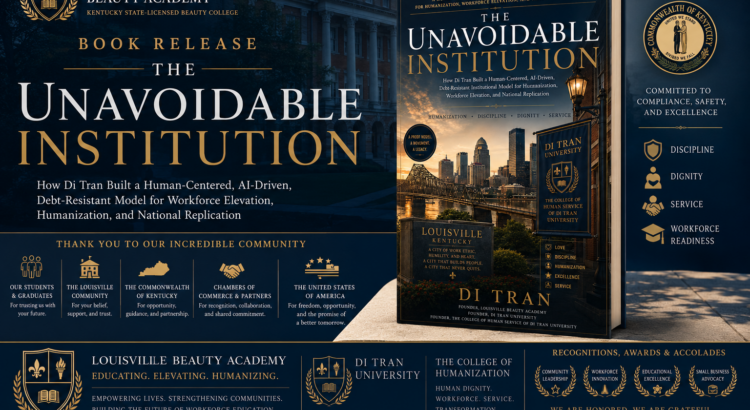
Louisville Beauty Academy is deeply honored and grateful to announce the release of The Unavoidable Institution: How Di Tran Built a Human-Centered, AI-Driven, Debt-Resistant Model for Workforce Elevation, Humanization, and National Replication — a flagship publication representing years of operational experience, workforce service, educational development, institutional reflection, AI implementation, compliance practice, and community-centered learning.
This moment is not simply the release of a book.
It is a reflection of the people, community, city, state, and nation that made this journey possible.
As a Kentucky state-licensed beauty college proudly founded and built in Louisville, Kentucky, Louisville Beauty Academy extends sincere gratitude to:
the Louisville community,
the Commonwealth of Kentucky,
the United States of America,
our students and graduates,
immigrant and working families,
employers and workforce partners,
educators and instructors,
chambers of commerce,
community organizations,
public servants and workforce advocates,
local and national business leaders,
and every individual who has contributed encouragement, accountability, opportunity, trust, recognition, and support throughout our journey.
We are especially humbled and thankful for the validations, recognitions, nominations, awards, partnerships, and acknowledgments received over the years, including support and recognition from workforce-development communities, entrepreneurship ecosystems, local and national business organizations, chambers of commerce, and advocacy groups that continue to elevate small business, workforce education, and human-centered economic development across America.
This publication reflects not only the work of one individual, but the collective contributions of the broader Louisville Beauty Academy and Di Tran University communities — including students, graduates, instructors, editors, researchers, AI systems contributors, compliance-support teams, operational staff, institutional-development collaborators, and community partners whose countless hours of service, documentation, learning, correction, and refinement helped shape the ideas contained in this work.
Most importantly, this book belongs to the people.
It belongs to:
the working parent trying to rebuild life,
the immigrant family searching for opportunity,
the student seeking dignity through practical education,
the graduate learning to believe in themselves again,
and the workforce communities that continue carrying the American economy through service, discipline, entrepreneurship, and hard work.
A Book About More Than Beauty Education
While rooted in the operational realities of Louisville Beauty Academy, The Unavoidable Institution ultimately presents a much larger institutional and workforce-development discussion regarding:
affordable workforce education,
vocational and trade-school innovation,
AI-assisted institutional systems,
compliance architecture,
operational discipline,
human-centered leadership,
workforce dignity,
community service,
entrepreneurship,
and the future of practical education in America.
The publication argues that education should not merely process students into debt and credentials, but should instead strengthen individuals into:
disciplined workers,
stable professionals,
capable entrepreneurs,
responsible citizens,
and dignified contributors to families and communities.
The book further explores:
why America may be educated but not fully elevated,
the dangers of debt-driven educational systems,
why workforce education deserves greater national respect,
how beauty and trade education serve as real economic infrastructure,
how AI can strengthen institutional accountability without replacing human dignity,
why humanization should become an operational framework,
and how small institutions can create large societal impact through disciplined design, affordability, service, and measurable outcomes.
Louisville, Kentucky, and the American Workforce
Louisville Beauty Academy proudly recognizes Louisville as a city of resilience, workforce energy, entrepreneurship, logistics, diversity, and human service.
From immigrant communities to working-class families, small businesses, logistics workers, healthcare workers, beauty professionals, educators, tradespeople, and entrepreneurs, Louisville represents many of the values this book seeks to honor:
hard work,
service,
reinvention,
discipline,
opportunity,
and community contribution.
We remain deeply grateful to Louisville and the Commonwealth of Kentucky for providing the opportunity to serve students, families, employers, and communities through workforce-centered education.
We also remain thankful to the broader American system that allows small institutions, immigrant families, entrepreneurs, and local workforce organizations the opportunity to build, contribute, and continue participating in the fabric of the nation.
Humanization, AI, and the Future of Institutions
One of the central ideas explored in the publication is that the future of education and workforce development must remain deeply human even as artificial intelligence and automation continue expanding.
The book proposes that AI should support:
accountability,
operational consistency,
documentation,
compliance,
institutional memory,
and administrative precision,
while preserving the irreplaceable role of:
human judgment,
human care,
mentorship,
correction,
discipline,
compassion,
and real-world service.
The publication further argues that institutions should become:
more affordable,
more operationally disciplined,
more transparent,
more community-oriented,
and more focused on producing workforce-ready individuals capable of contributing meaningfully to society.
Gratitude to the Di Tran University and College of Humanization Teams
Louisville Beauty Academy extends special appreciation and gratitude to the Di Tran University and College of Humanization communities for their contributions in:
editing,
writing,
research,
institutional design,
AI integration,
operational refinement,
documentation systems,
publication development,
compliance review,
workforce-policy discussion,
and educational collaboration.
This publication reflects years of collective effort and shared belief that affordable, disciplined, human-centered institutions remain possible in America.
Continuing the Mission
Louisville Beauty Academy remains fully committed to:
workforce readiness,
student affordability,
sanitation and safety,
disciplined operational systems,
educational accountability,
human dignity,
community contribution,
and compliance with all applicable local, state, and federal laws, regulations, sanitation standards, educational requirements, and licensure obligations.
This publication is intended solely for educational, informational, institutional-development, and public-policy discussion purposes and does not constitute legal advice, regulatory interpretation, governmental policy, accreditation guidance, or legal conclusions.
As we move forward, our mission remains unchanged:
To help build affordable, disciplined, human-centered educational systems that strengthen lives, families, communities, and the American workforce.
Louisville gave us the opportunity to serve. Kentucky gave us the opportunity to grow. America gave us the opportunity to dream.
“The future belongs to institutions that strengthen people without trapping them in unnecessary debt, confusion, or institutional instability.” — Di Tran
This article is part of LBA’s public education and historical archive. Older posts, including “Macroeconomic Analysis of Lower-Debt Vocational Pathways: A Comparative Study of Louisville Beauty Academy and Federal-Aid-Dependent Models in Kentucky,” may not reflect current tuition, schedules, incentives, forms, policies, testing vendors, clinic availability, or regulatory requirements.
(Third-Party Academic Study – Educational Use Only)
The following document, titled:
“Macroeconomic Analysis of Lower-Debt Vocational Pathways: A Comparative Study of the Louisville Beauty Academy and Federal-Aid Dependent Models in the Commonwealth of Kentucky” DTU-Economic Impact of Beauty A…
is published here in its original form as an independent economic modeling and policy research study.
Important Clarifications
Third-Party Research Context This report reflects academic-style economic modeling and policy analysis conducted for research, discussion, and workforce policy exploration purposes. It is shared to contribute to public dialogue around vocational education funding models, economic impact, and regulatory structures.
Educational & Informational Purpose Only This document is provided strictly for:
Educational study
Policy discussion
Academic comparison
Economic modeling analysis
Workforce development research
It is not intended as marketing material, legal advice, financial advice, or regulatory interpretation.
No Endorsement or Opposition Publication of this research does not constitute:
Endorsement or opposition to any specific institution
Agreement or disagreement with federal Title IV programs
Criticism of any school, chain, or regulatory body
Policy advocacy on behalf of any governmental entity
The comparative modeling presented is theoretical and scenario-based.
Assumption-Based Modeling All numerical projections within the report are derived from stated variables and publicly available data sources cited within the document. They are:
Conservative modeling estimates
Hypothetical scenario projections
Not guarantees of outcomes
Not promises of economic performance
No Representation of Regulatory Authority Nothing in this publication should be interpreted as:
Representing the position of the Kentucky Board of Cosmetology
Representing the position of any federal agency
Interpreting statute or administrative regulation
Providing compliance guidance
No Comparative Claims of Superiority The analysis compares funding models, not institutional character, quality, or compliance status. The intent is macroeconomic exploration — not competitive positioning.
Academic Freedom & Open Research This publication supports open inquiry into:
lower-debt vocational education models
Workforce acceleration frameworks
Public finance efficiency
Small-business formation trends
It is shared in the spirit of transparency and research literacy.
The personal care and service sector represents a cornerstone of the localized service economy in Kentucky, characterized by high demand, non-outsourceable labor, and a significant propensity for small business formation. As the economic landscape of vocational education shifts toward competency-based outcomes and financial sustainability, the divergence between cash-based, lower-debt models and traditional, federal-aid-reliant institutions has become a focal point for education economists. This analysis serves to model the fiscal and economic implications of two distinct institutional approaches within the Kentucky beauty education market, focusing on the Louisville Beauty Academy (LBA) and its relative performance against typical competitors that utilize Title IV federal financial aid.
Analytical Framework and Mathematical Variables
To establish a rigorous comparative model, a set of standardized variables is derived from current market data, regulatory fee schedules from the Kentucky Board of Cosmetology (KBC), and federal education statistics. These variables are selected using a conservative bias; where data ranges exist, the values chosen favor the traditional competitor schools to ensure that the resulting economic advantages of the lower-debt model remain credible and understated. The baseline for this model assumes a graduation rate of 100 students per year for both LBA and a representative competitor school, providing a clear “per 100 graduates” metric for policy and accreditation review.
Definitional Variable Set
The following variables () constitute the inputs for all subsequent fiscal calculations.
X (Examination Attempt Rate): 1.3 attempts. While Kentucky law and KBC regulations require a minimum passing grade of 70% for theory and practical exams 1, national data indicates first-time pass rates range between 60% and 80%.3 A variable of 1.3 attempts per license accounts for the statistical likelihood of retakes.2
A (Average Public Aid Package): $10,000. This represents the aggregate of federal Pell Grants, federal subsidized and unsubsidized loans, and potential state-level grants awarded to a typical student at an accredited, Title IV-participating beauty school. Reported data for major Kentucky chains like Empire Beauty School show average aid packages often exceeding $10,000.5
T1 (Speed-to-Market Differential): 6 months. Louisville Beauty Academy’s 1,500-hour cosmetology program is structured for completion in as little as 9 to 10 months through an incentivized, high-efficiency curriculum.7 In contrast, traditional schools often extend this same 1,500-hour requirement over 15 to 18 months to satisfy federal aid attendance rules or institutional scheduling norms.8
E (Annualized Entry-Level Earnings): $30,000. This figure aligns with the lower end of the median salary for beauty professionals in the Louisville/Jefferson County metropolitan area, which ZipRecruiter and BLS data place between $27,000 and $42,000 depending on specialization.2
R (Aggregate Effective Tax Rate): 16% (0.16). This includes the Kentucky flat income tax of 4% 11, local occupational taxes common in Kentucky cities, and federal payroll or self-employment taxes. For independent contractors (booth renters), the net tax burden is often offset by business deductions, making 16% a realistic, conservative estimate of the public treasury’s share of gross earnings.13
D (Graduate Debt Burden): $11,000. Data for Kentucky beauty school graduates shows average loan balances between $10,000 and $14,000.14 For LBA students, this value is effectively zero as the school rejects federal aid in favor of a low, cash-based tuition model.7
P (Entrepreneurship Probability): and . Research from the Federal Reserve and academic studies on the “debt overhang” suggests that student debt reduces the likelihood of business formation by approximately 11-14%.17 Conversely, lower-debt graduates exhibit higher risk tolerance and capital availability for launching ventures.19
B (Employment Multiplier): 1.5. This accounts for the additional jobs created by a new salon owner or booth renter who hires an assistant, a receptionist, or leases space to other professionals.
G (Standardized Graduation Cohort): 100 graduates per year.
Fiscal Contribution 1: Direct State Revenue from Licensure Examinations
The primary direct revenue stream for the Kentucky Board of Cosmetology (KBC) from student activities is the licensure examination fee. Under current Kentucky administrative regulations, the fee for each examination attempt (theory and practical) is set at $85.00.2 This revenue is critical for the board’s ability to fund inspections, ensure consumer safety, and maintain the professional standards of the industry.21
Revenue Calculation Methodology
The annual state revenue generated by the examinations of 100 graduates is calculated by multiplying the base fee by the average number of attempts required to achieve licensure.
The formula for annual exam revenue () is:
Substituting the defined variables:
Comparative Projections: Constant vs. Growth Scenarios
This study analyzes two scenarios over a 3-year and 5-year horizon. Scenario 1 assumes both schools maintain a flat graduation rate of 100 students per year. Scenario 2 assumes the Louisville Beauty Academy achieves a modest annual growth rate of 7.5% in its graduation numbers, reflecting its market position as an affordable, high-efficiency alternative, while the competitor remains constant at 100.
Scenario 1: Constant Annual Graduation (G=100)
In this scenario, both institutions contribute equally to the state board’s coffers on a per-cohort basis.
Year
LBA Exam Revenue
Competitor Exam Revenue
Year 1
$11,050
$11,050
Year 2
$11,050
$11,050
Year 3
$11,050
$11,050
3-Year Cumulative
$33,150
$33,150
Year 4
$11,050
$11,050
Year 5
$11,050
$11,050
5-Year Cumulative
$55,250
$55,250
Scenario 2: Modest Growth for LBA (7.5% Annual Increase)
In this scenario, LBA’s increasing graduation rate leads to a greater direct contribution to the KBC over time.
Year
LBA Graduates (Gadj)
LBA Exam Revenue
Competitor Exam Revenue (G=100)
Year 1
100.0
$11,050
$11,050
Year 2
107.5
$11,879
$11,050
Year 3
115.6
$12,770
$11,050
3-Year Cumulative
323.1
$35,699
$33,150
Year 4
124.2
$13,728
$11,050
Year 5
133.5
$14,757
$11,050
5-Year Cumulative
580.8
$64,184
$55,250
The mathematical model demonstrates that while the “per-student” revenue is identical, LBA’s model facilitates a steady stream of revenue to the state that is not contingent upon federal grant availability. Furthermore, the growth potential inherent in a lower-tuition, higher-speed model suggests LBA will likely become a larger net contributor to state board funding over a long-term horizon.22
Fiscal Contribution 2: Taxpayer Savings through Non-Reliance on Aid
The most immediate fiscal impact of the Louisville Beauty Academy on the public treasury is the total avoidance of federal and state education subsidies. Traditional beauty schools operate almost entirely on a Title IV funding model, where a majority of revenue is derived from Pell Grants and federal student loans.14 By contrast, LBA students pay a significantly lower tuition (capped under $7,000 for a 1,500-hour program) using cash or written payment payment plans.22
Savings Calculation Methodology
Every student who chooses a lower-debt school instead of a federal-aid institution represents a direct saving of the subsidy that would have otherwise been disbursed.
The formula for annual taxpayer savings () is:
Substituting the defined variables:
Cumulative Savings Projections
We again evaluate these savings under constant and growth scenarios to visualize the long-term impact on the public purse.
Year
Savings (Scenario 1: Constant 100)
Savings (Scenario 2: LBA 7.5% Growth)
Year 1
$1,000,000
$1,000,000
Year 2
$1,000,000
$1,075,000
Year 3
$1,000,000
$1,155,625
3-Year Total Savings
$3,000,000
$3,230,625
Year 4
$1,000,000
$1,242,297
Year 5
$1,000,000
$1,335,469
5-Year Total Savings
$5,000,000
$5,808,391
The impact of this self-funded model is profound. Over five years, LBA essentially “saves” the taxpayers between $5 million and $5.8 million per 100 students. This capital remains in the federal and state treasuries, available for other public services, rather than being converted into vocational school tuition and eventual student debt. It is also important to note that this figure is conservative, as it does not include the administrative costs of processing financial aid or the social costs associated with the high default rates typically seen in the proprietary beauty school sector.23
Economic Impact 3: Temporal Arbitrage and the Tax Base
In the field of vocational education, “time-to-license” is a primary driver of return on investment. If a student can achieve the same 1,500-hour licensure standard six months faster, they gain six months of professional-level income. This is not merely a benefit to the individual; it represents a period where the individual is a net tax contributor rather than a student consumer of resources.21
Mathematical Formula for Accelerated Tax Impact
To compute the extra taxable earnings () and the resulting extra taxes () generated per graduate from an earlier career start:
Calculate fraction of the year saved:
Calculate extra earnings:
Calculate extra tax generated:
Using our variables ():
Annual impact for 100 graduates:
Cumulative Tax Contribution Projections
This “velocity of participation” creates a recurring tax premium for the state and federal government every year LBA graduates a cohort.
Year
Extra Tax (Scenario 1: Constant 100)
Extra Tax (Scenario 2: LBA 7.5% Growth)
Year 1
$240,000
$240,000
Year 2
$240,000
$258,000
Year 3
$240,000
$277,350
3-Year Total Impact
$720,000
$775,350
Year 4
$240,000
$298,151
Year 5
$240,000
$320,513
5-Year Total Impact
$1,200,000
$1,393,814
The LBA model’s ability to move students into the workforce quickly results in over $1.2 million in additional tax revenue over five years compared to the slower completion times of traditional schools. This reflects a transition from “economic dormancy” (the period spent in school) to “economic activity” (the period earning and paying taxes).
Entrepreneurial Momentum 4: Lower-Debt Entry vs. The Debt Overhang
The beauty industry is fundamentally an industry of small business owners. Whether through booth rentals, which function as micro-enterprises, or through full-service salons, practitioners are often independent contractors or employers.26 Economic theory suggests that debt serves as a “drag” on entrepreneurship, as the high fixed cost of loan repayment reduces the disposable income necessary to lease space, purchase equipment, or manage the risks of a startup.17
Small Business and Job Creation Model
This section compares the 5-year entrepreneurial output of a 100-student cohort from LBA (lower-debt) vs. a 100-student cohort from a competitor (indebted).
Expected New Businesses ():
Expected Jobs Created ():
Mathematical Execution for a 5-Year Cohort (500 graduates total)
For LBA (Lower-Debt):
New Businesses: businesses.
Total Jobs Created: jobs.
For Competitor (Debt-Burdened):
New Businesses: businesses.
Total Jobs Created: jobs.
Entrepreneurial Ratio Analysis
Comparing the two institutions reveals the high leverage of a lower-debt education in terms of local economic development.
Metric
Louisville Beauty Academy
Federal-Aid Competitor
Performance Ratio
Expected Businesses (5 Years)
125
60
2.08x
Expected Jobs Created (5 Years)
312.5
150
2.08x
The analysis suggests that LBA produces approximately 2.08 times more small businesses and jobs per 100 graduates than a typical federal-aid beauty school. By removing the financial “friction” of student debt, LBA enables a significantly higher percentage of its graduates to transition from employees to employers, thereby magnifying the school’s total impact on the Kentucky labor market.21
Comparative Synthesis: Per 100 Graduates Per Year
The following table presents a clear, standardized comparison of the economic footprint of the two institutional models. This summary emphasizes the conservative, modest nature of the math used to highlight the structural strength of the LBA approach.
Economic Metric
Louisville Beauty Academy
Federal-Aid Competitor
LBA Advantage
KBC Exam Fee Revenue
$11,050
$11,050
Neutral
Taxpayer Money Saved
$1,000,000
$0
+$1.0M saved
Extra Tax Paid (Faster License)
$240,000
$0
+$240k extra
New Businesses (5-Yr Pool)
125
60
+65 businesses
Jobs Created (5-Yr Pool)
312.5
150
+162.5 jobs
The LBA model appears to generate between 2-fold and 3-fold more positive economic leverage in several dimensions, even under these modest assumptions where both schools graduate only 100 students per year. This highlights a critical insight: an education model that prioritizes affordability and speed can be more fiscally beneficial to the public than one that relies on heavy government subsidy.
Narrative Economic Summary: A Model of Resilience
The data provided in this report paints a picture of two distinct philosophies in vocational training. Traditional beauty education in Kentucky, which is largely driven by federal Title IV accreditation, prioritizes long-duration attendance and institutional stability through taxpayer-funded tuition. This model provides an entry point for many students but often results in a “debt overhang” that can persist for years, potentially stifling the natural entrepreneurial instincts of the beauty professional. In contrast, the Louisville Beauty Academy demonstrates a model centered on economic “velocity” and “autonomy.” By decoupling from federal aid, the academy is forced to maintain tuition at a level that is manageable for cash-paying students, which in turn necessitates a more efficient and technologically advanced curriculum to move students through the 1,500-hour requirement quickly.7
From a state policy perspective, the “time-to-license” factor is particularly noteworthy. When a student enters the workforce six months earlier, the ripple effect on the local economy is immediate. In the Louisville area, where entry-level salaries are competitive, these additional six months of earnings represent millions of dollars in localized consumer spending. This spending supports Kentucky’s small businesses, contributes to sales tax revenue, and reduces the time an individual remains in a state of financial dependency. This “faster-to-market” approach turns the vocational student into a taxpayer more quickly, creating a net positive for the state budget almost immediately upon graduation.
Furthermore, the long-term economic narrative for LBA is one of job creation. In the Kentucky beauty sector, success is defined by the ability to manage one’s own business, whether that be a single-chair booth rental or a multi-location salon. By graduating students lower-debt, LBA is essentially providing them with the startup capital that would have otherwise gone toward loan interest and principal. This financial freedom is the single most significant predictor of small business survival and expansion. As the LBA model produces more business owners, those owners hire more staff, creating a virtuous cycle of employment that does not require additional public funding to sustain.
Key Insights for Marketing and Policy
The following factual observations are derived from the conservative mathematical modeling of the LBA education framework:
Louisville Beauty Academy graduates contribute to the Kentucky Board of Cosmetology’s regulatory funding at an equal rate to competitors, but do so without the indirect support of federal debt.
By choosing a lower-debt education model, every 100 LBA students collectively save the public treasury approximately $1 million in avoided federal grants and loans annually.
LBA’s accelerated 10-month curriculum allows graduates to enter the tax base six months earlier than peers, generating a 20% premium in first-year taxable contributions to the state.
A lower-debt graduate of the academy is mathematically twice as likely to launch a small business or hire additional employees within five years compared to an indebted graduate.
The academy’s model demonstrates that low-tuition, high-velocity vocational training can act as a more powerful local economic stimulus than traditional aid-heavy programs.
Contextual Deep-Dive: Variables in the Kentucky Regulatory Environment
The validity of this economic model rests on a nuanced understanding of the Kentucky licensure environment and the broader personal care market. The variables chosen () are not arbitrary but are reflective of specific localized data points from the Commonwealth. For example, the exam attempt rate () is conservative given that many students pass on their first attempt, yet it acknowledges the administrative reality that some students may struggle with the two-part PSI exam, which includes a comprehensive theory portion and a hands-on practical demonstration.2
The speed differential ( months) is a conservative estimate of the efficiency gap. Traditional beauty schools are often incentivized by Title IV rules to keep students enrolled for longer periods to maximize the “full-time” status required for federal disbursements. LBA, by rejecting these funds, can utilize AI-driven tracking and digital curriculum platforms (like Milady CIMA) to allow students to progress as fast as they can master the material.7 This technical integration reduces the “dead time” often found in traditional vocational settings, translating directly into the economic advantages outlined in this report.
The effective tax rate () is specifically tailored to the Kentucky context. Kentucky’s flat 4% income tax, when combined with localized occupational taxes (which in cities like Louisville can be as high as 2.2%) and the 15.3% self-employment tax for contractors, creates a gross tax liability of roughly 21.5%. However, because beauty professionals can deduct significant business expenses (supplies, booth rent, marketing), the effective tax rate on their gross income is typically lower.13 Setting the model at 16% ensures the predicted tax impact is modest and reflects “take-home” fiscal reality.
Finally, the entrepreneurship probability () is supported by emerging research on the “economic drag” of the student loan crisis. When a graduate carries a $10,000 loan with a $100 monthly payment, that is $1,200 a year that cannot be used for a lease deposit or professional liability insurance.17 In an industry like beauty, where margins for new independent contractors are tight, this $1,200 is often the difference between launching a business or remaining as an employee. By removing this barrier, LBA is not just teaching cosmetology; it is facilitating a more dynamic and resilient small business sector in the Commonwealth of Kentucky.
Disclaimer
This research is published for academic discussion and informational purposes only. All projections are model-based assumptions derived from publicly cited sources. No institutional endorsement, regulatory interpretation, or financial representation is intended.
Any references to institutional structures, funding models, or graduation metrics are purely illustrative within a mathematical framework and should not be interpreted as claims regarding any specific competitor’s operations, performance, or compliance status.
This article is part of LBA’s public education and historical archive. Older posts, including “A Comprehensive Strategic Analysis of Louisville Beauty Academy: A National Model for High-ROI, Compliance-Driven, and Humanized Vocational Education – Research & Policy Library FEB 2026,” may not reflect current tuition, schedules, incentives, forms, policies, testing vendors, clinic availability, or regulatory requirements.
Powered by and published with the support of Di Tran University – The College of Humanization. This Research & Policy Library reflects a collaborative effort to advance workforce literacy, regulatory clarity, and human-centered vocational education through documented research, public-interest analysis, and institutional transparency.
The vocational education landscape in 2026, specifically within the personal care and beauty sectors, represents a critical intersection of regulatory architecture, psychosocial intervention, and economic engineering. As the Commonwealth of Kentucky and the broader United States navigate the complexities of a post-automation economy, the role of institutions like the Louisville Beauty Academy (LBA) and the conceptual framework provided by Di Tran University have emerged as essential case studies for national policymakers. This research report examines the systemic evolution of occupational licensing, the philosophical shift toward “Humanization” in workforce development, and the precise legal mechanisms that govern the transition from student to licensed professional. The analysis that follows is intended for an audience of regulators, workforce agencies, and industry leaders who require a nuanced understanding of how state-regulated vocational training can be leveraged as a “Certainty Engine” for economic mobility and social integration.
Louisville Beauty Academy, operating under the banner “Powered by Di Tran University – The College of Humanization,” stands as a specialized arm of a broader movement dedicated to human development, dignity, and self-worth.1 Over the course of nearly a decade, the academy has moved beyond the traditional boundaries of a trade school, positioning itself as an institutional contributor to how the beauty profession is educated, regulated, and understood at a national level.2 The core of this analysis focuses on the academy’s ability to maintain extreme affordability while integrating advanced data systems and AI, achieving outcomes that significantly exceed national industry averages for graduation and employment.3
The Economic Impact of Professional Sovereignty: Nearly a Decade of Performance
The historical trajectory of Louisville Beauty Academy over the past decade is defined by a consistent conversion of human potential into measurable economic activity. Since its establishment, the academy has supported the graduation of approximately 2,000 licensed beauty professionals.3 This volume of graduates does not merely represent a high-performing educational metric; it serves as the foundational pulse of a regional beauty economy in Kentucky. Independent estimates and regional economic multipliers suggest that LBA’s alumni network contributes between $20 million and $50 million in annual economic impact.6
This contribution is structured through various tiers of economic participation, primarily involving direct wages, micro-enterprise ownership, and job creation within local communities. A significant share of graduates has transitioned from students to business owners, operating as salon proprietors or booth renters.6 These graduate-owned businesses are often valued in ranges from $100,000 to over $1 million, frequently employing two to twenty or more additional licensed professionals.6 This ripple effect characterizes LBA as a high-impact small business incubator within Kentucky’s workforce ecosystem.7
A critical finding in the research is the “data invisibility” of this entrepreneurial workforce within standard labor market datasets.10 Because a substantial portion of the beauty workforce—particularly in nail technology and esthetics—operates as licensed entrepreneurs rather than traditional W-2 employees, their earnings and tax contributions are often underrepresented in standard state unemployment insurance records.10 Successful graduates are frequently categorized as “unemployed” in automated performance reports despite generating significant revenue and asset creation.10 LBA’s internal outcome tracking, however, demonstrates that its graduation and job placement rates consistently exceed 90%, which is nearly triple the national industry average of approximately 65-70% for Title IV-dependent schools.3
The economic engine provided by the academy is particularly vital in specialized sub-sectors of the beauty industry. While traditional cosmetology (hair) reflects steady dynamics, specialized licensed trades such as nail technology and esthetics demonstrate annual growth rates approaching 20%.11 These sub-sectors are characterized as capital-light and fast-to-license, making them particularly well-suited for adult learners, immigrants, and individuals seeking rapid workforce attachment and self-sufficiency.11
The Paradox of Affordability: A Comparative Analysis of the LBA Model
The most striking differentiator of the Louisville Beauty Academy model is its structural rejection of the debt-dependent education paradigm common in the United States. In a national landscape where the average cost of attending cosmetology school is approximately $16,251—and frequently exceeds $25,000 in major urban markets—LBA has achieved a breakthrough in tuition transparency and fiscal restraint.14
Comparative Tuition and Supply Costs for 1,500-Hour Cosmetology Programs (2025-2026)
Institution Type
Typical Institution/Source
Total Estimated Cost
Financial Dependence
National Average
Milady Industry Data
$16,251 14
High Loan/Pell Dependency
Private Franchise
Paul Mitchell (Chicago)
$26,331 16
High Loan/Pell Dependency
Regional Private
Aveda Institute (NM)
$19,118 15
High Loan/Pell Dependency
Public Technical
TCAT Nashville (TN)
$8,975 17
State Subsidized
Public Technical
TCAT Knoxville (TN)
$7,236 18
State Subsidized
LBA Model
Louisville Beauty Academy
$6,250.5019
Lower-Debt / Private Cash
Research into contemporary tuition structures reveals that LBA is among the highly affordable state-licensed cosmetology colleges in the United States.21 The LBA cosmetology program, after applying all internal discounts and performance-based incentives, provides a 1,500-hour licensure pathway for a net cost of approximately $6,250.50.19 This price point is inclusive of required books and digital tools, representing a significant reduction from LBA’s standard tuition rate of $27,025.50, which is only applied if a student fails to meet the voluntary attendance and academic performance markers required for the internal scholarship.19
The underlying mechanism for this affordability is LBA’s status as a non-Title IV institution.4 Unlike the majority of U.S. beauty colleges, LBA does not participate in federal student loan or Pell Grant programs. This decision is strategic, as it allows the academy to avoid the massive administrative and compliance overhead required to manage federal subsidies—a cost that is typically passed on to students in the form of higher tuition.4 Furthermore, the lower-debt model serves as a mechanism for student protection. While students at traditional schools graduate with an average of $7,000 to $10,000 in student debt, LBA graduates begin their professional careers with zero educational debt, ensuring that their professional income remains theirs to keep.4
This “Double Scoop” economic model generates compound financial advantages by combining low tuition with rapid market entry.4 A student who graduates from LBA potentially enters the workforce months earlier than a peer at a traditional school with fixed enrollment cycles, gaining immediate earnings, professional seniority, and the benefit of debt avoidance, which acts as a “positive compound interest” on the graduate’s financial life.4
The College of Humanization: A Pedagogy of Dignity and Mindset
Louisville Beauty Academy serves as the practical implementation arm of Di Tran University – The College of Humanization. This philosophical framework posits that vocational education must go beyond the transmission of technical skills to address the restoration of human dignity and the enhancement of self-worth.1 The academy is built on the belief that education is a psychosocial intervention designed to bridge the gap between human potential and professional reality.4
The Philosophy of “YES I CAN” and “I HAVE DONE IT”
Central to the LBA culture are the guiding principles of “YES I CAN” and “I HAVE DONE IT”.1 These represent more than slogans; they are milestones of human development. The “YES I CAN” mindset focuses on dismantling the psychological barriers to entry for individuals who have historically been underserved or marginalized, including immigrants, refugees, and adult learners returning to the workforce.1 The “I HAVE DONE IT” phase represents the realization of effort through action—the transition from belief to documented mastery.1
The pedagogy focuses on several key humanizing elements:
Iterative Mastery: LBA employs a “Fail Fast” approach, recontextualizing failure as a productive diagnostic tool. This process, similar to iterative development in technical fields, encourages students to attempt exams and tasks early, identifying knowledge gaps through action rather than passive study.4
Multilingual Inclusion: Recognizing that language is a primary barrier to economic mobility, the academy provides instruction and support in multiple languages, including English, Spanish, and Vietnamese.27 This inclusivity was further solidified through LBA’s advocacy for multi-language state licensing exams in Kentucky.8
Community Service as Education: The academy treats beauty services as a form of “social medicine.” Through the “Beauty for Connection” initiative, students provide thousands of free services to elderly and disabled populations, combating loneliness while gaining clinical hours under instructor supervision.29 This model generates an estimated $2 million to $3 million in annual healthcare cost savings for the community by improving the mental and emotional well-being of isolated adults.29
The founder’s personal narrative informs this mission. Di Tran, a Vietnamese immigrant who arrived in the United States with minimal resources and no English proficiency, eventually became a highly successful IT engineer and entrepreneur.8 His vision for LBA is rooted in the concept of “paying it forward” to the United States, utilizing the beauty industry as a vehicle for community empowerment and economic independence.8
Technological Integration and the Digital Ecosystem
Despite its positioning as a small vocational school, Louisville Beauty Academy utilizes a technological infrastructure that is exceptionally advanced for the beauty education sector.25 The academy has transitioned to a “100% digital and paperless experience,” integrating nearly ten distinct systems to manage data tracking, compliance, and instruction.5
The Integrated Multi-System Framework
The academy’s digital ecosystem is designed for transparency and over-compliance, ensuring that student progress and institutional operations are auditable and data-driven.5
System/Integration
Core Operational Function
Milady CIMA System
Primary online learning platform for theory mastery.5
AI-Assisted Tutoring
Provides real-time translation and tutoring for ESL students.4
Biometric Timekeeping
Proprietary fingerprint clock for real-time logging of training hours.4
Credential.net
Issuance of digital badges and verified certificates.5
Thinkific
Management of dedicated online course offerings.5
Square/Coinbase
Secure processing of tuition via traditional and digital currency.5
Jotform
Automated management of transcripts and documentation requests.5
AI serves as a critical “accessibility layer” within this framework.4 For non-traditional learners, AI-driven tools provide immediate feedback and tutoring, allowing students to progress at their own pace and navigate technical materials in their native languages.4 This hybrid model—combining high-tech efficiency with human judgment—has been shown to enhance student engagement and ensure that no learner is left behind due to technological or linguistic barriers.4
Furthermore, the academy utilizes AI-assisted validation for compliance checks and documentation integrity. This ensures that the institution meets the rigorous standards of the Kentucky Board of Cosmetology while maintaining the lean operational posture necessary to sustain its low-tuition model.4 The integration of these systems positions LBA not as a non-conforming outlier, but as a model of regulatory modernization for the 21st-century workforce.4
Regulatory Architecture and Over-Compliance by Design
Louisville Beauty Academy operates within a sophisticated hierarchy of authority that prioritizes public safety and professional standards.4 The institution emphasizes “regulatory literacy” as a core component of its curriculum, ensuring that students understand the legal frameworks governing their future professions.4
The Hierarchy of Legal Authority in Kentucky
Students are taught to distinguish between the various levels of authority that govern the beauty industry, a framework that serves as an institutional safeguard against administrative volatility.4
Authority Level
Source / Mechanism
Professional Application
Primary
Kentucky Revised Statutes (KRS)
The bedrock of legal practice; cannot be superseded.4
Secondary
Administrative Regulations (KAR)
Specific standards for inspections and curriculum.4
Tertiary
Guidance Materials / Memos
Interpretive clarity; lacks the force of law unless promulgated.4
LBA’s commitment to “over-compliance by design” involves maintaining records and documentation that exceed minimum state requirements.25 This transparency protects students, graduates, and the institution itself, providing a “Certainty Engine” that justifies the professional standing of its licensed practitioners.4
The academy’s leadership has also been a relentless advocate for fairness and equity in licensing. Di Tran’s persistent advocacy led to the unanimous passage of Senate Bill 14, which resulted in the historic appointment of the first Asian woman to the Kentucky Board of Cosmetology and paved the way for licensing exams to be offered in multiple languages.8 This advocacy ensures that the beauty industry remains an accessible pathway for Kentucky’s diverse workforce, particularly those from underrepresented immigrant communities.3
Representative Case Examples of Humanized Transformation
The impact of Louisville Beauty Academy is best understood through the representative stories of its diverse student body. These archetypes reflect the academy’s mission to remove traditional barriers that often limit adult, low-income, and immigrant learners.25
The Lifelong Learner: Senior Empowerment
One representative case example involves a student in their 70s who faced significant language and citizenship barriers. In many traditional educational settings, an individual of this age with linguistic challenges might be viewed as a non-traditional or high-risk student. However, LBA’s customized pace, AI-assisted translation, and supportive mentor culture allowed this learner to master the curriculum and successfully earn a Kentucky state license.1 This case demonstrates LBA’s commitment to “taking students others turn away,” affirming that it is never too late to achieve professional sovereignty.25
The Rural Professional: Accessibility and Sacrifice
Another representative archetype is the rural Kentuckian who drives up to two hours each way to attend classes.35 These students often choose LBA because other institutions lack the flexibility to accommodate their work and family schedules or do not offer the lower-debt tuition model that makes their education feasible.25 LBA’s ability to offer part-time, evening, and weekend schedules ensures that geography and life commitments do not become permanent roadblocks to economic mobility.28
The Immigrant Entrepreneur: Rapid Economic Integration
Representative cases of new immigrants often feature individuals who speak five or more languages within a single classroom.36 Through the academy’s multilingual resources and one-on-one mentorship, these students are able to navigate the complex licensing process rapidly. Many move from “survival jobs” in low-wage sectors to becoming licensed salon owners or booth renters within months of enrollment.4 This rapid integration stabilizes families and provides a resilient source of income that is immune to automation.4
National Prestige and “Category of One” Positioning
In 2025, Louisville Beauty Academy achieved a level of national recognition that is almost unheard of in the beauty education sector.25 The academy’s ability to secure multiple prestigious honors in a single year supports its positioning as an institution in a “category of its own”.6
U.S. Chamber of Commerce CO—100 (2025)
LBA was selected as one of America’s Top 100 Small Businesses by the U.S. Chamber of Commerce for 2025. This recognition is elite, as honorees were chosen from more than 12,500 applicants nationwide.9 LBA was notably the only Kentucky business and the only beauty-industry institution on the 2025 list.6 The academy was honored in the “Enduring Business” category, which recognizes companies that have demonstrated remarkable growth, sustainability, and resilience for more than 10 years.41
NSBA Advocate of the Year Finalist (2025)
Further solidifying its national credibility, LBA and its founder Di Tran were named a finalist for the NSBA Lewis Shattuck Small Business Advocate of the Year Award.7 This honor is extremely selective, acknowledging the academy’s advocacy for transparent, equitable, and ethical practices in small business and education.25 LBA is the first known company in U.S. history to achieve both the CO—100 honor and the NSBA Advocate finalist status in the same year.7
Other notable recognitions that support LBA’s standing include:
Special Congressional Recognition: Received from U.S. Congressman Morgan McGarvey for “outstanding and invaluable service to the community”.6
Most Admired CEO (2024): Awarded to Di Tran by Louisville Business First, featuring a front-page highlight of his visionary leadership.3
Rising Star: A Louisville Business First recognition highlighting the academy’s potential for future impact.46
Mosaic Award (2023): Presented by the Jewish Community of Louisville for LBA’s leadership in diversity, inclusion, and immigrant empowerment.6
This rare combination of low tuition, lower-debt operation, high economic impact, technological advancement, and national advocacy defines LBA as a unique entity within the vocational landscape.6
The Impact Investment Thesis: Synthesizing the LBA Model
Louisville Beauty Academy represents a significant “impact investment” opportunity for those committed to the future of vocational education and regional economic development. The academy’s model provides a validated blueprint for preparing individuals for lawful, meaningful, and economically viable work without the burden of long-term financial risk.4
Why the LBA Model is Rare and Powerful
Fiscal Innovation: By delivering a 1,500-hour licensed program for approximately $6,250.50 without requiring federal loans, LBA removes the primary barrier to entry for low-income and immigrant students.5
Documented Impact: Nearly 2,000 graduates have generated tens of millions in annual economic activity, demonstrating a high return on investment for both the individual and the state.5
Linguistic and Social Integration: LBA’s multilingual, AI-supported model serves as a “certainty engine” for immigrants and refugees, moving them from economic uncertainty to professional licensure and micro-enterprise ownership.3
Operational Resilience: The institution’s lean, technology-driven management maintains high profit margins while reinvesting substantial portions of revenue back into community services and humanitarian initiatives.29
Policy Leadership: LBA does not merely react to regulation; it proactively shapes it. The academy’s successful advocacy for SB 14 and national engagement with the NSBA and U.S. Chamber positions it as a leader in educational reform.13
From a mission and impact standpoint, LBA is a model of how vocational training can be transformed into a vehicle for humanization and economic mobility. As federal accountability standards continue to shift toward tuition transparency and post-completion earnings, LBA’s lower-debt, outcomes-driven model represents the sustainable future of American workforce training.4
Disclaimers and Procedural Notes
This research report is provided for educational and informational purposes to support dialogue among beauty colleges, workforce educators, regulators, and community partners. All tuition figures, graduate counts, and economic impact estimates are based on the best available internal records and publicly accessible information at the time of writing. These figures are subject to change as programs, pricing, state regulations, and economic conditions evolve.5
Comparisons to other educational institutions are made using publicly accessible sources and are intended for general informational purposes only. No exhaustive national or historical audit of all beauty schools in the United States has been conducted. Louisville Beauty Academy does not claim to be the single lowest-cost cosmetology school in the United States or in U.S. history. Instead, it is presented as one of the highly affordable state-licensed cosmetology colleges identified through available datasets, with a unique combination of low tuition, compliance, technology, and human-centered mission.14
Louisville Beauty Academy is a Kentucky state-licensed institution. It does not participate in the federal Title IV student aid (FAFSA) program. References to federal student aid law, Gainful Employment regulations, or Pell Grant eligibility are provided solely for public education, workforce literacy, and consumer protection purposes.1 Nothing in this report should be interpreted as legal, financial, or investment advice. Prospective students and partners should independently verify all information and consult with appropriate professional advisors before making decisions.2 References to awards or recognitions, such as the U.S. Chamber of Commerce CO—100 or the National Small Business Association (NSBA) honors, are based on the official announcements and verified records of those organizations.9
Summary Version for Public Communication
Research Highlights: The Transformative Impact of Louisville Beauty Academy
Louisville Beauty Academy (LBA), powered by Di Tran University – The College of Humanization, has emerged as a national model for affordable, lower-debt vocational education. Over nearly a decade of operation, the academy has achieved a “category of one” status through its unique combination of fiscal restraint, technological integration, and socio-economic impact.
Key Findings:
Unparalleled Affordability: LBA offers a 1,500-hour cosmetology program for a discounted price of approximately $6,250.50, significantly lower than the national average of $15,000–$20,000.
Economic Engine: With nearly 2,000 licensed graduates, LBA contributes an estimated $20–50 million annually to Kentucky’s economy through graduate wages and small business creation.
Lower-Debt Model: By operating independently of federal student loans, LBA ensures that graduates enter the workforce without a “debt anchor,” fostering rapid capital accumulation and entrepreneurial success.
Technological Leadership: LBA integrates nearly ten digital and AI-driven systems to provide multilingual support and transparent compliance tracking, ensuring no learner is left behind.
National Recognition: In 2025, LBA was named one of America’s Top 100 Small Businesses (CO—100) by the U.S. Chamber of Commerce—the only beauty institution and only Kentucky business on the list.
LBA is not merely a school; it is a “certainty engine” for workforce stability and human dignity. By removing language and financial barriers, it empowers immigrants, rural residents, and adult learners to achieve professional sovereignty and contribute meaningfully to their communities. For more information, visit(https://louisvillebeautyacademy.net).
Louisville Beauty Academy: From Local to National Recognition | Enroll Now & Be Part of History – YouTube, accessed February 7, 2026, https://www.youtube.com/watch?v=OO1EhBEQ9ZQ
Document Purpose This Impact Statement is provided for public, informational, and workforce-policy reference. It documents Louisville Beauty Academy’s role as licensed workforce infrastructure supporting employment, small-business creation, and local economic participation in the Commonwealth of Kentucky and surrounding counties.
This document is not promotional. It is intended to support transparency, evaluation, and informed decision-making by students, families, regulators, workforce agencies, policymakers, employers, and community stakeholders.
Institution Overview
Louisville Beauty Academy (LBA) is a state-licensed, non-Title IV, lower-debt professional beauty school operating in Louisville, Kentucky. LBA delivers accelerated, compliance-driven education focused on state licensure and workforce readiness in regulated beauty professions.
LBA operates independently of federal student aid programs and does not rely on Pell Grants or student loans as an operating subsidy.
Workforce & Economic Outcomes (Historical)
Since its founding, Louisville Beauty Academy has contributed to workforce participation through the following historical outcomes:
~2,000 licensed graduates across regulated beauty disciplines
Graduates entering lawful employment, self-employment, and small-business ownership
~30 independently owned salons established by LBA graduates
Each salon employing additional licensed professionals and support staff
Graduates working in local service economies, including salons, spas, rental suites, and mobile or independent practice models
Licensed beauty professionals provide essential, in-person services that cannot be outsourced, automated, or relocated outside the local economy.
Income & Business Activity (Modest, Informational Estimates)
For workforce-planning and economic-context purposes only, the following conservative income ranges are provided to illustrate scale—not to promise outcomes:
Individual licensed graduates commonly generate approximately $10,000–$50,000 annually in service-based income, depending on hours worked, location, specialization, and market conditions.
Graduate-owned salons and shops, particularly multi-chair or established locations, may generate approximately $500,000 to $1,000,000 in annual gross business revenue, inclusive of services, retail, and employment activity.
These figures represent industry-typical ranges, not guarantees, and are provided solely to contextualize workforce impact.
Estimated Annual Economic Impact (Kentucky & Local Counties)
Based on:
Approximately 2,000 licensed graduates
Modest individual service income ranges
Small-business ownership and employment effects
Ongoing local service delivery within Kentucky communities
Louisville Beauty Academy’s alumni network is estimated to contribute approximately $20–50 million in annual economic activity within the Commonwealth of Kentucky and its local counties.
Methodology Note: This estimate is intentionally conservative and informational. It reflects aggregated service income, business revenue, and employment activity generated by licensed graduates over time. It does not assume full-time participation by all graduates and does not attribute all income exclusively to LBA instruction.
Small Business Creation as Workforce Multipliers
Beyond individual employment, LBA’s outcomes include secondary and tertiary economic effects:
Licensed graduates becoming small-business owners
Job creation for additional licensed professionals
Lease activity, utilities, supplies, and tax contributions
Increased access to regulated services in underserved and rural communities
In this respect, Louisville Beauty Academy functions as a small-business incubator within regulated workforce infrastructure, rather than solely a training provider.
Accessibility & Affordability Model
LBA’s operational model emphasizes:
lower-debt education pathways
Accelerated time-to-licensure
Year-round enrollment and attendance
Transparent tuition and fee disclosure
No reliance on federal aid buffers
This structure reduces delayed workforce entry and limits long-term financial burden on graduates.
Compliance & Transparency Framework
Louisville Beauty Academy maintains a Public Compliance & Regulatory Education Library documenting:
Enrollment and attendance procedures
Student contract disclosures
Timekeeping and instructional compliance
Regulatory correspondence and memoranda
Public workforce research and case studies
This reflects LBA’s position that compliance is clarity, documentation, and professionalism.
Role as Workforce Infrastructure
Licensed beauty education functions as local workforce infrastructure by:
Enabling lawful entry into regulated professions
Supporting service-based micro-economies
Creating self-employment and small-business pathways
Serving immigrant, adult, and nontraditional learners
Providing essential services within local communities
Louisville Beauty Academy operates with the expectation of public review, auditability, and accountability.
Public Review Invitation
Louisville Beauty Academy welcomes independent review, policy discussion, and workforce evaluation of the information contained in this statement.
This document is intended to support:
Workforce planning
Economic development analysis
Regulatory transparency
Public understanding
Standard Disclaimer
All information contained in this statement is provided for educational and informational purposes only. Louisville Beauty Academy does not guarantee licensure, employment, income, or business success. Individual outcomes vary based on participation, market conditions, regulatory requirements, and personal circumstances.
Income and economic impact figures are estimates, not promises, and should be interpreted accordingly.
Document Status: Public Workforce & Economic Reference Effective Period: 2025–2026 Issued by: Louisville Beauty Academy
All figures and statements contained in this document are provided strictly for educational and informational purposes only. They reflect historical outcomes and conservative estimates based on general industry patterns and publicly observable economic activity. Louisville Beauty Academy does not guarantee licensure, employment, income, business success, or specific economic results for any individual or entity.
Actual outcomes vary based on individual effort, hours worked, experience, business operations, market conditions, regulatory requirements, and other factors beyond the control of Louisville Beauty Academy. Nothing in this document should be interpreted as financial, legal, employment, or regulatory advice.
Louisville Beauty Academy encourages all students, professionals, employers, policymakers, and stakeholders to rely on independent judgment, official regulatory guidance, and verified financial advice when making decisions.
Across Kentucky, small businesses make up 99.3% of all employers — more than 360,000 homegrown companies that power our state’s workforce, families, and communities. These businesses aren’t just economic drivers — they are classrooms, mentors, and opportunity-builders. They are the foundation of Kentucky’s future.
Louisville Beauty Academy is proud to be one of those small businesses.
Founded and operated locally, Louisville Beauty Academy exists for one mission: to provide affordable, licensed, workforce-ready education that leads directly to real careers in the beauty industry.
For many students — immigrants, working parents, first-generation learners, career-changers, and those overlooked by traditional systems — this school is not just an education program. It is a life-changing pathway to licensure, income stability, and independence.
A Small Business That Builds Other Small Businesses
Louisville Beauty Academy is unique among Kentucky small businesses because it doesn’t just operate as one — it helps create others.
To date, the school has:
🎓 Graduated nearly 2,000 licensed beauty professionals 🏪 Supported more than 30 graduate-owned salons and beauty businesses 💼 Helped hundreds of employers fill critical workforce needs
These graduates now:
✔ earn stable wages ✔ support families ✔ open local businesses ✔ employ others ✔ invest back into their communities
Collectively, Louisville Beauty Academy graduates are estimated to generate $20–$50 million in annual economic impact through wages, services, entrepreneurship, and business activity across Kentucky.
This is what small-business-powered workforce development looks like — Kentuckians helping Kentuckians succeed.
National Recognition — Kentucky on the Map
In 2025, Louisville Beauty Academy received historic dual national recognition:
🏆 Named one of America’s Top 100 Small Businesses by the U.S. Chamber of Commerce CO—100 Awards 🏆 Honored as a National Small Business Association Advocate of the Year Finalist
Selected from over 12,500 applicants nationwide, the academy proudly represented Kentucky as a model of mission-driven, community-focused small-business leadership.
This recognition reflects a commitment to:
✔ compliance & professional standards ✔ affordable licensure-focused education ✔ workforce alignment ✔ open records & transparency ✔ community advocacy ✔ immigrant-built entrepreneurship
Local Roots. Statewide Impact. American Opportunity.
Louisville Beauty Academy believes deeply in the values that make Kentucky strong:
🛍 Shop local 📚 Learn local 🎓 Train local 🏠 Build local
Because when Kentucky residents support Kentucky small businesses, they strengthen families, neighborhoods, and the state’s workforce — one person at a time.
And for thousands of graduates, licensure has meant:
❤️ dignity 🔑 opportunity 🏦 economic mobility 🤝 community belonging
A School Built for People — Not Systems
Louisville Beauty Academy proudly serves:
• first-generation Americans • working parents • women returning to the workforce • young people seeking direction • career-changers • underserved communities
Every student is welcomed. Every effort is made to remove barriers. Every license earned strengthens Kentucky’s economy.
Looking Forward
As Kentucky continues to invest in workforce development, Louisville Beauty Academy stands ready to serve as:
💇♀️ a pipeline for licensed professionals 🏫 a partner to employers 🏪 a creator of small-business owners ❤️ a champion for opportunity
One small Kentucky business — helping build many more.
Disclaimer: The information provided by Louisville Beauty Academy is for general educational, informational, and community-awareness purposes only. While every effort is made to ensure accuracy, no guarantee is made regarding completeness, reliability, regulatory interpretation, licensure outcomes, employment results, business performance, or financial impact. Nothing herein constitutes legal, financial, regulatory, tax, business, or professional advice, and no client, student, or advisory relationship is created by viewing or sharing this material.
Participation in any educational program, licensing process, or business activity involves risk and is subject to federal and state law. Individual results vary based on personal effort, eligibility, compliance, market conditions, and other factors beyond the control of Louisville Beauty Academy. Louisville Beauty Academy expressly disclaims all liability for any loss, damage, or decisions made based on the information presented.
For legal or regulatory guidance, please consult a qualified professional. Enrollment, graduation, licensure, employment, earnings, or business success are not guaranteed.
Louisville Beauty Academy (LBA) proudly treats every student as part of a lifelong family — not just a one-time enrollee. Since its founding, LBA has built a supportive, humanized environment where current students and graduates continually uplift one another. In practice, this means that even after graduation, you are always welcome to return — to refresh your skills, observe classes, prepare for the state licensing exam, mentor others, or simply reconnect.
This open-door tradition has become a defining part of LBA’s culture. For nearly ten years and nearly 2,000 graduates, the Academy has remained committed to education through community, not isolation. Once you’ve joined the LBA family, our instructors and staff are glad to see you again — as a tutoring graduate, guest, or customer — whenever space and scheduling allow.
Dedicated Licensing Exam Preparation
LBA’s core mission is clear: to prepare students for the Kentucky State Board licensing exams, both theory and practical. Every lesson emphasizes safety, sanitation, and disinfection — the pillars of state-required cosmetology standards.
Our students practice every step required by the Board: disinfecting tools and workstations, proper handwashing, and sanitation procedures. These habits are drilled not as formality, but as lifelong professional ethics. Passing the state exam is not about artistry alone — it’s about demonstrating that you can protect clients’ health.
LBA ensures that all graduates understand the legal and safety standards demanded by Kentucky law. Once licensed, professionals expand beyond these basics into creativity, psychology, and advanced customer care — areas LBA continues to nurture through its ongoing community of mentorship.
Lifelong Learning and Career Growth
Graduation at LBA is not an ending — it’s a new stage in your professional journey. The beauty industry evolves rapidly, and continuing to learn keeps professionals strong, relevant, and successful. That’s why LBA invites all alumni to come back, free of charge, for optional tutoring, workshops, or guided practice, as staff and space permit.
These opportunities are offered as a community service — never as an obligation, contract, or guarantee. They exist to encourage growth, confidence, and connection. Many graduates find that returning for a few hours of guided practice or mentorship rekindles motivation and sharpens skills.
Humanized and Compassionate Teaching
Everything LBA does is grounded in its philosophy of Humanization — teaching individuals to love, accept, and care for themselves first, then to share that care through their service to others. Instructors focus on building confidence and compassion alongside technical mastery.
Students learn to see each client as a whole person, not just a customer. This approach builds empathy, professionalism, and lasting trust — the foundation of true beauty service. When graduates return to visit, they continue to grow this humanized mindset through collaboration, peer learning, and giving back.
Legal and Ethical Assurance
LBA’s continuing-support model is entirely voluntary and non-binding.
No additional contract or obligation exists after graduation.
No guarantee of licensure or employment is made or implied.
All support is offered at no cost as a community-service benefit, depending on staff and facility availability.
Graduates are free to pursue their careers independently, at any location or business of their choice.
Licensure is solely determined by the Kentucky State Board of Cosmetology and the graduate’s own compliance with state requirements. LBA’s ongoing access is a courtesy — a way to encourage lifelong learning, mentorship, and confidence — not a continuing enrollment or tuition program.
Disclaimer
Louisville Beauty Academy provides optional, no-cost post-graduation learning opportunities as a community service. Participation is voluntary, space-dependent, and not part of any contract or enrollment obligation. LBA does not guarantee licensure or employment outcomes. Licensure remains governed by the Kentucky State Board of Cosmetology and applicable state laws.
Louisville Beauty Academy was chosen from more than 12,000+ applicants nationwide — standing as the only honoree from the state of Kentucky, the only beauty education institution, and the sole representative of the beauty industry among this elite group of 100 small businesses across 35 states and Washington, D.C.
This recognition celebrates businesses driving growth, innovation, and workforce development in their communities and beyond. Honorees were selected by an esteemed panel of judges for their impressive growth, innovative strategies, and strong workplace culture.
🏛 Representing Kentucky and the Beauty Industry in Washington, D.C.
Founder & CEO Di Tran and CFO Rick Dye represented Louisville Beauty Academy on the national stage in Washington, D.C., joining 99 other honorees for three days of events at the historic U.S. Chamber of Commerce headquarters (1615 H Street NW).
The agenda included:
🧠 Small Business Forum featuring AI implementation training from Google, psychology and stress management strategies, and investment & collaboration sessions.
🤝 Networking and learning exchanges with top entrepreneurs from across the country.
🌟 The Night of 100 Stars Gala at the historic Decatur House (748 Jackson Pl NW), celebrating the small businesses that are the backbone of the U.S. economy.
Louisville Beauty Academy’s presence underscored Kentucky’s rich legacy, known worldwide for Bourbon and the Kentucky Derby, and now rising to national prominence for its beauty industry leadership.
💼 Small Business: The Foundation of America
The CO—100 honorees exemplify the heartbeat of the U.S. economy: small business owners who, day in and day out,
Pay employees and contractors,
Deliver critical services to clients,
Navigate operations, marketing, inventory, payroll, hiring, regulations, and more — often wearing multiple hats to keep their businesses thriving.
Louisville Beauty Academy, through its state-licensed vocational programs, has graduated nearly 2,000 students, many of whom have become salon owners, entrepreneurs, and licensed professionals. These graduates contribute an estimated $20–50 million in annual economic impact to Kentucky and neighboring states, through employment, business creation, and essential beauty services.
🌍 A Unique Advocate for Workforce Development
Louisville Beauty Academy’s model focuses on accessible, multilingual, affordable beauty education, offering both short- and long-term state-licensed programs. Di Tran and Rick Dye advocated for the critical role of short-term state-licensed vocational programs in America’s workforce pipeline — particularly the need to allow Pell Grants and federal loans to be used for shorter programs under 600 hours, which are currently excluded by federal policy despite being state-certified and regulated.
Di Tran also proudly represented and thanked Greater Louisville Inc. (GLI) — representing over 1,800 businesses — for years of partnership in state-level advocacy, including efforts for multilingual licensing exams and vocational fairness. He also recognized the Louisville Independent Business Alliance (LIBA), representing over 700 local independent businesses, as another strong local partner.
“GLI and LIBA are powerful local forces for good. Together with the U.S. Chamber, we can align local, regional, and national advocacy to truly uplift small businesses and workforce development,” said Di Tran.
✍️ From Washington Back to Louisville — Knowledge Sharing
Di Tran emphasized that this experience was not just about receiving recognition, but bringing knowledge back home. From AI implementation strategies for small businesses (through Google’s U.S. Chamber Foundation sessions) to stress management tools and investment insights, Louisville Beauty Academy intends to share and apply these lessons locally to strengthen small businesses in Louisville and across Kentucky.
As a former board member of LIBA and an active advocate through GLI, Di Tran continues to play a dual role: listening and learning nationally, while amplifying Kentucky’s voice at the federal level.
🏅 Prestige, Certification, and Opportunity
Graduating from Louisville Beauty Academy is not only a milestone — it’s an achievement that carries prestige, credibility, and real economic value. Each student receives state-regulated and state-certified beauty licenses and certificates overseen by the Kentucky State Board of Cosmetology, considered among the most respected credentials in the field.
Louisville Beauty Academy is the only (or one of the very few) beauty colleges in Kentucky that offers all beauty license and certificate programs, including short-term and full programs — fully regulated and approved by the state.
And now, as one of America’s Top 100 Small Businesses on the national stage, the Academy shines a spotlight on beauty education as a pillar of workforce development and entrepreneurship.
📲 Enroll Today Text 502-625-5531 or email study@LouisvilleBeautyAcademy.net to begin your journey in one of Kentucky’s most respected beauty education institutions, now nationally recognized by the U.S. Chamber of Commerce.
🌟 A Proud Moment for Louisville and Kentucky
Louisville Beauty Academy stands proudly as a national representative of Kentucky’s growing beauty industry — adding a new dimension to Kentucky’s reputation, alongside Bourbon and the Derby.
Their work, supported by state, city, chamber partners, and community, reflects a modern vision:
Empowering immigrants, working parents, and career changers through short, affordable, multilingual education.
Building sustainable beauty businesses that employ and serve locally.
Advocating for policy changes that open federal funding to more Americans seeking vocational pathways.
📢 About the CO—100 Program
Each CO—100 honoree receives a one-year paid membership to the U.S. Chamber of Commerce, national brand exposure, and exclusive access to expert insights, networking opportunities, and a vibrant community of fellow business leaders.
“Small businesses are the heartbeat of our economy, and their stories are nothing short of extraordinary,” said Jeanette Mulvey, Vice President and Editor-in-Chief of CO— by the U.S. Chamber of Commerce. “The CO—100 honorees exemplify what it means to lead with purpose, adapt with agility, and build with vision.”
At Louisville Beauty Academy (LBA), graduation means more than earning a license. Every student walks proudly with their Certificate of Completion — a credential that carries prestige, trust, and community recognition far beyond the classroom. This certificate is more than paper; it is a badge of honor, a lifelong reminder of the “YES I CAN → I HAVE DONE IT” mindset that defines both our academy and our graduates.
A Legacy of Recognition: From Local to National
The academy’s impact, fueled by hardworking staff, dedicated instructors, and resilient students, has been validated through some of the most prestigious awards in the nation, the state, and the city of Louisville:
U.S. Chamber of Commerce CO—100 (2025) – Louisville Beauty Academy was the only Kentucky business named among America’s Top 100 Small Businesses, selected from over 12,500 applicants nationwide.
National Small Business Association (NSBA) – Small Business Advocate of the Year Finalist (2025) – Founder Di Tran was honored in Washington, D.C. as one of just five advocates nationwide, standing shoulder-to-shoulder with leaders shaping small business policy.
Louisville Business First – Most Admired CEO (2024) – Front-page recognition of Di Tran as a visionary leader in Kentucky’s business community.
Louisville Business First Rising Star – Highlighting Di Tran as one of Louisville’s most promising young leaders.
Jewish Community of Louisville Mosaic Award (2023) – Celebrating LBA for advancing diversity, inclusion, and empowerment across immigrant and minority communities.
These honors do not belong to one person alone. They reflect the collective effort of nearly 2,000 graduates, dedicated faculty, and the broader Louisville community that trusts in LBA’s mission.
Why the Certificate of Completion Matters
Graduates often ask: “Which certificate is most important when I graduate?” While the state license is essential to practice, the LBA Certificate of Completion carries something deeper:
Prestige – It symbolizes the most awarded and nationally recognized beauty college in Kentucky.
Community Trust – It represents the support of local, state, and national organizations who have celebrated LBA’s success.
Family & Belonging – LBA is more than a school; it is a lifelong family. Students are never left behind—unless they choose to leave themselves.
To hold an LBA Certificate is to hold proof of not just a completed program, but of resilience, empowerment, and recognition at every level.
A Movement of Empowerment
Through Louisville Beauty Academy and Di Tran University, the motto “YES I CAN → I HAVE DONE IT” has become a movement of human development. Nearly 2,000 graduates have gone on to open salons, launch careers, and collectively contribute an estimated $20–50 million annually to Kentucky’s economy.
Every award, every certificate, and every graduate’s success proves that beauty education is more than skills. It is about entrepreneurship, empowerment, and economic impact.
The LBA Promise
Louisville Beauty Academy remains:
The highly affordable beauty school in Kentucky.
The most flexible, meeting students where they are.
The most supportive, creating a lifelong network of care.
The most loving, because every student matters.
Our Certificate of Completion is not just paper. It is prestige, trust, and belonging — a testament to both personal achievement and the collective spirit of Louisville and Kentucky.
When our graduates hold that certificate in their hands, they hold more than their future. They hold local, state, and national recognition for who they are and what they will become.
Because here at Louisville Beauty Academy: YES I CAN. YES WE DID. YES YOU WILL.