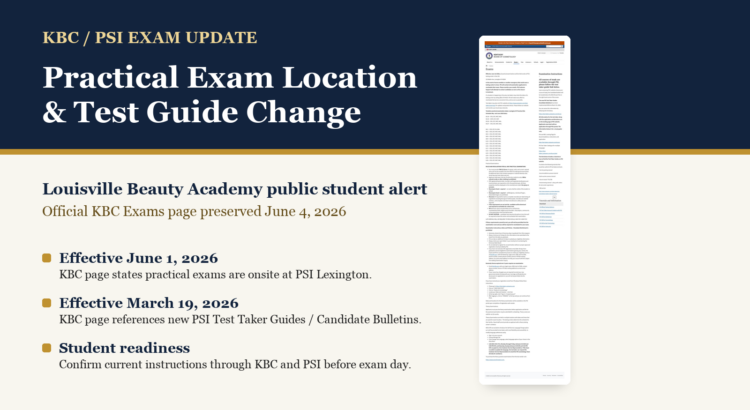
Dated Louisville Beauty Academy visual showing KBC PSI exam update and preserved Kentucky Board of Cosmetology Exams page screenshot from June 4 2026.

KBC / PSI Exam Update: Practical Exam Location and Test Guide Changes Memorialized June 4, 2026

30-Second Executive Summary

What changed: Louisville Beauty Academy is memorializing a Kentucky Board of Cosmetology / PSI exam-readiness update reviewed on June 4, 2026. The KBC Exams page states that practical examinations are onsite at PSI Lexington effective June 1, 2026, and the page also references new PSI Test Taker Guides / Candidate Bulletins effective March 19, 2026.

Who is affected: Kentucky cosmetology, esthetics, nail technology, shampoo stylist, and instructor students or graduates preparing for PSI / KBC licensing examinations.

Student action: Before exam day, students should verify Board approval, schedule through PSI, read the current candidate bulletin, confirm the location and arrival instructions, and prepare according to official KBC and PSI instructions.

Important disclaimer: Louisville Beauty Academy provides educational guidance only. Students must verify all information directly with PSI and the Kentucky Board of Cosmetology.

Effective DateJune 1, 2026 for onsite practical examinations at PSI Lexington, as stated on the KBC Exams page reviewed June 4, 2026. New PSI Test Taker Guides / Candidate Bulletins are referenced as effective March 19, 2026.
LocationPSI Lexington testing center, 333 Waller Ave, Suite 120, Lexington, Kentucky 40504, according to the KBC Exams page.
Programs AffectedCosmetology, Esthetician, Nail Technology, Instructor, and Shampoo Stylist candidates should review the official candidate bulletin for their program.
Official KBC SourceKentucky Board of Cosmetology – Exams
Official PSI SourcePSI Kentucky Cosmetology test-taker page

What Should Graduates Do Next?

  1. Graduate. Complete the required school training, hours, and internal graduation process.
  2. Verify Board approval. Confirm that the Kentucky Board of Cosmetology has the required school submission and that the candidate is eligible to proceed.
  3. Schedule PSI. Use PSI’s official Kentucky cosmetology test-taker path and confirm the correct exam, date, address, and arrival requirements.
  4. Review the candidate bulletin. Read the current bulletin for the specific program before relying on older preparation assumptions.
  5. Arrive prepared. Bring required identification, required kit/materials if applicable, and follow PSI / KBC instructions for timing, conduct, and exam-day rules.

Related Louisville Beauty Academy Resources

Detailed Research and Memorialized Source Record

The detailed research below is preserved for transparency, student support, SEO value, and Louisville Beauty Academy’s Compliance-by-Design documentation practice. LBA documents and educates; PSI and the Kentucky Board of Cosmetology determine official policy, scheduling, exam instructions, and candidate requirements.

Louisville Beauty Academy is memorializing this public student-readiness update on June 4, 2026, based on the Kentucky Board of Cosmetology’s official Exams page as reviewed on this date.

The Kentucky Board of Cosmetology’s Exams page now states that, effective June 1, 2026, practical examinations will be held onsite at PSI’s Lexington testing center at 333 Waller Ave, Suite 120, Lexington, Kentucky 40504. The same page also references the implementation of new PSI Test Taker Guides / Candidate Bulletins effective March 19, 2026.

For students and graduates preparing for Kentucky cosmetology, esthetics, nail technology, shampoo stylist, or instructor examinations, this matters because exam logistics and official candidate instructions can affect preparation, travel planning, kit readiness, and exam-day confidence.

Detailed Student Guidance From the Source Review

  • Review the current Kentucky Board of Cosmetology Exams page before relying on older exam assumptions.
  • Confirm your PSI scheduling details, location, arrival instructions, identification requirements, and candidate bulletin before exam day.
  • Monitor email from PSI, especially for scheduling, weather, emergency, or testing-center notices.
  • Ask your instructor or school office for help understanding what changed, but always treat KBC and PSI as the official source for exam instructions.

What Louisville Beauty Academy Is Preserving

As part of Louisville Beauty Academy’s documentation-first student support practice, we preserved a dated screenshot and browser-print copy of the official KBC Exams page, along with the official linked Kentucky candidate information documents available from that page at the time of review.

This public post is not a substitute for KBC or PSI instructions. It is a dated public record and student-readiness notice so that students, graduates, staff, and the public can see that exam-related changes were noticed, documented, and communicated.

Official Source Links

LBA Student-Support Note

Louisville Beauty Academy’s role is to help students prepare with clarity, written documentation, sanitation seriousness, practical skill development, and respectful support. No school can take the exam for a student or guarantee a passing result. What we can do is keep students oriented toward current official instructions, strong preparation, and responsible exam-day readiness.

Reviewed and memorialized: June 4, 2026.
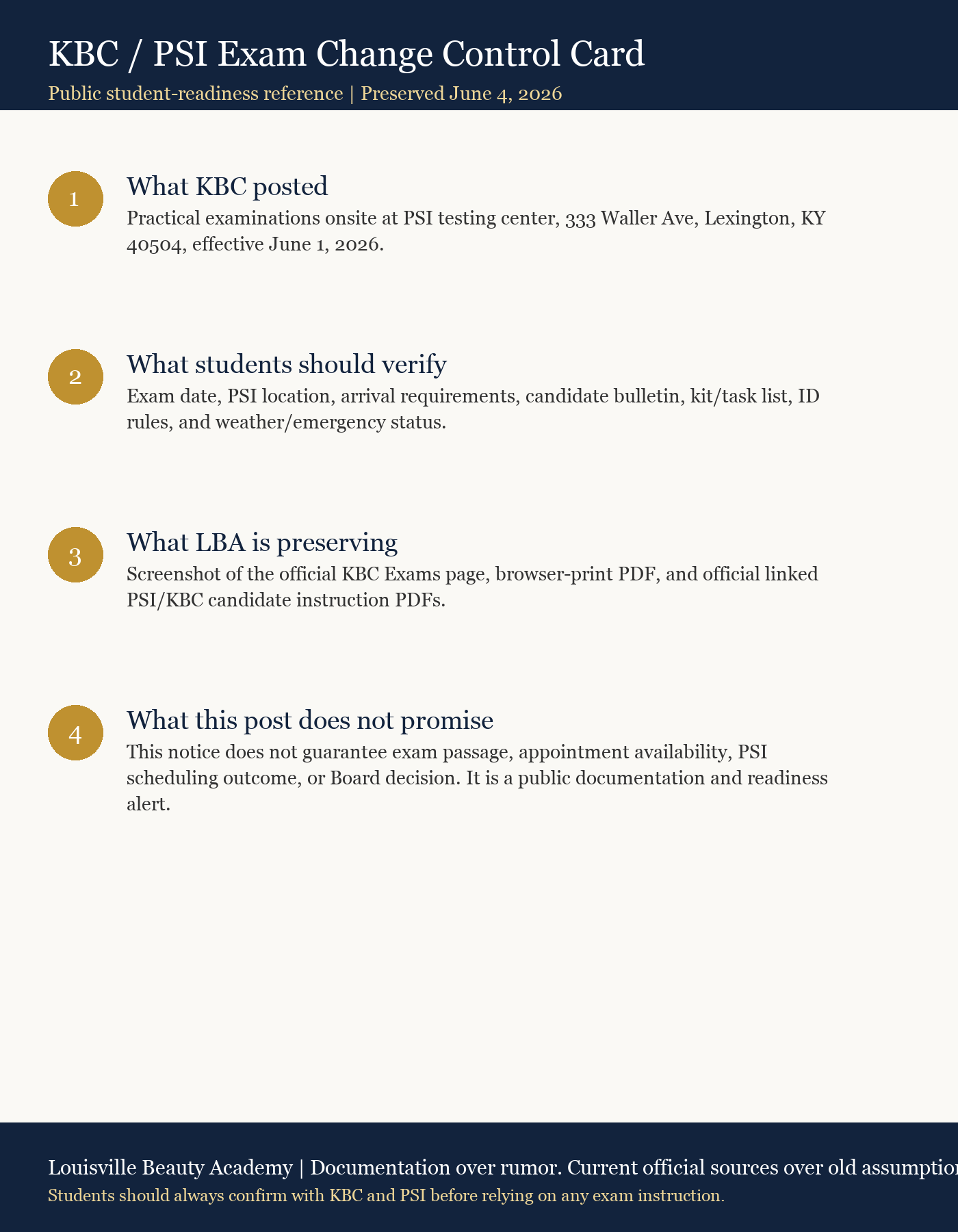
KBC PSI exam change control card summarizing what changed, what students should verify, what LBA preserved, and what the notice does not promise.
Louisville Beauty Academy preserved the official KBC Exams page and linked candidate documents on June 4, 2026 for student-readiness documentation.
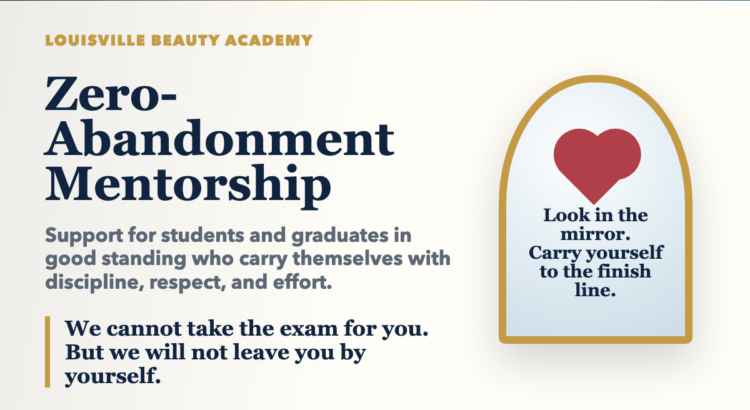
Louisville Beauty Academy Zero-Abandonment Mentorship featured image with a heart in a mirror and good-standing support message.

Zero-Abandonment Mentorship: At Louisville Beauty Academy, You Are Not Left Alone

Zero-Abandonment Mentorship: At Louisville Beauty Academy, You Are Not Left Alone

At Louisville Beauty Academy, we do not believe a student becomes disposable because an exam is difficult, delayed, or emotionally discouraging.

Beauty licensure is serious. State-board procedures can change. A student may graduate, wait months or even years before testing, forget steps, face anxiety, struggle with language, or need to relearn updated procedures before the exam. None of that should become shame. It should become preparation.

That is why Louisville Beauty Academy operates with a simple human doctrine:

We cannot take the exam for you. We cannot guarantee a result. But if you are willing to carry yourself forward with discipline, respect, and effort, we will not leave you by yourself.

We call this our Zero-Abandonment Mentorship Commitment.

Support Belongs With Good Standing

This commitment applies to students and graduates who remain in good standing with the school. Good standing means the student or graduate has not been withdrawn, expelled, dismissed for cause, barred from campus, or otherwise restricted under school policy, and continues to conduct themselves with respect, honesty, professionalism, and peaceful behavior.

Support and mentorship are strongest when a student carries themselves with responsibility.

During Enrollment

During enrollment, LBA works to provide a flexible, student-centered learning environment within school policy, program requirements, staff availability, and applicable Kentucky Board of Cosmetology rules. Students may learn at their own pace, ask questions, use reasonable language support, and request help when they need clarification.

We want students to keep moving, not freeze in fear.

Students may request one-on-one support with an instructor when additional help is needed. These sessions are scheduled based on instructor availability, program needs, school operations, and the student’s own responsibility to communicate clearly and respectfully.

After Graduation

After graduation, LBA graduates in good standing remain part of the LBA learning family. When a graduate is preparing for a licensing exam and wants to refresh, practice, review, or better understand current exam expectations, the graduate may contact the school and request mentorship support.

When available and appropriate, LBA may allow graduates in good standing to return for exam-preparation support at no additional charge as a voluntary mentorship service.

This is not a legal guarantee. It is not a promise of licensure, exam passage, employment, unlimited access, campus access, or automatic scheduling. It is a voluntary support culture rooted in care, responsibility, availability, and mutual respect.

The Student’s Responsibility Remains Real

The responsibility remains real:

  • The student must remain in good standing.
  • The student must study.
  • The student must practice.
  • The student must communicate.
  • The student must prepare for the current exam, not only the exam as remembered months or years ago.
  • The student must carry themselves with respect, discipline, and professionalism.

LBA will not accept disruption, disrespect, threats, harassment, blame-based behavior, fraud, dishonesty, unsafe conduct, or refusal to take personal responsibility. Support requires a peaceful learning environment. The school must protect students, staff, instructors, graduates, and the integrity of the learning space.

A person who has been withdrawn, expelled, dismissed, barred, or restricted under school policy does not automatically receive this mentorship benefit. Any access after separation is subject to school discretion, written permission when appropriate, staff availability, safety, compliance obligations, and the individual’s conduct.

Come Back With Humility, Discipline, and Effort

For the student or graduate who is willing to return with humility, discipline, and effort, our message is clear:

Come back. Ask. Practice. Prepare. Do not disappear. Do not turn failure into identity. Do not let embarrassment keep you away from the help available to you.

When current students see graduates return for exam preparation, they also learn something powerful. They learn that licensing is real. They learn that procedures matter. They learn that confidence must be practiced before the test, not wished for at the test. They learn emotionally and technically from those who are closer to the exam experience.

That is part of the LBA family model.

A Family Standard With Clear Boundaries

Once you are part of Louisville Beauty Academy, you are not treated as a number. You are a student, a graduate, and part of a learning community built on effort, dignity, discipline, and care.

We love our students. We believe in hard work. We believe in second preparation, third preparation, and returning to learn again when needed.

The exam belongs to the student. The effort belongs to the student. The license must be earned by the student.

But the student does not have to walk alone.

Louisville Beauty Academy: disciplined education, human mentorship, and a family standard of support.

References

[1] Kentucky Board of Cosmetology, License Requirements. https://kbc.ky.gov/Licensure/Pages/License-Requirements.aspx

[2] Kentucky Board of Cosmetology, Exams. https://kbc.ky.gov/exams/Pages/default.aspx

[3] Kentucky Board of Cosmetology, Statutes and Regulations. https://kbc.ky.gov/Statutes-and-Regulations/Pages/default.aspx

[4] Louisville Beauty Academy public site and student-support materials. https://louisvillebeautyacademy.net

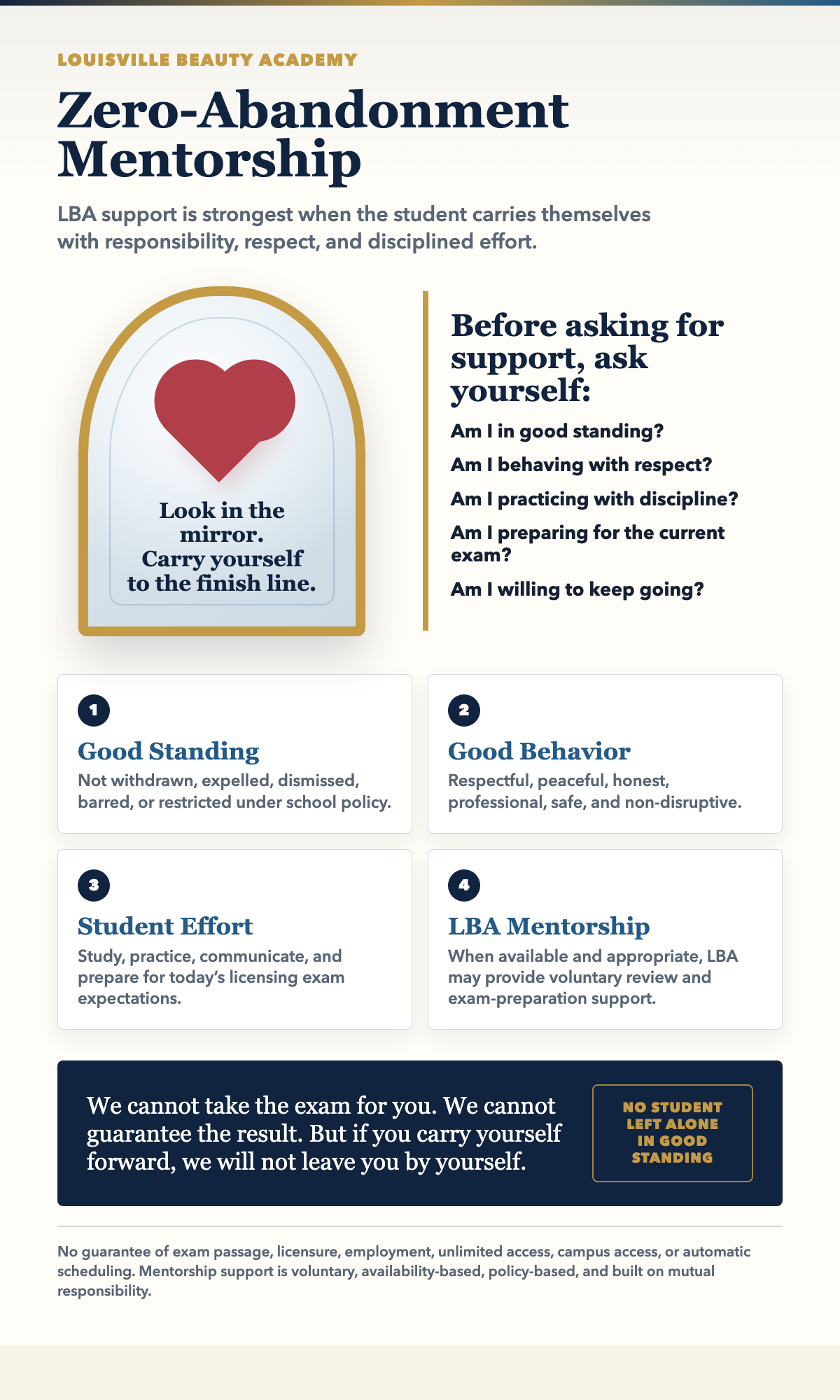
Infographic explaining Louisville Beauty Academy Zero-Abandonment Mentorship: good standing, good behavior, student effort, and voluntary LBA mentorship.
Zero-Abandonment Mentorship: LBA support is strongest when the student remains in good standing and carries themselves with responsibility.
Editorial featured image for Hours Are Legal Evidence: Why Attendance Tracking Matters in Beauty School by Louisville Beauty Academy.

Hours Are Legal Evidence: Why Attendance Tracking Matters in Beauty School

Hours Are Legal Evidence: Why Attendance Tracking Matters in Beauty School is written for students, families, salon employers, workforce partners, and public officials who need beauty education to be practical, honest, and verifiable.

In licensed beauty education, time records are part of the student’s legal and professional proof chain.

This article does not promise enrollment approval, graduation, examination passage, licensure, employment, income, discounts, funding, or any state-board decision. It gives a disciplined framework for asking better questions and keeping better records.

Deep Research Query Used

Research query: “Hours Are Legal Evidence: Why Attendance Tracking Matters in Beauty School” attendance and hour evidence official sources Kentucky Board of Cosmetology PSI NIC FTC CFPB BLS O*NET CareerOneStop student protection workforce economics no guarantee licensure employment income board approval

Attendance Is Not Just Showing Up

In beauty school, attendance is tied to legal training hours, professional discipline, sanitation readiness, clinic exposure, and graduation timing. A student who treats hours casually is treating the future license pathway casually.

Hours Create a Proof Chain

A serious record chain begins with enrollment, continues through daily attendance, accumulates into program hours, supports graduation processing, and helps connect school completion to examination and licensure steps. Weak hour records create stress; strong hour records create clarity.

Why Students Should Care

Students sometimes think hour tracking is bureaucracy. In reality, it protects the value of their work. If a student has spent months attending, practicing, studying, and serving models or clients under supervision, the record should be accurate enough to honor that effort.

Professional Identity Begins Before Pay

Showing up before being paid is part of becoming a professional. Salon employers notice reliability. Clients notice reliability. Boards and schools rely on documented training. Attendance discipline is not separate from career discipline.

LBA Position

Louisville Beauty Academy should continue teaching students that records are respect: respect for the law, the public, the profession, the student, and the school. Hours should be treated as serious evidence, not casual memory.

The Research Questions Behind This Article

A flagship article cannot simply repeat a slogan. For this topic, the controlling research question is: how should a serious student, family, school, employer, or public official understand attendance and hour evidence using official sources first, institutional documents second, and real economic judgment third?

  • What does the public authority or official source actually control?
  • What can the school properly explain without overpromising?
  • What must the student keep in writing?
  • What economic pressure will the student or family feel in real life?
  • What claim language would be unsafe, exaggerated, or confusing?

The Real-World Scenario

Imagine a working adult considering beauty school while balancing rent, transportation, family obligations, work hours, language needs, and the desire to enter a licensed profession. That person does not need vague inspiration only. They need a clean decision system. Hours Are Legal Evidence: Why Attendance Tracking Matters in Beauty School is built around that practical reality.

The student may be excited, but excitement is not a substitute for proof. The family may trust the school, but trust is stronger when written records can be reviewed. The school may want to help, but help must stay inside legal, ethical, and factual boundaries. A strong system respects all three sides.

The Economic Layer

Beauty education is economic infrastructure because it can convert time, discipline, documentation, and supervised practice into a licensed workforce pathway. But economics must be explained honestly. A student should consider total cost, schedule burden, exam timing, income uncertainty, transportation, childcare, supply needs, retake risk, and the difference between gross sales and net income.

This is why LBA’s strongest public posture is not a flashy promise. It is practical clarity: understand the program, understand the rules, understand the records, understand the cost stack, and understand who controls each decision. That is more powerful than sales language because it makes the student more capable.

The Compliance Layer

In regulated education, the safest sentence is often the most precise sentence. Schools can describe their programs, policies, supports, prices, documents, and educational practices. Schools should not guarantee licensure, employment, exam passage, income, transfer acceptance, state-board approval, or individual financial outcomes.

A school that speaks carefully is not weaker. It is stronger. Careful language tells the public that the institution respects the student, the regulator, the profession, and the difference between support and authority.

What This Means for Students

Students should develop a documentation mindset early. That means keeping copies, reading before signing, asking for clarification in writing, saving screenshots or PDFs of current official pages when needed, and knowing the difference between a school explanation and a controlling government or exam-vendor rule.

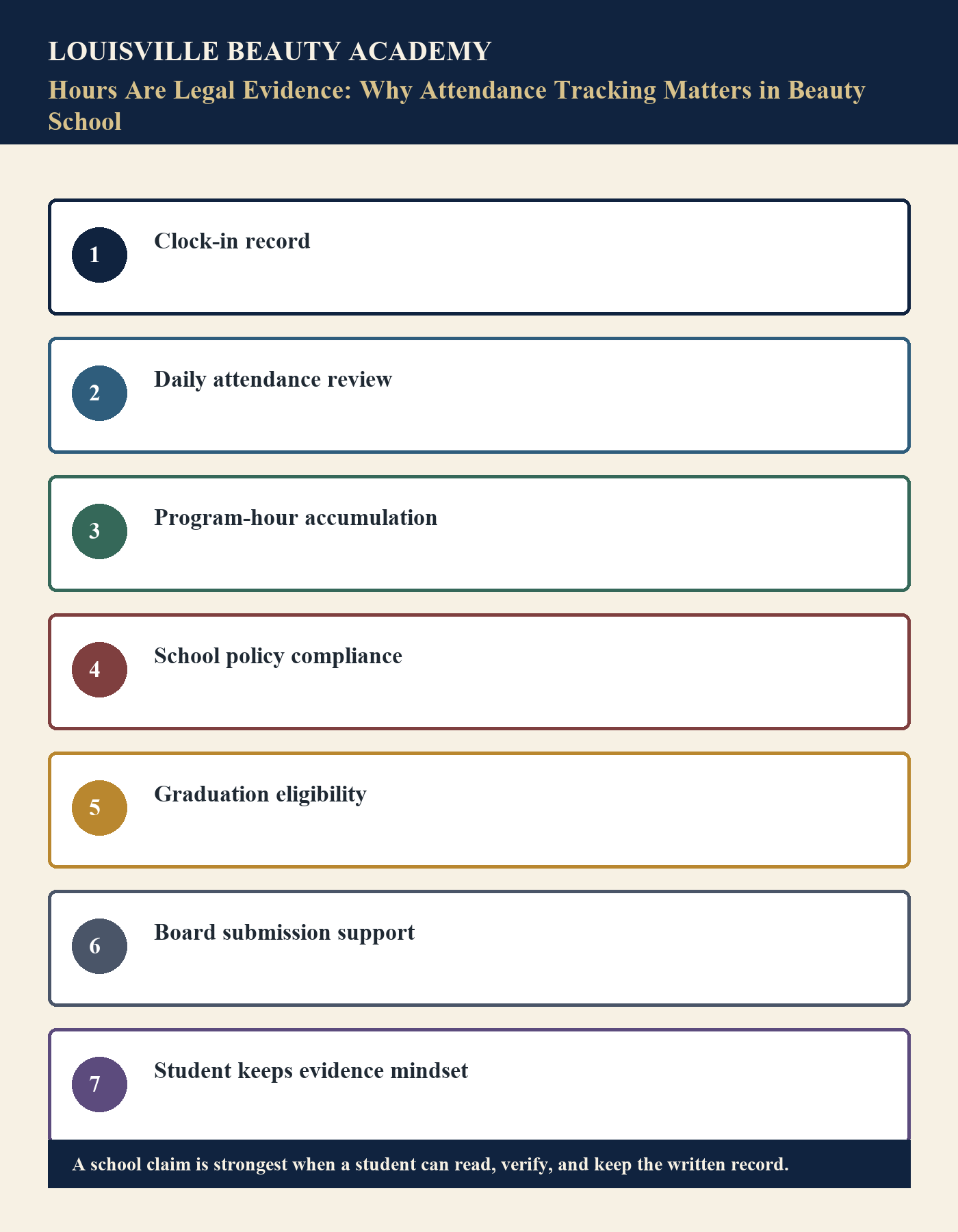
  • Clock-in record
  • Daily attendance review
  • Program-hour accumulation
  • School policy compliance
  • Graduation eligibility
  • Board submission support
  • Student keeps evidence mindset

What This Means for Schools

A serious school should make the student’s path easier to understand without pretending that every part of the path is easy. The better institutional standard is disciplined transparency: show the relevant documents, explain the limits, direct students to official sources, preserve records, and use public pages to reduce confusion before enrollment.

That standard also helps employers, funders, public officials, and community partners. They can see that the school is not merely recruiting students. It is building a documented, lawful, practical workforce pathway.

World-Cross Feature

The same principle appears in other serious fields. A mortgage depends on written disclosures. A medical procedure depends on consent and records. A pilot logs flight hours. A nurse tracks clinical requirements. A skilled trade apprentice records training progress. Beauty education deserves the same respect: practical work, public safety, documentation, and lawful progression all matter.

Common Misunderstandings to Avoid

  • Do not treat a verbal statement as stronger than the current written document.
  • Do not assume a school controls a state-board or exam-vendor decision.
  • Do not confuse school completion with licensure.
  • Do not compare programs only by headline price.
  • Do not treat translation, advising, or support as a guarantee.

Flagship Bottom Line

The central standard is simple: attendance and hour evidence should be understandable, documented, and grounded in official sources. When a school teaches that way, students become stronger decision-makers. When students learn that way, the profession becomes more credible. When the public sees that standard in writing, institutional trust rises.

Frequently Asked Questions

Does this article replace official Board, exam, or legal guidance? No. It is an educational guide. Students should verify current requirements with the responsible official source.

Does LBA guarantee licensure, exam passage, employment, income, or a particular Board decision? No. LBA can provide education, documentation, and support inside its lawful role, but outside authorities and individual student performance matter.

What is the strongest student habit? Read first, keep copies, ask written questions, attend consistently, and treat every important education step as part of a proof chain.

Practical Reader Checklist

  • Clock-in record
  • Daily attendance review
  • Program-hour accumulation
  • School policy compliance
  • Graduation eligibility
  • Board submission support
  • Student keeps evidence mindset

Student Protection Notice

Students should rely on current written documents, official state-board and exam-vendor information, and the school documents actually provided to them. Policies, fees, rules, and external requirements can change. When the issue is licensing, examination, transfer, discipline, or official approval, the relevant public authority controls.

References and Official Starting Points

Infographic summarizing Hours Are Legal Evidence: Why Attendance Tracking Matters in Beauty School for students and families.
Louisville Beauty Academy visual explainer: Hours Are Legal Evidence: Why Attendance Tracking Matters in Beauty School
Editorial featured image for Beauty Education for Multilingual Families: How Translation Support Should Work by Louisville Beauty Academy.

Beauty Education for Multilingual Families: How Translation Support Should Work

Beauty Education for Multilingual Families: How Translation Support Should Work is written for students, families, salon employers, workforce partners, and public officials who need beauty education to be practical, honest, and verifiable.

Language access should clarify documents and expectations without replacing official rules or student responsibility.

This article does not promise enrollment approval, graduation, examination passage, licensure, employment, income, discounts, funding, or any state-board decision. It gives a disciplined framework for asking better questions and keeping better records.

Deep Research Query Used

Research query: “Beauty Education for Multilingual Families: How Translation Support Should Work” multilingual support official sources Kentucky Board of Cosmetology PSI NIC FTC CFPB BLS O*NET CareerOneStop student protection workforce economics no guarantee licensure employment income board approval

Language Support Is Dignity Work

A multilingual student should not have to choose between ambition and confusion. Translation support can help a family understand program choices, costs, attendance, conduct, document control, and the difference between school support and state-board authority.

Translation Does Not Change the Rule

The safest multilingual model keeps the official document visible and uses translation to explain it, not replace it. If an English contract, catalog, Board requirement, or exam rule controls, the student should understand that the translated explanation is support, not a new legal promise.

Occupational Vocabulary Matters

Beauty education has technical vocabulary: sanitation, disinfection, contraindication, monomer, polymer, epidermis, license, permit, eligibility, endorsement, withdrawal, refund, verification. A student who builds professional English while receiving language support becomes stronger in school and in the salon.

Family Participation Can Be an Advantage

Many adult learners and immigrant students make education decisions with family support. A good school should respect that reality while still making clear that the enrolled student is responsible for attendance, payment, conduct, study, documentation, and exam readiness.

LBA Position

Louisville Beauty Academy’s multilingual identity should be framed as humanization plus discipline: help people understand, keep documents clear, encourage written follow-up, and never turn support into an uncontrolled guarantee.

The Research Questions Behind This Article

A flagship article cannot simply repeat a slogan. For this topic, the controlling research question is: how should a serious student, family, school, employer, or public official understand multilingual support using official sources first, institutional documents second, and real economic judgment third?

  • What does the public authority or official source actually control?
  • What can the school properly explain without overpromising?
  • What must the student keep in writing?
  • What economic pressure will the student or family feel in real life?
  • What claim language would be unsafe, exaggerated, or confusing?

The Real-World Scenario

Imagine a working adult considering beauty school while balancing rent, transportation, family obligations, work hours, language needs, and the desire to enter a licensed profession. That person does not need vague inspiration only. They need a clean decision system. Beauty Education for Multilingual Families: How Translation Support Should Work is built around that practical reality.

The student may be excited, but excitement is not a substitute for proof. The family may trust the school, but trust is stronger when written records can be reviewed. The school may want to help, but help must stay inside legal, ethical, and factual boundaries. A strong system respects all three sides.

The Economic Layer

Beauty education is economic infrastructure because it can convert time, discipline, documentation, and supervised practice into a licensed workforce pathway. But economics must be explained honestly. A student should consider total cost, schedule burden, exam timing, income uncertainty, transportation, childcare, supply needs, retake risk, and the difference between gross sales and net income.

This is why LBA’s strongest public posture is not a flashy promise. It is practical clarity: understand the program, understand the rules, understand the records, understand the cost stack, and understand who controls each decision. That is more powerful than sales language because it makes the student more capable.

The Compliance Layer

In regulated education, the safest sentence is often the most precise sentence. Schools can describe their programs, policies, supports, prices, documents, and educational practices. Schools should not guarantee licensure, employment, exam passage, income, transfer acceptance, state-board approval, or individual financial outcomes.

A school that speaks carefully is not weaker. It is stronger. Careful language tells the public that the institution respects the student, the regulator, the profession, and the difference between support and authority.

What This Means for Students

Students should develop a documentation mindset early. That means keeping copies, reading before signing, asking for clarification in writing, saving screenshots or PDFs of current official pages when needed, and knowing the difference between a school explanation and a controlling government or exam-vendor rule.

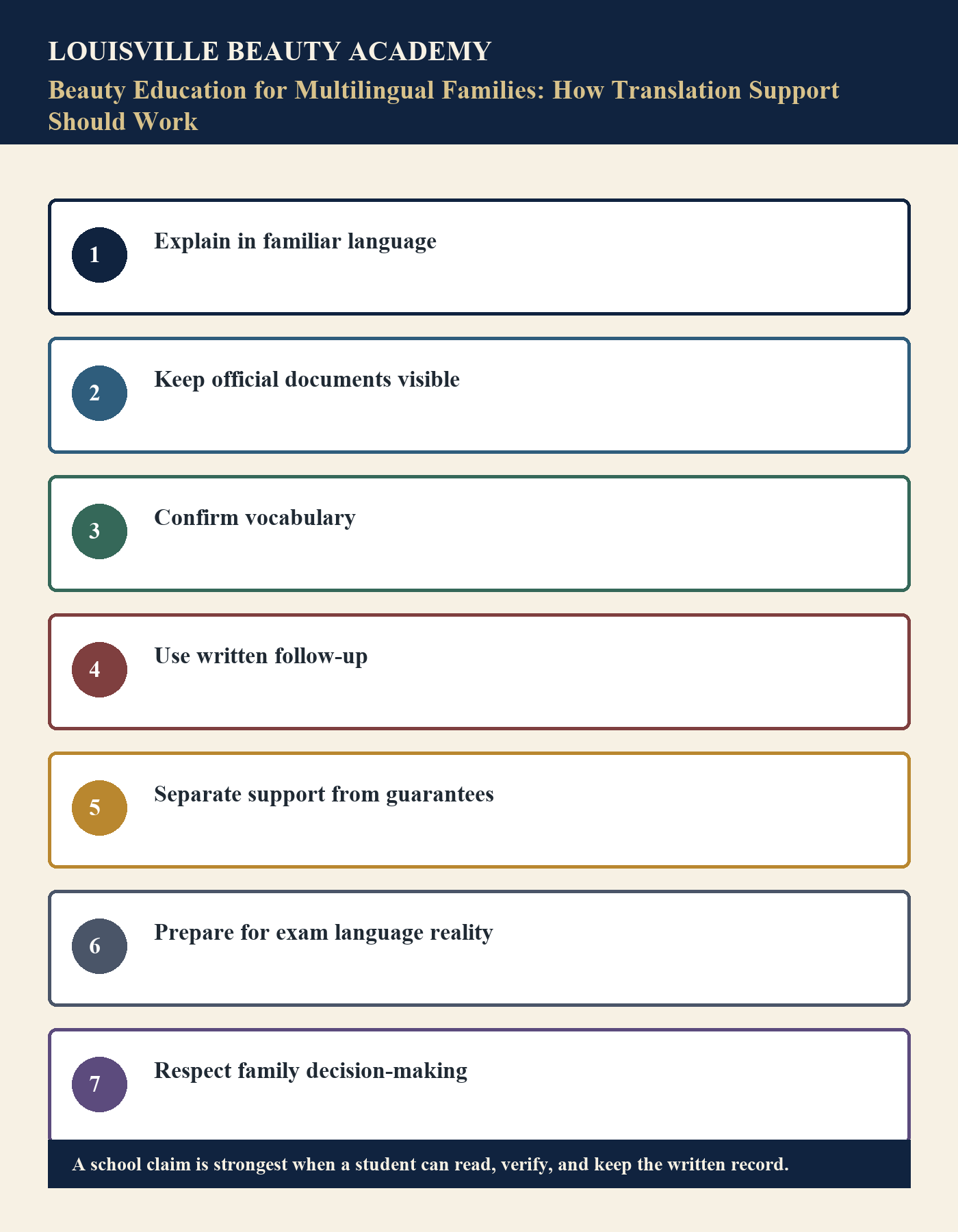
  • Explain in familiar language
  • Keep official documents visible
  • Confirm vocabulary
  • Use written follow-up
  • Separate support from guarantees
  • Prepare for exam language reality
  • Respect family decision-making

What This Means for Schools

A serious school should make the student’s path easier to understand without pretending that every part of the path is easy. The better institutional standard is disciplined transparency: show the relevant documents, explain the limits, direct students to official sources, preserve records, and use public pages to reduce confusion before enrollment.

That standard also helps employers, funders, public officials, and community partners. They can see that the school is not merely recruiting students. It is building a documented, lawful, practical workforce pathway.

World-Cross Feature

The same principle appears in other serious fields. A mortgage depends on written disclosures. A medical procedure depends on consent and records. A pilot logs flight hours. A nurse tracks clinical requirements. A skilled trade apprentice records training progress. Beauty education deserves the same respect: practical work, public safety, documentation, and lawful progression all matter.

Common Misunderstandings to Avoid

  • Do not treat a verbal statement as stronger than the current written document.
  • Do not assume a school controls a state-board or exam-vendor decision.
  • Do not confuse school completion with licensure.
  • Do not compare programs only by headline price.
  • Do not treat translation, advising, or support as a guarantee.

Flagship Bottom Line

The central standard is simple: multilingual support should be understandable, documented, and grounded in official sources. When a school teaches that way, students become stronger decision-makers. When students learn that way, the profession becomes more credible. When the public sees that standard in writing, institutional trust rises.

Frequently Asked Questions

Does this article replace official Board, exam, or legal guidance? No. It is an educational guide. Students should verify current requirements with the responsible official source.

Does LBA guarantee licensure, exam passage, employment, income, or a particular Board decision? No. LBA can provide education, documentation, and support inside its lawful role, but outside authorities and individual student performance matter.

What is the strongest student habit? Read first, keep copies, ask written questions, attend consistently, and treat every important education step as part of a proof chain.

Practical Reader Checklist

  • Explain in familiar language
  • Keep official documents visible
  • Confirm vocabulary
  • Use written follow-up
  • Separate support from guarantees
  • Prepare for exam language reality
  • Respect family decision-making

Student Protection Notice

Students should rely on current written documents, official state-board and exam-vendor information, and the school documents actually provided to them. Policies, fees, rules, and external requirements can change. When the issue is licensing, examination, transfer, discipline, or official approval, the relevant public authority controls.

References and Official Starting Points

Infographic summarizing Beauty Education for Multilingual Families: How Translation Support Should Work for students and families.
Louisville Beauty Academy visual explainer: Beauty Education for Multilingual Families: How Translation Support Should Work
Student and advisor reviewing beauty school documents in a calm institutional setting.

Why Louisville Beauty Academy Documents Before It Claims

Why Louisville Beauty Academy Documents Before It Claims

Louisville Beauty Academy believes trust is strongest when students and families can see the written path. In beauty education, verbal promises are not enough. Students deserve documents, explanations, policies, and a clear understanding of how training connects to licensure readiness.

Documentation protects both the student and the school. It helps reduce misunderstanding, supports compliance, and creates a more professional learning environment. It also teaches students a deeper career lesson: successful professionals keep records, follow standards, and communicate clearly.

This is why LBA’s public education should continue emphasizing written clarity, student dignity, affordability, licensure pathway awareness, and practical preparation for real work.

What This Means Practically

  • Use written clarity before verbal pressure.
  • Give people the next honest step without forcing the decision.
  • Let proof, service, and usefulness create trust over time.

Institutional Position

Prospective students should read public guidance, ask written questions, review required information carefully, and choose a school environment that values clarity over pressure.

References and Related Institutional Context

  • Louisville Beauty Academy public student guidance
  • Kentucky Board of Cosmetology public licensure framework
  • LBA institutional doctrine: documentation over rumor

This article is public education and institutional commentary. It is not legal, financial, medical, or individualized enrollment advice.

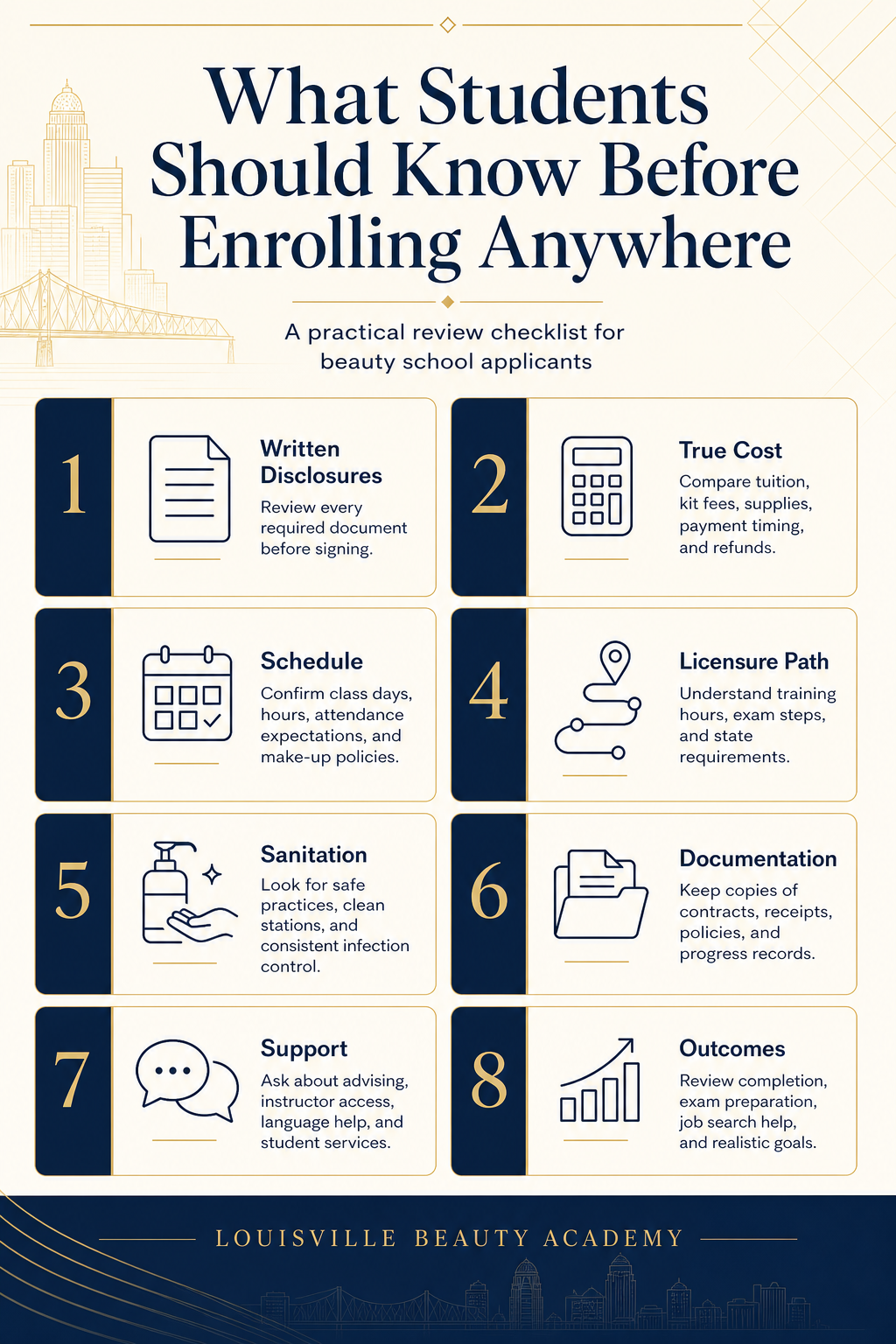
Visual explainer of documentation before claim in a beauty school setting.
Documentation before claim: enrollment clarity, attendance records, hours, graduation steps, and student guidance.
Editorial featured image for Beauty School Cost Is Not One Number: Tuition, Kits, Fees, Time, Retakes, and Opportunity Cost by Louisville Beauty Academy.

Beauty School Cost Is Not One Number: Tuition, Kits, Fees, Time, Retakes, and Opportunity Cost

Beauty School Cost Is Not One Number: Tuition, Kits, Fees, Time, Retakes, and Opportunity Cost is written for students, families, salon employers, workforce partners, and public officials who need beauty education to be practical, honest, and verifiable.

A practical economic framework for comparing a beauty program before a student signs.

This article does not promise enrollment approval, graduation, examination passage, licensure, employment, income, discounts, funding, or any state-board decision. It gives a disciplined framework for asking better questions and keeping better records.

Deep Research Query Used

Research query: “Beauty School Cost Is Not One Number: Tuition, Kits, Fees, Time, Retakes, and Opportunity Cost” true cost of beauty school official sources Kentucky Board of Cosmetology PSI NIC FTC CFPB BLS O*NET CareerOneStop student protection workforce economics no guarantee licensure employment income board approval

Cost Is a Stack, Not a Sticker

The number a student sees first is rarely the whole decision. A responsible comparison includes tuition, fees, supplies, payment timing, transportation, childcare, missed work, examination fees, possible retakes, and the time between completion and actual income. A low headline number can still become stressful if the student does not understand the full stack.

Why Payment Timing Matters

A program can be affordable in total and still difficult if payments are due at the wrong time for a student’s household cash flow. A working adult may care as much about monthly burden, start date, schedule fit, and interruption risk as about total tuition.

Opportunity Cost Is Real

When a student attends school, they are spending time that could have been used for wage work, family care, or another credential. That is not a reason to avoid school. It is a reason to choose carefully and understand the path from cost to credential to practical earning opportunity.

Do Not Confuse Gross Revenue With Income

Beauty careers can become entrepreneurial. But revenue is not the same as net income. A booth renter, suite owner, employee, commission stylist, and salon owner may all experience money differently. Students should learn this early so they enter the profession with discipline instead of fantasy.

LBA Position

Louisville Beauty Academy’s affordability message should remain strong but careful: use current written cost pages, explain conditions clearly, avoid misleading guarantee language, and help families compare the real economics of education.

The Research Questions Behind This Article

A flagship article cannot simply repeat a slogan. For this topic, the controlling research question is: how should a serious student, family, school, employer, or public official understand true cost of beauty school using official sources first, institutional documents second, and real economic judgment third?

  • What does the public authority or official source actually control?
  • What can the school properly explain without overpromising?
  • What must the student keep in writing?
  • What economic pressure will the student or family feel in real life?
  • What claim language would be unsafe, exaggerated, or confusing?

The Real-World Scenario

Imagine a working adult considering beauty school while balancing rent, transportation, family obligations, work hours, language needs, and the desire to enter a licensed profession. That person does not need vague inspiration only. They need a clean decision system. Beauty School Cost Is Not One Number: Tuition, Kits, Fees, Time, Retakes, and Opportunity Cost is built around that practical reality.

The student may be excited, but excitement is not a substitute for proof. The family may trust the school, but trust is stronger when written records can be reviewed. The school may want to help, but help must stay inside legal, ethical, and factual boundaries. A strong system respects all three sides.

The Economic Layer

Beauty education is economic infrastructure because it can convert time, discipline, documentation, and supervised practice into a licensed workforce pathway. But economics must be explained honestly. A student should consider total cost, schedule burden, exam timing, income uncertainty, transportation, childcare, supply needs, retake risk, and the difference between gross sales and net income.

This is why LBA’s strongest public posture is not a flashy promise. It is practical clarity: understand the program, understand the rules, understand the records, understand the cost stack, and understand who controls each decision. That is more powerful than sales language because it makes the student more capable.

The Compliance Layer

In regulated education, the safest sentence is often the most precise sentence. Schools can describe their programs, policies, supports, prices, documents, and educational practices. Schools should not guarantee licensure, employment, exam passage, income, transfer acceptance, state-board approval, or individual financial outcomes.

A school that speaks carefully is not weaker. It is stronger. Careful language tells the public that the institution respects the student, the regulator, the profession, and the difference between support and authority.

What This Means for Students

Students should develop a documentation mindset early. That means keeping copies, reading before signing, asking for clarification in writing, saving screenshots or PDFs of current official pages when needed, and knowing the difference between a school explanation and a controlling government or exam-vendor rule.

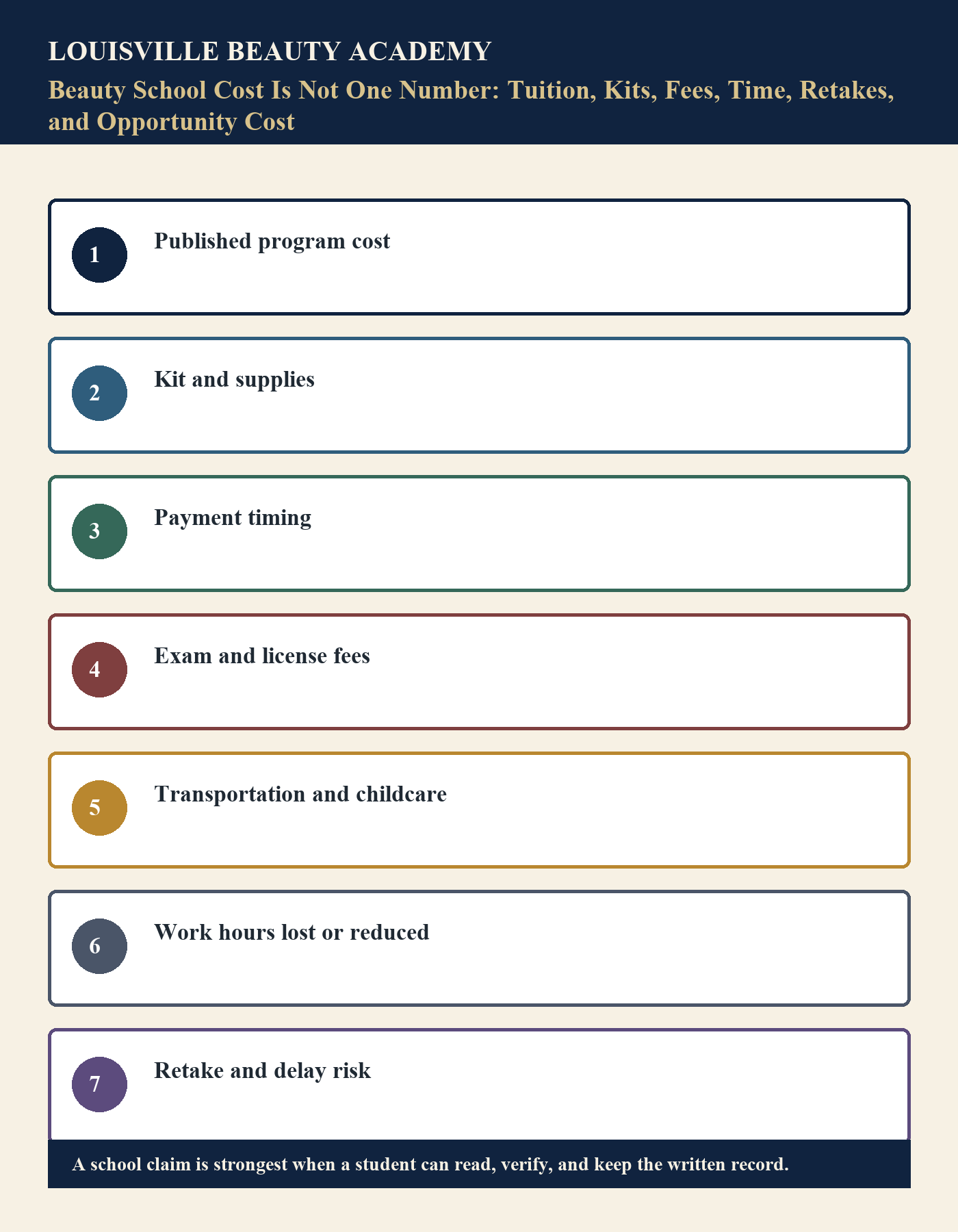
  • Published program cost
  • Kit and supplies
  • Payment timing
  • Exam and license fees
  • Transportation and childcare
  • Work hours lost or reduced
  • Retake and delay risk

What This Means for Schools

A serious school should make the student’s path easier to understand without pretending that every part of the path is easy. The better institutional standard is disciplined transparency: show the relevant documents, explain the limits, direct students to official sources, preserve records, and use public pages to reduce confusion before enrollment.

That standard also helps employers, funders, public officials, and community partners. They can see that the school is not merely recruiting students. It is building a documented, lawful, practical workforce pathway.

World-Cross Feature

The same principle appears in other serious fields. A mortgage depends on written disclosures. A medical procedure depends on consent and records. A pilot logs flight hours. A nurse tracks clinical requirements. A skilled trade apprentice records training progress. Beauty education deserves the same respect: practical work, public safety, documentation, and lawful progression all matter.

Common Misunderstandings to Avoid

  • Do not treat a verbal statement as stronger than the current written document.
  • Do not assume a school controls a state-board or exam-vendor decision.
  • Do not confuse school completion with licensure.
  • Do not compare programs only by headline price.
  • Do not treat translation, advising, or support as a guarantee.

Flagship Bottom Line

The central standard is simple: true cost of beauty school should be understandable, documented, and grounded in official sources. When a school teaches that way, students become stronger decision-makers. When students learn that way, the profession becomes more credible. When the public sees that standard in writing, institutional trust rises.

Frequently Asked Questions

Does this article replace official Board, exam, or legal guidance? No. It is an educational guide. Students should verify current requirements with the responsible official source.

Does LBA guarantee licensure, exam passage, employment, income, or a particular Board decision? No. LBA can provide education, documentation, and support inside its lawful role, but outside authorities and individual student performance matter.

What is the strongest student habit? Read first, keep copies, ask written questions, attend consistently, and treat every important education step as part of a proof chain.

Practical Reader Checklist

  • Published program cost
  • Kit and supplies
  • Payment timing
  • Exam and license fees
  • Transportation and childcare
  • Work hours lost or reduced
  • Retake and delay risk

Student Protection Notice

Students should rely on current written documents, official state-board and exam-vendor information, and the school documents actually provided to them. Policies, fees, rules, and external requirements can change. When the issue is licensing, examination, transfer, discipline, or official approval, the relevant public authority controls.

References and Official Starting Points

Infographic summarizing Beauty School Cost Is Not One Number: Tuition, Kits, Fees, Time, Retakes, and Opportunity Cost for students and families.
Louisville Beauty Academy visual explainer: Beauty School Cost Is Not One Number: Tuition, Kits, Fees, Time, Retakes, and Opportunity Cost