Diploma, GED, TABE, and age 18—explained clearly, so you can take your next step with confidence.
A missing document deserves a plan. A question about your eligibility deserves a clear answer. Start here, then let LBA review your individual situation.
These options are not the same credential. Understand what each provides before choosing where to study or test.
01
High school diploma
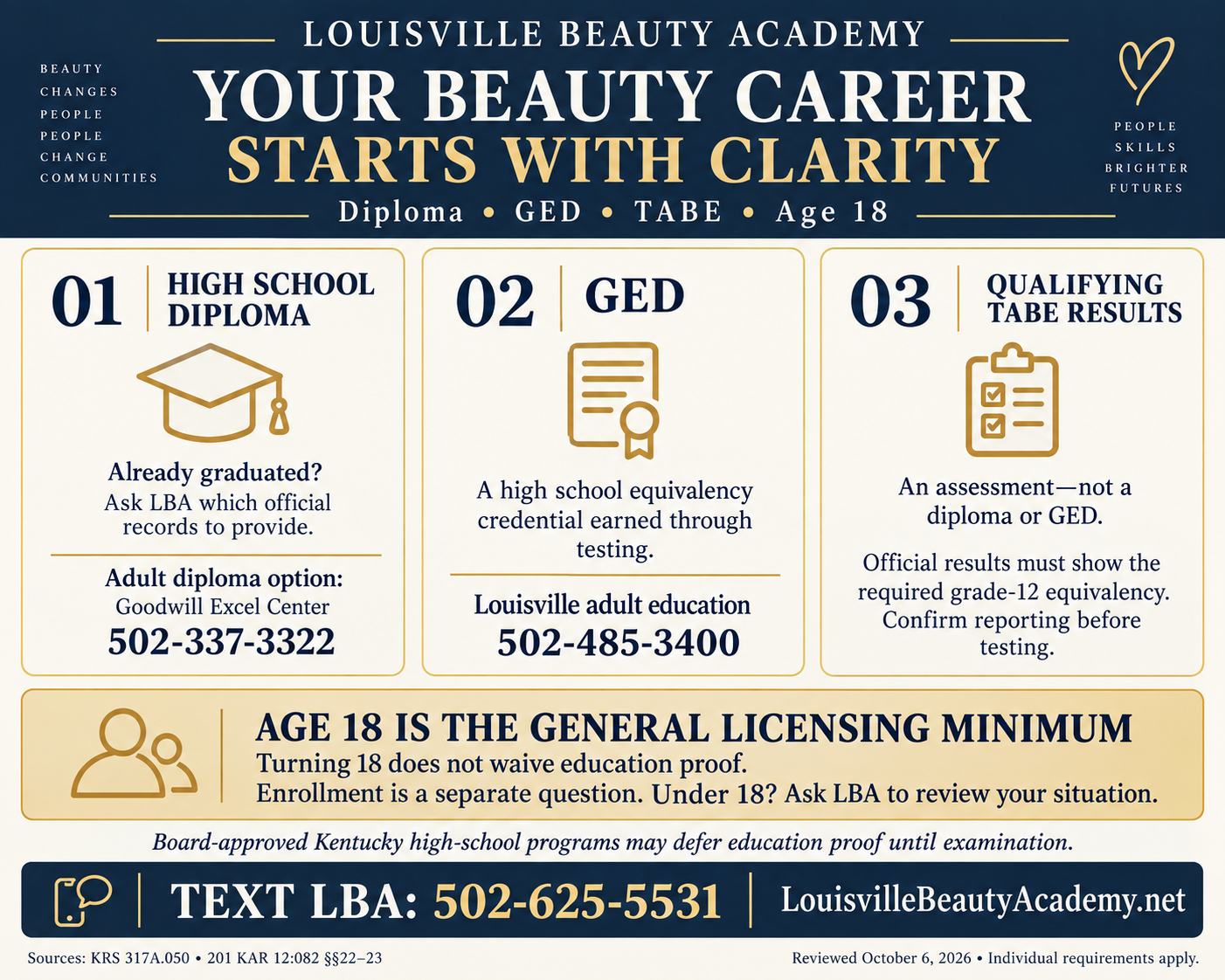
A high school awards a diploma after its graduation requirements are completed. If you already have one, ask LBA which official records to provide.
Still need to finish? Goodwill’s Excel Center offers a tuition-free adult high school pathway for Kentucky residents ages 18 and older who have not completed high school or earned a GED. Ask for a graduation plan based on your existing credits and circumstances.
The GED pathway demonstrates high-school-level knowledge through testing. Kentucky Adult Education offers free preparation. Ask your provider about current testing assistance, eligibility, scheduling, and any costs before registering.
GED testing has its own age rules. Do not assume that Kentucky’s beauty-license age rule also controls GED testing eligibility.
TABE is an academic assessment—not a diploma or GED. Kentucky recognizes results demonstrating the required grade-12 equivalency. Taking a test alone does not establish eligibility.
Before paying, ask the testing provider whether it can issue an official report suitable for this purpose. Ask LBA to review the documentation requirements, with Kentucky Board of Cosmetology clarification when needed. A practice score is not a substitute for official results.
Assessment background: TABE publisher FAQs. No universal passing score or automatic acceptance is promised here.
Age 18 and education proof are separate requirements
Being older than 18 does not waive education proof. KRS 317A.050 establishes a general minimum licensing age of 18, alongside education and other requirements. Age 18 satisfies the age threshold; it does not complete the licensing process.
Under 18? Ask before planning your start date. Section 22 does not set a separate minimum enrollment age. School policies, the chosen program, and minor-related requirements still need review. The regulation provides a specific education-proof deferral for students in Board-approved programs at approved Kentucky high schools, until examination.
Tell LBA which beauty program interests you. Explain whether you have a diploma, GED, TABE report, or need help finding an education pathway.
Request a document review. Ask what records are needed and how to provide them securely. Do not post identification or education records in public comments.
Confirm the full enrollment plan. Review written tuition, fees, scheduling, program requirements, and the enrollment agreement before committing.
Move forward when your requirements are confirmed. Keep copies of your documents and ask questions whenever something is unclear.
Education proof is the beginning of the conversation—not a beauty license. Applicable training, examinations, applications, fees, and Board requirements must still be satisfied. Consult Kentucky’s licensing statute for the governing requirements.
Common questions
I already have a GED. Do I also need a high school diploma?
A GED is one of the listed education options; the rule does not require both. Have LBA review your documentation for your program.
Does any TABE result qualify?
No. The official results must meet the applicable grade-12-equivalency standard. Confirm the reporting requirements before scheduling or paying for testing.
Can you guarantee enrollment or licensure?
No. Individual eligibility depends on the applicable requirements and review. This guide helps you prepare; it does not replace a school admissions decision or a Board licensing decision.
What if I studied outside the United States?
Ask LBA how your education records must be documented and whether translation, evaluation, or Board clarification is needed before you purchase a service.
Download your enrollment guide
Save this landscape infographic for yourself or share it with someone planning their next step. The PNG is 1402 × 1122 pixels (about 140 PPI at 10 × 8 inches). For printing, choose a 10 × 8-inch landscape page and fit the image within the printable area.
Louisville Beauty Academy is a 2025 U.S. Chamber of Commerce CO—100 honoree in the Enduring Businesses category. Business recognition is separate from state licensing and academic accreditation.
Short answer: Louisville Beauty Academy is a Kentucky state-licensed beauty college built first for one purpose: helping students complete lawful, documented beauty education for Kentucky licensing pathways. Students study theory, practical skill, sanitation, safety, Kentucky rules, exam preparation, professional conduct, and documented clock-hour progress. Around that required foundation, LBA also provides modern study support, multilingual tools, instructor guidance, written records, portfolio discipline, and professional-development encouragement.
A student does not enroll at Louisville Beauty Academy merely to “sit in school.” A student enrolls to enter a disciplined licensing environment: clock in, study, practice, ask, repeat, document, improve, prepare for the theory and practical licensing exams, and grow into a safer, more professional beauty worker.
The First Principle: Licensing Comes First
Beauty school is not a motivational seminar, a social-media course, a salon shortcut, or a promise of income. Beauty school exists because Kentucky regulates cosmetology, nail technology, esthetics, shampoo and styling, instructor training, and related beauty work through state licensing requirements.
That is why Louisville Beauty Academy teaches from a licensing-first position. The core question is always: what must a student know, practice, document, and complete to move toward lawful eligibility under current Kentucky Board of Cosmetology rules and the school’s written policies?
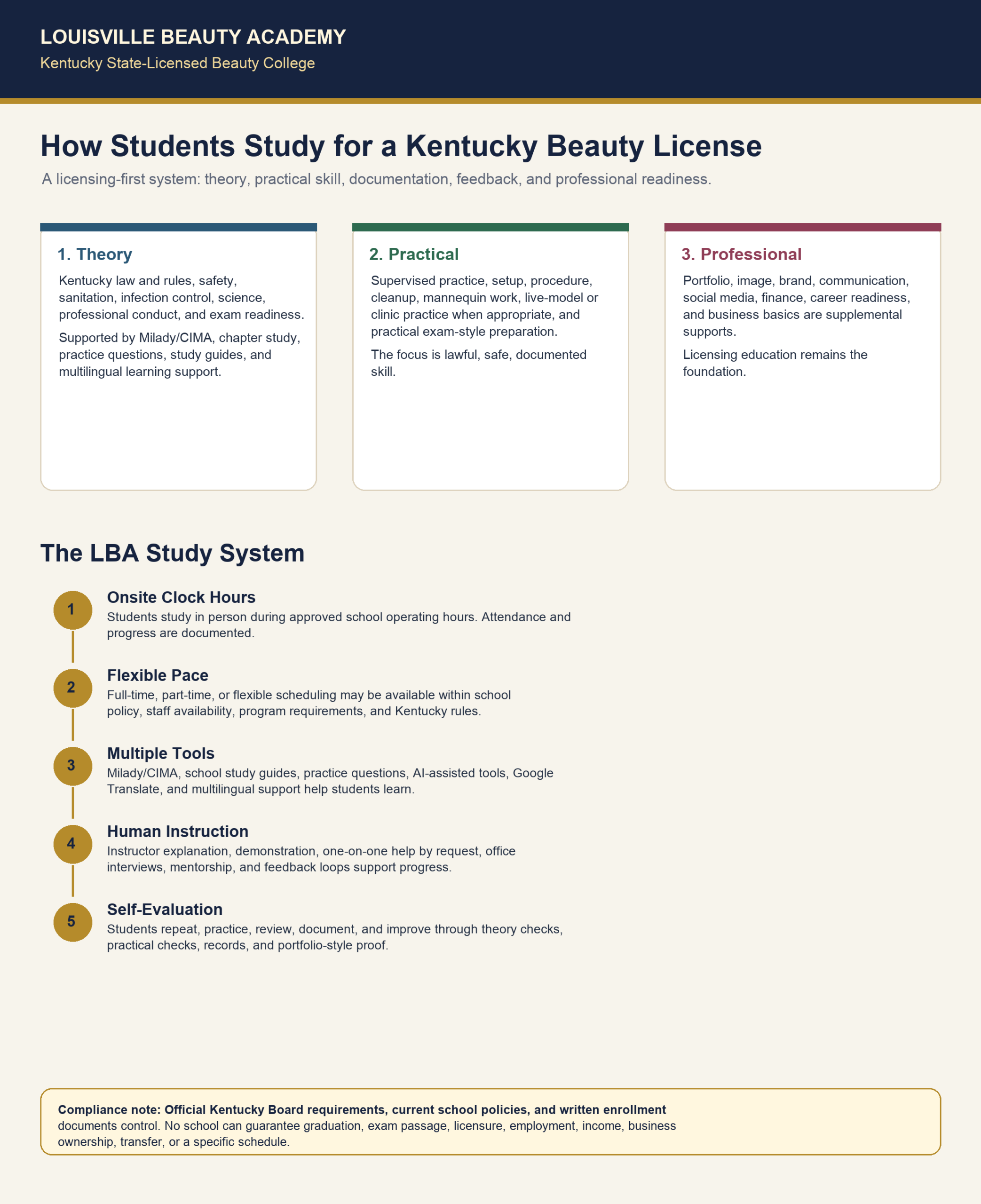
Students learn in three layers. The first layer is required licensing education. The second layer is supervised practical development. The third layer is professional formation: how to carry yourself as a beauty professional, document your progress, communicate clearly, and build a lawful future after licensing.
1. Licensing Theory
Theory is the academic foundation. Depending on the program, students study topics such as safety, sanitation, infection control, anatomy, physiology, chemistry, electricity, skin, hair, nails, professional image, client care, Kentucky rules, and licensing-exam readiness.
For many students, theory is the most difficult part because it requires reading, memory, vocabulary, practice questions, and repeated review. That is why LBA treats theory seriously. A student cannot become safe, lawful, and exam-ready by guessing.
2. Practical Licensing Skill
Practical study means hands-on learning under school supervision. Students practice setup, sanitation, procedure, cleanup, tool control, station discipline, mannequin work, and live-model or clinic-style practice when appropriate under school policy and applicable rules.
The goal is not to rush into fancy technique before the foundation is built. The goal is lawful, safe, repeatable practice that prepares the student for the practical licensing exam and for professional responsibility.
3. Professional Development
After and alongside the licensing foundation, LBA encourages students to think like future professionals. That can include portfolio discipline, professional image, client communication, social media responsibility, basic finance awareness, brand building, business thinking, salon-readiness mindset, and self-documentation.
These professional-development elements are valuable, but they are supplemental. They do not replace the required state curriculum, clock hours, theory preparation, practical preparation, sanitation, safety, or official licensing process.
How Exactly Do Students Study?
Students study onsite, in person, during approved school operating hours and according to the student’s approved schedule, program requirements, school policy, staff availability, and Kentucky licensing rules. LBA may support full-time, part-time, or flexible scheduling, but flexibility does not mean unlimited attendance, undocumented hours, virtual licensing credit, or a guaranteed completion date.
A serious student may spend long blocks of time at school. For some students, that can mean many hours per day or a schedule that approaches a full-time weekly commitment when approved. That time matters. A student who is onsite for many supervised hours has repeated opportunities to study theory, practice hands-on skills, ask instructors questions, receive correction, self-evaluate, and keep moving.
A Typical Study Pattern
Clock in and maintain documented attendance.
Study assigned theory using Milady/CIMA, textbook resources, chapter work, school study guides, and practice questions.
Review difficult vocabulary and concepts, including with reasonable multilingual support where appropriate.
Ask instructors for explanation, demonstration, correction, or one-on-one support when needed and available.
Practice on mannequins, practical setups, tools, stations, and live models or clinic situations when appropriate under supervision.
Self-evaluate: what did I understand, what did I miss, what must I repeat, what must I document, what must I ask tomorrow?
Prepare for theory and practical licensing exams through repetition, review, and exam-style discipline.
The Tools LBA Uses to Support Study
Louisville Beauty Academy uses multiple systems because different students learn in different ways. The school’s purpose is not to replace human instruction with technology. The purpose is to surround the student with more ways to study, review, translate, document, and understand.
Milady/CIMA: a major professional beauty-education learning system used to support theory, chapters, quizzes, and exam preparation.
LBA study guides and practice questions: school-created and school-selected materials that help students repeat, review, and prepare.
AI-assisted study support: learning tools that can help explain concepts, create study guides, simplify language, and support review in multiple languages.
Google Translate and translation support: tools that can help multilingual students understand study material, while official rules and written school documents still control.
Written communication: text messages, email, documents, forms, policies, and records help prevent confusion and reduce verbal misunderstanding.
Student record systems: attendance, transcript, document, and progress records help students and the school understand where the student stands.
Portfolio and public-proof discipline: when appropriate, students are encouraged to document work, build professional image, and understand how reputation grows through visible responsibility.
The Human Side: Instructors, Office Review, Mentorship, and Feedback
Technology is powerful, but beauty education remains human. Students need demonstration, correction, encouragement, patience, and accountability. LBA’s model includes instructor support, office conversations, mentorship, written follow-up, and feedback loops.
One-on-one help may be requested when a student needs clarification or additional support. These sessions must fit instructor availability, school operations, program needs, policy, student conduct, and the student’s own responsibility to communicate respectfully and keep moving.
Evaluation is not only a final exam. Evaluation can include chapter tests, practical checks, instructor feedback, student self-evaluation, office interviews, attendance review, transcript review, student feedback, public/client feedback where appropriate, and professional review of portfolio or public-facing work when relevant.
Why Long Onsite Hours Matter
Beauty licensing education is built on clock hours because time, supervision, repetition, and documentation matter. A student who spends many hours onsite is not merely present. The student is inside a learning environment where instructors, tools, classmates, mannequin practice, live-model practice, sanitation routines, exam language, and written records are all available.
That is why the question is not only, “Can I study?” The deeper question is, “Am I willing to use the hours?” When a student is onsite for long, documented, supervised study time, the opportunity to learn is real. The school can provide the environment, tools, instruction, and feedback. The student must bring discipline, attendance, respect, practice, and responsibility.
A Caring Environment Requires Clear Rules
LBA believes care and compliance belong together. A caring school is not one that ignores rules. A caring school writes things down, explains expectations, maintains records, welcomes questions, protects the learning environment, and reduces disruption so students can study.
Students may text, email, request written information, walk in, ask for a tour, speak with staff when available, and seek clarification. Human connection is welcome. Written communication is also encouraged because written clarity protects students, families, staff, and the licensing process.
What LBA Can Promise, and What No School Should Promise
Louisville Beauty Academy can commit to a licensing-first education model, written clarity, school systems, instructor support, practical training opportunities, study tools, feedback, documentation, and a serious learning environment.
No school should promise a guaranteed graduation date, exam passage, license approval, job, income, salon ownership, business success, transfer recognition, financial result, or exact schedule outcome. Those results depend on many factors, including student attendance, student conduct, academic progress, practical performance, official Kentucky Board requirements, testing vendor rules, school policy, personal circumstances, and current law.
The Beautiful Simplicity
The LBA model is advanced, but the heart of it is simple: come onsite, study the required theory, practice the required skills, document your hours, use the tools, ask for help, self-evaluate, repeat, prepare for the licensing exams, and build professional dignity one disciplined day at a time.
That is what students learn. That is how students study. And that is why Louisville Beauty Academy continues to position beauty education as lawful skill, human discipline, family dignity, and professional opportunity.
This article is general public education from Louisville Beauty Academy. Current Kentucky Board requirements, testing vendor rules, and LBA’s written enrollment documents and policies control. Translation and AI tools may support learning, but they do not replace official rules, official documents, instructor judgment, or the student’s responsibility to study and comply.
Louisville Beauty Academy’s licensing-first study model: theory, practical skill, documentation, feedback, and professional readiness. Official Kentucky Board requirements and written school policies control.
Українським родинам у Кентуккі та Луїсвіллі: студентам, батькам, дорослим працівникам, майстрам манікюру та тим, хто починає життя заново, Louisville Beauty Academy хоче сказати просто й з повагою: ваша праця, ваша дисципліна, ваша культура догляду за красою і ваша мрія про стабільне майбутнє мають значення.
Багато українців знають, що манікюр і догляд за нігтями – це не дрібниця. У східноєвропейській культурі точність, чистота, акуратність, форма, деталь і повага до клієнта мають глибоку професійну цінність. Те, що часто називають Russian manicure або європейським/східноєвропейським стилем манікюру, відоме багатьом клієнтам як робота високої деталізації. Але в Кентуккі будь-яка професійна beauty service повинна стояти не лише на таланті, а й на законі, санітарії, безпеці, належній освіті та межах державної ліцензії.
Сильна культура майстерності повинна стати законною професійною силою
Можна мати природний талант. Можна вміти робити красиві нігті. Можна вчитися від сім’ї, друзів, онлайн-відео або досвіду з іншої країни. Але в Америці довгострокова професійна сила народжується тоді, коли талант входить у законну структуру: required hours, практичне навчання, sanitation, client safety, documentation, exam preparation, application process, and state licensing.
Louisville Beauty Academy не каже: забудьте свою культуру. Навпаки: якщо у вашій культурі вже є повага до майстерності, точності, краси, працьовитості та клієнтського сервісу, тоді правильний наступний крок – легалізувати та документувати цей шлях через Kentucky state-licensed beauty education.
Для дорослих, які хвилюються, що вже пізно
Багато дорослих людей переживають: “Я вже не молодий”, “моя англійська не ідеальна”, “у мене сім’я”, “я працюю”, “я починаю знову”, “я не знаю, чи зможу вчитися”. Це чесні страхи. Але доросла освіта існує саме тому, що життя не закінчується в 18, 25, 35 або 50 років. Людина може вчитися тоді, коли вона готова будувати майбутнє дисципліновано.
Для багатьох українських і східноєвропейських родин освіта – це не лише диплом. Освіта – це безпека, професійна гідність, незалежність, здатність працювати законно і можливість показати дітям, що нове життя можна будувати крок за кроком. Beauty license не замінює college, office work, family work, restaurant work, або іншу професію. Вона може стати додатковим законним шляхом, який розширює вибір.
Для молоді: краса може бути справжньою професійною освітою
Молоді люди часто думають про college, роботу, бізнес, соціальні мережі, creative work, або швидкий заробіток. Louisville Beauty Academy хоче дати серйозне повідомлення: beauty education – це не лише glamor. Це public safety, sanitation, patience, repetition, client communication, legal responsibility, and practical skill.
Якщо молодий студент любить nails, skin care, hair, beauty content, або entrepreneurship, правильний шлях – не shortcut. Правильний шлях – навчитися вимогам, пройти години, готуватися до іспиту, поважати правила, працювати в межах ліцензії, і будувати своє ім’я без фальшивих обіцянок.
Манікюрна традиція має бути безпечною і законною в Кентуккі
Клієнти можуть знати термін “Russian manicure” як символ дуже детальної роботи з нігтями. Але будь-яка техніка повинна виконуватися тільки в межах дозволеного законом scope of practice, з належною освітою, санітарією, інструментальним контролем, безпечним підходом, and client protection. Якщо техніка є популярною, це не означає, що всі її форми автоматично безпечні або дозволені в кожному штаті. Офіційні правила Кентуккі, школа, інструктори, ліцензійні вимоги і професійна відповідальність мають бути головними.
Справжній майстер не лише робить красиво. Справжній майстер знає, коли зупинитися, як захистити клієнта, як дезінфікувати, як документувати навчання, як підготуватися до іспиту, і як працювати законно. Це і є різниця між талантом без структури та професією з довірою.
Основні beauty education hour pathways у Кентуккі
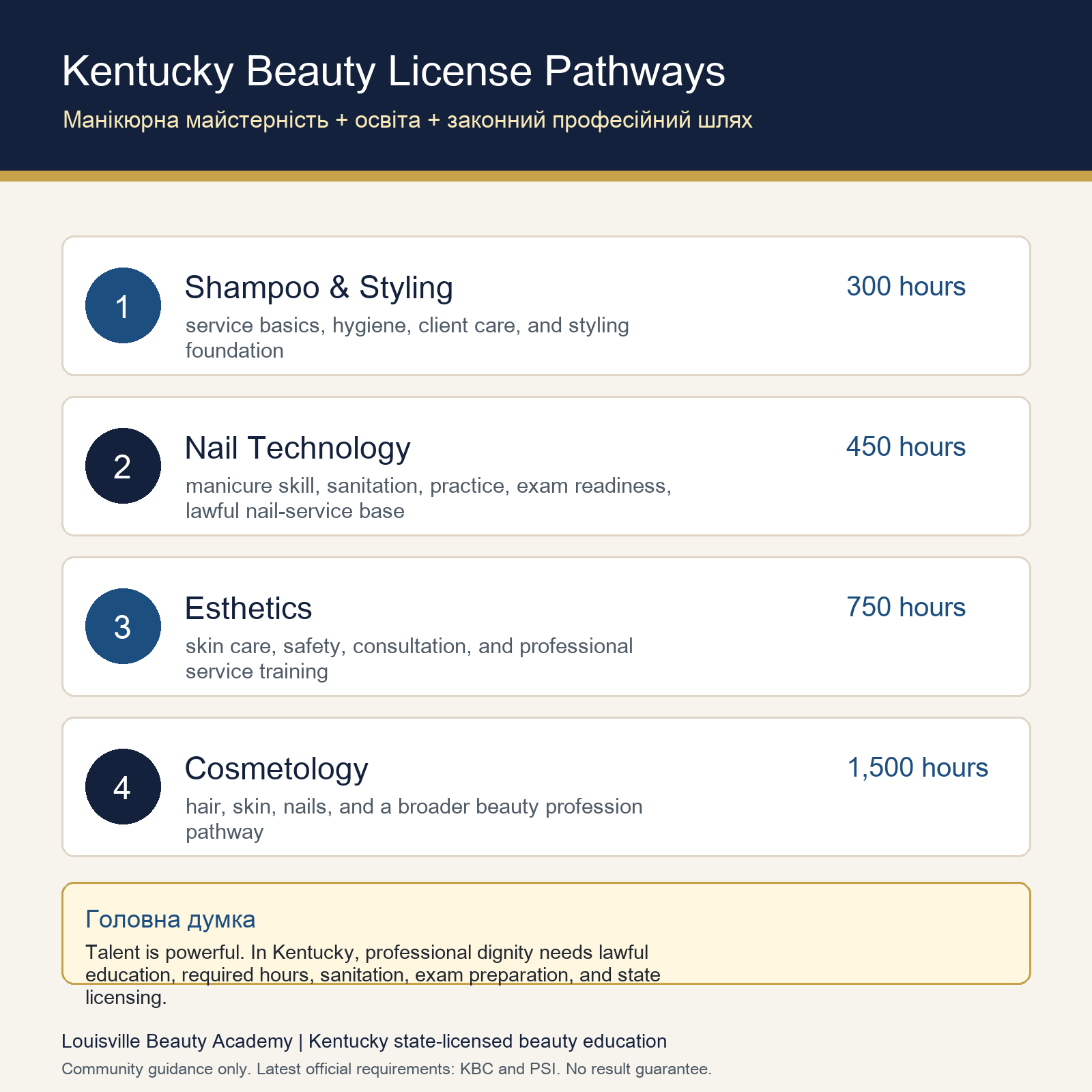
За поточними публічними матеріалами Kentucky Board of Cosmetology, основні шляхи включають Shampoo and Style Services – 300 hours, Nail Technician – 450 hours, Esthetician – 750 hours, and Cosmetologist – 1,500 hours. Ці години пов’язані не лише з навчанням, а й з віком, освітою, заявою, іспитом, ліцензією та актуальними процедурами штату.
KBC exam page направляє студентів до PSI portal, Candidate Bulletin, language catalog, and exam-language-change resources. Ukrainian is presented here as community-access guidance, not as an official PSI exam-language claim. Перед enrollment, registration або examination студент повинен перевірити найновішу офіційну інформацію Kentucky Board of Cosmetology і PSI.
Основні beauty education-hour pathways у Кентуккі. Перед enrollment або examination перевіряйте найновіші офіційні вимоги KBC and PSI.
Чому Louisville Beauty Academy говорить до української громади
Louisville Beauty Academy є Kentucky state-licensed beauty school у Луїсвіллі. Школа працює з різними громадами, дорослими студентами, working students, immigrant families, parents, and people rebuilding life with dignity. LBA цінує affordability, written clarity, required hours, practical training, exam readiness, sanitation, and respectful multilingual support.
У 2025 році Louisville Beauty Academy отримала national and local business/community recognition. Це не є гарантією результату для окремого студента і не є government endorsement або license guarantee. Але це показує, що невелика state-licensed beauty school може служити громаді, тримати витрати більш практичними, навчати дорослих і молодь, і вийти на ширшу державну та національну сцену через дисципліну, доказ і служіння.
YES I CAN: не slogan, а доросла дисципліна
YES I CAN не означає, що шлях буде легким. Це означає: я можу вчитися. Я можу ставити питання. Я можу пройти години. Я можу поважати закон. Я можу вивчити sanitation. Я можу готуватися до іспиту. Я можу будувати професійне ім’я не через shortcut, а через documented skill and lawful service.
Для української громади це може бути дуже сильним: від страху до навички, від втрати до структури, від невизначеності до професійного вибору, від таланту до license pathway. Не кожна людина стане власником salon. Не кожна людина піде одним шляхом. Але кожна людина заслуговує зрозуміти законний шлях перед тим, як ризикувати часом, грошима і майбутнім.
Наступний крок
Якщо ви думаєте про Nail Technology, Esthetics, Shampoo & Styling, або Cosmetology у Кентуккі, почніть з офіційних вимог. Відвідайте школу. Запитайте про години, cost, schedule, documents, language support, exam process, and current state-board rules. Не йдіть shortcut. Будуйте legal path.
Important notice: This article is general educational and institutional information. It is not legal, immigration, financial, employment, business, health, or personal eligibility advice. Licensing, examination language, technique scope, out-of-state recognition, admission, and eligibility requirements can change, and current official agency rules control. Completing a program, attending school, preparing for an exam, or earning hours does not guarantee graduation, examination passage, licensure, employment, income, salon ownership, admission, financial aid, or transfer/out-of-state recognition.
केन्टकी र लुइभिलका नेपाली परिवार, विद्यार्थी, कामदार, अभिभावक, र नयाँ जीवन बनाउँदै गरेका सबैलाई: अमेरिकामा सम्मानजनक जीवनको बाटो एउटै मात्र हुँदैन। कसैले कलेज पढ्छ। कसैले रेस्टुरेन्ट, गोदाम, होटल, स्वास्थ्य सेवा, अफिस, पसल, वा परिवारको व्यवसायमा इमानदारीपूर्वक काम गर्छ। कसैले घर, बच्चा, परिवार, भाषा, पैसा, र समयको जिम्मेवारीसँगै अगाडि बढ्छ। यी सबै श्रम सम्मानका कुरा हुन्। तर Louisville Beauty Academy को सन्देश स्पष्ट छ: मेहनतलाई कानुनी पेशागत पहिचानमा बदल्ने बाटो पनि सम्भव छ। राज्यले मान्यता दिएको occupational license ले हातको सीपलाई सार्वजनिक विश्वास, कागजी प्रमाण, र व्यावसायिक विकल्पमा उचाल्न सक्छ।
नेपाली समुदायले त्याग, शिक्षा, परिवार, बचत, धैर्य, र इमानदारीलाई गहिरो रूपमा सम्मान गर्छ। यही मूल्यहरू beauty education सँग मिल्छन्। Nail Technology, Esthetics, Shampoo & Styling, र Cosmetology जस्ता बाटाहरू केवल सौन्दर्यको कुरा होइनन्। ती hygiene, safety, practice hours, client care, परीक्षा तयारी, documentation, र Kentucky state rules भित्र पेशागत जिम्मेवारी सिक्ने बाटा हुन्।
रेस्टुरेन्ट वा अफिसको काम सानो होइन, तर तपाईंको जीवन त्यहाँ मात्र सीमित हुनुपर्दैन
धेरै नेपाली परिवारले अमेरिकामा सुरु गर्दा कठिन कामबाट सुरु गरेका छन्। रेस्टुरेन्टमा लामो समय उभिनु, सफाइ गर्नु, खाना बनाउनु, डेलिभरी गर्नु, गोदाममा काम गर्नु, अफिसमा दिन बिताउनु, वा परिवारको जिम्मेवारी बोकेर पढ्नु सजिलो होइन। यी कामले परिवार बचाउँछन्। यी कामले बच्चालाई पढाउँछन्। यी कामले घर बनाउँछन्। Louisville Beauty Academy ले यस्तो श्रमलाई कहिल्यै कम ठान्दैन।
तर मानिस केवल आजको कामबाट मात्र परिभाषित हुँदैन। तपाईं आज रेस्टुरेन्टमा काम गर्दै हुनुहुन्छ भने पनि भविष्यमा कानुनी रूपमा nail technician बन्ने तयारी गर्न सक्नुहुन्छ। तपाईं अफिसमा काम गर्नुहुन्छ भने पनि customer service, scheduling, bookkeeping, marketing, and discipline जस्ता सीपहरू पछि salon operation मा उपयोगी हुन सक्छन्। तपाईं कलेज पढ्दै हुनुहुन्छ भने पनि beauty skill एउटा practical professional option बन्न सक्छ। प्रश्न “यो कि त्यो” होइन। प्रश्न हो: कसरी आफ्नो जीवनमा थप कानुनी, व्यावसायिक, र सम्मानजनक विकल्प बनाउने?
कलेज, काम, र beauty license एकअर्काका विरोधी होइनन्
कलेजले सोचाइ फराकिलो बनाउँछ। अफिस वा corporate work ले system, communication, customer care, and responsibility सिकाउँछ। परिवारको कामले धैर्य र sacrifice सिकाउँछ। Beauty licensing preparation ले यी सबैलाई हातको सीप, सेवा, hygiene, documentation, and state-recognized professional training सँग जोड्न सक्छ।
किन कलेज पढ्दै beauty skill सिक्न नहुने? किन अफिसमा काम गर्दै भविष्यको salon ownership को सपना राख्न नहुने? किन परिवारको लागि काम गर्दै कानुनी पेशागत license को बाटो तयार नगर्ने? सपना ठूलो हुन सक्छ, तर सपना जिम्मेवार हुनुपर्छ। License, education hours, examination requirements, sanitation, records, client trust, taxes, business judgment, and continuing learning बिना salon ownership केवल कल्पना रहन्छ। सही तयारी भएमा त्यो disciplined professional path बन्न सक्छ।
State occupational license भनेको केवल कागज होइन, सार्वजनिक भरोसा हो
Beauty industry मा सीप मात्र पुग्दैन। ग्राहकको सुरक्षा, उपकरणको सफाइ, sanitation, infection-control mindset, consultation, professional conduct, recordkeeping, and state compliance चाहिन्छ। त्यसैले license केवल एउटा कागज होइन। त्यो समाजसँग गरिएको वचन जस्तै हो: “म सिकेर, अभ्यास गरेर, नियम मानेर, सुरक्षित रूपमा सेवा गर्न तयार छु।”
कुनै पनि स्कूलले graduation, परीक्षा पास, license, job, income, business ownership, transfer approval, वा immigration benefit guarantee गर्न सक्दैन। Louisville Beauty Academy पनि यस्तो guarantee गर्दैन। तर सही education, honest hours, documentation, and official process ले मेहनतलाई संरचना दिन्छ। यसले सीपलाई अन्दाजबाट निकालेर कानुनी र professional identity तर्फ लैजान सक्छ।
केन्टकीका प्रमुख beauty education hour pathways
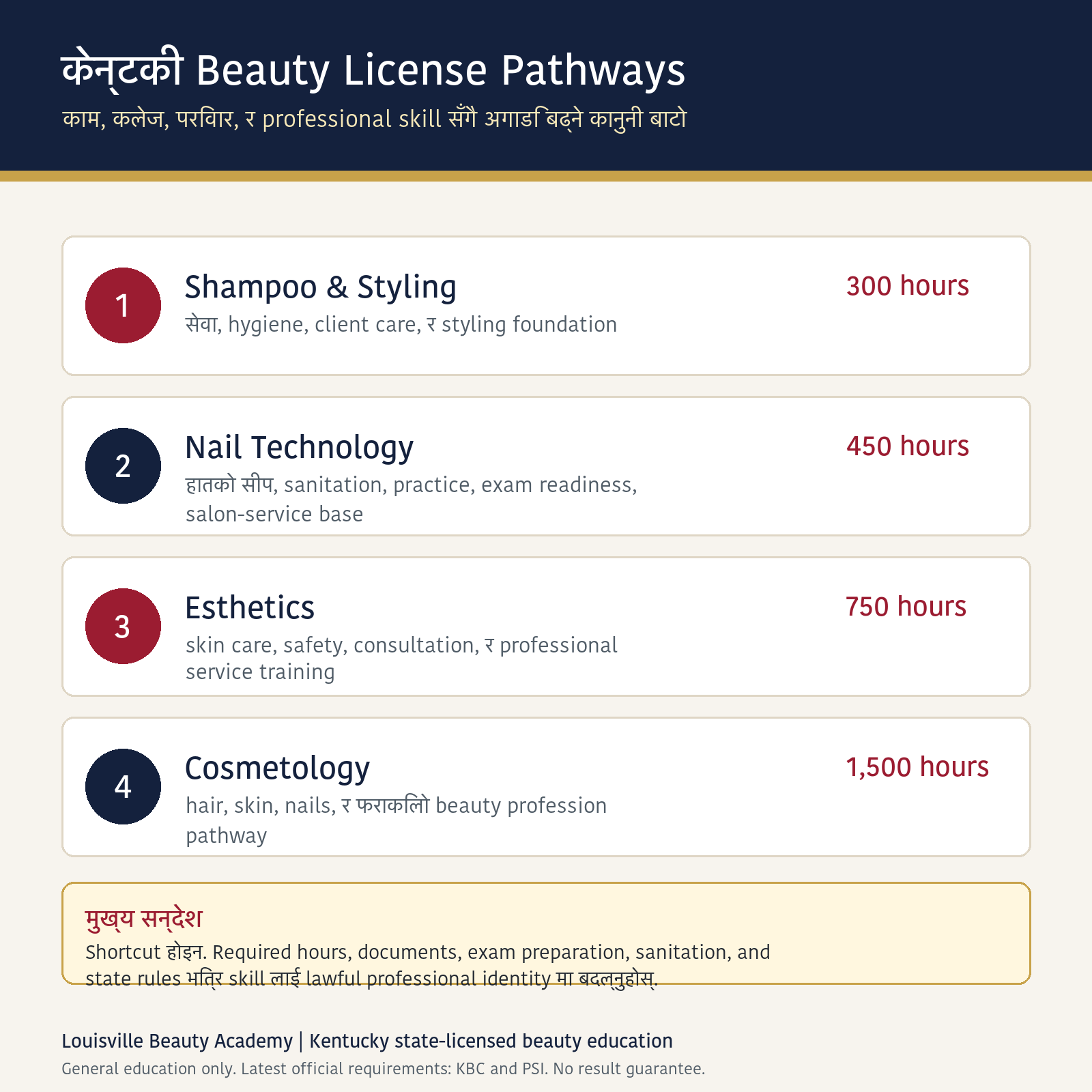
Kentucky Board of Cosmetology को सार्वजनिक guidance अनुसार प्रमुख pathways मा Shampoo and Style Services 300 hours, Nail Technician 450 hours, Esthetician 750 hours, and Cosmetologist 1,500 hours समावेश छन्। यी hour requirements मात्र होइनन्; विद्यार्थीले उमेर, education, application, examination, licensing, and current state-board procedure जस्ता official requirements पनि बुझ्नुपर्छ।
KBC exam page ले PSI portal, Candidate Bulletin, language catalog, and exam-language-change resources तर्फ विद्यार्थीलाई निर्देशित गर्छ। Nepali community को लागि यो लेख community guidance हो। Nepali language लाई official PSI exam-language option भनेर प्रस्तुत गरिएको छैन। भाषा support, परीक्षा प्रक्रिया, र eligibility समयसँग परिवर्तन हुन सक्छन्, त्यसैले registration वा examination अघि KBC र PSI को सबैभन्दा नयाँ official information नै मुख्य आधार हुनुपर्छ।
केन्टकी beauty profession का प्रमुख education-hour pathways. Registration र examination अघि KBC र PSI को latest official requirements verify गर्नुहोस्।
नेपाली विद्यार्थीका लागि मूल सन्देश: shortcut होइन, legal path
अमेरिकामा छिटो पैसा, छिटो काम, छिटो status, वा छिटो business को भाषा धेरै सुनिन्छ। तर छोटो बाटोले लामो जीवन सुरक्षित बनाउँदैन। Beauty profession मा पनि यही सत्य हो। यदि राज्यको requirement छ भने, त्यो requirement लाई सम्मान गर्नुपर्छ। यदि hours चाहिन्छ भने, hours पूरा गर्नुपर्छ। यदि exam चाहिन्छ भने, exam को तयारी गर्नुपर्छ। यदि license चाहिन्छ भने, license आएपछि मात्र त्यसको अधिकार अनुसार सेवा गर्नुपर्छ।
नेपाली परिवारका लागि यो कुरा गहिरो छ: कानुनी बाटोले केवल एक जनालाई होइन, पूरा परिवारको नाम र भविष्यलाई सुरक्षित गर्छ। आफ्नो बच्चालाई देखाउन सकिन्छ कि मेहनत केवल कमाइ होइन; मेहनतलाई प्रमाण, सीप, license, service, and dignity मा बदल्न सकिन्छ।
Louisville Beauty Academy को भूमिका
Louisville Beauty Academy Kentucky state-licensed beauty school हो, जसले Louisville र वरिपरिका विविध समुदायका विद्यार्थीलाई सेवा गर्छ। स्कूलको ध्यान चमकदार वाचा होइन; स्पष्ट बाटो, affordable structure, required hours, practical training, documentation, exam readiness, and respectful support हो। Multilingual students लाई सम्मान गर्ने वातावरण बनाउनु LBA को identity को भाग हो, तर official licensing rules सधैं Kentucky Board of Cosmetology र PSI को current requirements अनुसार चल्छन्।
2025 मा Louisville Beauty Academy ले national and local business/community recognition प्राप्त गरेको छ। यस्तो recognition ले कुनै विद्यार्थीको व्यक्तिगत परिणाम guarantee गर्दैन, government endorsement वा license guarantee पनि होइन। तर यसले देखाउँछ कि एउटा सानो, state-licensed, student-centered beauty school पनि affordability, discipline, documentation, and community service मार्फत ठूलो मंचमा देखिन सक्छ।
YES I CAN: नेपाली परिवारका लागि शान्त तर बलियो वाक्य
YES I CAN सजिलो सफलताको नारा होइन। यो दैनिक अनुशासन हो। “म सिक्न सक्छु। म hours पूरा गर्न सक्छु। म official rules पढ्न सक्छु। म प्रश्न गर्न सक्छु। म exam तयारी गर्न सक्छु। म legal way मा काम गर्न सक्छु। म परिवारको dignity बढाउन सक्छु।”
नेपाली समुदायको शक्ति loud confidence होइन; धेरै पटक यो quiet sacrifice हो। त्यही quiet sacrifice लाई documented education, lawful licensing, professional service, and future ownership mindset मा बदल्न सकिन्छ भने त्यो केवल beauty school को कथा होइन। त्यो नयाँ अमेरिकी जीवनलाई कानुनी रूपमा माथि उठाउने कथा हो।
अर्को कदम
यदि तपाईं Kentucky मा Nail Technology, Esthetics, Shampoo & Styling, वा Cosmetology सोच्दै हुनुहुन्छ भने पहिले official requirements पढ्नुहोस्। School visit गर्नुहोस्। आफ्नो schedule, cost, language needs, documents, prior hours if any, and exam process clear गर्नुहोस्। Guess नगर्नुहोस्। Shortcut नखोज्नुहोस्। Legal path रोज्नुहोस्।
Louisville Beauty Academy नेपाली विद्यार्थी र परिवारलाई यो सोच्न आमन्त्रण गर्छ: तपाईं रेस्टुरेन्टमा काम गर्न सक्नुहुन्छ, कलेज पढ्न सक्नुहुन्छ, corporate office मा professional बन्न सक्नुहुन्छ, र beauty license को बाटो पनि तयार गर्न सक्नुहुन्छ। एक दिन salon ownership को सपना पनि राख्न सक्नुहुन्छ। तर त्यो सपना law, education, skill, sanitation, documentation, and service भित्र उभिनुपर्छ।
Important notice: This article is general educational and institutional information. It is not legal, immigration, financial, employment, business, or personal eligibility advice. Licensing, examination language, out-of-state recognition, admission, and eligibility requirements can change, and current official agency rules control. Completing a program, attending school, preparing for an exam, or earning hours does not guarantee graduation, examination passage, licensure, employment, income, salon ownership, admission, financial aid, or transfer/out-of-state recognition.
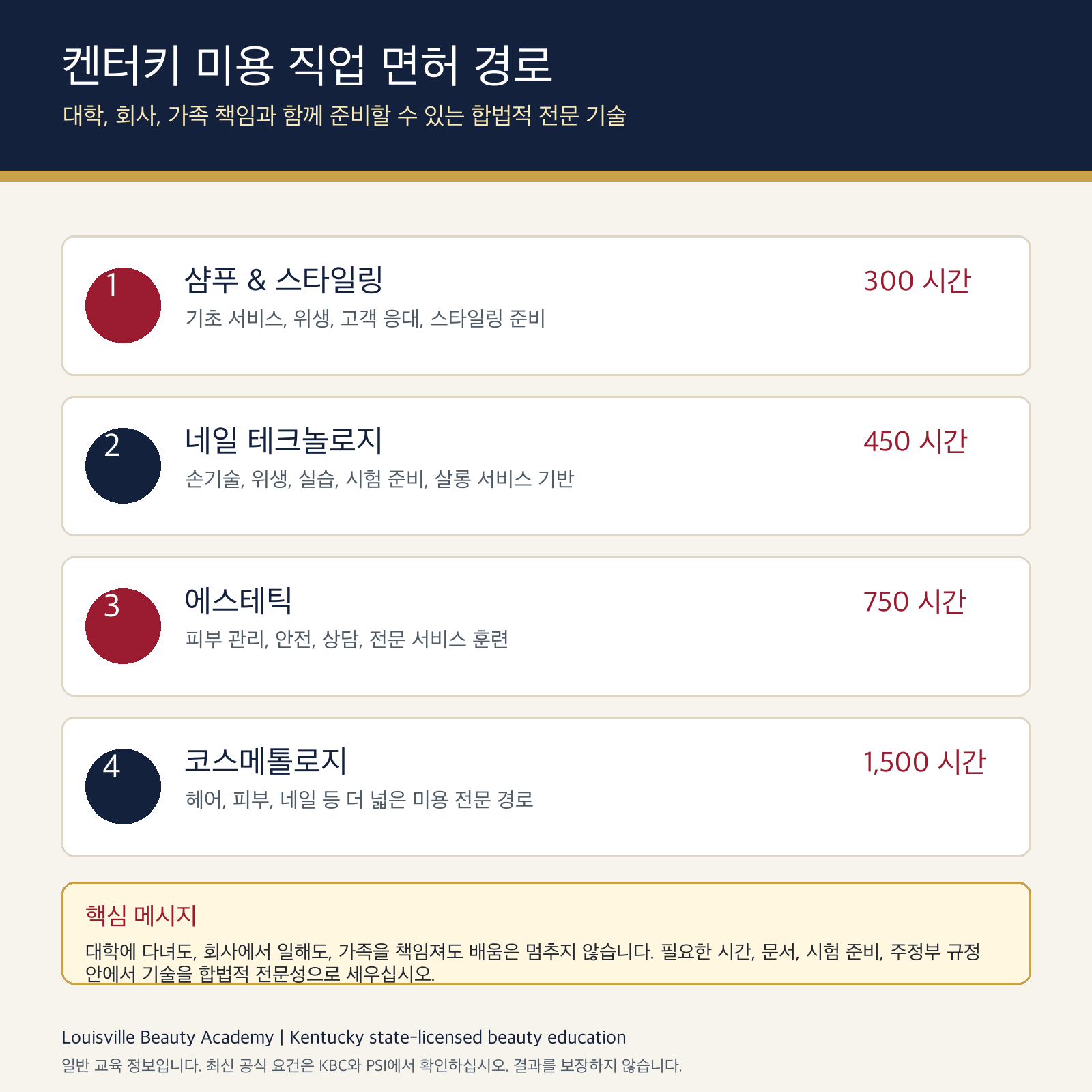
켄터키와 루이빌의 한인 가정, 유학생, 직장인, 부모, 그리고 다시 시작하려는 모든 분들께: 미국에서의 삶은 한 가지 길만 강요하지 않습니다. 대학에 다니는 길도 귀하고, 회사에서 일하는 길도 귀하고, 가족을 위해 식당이나 작은 비즈니스에서 땀 흘리는 길도 귀합니다. 그러나 동시에, 주정부가 인정하는 직업 면허를 통해 자신의 손기술과 성실함을 합법적인 전문 직업으로 세우는 길도 매우 귀합니다.
Louisville Beauty Academy가 한인 커뮤니티에 전하고 싶은 메시지는 분명합니다. 대학을 다니면서도 미용을 배울 수 있고, 회사에 다니면서도 면허의 길을 준비할 수 있으며, 언젠가 자신의 살롱을 꿈꾸는 것도 부끄러운 일이 아닙니다. 중요한 것은 지름길이 아니라 올바른 길입니다. 필요한 교육 시간, 문서, 시험 준비, 주정부 규정, 그리고 성실한 훈련을 통과하여 삶을 합법적으로 높이는 것입니다.
대학, 회사, 미용 면허는 서로 적이 아닙니다
많은 한인 가정은 교육을 깊이 존중합니다. 대학, 학위, 직장, 전문성은 가족의 희생과 미래를 담고 있습니다. Louisville Beauty Academy는 그 가치를 낮추지 않습니다. 오히려 이렇게 말합니다. 대학 교육이 한 사람의 지적 기반을 넓혀 준다면, 주정부 직업 면허는 한 사람의 실무 능력과 서비스 책임을 법적으로 세워 줍니다.
한 학생은 낮에는 대학 수업을 듣고, 다른 시간에는 미용 기술을 배울 수 있습니다. 한 직장인은 회사에서 행정, 고객 서비스, 회계, 마케팅, 기술 업무를 하면서도 저녁이나 가능한 시간에 새로운 전문 분야를 준비할 수 있습니다. 한 부모는 가족을 돌보면서도 자신의 손기술을 문서화된 교육 시간과 면허 준비로 연결할 수 있습니다. 이 길은 “둘 중 하나”가 아니라, 삶의 선택지를 넓히는 하나의 전략이 될 수 있습니다.
식당 일도 귀하고, 사무직도 귀하고, 살롱 창업의 꿈도 귀합니다
미국의 많은 이민자 가정은 식당, 세탁소, 편의점, 네일살롱, 사무실, 공장, 병원, 학교, 교회, 가족 사업 안에서 삶을 세워 왔습니다. 그 노동은 낮은 일이 아닙니다. 가족을 살리고, 자녀를 교육시키고, 집을 지키고, 커뮤니티를 세운 귀한 일입니다.
그러나 사람은 어제의 직업만으로 정의되지 않습니다. 오늘 회사에서 일하는 사람이 내일 미용 면허를 준비할 수 있습니다. 현재 식당에서 일하는 사람이 주말과 저녁을 사용해 네일, 에스테틱, 샴푸 & 스타일링, 코스메톨로지 경로를 배울 수 있습니다. 이미 사무직 경력을 가진 사람이 고객 관리, 예약, 마케팅, 위생 기록, 운영 감각을 살려 훗날 더 전문적인 살롱 운영자로 성장할 수도 있습니다. 가능성은 있습니다. 다만 그 가능성은 반드시 합법적이고 정직한 준비 위에 세워져야 합니다.
주정부 직업 면허는 작은 종이가 아니라 공적 신뢰입니다
미용은 단순히 예쁘게 꾸미는 기술만이 아닙니다. 위생, 안전, 도구 관리, 고객 상담, 피부와 손톱의 기본 이해, 서비스 윤리, 실습 기록, 시험 준비, 그리고 주정부 규정에 대한 존중이 함께 들어갑니다. 그래서 면허는 단순한 종이가 아닙니다. 그것은 “나는 배우고, 준비하고, 법 안에서 사람을 섬기겠습니다”라는 공적 약속에 가깝습니다.
면허가 성공을 보장하지는 않습니다. 졸업, 시험 합격, 취업, 수입, 창업, 타주 인정도 자동으로 보장되지 않습니다. 그러나 면허 준비 과정은 성실함을 기록으로 바꾸고, 기술을 법적 구조 안에 넣고, 한 사람의 서비스를 더 신뢰할 수 있는 전문 영역으로 세워 줍니다.
한인 학생에게 중요한 것은 체면보다 실력, 지름길보다 합법성입니다
한인 문화에는 공부, 노력, 가족 책임, 장인정신, 정직한 이름에 대한 깊은 존중이 있습니다. 이 가치는 미용 면허의 길과 잘 맞습니다. 아름다움은 화려함만이 아니라 반복 훈련입니다. 고객 서비스는 말만 잘하는 것이 아니라 약속을 지키는 것입니다. 살롱 운영은 꿈만으로 되는 것이 아니라 위생, 기록, 비용, 예약, 세금, 규정, 사람 관리, 고객 신뢰가 함께 있어야 합니다.
그래서 Louisville Beauty Academy의 메시지는 단순합니다. 부끄러워하지 마십시오. 늦었다고 생각하지 마십시오. 영어가 완벽하지 않다고 자신을 포기하지 마십시오. 대학을 다니고 있어도, 회사에 다니고 있어도, 식당에서 일하고 있어도, 가족을 돌보고 있어도, 올바른 길을 확인하고 한 걸음씩 준비할 수 있습니다.
켄터키의 주요 미용 교육 시간 경로
Kentucky Board of Cosmetology의 현재 공개 안내에 따르면, 주요 경로에는 Shampoo and Style Services 300시간, Nail Technician 450시간, Esthetician 750시간, Cosmetologist 1,500시간 등의 교육 시간 요건이 포함됩니다. 각 경로는 교육 시간만으로 끝나는 것이 아니라 학력 요건, 만 18세 요건, 필기 및 실기 시험, 면허 신청, 면허 확인 또는 면허 발급 후 서비스 제공 등 공식 절차와 연결됩니다.
KBC 시험 안내 페이지는 PSI 포털, Candidate Bulletin, 시험 언어 변경 및 언어 카탈로그 관련 정보를 안내합니다. 언어 지원과 시험 운영은 변할 수 있으므로, 학생은 등록과 시험 전 반드시 KBC와 PSI의 최신 공식 정보를 확인해야 합니다.
켄터키 미용 직업의 주요 교육 시간 경로입니다. 등록과 시험 전 Kentucky Board of Cosmetology 및 PSI의 최신 공식 요건을 확인하십시오.
Louisville Beauty Academy는 켄터키 주정부 허가를 받은 미용 교육 기관으로, 루이빌과 주변 커뮤니티의 학생들을 섬깁니다. 학교는 화려한 포장보다 명확한 길을 중요하게 생각합니다. 필요한 시간, 실습, 문서, 시험 준비, 학생 지원, 그리고 다문화 학생들이 이해할 수 있는 안내를 중요하게 봅니다.
2025년 Louisville Beauty Academy는 전국 및 지역 차원의 비즈니스·커뮤니티 인정을 받았습니다. 이러한 인정은 학생 개인의 결과를 보장하지 않으며 정부 보증이나 면허 보장을 의미하지 않습니다. 그러나 작은 주정부 인가 미용학교도 성실한 교육, 합리적 비용, 학생 중심 운영, 지역사회 기여를 통해 더 큰 무대에서 보일 수 있다는 신호입니다.
왜 회사원도, 대학생도, 부모도 미용 면허를 생각할 수 있는가
회사 생활은 전문성을 줍니다. 대학은 사고의 폭을 줍니다. 가족 책임은 인내를 가르칩니다. 미용 면허 준비는 이 모든 것을 손으로 실천하는 전문 서비스로 연결할 수 있습니다. 누군가는 회사에 계속 다니면서 부업이 아닌 합법적 미래 선택지를 준비할 수 있습니다. 누군가는 대학 전공과 미용 기술을 결합해 브랜드, 마케팅, 운영, 교육, 창업의 길을 더 넓게 볼 수 있습니다. 누군가는 살롱을 소유하고 싶다는 꿈을 갖고, 먼저 법적 자격과 현장 이해부터 쌓을 수 있습니다.
왜 회사에서 일하면서도 언젠가 자신의 살롱을 소유하지 못하겠습니까? 단, 그 꿈은 책임 있는 꿈이어야 합니다. 면허, 규정, 위생, 실력, 고객 신뢰, 재정 판단, 사업 운영, 그리고 계속 배우는 태도가 함께 있어야 합니다. Louisville Beauty Academy는 꿈을 과장하지 않습니다. 꿈을 법과 교육과 훈련 안에 세우라고 말합니다.
YES I CAN: 조용하지만 강한 한 걸음
Louisville Beauty Academy의 정신은 YES I CAN입니다. 이것은 쉬운 성공을 약속하는 구호가 아닙니다. “나는 배울 수 있다. 나는 시간을 채울 수 있다. 나는 질문할 수 있다. 나는 시험을 준비할 수 있다. 나는 법 안에서 일할 수 있다. 나는 가족에게 더 큰 존엄과 선택지를 보여 줄 수 있다”는 훈련입니다.
한인 커뮤니티의 강점은 조용한 성실함입니다. 그 성실함이 문서화된 교육 시간, 합법적 면허 준비, 전문 서비스, 그리고 언젠가 더 큰 직업 정체성으로 연결될 수 있다면, 그것은 단순한 미용 교육이 아닙니다. 그것은 가족의 미래를 더 넓히는 실질적 선택입니다.
다음 단계
켄터키에서 네일, 에스테틱, 샴푸 & 스타일링, 코스메톨로지 분야를 생각하고 있다면 먼저 공식 요건을 읽고, 학교를 방문하고, 현재 필요한 시간과 문서를 확인하고, 시험 절차와 언어 지원을 확인하십시오. 추측하지 말고 확인하십시오. 지름길을 찾지 말고 법적 길을 걸으십시오.
Louisville Beauty Academy는 한인 학생과 가족이 대학, 직장, 가족 책임, 그리고 미용 전문직의 길을 함께 생각할 수 있도록 돕고자 합니다. 목표는 허영이 아니라 존엄입니다. 목표는 과장이 아니라 합법적 전문성입니다. 목표는 남에게 보이기 위한 성공이 아니라, 자기 삶을 실제로 세우는 힘입니다.
중요 안내: 이 글은 일반 교육 및 기관 안내입니다. 법률, 이민, 재정, 취업, 사업, 또는 개인 자격에 대한 조언이 아닙니다. 면허, 시험 언어, 타주 인정, 입학 및 자격 요건은 변경될 수 있으며 공식 기관의 최신 규정이 우선합니다. 교육 과정 완료, 시간 이수, 시험 준비 또는 학교 출석이 졸업, 시험 합격, 면허 취득, 취업, 수입, 살롱 소유, 입학, 재정 지원, 또는 타주 인정/전환을 보장하지 않습니다.
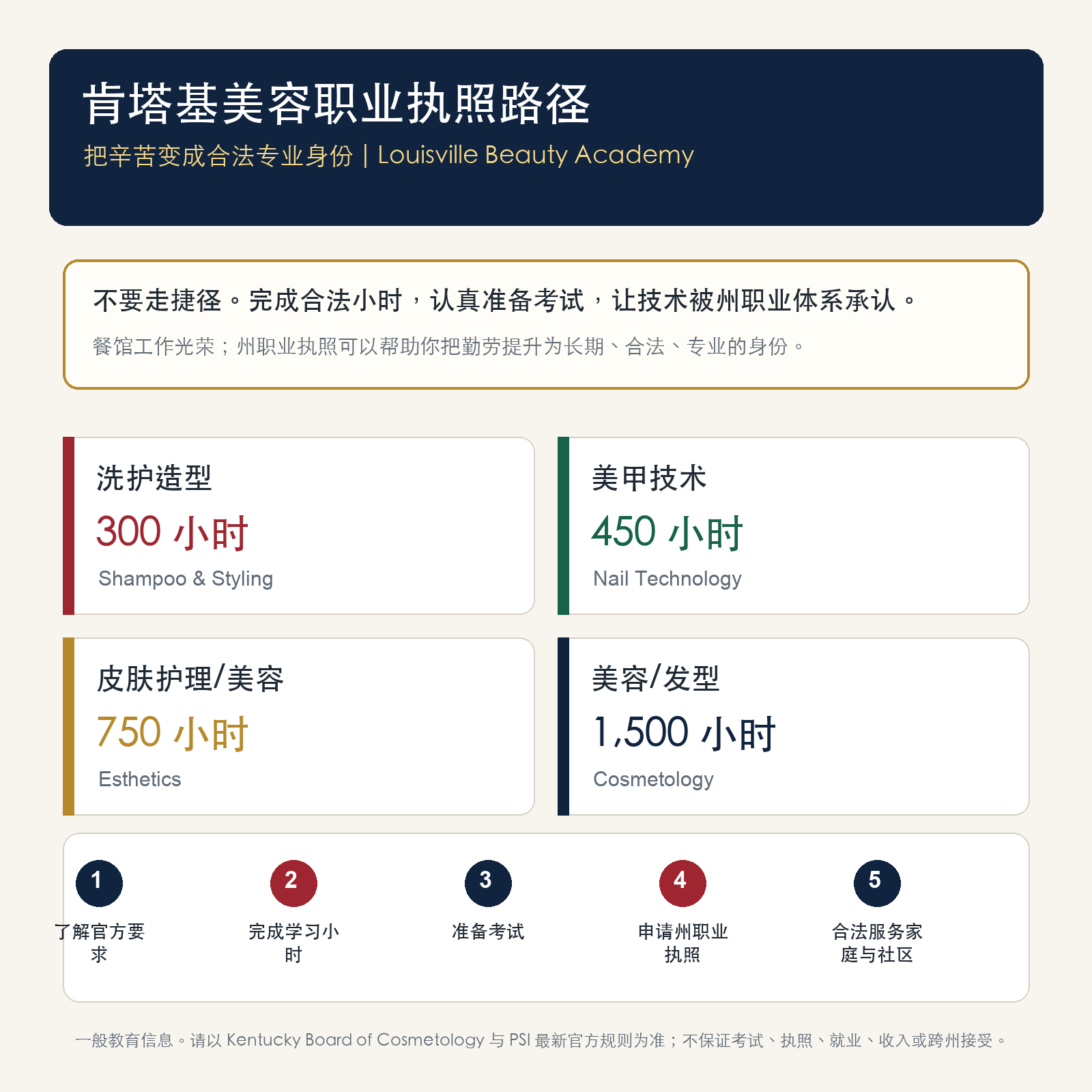
Louisville Beauty Academy 想对每一位华人、华裔、新移民、餐馆工作者、家庭照顾者、转行者、年轻人和重新开始的人说一句很重要的话:不要低估州职业执照。餐馆工作是辛苦、光荣、养家的工作;但如果你的心里还有一个专业梦想,美容行业的州执照可以让你的努力被记录、被审核、被合法化,也让你站到更正式的职业舞台上。
Louisville Beauty Academy 是肯塔基州许可的美容教育机构,服务路易维尔及周边社区。学校坚持清楚的学费、真实的学习小时、职业执照路径、学生支持和多语言尊重。我们不把教育包装成虚荣;我们把教育当作人生责任。
2025 年,Louisville Beauty Academy 获得全国层面的商业与社区认可,包括 U.S. Chamber of Commerce CO-100 相关认可和地方/商会层面的倡导认可。这些荣誉不是给学生的结果保证,也不是政府背书;它们说明一件事:一个小型、可负担、州许可、以学生为中心的美容学校,也可以在全国舞台上被看见。
Đời sống ở Mỹ đẹp không phải vì con đường nào cũng dễ. Đời sống ở Mỹ đẹp vì đất nước này cho con người một quyền rất quý: quyền được học lại, làm lại, nâng mình lên, đi bằng luật pháp, đi bằng mồ hôi, và để sự cố gắng của mình được công nhận một cách chính thức.
Đối với nhiều gia đình Việt Nam tại Louisville và Kentucky, câu hỏi không chỉ là: “Tôi có thể làm nghề gì?” Câu hỏi sâu hơn là: “Làm sao để công sức của tôi trở thành một nghề hợp pháp, có giấy tờ, có tiêu chuẩn, có danh dự, và có thể nuôi gia đình lâu dài?”
Tại Louisville Beauty Academy, câu trả lời của chúng tôi rất rõ: đừng đi đường tắt. Đừng tự xem nhẹ mình. Đừng để câu “tôi không giỏi tiếng Anh” trở thành cái cớ để bỏ cuộc. Nếu bạn muốn bước vào nghề làm đẹp tại Kentucky, hãy đi con đường thật: học thật, đủ giờ thật, thi thật, xin giấy phép thật, và làm nghề bằng tư cách chuyên nghiệp thật.
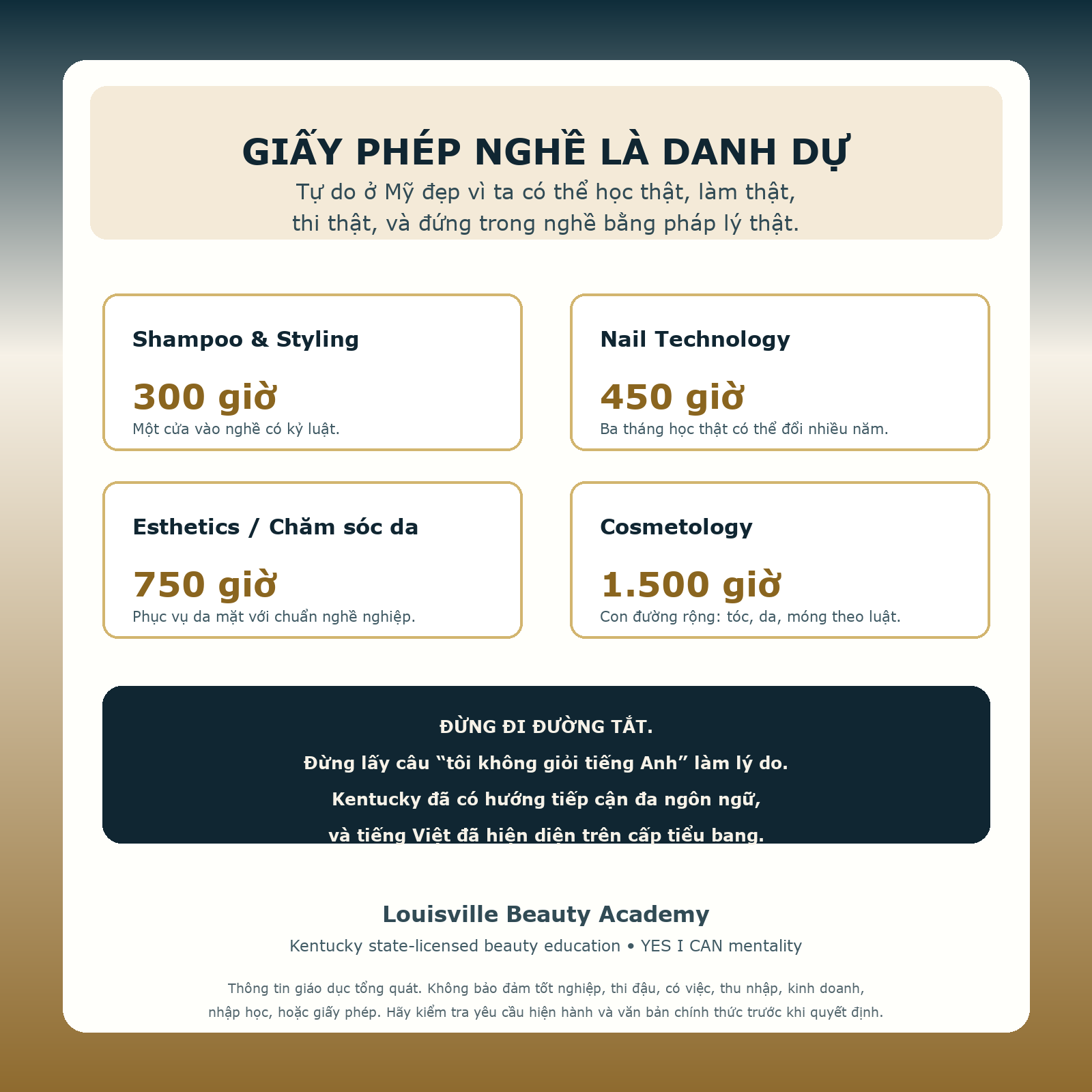
Các con đường học giờ chính trong nghề làm đẹp Kentucky. Hãy luôn kiểm tra yêu cầu hiện hành và văn bản chính thức trước khi quyết định.
Giấy Phép Nghề Không Phải Là Tờ Giấy Nhỏ
Nhiều người trong cộng đồng chưa hiểu hết giá trị của một state occupational license – giấy phép hành nghề do tiểu bang quản lý. Bằng đại học thường do một trường cấp. Nhưng giấy phép nghề, khi được cấp đúng luật, là quyền hành nghề nằm trong hệ thống pháp lý của tiểu bang.
Điều đó không có nghĩa giấy phép nghề “cao hơn” đại học trong mọi hoàn cảnh. Nhưng trong đời sống thực tế, một giấy phép hành nghề hợp pháp có thể có sức mạnh rất lớn: nó nối tên bạn với một nghề được quản lý, một tiêu chuẩn vệ sinh – an toàn, một trách nhiệm phục vụ công chúng, và một con đường kiếm sống hợp pháp.
Với nhiều gia đình nhập cư, đó là điều đáng quý. Không phải ai cũng có thời gian, tiền bạc, ngôn ngữ, hoặc hoàn cảnh để đi lại con đường đại học dài nhiều năm. Nhưng một con đường nghề nghiệp hợp pháp – như Nail Technology, Esthetics, Shampoo & Styling, hoặc Cosmetology – có thể giúp một người biến sự chăm chỉ thành danh phận nghề nghiệp rõ ràng.
Đừng Xem Nhẹ Nghề Làm Đẹp
Nghề làm đẹp không chỉ là móng, tóc, da mặt, gội đầu, trang điểm, hay dịch vụ bên ngoài. Nghề làm đẹp là một nghề chạm vào con người. Nó đòi hỏi vệ sinh, an toàn, kỷ luật, giao tiếp, lòng tin, sự kiên nhẫn, kỹ thuật, và trách nhiệm.
Một người được cấp phép không chỉ “biết làm.” Người đó đang nói với khách hàng và cộng đồng: tôi đã đi qua một quá trình học tập; tôi hiểu luật và tiêu chuẩn cơ bản; tôi biết rằng tay nghề phải đi cùng an toàn; và tôi chọn làm nghề trong ánh sáng, không trong bóng tối.
Đừng coi thường state license. Đừng coi thường nail license. Đừng coi thường shampoo styling. Đừng coi thường esthetics. Đừng coi thường cosmetology. Mỗi giấy phép, nếu được đi đúng đường, là một nền móng để một con người đứng thẳng hơn trong xã hội.
Ba Tháng Có Thể Phục Vụ Ba Mươi Năm
Ví dụ, chương trình Nail Technology tại Kentucky hiện được công bố ở mức 450 giờ. Với lịch học phù hợp, đó có thể là một khoản đầu tư ngắn so với cuộc đời làm nghề phía trước. Ba tháng học nghiêm túc có thể mở ra ba mươi năm hoặc hơn của lao động hợp pháp, phục vụ khách hàng, nuôi gia đình, mở booth, mở salon, hoặc xây dựng một cơ sở nhỏ của chính mình.
Chương trình Shampoo & Styling hiện được công bố ở mức 300 giờ. Esthetics là 750 giờ. Cosmetology là 1.500 giờ. Những con số này không phải khẩu hiệu. Đây là các ngưỡng học giờ được gắn với hệ thống cấp phép. Người học phải kiểm tra yêu cầu hiện hành, giấy tờ, hợp đồng, lịch học, quy định thi, và văn bản chính thức trước khi quyết định.
Đừng nói “tôi không có thời gian đi học” quá nhanh. Hãy hỏi lại: nếu một khoảng thời gian học nghiêm túc có thể phục vụ đời mình thêm 30 năm, 40 năm, hoặc 50 năm, thì đó có còn là mất thời gian không? Hay đó là cách mình tôn trọng chính mình?
Tiếng Việt Đã Có Chỗ Trong Con Đường Thi Cấp Phép
Louisville Beauty Academy sống với tinh thần YES I CAN. Không phải “yes” rẻ tiền. Không phải nói cho vui. YES I CAN nghĩa là: tôi có thể học; tôi có thể hiểu; tôi có thể làm đúng; tôi có thể đi từng giờ; tôi có thể hỏi lại; tôi có thể thi; tôi có thể đứng lên hợp pháp.
Trong nhiều năm, LBA và nhiều người trong cộng đồng đã vận động cho sự công bằng ngôn ngữ trong kỳ thi cấp phép ngành làm đẹp. Con đường đa ngôn ngữ không hạ thấp tiêu chuẩn. Nó giúp người học hiểu tiêu chuẩn tốt hơn. Khi một người được học và thi bằng ngôn ngữ họ hiểu rõ hơn, họ có cơ hội thật hơn để nắm luật, vệ sinh, an toàn, và trách nhiệm nghề nghiệp.
Tiếng Việt đã hiện diện trong hướng tiếp cận cấp tiểu bang Kentucky. Điều này không tự nhiên rơi xuống. Nó là kết quả của nhiều năm kiên trì, nhiều tiếng nói cộng đồng, nhiều lần giải thích, nhiều lần không bỏ cuộc. Đừng phí điều đó. Nếu hôm nay có một cánh cửa ngôn ngữ rộng hơn, thì trách nhiệm của chúng ta là bước qua cánh cửa đó bằng học thật và làm thật.
Giấy Phép Có Thể Đi Xa Hơn Một Thành Phố
Một giấy phép nghề được cấp hợp pháp không chỉ có giá trị trong cảm xúc. Nó có thể trở thành hồ sơ nghề nghiệp khi bạn làm việc, chuyển nơi ở, hoặc xin xét theo quy định của nơi khác. Việc chuyển giấy phép giữa các tiểu bang luôn phụ thuộc vào luật và yêu cầu của tiểu bang nhận hồ sơ, nhưng giấy phép thật và giờ học thật là nền tảng mạnh hơn rất nhiều so với làm chui, học tắt, hoặc nghe lời hứa không có giấy tờ.
Đừng xây tương lai của mình trên đường tắt. Đường tắt có thể nhanh trong vài tuần, nhưng làm yếu cuộc đời trong nhiều năm. Đường chính thống có thể khó lúc đầu, nhưng nó để lại hồ sơ, bằng chứng, giấy phép, danh dự, và sự tự tin trước gia đình, khách hàng, tiểu bang, và chính mình.
LBA: Một Trường Nhỏ Nhưng Không Nhỏ Trong Sứ Mệnh
Louisville Beauty Academy là một trường beauty được cấp phép tại Kentucky, được xây dựng để phục vụ người thật: người nhập cư, người đi làm, cha mẹ bận rộn, người cần học bằng ngôn ngữ dễ hiểu hơn, người muốn chi phí rõ ràng, và người muốn một con đường nghề nghiệp có giấy tờ.
Năm 2025, LBA được CO- by the U.S. Chamber of Commerce ghi nhận trong danh sách CO-100, hạng mục Enduring Businesses. LBA cũng được ghi nhận trong hồ sơ công khai về vai trò vận động doanh nghiệp nhỏ và chính sách nghề nghiệp. Những điều này không phải để khoe. Chúng là lời nhắc rằng một trường nhỏ, nếu làm đúng, có thể có tiếng nói quốc gia.
Chúng tôi không nói điều đó để hứa ai cũng sẽ có kết quả giống nhau. Không trường nào được nói như vậy. Chúng tôi nói điều đó để nhắc cộng đồng Việt Nam rằng: đừng tự hạ thấp nghề. Đừng tự hạ thấp mình. Một nghề được cấp phép hợp pháp có thể là một trong những con đường đẹp nhất để biến tự do ở Mỹ thành trách nhiệm, lao động, gia đình, và đóng góp.
Đừng Bỏ Học Thật. Đừng Bỏ Nghĩa Thật Của Đời Sống.
Có người muốn nhanh. Có người muốn làm trước rồi tính sau. Có người nghe ai đó nói “không cần giấy phép đâu.” Nhưng nghề thật không nên bắt đầu bằng cách tự giấu mình khỏi pháp luật.
Đi học không chỉ để lấy giấy. Đi học là để chứng minh với chính mình rằng mình có thể đi hết một con đường. Đi học là để tập kỷ luật. Đi học là để hiểu nghề không chỉ bằng tay, mà bằng đầu óc, bằng đạo đức, bằng hồ sơ, bằng sự đúng đắn.
Nếu bạn là người Việt ở Kentucky, nếu bạn muốn vào nghề nail, tóc, da, hoặc chăm sóc sắc đẹp, hãy đi thẳng. Hãy hỏi rõ. Hãy đọc văn bản. Hãy tích lũy giờ hợp pháp. Hãy chuẩn bị thi. Hãy lấy giấy phép bằng đường chính đáng. Đừng cứu mình khỏi cơ hội chỉ vì sợ tiếng Anh. Đừng cứu mình khỏi tương lai chỉ vì ba tháng, năm tháng, hay chín tháng học có vẻ dài.
Lời Mời Từ Louisville Beauty Academy
Nếu bạn cần hỏi bằng tiếng Việt, hãy hỏi bằng tiếng Việt. Nếu bạn cần hiểu chương trình, chi phí, giờ học, điều kiện, hỗ trợ ngôn ngữ, hoặc cách bắt đầu, hãy liên hệ LBA bằng văn bản. Chúng tôi tin vào sự rõ ràng. Chúng tôi tin vào tài liệu. Chúng tôi tin vào học thật. Và chúng tôi tin rằng người Việt có thể đứng rất đẹp trong nghề làm đẹp – không bằng đường tắt, mà bằng danh dự.
Bài viết này là thông tin giáo dục tổng quát. Đây không phải tư vấn pháp lý, di trú, tài chính, hoặc bảo đảm tốt nghiệp, thi đậu, được cấp giấy phép, có việc làm, thu nhập, kinh doanh, nhập học, chuyển giờ, hoặc chuyển giấy phép. Yêu cầu hiện hành của Kentucky Board of Cosmetology, PSI, văn bản của trường, và luật của từng tiểu bang mới là căn cứ phải kiểm tra trước khi quyết định.
Ý chính rất đơn giản: cuộc đời ở Mỹ đẹp vì ta có thể nâng mình lên bằng con đường hợp pháp. Nghề làm đẹp, khi đi bằng giáo dục thật và giấy phép thật, không phải nghề nhỏ. Đó là một con đường danh dự.
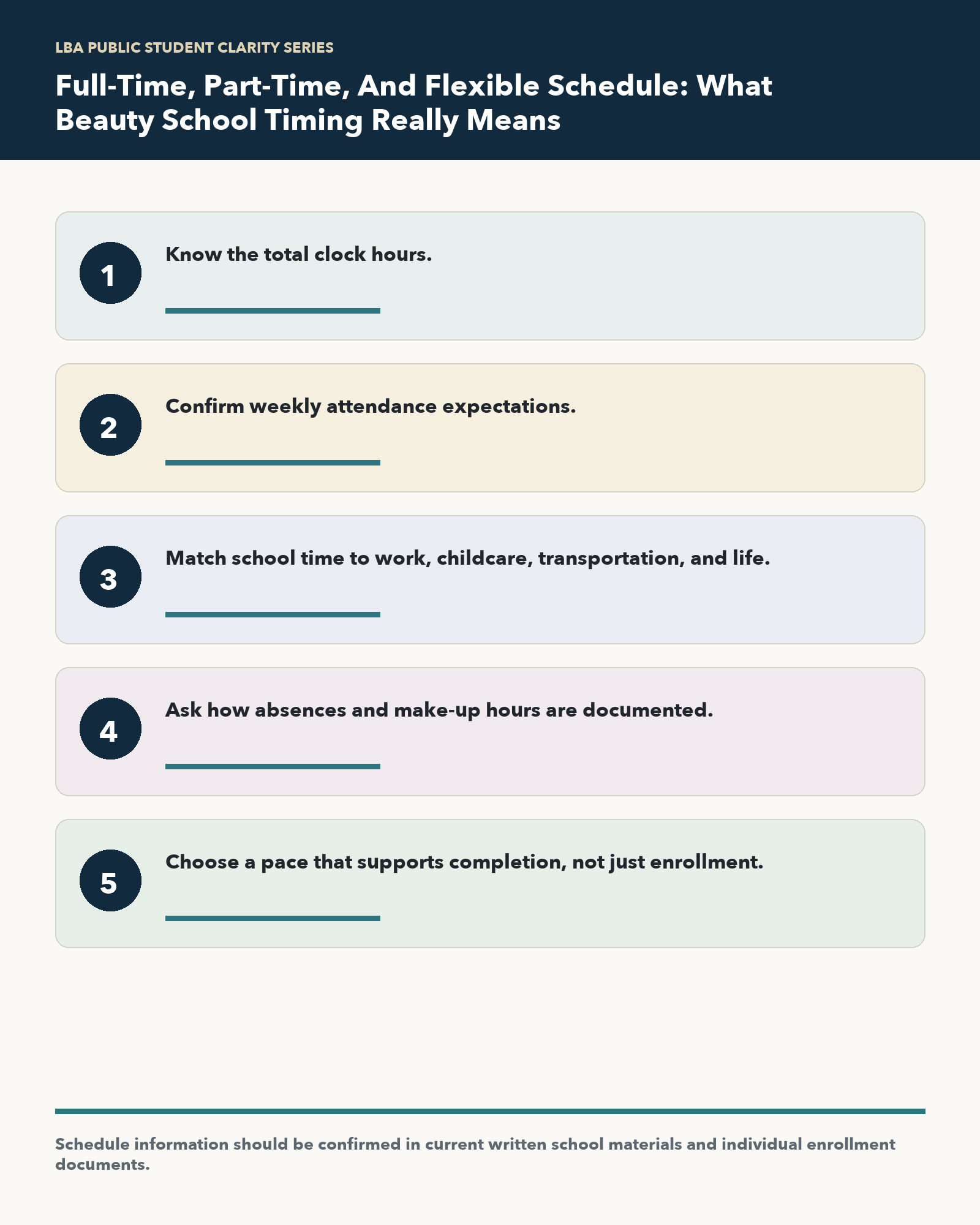
Flexible schedule does not mean unlimited schedule. It means the student and school should understand the approved operating window, weekly attendance expectation, program clock hours, and the pace needed to finish. For working adults, parents, caregivers, and career changers, this kind of clarity can make education feel possible without making it vague.
A privacy-safe visual guide from Louisville Beauty Academy’s public student clarity series.
Questions To Ask Before Enrolling
How many clock hours are required?
What weekly attendance range is expected?
Which days and times can actually be selected?
How are absences, make-up hours, and breaks handled?
How long does completion usually take at the chosen pace?
Written schedule clarity helps a working adult decide honestly. It also protects the licensing process because clock-hour education is regulated and must be documented.
Flexibility With Structure
The strongest schedule conversation is both hopeful and practical. It respects a student’s ambition while also naming the real attendance commitment. A student should know what pace is realistic, what records must be kept, and what happens if life interrupts the plan.
Schedule discussions are guidance, not guarantees. This article does not guarantee a specific schedule, completion date, attendance result, clock-hour outcome, or license timeline. Actual completion timing depends on the program, approved schedule, attendance, school policy, clock-hour progress, student choices, and applicable Kentucky Board requirements.
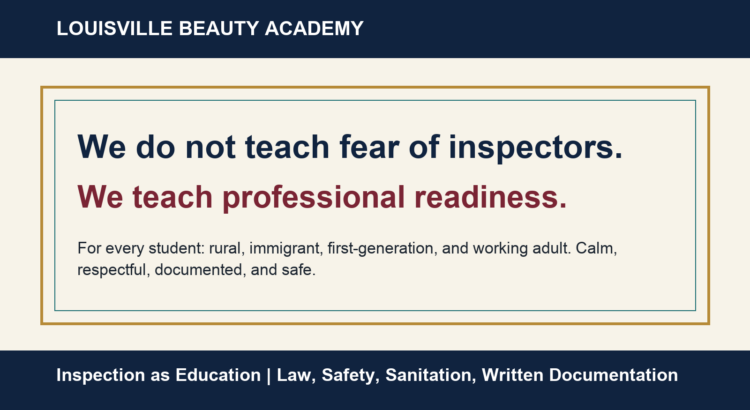
A center of excellence is proven by behavior under pressure. LBA's standard is to turn inspection into education, complaint into documentation, and fear into professional practice.
Who This Is For
This series is for every beauty student, including students from rural and country-side communities, immigrant students, first-generation students, working adults, and students who may feel nervous when an inspector or regulator enters the room. The purpose is to replace fear with understanding, practice, safety, sanitation, and written documentation.
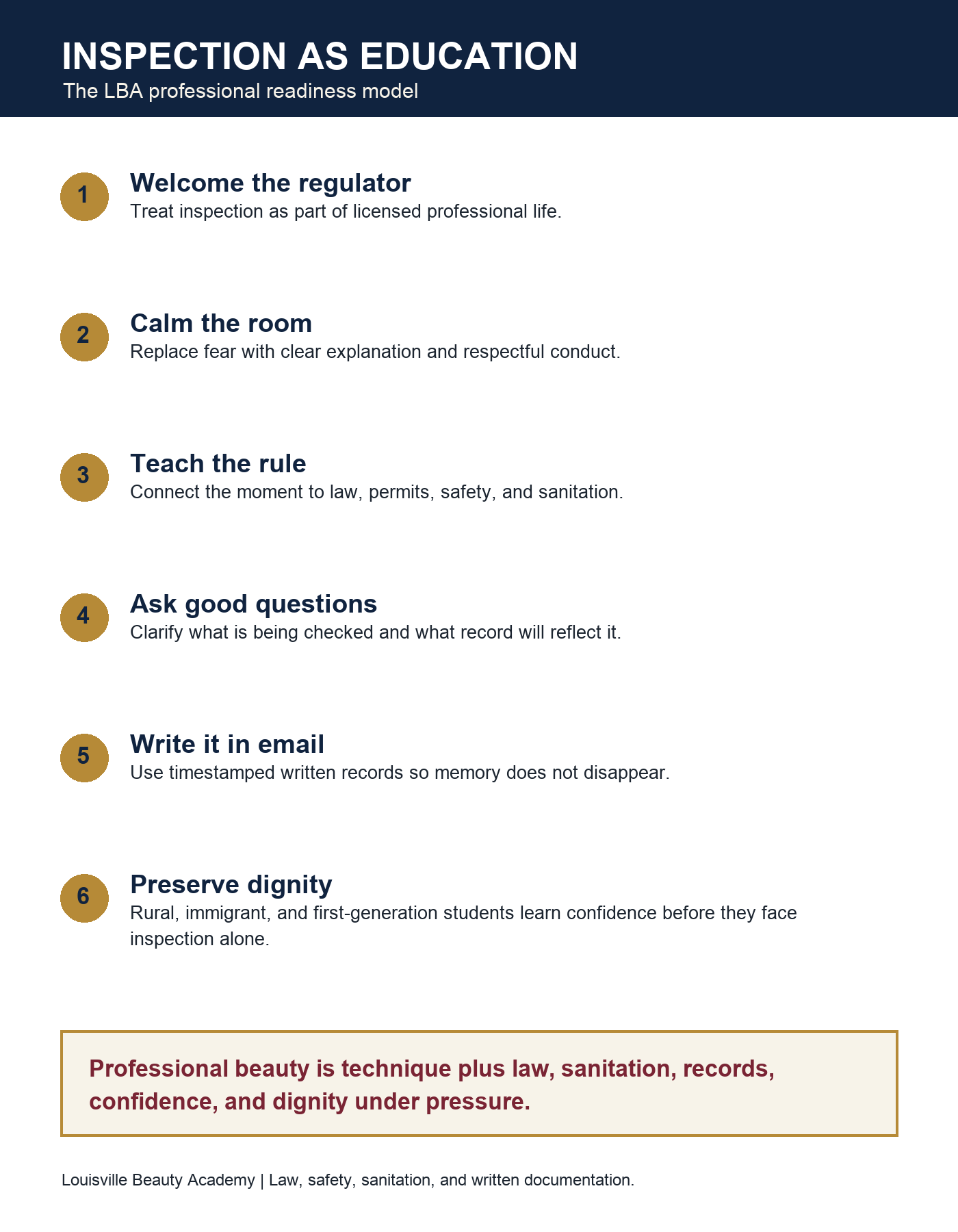
The LBA inspection-as-education model turns regulatory moments into professional readiness training.
The Standard
The serious school does not merely say it cares about compliance. It teaches compliance in real time, in front of students, with records and professional discipline.
The Policy Meaning
This is bigger than one school event. It is a model for how regulated workforce education can protect the public while building student confidence.
The Public Promise
Louisville Beauty Academy will keep teaching beauty students that lawful professionalism is beautiful: clean hands, clear records, calm conduct, and dignity under pressure.
The Louisville Beauty Academy Standard
A serious beauty school teaches more than the service. It teaches the professional environment around the service: regulation, safety, sanitation, licensing awareness, written documentation, respectful communication, and the ability to remain steady when a real inspector is present.
That is why LBA treats regulatory moments as education. Students from every background should not wait until they are alone in a salon to learn how to respond professionally.
Public information notice: this post is educational and policy-oriented. It does not accuse any person or agency of wrongdoing, disclose private student information, claim accreditation, promise licensure or employment outcomes, or replace professional legal/regulatory advice.