Part 3 of 8 – LBA Inspection as Education Series.
Core Pulse
Beauty education is not only technique. It is law, safety, sanitation, licensing, permits, student records, and the discipline to operate inside a regulated profession.
Who This Is For
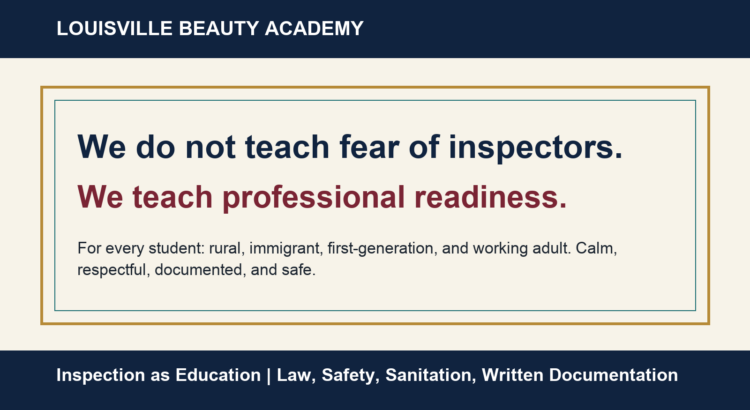
This series is for every beauty student, including students from rural and country-side communities, immigrant students, first-generation students, working adults, and students who may feel nervous when an inspector or regulator enters the room. The purpose is to replace fear with understanding, practice, safety, sanitation, and written documentation.
More Than Technique
Technique matters, but the licensed beauty profession also depends on rules that protect the public and define lawful practice.
What Students Should Understand
Students should understand why licenses, permits, sanitation, clean facilities, chemical handling, attendance records, and safety practices are not optional details.
Professional Confidence
Confidence is not pretending rules do not exist. Confidence is knowing the rules well enough to respond respectfully and correctly.
The Louisville Beauty Academy Standard
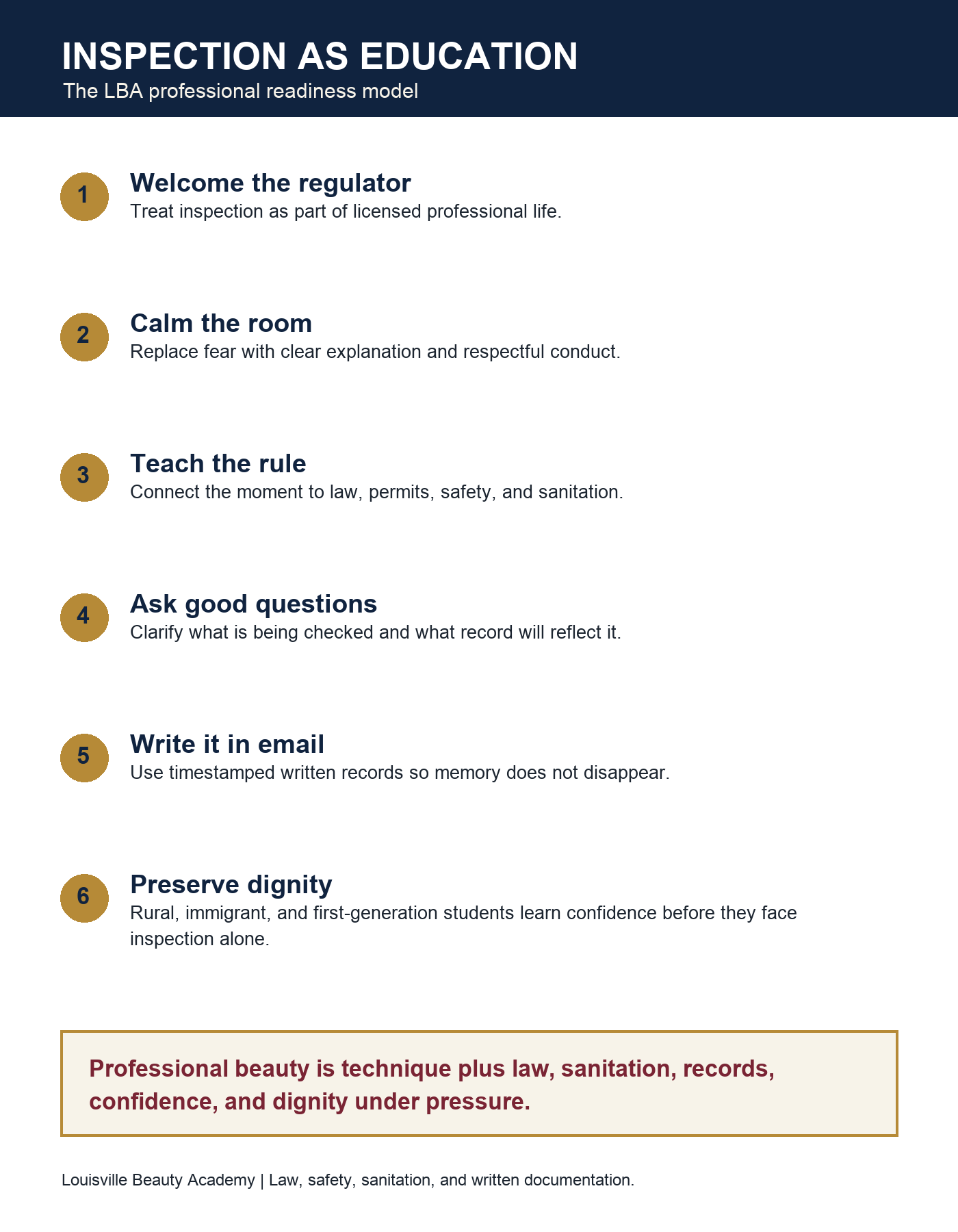
A serious beauty school teaches more than the service. It teaches the professional environment around the service: regulation, safety, sanitation, licensing awareness, written documentation, respectful communication, and the ability to remain steady when a real inspector is present.
That is why LBA treats regulatory moments as education. Students from every background should not wait until they are alone in a salon to learn how to respond professionally.
Read Next
- A Beauty School Is Not A Salon: LBA’s Ethical Student Clinic Doctrine
- The Comprehensive Guide to Infection Control, Safety, and Sanitation
- Before You Choose Cosmetology: 12 Questions Every Beauty Student Should Ask
Public Sources
- Kentucky Board of Cosmetology
- 201 KAR 12:082 – Education Requirements and School Administration
- 201 KAR 12:100 – Infection Control, Health, and Safety
- Kentucky Attorney General Open Records and Open Meetings Guide
Public information notice: this post is educational and policy-oriented. It does not accuse any person or agency of wrongdoing, disclose private student information, claim accreditation, promise licensure or employment outcomes, or replace professional legal/regulatory advice.