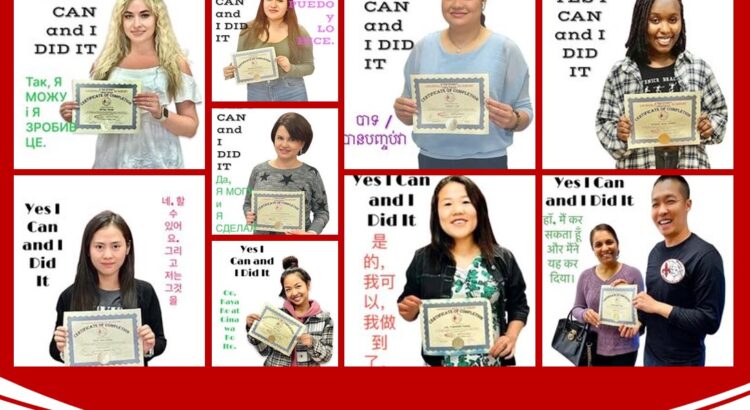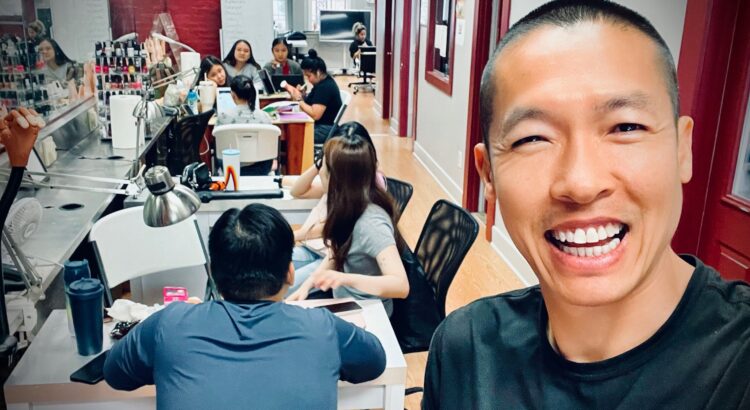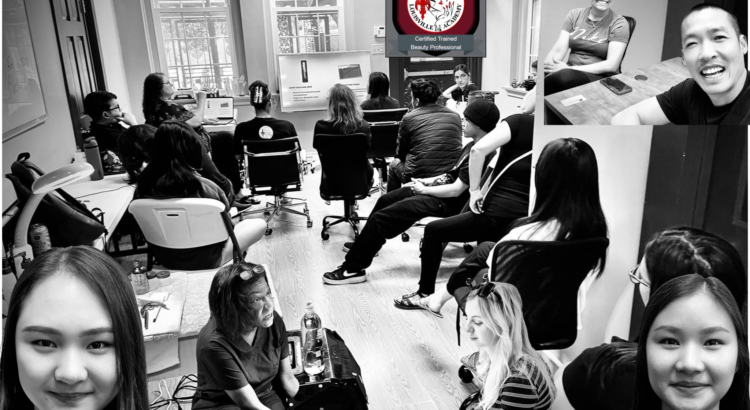
En el corazón de nuestra diversa nación, enclavada dentro de la vibrante ciudad de Louisville, se erige una institución que desafía las probabilidades y se presenta como un faro de esperanza para muchos: la Academia de Belleza de Louisville. No es solo una academia; es un testimonio del espíritu de ambición, resiliencia y el ardiente deseo de convertir lo imposible en “YO SOY POSIBLE.”
Nos enorgullece servir como una academia de belleza para inmigrantes, la población subrepresentada y aquellas almas audaces que se atreven a pensar más allá de los límites percibidos. Nuestras puertas están abiertas para aquellos que llevan sueños en sus ojos y determinación en sus corazones, sin importar de dónde vengan o cuán bien hablen inglés.
Hoy, brillamos de orgullo al mirar a nuestros más de 1000 graduados, una comunidad en rápido crecimiento de profesionales talentosos que una vez pensaron que el sueño de una educación de calidad en una tierra extranjera estaba fuera de alcance. No son solo estudiantes; son la personificación de la tenacidad y el espíritu de “YO SOY POSIBLE.”
En la Academia de Belleza de Louisville, creemos en nutrir a nuestros estudiantes en tres niveles fundamentales:
Adaptación Cultural: Reconociendo que muchos de nuestros estudiantes, como nuestro estimado fundador, Di Tran, vienen de tierras lejanas, a menudo con un dominio limitado del inglés. Aceptamos esta diversidad y nuestros educadores están capacitados para asegurar que cada estudiante se sienta comprendido, valorado y confiado en su viaje para convertirse en estadounidense.
Crecimiento Profesional: Nuestra academia no solo enseña técnicas de belleza. Guiamos a nuestros estudiantes para que se conviertan en verdaderos profesionales. Aprender de aquellos que han recorrido el camino, como Di Tran, que vino de un país del tercer mundo sin saber inglés, garantizamos que nuestros estudiantes no solo sean técnicamente competentes, sino también profesionales integrales listos para enfrentar el mundo.
Preparación para la Licencia Estatal: Nuestra máxima prioridad sigue siendo dotar a nuestros estudiantes de las habilidades y conocimientos que necesitan para aprobar con confianza los exámenes de licencia de belleza del estado de Kentucky. Con nuestra rigurosa formación y ambiente de apoyo, aseguramos que cada graduado esté listo para entrar al mundo profesional con confianza.
Pero más allá de los cursos, certificaciones y reconocimientos, lo que realmente nos distingue es nuestra ética familiar. Cada estudiante no es solo un aprendiz; son una parte invaluable de nuestra creciente familia. Una familia que está comprometida sin descanso en cambiar la narrativa de “imposible” a “YO SOY POSIBLE.”
Si estás al borde de elegir tu camino, buscando un lugar que no solo enseñe sino que eleve, inspire y crea en ti, entonces la Academia de Belleza de Louisville te espera. A nuestros graduados que han alcanzado sus sueños, a aquellos al borde de hacerlo, y a aquellos que aún están por unirse a nosotros: estamos aquí, creemos en ti y juntos, convertiremos los sueños en realidad.
Únete a nosotros. Sé parte del cambio. Sé parte de la familia que proclama al unísono: “¡YO SOY POSIBLE!”
In the heart of our diverse nation, nestled within the vibrant city of Louisville, stands an institution that defies the odds and stands as a beacon of hope for many: the Louisville Beauty Academy. It is not just any academy; it is a testament to the spirit of ambition, resilience, and the burning desire to turn the impossible into “I AM POSSIBLE.”
We take pride in serving as a college of beauty for immigrants, the underrepresented, and those daring souls who dare to think beyond perceived boundaries. Our doors are wide open for those who carry dreams in their eyes, and determination in their hearts, regardless of where they come from or how well they speak English.
Today, we beam with pride looking at our 1000+ graduates, a rapidly growing community of talented professionals who once thought the dream of a quality education in a foreign land was out of reach. These are not just students; they are the embodiment of tenacity and the spirit of “I AM POSSIBLE.”
At Louisville Beauty Academy, we believe in nurturing our students at three foundational levels:
Cultural Adaptation: Recognizing that many of our students, like our esteemed founder, Di Tran, come from lands far away, often with limited English proficiency. We embrace this diversity, and our educators are trained to ensure that every student feels understood, valued, and confident in their journey to becoming an American.
Professional Growth: Our academy doesn’t just teach beauty techniques. We mentor our students to become true professionals. Learning from those who’ve walked the path, like Di Tran who came from a third-world country with zero English, we ensure our students are not just technically proficient, but are also well-rounded professionals ready to take on the world.
State Licensure Preparation: Our topmost priority remains to equip our students with the skills and knowledge they need to confidently clear the KY state beauty licensure exams. With our rigorous training and supportive environment, we ensure every graduate is ready to step into the professional world with confidence.
But beyond the courses, certifications, and accolades, what truly sets us apart is our family ethos. Every student is not just a learner; they’re an invaluable part of our growing family. A family that’s relentlessly committed to turning the narrative of “impossible” to “I AM POSSIBLE.”
If you’re on the brink of choosing your path, seeking a place that will not only teach but uplift, inspire, and believe in you, then Louisville Beauty Academy awaits you. To our graduates who’ve achieved their dreams, to those on the brink of doing so, and to those who are yet to join us: we are here, we believe in you, and together, we will turn dreams into reality.
Join us. Be part of the change. Be part of the family that shouts in unison: “I AM POSSIBLE!”
Methacrylates are a broad family of chemical compounds used across multiple industries, including cosmetics, dentistry, medicine, manufacturing, and engineering. Within professional nail services, methacrylates are most often discussed in relation to acrylic nail systems and gel products.
Two methacrylates are frequently—and incorrectly—conflated in inspections, complaints, and public discussions:
Methyl Methacrylate (MMA)
2-Hydroxyethyl Methacrylate (HEMA)
Although both belong to the methacrylate family, they are chemically distinct substances with different safety profiles, permitted uses, and regulatory treatment. Understanding this distinction is essential for students, licensed professionals, inspectors, and regulators.
This article provides technical clarification, regulatory context, and documented compliance practices, particularly within the scope of Kentucky cosmetology law.
1. Methyl Methacrylate (MMA)
Chemical Properties
Methyl Methacrylate (MMA) is an organic compound with the chemical formula C₅H₈O₂. It is a clear, volatile liquid commonly used as a base material in the production of acrylic plastics, industrial resins, and molded acrylic sheets.
Historical Use in Nail Services
Decades ago, MMA was used in some nail acrylic systems because of its:
Extremely strong adhesion
Low cost
High durability
However, these same properties created serious safety concerns in cosmetic applications.
Safety and Regulatory Concerns
MMA has been associated with:
Nail plate damage due to excessive adhesion
Difficulty in safe removal
Skin sensitization
Respiratory irritation from vapor exposure
Because of these risks, many states explicitly restrict or prohibit the cosmetic use of MMA in nail services, particularly when applied directly to the natural nail plate.
Importantly, restrictions on MMA do not apply to all methacrylates.
2. 2-Hydroxyethyl Methacrylate (HEMA)
Chemical Properties
2-Hydroxyethyl Methacrylate (HEMA) has the chemical formula C₆H₁₀O₃. It is a distinct ester of methacrylic acid and differs structurally and functionally from MMA.
Accepted Uses
HEMA is widely used in:
Dental bonding agents
Medical devices
Contact lenses
Professional cosmetic nail products (gels and acrylic systems)
Safety Profile
HEMA is not banned in professional nail products. However, like many cosmetic ingredients, it may cause contact allergies with repeated or improper exposure, particularly without gloves, ventilation, or proper training.
For this reason, professional education emphasizes:
Controlled use
Proper ventilation
Skin-contact avoidance
Client and student allergy awareness
3. Critical Regulatory Distinction: MMA ≠ HEMA
A recurring compliance issue nationwide is the incorrect assumption that all methacrylates are prohibited. This is false.
MMA: Historically restricted or banned for cosmetic nail use in many jurisdictions
HEMA: Permitted when properly formulated, labeled, and used in professional systems
Kentucky law does not classify all methacrylates as illegal. Regulatory enforcement focuses on:
Product labeling
Intended cosmetic use
Manufacturer disclosures
Safe professional application
Sanitation and exposure controls
4. Kentucky Board of Cosmetology (KBC) Legal Context
Louisville Beauty Academy operates under the authority of the Kentucky Board of Cosmetology and adheres to all applicable statutes and administrative regulations, including but not limited to:
KRS 317A — Scope of practice and regulatory authority
201 KAR 12:030 — Sanitation and safety standards
201 KAR 12:082 — School operations, instruction, and compliance documentation
“Immediate Danger” Explained
Under Kentucky administrative law, an “immediate danger” designation applies only when a condition presents:
A direct, imminent threat to public health or safety
An active violation requiring prompt corrective action
The mere presence of a legally permitted chemical (such as HEMA)—when properly labeled, documented, and used within professional standards—does not constitute immediate danger.
Louisville Beauty Academy does not use MMA-based nail products.
LBA intentionally selects products that meet industry standards, manufacturer transparency, and regulatory expectations, including:
OPI Clarite — confirmed MMA-free
All Seasons Odorless Monomer — contains HEMA, not MMA
These products are:
Sourced from nationally recognized vendors
Supported by manufacturer documentation
Used strictly for educational purposes
Applied under licensed supervision
Integrated into structured sanitation and safety instruction
This distinction is intentional, documented, and verifiable.
6. Gold-Standard Transparency & Open Regulatory Library
Louisville Beauty Academy (LBA), as the Gold Standard of Beauty Education in Kentucky, maintains a permanent, open-library public record of all regulatory, legislative, and administrative materials impacting:
Beauty schools
Students
Licensed professionals
Employers
Kentucky citizens
This includes documented updates to 201 KAR 12:030, as finalized following the December 3, 2025 administrative review cycle.
LBA provides this information solely for education, transparency, and community understanding.
Official Regulatory Resources
For official interpretations, enforcement actions, or legal determinations, please contact:
While MMA and HEMA are both methacrylates, they are not interchangeable in chemistry, regulation, or professional use. Misunderstanding this distinction can lead to:
Improper enforcement
Unnecessary citations
Confusion for students and licensees
Through transparent documentation, chemical education, and open regulatory access, Louisville Beauty Academy demonstrates that compliance is not secrecy—it is clarity.
This article exists to support informed inspections, educated professionals, and a safer beauty industry for Kentucky.
References
Allergo Journal International. (2018). Contact allergy to (meth)acrylates in the dental series. https://doi.org/10.xxxx/xxxxx
The beauty industry, with its vast avenues, has witnessed tremendous growth over the years, and one profession that has firmly held its ground is that of a Nail Technician. As individuals become increasingly conscious about personal grooming, the demand for skilled nail technicians is on the rise. This article delves deep into the history, market size, and various opportunities surrounding this profession, with a particular focus on the Louisville Beauty Academy’s significant contribution to the industry.
History
The art of nail decoration traces back thousands of years. Ancient civilizations, like the Egyptians and Chinese, used henna, gelatin, and beeswax to color their nails. Fast forward to the 20th century, and the nail industry began to take a professional shape, with salons dedicated exclusively to nail care sprouting across cities.
Market Size & Statistics
Over the years, the nail salon industry has witnessed consistent growth. In the U.S. alone, the nail salon industry’s revenue was estimated at over $8 billion in 2020. Such numbers demonstrate the promising potential of the nail technician profession.
The Bureau of Labor Statistics projects a steady growth rate for manicurists and pedicurists in the upcoming years. This data not only reaffirms the industry’s robustness but also suggests that there’s never been a better time to pursue a career as a nail technician.
Opportunity in Workforce Development
As the market evolves, so does the need for well-trained professionals. Today, being a nail technician is not just about polishing nails. It’s about understanding nail health, mastering the art of nail design, and staying updated with the latest technologies and trends. This presents an excellent opportunity for educational institutions to mold the next generation of nail technicians.
Employment Opportunities
With the increasing number of nail salons, spas, and other beauty establishments, the demand for skilled nail technicians is surging. From being a full-time employee at a renowned spa to owning a nail salon, the avenues are vast. Moreover, the flexibility this profession offers is unmatched. Many technicians prefer to be mobile, offering services at clients’ homes, while others collaborate with wedding planners or event organizers to provide specialized services.
Learning Opportunities
The beauty industry’s dynamic nature demands continuous learning. Several institutions offer nail technician courses, but choosing the right one can make all the difference in a budding technician’s career.
Enter, Louisville Beauty Academy.
Recognized as the highly affordable, flexible, and trusted institution in Kentucky, Louisville Beauty Academy has set benchmarks in advanced teaching methodologies and technology usage. With a legacy of producing over 1,000 graduates and counting, the academy is pivotal in bridging the gap between the industry’s talent demand and supply.
What sets Louisville Beauty Academy apart?
Affordability: Many aspirants often hold back from pursuing their passion due to financial constraints. Louisville Beauty Academy understands this and offers top-notch education at the highly affordable rates.
Flexibility: Catering to a diverse range of students, including those who juggle multiple responsibilities, the academy offers flexible timings and courses to fit everyone’s needs.
Trust: With its increasing number of graduates, the academy has garnered immense trust from students and industry experts alike.
Personalized Education: At Louisville Beauty Academy, the learning experience is not just limited to books and lectures. Each student gets personalized attention with one-on-one sessions with instructors, ensuring they grasp every nuance of the trade.
Support for the Underserved: The academy takes pride in its mission to support underserved populations. This initiative not only brings diverse talent to the industry but also empowers many to build a promising career.
In conclusion, as the nail technician industry continues to flourish, it’s imperative for aspirants to equip themselves with the best skills and knowledge. Institutions like Louisville Beauty Academy play a pivotal role in shaping the future of the industry, ensuring every graduate is not just a skilled technician, but a master of the craft. For those seeking a rewarding career in this field, there’s no better place to start than Louisville Beauty Academy.
In an era where the beauty industry is booming, the importance of a comprehensive educational foundation cannot be understated. The Louisville Beauty Academy (LBA) stands out as a beacon of excellence, establishing benchmarks in affordability, flexibility, and inclusive education. This article sheds light on LBA’s unique offerings, emphasizing its position as an elite beauty school in the region.
Affordability: Value-driven Education
Cost often stands as a significant barrier when choosing an educational institution. The disheartening reality is that many potential beauty professionals abandon their dreams due to financial constraints. Louisville Beauty Academy directly addresses this concern, offering top-tier quality education without an exorbitant price tag. With courses priced significantly lower than many counterparts, LBA makes quality beauty education accessible to a broader audience.
Flexible Learning: Time and Payment Options
Flexibility is indispensable in today’s fast-paced world. Whether you’re balancing a job, family responsibilities, or other commitments, LBA offers tailored solutions. The academy provides a plethora of courses designed to fit varying schedules, ensuring that time constraints don’t hinder a student’s educational journey.
Beyond time flexibility, the academy’s approach to payments stands out. Recognizing the financial pressures many students face, LBA offers adaptable payment options, allowing students to focus on their studies without the looming stress of financial strain.
An Inclusive Environment: Championing Diversity
For LBA, diversity isn’t just a buzzword—it’s integral to the academy’s ethos. The institution takes immense pride in its inclusivity, particularly for immigrant students who may face challenges in conventional educational settings due to language barriers. Recognizing the language challenges many immigrants face, LBA offers support systems and resources to ensure these students receive the same quality education as their peers.
A Holistic Curriculum: From Basics to Advanced Techniques
A standout feature of LBA’s approach is its comprehensive curriculum. To illustrate, let’s consider the art of manicuring. While seemingly simple, achieving a perfect manicure requires mastering a sequence of steps, and LBA ensures its students are adept at each.
Preparation: Emphasizing the importance of cleanliness, sanitization, and old polish removal.
Shaping: Teaching the nuances of various nail shapes, from oval to almond.
Cuticle Care: Stressing the techniques of gentle pushing and meticulous trimming.
Exfoliation: Highlighting the importance of dead skin removal for optimal hand texture.
Massage: Imparting techniques to boost blood circulation through therapeutic massage.
Base Coat Application: Teaching the foundational steps for a long-lasting manicure.
Nail Polish Application: Perfecting the art of even and seamless polish application.
Top Coat Application: Ensuring a glossy and lasting finish.
Drying: Techniques to ensure the manicure remains pristine.
Conclusion
The Louisville Beauty Academy isn’t merely a school; it’s an institution symbolizing hope, opportunity, and excellence. It represents a place where dreams aren’t deterred by financial or linguistic barriers. Through its unwavering commitment to affordability, flexibility, and inclusivity, LBA guarantees that every student, regardless of their background, can compete and excel in the vibrant world of beauty.
Eyelash extensions have steadily grown from a trend into an established beauty essential. For anyone dreaming of diving into this booming industry or perfecting their craft, the latest book by Di Tran, titled “The Complete Guide to Eyelash Extensions: Artistry, Safety, and Business Essentials for Building Your Lashing Career”, promises to be an indispensable resource.
Comprehensive Training for Aspiring and Established Artists
Released on August 17, 2023, this guide stands out as perhaps the most thorough training manual for both budding and experienced lash technicians. At its heart, the book is dedicated to mastering the application of eyelash extensions that not only look mesmerizing but are also safely applied.
Technicians will appreciate the systematic curriculum, meticulously designed to enhance their proficiency in:
Client analysis
Isolation techniques
Precision adhesion methods
Troubleshooting common issues
Mastering advanced applications, such as volume lashes.
Moreover, Tran emphasizes the critical importance of health and safety in the industry. The book underscores the necessity of understanding the best practices for the well-being of clients, a fundamental aspect that paves the way for licensing and insurance.
Business Insights for a Flourishing Lash Studio
While many manuals stop at technique, Tran’s guide delves deeply into the entrepreneurial facet of the industry. Readers are provided with a comprehensive view of managing a successful lash studio, from the initial choice of equipment to effective branding and marketing strategies. This holistic approach ensures that technicians are not only skilled but also primed for business success.
Decades of Expertise Distilled
What sets this book apart is its author, Di Tran, the master lash educator and founder of Louisville Beauty Academy. Tran’s rich experience infuses every page, offering readers insights, industry secrets, and hands-on tips in an easily digestible format. In addition to the core content, students and professionals alike will benefit from the accompanying AUDIO-visual materials, practitioner pointers, self-assessment tools, and adaptable curriculums.
In Conclusion
For those standing at the crossroads of their lashing journey, be it beginners or seasoned professionals, “The Complete Guide to Eyelash Extensions” beckons as the beacon of knowledge. It’s not just a book; it’s a comprehensive journey towards mastery, confidence, and success in the world of eyelash extensions.
P.S.: Louisville Beauty Academy is a leader in beauty education. Renowned for its affordability and flexibility, the academy prides itself on being at the forefront of cutting-edge technology and the latest industry knowledge. With a relentless drive to constantly evolve and stay ahead of trends, the academy exemplifies excellence in every aspect of beauty education.
La industria estadounidense del cuidado de uñas, conocida por su diversidad vibrante, ha visto contribuciones significativas de varios grupos étnicos a lo largo de los años. La comunidad latina, con su rica énfasis cultural en la belleza y el cuidado personal, ha sido una participante activa en este ámbito. Su presencia no solo se ve en los salones de uñas como consumidores, sino también como profesionales capacitados, influencers y empresarios. Sin embargo, el camino no está exento de desafíos.
Significado Cultural Profundo En muchas culturas latinas, la belleza y el cuidado personal tienen una profunda significación. Este valor cultural es evidente en varios dominios, desde el cuidado del cabello hasta el maquillaje y el cuidado de las uñas. Muchos empresarios latinos, reconociendo este pilar cultural, se han aventurado en la industria del cuidado de uñas, estableciendo sus propios salones y negocios.
Influencers, Artistas y Marcas El auge de las redes sociales ha introducido una nueva era para el arte de las uñas. Los influencers de belleza latinos, especializados en diseños y tendencias de uñas, se han hecho un hueco, guiando las evoluciones de la industria. Además, los empresarios latinos han ampliado las ofertas de la industria al lanzar sus propias líneas de esmaltes y creando herramientas adaptadas a las preferencias de su comunidad.
Desafíos en el Camino Si bien la industria de la belleza es vasta y llena de potencial, los latinos enfrentan desafíos específicos al aventurarse en la industria del cuidado de uñas. La competencia del mercado, la necesidad constante de mejorar habilidades y las normativas pueden representar obstáculos. Más pertinente aún son los desafíos de las barreras del idioma. Las pruebas de examinación, un paso crucial para la legitimización profesional, a menudo restringen a los hablantes no nativos de inglés.
En este contexto, hacemos un llamado a la comunidad latina para abogar por pruebas en múltiples idiomas junto con sus líderes comunitarios y representantes estatales. Es esencial recalcar que si una persona entiende matemáticas y saneamiento en español, es equivalente a entenderlo en inglés. El conocimiento debe ser el criterio de medición, no el idioma en el que se muestra.
Conclusión La implicación de la comunidad latina en la industria del cuidado de uñas refleja una combinación de valores culturales, espíritu empresarial y habilidad. Si bien persisten desafíos, en especial en el ámbito de las barreras del idioma y la representación, el camino a seguir está claro. Abogar por la inclusividad, oportunidades equitativas y representación puede llevar a una industria de la belleza verdaderamente diversa y rica. Con líderes y defensores presionando por el cambio, un horizonte más brillante e inclusivo es sin duda alcanzable.
The American nail industry, known for its vibrant diversity, has seen significant contributions from various ethnic groups over the years. The Latino community, with its rich cultural emphasis on beauty and personal grooming, has been an active participant in this domain. Their presence is not only seen in nail salons as consumers but also as skilled professionals, influencers, and entrepreneurs. However, the journey is not without its challenges.
A Deep-rooted Cultural Significance In many Latino cultures, beauty and personal grooming hold a profound significance. This cultural value is evident in various domains, from haircare to makeup and nail care. Events, from festive occasions to daily grooming, underscore the importance of well-maintained nails. Many Latino entrepreneurs, recognizing this cultural touchstone, have ventured into the nail industry, establishing their own salons and businesses.
Influencers, Artists, and Brands The rise of social media platforms has ushered in a new era for nail artistry. Latino beauty influencers, specializing in nail designs and trends, have carved a niche for themselves, guiding industry evolutions. Additionally, Latino entrepreneurs have expanded the industry’s offerings by launching their nail polish lines and crafting tools suited to their community’s preferences.
Challenges on the Path While the beauty industry is vast and full of potential, Latinos face specific challenges when venturing into the nail industry. Market competition, ever-evolving skill requirements, and regulatory standards can pose hurdles. More pertinently, the challenges of language barriers loom large. Examination testing, a crucial step for professional legitimization, often restricts non-English speakers.
For instance, some states have been highlighted for their restrictions on multi-language testing. The sentiment of the immigrant community’s leaders, advocating for multilanguage tests, is powerfully expressed. They rightly point out that if an individual understands math and sanitation in Spanish, it is equivalent to understanding it in English. Knowledge should be the measuring yardstick, not the language in which it is displayed.
Furthermore, the appeal for equal representation, particularly in state boards of cosmetology, stands as a testament to the community’s drive for inclusivity. Diversity within such boards can usher in a more holistic and encompassing regulatory framework.
Conclusion The Latino community’s involvement in the nail industry reflects a blend of cultural values, entrepreneurial spirit, and skill. While challenges persist, especially in the realm of language barriers and representation, the path forward is clear. By advocating for inclusivity, equal opportunities, and representation, the beauty industry can truly celebrate its diverse tapestry. With leaders and advocates pushing for change, a brighter, more inclusive horizon is undoubtedly within reach.
The American nail salon industry, with its glitz and glamour, boasts a rich tapestry interwoven with the Vietnamese immigrant story. The rise of Vietnamese Americans in the nail industry illuminates a narrative of economic opportunity, community resilience, and the power of entrepreneurship.
From Hollywood to Main Street The link between Vietnamese immigrants and nail salons in America begins, surprisingly, with Hollywood. In 1975, actress Tippi Hedren, most celebrated for her iconic role in Hitchcock’s “The Birds”, visited a Vietnamese refugee camp in California. Moved by their plight, Hedren introduced several women to the nail artistry profession, even sponsoring their training at a local beauty school1.
An Opportunity Beckons The nail salon industry provided an appealing prospect for many Vietnamese immigrants, especially those grappling with language barriers and limited professional avenues. With the need for minimal startup costs and the ability to learn the craft swiftly, it became an attractive proposition for newcomers seeking economic stability2.
The Power of Networking The initial group of trained manicurists found success and, in turn, became local pioneers. Many ventured into their own businesses and brought in relatives and acquaintances from their community. This ripple effect, a combination of entrepreneurial spirit and community networking, significantly bolstered the growth of Vietnamese-owned nail salons3.
Revolutionizing Accessibility The influx of Vietnamese nail salons in America led to a transformative shift in the perception of nail care. Historically regarded as a luxury, Vietnamese-owned establishments made these services affordable for a broader segment of the population4, turning nail care into a routine self-care experience for many.
Today’s Landscape Presently, Vietnamese Americans play a dominant role in the nail salon industry. Some studies estimate that they own and operate up to half of all nail salons in the U.S5, a testament to their impactful and enduring legacy in this niche.
In essence, the trajectory of Vietnamese Americans in the nail industry is a vibrant testament to determination, community collaboration, and the quintessential American dream.
Footnotes
Robinson, M. (2016). “How Vietnamese Americans Took Over The Nails Business: A Documentary”. NPR. Retrieved from NPR website. ↩
Vo, L. T., & Nguyen, T. T. (2012). “The Vietnamese American 1.5 Generation: Stories of War, Revolution, Flight and New Beginnings”. Temple University Press. ↩
Tran, M. (2015). “How did Vietnamese nails salon owners come to dominate the beauty industry?”. The Guardian. Retrieved from The Guardian website. ↩
Elias, M. (2009). “Vietnamese immigrants nail the American dream”. USA Today. Retrieved from USA Today website. ↩
Nguyen, M. T. (2018). “The rise and dominance of Vietnamese nail salons in America”. Journal of American Ethnic History. ↩
If you’re a beauty professional in Kentucky considering a move to Indiana, you might be wondering how you can transfer your credentials and continue your practice seamlessly. Whether you’re a nail technician, instructor, cosmetologist, or esthetician, the process of transferring your license to the Indiana State Board of Cosmetology is vital. This article will guide you through the essential steps required for a smooth transfer.
Before you can proceed with any online application, you need to have an account on MyLicense.IN.gov. If you don’t have one yet, it’s the first step. Go to MyLicense.IN.gov, enter your SSN and birthdate, and the system will prompt you to create an account. Having an account will ease your application process and help you keep track of any requirements or status updates.
2. Understand the Requirements:
After setting up your account, familiarize yourself with Indiana’s requirements for beauty professionals:
Application: As a high school graduate or its equivalent, you can apply online via your MyLicense account.
Application Fee: A non-refundable fee of $40.00, which can be paid by credit or debit card through your online account.
Positive Response Documentation: If your application contains any ‘yes’ responses, provide a detailed statement and relevant court documents.
Name Change Documentation: If there’s a name difference, provide legal proof, such as a marriage certificate or divorce decree.
Foreign Jurisdictions: If you studied outside the U.S., submit your high school diploma and beauty culture school transcript. If not in English, they require a certified English translation.
Verification of State Licensure(s): Indiana needs verification from every jurisdiction where you’ve held a license. A mere copy of your license won’t suffice.
3. Meet the Specific Requirements for Instructors:
If you’re an instructor, note these specific requirements:
Completion of 1000 hours of beauty culture instructor education. Indiana does not accept apprenticeship hours. If you’ve practiced for a year, that can substitute for 100 hours, provided you’ve completed a minimum of 700 hours of instructor education.
A 70% passing rate is a must on both written and practical licensing exams from your previous jurisdiction.
Submit documentation proving you met the education requirement if your original jurisdiction accepts apprenticeship hours for licensure.
4. Note Differences and Transfer Processes:
While both Kentucky and Indiana have rigorous standards for licensing beauty professionals, specifics might differ. For example, if your license from Kentucky doesn’t meet Indiana’s reciprocity requirements, you can transfer your hours from Kentucky to an Indiana-approved beauty culture school, graduate, and then apply for an Indiana license by examination.
5. Consider the License Prerequisites:
Instructor licenses in Indiana act as a prerequisite to a base license (e.g., cosmetology, barber, manicuring). If you’re a nail technician, you’ll first need to obtain an Indiana manicurist license before qualifying as an instructor.
6. Stay Updated on Renewal and Education Requirements:
In Indiana, there’s no requirement for continuing education under the cosmetology board, and licenses are renewed every four years.
In Conclusion:
Transferring your beauty professional license between states can be daunting, but with the right knowledge and by understanding Indiana’s specific requirements, the transition can be smooth. Always consider reaching out to local state boards or professionals for personalized advice and ensure you have an active account on MyLicense.IN.gov to facilitate your application process.
P.S. For any further questions or clarifications, the most effective method of communication is to directly email the Indiana State Board of Cosmetology. They are equipped to provide you with the most accurate and up-to-date information pertaining to your licensing needs.
I am [YOUR NAME], holding licenses as a nail technician and instructor in Kentucky. I’m considering a move to Indiana and would like to transfer my licenses accordingly.
Are there any transfer exams or requirements for those from Kentucky?
Could you brief me on the application process, including forms and fees?
Is there a reciprocity agreement between Indiana and Kentucky for these licenses?
Post-transfer, are there added continuing education requirements?
What is the usual timeline for the transfer approval?
How often will I need to renew these licenses in Indiana?
Your assistance is greatly appreciated.
Thank you,
Your Name
Kentucky State Board of Cosmetology – Process to Request Certification on KYBOC.MyLicenseOne.com
Disclaimer: The information provided in this article is sourced from public records and is shared purely for instructional and informational purposes. It should not be construed as legal advice or a definitive guide on the licensing process. While we aim to present accurate and up-to-date information, regulations and requirements may change. For detailed and specific instructions, always consult and follow up directly with the State Board of Cosmetology of the respective state. We highly recommend reaching out to them for any licensing inquiries or clarifications.