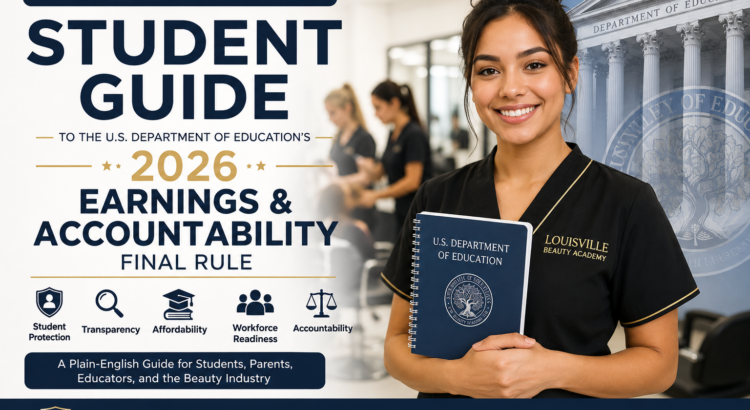
Louisville Beauty Academy’s Student Guide to the U.S. Department of Education’s 2026 Earnings & Accountability Final Rule


Louisville Beauty Academy as a Center of Excellence for Beauty Education Information

Louisville Beauty Academy believes education begins before enrollment.

Our purpose is not only to teach beauty skills, but also to help students, families, educators, employers, and the public understand the rules, costs, licensing pathways, responsibilities, and financial choices connected to beauty education.

For that reason, LBA is committed to serving as a local Center of Excellence for Beauty Education Information — a place where students can learn clearly, ask questions, compare options, and make informed decisions before choosing any school.

Louisville Beauty Academy does NOT process Title IV federal student aid, including federal student loans or Pell Grants. Because we do not operate as a federal-aid-dependent model, our goal is to keep tuition lower, reduce unnecessary administrative cost, and pass as much educational value as possible directly to students through affordability, transparency, and practical training.

This guide is part of that purpose.

By organizing federal policy, student questions, licensing concepts, affordability concerns, federal-aid terminology, and plain-English explanations in one place, Louisville Beauty Academy seeks to support transparency across the beauty education field.

Our mission is education first: clear information, honest guidance, practical training, responsible cost, and accessible pathways toward state licensure.


A Plain-English Guide for Students, Parents, Educators, and the Beauty Industry

About This Guide

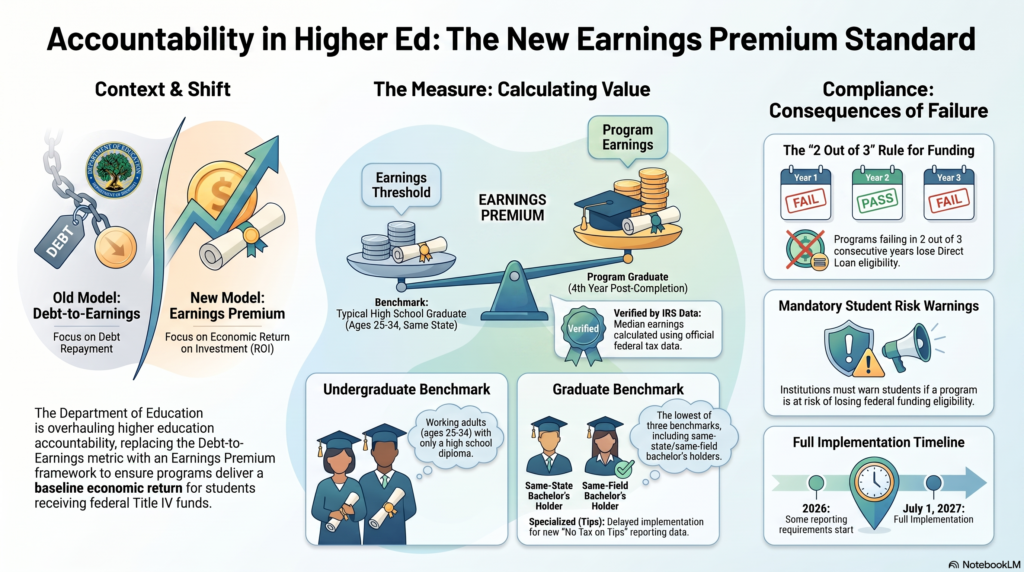
This guide is designed to help students, parents, educators, employers, policymakers, and the public understand the portions of the U.S. Department of Education’s June 29, 2026 Earnings & Accountability Final Rule that are most relevant to beauty education.

Unlike a news article, this page serves as a long-term educational resource. It combines official federal information with Louisville Beauty Academy’s educational commentary to help readers better understand the policy landscape.

Important Disclaimer

This guide is an independent educational resource prepared by Louisville Beauty Academy. The U.S. Department of Education does not endorse, accredit, evaluate, approve, or otherwise recognize Louisville Beauty Academy through this rule. References to federal materials are provided for educational purposes. Readers are encouraged to review the official Department of Education publications directly.


Why This Guide Exists

Federal education regulations can be difficult to read, often spanning hundreds of pages filled with legal terminology and technical language.

Students deserve a clear explanation of:

  • What changed.
  • Why it changed.
  • What it means for beauty education.
  • What it means for future students.
  • What it does not mean.

Our goal is education—not persuasion.


Quick Summary

The Department’s Goals

The Department’s final rule focuses on several major themes, including:

  • Protecting students from low-earning programs.
  • Improving educational accountability.
  • Increasing transparency.
  • Reducing unnecessary student debt.
  • Supporting workforce needs.
  • Improving information available to students.

These themes are part of a broader national conversation about educational value.


Why Beauty Education Is Specifically Discussed

The final rule includes discussion regarding cosmetology education and recognizes that many cosmetology programs operate differently from many traditional colleges.

The rule discusses comments noting that:

  • many cosmetology programs do not participate in the Federal student loan program;
  • some non-federally funded cosmetology programs may have lower tuition prices;
  • similar educational outcomes may exist in certain circumstances; and
  • these programs help supply the cosmetology workforce.

These discussions recognize that beauty education has characteristics that differ from many other forms of higher education.


What “Delayed Implementation” Means

One of the most significant aspects of the final rule for beauty education is delayed implementation for certain occupations, including cosmetology, barbering, esthetics, and massage therapy.

This means certain program eligibility consequences will begin later than originally proposed.

It does not mean:

  • beauty schools are exempt;
  • accountability has been eliminated;
  • regulations no longer apply.

Instead, the Department determined that implementation should be delayed for these occupations while using earnings data that better reflects the implementation of federal tax policy affecting tipped workers.


Questions Every Student Should Ask Before Choosing Any Beauty School

Regardless of which school you attend, ask:

Tuition

  • What is the total tuition?
  • Are there additional fees?
  • Are books included?
  • Is the student kit included?

Licensing

  • Does this program prepare me for state licensure?
  • What are my state licensing requirements?
  • What examinations are required?

Financial Commitment

  • Will I borrow money?
  • How much debt could I graduate with?
  • What are my repayment responsibilities?

Educational Experience

  • What is the attendance policy?
  • What is the refund policy?
  • How much hands-on training will I receive?
  • How are practical skills taught?

Students who ask informed questions make better educational decisions.


Understanding Key Terms

State Licensure

A state-issued professional license allowing an individual to practice after meeting legal requirements.

Accreditation

A separate institutional quality assurance process that may be required for participation in certain federal student aid programs.

Federal Student Aid

Federal financial assistance programs authorized under federal law for eligible students attending eligible institutions.

Workforce Education

Career-focused education designed to prepare students for employment in licensed or skilled professions.


What This Rule Does NOT Say

The Department of Education does not state that:

  • Louisville Beauty Academy is endorsed.
  • Louisville Beauty Academy is approved by the federal government.
  • Accreditation is unnecessary.
  • Lower tuition automatically means higher quality.
  • Every beauty school is the same.

Readers should be careful not to draw conclusions beyond what the Department actually published.


Louisville Beauty Academy’s Perspective

Since opening in 2016, Louisville Beauty Academy has believed that career education should be:

  • Affordable.
  • Transparent.
  • Practical.
  • State-licensed.
  • Workforce-focused.
  • Student-centered.
  • Ethically operated.

We have also believed that students deserve clear information before enrolling, including tuition, licensing requirements, expected commitments, and educational expectations.

Today, after helping nearly 2,000 graduates pursue state licensure and careers, we continue to believe that informed students make better educational decisions.

While the Department of Education does not discuss Louisville Beauty Academy specifically, we believe the broader national conversation surrounding affordability, transparency, workforce preparation, and responsible educational value reflects principles that have guided our educational philosophy since our founding.


Read the Official Sources

We encourage every reader to review the original materials.
https://www.ed.gov/about/news/press-release/us-department-of-education-issues-final-rule-hold-all-colleges-and-universities-accountable-low-earning-programs

Before You Choose Cosmetology: 12 Questions Every Beauty Student Should Ask

A student deserves more than one default answer

Cosmetology is a valuable license. It can be the right path for a student who wants broad training in hair, skin, nails, salon service, and multiple areas of beauty practice.

But cosmetology is not the whole beauty industry.

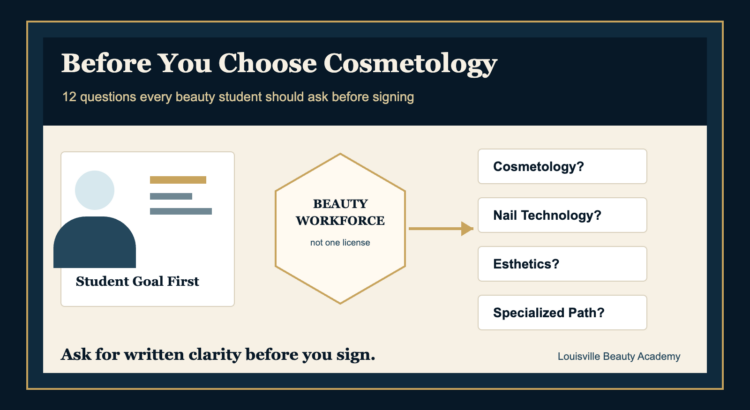
Beauty is larger than one license. A student may want to become a nail technician. Another may want esthetics or skincare. Another may want shampoo/style, instructor development, salon ownership, booth rental, lawful self-employment, or a specialized beauty business. Some students need the broadest pathway. Some students need the focused pathway.

The ethical question is not, “How do we place every student into the longest program?”

The ethical question is, “What does this student actually want to do, and what is the lawful, affordable, documented pathway that fits that goal?”

Louisville Beauty Academy believes students should be guided with clarity before they sign. A school should be able to explain the path, the cost, the time, the license, the exam steps, the career reality, and the difference between a learning environment and a salon.

The first question: what service do you actually want to perform?

Before a student chooses cosmetology, the student should pause and ask a simple question: what beauty service do I actually want to perform after school?

If the answer is broad salon practice, cosmetology may make sense. If the answer is nails, the student should ask about nail technology. If the answer is skincare, facials, or esthetics, the student should ask about esthetics.

This is not anti-cosmetology. It is pro-student. Cosmetology should be chosen because it fits the student’s goal, not because it is treated as the automatic default for every beauty student.

Why statistics matter before enrollment

Students should ask whether the school director or admissions adviser understands current public workforce and license-use questions.

Public labor data separates manicurists/pedicurists, skincare specialists, and barbers/hairstylists/cosmetologists into distinct occupational categories. According to the U.S. Bureau of Labor Statistics, employment of manicurists and pedicurists is projected to grow 7% from 2024 to 2034. Skincare specialists are also projected to grow 7%. Barbers, hairstylists, and cosmetologists are projected to grow 5% overall.

Those numbers do not mean one path is good and another is bad. They mean students deserve a real comparison.

There is also a serious license-use question. In a January 2025 state regulatory review, Utah’s Office of Professional Licensure Review reported survey results showing that 32% of surveyed active cosmetology-related licensees worked zero hours, 72% worked 20 hours or less per week, and only 17% worked more than 30 hours per week.

That Utah report should not be presented as a national statistic by itself. It is one state-level public example. But it is serious enough to raise a fair student question: if many licensed professionals are not using a broad license full-time, what should a student ask before choosing the broadest pathway?

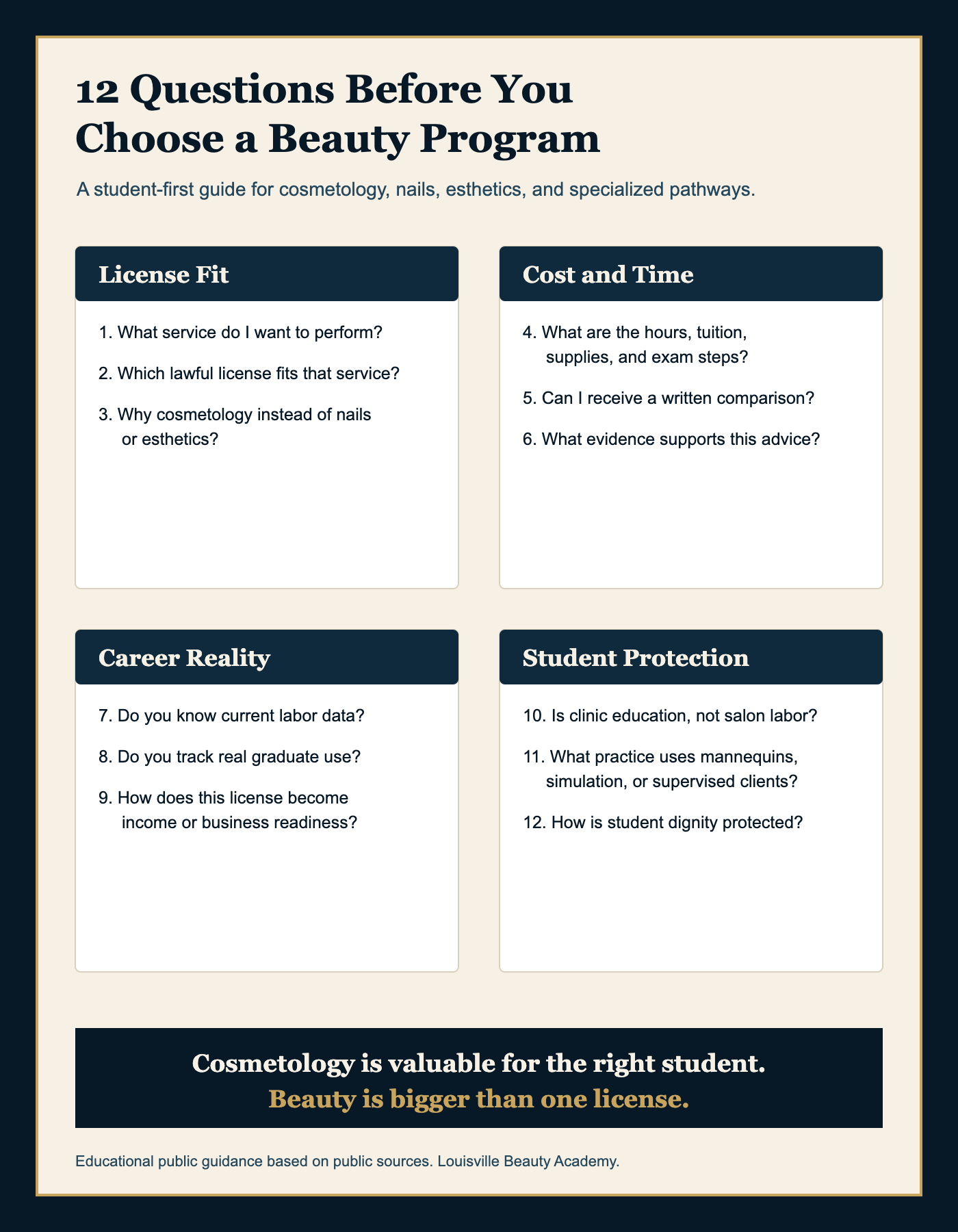
12 questions every beauty student should ask

  1. What beauty service do I actually want to perform after graduation?
  2. Which license, permit, or training pathway legally fits that service in my state?
  3. Why are you recommending cosmetology instead of nail technology, esthetics, or another focused pathway?
  4. What are the hours, tuition, supply costs, exam steps, and likely timeline for each pathway?
  5. Can I receive a written comparison before I sign?
  6. What public data or school evidence are you using to advise me?
  7. Are you familiar with current labor data for cosmetology, nail technology, and esthetics/skincare?
  8. Do you track whether graduates work in-field, work part-time, become self-employed, or specialize after licensure?
  9. If I choose cosmetology, how will the program help me turn a broad license into a real career plan?
  10. If I only want nails or skincare, why should I choose a broader pathway?
  11. How does the school teach employment, booth rental, self-employment, sanitation, licensing discipline, and small-business reality?
  12. What does student success look like six months and one year after licensure?

Ask about school clinic before you begin

A beauty school is not a salon. A salon is a commercial service business. A school is an educational environment. A school exists to train, supervise, document, correct, protect, and prepare students for lawful practice.

Student clinic can be an important part of training when it is properly supervised, tied to curriculum, documented, and focused on student learning. Students should ask what live-client work is required, optional, or recommended under school policy and state rules; how mannequins, simulation, classroom theory, and supervised live-client practice each fit; and how the school protects student dignity, sanitation, safety, and learning pace.

Federal labor analysis can be fact-specific. The U.S. Department of Labor’s student/intern guidance uses a primary-beneficiary framework under the Fair Labor Standards Act. Public education should not turn that into a loose slogan. The safer and more ethical question is whether the student is truly the primary educational beneficiary of the training experience.

In plain language: the student should be learning, not being used.

The right school should explain, not pressure

A strong beauty school should be able to explain why the recommended license fits the student’s goal, how much the pathway costs, how long it takes, what the student can lawfully do after completion and licensure, what the student cannot lawfully do, what public sources support the school’s guidance, and what the student should confirm directly with official licensing sources.

The right conversation is not pressure. It is guidance.

Cosmetology is valuable for the right student. Beauty is bigger than cosmetology.

A final word to students

Before you sign, ask. Before you borrow, ask. Before you choose the longest path, ask whether it is the right path. Before you enter clinic, ask what the educational purpose is. Before you trust a recommendation, ask what data and public sources support it.

Good questions do not disrespect a school. Good questions protect the student, the school, the profession, and the public.

Checklist infographic titled 12 Questions Before You Choose a Beauty Program, organized by license fit, cost and time, career reality, and student protection.
Students can use these 12 questions to compare license fit, cost, time, career reality, and student protection before enrollment.

References and Public Sources

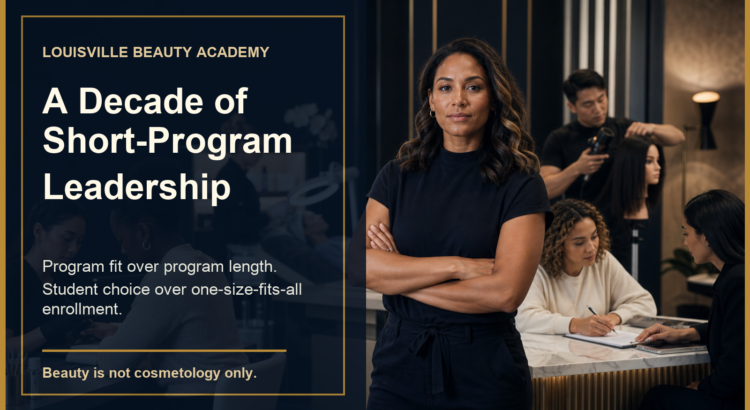
A Decade of Short-Program Leadership: Why Beauty Is Not Cosmetology Only

Ten years of proof changes the conversation

For nearly a decade, Louisville Beauty Academy has helped students enter the beauty workforce through shorter, specialized, lawful programs that match real student goals.

That experience matters because beauty education has too often been publicly reduced to one word: cosmetology. Cosmetology is valuable. It is a serious broad license for the students whose goals require broad preparation. But beauty is not cosmetology only, and cosmetology should not be treated as the default answer for every student who walks through the door.

Our own enrollment reality confirms the shift

LBA’s lived enrollment reality has consistently shown that many students are not primarily looking for the longest generalist route. They are looking for the path that fits their life, their budget, their service goal, and the law.

Many students want a focused pathway: nail technology, esthetics and skincare, eyelash services, shampoo and styling, instructor development, or another specific beauty workforce route. For those students, the ethical question is not how much time a school can keep them enrolled. The ethical question is what pathway they actually need.

The real gate is often knowledge

Beauty education is not just hands. It is lawful judgment. It is theory, safety, sanitation, infection control, public protection, documentation, exam readiness, and professional responsibility.

When students struggle, the barrier is often not that they cannot care, serve, practice, or work. The barrier is often the knowledge system around licensure. That is why LBA and Di Tran University treat theory support, multilingual explanation, AI-assisted learning, and compliance clarity as workforce infrastructure.

A different answer to federal scrutiny

The federal conversation around career programs, debt, earnings, and gainful employment has created stigma around parts of beauty education. LBA’s answer is not to defend every old model. Our answer is better: right-size the pathway, reduce unnecessary burden, make program choice transparent, and help students enter the workforce through the route that fits.

The future of beauty education should not be one long default lane. It should be an honest map.

Not every student needs the same road. Every student deserves the path that fits.

This article continues the LBA doctrine introduced in Beauty Workforce Is Not One License.

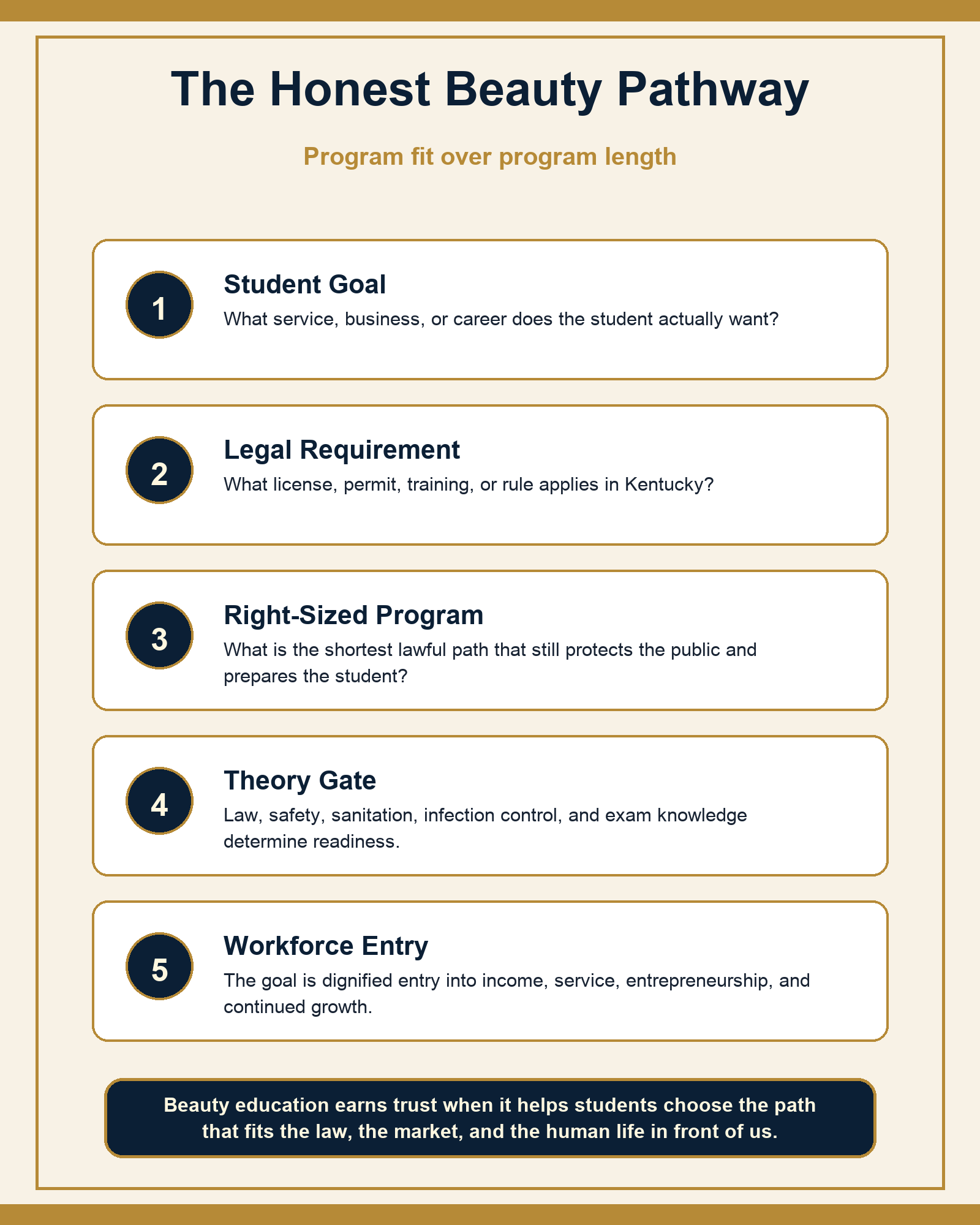
Infographic titled The Honest Beauty Pathway showing student goal, legal requirement, right-sized program, theory gate, and workforce entry.
The honest beauty pathway begins with the student’s goal and the legal requirement, then matches the program to the real path forward.

Public Source Anchors