The Impact of the Gainful Employment Rule: Comparing Requirements Before and After

The Gainful Employment Rule, introduced by the U.S. Department of Education, has brought significant changes to the requirements for beauty schools, particularly those offering cosmetology, massage therapy, and other wellness-related certifications. This law, designed to protect students from accruing unmanageable debt, requires schools to prove that their graduates can find jobs and earn enough to repay their student loans. However, the added administrative burdens and expenses have placed immense strain on these institutions, resulting in a wave of closures.

Here’s a comparison of the requirements before the law and the new requirements after its implementation, highlighting the hardships many schools now face.


Requirements Before the Gainful Employment Rule:

  1. Basic Accreditation and Licensing:
    • Schools needed to be accredited by a recognized accrediting body and meet state licensing requirements. This included compliance with curriculum standards, instructional quality, and ensuring students passed state board exams to obtain their licenses.
  2. Compliance with Federal Student Aid:
    • Schools offering federal financial aid (such as Pell Grants or federal loans) had to ensure proper administration of funds, track student enrollment, and submit basic financial data to the U.S. Department of Education.
  3. Job Placement Rates:
    • While some accreditation agencies required schools to report job placement rates, the process was less rigorous. Schools typically used surveys or informal tracking to demonstrate that graduates were employed in their field.

New Requirements Under the Gainful Employment Rule:

  1. Debt-to-Earnings Accountability:
    • Schools must now prove that their graduates earn enough income to manage their student loan payments. Specifically, the graduates’ annual loan payments should not exceed 8% of their total income or 20% of their discretionary income​(Modern Salon). Schools are responsible for tracking and verifying this data, adding substantial administrative and financial burdens.
  2. Documenting Graduate Earnings:
    • Unlike before, schools must now provide verifiable data on graduate earnings. This includes requiring graduates to submit pay stubs, tax forms (such as W-2s or 1099s), or using third-party employment verification services. Many graduates, particularly those in the beauty industry who rely on cash payments and tips, are reluctant to provide such documentation, making compliance almost impossible for schools​(Salary.com)​(Cosmetology Career Now).
  3. Loss of Federal Funding:
    • Schools that cannot demonstrate that their graduates meet the required earnings thresholds lose access to federal financial aid, which is often critical for attracting students. For many beauty schools, this is a death sentence, as the majority of their students rely on federal loans and grants​(MyAACS).
  4. Increased Administrative Costs:
    • The cost of complying with the Gainful Employment Rule has increased dramatically. Schools must hire additional staff to manage data collection, process graduate employment information, and ensure compliance with federal regulations. Smaller schools, in particular, struggle to meet these added expenses​(MyAACS).
  5. Higher Risk of Closure:
    • Schools that fail to meet these stringent requirements face immediate consequences, including loss of accreditation and eventual closure. The inability to prove graduates’ income often stems from factors beyond the school’s control, such as the large number of independent contractors in the beauty industry who underreport income​(Cosmetology Career Now)​(BLS.gov).

Increased Financial and Operational Burden:

  • Before: Schools had to manage student enrollments, provide quality education, and ensure graduates passed licensing exams.
  • After: In addition to these duties, schools must now track and prove post-graduation earnings, often from graduates who are reluctant to share income data or work as freelancers in cash-based economies. This creates a nearly unmanageable burden for schools that already operate with tight budgets.

Impact on Beauty Schools:

The Gainful Employment Rule has disproportionately impacted beauty and wellness schools, where many graduates work as independent contractors, often without consistent or traceable income. Schools now find it nearly impossible to provide the federal government with the necessary documentation to prove that their graduates are earning enough to meet loan repayment requirements.

As a result, beauty schools across the nation are shutting down due to the immense financial and regulatory pressures. In fact, many accredited institutions that once thrived by offering affordable career training to thousands of students are now unable to operate in this new regulatory environment​(MyAACS)​(Salary.com).

EXAMPLE OF COSMETOLOGY PROGRAM WITH AVERAGE COST OF $20,000

For a $20,000 cosmetology program with a 5% annual interest rate and a 10-year repayment term, the following calculations apply:

  • Monthly Loan Payment: Approximately $212.13
  • Annual Debt Payment: Around $2,545.57

Compliance with the Gainful Employment Rule:

According to the Gainful Employment Rule, the annual debt payment must not exceed 8% of a graduate’s total income. This means that for a graduate to afford the loan payments, they would need to earn at least:

In this scenario, 8% of the graduate’s total income would go toward loan payments, while the remaining 92% would be available for other living expenses such as housing, food, transportation, and savings. This ensures that the student can manage their loan obligations without being financially overburdened, leaving the majority of their income for essential needs and discretionary spending.

The school must also provide transparent data on job placement rates, average earnings, and loan repayment expectations to ensure students are fully informed about their financial obligations and potential post-graduation income.

Collecting Data Challenges – VERIFIABLE PROOF OF GRADUATES EARNINGS

Under the Gainful Employment Rule, schools must provide verifiable proof of their graduates’ earnings to demonstrate compliance with the required debt-to-income ratio. The acceptable forms of proof include:

1. Official Employment Records:

Schools can use data from third-party employment verification services that track graduate employment outcomes. This data typically comes from state or federal agencies that collect information on wages and employment status.

2. Graduate-Provided Pay Stubs:

Graduates can submit their own pay stubs as proof of income. These stubs should show consistent earnings over a period, typically spanning several months, to give a reliable picture of income.

3. W-2 Forms or Tax Returns:

For independent contractors or those with fluctuating income, schools can request W-2 forms or tax returns as official documentation of annual income. For 1099 workers, 1099 tax forms would also serve as proof of income.

4. State Employment Data:

In some cases, schools can obtain state employment data through agreements with state labor departments. This data reflects the earnings reported to the state for tax purposes, which can be used to validate income for a large group of graduates.

5. Graduate Surveys:

Schools often rely on graduate surveys where students self-report their employment status and income. While surveys alone may not suffice for regulatory compliance, they can be combined with other documentation to meet requirements.

6. Employer Verification:

Employers can confirm a graduate’s income by providing documentation directly to the school. This could be in the form of an official letter from the employer or other records that verify employment and salary​(

MyAACS)​(BLS.gov).

Challenges:

  • Privacy Concerns: Graduates may be uncomfortable sharing their detailed earnings information.
  • Independent Contractor Income: Many cosmetologists work as independent contractors (1099 workers), making their income harder to track through traditional means like pay stubs or W-2s, especially if cash payments are involved​(Cosmetology Career Now).

In summary, schools are required to provide credible, verifiable documentation, which can come from a variety of sources such as pay stubs, tax forms, or employment data. The goal is to ensure that graduates are earning enough to repay their student loans without being financially overburdened.


Conclusion: Navigating the New World of Beauty Schools and FAFSA Challenges

The landscape of beauty education has shifted dramatically with the implementation of the Gainful Employment Rule. As federal financial aid, including FAFSA, becomes increasingly difficult for beauty and trade schools to access, both students and schools face new challenges. The regulation’s strict requirements for debt-to-income ratios mean that many beauty schools are at risk of losing eligibility for financial aid. For students relying on FAFSA, this could lead to increased tuition costs as fewer schools qualify for federal aid​(Modern Salon)​(MyAACS).

However, Louisville Beauty Academy stands out as an exception in this evolving market. With a model that emphasizes affordability and flexibility, the school has consistently achieved a graduation success rate of over 90% and similar employment rates. What makes Louisville Beauty Academy particularly appealing is its scholarship offerings, which provide 50-75% tuition coverage based on attendance and other incentives. This empowers students to graduate lower-debt or with significantly lower costs compared to other institutions​(BLS.gov).

Louisville Beauty Academy’s model ensures that students are not burdened by high tuition fees and, even if loans are involved, they amount to 70-90% less than at other schools. This combination of affordability, a supportive environment, and a focus on student success makes it an ideal choice for prospective students.

For investors, Louisville Beauty Academy is a prime opportunity. The school’s success-oriented, cost-effective model is ripe for expansion. Its humanizing approach, as championed by Di Tran University, focuses on elevating students in a family-oriented environment, ensuring that both students and investors benefit from the institution’s growth.

As both students and investors navigate this new world, it’s crucial to ask the right questions about a school’s financial aid eligibility and affordability, making Louisville Beauty Academy a top contender for the future of beauty education.
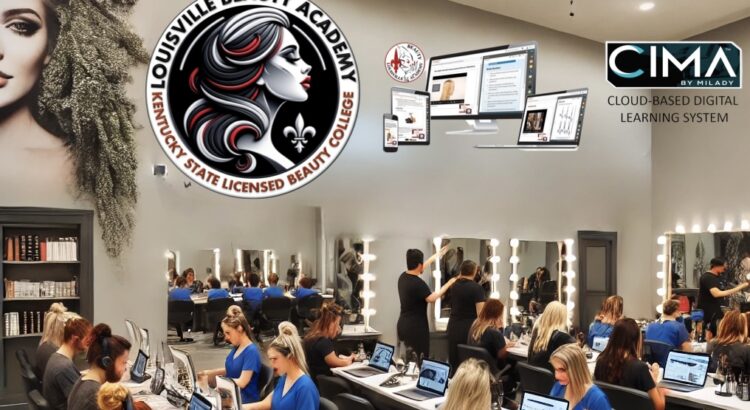

Kentucky State Law Allows a Single Beauty Program, Beauty Instructor Apprentice, to Be Partially Online

Kentucky State regulations governing beauty education strictly mandate that most programs must be completed onsite to qualify for licensing credit hours. Louisville Beauty Academy, a Kentucky state-licensed beauty school, is fully aligned with these legal requirements. As of September 2024, the majority of beauty programs still require hands-on, direct instruction to meet state standards.

However, there is one notable exception allowed by the law: the Apprentice Instructor Curriculum. According to Section 8 of the law, this program requires a total of 750 hours of training, with 425 hours dedicated to direct contact with students. The remaining 325 hours of theory instruction can be completed either in person or online, making it the only beauty program that offers some flexibility for online learning.

This partial online allowance provides an opportunity for aspiring beauty instructors to complete their theoretical coursework remotely while ensuring they still receive the hands-on experience required through 425 onsite hours. Though online options remain limited for most programs, this exception reflects Kentucky’s evolving approach to beauty education.

The Apprentice Instructor Curriculum remains the only program that permits this balance between online and onsite education, offering more flexibility for students while maintaining the high standards set by the state for licensing.

Navigating the Path to Completing Your Cosmetology Education: Louisville Beauty Academy’s 80-Hour Brush-Up Course


At Louisville Beauty Academy, we understand the unique challenges that students in the beauty industry may face, especially those who have already completed the required credit hours but, for various reasons, are unable to return to their original school. Whether you’re a transfer student, faced personal circumstances that prevented you from continuing, or simply seeking a fresh start, our academy is here to support you in achieving your goals.

Can We Help You if You Already Have Credit Hours?

The short answer is yes, we can help you. Louisville Beauty Academy, a Kentucky State-licensed and accredited beauty college, offers a tailored solution in the form of our 80-Hour Brush-Up Course, specifically designed to meet the requirements set forth by the Kentucky State Board of Cosmetology. This course is available for students in various programs, including:

  • Cosmetology
  • Skincare/Esthetics
  • Nail Technology
  • Shampoo and Styling
  • Instructor Programs

What is the 80-Hour Brush-Up Course?

The Kentucky State Board of Cosmetology requires students who need additional assistance or are seeking licensure after transferring or re-enrolling to complete an 80-hour Brush-Up Course. This course is designed to refresh your skills and knowledge, ensuring you are fully prepared to meet the board’s standards.

Standard Tuition Fee: $1,600.00
Additional Costs: Please refer to the school’s website for the cost of the Student Kit and the Online Digital Theory System (CIMA) for specific programs. Prices for these materials vary based on the book company and are detailed online.

What It Includes: The 80-hour course covers essential practical and theoretical components across your chosen discipline. Whether you’re focused on cosmetology, esthetics, or nail technology, this program provides a comprehensive review of all the critical areas you need to be confident and successful in your state licensure exams.

Who is This Course For?

This course is ideal for students who:

  • Have completed the required credit hours at a different school but cannot return due to personal or institutional reasons.
  • Are transferring from another institution and need to meet the Kentucky State Board’s requirements.
  • Need additional support or a structured environment to refresh their skills before taking the state exam.
  • Seek a legal and licensed pathway to complete their education and move forward in their career.

Why Choose Louisville Beauty Academy?

At Louisville Beauty Academy, we are more than just an institution—we are a family. We understand that life can present challenges, and we are here to guide you every step of the way. Our goal is to offer a supportive and welcoming environment where you can complete your education and pursue your career goals.

Why Students Benefit from This Program:

  • State-Approved Certification: This course satisfies the Kentucky State Board’s requirements, enabling you to move forward with confidence toward licensure.
  • Skill Refreshment: After time away from your studies, this program ensures that your skills are up-to-date, giving you the confidence needed for success.
  • Flexible Learning: We offer a supportive environment tailored to help you complete your hours without the challenges you may have faced at other institutions.
  • A Path to Your Future: By joining Louisville Beauty Academy, you are taking the next step toward a rewarding and fulfilling career in the beauty industry.

How to Get Started

If you’re ready to take the next step and complete your educational journey, we invite you to enroll in our 80-hour Brush-Up Course. This is the opportunity you’ve been looking for to receive the support, guidance, and structure necessary to meet your goals.

At Louisville Beauty Academy, we are committed to helping you succeed. Sign up today, and let us help you achieve the career you’ve always dreamed of.


Disclaimer: Louisville Beauty Academy is a Kentucky State Board of Cosmetology–licensed and state-licensed institution authorized to provide education and guidance exclusively to enrolled students. We are legally and ethically obligated to refrain from offering personalized advice, instruction, or consultation to individuals who are not officially enrolled in our programs. Any information provided on this website is for general informational purposes only and does not constitute formal guidance or instruction. To receive comprehensive support and ensure compliance with state regulations, individuals are encouraged to enroll in our 80-Hour Brush-Up Course or other applicable programs

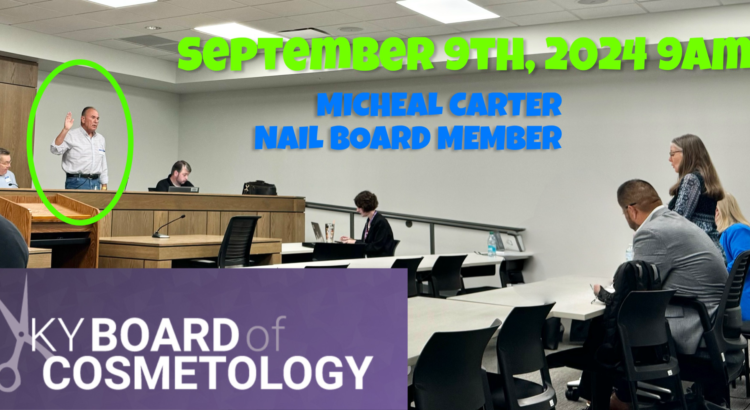
Historic Day for Kentucky Beauty Industry: Michael Carter Sworn In as First Nail Technician on Board of Cosmetology, Executive Director Removed – September 9th, 2024 9am

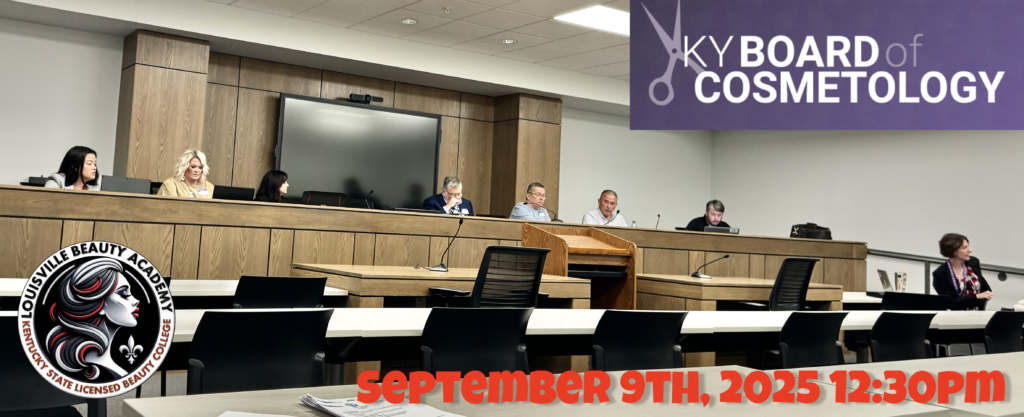
The Louisville Beauty Academy is excited to bring the latest updates from today’s Kentucky Board of Cosmetology meeting. In a historic moment for the beauty industry, Michael Carter was officially sworn in as the first-ever nail technician board member at 9 AM today. This appointment marks a significant milestone, as Michael Carter becomes the first representative of licensed nail technicians to serve on the board in its history. His swearing-in comes as a result of Senate Bill 14, which was passed earlier this year, expanding representation within the beauty industry.

However, that was not the only significant event during today’s meeting. At 12:30 PM, following an executive session on employee evaluations, the six-member board unanimously voted to remove Julie Campbell from her position as Executive Director of the Kentucky Board of Cosmetology, effective immediately. This decision comes after much discussion and pressure from the public, including a petition from over 1,700 members of the licensed community and general public demanding her removal. The petition can be viewed here.

The meeting was held both in person, attended by several beauty school owners, and virtually via Zoom, allowing the public to observe these important decisions as they unfolded.

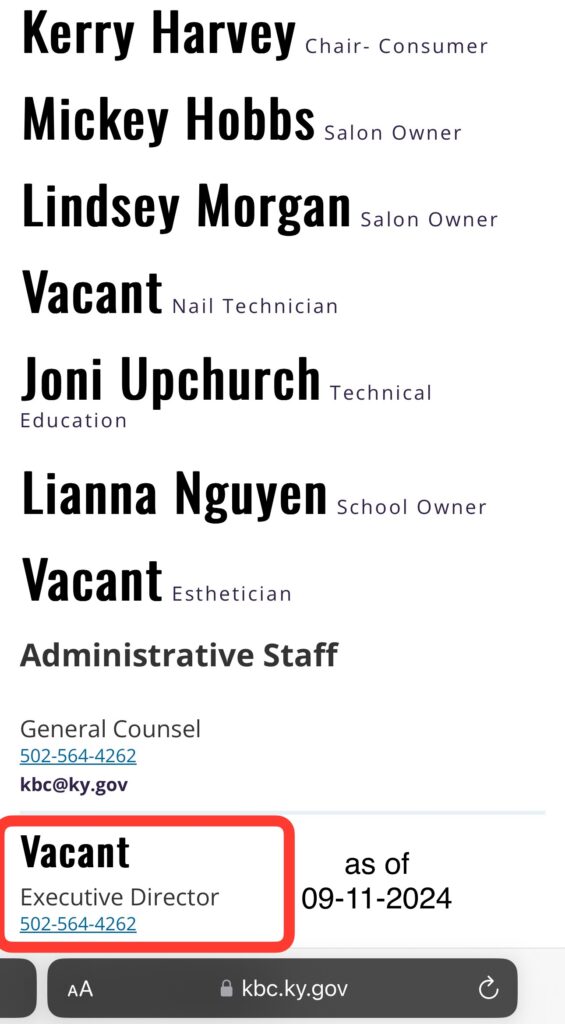
As of 3 pm on September 11th, 2024, the Kentucky State Board of Cosmetology website reflects this change; the removal of the former Executive Director, marking the end of a roughly 7-year term.

Disclaimer:
This information has been gathered and provided to the public by the Louisville Beauty Academy as informed, but does not guarantee any outcome as situations are constantly changing and evolving. For the most up-to-date information or inquiries related to the Kentucky Board of Cosmetology, please contact them directly at kbc@ky.gov.

Stay tuned for further updates as they develop. Louisville Beauty Academy remains committed to keeping the beauty community informed of all the latest news and developments affecting the industry.

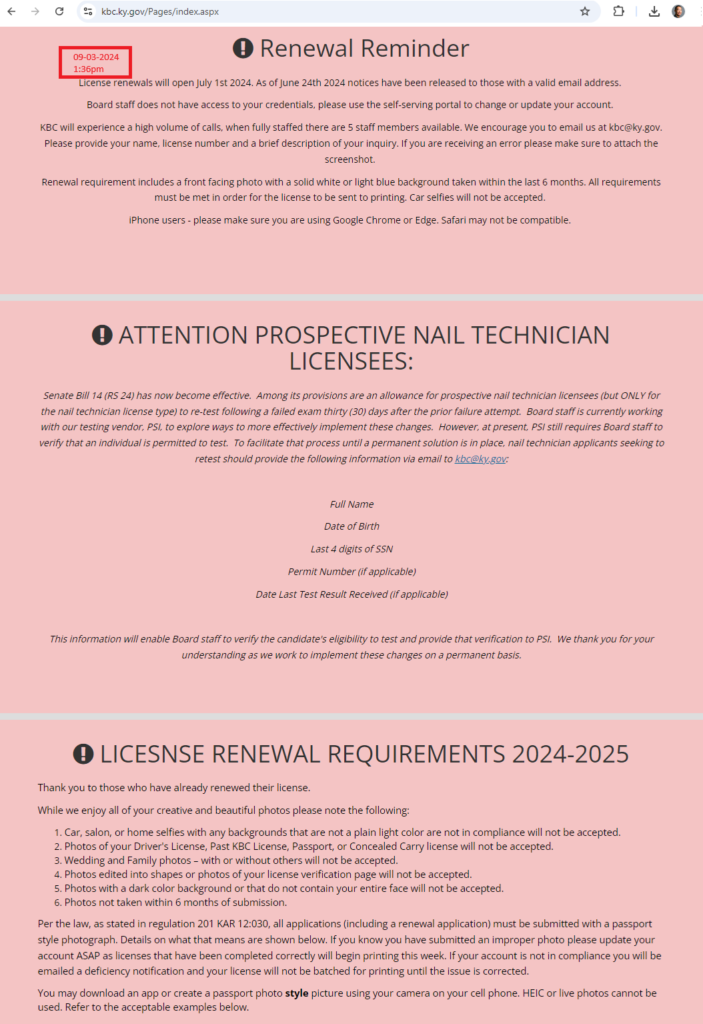
Kentucky State Board of Cosmetology Has Officially Posted About Senate Bill 14 as Law and Updates the Community as of Today, September 3rd, 2024

At Louisville Beauty Academy, a Kentucky state-licensed beauty school, we believe that staying informed about the latest regulations and public information in the beauty industry is crucial for both current students and prospective professionals. As part of our commitment to transparency and education, we are pleased to share the following important updates regarding Kentucky regulations and licensing procedures for beauty professionals.

Senate Bill 14 (RS 24) Now in Effect: What Prospective Nail Technicians Need to Know

Senate Bill 14, now effective in Kentucky, brings important changes for prospective nail technician licensees:

  • Retesting Opportunity: If you fail your nail technician exam, you can now retake the exam 30 days after your previous attempt. This option applies ONLY to the nail technician license type.
  • Verification Process: Until a permanent solution is implemented, the Kentucky Board of Cosmetology (KBC) requires verification of eligibility to retest.

To facilitate this process, nail technician applicants should email the following information to kbc@ky.gov:

  • Full Name
  • Date of Birth
  • Last 4 digits of SSN
  • Permit Number (if applicable)
  • Date Last Test Result Received (if applicable)

This information will enable KBC staff to verify your eligibility to retest and coordinate with PSI, the official testing vendor.

License Renewal Requirements for 2024-2025: Compliance is Key

As the license renewal period approaches, it is essential to ensure your renewal application meets the required standards. The following are important reminders for all licensees:

  • Photo Requirements:
    • Not Accepted:
      • Car, salon, or home selfies with non-plain backgrounds.
      • Photos of your Driver’s License, previous KBC License, Passport, or Concealed Carry License.
      • Wedding and family photos, whether alone or with others.
      • Photos edited into shapes or images of your license verification page.
      • Photos with dark backgrounds or that do not show your entire face.
      • Photos taken more than 6 months before submission.

All applications must include a passport-style photo as per regulation 201 KAR 12:030. Licenses that meet the requirements will begin printing this week. If your submission is not compliant, you will receive a deficiency notification, and your license will not be printed until the issue is corrected. You may use a smartphone camera or an appropriate app to create a passport-style photo, but HEIC or live photos will not be accepted.

Why Public Information Matters

Understanding public information and staying updated on regulatory changes is vital for all beauty professionals. Louisville Beauty Academy is committed to sharing what we know to help our students and alumni navigate their careers successfully. However, it is important to note that regulations and requirements can change frequently.

Call to Action: Enroll Today at Louisville Beauty Academy!

Ready to start your journey in the beauty industry? Don’t wait—enroll today at Louisville Beauty Academy, where your future begins now!

Contact our Enrollment Department:

Take the first step toward a successful and fulfilling career in beauty. We’re here to support you every step of the way!

Disclaimer

Please be aware that while Louisville Beauty Academy strives to provide accurate and up-to-date information, we do not guarantee the legal or economic accuracy of any information shared. Regulations and requirements may change, and it is the responsibility of each individual to verify the most current information directly with the Kentucky State Board of Cosmetology or other relevant authorities.

We encourage all beauty professionals and students to stay informed, regularly check for updates, and consult with official sources to ensure compliance with current regulations.

For more information or assistance, please contact Louisville Beauty Academy. Your success is our priority, and we are here to support your journey in the beauty industry.

The Unsung Heroes of Human Connection: Elevating the Role of Nail Technicians in the Modern World

In a world rapidly advancing towards automation and robotic services, there remains a profession deeply rooted in human connection, care, and physical touch: nail technology. This career is not just about aesthetics; it is a powerful blend of therapy, personal care, and social connection that addresses both the physical and emotional needs of clients. As we move further into an era dominated by technology, the significance of nail technicians will only grow, affirming their role as essential providers of human services.

The Therapeutic Power of Nail Services

Imagine walking into a nail salon after a stressful day. The environment is warm, the atmosphere inviting, and the technician greets you with a smile. As you settle into your seat, the conversation flows easily—sometimes light-hearted, sometimes profound. Your hands or feet are gently held, massaged, and cared for, and before long, you feel the stress melting away. This is the magic of nail technology, a profession that goes far beyond just applying polish.

In recent years, psychologists and psychiatrists have increasingly recognized the therapeutic value of services like manicures and pedicures. More than just an aesthetic treatment, these services provide a unique environment of care, where the human touch can alleviate loneliness, reduce anxiety, and foster a sense of well-being. As automation takes over more routine tasks, the demand for professions that offer this kind of human connection will only increase. Nail technicians are at the forefront of this movement, providing not just beauty but also a crucial mental health service.

The Heart of the Nail Industry: Immigrant Communities

The nail industry in the United States owes much of its success to immigrant communities, particularly the Vietnamese, who have made affordable, high-quality nail care a mainstream service. It all began in the 1970s when a group of Vietnamese refugees, mostly women, were introduced to the art of nail care by Hollywood actress Tippi Hedren. From these humble beginnings, the Vietnamese community has grown to dominate the industry, bringing affordable and accessible nail care to millions across the country.

Today, the industry continues to flourish, with many more immigrants, including Latinos, entering the field. These individuals share a deep love for the United States and an even deeper love for serving others. Their dedication to their craft and their clients is what makes the nail industry so extraordinary. They are not just providing a service; they are creating environments of care and connection, one client at a time.

Louisville Beauty Academy: A Beacon of Excellence

One of the shining examples of this industry’s impact is Louisville Beauty Academy, a Kentucky state-licensed college founded by Di Tran, a Vietnamese immigrant with over 20 years of experience in the nail industry. Starting in high school, Di Tran has seen firsthand how nail technology can change lives. He has dedicated himself to elevating the profession and training the next generation of nail technicians to not only excel in their craft but also to understand the profound impact they have on their clients’ lives.

Di Tran is also the founder of an AI company and an education college focused on IT, making him uniquely positioned to understand the balance between technology and human connection. He strongly believes that as the world becomes more automated, the nail industry will rise to new heights of importance, bridging the gap between healthcare and beauty. This profession treats not just the body but the mind and soul, making it a vital component of holistic health care.

The Future of Nail Technology: More Than Just Beauty

As we look to the future, the role of nail technicians will continue to expand. They are not just beauticians; they are caregivers, therapists, and community builders. In an increasingly disconnected world, they provide a vital human touch that no machine can replicate. The nail industry is not just surviving in the face of technological advancement—it is thriving, proving that the power of human connection is irreplaceable.

Louisville Beauty Academy and professionals like Di Tran are leading the charge, ensuring that this profession continues to grow and adapt to the changing needs of society. Nail technology is no longer just about making people look good; it is about making them feel good, too. And in a world where mental health is becoming an ever-more pressing concern, the role of the nail technician is more important than ever.

Call to Action

Ready to make a difference in people’s lives while building a rewarding career? Enroll today at Louisville Beauty Academy by texting our enrollment department at 502-615-5531 or emailing study@louisvilleBeautyAcademy.net. Our school is one of the most inclusive, caring, family-affordable, and flexible beauty colleges, where we teach the ‘YES I CAN’ mentality. Join us and become part of a profession that’s not just about beauty—it’s about connection, care, and making a real impact on the world.

Board of Cosmetology Under Scrutiny: Legislative Oversight Reveals Ongoing Issues and Complaints – August 15, 2024

Introduction:

Louisville Beauty Academy, a Kentucky state-licensed beauty school, is dedicated to keeping you informed with the most recent developments in the beauty industry. Whether it’s news about licensing, educational opportunities, or regulatory changes, we are committed to providing you with timely and accurate information. Our goal is to empower our students and professionals with the knowledge they need to succeed in their careers.

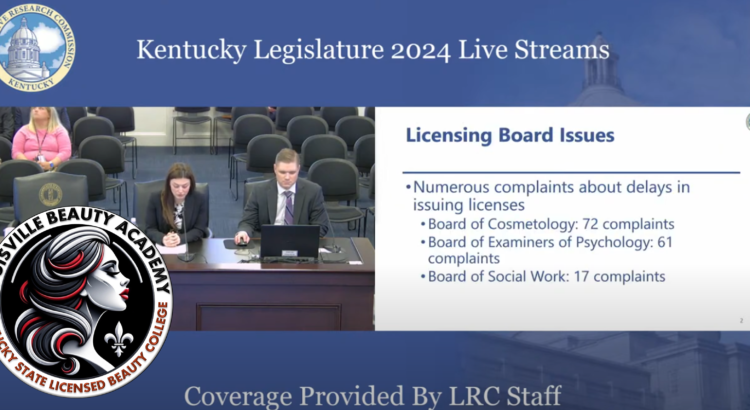
The Board of Cosmetology was a significant focus in the committee meeting, particularly due to ongoing issues that have generated numerous complaints. Here’s a summary of the information provided about the Board of Cosmetology:

Complaints and Issues:

  1. Frequent Complaints: The Board of Cosmetology is the most common source of complaints, with 72 complaints reported between 2008 and 2024. The complaints mainly revolve around delays in receiving licenses.
  2. Focus of Legislative Oversight: The Board is already the subject of a legislative oversight research study. This study is comprehensive, covering multiple aspects of the Board’s operations.
  3. Areas of Investigation:
    • Fines and Inspections: The study includes a review of the fines imposed by the Board over the last five years, the inspection processes, and the qualifications and activities of inspectors.
    • Administrative Procedures: The investigation also looks into the administrative procedures of the Board, possibly including how they handle applications, renewals, and compliance with state laws.
  4. Senate Bill 14:
    • Legislative Action: In response to these ongoing issues, Senate Bill 14 was passed, becoming law on July 15, 2024. This bill aimed to address some of the significant concerns related to the Board’s operations, particularly in the areas affecting nail technicians and estheticians.
    • Post-Legislation Review: There is interest in comparing the volume of complaints before and after the enactment of Senate Bill 14 to assess its impact.
  5. Specific Complaints:
    • Executive Director: There have been ongoing complaints about the conduct and actions of the Executive Director of the Board of Cosmetology. This issue remains a point of concern for some committee members, and there is interest in exploring how many complaints focus specifically on the Executive Director’s role.
  6. Future Reporting:
    • November Report: A full report on the Board of Cosmetology is scheduled to be presented in November 2024. This report will include findings from the legislative oversight study and will be shared with the committee members for further review.
  7. Complaints Related to Licensing Delays:
    • Impact on Professionals: Delays in processing licenses, particularly for nail technicians, estheticians, and cosmetologists, have been a major source of frustration. These delays not only affect the livelihoods of professionals but also limit the availability of services in the community.

Additional Information:

  • Systemic Focus: The legislative oversight staff typically focus on systemic issues rather than individual complaints. The belief is that improving the system will lead to better outcomes overall, rather than just addressing specific cases.
  • Senator Thomas’s Inquiry: Senator Thomas has expressed a keen interest in the ongoing complaints and has requested that the upcoming report in November provide detailed information on the nature of complaints before and after the new law took effect, particularly focusing on the role of the Executive Director.

REFERENCES

Legislative Oversight & Investigations Committee (8-15-24)

Disclaimer: For any specific questions or clarifications regarding beauty licensing legislation, please contact the Kentucky State Board of Cosmetology directly at KBC@ky.gov.

First Nail Technician Board Member in the History of the Kentucky State Board of Cosmetology: Michael Carter Appointed – August 2024

Louisville Beauty Academy Update: Celebrating a Historic Appointment in Kentucky’s Beauty Industry

At Louisville Beauty Academy, a Kentucky state-licensed beauty college, we pride ourselves on ensuring our students stay informed and up-to-date with the latest changes in beauty licensing and law in Kentucky. Our commitment to student success goes beyond education; it includes keeping everyone in our community aware of critical regulatory updates that impact their careers.

As part of our ongoing efforts to support our students, we are pleased to share significant developments related to the Kentucky Board of Cosmetology. As of March 2024, Governor Andy Beshear signed Senate Bill 14 into law. This legislation is a monumental step forward in promoting inclusivity and diversity within the beauty industry in Kentucky. Senate Bill 14 expanded the Board of Cosmetology by adding two new seats—one for a licensed nail technician and another for an esthetician.

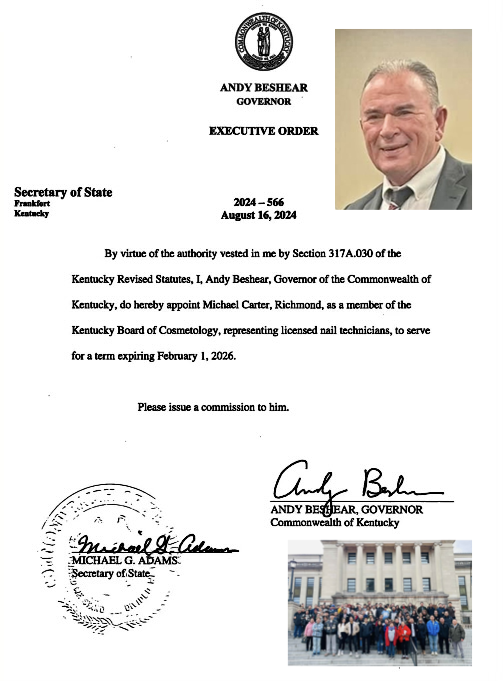
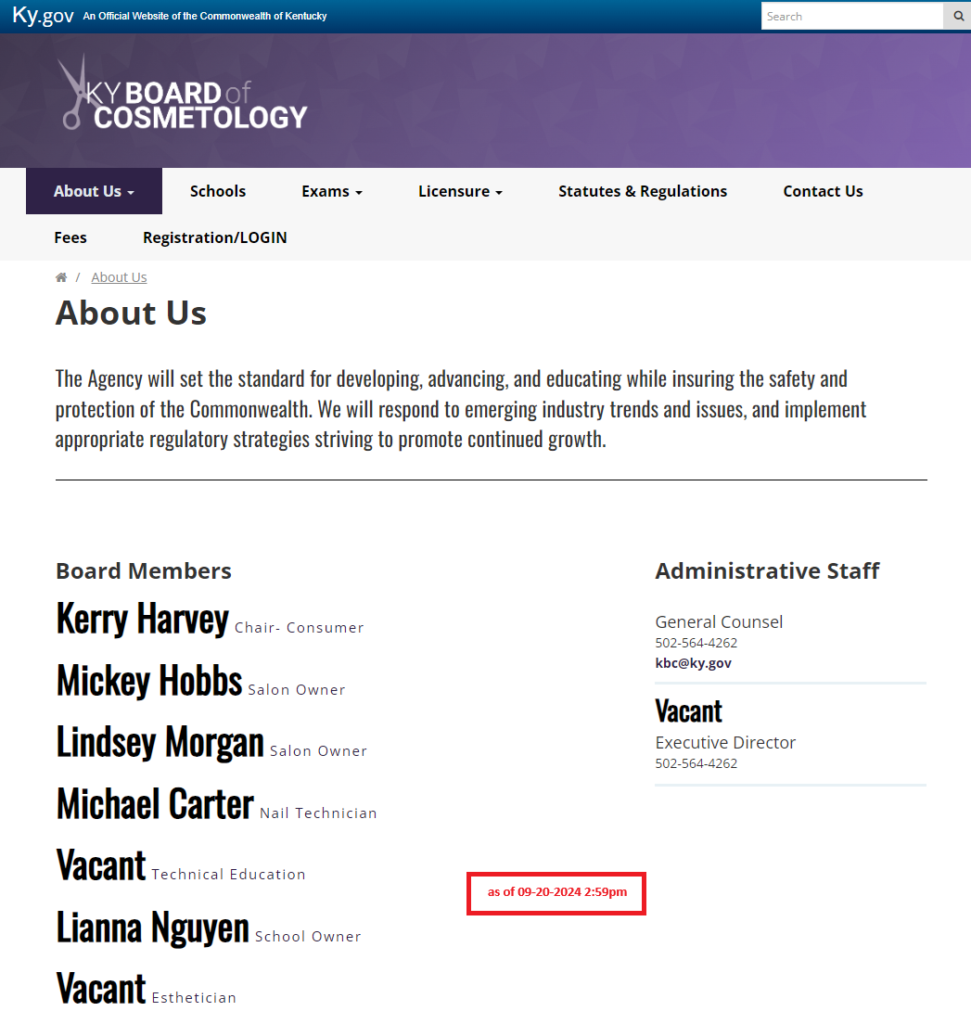
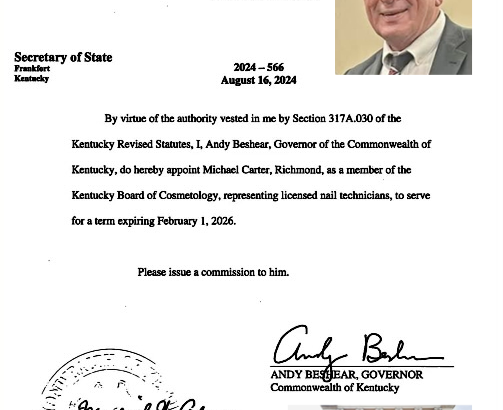
Today, we are excited to announce that Governor Andy Beshear, along with Secretary of State Michael Adams, has officially filled the first of these new positions. Michael Carter of Richmond, Kentucky, has been appointed as the newest member of the Kentucky Board of Cosmetology, representing licensed nail technicians. His appointment is effective immediately as of August 16, 2024, and he will serve a term that expires on February 1, 2026.

This appointment is a significant milestone for the beauty industry in Kentucky, particularly for nail technicians, as it ensures that their voice is heard at the state level. Michael Carter’s experience and dedication to the profession will bring valuable insights to the Board, benefiting all nail technicians across the Commonwealth.

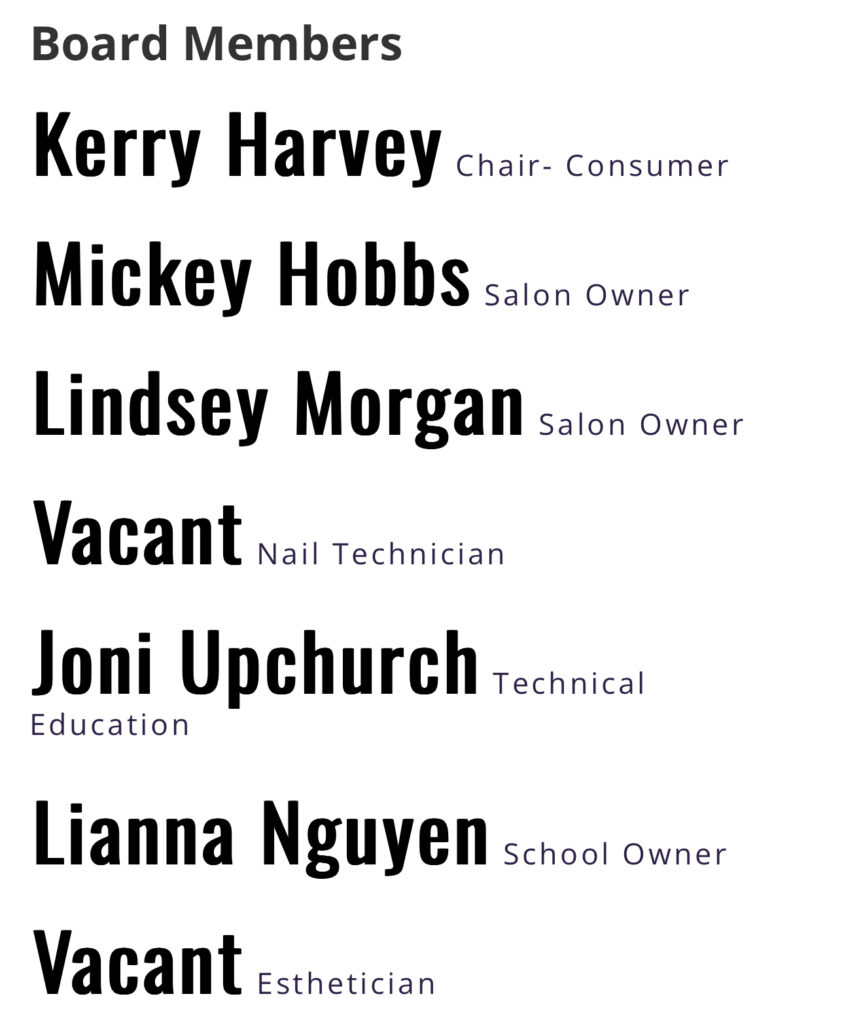
As of August 19th, 2024 – KENTUCKY STATE BOARD OF COSMETOLOGY MEMBERS

At Louisville Beauty Academy, we understand how vital it is for our students and graduates to be aware of such changes. We are committed to providing timely updates and ensuring that our community remains informed about important regulatory shifts. We encourage all our students to stay engaged and understand how these changes may affect their professional journey.

As we await the appointment of a representative for estheticians, we are confident that these additions to the Board will further enhance the diversity and representation within the beauty industry in Kentucky. We will continue to keep our students informed of any further developments.

Stay tuned for more updates, and remember, Louisville Beauty Academy is here to support you every step of the way in your beauty career.

Louisville Beauty Academy remains dedicated to excellence in education and compliance with Kentucky’s beauty regulations, ensuring our students are well-prepared to thrive in their professional careers.


Disclaimer: The information provided in this update is shared as known and publicly available at the time of publication. Louisville Beauty Academy does not guarantee the accuracy, completeness, or timeliness of the information provided. For the most accurate and up-to-date information, please contact the Kentucky State Board of Cosmetology directly by emailing them at kbc@ky.gov.

Louisville Beauty Academy: A Tradition of Learning, Growth, and Published Excellence

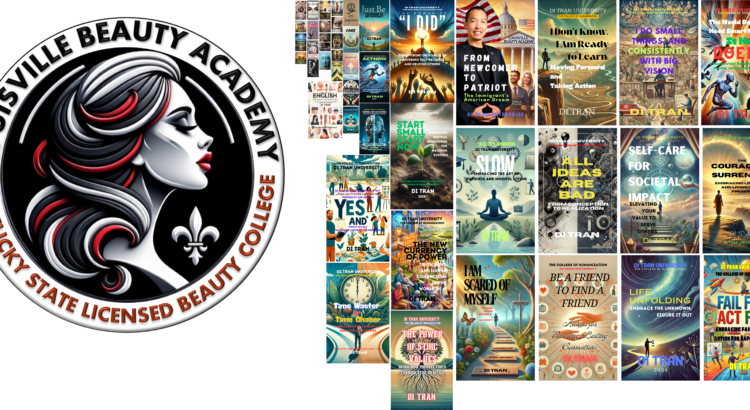
Louisville Beauty Academy, founded by Di Tran, is more than just a beauty school; it’s a hub of continuous learning and personal development. Our founder, along with our instructors, is dedicated to evolving with the industry, as evidenced by an impressive list of published books. These works highlight our commitment to education, flexibility, and affordability. We break down barriers to ensure your success—the only question is, “Do you want this?” If the answer is yes, there’s no better place to start your beauty career.

Books Published by Di Tran and More to Come:

  1. Zero Judgement: The Path to a Fulfilling Life
  2. Drop the “ME” and Focus on the “OTHERS”: The Power of Gratitude
  3. The Courage to Surrender: Embracing Life Fully and Living in the Present
  4. The World Doesn’t Need Smart People, It Needs Doers
  5. I Don’t Know. I Am Ready to Learn
  6. I Do Small Things, and Consistently with Big Vision
  7. Self-Care for Societal Impact
  8. All Ideas Are Bad
  9. Life Unfolding
  10. Fail Fast, Act Fast
  11. ABC of Empowerment
  12. Beauty Business Brilliance
  13. Start Small, Start Now
  14. Empowered Health
  15. Yes And vs Yes But
  16. The Power of “I DID”
  17. My God is my PEACE
  18. Mastering English for Beauty Professionals
  19. Minds and Machines
  20. Act Now, Adopt AI
  21. The Healing Power of Beauty Services
  22. Harmonic Laws
  23. Just Be
  24. Simple English Communication for Beauty Professionals
  25. Effective Communication in the Salon Environment
  26. Serving: The Foundation of a Fulfilling Life
  27. FEEL IT
  28. Humanization
  29. CARE
  30. BELIEF
  31. Mastering the Craft: A Journey to Professional Nail Technician
  32. Drop the FEAR and Focus on the FAITH
  33. Fired to Fired Up
  34. The Power of Stoic Values
  35. From Newcomer to Patriot
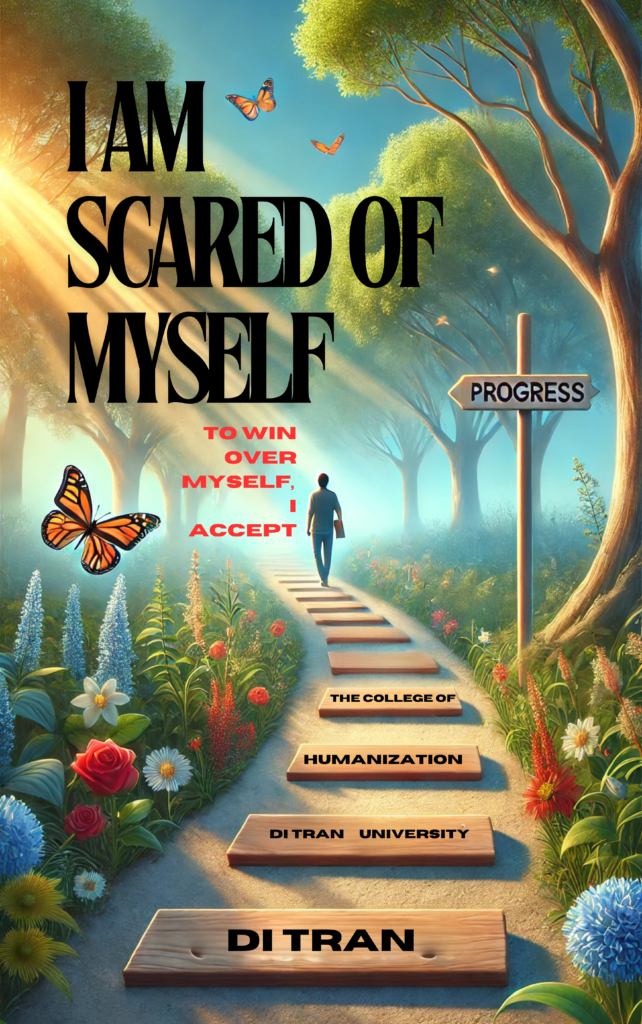
  36. I Am Scared of Myself
  37. SLOW
  38. Be a Friend to Find a Friend
  39. The New Currency of Power
  40. Time Waster or Time Chaser
  41. Louisville Beauty Academy Student Catalog
  42. Mastering the Art of Microblading
  43. Nailed It! A Handbook for Nail Technicians
  44. Value in Every Letter
  45. Grateful Echoes
  46. The Complete Guide to Eyelash Extensions
  47. The Robotic Labyrinth
  48. Guiding Lights
  49. The Great Candy Kingdom Adventure

More books are on the way, reflecting our ongoing dedication to growth and excellence.

Join Us Today! Text us at 502-625-5531 or email study@LouisvilleBeautyAcademy.net to start your journey immediately. Don’t wait—time is money!

Understanding Finances and Tuition Costs at Louisville Beauty Academy: A Path to Lower-Debt Success

At Louisville Beauty Academy, a Kentucky state-licensed beauty school, we believe that understanding finances is a critical skill that every adult must master. As one of the highly affordable beauty colleges in the state, particularly for our 1,500-hour Cosmetology program, we offer a tuition rate of less than $7,000, provided students meet all attendance and payment requirements. This represents a substantial discount—up to 75%—compared to other institutions. However, despite this significant financial benefit, many students overlook the importance of managing their finances, often accumulating debt through federal aid and other sources without fully understanding the long-term consequences.

The Reality of Debt: A Burden That Lasts

Debt, regardless of its source, is a financial obligation that follows you until it is fully repaid. At Louisville Beauty Academy, we pride ourselves on our commitment to helping students avoid the burden of debt. Through our lower-debt enablement programs, we have successfully graduated over 1,000 students who are now thriving in their careers, many as salon owners. These graduates have achieved their dreams without the weight of student loans holding them back, and we are proud of their accomplishments.

The Importance of Financial Awareness

We urge every prospective and current student to carefully consider their finances before committing to any form of debt. The opportunity to receive a quality education at such an affordable rate is rare, and we encourage students to take full advantage of this discount while it is still available. Seats in our programs are limited, and the scholarships we offer may change in the future. As of 2024, the substantial discount remains, but it is crucial to act now.

Balancing Flexibility and Affordability

At Louisville Beauty Academy, we understand that life requires flexibility, and we offer one of the most flexible learning environments in the state of Kentucky. However, with this flexibility comes the need to make informed decisions about balancing affordability and convenience. Every student must weigh their options and consider the long-term impact of their choices on their financial well-being.

Start Your Financial Journey Today

Financial literacy is an essential part of adult life, and it begins with your education. By making informed decisions about tuition and understanding the implications of debt, you set the foundation for a financially stable future. Louisville Beauty Academy is here to support you every step of the way, offering not just an education but a pathway to success that starts with smart financial choices.

We are proud to offer you the tools and resources to graduate lower-debt and pursue your dreams. Remember, the decisions you make today will shape your future, so take control of your finances now and invest in your education with confidence.

Louisville Beauty Academy is here to help you achieve your goals—without the burden of debt. Seats are limited, and opportunities like this are rare. Make the decision today to invest in your future wisely.

Disclaimer

Please note that while Louisville Beauty Academy strives to provide accurate and up-to-date information, it is essential to verify all details regarding regulations, tuition costs, scholarships, and other pertinent information directly with the Kentucky State Board of Cosmetology. For the most current and accurate information, you can contact the Kentucky State Board of Cosmetology by emailing kbc@ky.gov.

Additionally, we recommend that you check our school’s pricing page for the latest updates on tuition costs and scholarship opportunities. You can find this information, including the student contract, at the following link: Louisville Beauty Academy Pricing and Scholarship Information.

It is crucial to review this information carefully to make informed decisions about your education and financial commitments.